Overview
This unit introduces basic principles of microeconomic and macroeconomic theory and the methods of economic analysis . You will examine the demand-supply model, market equilibrium, elasticity, and how the prices of goods and services, and the cost and revenue curves are determined. You will compare the key market structures: perfect competition, monopoly, monopolistic competition, and oligopoly and examine why government intervention is necessary in order to correct market failure and achieve allocative and productive efficiency. You will be introduced to the key macroeconomic indicators and their role in managing the economy. You will be given the opportunity to explore the dynamics of macroeconomic policies, and their effectiveness in achieving national economic objectives and dynamic efficiency to achieve long term economic growth.
Details
Pre-requisites or Co-requisites
There are no requisites for this unit.
Important note: Students enrolled in a subsequent unit who failed their pre-requisite unit, should drop the subsequent unit before the census date or within 10 working days of Fail grade notification. Students who do not drop the unit in this timeframe cannot later drop the unit without academic and financial liability. See details in the Assessment Policy and Procedure (Higher Education Coursework).
Offerings For Term 3 - 2026
Attendance Requirements
All on-campus students are expected to attend scheduled classes - in some units, these classes are identified as a mandatory (pass/fail) component and attendance is compulsory. International students, on a student visa, must maintain a full time study load and meet both attendance and academic progress requirements in each study period (satisfactory attendance for International students is defined as maintaining at least an 80% attendance record).
Recommended Student Time Commitment
Each 6-credit Undergraduate unit at CQUniversity requires an overall time commitment of an average of 12.5 hours of study per week, making a total of 150 hours for the unit.
Class Timetable
Assessment Overview
Assessment Grading
This is a graded unit: your overall grade will be calculated from the marks or grades for each assessment task, based on the relative weightings shown in the table above. You must obtain an overall mark for the unit of at least 50%, or an overall grade of 'pass' in order to pass the unit. If any 'pass/fail' tasks are shown in the table above they must also be completed successfully ('pass' grade). You must also meet any minimum mark requirements specified for a particular assessment task, as detailed in the 'assessment task' section (note that in some instances, the minimum mark for a task may be greater than 50%). Consult the University's Grades and Results Policy for more details of interim results and final grades.
All University policies are available on the CQUniversity Policy site.
You may wish to view these policies:
- Grades and Results Policy
- Assessment Policy and Procedure (Higher Education Coursework)
- Review of Grade Procedure
- Student Academic Integrity Policy and Procedure
- Academic Progression Policy and Procedure
- Student Refund and Credit Balance Policy and Procedure
- Complaints Policy and Procedure
- Information and Communications Technology Acceptable Use Policy and Procedure
This list is not an exhaustive list of all University policies. The full list of University policies are available on the CQUniversity Policy site.
Feedback, Recommendations and Responses
Every unit is reviewed for enhancement each year. At the most recent review, the following staff and student feedback items were identified and recommendations were made.
Feedback from In online zoom tutorial/workshop sessions
Some students find graphs difficult to interpret despite the considerable amount of tutorial time is spent on graphical interpretations, relating theory to real life economic examples.
Investigate ways to assist students to better understand graphical presentation of economic concepts.
Feedback from UC self reflection
The hurdle requirement for the first assessment may be linked to non-submission of subsequent assessments resulting in AF outcomes.
Investigate assessment regime to discourage AF outcomes.
Feedback from Student Evaluation Survey
Learning resources and assessment items have been well structured and greatly benefit a student's ability to comprehend what is asked of each task.
Contnue providing structured Moodle resources and assessment with clear assignment criteria.
Feedback from Teaching teams self-reflection in the meeting and by e-mail
Despite 10 weeks teaching with the same volume of learning for Economics core unit, many students are not coming prepared to class.
Review if workshops should return to be in the 11 or 12-week teaching format.
Feedback from Practice quizzes
Students learning the unit
Review if there should be some weightage to the quizzes as well so that the students are able to understand the concepts.
- Describe the scope of the discipline of microeconomics and macroeconomics and the methodology of economic analysis and interpretation of tables and graphs, applying theory to practice.
- Describe the definitive characteristics of four different market structures, and rate each in terms of efficiency and the firm’s production decisions.
- Demonstrate how government intervention may be beneficial in cases of market failure in order to achieve more desirable outcomes for the economy and the society.
- Explain macroeconomic goals and assess various macroeconomic policies to stabilise the economy.
- Demonstrate why countries gain from international trade, globalisation, and exchange rate determination.
This Core Unit as well as the proposed changes, meets the Bachelor of Business (Accounting) professional outcomes, standards and assessment tasks as required by the external accounting accrediting bodies.
Alignment of Assessment Tasks to Learning Outcomes
| Assessment Tasks | Learning Outcomes | ||||
|---|---|---|---|---|---|
| 1 | 2 | 3 | 4 | 5 | |
|
1.
Assessment 1
(50% of unit )
Written Assessment
|
|||||
|
2.
Assessment 2
(50% of unit )
Written Assessment
|
|||||
Alignment of Graduate Attributes to Learning Outcomes
| Graduate Attributes | Learning Outcomes | ||||
|---|---|---|---|---|---|
| 1 | 2 | 3 | 4 | 5 | |
| 1 - Communication | |||||
| 2 - Problem Solving | |||||
| 3 - Critical Thinking | |||||
| 4 - Information Literacy | |||||
| 5 - Team Work | |||||
| 6 - Information Technology Competence | |||||
| 7 - Cross Cultural Competence | |||||
| 8 - Ethical practice | |||||
| 9 - Social Innovation | |||||
| 10 - First Nations Knowledges | |||||
| 11 - Aboriginal and Torres Strait Islander Cultures | |||||
Textbooks
Essentials of Economics
- Edition: 6th (2025)
- Authors: Hubbard, G.R., Garnett, A. M., Lewis, P., & O’Brien, A
- Pearson Education
- Melbourne Melbourne , Victoria , Australia
- ISBN: 9780655702870
Prescribed Textbook
1. Hubbard, G.R., Garnett, A. M., Lewis, P., & O’Brien, A. (2025). Essentials of Economics. 6th Edition. Melbourne, Victoria: Pearson Education, Australia. (Paperback) ISBN: 9780655702870
2. e-Book (not-interactive) is also available for half the price of paperback from the CQU - Bookshop
3. Revel Book- with Interactive content. (***Recommended option***) Revel is your book delivered interactively. Read, practice, and study in one continuous experience on your computer, tablet or mobile device – quizzes, videos, interactive activities.
Students may order from the CQU- Bookshop: https://bookshop.cqu.edu.au/
Additional Textbook Information
Prescribed Textbook
1. Hubbard, G.R., Garnett, A. M., Lewis, P., & O’Brien, A. (2025). Essentials of Economics. 6th Edition. Melbourne, Victoria: Pearson Education, Australia. (Paperback) ISBN: 9780655702870
2. e-Book (not-interactive) is also available for half the price of paperback from the CQU - Bookshop
3. Revel Book- with Interactive content. (***Recommended option***) Revel is your book delivered interactively. Read, practice, and study in one continuous experience on your computer, tablet or mobile device – quizzes, videos, interactive activities.
Students may order from the CQU- Bookshop: https://bookshop.cqu.edu.au/
IT Resources
- CQUniversity Student Email
- Internet
- Unit Website (Moodle)
- Zoom access: microphone and webcam required
All submissions for this unit must use the referencing style: American Psychological Association 7th Edition (APA 7th edition)
For further information, see the Assessment Tasks.
a.medhekar@cqu.edu.au
Week 1: Introduction to Unit Overview and Moodle
Begin Date: 09 Nov 2026Module/Topic
Introduction to Unit Overview and Moodle
No Class: Students need to explore
the moodle site first four Tiles and
Week-1 Tile information
Chapter
Econ11026 Unit Moodle Site & Introduction to- What is Economics?
Set Textbook: Hubbard, G.R., Garnett, A. M., Lewis, P., & O’Brien, A. (2025). Essentials of Economics. 6th Edition. Melbourne, Victoria: Pearson Education, Australia.
Events and Submissions/Topic
No scheduled classes this week.
Please listen to the recordings on Introduction and Explore the Econ-11026 Moddle Units First -4 Tiles Resources
Week 2: Topic -1 Demand, Supply & Elasticity
Begin Date: 16 Nov 2026Module/Topic
Topic 1: Market Demand, Supply & Elasticity
Chapter
Hubbard et al. (2025) Chapters 3 & 4
Events and Submissions/Topic
Start Answering Assessment 1 Questions
Week 3: Topic-2 Production, Costs & Perfect Competition
Begin Date: 23 Nov 2026Module/Topic
Topic-2: Technology, Production, Costs & Perfect Competition
Chapter
Hubbard et al. (2025) Chapters 6 & 7
Events and Submissions/Topic
Week 4: Topic-3 Imperfect Markets
Begin Date: 30 Nov 2026Module/Topic
Topic-3: Imperfect Markets: Monopoly, Monopolistic & Oligopoly
Chapter
Hubbard et al. (2025) Chapters 8 & 9
Events and Submissions/Topic
Week 5: Topic-4 Market Failure, Inequality and The Role of Government
Begin Date: 07 Dec 2026Module/Topic
Topic-4: Market Failure, Inequality, & The Role of Government
Chapter
Hubbard et al. (2025) Chapters 11 & 12
Events and Submissions/Topic
Finalise Written Assignment -1: Due Friday Next Week 6
Week 6:Topic 5 - Introduction to Macroeconomics & GDP
Begin Date: 14 Dec 2026Module/Topic
Topic-5: Introduction to Macroeconomics and GDP
Chapter
Hubbard et al. (2025) Chapter 13
Events and Submissions/Topic
Written Assignment -1 Due this Friday Week-6
Written Assessment (Short Answer Response) Due: Week 6 Friday (18 Dec 2026) 11:45 pm AEST
Mid-Term Break: Chrismas 2026 & New Year 2027
Begin Date: 21 Dec 2026Module/Topic
Christmas 2026 & New Year 2027
19-December-2026 to 3-January-2027
Chapter
Events and Submissions/Topic
Mid-Term Break: 19-December-2026 to 3-January-2027
Start Answering - Assessment 2 Part-A Questions
Week 7: Topic-6 Unemployment and Inflation
Begin Date: 04 Jan 2027Module/Topic
Topic-6: Unemployment and Inflation
Chapter
Hubbard et al. (2025) Chapters 14 & 15
Selected sections from Ch.15 Aggregate Demand (AD) & Aggregate Supply (AS) Model will be covered
Events and Submissions/Topic
Start Answering - Assessment 2 Part-A Questions
Week 8: Topic-7 Monetary Policy
Begin Date: 11 Jan 2027Module/Topic
Topic-7: Monetary Policy
Chapter
Hubbard et al. (2025) Chapters 16 & 17
Selected sections from Ch.16- Money
& RBA will be covered
Events and Submissions/Topic
Start Answering - Assessment 2 Part-B Essay
Week 9: Topic-8 Fiscal Policy
Begin Date: 18 Jan 2027Module/Topic
Topic-8: Fiscal Policy
Chapter
Hubbard et al. (2025) Chapter 18
Events and Submissions/Topic
Week 10: Topic-9 International Trade and Globalisation
Begin Date: 25 Jan 2027Module/Topic
Topic-9: International Trade and Globalisation
Chapter
Hubbard et al. (2025) Chapter 19
Events and Submissions/Topic
Assignment -2 Macroeconomics
Due Friday Week -12
Week 11: Topic-10 International Finance and Exchange Rates
Begin Date: 01 Feb 2027Module/Topic
Topic-10: International Finance and Exchange Rates
Chapter
Hubbard et al. (2025) Chapter 20
Events and Submissions/Topic
Assignment -2 Macroeconomics
Due Friday Next Week -12
Week 12 Revision Week - Work on Assignment-2
Begin Date: 08 Feb 2027Module/Topic
Work on Final Assignment 2 Answers, due this Friday.
Chapter
No scheduled classes in week 12.
Events and Submissions/Topic
Finalise Written Assignment -2 Answers.
Written Assessment Due: Week 12 Friday (12 Feb 2027) 11:45 pm AEST
Exam Week
Begin Date: 15 Feb 2027Module/Topic
Chapter
Events and Submissions/Topic
Vacation Week
Begin Date: 22 Feb 2027Module/Topic
Chapter
Events and Submissions/Topic
1 Written Assessment
IMPORTANT: Both (1+2) Assessment tasks are hurdle tasks, requiring a minimum grade of 50% or greater in each assessment to complete the unit successfully.
Assignment Weighting: 50 marks (50%)
Assessment -1 takes a short-answer format and requires responding to questions focusing on the topics covered from microeconomic section of the unit.
The task involves theoretical questions, graphs, calculations, real-life applications of market structures, externalities, and the role of government- applying theory to real-life economic issues.
It is recommended that students work on the questions progressively each week, rather than attempt to complete them in one day.
It is important that you familiarise yourself with the University Plagiarism Policy: https://www.cqu.edu.au/student-life/services-and-facilities/referencing/what-is-plagiarism.
Penalties apply for plagiarism, copying from other student's assignment, including own plagiarism.
"This assessment requires students to adhere to the guidelines on the use of Artificial Intelligence (AI) tools as specified in the Artificial Intelligence Assessment Scale (AIAS). Any misuse or lack of disclosure regarding the use of AI tools will be considered a breach of academic integrity."
AI Scale Level 1: (No AI) and AI- Assisted Guided Collaboration: You must demonstrate your core skills and knowledge.
Late submission Penalties (5% of the Assessment marks per day) also apply without an approved extension.
This assessment allows for a re-submitted attempt in certain circumstances.
If you have achieved between 40–49% of the total marks for this assessment item, you may request the Unit Coordinator for this unit to allow you to make a re-submission.
You must make this request in writing via email within three calendar days of receiving your marks and feedback for this assessment. The Unit Coordinator has the sole discretion for allowing a re-submission attempt. If the Unit Coordinator allows a re-submission attempt, the decision will be conveyed to you in writing via email to your student email address.
The re-submission notice will include instructions for you on:
1. What has to be done by you? When and how you must resubmit? (no more than seven calendar days from the decision being emailed to you will be allowed).
2. Your re-submission will result in no more than 50% of the allowed marks for this assessment item being awarded in total.
3. That is, if you are allowed a re-submission, you can achieve no more than 50% for this assessment item, regardless of how well you perform in your re-submission.
4. Please Note: No extensions will be allowed for your assignment re-submission.
Week 6 Friday (18 Dec 2026) 11:45 pm AEST
Please upload a written word document
Week 8 Friday (15 Jan 2027)
The Assessment Criteria Includes:
1. Clarity of presentation
2. Evidence of research and in-text and end-of-text referencing
3. Analysis of the real-life economic examples/scenario or policy
4. Application of economic theory (definitions, assumptions, and relevant graphs drawn and explained)
5. More details of Assignment - 1 questions, formatting guidelines, submission tips and APA-7 referencing style guide are available under the 'Assessment Tile' of the Econ11026 Unit Moodle site.
- Describe the scope of the discipline of microeconomics and macroeconomics and the methodology of economic analysis and interpretation of tables and graphs, applying theory to practice.
- Describe the definitive characteristics of four different market structures, and rate each in terms of efficiency and the firm’s production decisions.
- Demonstrate how government intervention may be beneficial in cases of market failure in order to achieve more desirable outcomes for the economy and the society.
2 Written Assessment
Both assessment tasks are hurdle tasks, requiring a minimum grade of 50% or greater in each assessment to complete the unit successfully.
Task -2 'Written Assessment' covers the Macroeconomic section of the unit. It requires you to demonstrate both theoretical and applied knowledge relating to real-life examples of macroeconomic section of the unit.
Written Assessment - 2 Task, consists of two parts.
Part A worth 25 marks, will cover short answer calculation questions. (approximately 800 words).
Part B worth 25 marks, students will analyse a contemporary macroeconomic policy issue and its application to real
life economics and write a research essay on the topic (approximately 2200 words).The task requires a significant
reading and research effort and will take time to develop a quality response. Students are strongly encouraged to
commence the work well before the deadline.
It is important that you familiarise yourself with the University Plagiarism Policy. https://www.cqu.edu.au/student-life/services-and-facilities/referencing/what-is-plagiarism.
Penalties apply for copying from other students, not acknowledging information sources, and plagiarism including own-plagiarism, and use of AI Penalties.
"This assessment requires students to adhere to the guidelines on the use of Artificial Intelligence (AI) tools as specified in the Artificial Intelligence Assessment Scale (AIAS). Any misuse or lack of disclosure regarding the use of AI tools will be considered a breach of academic integrity."
AI Scale Level 1: (No AI) and AI- Assisted Guided Collaboration: You must demonstrate your core skills and knowledge. This is in context of Assignment 2-Part- A.
AI Scale Level 2: AI- Planning: You may use AI for planning, idea development, and research. Your final submission should show how you have developed and refined these ideas. This is in context of Assignment 2-Part- B.
Late submission Penalties (5% of the Assessment marks per day) also apply without an approved extension.
Week 12 Friday (12 Feb 2027) 11:45 pm AEST
Please upload a written word document
Assignment 2 Marks and feedback will be released few days before the grade certification date.
More details of the Assignment-2 questions and the marking rubric will be available in the Assessment Tile of the Unit Moodle site.
Assessment criteria overall includes the overview of the current economic environment with regard to business cycle; description of macroeconomic goals, macroeconomic policy objectives and processes and their impact on the aggregate demand; factors influencing the current macroeconomic policy stance; limitations of policy; the clarity of explanations and referencing; and the use of the DADA framework.
Part - A: Students are expected to answer calculation, graphical, and short answer questions applying theory to real-life examples. (approximately 800 words).
Part - B: Students are expected to answer and analyse a contemporary macroeconomic objective or a policy issue and write a research essay on the topic (approximately 2200 words).
Please structure your essay keeping in mind:
- Define the key terms, explain assumptions, graphical explanation, insert relevant tables and data, and provide analysis by applying theory to real-life examples.
- It is recommended that students work progressively on preparing weekly answers to the assignment questions provided for macroeconomic topics covered, to avoid late penalty and extensions.
Minimum Mark 25/50 = 50% to Pass Assignment 2
- Describe the scope of the discipline of microeconomics and macroeconomics and the methodology of economic analysis and interpretation of tables and graphs, applying theory to practice.
- Explain macroeconomic goals and assess various macroeconomic policies to stabilise the economy.
- Demonstrate why countries gain from international trade, globalisation, and exchange rate determination.
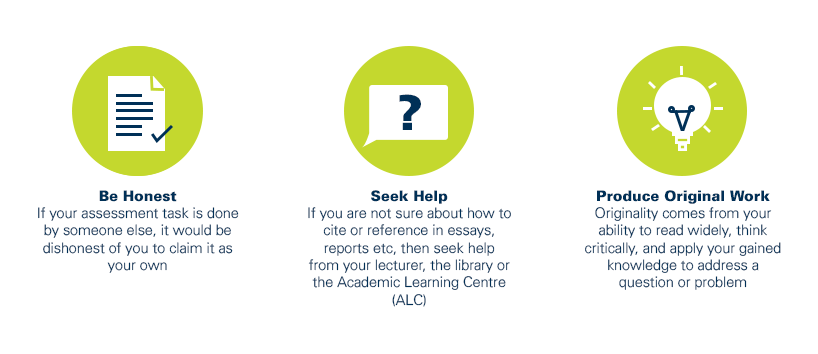
As a CQUniversity student you are expected to act honestly in all aspects of your academic work.
Any assessable work undertaken or submitted for review or assessment must be your own work. Assessable work is any type of work you do to meet the assessment requirements in the unit, including draft work submitted for review and feedback and final work to be assessed.
When you use the ideas, words or data of others in your assessment, you must thoroughly and clearly acknowledge the source of this information by using the correct referencing style for your unit. Using others’ work without proper acknowledgement may be considered a form of intellectual dishonesty.
Participating honestly, respectfully, responsibly, and fairly in your university study ensures the CQUniversity qualification you earn will be valued as a true indication of your individual academic achievement and will continue to receive the respect and recognition it deserves.
As a student, you are responsible for reading and following CQUniversity’s policies, including the Student Academic Integrity Policy and Procedure. This policy sets out CQUniversity’s expectations of you to act with integrity, examples of academic integrity breaches to avoid, the processes used to address alleged breaches of academic integrity, and potential penalties.
What is a breach of academic integrity?
A breach of academic integrity includes but is not limited to plagiarism, self-plagiarism, collusion, cheating, contract cheating, and academic misconduct. The Student Academic Integrity Policy and Procedure defines what these terms mean and gives examples.
Why is academic integrity important?
A breach of academic integrity may result in one or more penalties, including suspension or even expulsion from the University. It can also have negative implications for student visas and future enrolment at CQUniversity or elsewhere. Students who engage in contract cheating also risk being blackmailed by contract cheating services.
Where can I get assistance?
For academic advice and guidance, the Academic Learning Centre (ALC) can support you in becoming confident in completing assessments with integrity and of high standard.
What can you do to act with integrity?