Overview
Teaching for Mathematical Proficiency focuses on the development of professional knowledge that supports the teaching of Mathematics in primary schools in this unit. You will explore Mathematics content and experiment with pedagogical approaches for teaching mathematical reasoning and understanding. You will be introduced to mathematics content that recognises your own disposition towards mathematics and how your students may find learning mathematics difficult. You will evaluate ICTs and other resources, learning processes and teaching strategies on the development of mathematical proficiency. You will be introduced to the rationale, organisation and content of the Australian Curriculum: Mathematics and design plans for learning and teaching mathematical concepts and skills appropriate for specific year levels in the primary school. You will explain and justify approaches to promoting numeracy development through reference to authoritative sources and identify strategies for informing and involving parents and carers in the educative process. You will demonstrate effective pedagogy in Mathematics through role play of examples of classroom practice including the use of ICTs to support mathematical understanding. You will be introduced to the socioconstructivist approach to teaching mathematics through problem solving and inquiry based learning. you will be encouraged to facilitate your students' mathematical thinking.
Details
Pre-requisites or Co-requisites
There are no requisites for this unit.
Important note: Students enrolled in a subsequent unit who failed their pre-requisite unit, should drop the subsequent unit before the census date or within 10 working days of Fail grade notification. Students who do not drop the unit in this timeframe cannot later drop the unit without academic and financial liability. See details in the Assessment Policy and Procedure (Higher Education Coursework).
Offerings For Term 2 - 2026
Attendance Requirements
All on-campus students are expected to attend scheduled classes - in some units, these classes are identified as a mandatory (pass/fail) component and attendance is compulsory. International students, on a student visa, must maintain a full time study load and meet both attendance and academic progress requirements in each study period (satisfactory attendance for International students is defined as maintaining at least an 80% attendance record).
Recommended Student Time Commitment
Each 6-credit Undergraduate unit at CQUniversity requires an overall time commitment of an average of 12.5 hours of study per week, making a total of 150 hours for the unit.
Class Timetable
Assessment Overview
Assessment Grading
This is a graded unit: your overall grade will be calculated from the marks or grades for each assessment task, based on the relative weightings shown in the table above. You must obtain an overall mark for the unit of at least 50%, or an overall grade of 'pass' in order to pass the unit. If any 'pass/fail' tasks are shown in the table above they must also be completed successfully ('pass' grade). You must also meet any minimum mark requirements specified for a particular assessment task, as detailed in the 'assessment task' section (note that in some instances, the minimum mark for a task may be greater than 50%). Consult the University's Grades and Results Policy for more details of interim results and final grades.
All University policies are available on the CQUniversity Policy site.
You may wish to view these policies:
- Grades and Results Policy
- Assessment Policy and Procedure (Higher Education Coursework)
- Review of Grade Procedure
- Student Academic Integrity Policy and Procedure
- Academic Progression Policy and Procedure
- Student Refund and Credit Balance Policy and Procedure
- Complaints Policy and Procedure
- Information and Communications Technology Acceptable Use Policy and Procedure
This list is not an exhaustive list of all University policies. The full list of University policies are available on the CQUniversity Policy site.
Feedback, Recommendations and Responses
Every unit is reviewed for enhancement each year. At the most recent review, the following staff and student feedback items were identified and recommendations were made.
Feedback from SUTE
Assessment task 2
Review of assessment task 2.
Feedback from SUTE
Distance tutorial
Review tutorial structure.
Feedback from SUTE
Feedback
Clarify feedback types and purposes.
- Reflect critically on approaches to teaching Mathematics to improve professional knowledge and practice
- Apply research on effective practice to justify pedagogy that improves students’ mathematical proficiency and understanding of core concepts
- Recommend strategies, resources and learning activities that aid the transfer of mathematical understanding to real world contexts
- Evaluate the content, skills and teaching strategies of the learning area to identify ICTs and other resources that enhance understanding, fluency, reasoning and problem solving in Mathematics
- Design well-structured lessons that engage learners in actively applying key mathematical skills to understand the content
- Use strategies that contribute to effective partnerships with parents/ carers in supporting students’ numeracy development
- Engage in opportunities for sharing and enhancing professional knowledge and practice through reflection and collaboration.
Successful completion of this unit provides opportunities for students to engage with the Australian Professional Standards for Teachers (Graduate Career Stage) focus areas of:
1.2 Understand how students learn
2.1 Content and teaching strategies of the teaching area
2.5 Literacy and numeracy strategies
2.6 Information and Communication Technology (ICT)
3.3 Use teaching strategies
3.4 Select and use resources
3.6 Evaluate and improve teaching programs
3.7 Engage parents/carers in the educative process
6.2 Engage in professional learning and improve practice
7.3 Engage with the parents/carers
Alignment of Assessment Tasks to Learning Outcomes
| Assessment Tasks | Learning Outcomes | ||||||
|---|---|---|---|---|---|---|---|
| 1 | 2 | 3 | 4 | 5 | 6 | 7 | |
| 1 - Written Assessment - 45% | |||||||
| 2 - Reflective Practice Assignment - 45% | |||||||
| 3 - Peer assessment - 10% | |||||||
Alignment of Graduate Attributes to Learning Outcomes
| Graduate Attributes | Learning Outcomes | ||||||
|---|---|---|---|---|---|---|---|
| 1 | 2 | 3 | 4 | 5 | 6 | 7 | |
| 1 - Communication | |||||||
| 2 - Problem Solving | |||||||
| 3 - Critical Thinking | |||||||
| 4 - Information Literacy | |||||||
| 5 - Team Work | |||||||
| 6 - Information Technology Competence | |||||||
| 7 - Cross Cultural Competence | |||||||
| 8 - Ethical practice | |||||||
| 9 - Social Innovation | |||||||
| 10 - First Nations Knowledges | |||||||
| 11 - Aboriginal and Torres Strait Islander Cultures | |||||||
Textbooks
Helping Children Learn Mathematics
- Edition: 4th (2022)
- Authors: Robert Reys
- Wiley & Sons
- ISBN: ISBN : 0-7303-9182-5
IT Resources
- CQUniversity Student Email
- Internet
- Unit Website (Moodle)
- MS Teams
- Microsoft CoPilot, ChatGPT, or similar Generative Artificial Intelligence tool.
- Feedback Fruits
- CQU Success
All submissions for this unit must use the referencing style: American Psychological Association 7th Edition (APA 7th edition)
For further information, see the Assessment Tasks.
m.gronow@cqu.edu.au
Week 1
Begin Date: 13 Jul 2026Module/Topic
Introduction to EDCU12038.
Mathematics in our world and learning mathematics.
Chapter
Reys et al., (2022). Helping Children Learn Mathematics, 4th Australian Edition. John Wiley & Sons, Incorporated.
Chapter 1 School mathematics in a changing world.
1.1 What is mathematics?
1.2 What determines the mathematics being taught?
1.3 The role of the teacher.
Chapter 2 Helping children learn mathematics with understanding.
2.2 Meaningful connections between procedural and conceptual knowledge.
2.3 How do children learn mathematics?
2.4 How can we help children make sense of mathematics.
Readings:
Australian Education Research Organisation. (2021). Early numeracy: Promote children’s early literacy skills.
Goos, M., Bennison, A., Forgasz, H., Yasukawa, K. (2024). Research in Numeracy Education. In: Mesiti, C., et al. Research in Mathematics Education in Australasia 2020–2023. Springer, Singapore.
Events and Submissions/Topic
Read the Welcome to EDCU12038 and the Unit introduction on the Moodle site.
Access the text book from the eReading list or use the link on the Unit introduction page
Reys et al., (2022). Helping Children Learn Mathematics, 4th Australian Edition. John Wiley & Sons, Incorporated.
Put your tutorial time in your calendar. These are available on the Moodle site under the On Campus Tutorials and Distance Online Tutorial Zoom link section.
Go to MSTEAMS and introduce yourself to your Learning Community Group (LCG). Find out more about your LCG under the EDCU12038 Teaching for Mathematical Proficiency Learning Community section on the Moodle site
Week 2
Begin Date: 20 Jul 2026Module/Topic
Planning and teaching mathematics.
Chapter
Reys et al., (2022). Helping Children Learn Mathematics, 4th Australian Edition. John Wiley & Sons, Incorporated.
Chapter 3 Planning and teaching
3.1 Effective planning and preparation for teaching: using strategic questions to inform teaching practice.
3.2 Planning for effective teaching.
3.3 Levels of planning.
3.4 Planning different types of lessons.
Events and Submissions/Topic
Review the Moodle site weekly content under the Learning Material section.
Begin the discussion on Assessment Task 1 in your LCG.
Share some AI hints with your LCG.
Week 3
Begin Date: 27 Jul 2026Module/Topic
Problem solving.
Chapter
Reys et al., (2022). Helping Children Learn Mathematics, 4th Australian Edition. John Wiley & Sons, Incorporated.
Chapter 6 Helping children with problem solving
6.1 What is a problem and what is problem solving.
6.2 Teaching mathematics through problem solving.
6.3 Strategies for problem solving.
6.4 Looking back.
6.5 Helping students to solve problems.
Students view the following resource from the Australian Curriculum.
Events and Submissions/Topic
Review the Moodle site weekly content under the Learning Material section.
Collaborate with your LCG to complete your Assessment Task 1 draft.
Week 4
Begin Date: 03 Aug 2026Module/Topic
Counting and number sense.
Chapter
Reys et al., (2022). Helping Children Learn Mathematics, 4th Australian Edition. John Wiley & Sons, Incorporated.
Chapter 7 Counting and number sense in early childhood and primary years.
7.1 Developing number sense.
7.2 Counting principles.
7.3 Counting strategies.
7.4 Cardinal, ordinal and nominal numbers.
7.5 Writing numerals.
Events and Submissions/Topic
Review the Moodle site weekly content under the Learning Material section.
Collaborate with your LCG to complete your Assessment Task 1.
Upload your Assessment Task 1 Part 1 draft on Feedback Fruits due Friday 7 August.
Assessment Task 1 - Begin your review of LCG members' Part 1 draft on Feedback Fruits
Week 5
Begin Date: 10 Aug 2026Module/Topic
Number sense and place value.
Chapter
Reys et al., (2022). Helping Children Learn Mathematics, 4th Australian Edition. John Wiley & Sons, Incorporated.
Chapter 8 Extending number sense: place value.
8.1 Our numeration system.
8.2 Nature of place value.
8.3 Beginning place value.
8.4 Consolidating place value.
8.5 Extending place value.
8.6 Reading and writing numbers.
8.7 Rounding.
Events and Submissions/Topic
Review the Moodle site weekly content under the Learning Material section.
Collaborate with your LCG to complete your Assessment Task 1.
Share your AI support and knowledge
Assessment Task 1 - Continue your review of LCG members' Part 1 draft on Feedback Fruits.
Assessment Task 1 - Prepare your Part 2 Written Reflection Report.
Week 6
Begin Date: 17 Aug 2026Module/Topic
Reflective practices and mathematical thinking.
Chapter
Reys et al., (2022). Helping Children Learn Mathematics, 4th Australian Edition. John Wiley & Sons, Incorporated.
Page 34 Encouraging reflection and the use of metacognition.
Page 102 Self assessment and peer assessment.
Events and Submissions/Topic
Review the Moodle site weekly content under the Learning Material section.
Assessment Task 1 due for submission on the Moodle site by Friday 21 August 11:45pm AEST
Researching mathematical concept - Reflection of professional learning Due: Week 6 Friday (21 Aug 2026) 11:45 pm AEST
Break
Begin Date: 24 Aug 2026Module/Topic
Chapter
Events and Submissions/Topic
Week 7
Begin Date: 31 Aug 2026Module/Topic
The four operations.
Chapter
Reys et al., (2022). Helping Children Learn Mathematics, 4th Australian Edition. John Wiley & Sons, Incorporated.
Chapter 9 Operations: meanings and basic number facts.
9.1 Helping children develop number sense and computational fluency.
9.2 Developing meanings for the four operations.
9.3 Mathematical properties.
9.4 Overview of learning the basic facts.
9.5 Thinking strategies for basic number facts.
Events and Submissions/Topic
Review the Moodle site weekly content under the Learning Material section.
Set a time line with your LCG for completion of tasks for Assessment Task 2.
Discuss with your LCG Assessment Task 2 requirements.
Week 8
Begin Date: 07 Sep 2026Module/Topic
Mental computation, calculators and estimation.
Chapter
Reys et al., (2022). Helping Children Learn Mathematics, 4th Australian Edition. John Wiley & Sons, Incorporated.
Chapter 10 Mental computation, calculators and estimation.
10.1 Calculators.
10.2 Mental computation.
10.3 Estimation.
Reading:
Australian Education Research Organisation (AERO). (2025). Explainer: Retention and Recall
https://www.edresearch.edu.au/sites/default/files/2025-04/retention-and-recall-explainer-aa.pdf
Events and Submissions/Topic
Review the Moodle site weekly content under the Learning Material section.
Share research and thoughts on readings for Assessment Task 2 with your LCG
Begin report for Assessment Task 2 presentation to your LCG on Feedback Fruits.
Week 9
Begin Date: 14 Sep 2026Module/Topic
Solving problems with written strategies.
Chapter
Reys et al., (2022). Helping Children Learn Mathematics, 4th Australian Edition. John Wiley & Sons, Incorporated.
Chapter 11 Solving problems with written strategies.
11.1 Emergent understanding and experiences.
11.2 Addition.
11.3 Subtraction.
11.4 Multiplication
11.5 Division.
11.6 Finding the balance between practice and proficiency.
Reading:
Australian Education Research Organisation (AERO). (2024). Scaffolded practice
Events and Submissions/Topic
Review the Moodle site weekly content under the Learning Material section.
Upload your Assessment Task 2 Part 1 presentations to Feedback Fruits for LCG members to review by 18 September.
Week 10
Begin Date: 21 Sep 2026Module/Topic
Fractions and decimals.
Chapter
Reys et al., (2022). Helping Children Learn Mathematics, 4th Australian Edition. John Wiley & Sons, Incorporated.
Chapter 12 Fractions and decimals: meanings and operations.
12.1 Conceptual development of fractions.
12.2 Understanding equivalence and ordering fractions.
12.3 Operations with fractions.
12.4 Conceptual development of decimals.
12.5 Operations with decimals.
Events and Submissions/Topic
Review the Moodle site weekly content under the Learning Material section.
Review and evaluate LCG members' presentations on Feedback Fruits.
Week 11
Begin Date: 28 Sep 2026Module/Topic
Number theory.
Chapter
Reys. (2022). Helping Children Learn Mathematics, 4th Australian Edition. John Wiley & Sons, Incorporated.
Chapter 14 Extending children with number theory.
14.1 Number theory in primary school mathematics.
14.2 Number theory topics for primary school children.
14.3 Other number number theory topics.
Events and Submissions/Topic
Review the Moodle site weekly content under the Learning Material section.
Complete LCG members' presentation reviews
Finalise writing and editing of Assessment Task 2 Part 2 written reflection for submission.
Week 12
Begin Date: 05 Oct 2026Module/Topic
Pattern and algebraic thinking.
Chapter
Reys et al., (2022). Helping Children Learn Mathematics, 4th Australian Edition. John Wiley & Sons, Incorporated.
Chapter 15 Pattern and algebraic thinking.
15.1 Problems, patterns and relations.
15.2 Language and symbols of algebra.
15.3 Modelling, generalising and justifying.
Events and Submissions/Topic
Assessment Task 2 - Reflective Practice Assignment written task submitted to Moodle for external examination by 9 October 2026.
Report presentation and written reflective practice Due: Week 12 Friday (9 Oct 2026) 11:45 pm AEST
Exam Week
Begin Date: 12 Oct 2026Module/Topic
Chapter
Events and Submissions/Topic
Vacation/Exam Week
Begin Date: 19 Oct 2026Module/Topic
Chapter
Events and Submissions/Topic
1 Written Assessment
The task
In the task you will be required to work collaboratively in your Learning Community Group (LCG) and use generative AI to explore a given mathematical concept through a given content description from the Australian Curriculum: Mathematics (v9).
You will:
- Write a self-reflection on your disposition towards teaching and learning of mathematics.
- Investigate current research in the teaching and learning of a problem-solving mathematical concept.
- Develop a learning strategy based on problem-solving as a mathematical concept that reflects your understanding of the research in the teaching and learning of problem-solving.
- Upload a draft of your written submission to the Feedback Fruits application to be reviewed and evaluated by your LCG members.
- Use the feedback from your LCG reviews, and the feedback you give to your LCG members to write a reflection of the professional learning gained from giving and receiving of feedback to your LCG peers.
- Submit your final report on Moodle for external examination.
AI Use
Within this assessment, the use of Gen AI agents is as follows:
- Generate ideas and general structures.
- Editing and improving written content.
- Producing content for you to critique, adapt, and review.
- You will be able to use AI tools such as ChatGPT, Copilot, Claude, elicit and others in an ethical and academically responsible manner.
In using AI, you must:
- Disclose your AI use in your text and in your reference list.
- Not submit AI‑generated content verbatim your work MUST be edited and personalised.
- Avoid and acknowledge any unethical AI use.
- Maintain responsibility for accuracy of any AI-generated information and uphold academic integrity.
From the AI Assessment scale tool this task is designed for AI use at Level 4.
You may use AI extensively throughout your work either as you wish, or as specifically directed in your assessment. Focus on directing AI to achieve your goals wile demonstrating your critical thinking.
Week 6 Friday (21 Aug 2026) 11:45 pm AEST
Task is submitted as a single word document through the Moodle submission process.
Week 8 Friday (11 Sept 2026)
Return to students as marked word document with tracked changes with a separate marking guide.
- Descriptive self-reflection of your disposition towards problem-solving in the learning of mathematics.
- Research in problem-solving as a mathematical concept.
- Research in how children learn problem-solving as a mathematical concept.
- A problem-solving teaching and learning strategy, using the AC:M Number strand content descriptor AC9M1N05.
- Learning approach based on problem solving as a mathematical concept that reflects your understanding of the research in the teaching and learning of problem-solving, using the AC:M Number strand content descriptor AC9M1N05.
- Demonstrates professional engagement with LCG peers through peer- review processes and Learning Community Group collaboration.
- Written Reflection report is written with clarity and coherence creating a narrative that follows an academic writing style that adheres to APA7 formatting and referencing procedures.
- Reflect critically on approaches to teaching Mathematics to improve professional knowledge and practice
- Apply research on effective practice to justify pedagogy that improves students’ mathematical proficiency and understanding of core concepts
- Recommend strategies, resources and learning activities that aid the transfer of mathematical understanding to real world contexts
- Evaluate the content, skills and teaching strategies of the learning area to identify ICTs and other resources that enhance understanding, fluency, reasoning and problem solving in Mathematics
- Design well-structured lessons that engage learners in actively applying key mathematical skills to understand the content
- Use strategies that contribute to effective partnerships with parents/ carers in supporting students’ numeracy development
2 Reflective Practice Assignment
The task
This assessment task requires you to work collaboratively in your Learning Community Group (LCG) to share mathematical knowledge and understanding of a mathematical concept chosen, in collaboration with your LCG members, in preparation for a report to be presented to LCG members on Feedback Fruits.
You will:
- Create a report presentation on the mathematical concept chosen by your LCG.
- Review each of your LCG members' presentations offering meaningful feedback based on the criteria given.
- Write a reflective practice report.
Your presentation report will:
- Access the content from this unit and from your wider reading, to demonstrate your knowledge and understanding of the chosen mathematical concept.
- Demonstrate your knowledge and understanding of pedagogical approaches of the chosen mathematical concept.
- Develop a pedagogical strategy for engaging students in learning the mathematical concept.
- Explain how you will teach the mathematical concept to support students' learning.
Your submitted written reflection report will:
- Be a revised edition of your presentation, written in academic style following APA7 formatting and referencing guidelines (see https://apastyle.apa.org/ ).
- Include your LCG members' feedback in your written reflection and demonstrate where you adjusted your and evaluate each other's report.
- Include the feedback you gave to your LCG members on their presentation.
AI Use
Within this assessment, the use of Gen AI agents is as follows:
- Generate ideas and general structures.
- Editing and improving written content.
- Producing content for you to critique, adapt, and review.
- You will be able to use AI tools such as ChatGPT, Copilot, Claude, elicit and others in an ethical and academically responsible manner.
In using AI, you must:
- Disclose your AI use in your text and in your reference list.
- Not submit AI‑generated content verbatim your work MUST be edited and personalised.
- Avoid and acknowledge any unethical AI use.
- Maintain responsibility for accuracy of any AI-generated information and uphold academic integrity.
From the AI Assessment scale tool this task is designed for AI use at Level 4.
You may use AI extensively throughout your work either as you wish, or as specifically directed in your assessment. Focus on directing AI to achieve your goals wile demonstrating your critical thinking.
Week 12 Friday (9 Oct 2026) 11:45 pm AEST
Task is submitted as a single word document through the Moodle submission process.
Marked assessment tasks will be returned with annotation on manuscript and completed criteria grading sheet with comments. Submissions over the 1500 word limit may not receive feedback.
- Investigation of the mathematical concept and connection to the Australian Curriculum: Mathematics.
- Understanding of the mathematical concept.
- Understand how students learn the mathematical concept.
- Pedagogical strategy used to engage students.
- Ability to connect the Australian Curriculum: Mathematics, and research into the mathematical concept in the pedagogical strategy.
- Demonstrates professional engagement with LCG peers through peer-review processes and Learning Community Group collaboration.
- Written reflection follows APA7 guidelines of formatting and referencing, file name is given as indicated and correct cover page is used. Writing is clear and concise and written in a coherent narrative with attention to spelling, punctuation and grammar.
- Reflect critically on approaches to teaching Mathematics to improve professional knowledge and practice
- Apply research on effective practice to justify pedagogy that improves students’ mathematical proficiency and understanding of core concepts
- Recommend strategies, resources and learning activities that aid the transfer of mathematical understanding to real world contexts
- Evaluate the content, skills and teaching strategies of the learning area to identify ICTs and other resources that enhance understanding, fluency, reasoning and problem solving in Mathematics
- Design well-structured lessons that engage learners in actively applying key mathematical skills to understand the content
- Engage in opportunities for sharing and enhancing professional knowledge and practice through reflection and collaboration.
3 Peer assessment
This assessment task involves each student evaluating other Learning Community Group (LCG) members engagement in the LCG during the term.
Exam Week Friday (16 Oct 2026) 11:45 pm AEST
Submission completed on Self and Peer Assessment (SPA) application.
The ten criteria questions you are asked to respond to are:
- Was dependable in attending group meetings.
- Willingly accepted assigned tasks.
- Contributed positively to group discussions.
- Completed work on time or made alternative arrangements.
- Helped others with their work when needed.
- Did work accurately and completely.
- Contributed their fair share of the work.
- Worked well with other group members.
- Overall was a valuable member of the team.
- Gave and accepted feedback willing and productively.
- Reflect critically on approaches to teaching Mathematics to improve professional knowledge and practice
- Recommend strategies, resources and learning activities that aid the transfer of mathematical understanding to real world contexts
- Design well-structured lessons that engage learners in actively applying key mathematical skills to understand the content
- Engage in opportunities for sharing and enhancing professional knowledge and practice through reflection and collaboration.
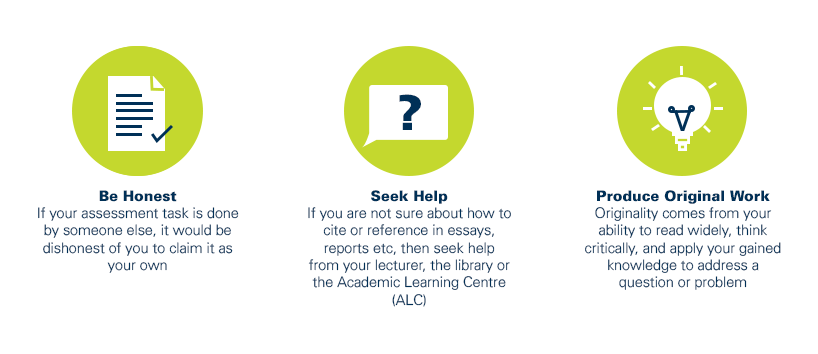
As a CQUniversity student you are expected to act honestly in all aspects of your academic work.
Any assessable work undertaken or submitted for review or assessment must be your own work. Assessable work is any type of work you do to meet the assessment requirements in the unit, including draft work submitted for review and feedback and final work to be assessed.
When you use the ideas, words or data of others in your assessment, you must thoroughly and clearly acknowledge the source of this information by using the correct referencing style for your unit. Using others’ work without proper acknowledgement may be considered a form of intellectual dishonesty.
Participating honestly, respectfully, responsibly, and fairly in your university study ensures the CQUniversity qualification you earn will be valued as a true indication of your individual academic achievement and will continue to receive the respect and recognition it deserves.
As a student, you are responsible for reading and following CQUniversity’s policies, including the Student Academic Integrity Policy and Procedure. This policy sets out CQUniversity’s expectations of you to act with integrity, examples of academic integrity breaches to avoid, the processes used to address alleged breaches of academic integrity, and potential penalties.
What is a breach of academic integrity?
A breach of academic integrity includes but is not limited to plagiarism, self-plagiarism, collusion, cheating, contract cheating, and academic misconduct. The Student Academic Integrity Policy and Procedure defines what these terms mean and gives examples.
Why is academic integrity important?
A breach of academic integrity may result in one or more penalties, including suspension or even expulsion from the University. It can also have negative implications for student visas and future enrolment at CQUniversity or elsewhere. Students who engage in contract cheating also risk being blackmailed by contract cheating services.
Where can I get assistance?
For academic advice and guidance, the Academic Learning Centre (ALC) can support you in becoming confident in completing assessments with integrity and of high standard.
What can you do to act with integrity?