Overview
Biological and Earth and Space Sciences develops understanding of both the content and pedagogy required to teach Science in Primary and Early Childhood classrooms. Students are introduced to concepts around how children learn Science; the importance of Science education in an Australian and international context; and current views around effective pedagogical practice linked to research. The focus on pedagogy will be linked to two content areas from the Australian Curriculum: Biological sciences and Earth and Space sciences.
Details
Pre-requisites or Co-requisites
There are no requisites for this unit.
Important note: Students enrolled in a subsequent unit who failed their pre-requisite unit, should drop the subsequent unit before the census date or within 10 working days of Fail grade notification. Students who do not drop the unit in this timeframe cannot later drop the unit without academic and financial liability. See details in the Assessment Policy and Procedure (Higher Education Coursework).
Offerings For Term 1 - 2026
Attendance Requirements
All on-campus students are expected to attend scheduled classes - in some units, these classes are identified as a mandatory (pass/fail) component and attendance is compulsory. International students, on a student visa, must maintain a full time study load and meet both attendance and academic progress requirements in each study period (satisfactory attendance for International students is defined as maintaining at least an 80% attendance record).
Recommended Student Time Commitment
Each 6-credit Undergraduate unit at CQUniversity requires an overall time commitment of an average of 12.5 hours of study per week, making a total of 150 hours for the unit.
Class Timetable
Assessment Overview
Assessment Grading
This is a graded unit: your overall grade will be calculated from the marks or grades for each assessment task, based on the relative weightings shown in the table above. You must obtain an overall mark for the unit of at least 50%, or an overall grade of 'pass' in order to pass the unit. If any 'pass/fail' tasks are shown in the table above they must also be completed successfully ('pass' grade). You must also meet any minimum mark requirements specified for a particular assessment task, as detailed in the 'assessment task' section (note that in some instances, the minimum mark for a task may be greater than 50%). Consult the University's Grades and Results Policy for more details of interim results and final grades.
All University policies are available on the CQUniversity Policy site.
You may wish to view these policies:
- Grades and Results Policy
- Assessment Policy and Procedure (Higher Education Coursework)
- Review of Grade Procedure
- Student Academic Integrity Policy and Procedure
- Academic Progression Policy and Procedure
- Student Refund and Credit Balance Policy and Procedure
- Complaints Policy and Procedure
- Information and Communications Technology Acceptable Use Policy and Procedure
This list is not an exhaustive list of all University policies. The full list of University policies are available on the CQUniversity Policy site.
Feedback, Recommendations and Responses
Every unit is reviewed for enhancement each year. At the most recent review, the following staff and student feedback items were identified and recommendations were made.
Feedback from SUTE
Assessment tasks
Assessments will be refined and modified to further assist.
Feedback from Moodle
Moodle content
Moodle content, and in particular for Early Years' content, will continue to be updated in line with the EYLF 2.0.
Feedback from Tutorials
Tutorial content
Continual improvements are being made to keep unit content covered in tutorials to be relevant, interesting, and engaging.
- Evaluate examples of teaching practice in science to identify how connections are made to students’ prior knowledge or experience to promote learning and inform pedagogical practice
- Access/evaluate and apply professional literature on contemporary science education to develop a rationale for learning design
- Analyse and incorporate content that recognises the experience of Aboriginal and Torres Strait Islander students in the science classroom
- Select teaching and learning strategies that promote higher order thinking and scaffold students’ understanding of core concepts in the areas of Biological and Earth and Space sciences
- Create learning resources in which learner engagement is transformed by the use of ICT for collaboration and inquiry.
Successful completion of this unit provides opportunities for students to engage with the Australian Professional Standards for Teachers (Graduate Career Stage) focus areas of:
1.1 Physical, social and intellectual development and characteristics of students
1.2 Understand how students learn
1.4 Strategies for teaching Aboriginal and Torres Strait Islander students
2.1 Content and teaching strategies of the teaching area
2.2 Content selection and organisation
2.6 Information and Communication Technology (ICT)
3.3 Use teaching strategies
3.4 Select and use resources
4.1 Support student participation
Alignment of Assessment Tasks to Learning Outcomes
| Assessment Tasks | Learning Outcomes | ||||
|---|---|---|---|---|---|
| 1 | 2 | 3 | 4 | 5 | |
| 1 - Presentation - 50% | |||||
| 2 - Practical and Written Assessment - 50% | |||||
Alignment of Graduate Attributes to Learning Outcomes
| Graduate Attributes | Learning Outcomes | ||||
|---|---|---|---|---|---|
| 1 | 2 | 3 | 4 | 5 | |
| 1 - Communication | |||||
| 2 - Problem Solving | |||||
| 3 - Critical Thinking | |||||
| 4 - Information Literacy | |||||
| 5 - Team Work | |||||
| 6 - Information Technology Competence | |||||
| 7 - Cross Cultural Competence | |||||
| 8 - Ethical practice | |||||
| 9 - Social Innovation | |||||
| 10 - First Nations Knowledges | |||||
| 11 - Aboriginal and Torres Strait Islander Cultures | |||||
Alignment of Assessment Tasks to Graduate Attributes
| Assessment Tasks | Graduate Attributes | ||||||||||
|---|---|---|---|---|---|---|---|---|---|---|---|
| 1 | 2 | 3 | 4 | 5 | 6 | 7 | 8 | 9 | 10 | 11 | |
| 1 - Presentation - 50% | |||||||||||
| 2 - Practical and Written Assessment - 50% | |||||||||||
Textbooks
Science in Early Childhood
- 5th Edition (2023)
- Authors: Campbell, C. & Howitt, C.
- Cambridge
- Melbourne Melbourne , Victoria , Australia
- ISBN: 9781009339766
This is only a prescribed textbook for students enrolled in CC14 Bachelor of Education Early Childhood. Pre-service teachers enrolled in CC12 are not required to purchase this textbook, however you should consider purchasing it if you are considering teaching in the lower grades of primary school.
Teaching Primary Science Constructively
- 8th Edition (2024)
- Authors: Skamp, K. & Preston. C.
- Cengage
- Melbourne Melbourne , Victoria , Australia
- ISBN: 9780170472814
This is a supplemental text for pre-service teachers enrolled in the CC12 Bachelor of Education Primary. You are not required to purchase this textbook, however if you are considering pursuing a teaching science or STEM specialization, it is strongly recommended that you purchase this textbook.
IT Resources
- CQUniversity Student Email
- Internet
- Unit Website (Moodle)
All submissions for this unit must use the referencing style: American Psychological Association 7th Edition (APA 7th edition)
For further information, see the Assessment Tasks.
d.mallett@cqu.edu.au
Week 1
Begin Date: 09 Mar 2026Module/Topic
Science Inquiry - An introduction and overview including social cultural theory and social constructivism in science education.
Chapter
Bybee, R. W., Taylor, J. A., Gardner, A., van Scotter, P., Carlson, J., Powell, C., Westbrook, A. & Landes, N. (2006). The BSCS 5E Instructional model: Origins and effectiveness. https://media.bscs.org/bscsmw/5es/bscs_5e_full_report.pdf
Australian Academy of Science. (2025). Using a science journal throughout inquiry. https://primaryconnections.org.au/pedagogical-tools/using-science-journal-throughout-inquiry
Australian Academy of Science. (2012). Chapter 2: Primary connections and science education pedagogical reform. (pp. 5-10 ,233-236). In K. Skamp. Teaching primary science trial-teacher feedback on the implementation of Primary Connections and the 5E model.
Khalik, M., Abdul Talib, C., & Mohd Rafi, I. B. (2018). Implementation of Inquiry–Based Science Education: Issues, Exemplars and Recommendations. Learning Science and Mathematics Journal, 832(13), 115-124. (Note: You only need to read the first ten pages of this Khalik et al. (2018) article), as the remainder is not relevant to primary school science teaching.
Rosenbrock, M. (2025). Using worked examples in science. https://www.teachermagazine.com/au_en/articles/using-worked-examples-in-science
Events and Submissions/Topic
Week 2
Begin Date: 16 Mar 2026Module/Topic
Early years science learning
Chapter
Fleer, M. (2024). Conceptual PlayWorld for Infant-Toddlers : The Unique Nature of Becoming a Science Learner in the Early Years of Life. Research in Science Education (Australasian Science Education Research Association), 54(2), 315–338. https://doi.org/10.1007/s11165-023-10145-2
Fleer, M. (2019). Five steps for early childhood educators to create a Conceptual PlayWorld and encourage a love of STEM. https://thespoke.earlychildhoodaustralia.org.au/five-steps-early-childhood-educators-create-conceptual-playworld-encourage-love-stem/
Fleer, M. (2019). The conceptual playlab launch. https://www.youtube.com/watch?v=qS12vPB-RqU
Events and Submissions/Topic
Week 3
Begin Date: 23 Mar 2026Module/Topic
The EYLF 2.0 and The Australian Curriculum, Science.
Chapter
Australian Curriculum Assessment and Reporting Authority [ACARA]. (2022). Australian Curriculum: Science – Understand this learning area. https://v9.australiancurriculum.edu.au/teacher-resources/understand-this-learning-area/science
Goodrum, D. (2013). Science. https://youtu.be/EipdYVDyhl0?si=9chbxkCoUyo5ycSJ
Early Years Reading
Nolan, A. & Raban, B. (2024). Chapter 2: Identifying the science in early childhood policy documentation. In C. Campbell, W.M. Jobling and C. Howitt (Eds.). Science in Early Childhood (5th edition.). Cambridge University Press.
Primary Years Reading
Skamp, K. (2024). Chapter 3A: Implementing the Australian Curriculum: Science with a constructivist mindset. . In K. Skamp & C. Preston. (Eds.) Teaching primary science constructively. (7th Ed., pp. 92-120) Cengage Learning Australia.
Events and Submissions/Topic
Week 4
Begin Date: 30 Mar 2026Module/Topic
Digital tools and Gen AI in the science classroom.
Chapter
Shearman, O. (2025). How students can use AI in the Science Classroom. https://www.theteachingastrophysicist.com/post/how-students-can-use-ai-in-the-science-classroom
Australian Institute for teaching and school leadership [AITSL]. (2017). Using ICT in Science. https://www.aitsl.edu.au/tools-resources/resource/using-ict-in-science-illustration-of-practice.
ICTE Solutions Australia. (2024). 5 Ways to promote science in ECE with ICT. https://www.youtube.com/watch?v=vTCBwmP4O-g
A recommended reading on scaffolding
Wood, D., Bruner, J. S., & Ross, G. (1976). The role of tutoring in problem solving. Journal of child psychology and psychiatry, 17(2), 89-100.
Events and Submissions/Topic
AT1 is due next week.
Week 5
Begin Date: 06 Apr 2026Module/Topic
Teaching Biological Science
Chapter
Fizzics Education. (2024). Best practices in biology teaching. https://www.fizzicseducation.com.au/articles/best-practices-in-biology-teaching/?srsltid=AfmBOoqwSiaqmLbek9sUjgxNihogYr1p0bEerpSEadSjmCIb2jrYvg3v
Australian Academy of Science. (2025). Core science concepts: biological Science. https://primaryconnections.org.au/science-content/core-science-concepts?tabIndex=4
Australian Academy of Science. (2025). Core science concepts: Earth and space science. https://primaryconnections.org.au/science-content/core-science-concepts?tabIndex=2
Events and Submissions/Topic
AT1 is due this week.
Week 6
Begin Date: 13 Apr 2026Module/Topic
The Cross Curriculum Priorities
Chapter
Alacapınar, F. G., & Uysal, H. (2020). Effect of station technique in classroom teaching: A meta-analysis study. Research on Education and Psychology, 4(Special Issue), 88-106.
Early Years Reading
Chealuck, K. & Campbell, C. (2023). Chapter 8: Indigenous ways of knowing in science. In C. Campbell, W.M. Jobling and C. Howitt (Eds.). Science in Early Childhood (4th edition.). Cambridge University Press.
Primary Years Reading
Hackling, M., Byrne, M., Gower, G., & Anderson, K. (2015). A pedagogical model for engaging aboriginal children with science learning. Teaching Science, 61(1), 27–39. https://doi.org/10.3316/aeipt.206558
Events and Submissions/Topic
Vacation Week
Begin Date: 20 Apr 2026Module/Topic
Chapter
Events and Submissions/Topic
Week 7
Begin Date: 27 Apr 2026Module/Topic
Teaching Biological Sciences outside.
Chapter
Curtis, D., & Carter, M. (2013). Chapter 7 – Study session: Observing how children connect with the natural world. In D. Curtis and M. Carter. (Eds.). The art of awareness how observation can transform your teaching (2nd ed.). Redleaf Press.
Jarrett, O. (2010). "Inventive" Learning Stations. Science and Children, 47(5), 56-59. https://www.proquest.com/scholarly-journals/inventive-learning-stations/docview/236917288/se-2
Early Years Reading
Howitt, C. & Campbell, C. (2023). Chapter 12: Science learning through informal experiences. In C. Campbell, W.M. Jobling and C. Howitt (Eds.). Science in Early Childhood (4th edition.). Cambridge University Press.
Primary Years Reading
Tytler, R., Haslam, F., White, P. & Peterson, S. (2021). Living things and environments. In K. Skamp & C. Preston. (Eds.) Teaching primary science constructively. (7th Ed., pp. 327-383) Cengage Learning Australia.
Events and Submissions/Topic
Week 8
Begin Date: 04 May 2026Module/Topic
Teaching Earth and Space Sciences
Chapter
Cartier, J. L., Smith, M. S., Stein, M. K., & Ross, D. K. (2013). Chapter 5: Encouraging and guiding student thinking. In J.L. Cartier., L. Smith., M.K. Stein and D.K. Ross (Eds.), 5 practices for orchestrating productive task-based discussions in science. National Council of Teachers of Mathematics.
Early Years Reading
Ashbrook, P. (2020). The Early Years: Earth & Space Science for Young Learners. Science and Children, 58(2), 12-13.
Primary Years' Reading
Skamp, K. (2021). Chapter 12 – Our place in space. In K. Skamp & C. Preston. (Eds.) Teaching primary science constructively. (7th Ed., pp. 522-574) Cengage Learning Australia.
Events and Submissions/Topic
Week 9
Begin Date: 11 May 2026Module/Topic
Teaching science and STEM with Narrative
Chapter
Shaby, N., Dillon, J., Peleg, R., Assaraf, O. B. Z., Pattison, S., Pierroux, P., … Contreras, D. (2025). Telling tales: the use of narratives in informal STEM settings. Research in Science & Technological Education, 1–22. https://doi.org/10.1080/02635143.2025.2469065
Van Andel Institute for Education. (2025). Science through storytelling: Using narrative to inspire curious students. https://youtu.be/brte6Qp0hpQ?si=zlJqp-ah3OSwRysu
Events and Submissions/Topic
Week 10
Begin Date: 18 May 2026Module/Topic
Teaching Science within a STEM classroom
Chapter
Hite, R., Greenhalghspencer, H., & Childers, G. (2022). Differentiation in the Life Science Classrooms Using Station Rotations. Science Scope (Washington, D.C.), 45(5), 52–58. https://doi.org/10.1080/08872376.2022.12291479
NSW Government: Education. (2026). Best practice in STEM education. https://education.nsw.gov.au/teaching-and-learning/curriculum/stem/about-stem/best-practice-in-stem-education
Early Years Reading
Preston, C. (2023). Chapter 11: STEM education in early childhood. In C. Campbell, W.M. Jobling and C. Howitt (Eds.). Science in Early Childhood (4th edition.). Cambridge University Press.
Events and Submissions/Topic
Week 11
Begin Date: 25 May 2026Module/Topic
Beginning your science teaching journey
Chapter
Preston, C., Mules, M., Baker, D., & Frost, K. (2007). Teaching primary science constructively: Experiences of pre-service teachers at Macquarie University: Teaching Science, 52(4), 12-16.
Australian Academy of Science. (2025). Collaborative learning. https://primaryconnections.org.au/pedagogical-tools/collaborative-learning
Australian Science Teachers' Association. (2025). ASTA Position paper: Inquiry vs explicit teaching misrepresentation. https://asta.edu.au/wp-content/uploads/2025/07/ASTA-Position-paper_-Inquiry-vs-Explicit-teaching-2025-7.pdf
Australian Academy of Science. (2012). Chapter 2.5: Factors influencing teacher willingness to change pedagogical practices. (pp. 13-19). In K. Skamp. Teaching primary science trial-teacher feedback on the implementation of Primary Connections and the 5E model. https://shorturl.at/957WX
Events and Submissions/Topic
AT2 is due next week.
Week 12
Begin Date: 01 Jun 2026Module/Topic
Revision and feedback week
Chapter
No readings this week.
Events and Submissions/Topic
Exam Week
Begin Date: 08 Jun 2026Module/Topic
Chapter
Events and Submissions/Topic
Vacation/Exam Week
Begin Date: 15 Jun 2026Module/Topic
Chapter
Events and Submissions/Topic
1 Presentation
Weighting: 50%
Due date: Week 6 (14 Apr 2026) 10:59 pm AEST
Due date grace period: The 72 hour grace period applies to this assignment. If you need longer than 72 hours, you will still need to use the normal Assessment Extension System process.
Word Count: 1500 words + conference recording of no more than 10 minutes (+/- 10%)
Use of Generative Artificial Intelligence agents (Gen AI)
Level 4: AI Use with Critical Direction
You may use AI throughout your work, either as you wish or as specifically directed. Focus on directing AI to achieve your goals while demonstrating critical thinking. Any misuse or lack of disclosure regarding AI tools will be considered a breach of academic integrity. More information on your use of GenAI in your assessments will be given both in workshops and on Moodle.
Task description:
In this task, you are going to complete your own authentic scientific inquiry (based on either the Biological or Earth and space sciences) along with a science inquiry experience reflection/diary to document changes and your notes in your inquiry experience. You will present your results of your inquiry and critical reflections of your experience with another student in the class along with a lesson sequence outline/summary on how you would teach this inquiry to a future class. Finally, you will provide a critical reflection on your partner's presentation drawing from your own experience with your inquiry and research on why the use of scientific inquiry is an effective approach to learning science. Your critical evaluation of your peer's work should be constructive in nature, drawing from the literature to help them improve their inquiry and teaching. For example: You might provide constructive ideas on ways they could have delved deeper into the inquiry by asking more effective and probing questions, or ways to improve their teaching. You are strongly encouraged to use the PROE and 5E approach in your inquiry.
You will submit your science experience notes and reflections along with a YouTube or ECHO360 link to your recording of your conference, your slide presentation and your critical feedback you provided to your peer (which will also include their full name).
Week 6 Tuesday (14 Apr 2026) 10:59 pm AEST
Submit online via Moodle
Your response will be returned once moderation has occurred and in time so that you can apply the feedback to your next assignment.
Demonstrated, clear and practical understanding of Science Inquiry and a current scientific understanding of the concepts of the curriculum.
Evaluate examples of inquiry experience and teaching to promote learning and inform pedagogical practice
Access/evaluate and apply professional literature on how and why you should teach science with an inquiry based approach.
- Evaluate examples of teaching practice in science to identify how connections are made to students’ prior knowledge or experience to promote learning and inform pedagogical practice
- Access/evaluate and apply professional literature on contemporary science education to develop a rationale for learning design
- Analyse and incorporate content that recognises the experience of Aboriginal and Torres Strait Islander students in the science classroom
- Communication
- Problem Solving
- Critical Thinking
- Information Literacy
- Information Technology Competence
- Cross Cultural Competence
2 Practical and Written Assessment
Word Count: 3000 words
Due date grace period: The 72 hour grace period applies to this assignment. If you need longer than 72 hours, you will still need to use the normal Assessment Extension System process.
Weighting: 50%
Use of Generative Artificial Intelligence agents (Gen AI)
Level 4: AI Use with Critical Direction
You may use AI throughout your work, either as you wish or as specifically directed. Focus on directing AI to achieve your goals while demonstrating critical thinking. Any misuse or lack of disclosure regarding AI tools will be considered a breach of academic integrity. More information on your use of GenAI in your assessments will be given both in workshops and on Moodle.
Task description, context and task: You have just arrived at a school, where the head of curriculum has told you that you only have 30 minutes per week to teach science. You know that you will need more time, so you have decided to teach your Science unit in small groups as part of an integrated STEM (or STEAM) approach to learning. You will then reflect on your lessons and provide a justification of why students will benefit from learning science in small groups, providing links between your teaching and the literature on small group learning in science.
You do NOT need to provide detailed information about the activities that the students will engage in for Mathematics, Technologies or Engineering, however you should provide a description (Max: 100 words) of the two STEM disciplines you have included in your learning pathway.
You need to incorporate engaging activities that recognise an Aboriginal and Torres Strait Islander perspectives. To help simplify this task, it has been broken into two parts.
Part A Learning activities task sheets or equivalent (Readable text based document) and Lesson summaries: Develop your learning activities which incorporate Aboriginal and Torres Strait Islander perspectives and incorporate relevant and purposeful digital tools to enhance the students' learning experiences. You are encouraged to adapt ideas from those you may have seen in the classroom, or activities you have found online. You will need to acknowledge where you got your ideas from with citations and a reference list.
You are to also provide a discussion on how these learning stations will work and what the teacher will do along with the questions/prompts you will ask in the lessons . At least one lesson must include the explicit teaching of a science skill that will help your students learn like a scientist. You are not being asked to write lesson plans. You are also encouraged to include bracketed links to learning theory in these descriptions. e.g. The students will work in small groups to complete a KWHL chart outlining what they know at the beginning of the unit (Social constructivism, Vygotsky).
Part B: A Critical reflection of your teaching including a justification for teaching science with in small groups.
Week 12 Monday (1 June 2026) 1:00 pm AEST
Submit online via Moodle
Return Date to Students Your task will be returned once moderation has occurred.
Demonstrated practical knowledge and understanding of the Australian Curriculum (Science).
Demonstrated knowledge and understanding of the Aboriginal and Torres Strait Islander Histories and Cultures general capability as given in the Australian Curriculum and its relevant to your teaching.
Utilised digital tools to help support learning and enhance learner engagement and understanding.
Student Engagement: Reasoning drawing from high quality sources demonstrating an understanding of why you should use small group learning to with highly effective pedagogical approaches to maximise student engagement and immersion in learning like a scientist.
- Access/evaluate and apply professional literature on contemporary science education to develop a rationale for learning design
- Select teaching and learning strategies that promote higher order thinking and scaffold students’ understanding of core concepts in the areas of Biological and Earth and Space sciences
- Create learning resources in which learner engagement is transformed by the use of ICT for collaboration and inquiry.
- Communication
- Problem Solving
- Critical Thinking
- Information Literacy
- Information Technology Competence
- Cross Cultural Competence
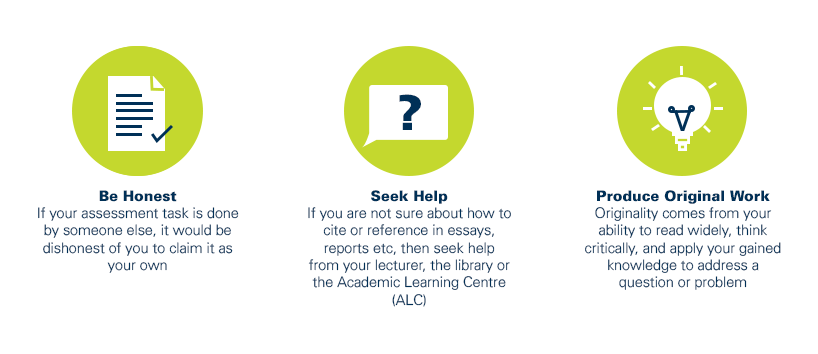
As a CQUniversity student you are expected to act honestly in all aspects of your academic work.
Any assessable work undertaken or submitted for review or assessment must be your own work. Assessable work is any type of work you do to meet the assessment requirements in the unit, including draft work submitted for review and feedback and final work to be assessed.
When you use the ideas, words or data of others in your assessment, you must thoroughly and clearly acknowledge the source of this information by using the correct referencing style for your unit. Using others’ work without proper acknowledgement may be considered a form of intellectual dishonesty.
Participating honestly, respectfully, responsibly, and fairly in your university study ensures the CQUniversity qualification you earn will be valued as a true indication of your individual academic achievement and will continue to receive the respect and recognition it deserves.
As a student, you are responsible for reading and following CQUniversity’s policies, including the Student Academic Integrity Policy and Procedure. This policy sets out CQUniversity’s expectations of you to act with integrity, examples of academic integrity breaches to avoid, the processes used to address alleged breaches of academic integrity, and potential penalties.
What is a breach of academic integrity?
A breach of academic integrity includes but is not limited to plagiarism, self-plagiarism, collusion, cheating, contract cheating, and academic misconduct. The Student Academic Integrity Policy and Procedure defines what these terms mean and gives examples.
Why is academic integrity important?
A breach of academic integrity may result in one or more penalties, including suspension or even expulsion from the University. It can also have negative implications for student visas and future enrolment at CQUniversity or elsewhere. Students who engage in contract cheating also risk being blackmailed by contract cheating services.
Where can I get assistance?
For academic advice and guidance, the Academic Learning Centre (ALC) can support you in becoming confident in completing assessments with integrity and of high standard.
What can you do to act with integrity?