Overview
Sustainability through Active Citizenship focuses on strategies and processes that educators can use to achieve the stated goal of the Melbourne Declaration of supporting young Australians to develop as active, informed citizens. Students explore issues related to Citizenship Education within the context of multicultural society and the lived experience of Aboriginal and Torres Strait Islander people and identify pedagogical practices for modelling democratic process in classroom settings. They develop understanding of sustainability as an issue involving values education and apply democratic and participatory processes to enact a group decision-making and planning task related to action for sustainable futures. Individually, students reflect on the relevance of the strategies and processes for use in primary school classrooms in terms of their potential for educating learners to achieve the goal of active, informed citizenship and to value participation in communities and groups for creating sustainable futures.
Details
Pre-requisites or Co-requisites
There are no requisites for this unit.
Important note: Students enrolled in a subsequent unit who failed their pre-requisite unit, should drop the subsequent unit before the census date or within 10 working days of Fail grade notification. Students who do not drop the unit in this timeframe cannot later drop the unit without academic and financial liability. See details in the Assessment Policy and Procedure (Higher Education Coursework).
Offerings For Term 1 - 2026
Attendance Requirements
All on-campus students are expected to attend scheduled classes - in some units, these classes are identified as a mandatory (pass/fail) component and attendance is compulsory. International students, on a student visa, must maintain a full time study load and meet both attendance and academic progress requirements in each study period (satisfactory attendance for International students is defined as maintaining at least an 80% attendance record).
Recommended Student Time Commitment
Each 6-credit Undergraduate unit at CQUniversity requires an overall time commitment of an average of 12.5 hours of study per week, making a total of 150 hours for the unit.
Class Timetable
Assessment Overview
Assessment Grading
This is a graded unit: your overall grade will be calculated from the marks or grades for each assessment task, based on the relative weightings shown in the table above. You must obtain an overall mark for the unit of at least 50%, or an overall grade of 'pass' in order to pass the unit. If any 'pass/fail' tasks are shown in the table above they must also be completed successfully ('pass' grade). You must also meet any minimum mark requirements specified for a particular assessment task, as detailed in the 'assessment task' section (note that in some instances, the minimum mark for a task may be greater than 50%). Consult the University's Grades and Results Policy for more details of interim results and final grades.
All University policies are available on the CQUniversity Policy site.
You may wish to view these policies:
- Grades and Results Policy
- Assessment Policy and Procedure (Higher Education Coursework)
- Review of Grade Procedure
- Student Academic Integrity Policy and Procedure
- Academic Progression Policy and Procedure
- Student Refund and Credit Balance Policy and Procedure
- Complaints Policy and Procedure
- Information and Communications Technology Acceptable Use Policy and Procedure
This list is not an exhaustive list of all University policies. The full list of University policies are available on the CQUniversity Policy site.
Feedback, Recommendations and Responses
Every unit is reviewed for enhancement each year. At the most recent review, the following staff and student feedback items were identified and recommendations were made.
Feedback from SUTE
Revise assessment tasks
Update assessment tasks in-line with the Australian Curriculum Version 9.
Feedback from SUTE
Update learning materials
Update learning materials in-line with the Australian Curriculum Version 9.
- Critique approaches to Citizenship Education to evaluate the use of inclusive strategies and the perspectives and experience of Aboriginal and Torres Strait Islander people and cultural and social minority groups
- Recommend teaching strategies that develop positive dispositions towards active citizenship and participatory democratic process for primary school-aged learners
- Justify the use of strategies for establishing respectful learning environments in which individual and group differences are valued
- Assess and critically reflect on learning processes to explain how they promote engagement and participation, improve student learning and develop positive values towards creating sustainable futures
- Select and use resources that support higher order thinking and facilitate effective group participation, planning and decision-making processes.
Successful completion of this unit provides opportunities for students to engage with the Australian Professional Standards for Teachers (Graduate Career Stage) focus areas of:
1.1 Physical, social and intellectual development and characteristics of students
1.2 Understand how students learn
1.3 Students with diverse linguistic, cultural, religious and socioeconomic backgrounds
1.4 Strategies for teaching Aboriginal and Torres Strait Islander students
2.1 Content and teaching strategies of the teaching area
2.4 Understand and respect Aboriginal and Torres Strait Islander people to promote reconciliation between Indigenous and non Indigenous Australians
3.4 Select and use resources
4.1 Support student participation
Alignment of Assessment Tasks to Learning Outcomes
| Assessment Tasks | Learning Outcomes | ||||
|---|---|---|---|---|---|
| 1 | 2 | 3 | 4 | 5 | |
| 1 - Practical Assessment - 50% | |||||
| 2 - Group Work - 50% | |||||
Alignment of Graduate Attributes to Learning Outcomes
| Graduate Attributes | Learning Outcomes | ||||
|---|---|---|---|---|---|
| 1 | 2 | 3 | 4 | 5 | |
| 1 - Communication | |||||
| 2 - Problem Solving | |||||
| 3 - Critical Thinking | |||||
| 4 - Information Literacy | |||||
| 5 - Team Work | |||||
| 6 - Information Technology Competence | |||||
| 7 - Cross Cultural Competence | |||||
| 8 - Ethical practice | |||||
| 9 - Social Innovation | |||||
| 10 - First Nations Knowledges | |||||
| 11 - Aboriginal and Torres Strait Islander Cultures | |||||
Alignment of Assessment Tasks to Graduate Attributes
| Assessment Tasks | Graduate Attributes | ||||||||||
|---|---|---|---|---|---|---|---|---|---|---|---|
| 1 | 2 | 3 | 4 | 5 | 6 | 7 | 8 | 9 | 10 | 11 | |
| 1 - Practical Assessment - 50% | |||||||||||
| 2 - Group Work - 50% | |||||||||||
Textbooks
Teaching Humanities and Social Sciences: Teaching & Learning across Australia
- 8th edition (2025)
- Authors: Libby Tudball, Peter Brett, Rob Gilbert
- Cengage Learning Australia
- South Melbourne South Melbourne , Victoria , Australia
- ISBN: 9780170460187
Additional Textbook Information
This text will also be used for EDCU12042 History Curriculum and Pedagogy and EDCU14033 Geography.
IT Resources
- CQUniversity Student Email
- Internet
- Unit Website (Moodle)
- Audacity or other MP3
All submissions for this unit must use the referencing style: American Psychological Association 7th Edition (APA 7th edition)
For further information, see the Assessment Tasks.
k.menzie-ballantyne@cqu.edu.au
Week 1
Begin Date: 09 Mar 2026Module/Topic
Active and informed citizenship
Chapter
Set text: Chapter 15 Teaching and Learning for Active and Informed Citizenship
Events and Submissions/Topic
Week 2
Begin Date: 16 Mar 2026Module/Topic
Civics Education - the 'informed' component
Chapter
Set text: Chapter 15 Teaching and Learning for Active and Informed Citizenship
Events and Submissions/Topic
Week 3
Begin Date: 23 Mar 2026Module/Topic
Experiences of citizenship of Aboriginal and Torres Strait Islander peoples and other cultural minorities
Chapter
Set text: Chapter 16 Aboriginal and Torres Strait Islander Histories and Cultures
Events and Submissions/Topic
Week 4
Begin Date: 30 Mar 2026Module/Topic
Effective pedagogy in citizenship education
Chapter
Set text: Chapter 4 Planning for Critical Inquiry & Chapter 7 Values, Ethical Understanding and Controversial Issues
Events and Submissions/Topic
Week 5
Begin Date: 06 Apr 2026Module/Topic
Educating for Global Citizenship/Global Competence
Chapter
Set Text: Chapter 1 The Context for Teaching in the Humanities and Social Sciences, Chapter 2 The Humanities and Social Sciences in the Australian Curriculum pp 47 - 58 & Chapter 7 Values, Ethical Understanding and Controversial Issues pp 192 - 194
Events and Submissions/Topic
Week 6
Begin Date: 13 Apr 2026Module/Topic
Democratic process and the skills of consensus
Chapter
Set readings accessed through the Moodle site
Events and Submissions/Topic
Vacation Week
Begin Date: 20 Apr 2026Module/Topic
Chapter
Events and Submissions/Topic
Week 7
Begin Date: 27 Apr 2026Module/Topic
Defining Sustainability
Chapter
Set text: Chapter 18 Sustainability
Events and Submissions/Topic
Week 8
Begin Date: 04 May 2026Module/Topic
Education for Sustainable Development
Chapter
Set text: Chapter 18 Sustainability
Events and Submissions/Topic
Week 9
Begin Date: 11 May 2026Module/Topic
Engaging with community to balance wants and needs
Chapter
Set text: Chapter 14 Teaching and Learning Economics and Business
Events and Submissions/Topic
Week 10
Begin Date: 18 May 2026Module/Topic
The role of values in Education for Sustainable Development
Chapter
Set text: Chapter 7 Values, Ethical Understanding and Controversial Issues
Events and Submissions/Topic
Week 11
Begin Date: 25 May 2026Module/Topic
Effective pedagogy in Education for Sustainable Development
Chapter
Set text: Chapters 3 Integrating the Curriculum & Chapter 18 Sustainability
Events and Submissions/Topic
Week 12
Begin Date: 01 Jun 2026Module/Topic
Unit review
Chapter
Events and Submissions/Topic
Exam Week
Begin Date: 08 Jun 2026Module/Topic
Chapter
Events and Submissions/Topic
Vacation/Exam Week
Begin Date: 15 Jun 2026Module/Topic
Chapter
Events and Submissions/Topic
1 Practical Assessment
For this assessment, you will need to create a podcast of no longer than 10 minutes using Audacity (or another MP3 tool). Instructions on how to download Audacity and use this free online program will be on the Unit Moodle site.
A national radio station runs a regular session called 'Education Views Today'. They have asked you to record a response to the question: What is the best way to teach civics and citizenship in primary schools in an effort to achieve the Alice Springs (Mparntwe) Declaration's goal that all Australian students should be active and informed members of their local and global communities?
Your response should present a persuasive and concise argument, based on research, evaluating past and present approaches to pedagogy, classroom practice and/or whole-school initiatives.
Your response should also demonstrate your understanding of the experiences of citizenship for Aboriginal and Torres Strait Islander peoples and how concepts of citizenship and approaches to civics and citizenship education could marginalise cultural minorities.
In addition to the podcast, you will need to upload an annotated bibliography of the reference material used to inform your presentation. Examples of annotated bibliographies will be provided on the Unit Moodle site.
needs of diverse student groups and individuals.
AI Assessment Scale: Level 2: You may use AI for planning, idea development, and research. Your final submission must include a title page that explains whether or not you have used AI, and how you have used it to develop and refine your ideas. Any misuse or lack of disclosure regarding AI tools will be considered a breach of academic integrity.
72 Hour Grace Period: Please note: The 72-Hour grace period applies to this assignment. If you need longer than 72 hours, you will still need to use the normal Assessment Extension System process.
Week 6 Tuesday (14 Apr 2026) 11:45 pm AEST
Feedback on this assessment will be provided in sufficient time to allow for academic support and advice as necessary to inform students’ responses to the next assessment task.
Critical analysis of past and present approaches to teaching civics and citizenship, including global citizenship
Demonstrated understanding of how concepts of citizenship and/or citizenship education can marginalise cultural minorities
Demonstrated understanding of the experiences of citizenship for Aboriginal and Torres Strait Islander peoples
Selection and use of relevant literature
Effective use of oral techniques and persuasive arguments
- Critique approaches to Citizenship Education to evaluate the use of inclusive strategies and the perspectives and experience of Aboriginal and Torres Strait Islander people and cultural and social minority groups
- Recommend teaching strategies that develop positive dispositions towards active citizenship and participatory democratic process for primary school-aged learners
- Justify the use of strategies for establishing respectful learning environments in which individual and group differences are valued
- Communication
- Problem Solving
- Critical Thinking
- Information Literacy
- Information Technology Competence
- Cross Cultural Competence
- Ethical practice
2 Group Work
In groups of approximately 10, you will use democratic process to develop a sustainability action plan that could be enacted in a regional community, a school or other specific locality.
Your group must document rules and procedures for managing conflict, reaching consensus and making decisions that showconsideration of the perspectives of all members and make provision for their active involvement in the planning process. In addition, each group must document the processes and literature used to develop their plan.
Each group member will be asked to complete a short peer assessment (approximately 50 words per person) assessing each of the other group members in terms of their participation and demonstration of active citizenship.
Each group member will also write a reflection (no more than 1400 words) identifying how the processes used in this assessment might be effective in developing active citizenship and positive attitudes to sustainability in primary classrooms.
Each group member will therefore submit:
• a full list of group members including names and student numbers
• a copy of their group's rules and procedures
• a copy of their group's sustainability action plan (including documented evidence of the research and processes used)
• peer assessments of each of the other group members
• a reflection on how knowledge learned and processes used in this assessment might be effective in primary classrooms to develop active citizenship and positive attitudes towards sustainability.
Although this is a group assessment, individual grades will be awarded.
AI Assessment Scale: Level 2: You may use AI for planning, idea development, and research. Your final submission must include a title page that explains whether or not you have used AI, and how you have used it to develop and refine your ideas. Any misuse or lack of disclosure regarding AI tools will be considered a breach of academic integrity.
72 Hour Grace Period: Please note: The 72-Hour grace period applies to this assignment, although you must negotiate this with all your group members. If you need longer than 72 hours, you will still need to use the normal Assessment Extension System process.
Week 12 Thursday (4 June 2026) 11:45 pm AEST
Feedback on this final assessment response will be provided following moderation and prior to the Date of Certification of Grades for the term.
Understanding of procedures for achieving group consensus and democratic process Understanding of sustainability as a balance between competing stakeholder viewpoints
Understanding of the social, economic and environmental pillars of sustainability
Ability to assess the participation and active citizenship of other group members
Ability to apply learning experiences to the pedagogy of civics and citizenship education
Ability to apply learning experiences to the pedagogy of education for sustainable development
- Assess and critically reflect on learning processes to explain how they promote engagement and participation, improve student learning and develop positive values towards creating sustainable futures
- Select and use resources that support higher order thinking and facilitate effective group participation, planning and decision-making processes.
- Communication
- Problem Solving
- Critical Thinking
- Information Literacy
- Team Work
- Cross Cultural Competence
- Ethical practice
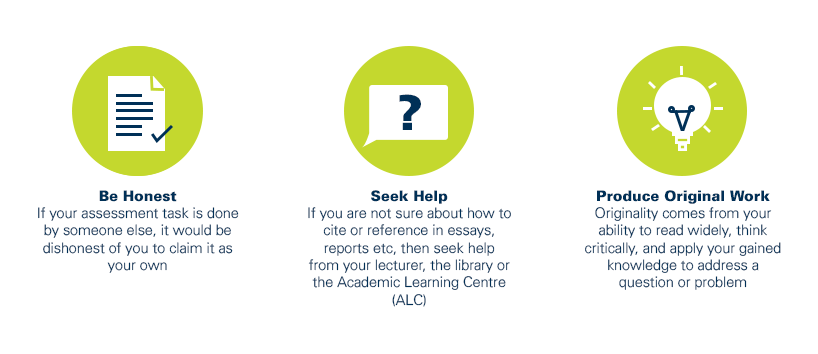
As a CQUniversity student you are expected to act honestly in all aspects of your academic work.
Any assessable work undertaken or submitted for review or assessment must be your own work. Assessable work is any type of work you do to meet the assessment requirements in the unit, including draft work submitted for review and feedback and final work to be assessed.
When you use the ideas, words or data of others in your assessment, you must thoroughly and clearly acknowledge the source of this information by using the correct referencing style for your unit. Using others’ work without proper acknowledgement may be considered a form of intellectual dishonesty.
Participating honestly, respectfully, responsibly, and fairly in your university study ensures the CQUniversity qualification you earn will be valued as a true indication of your individual academic achievement and will continue to receive the respect and recognition it deserves.
As a student, you are responsible for reading and following CQUniversity’s policies, including the Student Academic Integrity Policy and Procedure. This policy sets out CQUniversity’s expectations of you to act with integrity, examples of academic integrity breaches to avoid, the processes used to address alleged breaches of academic integrity, and potential penalties.
What is a breach of academic integrity?
A breach of academic integrity includes but is not limited to plagiarism, self-plagiarism, collusion, cheating, contract cheating, and academic misconduct. The Student Academic Integrity Policy and Procedure defines what these terms mean and gives examples.
Why is academic integrity important?
A breach of academic integrity may result in one or more penalties, including suspension or even expulsion from the University. It can also have negative implications for student visas and future enrolment at CQUniversity or elsewhere. Students who engage in contract cheating also risk being blackmailed by contract cheating services.
Where can I get assistance?
For academic advice and guidance, the Academic Learning Centre (ALC) can support you in becoming confident in completing assessments with integrity and of high standard.
What can you do to act with integrity?