Overview
Literacy and Numeracy for Teachers develops students’ personal competence in the content knowledge required to teach literacy and numeracy in primary school settings. In the area of literacy, students learn the components of the clause as the basic unit of meaning in the English grammar system and develop a metalanguage for identifying and describing the language used to express and connect ideas in written text. They apply this knowledge in a series of test situations to identify and use specific grammatical features and to proofread and analyse samples of written language. Personal competence in spelling is also developed in this unit through acquisition and application of the four areas of spelling knowledge to the maintenance of a personal spelling journal throughout the unit. In Numeracy, students participate in a series of challenges that focus on real-world application of mathematical terminology and processes for calculating and using rational numbers, using measurement and displaying and interpreting statistical information. Personal proficiency will be assessed through a test at the completion of the unit.
Details
Pre-requisites or Co-requisites
Important note: Students enrolled in a subsequent unit who failed their pre-requisite unit, should drop the subsequent unit before the census date or within 10 working days of Fail grade notification. Students who do not drop the unit in this timeframe cannot later drop the unit without academic and financial liability. See details in the Assessment Policy and Procedure (Higher Education Coursework).
Offerings For Term 1 - 2026
Attendance Requirements
All on-campus students are expected to attend scheduled classes - in some units, these classes are identified as a mandatory (pass/fail) component and attendance is compulsory. International students, on a student visa, must maintain a full time study load and meet both attendance and academic progress requirements in each study period (satisfactory attendance for International students is defined as maintaining at least an 80% attendance record).
Recommended Student Time Commitment
Each 6-credit Undergraduate unit at CQUniversity requires an overall time commitment of an average of 12.5 hours of study per week, making a total of 150 hours for the unit.
Class Timetable
Assessment Overview
Assessment Grading
This is a pass/fail (non-graded) unit. To pass the unit, you must pass all of the individual assessment tasks shown in the table above.
All University policies are available on the CQUniversity Policy site.
You may wish to view these policies:
- Grades and Results Policy
- Assessment Policy and Procedure (Higher Education Coursework)
- Review of Grade Procedure
- Student Academic Integrity Policy and Procedure
- Academic Progression Policy and Procedure
- Student Refund and Credit Balance Policy and Procedure
- Complaints Policy and Procedure
- Information and Communications Technology Acceptable Use Policy and Procedure
This list is not an exhaustive list of all University policies. The full list of University policies are available on the CQUniversity Policy site.
Feedback, Recommendations and Responses
Every unit is reviewed for enhancement each year. At the most recent review, the following staff and student feedback items were identified and recommendations were made.
Feedback from Moodle
Students requested that the textbook be available online.
Investigate possibility of providing reading/textbook online.
- Identify specific language features and their function in a range of text types using appropriate metalanguage
- Apply the conventions of Standard Australian English to construct and proofread written text
- Devise strategies for spelling acquisition based on phonological, visual, morphemic and etymological features of vocabulary
- Select appropriate operations, formulae and communication strategies and technologies to estimate, calculate and validate solutions to authentic mathematical problems
- Display, interpret and make predictions based on given or collected data.
Successful completion of this unit provides opportunities for students to engage with the Australian Professional Standards for Teachers (Graduate Career Stage) focus areas of:
2.1 Content and teaching strategies of the teaching area
2.5 Literacy and numeracy strategies
6.2 Engage in professional learning and improve practice
Alignment of Assessment Tasks to Learning Outcomes
| Assessment Tasks | Learning Outcomes | ||||
|---|---|---|---|---|---|
| 1 | 2 | 3 | 4 | 5 | |
| 1 - Portfolio - 30% | |||||
| 2 - Written Assessment - 20% | |||||
| 3 - In-class Test(s) - 50% | |||||
Alignment of Graduate Attributes to Learning Outcomes
| Graduate Attributes | Learning Outcomes | ||||
|---|---|---|---|---|---|
| 1 | 2 | 3 | 4 | 5 | |
| 1 - Communication | |||||
| 2 - Problem Solving | |||||
| 3 - Critical Thinking | |||||
| 4 - Information Literacy | |||||
| 5 - Team Work | |||||
| 6 - Information Technology Competence | |||||
| 7 - Cross Cultural Competence | |||||
| 8 - Ethical practice | |||||
| 9 - Social Innovation | |||||
| 10 - First Nations Knowledges | |||||
| 11 - Aboriginal and Torres Strait Islander Cultures | |||||
Alignment of Assessment Tasks to Graduate Attributes
| Assessment Tasks | Graduate Attributes | ||||||||||
|---|---|---|---|---|---|---|---|---|---|---|---|
| 1 | 2 | 3 | 4 | 5 | 6 | 7 | 8 | 9 | 10 | 11 | |
| 1 - Portfolio - 30% | |||||||||||
| 2 - Written Assessment - 20% | |||||||||||
| 3 - In-class Test(s) - 50% | |||||||||||
Textbooks
Grammar and Meaning
- 3rd edition (2024)
- Authors: Humphrey, Droga and Feez
- PETAA (Primary English Teaching Association Australia)
- Newtown Newtown , NSW , Australia
- ISBN: 978-1-875622-91-7
Pearson Illustrated Maths Dictionary
- Edition: 5 th (2020)
- Authors: De Klerk, Marasco
- Pearson
- Melbourne Melbourne , Victoria , Australia
- ISBN: 978-1-4860-0983-1
IT Resources
- CQUniversity Student Email
- Internet
- Unit Website (Moodle)
- Access to a scanner and a printer (Distance students only)
All submissions for this unit must use the referencing style: American Psychological Association 7th Edition (APA 7th edition)
For further information, see the Assessment Tasks.
g.busch@cqu.edu.au
g.wilkes@cqu.edu.au
Week 1
Begin Date: 09 Mar 2026Module/Topic
Introduction to the unit. Details regarding all assessment tasks. Define key terms that are used to describe the functions of language. Compare and contrast the language features of spoken and written texts. Refer to prior knowledge to identify the language features of a range of familiar text types. Discuss the effects of audience and purpose on making language choices in effective texts.
Chapter
Chapter 1 of Grammar and Meaning.
Events and Submissions/Topic
Week 2
Begin Date: 16 Mar 2026Module/Topic
Introduction to Word Study. Introduction to the English spelling system and learning to spell accurately. Further details regarding the Spelling Journal.
Chapter
Chapter 1 of Grammar and Meaning - Language, learning and knowledge about language and 2 of Grammar and Meaning - Language for expressing ideas.
Events and Submissions/Topic
Week 3
Begin Date: 23 Mar 2026Module/Topic
Chapter
Chapter 2 of Grammar and Meaning - Language for expressing ideas - and complete exercises 2.18; 2.20 and 2.23
Events and Submissions/Topic
Assessment task 1. In-class test 1. Distance students to complete this online on the Sunday afternoon following Week 3.
Week 4
Begin Date: 30 Mar 2026Module/Topic
More detail regarding the clause as the basic unit of meaning, the types of clauses and the key ingredient of every clause which is the process or verb.
Chapter
Chapter 3 of Grammar and Meaning - Connecting Ideas .
Events and Submissions/Topic
Week 5
Begin Date: 06 Apr 2026Module/Topic
Further examination of how clauses can be organised to create effective texts. How to identify the clauses and verbs in a sentence. Identifying errors in written expression and using the metalanguage to explain them. How to use text connectives to create cohesive texts. Practise the use of nominalisation to create formal written texts in the third person.
Chapter
Chapter 4 of Grammar and Meaning - Language for interacting with others
Events and Submissions/Topic
Assessment task 1. In-class test 2. Distance students to complete this online on Sunday afternoon following Week 5.
Week 6
Begin Date: 13 Apr 2026Module/Topic
Enhancing your written competence in the construction and organisation of written texts. Examining the impact attitudes and dispositions on competence and confidence in numeracy and mathematical reasoning.
Chapter
Chapter 5 of Grammar and Meaning - Creating well organised and coheshive texts
Events and Submissions/Topic
Assessment task 1. In-class test 3. Distance students to complete this online on Sunday afternoon following Week 6.
Vacation Week
Begin Date: 20 Apr 2026Module/Topic
There are no tutorials or Zoom sessions in this week.
Chapter
Use this time to review unit content and practise your writing and proofreading skills.
Events and Submissions/Topic
Week 7
Begin Date: 27 Apr 2026Module/Topic
Place value in the Hindu-Arabic system. Estimation and approximation. Decimal place value and related strategies for approximation. Problem Solving.
Chapter
Events and Submissions/Topic
Assessment task 2 Spelling Journal due.
Week 8
Begin Date: 04 May 2026Module/Topic
Common fractions in real world settings. Operations and problem solving regarding common and decimal fractions. Converting between common fractions, decimal fractions, percentages and ratios.
Chapter
Events and Submissions/Topic
Week 9
Begin Date: 11 May 2026Module/Topic
Apply conceptual understanding of the size and use of standard units to select units that are appropriate for the attributes being measured. Calculate conversions in units of time and metric measurements.
Chapter
Events and Submissions/Topic
Week 10
Begin Date: 18 May 2026Module/Topic
Use terminology and conventions for recording time in analogue, digital, 12 and 24-hour forms. Plan investigations that test the application of common formulae for perimeter, area and volume. Select and apply formulae to calculate perimeter, area and volume of common plane and solid shapes. Explain the relationship between perimeter, area and volume of shapes and solids.
Chapter
Events and Submissions/Topic
Week 11
Begin Date: 25 May 2026Module/Topic
Discuss the importance of statistical literacy as a vital attribute of a numerate person. Describe and give examples of categorical, numerical, continuous and discrete data sets.
Select graphical representation forms suitable for displaying different types of data . Calculate the mean and median of a set of scores.
Apply the STEP method to solve mathematical problems. Evaluate the importance of reflecting on the effectiveness of strategies for solving problems. Brainstorm a list of contexts for applying a range of problem solving strategies
Demonstrate mathematical knowledge and skills related to number, fractions, decimals, percentages, measurement and statistics and data.
Chapter
Events and Submissions/Topic
Assessment Task 3. In-class test of Mathematical Proficiency. Distance students to complete this online on Sunday afternoon following Week 11.
Week 12
Begin Date: 01 Jun 2026Module/Topic
Unpack final Assessment task with students and open forum for questions and feedback.
Chapter
Events and Submissions/Topic
Exam Week
Begin Date: 08 Jun 2026Module/Topic
Chapter
Events and Submissions/Topic
Vacation/Exam Week
Begin Date: 15 Jun 2026Module/Topic
Chapter
Events and Submissions/Topic
1 Portfolio
Three (3) short in-class tests conducted in Weeks 3, 5 and 6 of the course. Each test will have a weighting of 10% of the overall marks available for the course. The marks for the three tests will be combined to calculate the total mark for this assessment task. Distance students will access each test online and complete them under timed conditions.
For each test you will be required to demonstrate personal competence in the use of Standard Australian English and knowledge of the appropriate metalanguage (terminology for discussing language function) by completing the following tasks:
- Identification of grammatical elements in a given text (Week 3) Distance students 29 March
- Proofreading and use of metalanguage to justify corrections (Week 5) Distance students 12 April
- Production of a written text according to the features of a given text type. (Week 6) Distance students April 19
Further details about the content and conduct of each in-class test will be provided on the course Moodle site.
AI Assessment Scale: Level 1
You may not use AI at any point during this assessment. You must demonstrate your core skills and knowledge. Any misuse or lack of disclosure regarding the use of AI tools will be considered a breach of academic integrity.
Please note that the 72 hour grace period does not apply to task 1.
On-campus students will complete the tests during their scheduled tutorial in Weeks 3, 5 and 6. Distance students will access the tests online through the link provided on the Moodle site. Students must complete the test within a one hour timeframe. Timing will commence from the first access to the test via the Moodle link.
Feedback on this assessment task will be ongoing during Weeks 4, 6 and 7. Where possible, marked work will be available no later than 2 weeks after completion of each test.
Knowledge of levels of grammatical structure and specific language elements for expressing ideas
Ability to proofread written text and provide feedback on language use
Knowledge of metalanguage for describing language functions
Ability to construct cohesive texts using structure and language features that meet audience and purpise
- Identify specific language features and their function in a range of text types using appropriate metalanguage
- Apply the conventions of Standard Australian English to construct and proofread written text
- Communication
- Problem Solving
- Critical Thinking
2 Written Assessment
This assessment involves the construction and maintenance of a personal spelling journal that records your attempts to evaluate and improve your personal spelling competence. You will be expected to record at least five (5) additions to your list of words each week (that is 20 words in total). A structure for setting up your journal will be provided on the Moodle site for this course.
In your journal you will be expected to identify strategies for acquiring spelling using phonological, visual, morphemic and etymological knowledge and apply these strategies to your own word study and vocabulary extension.
In addition, the entry for each week must be accompanied by a brief evaluation of the effectiveness of these areas of knowledge in improving your spelling and understanding of the English spelling system.
Further details for this task will be provided on the course Moodle site.
AI Assessment Scale Level 2: AI for Planning and Research
You may use AI for planning, idea development, and research. Your final submission should show how you have developed and refined these ideas. Any misuse or lack of disclosure regarding AI tools will be considered a breach of academic integrity.
Please note that the 72 hour grace period applies to task 2.
Week 8 Monday (4 May 2026) 11:45 pm AEST
Due on Monday 04 May 2025
Feedback on this task will be provided following moderation.
Knowledge of the English spelling system
Understanding of strategies that improve spelling acquisition
Application of phonological, visual, morphemic and / etymological knowledge to the deconstruction of vocabulary
Ability to evaluate own competence and select words that enhance personal spelling competence.
- Devise strategies for spelling acquisition based on phonological, visual, morphemic and etymological features of vocabulary
- Communication
- Problem Solving
- Critical Thinking
3 In-class Test(s)
Test of Mathematical Proficiency
Throughout the term, you will build knowledge of Mathematical content, skills and communication that are integral to your role as a teacher. You will complete a 2-hour end-of-term test that draws on the content you have covered throughout the course. The test will include a range of question types including short answer, modelling and problem-solving questions. You will be required to show all working using appropriate mathematical terminology and communication methods in the application section of the test. An emphasis will be placed on the number, measurement and statistics knowledge required to perform the role of a teacher in school settings.
Further details about this task and revision quizzes to prepare for the final test will be provided on the Moodle site for this course.
AI Assessment Scale: Level 1
You may not use AI at any point during this assessment. You must demonstrate your core skills and knowledge. Any misuse or lack of disclosure regarding the use of AI tools will be considered a breach of academic integrity.
Please note that the 72 hour grace period does not apply to task 3.
The test will be conducted in Week 11 during tutorial time for on-campus students. Distance students will access the test online. The test will be available for DISTANCE students from midday on Sunday 31 may, 2026.
Feedback on this final assessment response will be available after moderation and in line with university policy on certification of grades.
Demonstration of personal competence in mathematical focus areas of number, measurement and statistics and probability
Use of communication methods to justify mathematical reasoning
Ability to select appropriate methods for solving real world applications of mathematical knowledge
- Select appropriate operations, formulae and communication strategies and technologies to estimate, calculate and validate solutions to authentic mathematical problems
- Display, interpret and make predictions based on given or collected data.
- Communication
- Problem Solving
- Critical Thinking
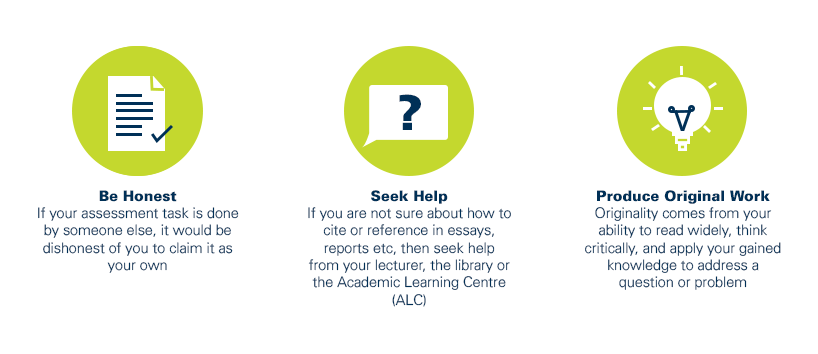
As a CQUniversity student you are expected to act honestly in all aspects of your academic work.
Any assessable work undertaken or submitted for review or assessment must be your own work. Assessable work is any type of work you do to meet the assessment requirements in the unit, including draft work submitted for review and feedback and final work to be assessed.
When you use the ideas, words or data of others in your assessment, you must thoroughly and clearly acknowledge the source of this information by using the correct referencing style for your unit. Using others’ work without proper acknowledgement may be considered a form of intellectual dishonesty.
Participating honestly, respectfully, responsibly, and fairly in your university study ensures the CQUniversity qualification you earn will be valued as a true indication of your individual academic achievement and will continue to receive the respect and recognition it deserves.
As a student, you are responsible for reading and following CQUniversity’s policies, including the Student Academic Integrity Policy and Procedure. This policy sets out CQUniversity’s expectations of you to act with integrity, examples of academic integrity breaches to avoid, the processes used to address alleged breaches of academic integrity, and potential penalties.
What is a breach of academic integrity?
A breach of academic integrity includes but is not limited to plagiarism, self-plagiarism, collusion, cheating, contract cheating, and academic misconduct. The Student Academic Integrity Policy and Procedure defines what these terms mean and gives examples.
Why is academic integrity important?
A breach of academic integrity may result in one or more penalties, including suspension or even expulsion from the University. It can also have negative implications for student visas and future enrolment at CQUniversity or elsewhere. Students who engage in contract cheating also risk being blackmailed by contract cheating services.
Where can I get assistance?
For academic advice and guidance, the Academic Learning Centre (ALC) can support you in becoming confident in completing assessments with integrity and of high standard.
What can you do to act with integrity?