Overview
English - Teaching Reading builds on students' foundation understandings related to sociocultural theories of literacy to develop knowledge and understanding of skills, strategies and pedagogical approaches that are effective for the teaching of reading in both early years contexts and the middle and upper primary school. An initial focus on “learning to read” incorporates tools and techniques for assessing learners’ current knowledge of the reading process to determine a focus for instruction. Students build understanding of a balanced approach to teaching reading based on the roles of an effective reader and plan for the use of the key teaching strategies of shared, modelled, and guided reading to teach skills within meaningful contexts. They apply this knowledge to evaluation of texts suitable for teaching reading and comprehension strategies across the primary years including a focus on building learners’ capacity for metacognition and strategic approaches to comprehending a range of print-based, multimodal and digital texts to use “reading to learn”.
Details
Pre-requisites or Co-requisites
There are no requisites for this unit.
Important note: Students enrolled in a subsequent unit who failed their pre-requisite unit, should drop the subsequent unit before the census date or within 10 working days of Fail grade notification. Students who do not drop the unit in this timeframe cannot later drop the unit without academic and financial liability. See details in the Assessment Policy and Procedure (Higher Education Coursework).
Offerings For Term 1 - 2026
Attendance Requirements
All on-campus students are expected to attend scheduled classes - in some units, these classes are identified as a mandatory (pass/fail) component and attendance is compulsory. International students, on a student visa, must maintain a full time study load and meet both attendance and academic progress requirements in each study period (satisfactory attendance for International students is defined as maintaining at least an 80% attendance record).
Recommended Student Time Commitment
Each 6-credit Undergraduate unit at CQUniversity requires an overall time commitment of an average of 12.5 hours of study per week, making a total of 150 hours for the unit.
Class Timetable
Assessment Overview
Assessment Grading
This is a graded unit: your overall grade will be calculated from the marks or grades for each assessment task, based on the relative weightings shown in the table above. You must obtain an overall mark for the unit of at least 50%, or an overall grade of 'pass' in order to pass the unit. If any 'pass/fail' tasks are shown in the table above they must also be completed successfully ('pass' grade). You must also meet any minimum mark requirements specified for a particular assessment task, as detailed in the 'assessment task' section (note that in some instances, the minimum mark for a task may be greater than 50%). Consult the University's Grades and Results Policy for more details of interim results and final grades.
All University policies are available on the CQUniversity Policy site.
You may wish to view these policies:
- Grades and Results Policy
- Assessment Policy and Procedure (Higher Education Coursework)
- Review of Grade Procedure
- Student Academic Integrity Policy and Procedure
- Academic Progression Policy and Procedure
- Student Refund and Credit Balance Policy and Procedure
- Complaints Policy and Procedure
- Information and Communications Technology Acceptable Use Policy and Procedure
This list is not an exhaustive list of all University policies. The full list of University policies are available on the CQUniversity Policy site.
Feedback, Recommendations and Responses
Every unit is reviewed for enhancement each year. At the most recent review, the following staff and student feedback items were identified and recommendations were made.
Feedback from Student Feedback
Assessment provided opportunity to learn about classroom practice.
Ensure classroom practice is observed and included in learning materials and assessment.
Feedback from Student Feedback
Provide support for learning through videos.
Update video resources
- Apply a range of formal and informal assessment tools, techniques and data collection methods suitable for determining the literacy capabilities of a learner in an early years classroom
- Collect assessment data using appropriate formats for recording literacy learning across a range of social contexts
- Interpret assessment data to identify a clear focus for instruction that meets student needs and provides opportunities for meaningful literacy learning
- Plan learning sequences that explicitly address identified needs and/ or enhance reading practices incorporating research-informed literacy teaching strategies
- Review the potential of digital, multimodal and print-based resources for engaging students in active reading and comprehension processes
- Engage in opportunities for sharing and providing feedback to improve professional knowledge and practice.
Successful completion of this unit provides opportunities for students to engage with the Australian Professional Standards for Teachers (Graduate Career Stage) focus areas of:
1.2 Understand how students learn
1.3 Students with diverse linguistic, cultural, religious and socioeconomic backgrounds
2.1 Content and teaching strategies of the teaching area
2.2 Content selection and organisation
2.5 Literacy and numeracy strategies
2.6 Information and Communication Technology (ICT)
3.1 Establish challenging learning goals
3.2 Plan, structure and sequence learning programs
3.3 Use teaching strategies
3.4 Select and use resources
3.6 Evaluate and improve teaching programs
5.1 Assess student learning
5.4 Interpret student data
6.2 Engage in professional learning and improve practice
Alignment of Assessment Tasks to Learning Outcomes
| Assessment Tasks | Learning Outcomes | |||||
|---|---|---|---|---|---|---|
| 1 | 2 | 3 | 4 | 5 | 6 | |
| 1 - Practical Assessment - 50% | ||||||
| 2 - Presentation - 50% | ||||||
Alignment of Graduate Attributes to Learning Outcomes
| Graduate Attributes | Learning Outcomes | |||||
|---|---|---|---|---|---|---|
| 1 | 2 | 3 | 4 | 5 | 6 | |
| 1 - Communication | ||||||
| 2 - Problem Solving | ||||||
| 3 - Critical Thinking | ||||||
| 4 - Information Literacy | ||||||
| 5 - Team Work | ||||||
| 6 - Information Technology Competence | ||||||
| 7 - Cross Cultural Competence | ||||||
| 8 - Ethical practice | ||||||
| 9 - Social Innovation | ||||||
| 10 - First Nations Knowledges | ||||||
| 11 - Aboriginal and Torres Strait Islander Cultures | ||||||
Alignment of Assessment Tasks to Graduate Attributes
| Assessment Tasks | Graduate Attributes | ||||||||||
|---|---|---|---|---|---|---|---|---|---|---|---|
| 1 | 2 | 3 | 4 | 5 | 6 | 7 | 8 | 9 | 10 | 11 | |
| 1 - Practical Assessment - 50% | |||||||||||
| 2 - Presentation - 50% | |||||||||||
Textbooks
There are no required textbooks.
IT Resources
- CQUniversity Student Email
- Internet
- Unit Website (Moodle)
All submissions for this unit must use the referencing style: American Psychological Association 7th Edition (APA 7th edition)
For further information, see the Assessment Tasks.
l.k.donohue@cqu.edu.au
Week 1
Begin Date: 09 Mar 2026Module/Topic
Definitions of reading and informing frameworks
Chapter
Textbook: Chapter 1: A balanced approach to reading comprehension instruction.
Fellowes, J., & Oakley, G. (2014). Language, literacy and early childhood education. (2nd ed.). South Melbourne, VIC: Oxford. Chapter 9.(CRO)
Freebody, P. (1992). A socio-cultural approach: resourcing four roles as a literacy learner http://www.myread.org/readings_freebody.htm
Events and Submissions/Topic
Week 2
Begin Date: 16 Mar 2026Module/Topic
Stages in reading development
Chapter
Australian Curriculum Assessment and Reporting Authority. (2015) General capabilities: Literacy [online]
Clay, Marie M, (2002). An observation survey of early literacy achievement. (2nd ed). Auckland, NZ: Heinemann. pp 49- 81 (CRO)
Events and Submissions/Topic
Week 3
Begin Date: 23 Mar 2026Module/Topic
Learning to Read: Foundational Skills (young children)
Chapter
Textbook: Chapters 2,3,4
Hill, S. (2012). Developing early literacy: assessment and teaching. (2nd ed.). South Yarra. VIC: Eleanor Curtain Publishing. Chapter 11. (CRO)
Konza, D. (2010). Understanding the Reading Process. Research into Practice: Literacy is everyone's business. www.decs.sa.gov.au/literacy.
Events and Submissions/Topic
Week 4
Begin Date: 30 Mar 2026Module/Topic
Learning to Read: Comprehension and Fluency
Chapter
Textbook: Chapter 4. Reading with Fluency
Duke, D, Ward, P, Pearson, David. (2021). The Science of Reading Comprehension Instruction. Wiley Periodicals LLC on behalf of the International Reading Association. https://doi.org/10.1002/trtr.1993
Events and Submissions/Topic
Week 5
Begin Date: 06 Apr 2026Module/Topic
Reading Assessment
Chapter
Tompkins, G., Campbell, R., Green, D., & Smith, C. (2015). Literacy for the 21st century: A balanced approach (2nd ed.) Melbourne, VIC: Pearson. Chapter 3. (CRO)
Department of Education (WA). (2013). First steps: Reading map of development (3rd ed.). [Online] Chapter 3.
Events and Submissions/Topic
Week 6
Begin Date: 13 Apr 2026Module/Topic
Comprehension and meaning making strategies
Chapter
Textbook: Chapter 5 Teaching students to comprehend texts
Kelly, M., & Topfer, C. (2011). Reading comprehension: taking the learning deeper. Norword, SA: Australian Literacy Educators’ Association. Pp. 20-26; 52-58. (CRO)
Adler, C (2013). Seven strategies to teach students text comprehension [online]. http://www.readingrockets.org/article/3479
Events and Submissions/Topic
Assessment 1: Analysis of Assessment in Reading
Due: Week 6 Friday 17 April 2026 11.45 pm
Analysis of assessment in reading Due: Week 6 Friday (17 Apr 2026) 11:59 pm AEST
Vacation Week
Begin Date: 20 Apr 2026Module/Topic
Chapter
Events and Submissions/Topic
Week 7
Begin Date: 27 Apr 2026Module/Topic
Procedures for teaching reading
Chapter
Textbook: Chapter 6 Teaching Approaches
Crouch, D. and Cambourne, Dr B. (8 May 2021). Teaching Decisions That Bring the conditions of Learning to Life. https://foundationforlearningandliteracy.info/wp-content/uploads/2020/10/Teaching-decisions-that-bring-the-conditions-of-learning-to-life-1.pdf
Department of Education (WA). (2013). First steps: Reading resource book (3rd ed.). [Online]. Chapter 1.
Events and Submissions/Topic
Week 8
Begin Date: 04 May 2026Module/Topic
Guided reading and focused instruction
Chapter
Textbook: Chapter 6 Teaching Approaches
Richardson, J. (2009). The next step in guided reading. New York: Scholastic. (CRO)
Events and Submissions/Topic
Week 9
Begin Date: 11 May 2026Module/Topic
Exploring Texts
Chapter
Fisher, D., Frey, N., & Lapp, D. (2016). Text Complexity. California, USA: Corwin. Chapter 4. (CRO)
Callow, J. (2013). The shape of Things to Come. Newtown, NSW: Primary English Teaching Association Australia. Chapter 2 (CRO)
Events and Submissions/Topic
Week 10
Begin Date: 18 May 2026Module/Topic
Planning for the teaching of reading
Chapter
Textbook:
Chapter 7 - Working with Groups
Chapter 13 - Managing the Literacy Classroom
Winch, G., Johnston, R., March, P., Ljungdahl, L., & Holliday, M. (2020). Literacy: reading, writing and children’s literature. (5th ed.). South Melbourne, VIC: Oxford University Press.
Australian Education Research Organisation (AERO). (2021). Tried and tested: Explicit instruction.
Australian Education Research Organisation (AERO). (2024). A rapid literature scan on formative assessment, explicit instruction and mastery learning.
Events and Submissions/Topic
Week 11
Begin Date: 25 May 2026Module/Topic
Supporting students with reading difficulties
Chapter
Textbook: Chapter subsections on 'When Readers Struggle'
See Moodle for readings and resources
Events and Submissions/Topic
Week 12
Begin Date: 01 Jun 2026Module/Topic
Peer review and feedback
Chapter
Opportunities will be provided for professional sharing, collegial discussion and informal feedback on your planning in tutorials this week.
Events and Submissions/Topic
Assessment 2: Whole Class Plan for Instruction in Reading
Due: Week 12 Friday 5 June 2026 11.45 pm
Whole class plan for instruction in reading Due: Week 12 Friday (5 June 2026) 11:59 pm AEST
Exam Week
Begin Date: 08 Jun 2026Module/Topic
Chapter
Events and Submissions/Topic
Vacation/Exam Week
Begin Date: 15 Jun 2026Module/Topic
Chapter
Events and Submissions/Topic
1 Practical Assessment
For this assessment task, you are required to analyse and interpret assessment data to identify a student’s progress in reading and determine their learning needs. You must choose a focus student, in Years 1 to 2, capable of reading approximately 100 words of continuous text at an instructional level. Specifically, you will mark two running records, complete a miscue analysis and interpret the information you gather about the reader during a retell or discussion about the focus texts. Detailed information and resources will be provided on the Moodle site for this purpose.
You will summarise the assessment data to identify the focus student’s learning needs in reading. This summary and interpretation of data may be written in dot point form but should be no more than 750 words in length.
You will then select a text for the purpose of teaching new reading knowledge and skills. Your text selection must be accompanied by a justification that explains and illustrates why the focus text is a suitable choice for promoting the focus student’s reading development. The justification should identify the features of the text that provide a focus for the explicit teaching of reading with reference to your analysis of the assessment data. The justification should be no more than 750 words in length.
The word count is considered from the first word of the introduction to the last word of the conclusion. It excludes the cover page, abstract, contents page, reference page and appendices.
Further information and support for completing this task will be provided on the Moodle site.
AI Assessment Scale - Level 2: You may use AI for planning, idea development, and research. Your final submission should show how you have developed and refined these ideas. Any misuse or lack of disclosure regarding AI tools will be considered a breach of academic integrity.
Required AI Disclosure: Include a statement at the end of your report listing any AI tools used, which sections they were used in, and how they were used.
72-Hour grace period: Applies to this assessment. If you need longer, please use the Assessment Extension System process.
Week 6 Friday (17 Apr 2026) 11:59 pm AEST
Feedback on this assessment task will be returned following moderation and in sufficient time to inform students in preparation for Assessment Task 2.
Knowledge and understanding of tools and techniques for assessment in reading
Application of reading frameworks to the analysis and interpretation of student assessment data
Demonstrated knowledge of textual features that support reading development and engagement
Justification of planning decisions that are responsive to identified learning needs.
This assessment task draws on the following Australian Professional Standards for Teachers 1.2,1.3, 2.1, 2.2, 2.5, 3.1, 3.2, 3.3, 3.4, 5.1, 5.4
- Apply a range of formal and informal assessment tools, techniques and data collection methods suitable for determining the literacy capabilities of a learner in an early years classroom
- Collect assessment data using appropriate formats for recording literacy learning across a range of social contexts
- Interpret assessment data to identify a clear focus for instruction that meets student needs and provides opportunities for meaningful literacy learning
- Plan learning sequences that explicitly address identified needs and/ or enhance reading practices incorporating research-informed literacy teaching strategies
- Communication
- Problem Solving
- Critical Thinking
- Cross Cultural Competence
2 Presentation
Choose one of the samples of whole school planning and one of the assessment data sets for a class group provided on the course Moodle site as the basis for planning a reading program for one week for the given class. Your planning must:
(a) be consistent with the goals for the year level outlined on the school plan;
(b) demonstrate your ability to interpret the assessment data; and
(c) cater for the learning needs of all students in the class.
Your planning should include a section of a class timetable for the scheduling of daily reading sessions and show evidence of your understanding of the gradual release of responsibility model for teaching reading. Specifically, your planning must provide detailed information about the learning goals, resources (texts used), classroom organisation, teaching strategies and learning activities for modelled, shared, guided and independent reading sessions for the whole class and small groups at instructional level for the week.
The word count is considered from the first word of the introduction to the last word of the conclusion. It excludes the cover page, abstract, contents page, reference page and appendices.
AI Assessment Scale - Level 2: You may use AI for planning, idea development, and research. Your final submission should show how you have developed and refined these ideas. Any misuse or lack of disclosure regarding AI tools will be considered a breach of academic integrity.
Required AI Disclosure: Include a statement at the end of your report listing any AI tools used, which sections they were used in, and how they were used.
72-Hour grace period: Applies to this assessment. If you need longer, please use the Assessment Extension System process.
Week 12 Friday (5 June 2026) 11:59 pm AEST
Assessment will be returned following moderation and in accordance with university policy on certification of grades.
1. Interpret assessment data to identify a clear focus for instruction that meets student needs and provides opportunities for meaningful literacy learning.
2. Demonstrated understanding of the purpose and practices of reading procedures.
3. Planning demonstrates knowledge, understanding and application of the gradual release of responsibility model.
4. Plan learning sequences that explicitly address identified needs and/or enhance reading practices incorporating research-informed teaching strategies.
5. Planning includes the application of pedagogical knowledge that caters for diverse skills and abilities in reading.
This assessment task draws on the following Australian Professional Standards for Teachers: 1.2, 2.1, 2.2, 2.5, 2.6, 3.4, 3.6, and 6.2.
- Plan learning sequences that explicitly address identified needs and/ or enhance reading practices incorporating research-informed literacy teaching strategies
- Review the potential of digital, multimodal and print-based resources for engaging students in active reading and comprehension processes
- Engage in opportunities for sharing and providing feedback to improve professional knowledge and practice.
- Communication
- Problem Solving
- Critical Thinking
- Information Literacy
- Team Work
- Information Technology Competence
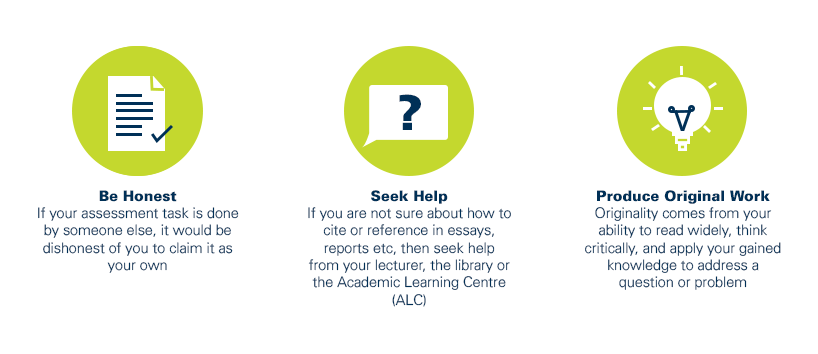
As a CQUniversity student you are expected to act honestly in all aspects of your academic work.
Any assessable work undertaken or submitted for review or assessment must be your own work. Assessable work is any type of work you do to meet the assessment requirements in the unit, including draft work submitted for review and feedback and final work to be assessed.
When you use the ideas, words or data of others in your assessment, you must thoroughly and clearly acknowledge the source of this information by using the correct referencing style for your unit. Using others’ work without proper acknowledgement may be considered a form of intellectual dishonesty.
Participating honestly, respectfully, responsibly, and fairly in your university study ensures the CQUniversity qualification you earn will be valued as a true indication of your individual academic achievement and will continue to receive the respect and recognition it deserves.
As a student, you are responsible for reading and following CQUniversity’s policies, including the Student Academic Integrity Policy and Procedure. This policy sets out CQUniversity’s expectations of you to act with integrity, examples of academic integrity breaches to avoid, the processes used to address alleged breaches of academic integrity, and potential penalties.
What is a breach of academic integrity?
A breach of academic integrity includes but is not limited to plagiarism, self-plagiarism, collusion, cheating, contract cheating, and academic misconduct. The Student Academic Integrity Policy and Procedure defines what these terms mean and gives examples.
Why is academic integrity important?
A breach of academic integrity may result in one or more penalties, including suspension or even expulsion from the University. It can also have negative implications for student visas and future enrolment at CQUniversity or elsewhere. Students who engage in contract cheating also risk being blackmailed by contract cheating services.
Where can I get assistance?
For academic advice and guidance, the Academic Learning Centre (ALC) can support you in becoming confident in completing assessments with integrity and of high standard.
What can you do to act with integrity?