Overview
The development of skilled reading is fundamental to children’s learning across the curriculum at school and to their participation in a wide range of social situations in everyday life. In this unit, you will acquire knowledge and understanding of content in the Australian Curriculum English as the basis for effective planning, teaching and assessment in reading. Unit content includes an emphasis on the skills of phonemic awareness, phonics, fluency, vocabulary, oral language and comprehension as the foundation for early reading instruction. You will apply this knowledge to interpret assessment data, select resources, and plan activities and learning experiences for learners in early childhood education and care settings and the early years of primary school using evidence-based, balanced approaches to reading pedagogy. In addition, your engagement with the learning materials in this unit will enhance your knowledge of the technical aspects of print-based texts and the grammatical content that comprises the Language strand of the English Curriculum, as the basis for demonstrating and reflecting on your personal and professional literacy competence.
Details
Pre-requisites or Co-requisites
Completion of 72 credit points in CA10 or CG72 OR Admission to CM43 or CC45
Important note: Students enrolled in a subsequent unit who failed their pre-requisite unit, should drop the subsequent unit before the census date or within 10 working days of Fail grade notification. Students who do not drop the unit in this timeframe cannot later drop the unit without academic and financial liability. See details in the Assessment Policy and Procedure (Higher Education Coursework).
Offerings For Term 1 - 2026
Attendance Requirements
All on-campus students are expected to attend scheduled classes - in some units, these classes are identified as a mandatory (pass/fail) component and attendance is compulsory. International students, on a student visa, must maintain a full time study load and meet both attendance and academic progress requirements in each study period (satisfactory attendance for International students is defined as maintaining at least an 80% attendance record).
Recommended Student Time Commitment
Each 6-credit Postgraduate unit at CQUniversity requires an overall time commitment of an average of 12.5 hours of study per week, making a total of 150 hours for the unit.
Class Timetable
Assessment Overview
Assessment Grading
This is a graded unit: your overall grade will be calculated from the marks or grades for each assessment task, based on the relative weightings shown in the table above. You must obtain an overall mark for the unit of at least 50%, or an overall grade of 'pass' in order to pass the unit. If any 'pass/fail' tasks are shown in the table above they must also be completed successfully ('pass' grade). You must also meet any minimum mark requirements specified for a particular assessment task, as detailed in the 'assessment task' section (note that in some instances, the minimum mark for a task may be greater than 50%). Consult the University's Grades and Results Policy for more details of interim results and final grades.
All University policies are available on the CQUniversity Policy site.
You may wish to view these policies:
- Grades and Results Policy
- Assessment Policy and Procedure (Higher Education Coursework)
- Review of Grade Procedure
- Student Academic Integrity Policy and Procedure
- Academic Progression Policy and Procedure
- Student Refund and Credit Balance Policy and Procedure
- Complaints Policy and Procedure
- Information and Communications Technology Acceptable Use Policy and Procedure
This list is not an exhaustive list of all University policies. The full list of University policies are available on the CQUniversity Policy site.
Feedback, Recommendations and Responses
Every unit is reviewed for enhancement each year. At the most recent review, the following staff and student feedback items were identified and recommendations were made.
Feedback from SUTE
Weekly topics and assessments
Provide clearer links between the weekly topics and the assessment tasks.
- Illustrate teaching strategies that support explicit and balanced instruction in the knowledge and skills for early reading, demonstrating understanding of novice versus expert learner characteristics and their implications for practice
- Align teaching, learning and assessment with curriculum content descriptions and achievement standards and evidence-based approaches to cross-curricular literacy pedagogy
- Select and justify print-based, multimodal and digital texts that provide a focus for early reading instruction
- Use a range of evidence-based assessment strategies to collect information on students’ reading knowledge and skills, evaluate progress, and determine a focus for targeted instruction in phonemic awareness, phonics, fluency, vocabulary, oral language and/or comprehension, analysing student performance in relation to novice-to-expert progression and brain-based learning processes
- Interpret assessment data to set learning goals that provide achievable challenges for students with varying characteristics and abilities in reading, adjusting instructional practice in response to students' progression from novice towards mastery
- Plan learning experiences in reading that are responsive to the strengths and needs of learners from diverse linguistic, cultural, religious and socioeconomic backgrounds
- Develop reading programs that bridge home and school literacy practices for students from diverse backgrounds including EAL/D and Aboriginal and Torres Strait Islander learners
- Design reading instruction that supports students' ability to access prior knowledge and combine stored information to solve comprehension problems, demonstrating understanding of how the brain applies attained knowledge to generate meaning from texts
- Apply personal competence in literacy appropriate for performing the professional work of teachers
- Identify, describe and evaluate the ways in which personal and professional literacy competence address the Australian Professional Standards for Teachers and support the ability to have a positive impact on student learning.
Successful completion of this unit provides opportunities for students to demonstrate the Australian Professional Standards for Teachers focus areas of:
1.3 Students with diverse linguistic, cultural, religious and socioeconomic backgrounds
1.5 Differentiate teaching to meet the specific learning needs of students across the full range of abilities
2.1 Content and teaching strategies of the teaching area
2.2 Content selection and organisation
2.3 Curriculum, assessment and reporting
2.5 Literacy and numeracy strategies
3.1 Establish challenging learning goals
3.2 Plan, structure and sequence learning programs
3.3 Use teaching strategies
3.4 Select and use resources
5.1 Assess student learning
5.2 Provide feedback to students on their learning
5.4 Interpret student data
6.2 Engage in professional learning and improve practice
6.4 Apply professional learning and improve student learning
Alignment of Assessment Tasks to Learning Outcomes
| Assessment Tasks | Learning Outcomes | |||||||||
|---|---|---|---|---|---|---|---|---|---|---|
| 1 | 2 | 3 | 4 | 5 | 6 | 7 | 8 | 9 | 10 | |
| 1 - Written Assessment - 50% | ||||||||||
| 2 - Portfolio - 50% | ||||||||||
| 3 - Online Test - 0% | ||||||||||
Alignment of Graduate Attributes to Learning Outcomes
| Graduate Attributes | Learning Outcomes | |||||||||
|---|---|---|---|---|---|---|---|---|---|---|
| 1 | 2 | 3 | 4 | 5 | 6 | 7 | 8 | 9 | 10 | |
| 1 - Knowledge | ||||||||||
| 2 - Communication | ||||||||||
| 3 - Cognitive, technical and creative skills | ||||||||||
| 4 - Research | ||||||||||
| 5 - Self-management | ||||||||||
| 6 - Ethical and Professional Responsibility | ||||||||||
| 7 - Leadership | ||||||||||
| 8 - First Nations Knowledges | ||||||||||
| 9 - Aboriginal and Torres Strait Islander Cultures | ||||||||||
Textbooks
Literacy: Reading, Writing and Children's Literature
- Edition: Sixth (2019)
- Authors: Winch,G., Johnston, R. R., March, P, Ljungdahl, L. Holliday, M.
- Oxford
- Sydney Sydney , NSW , Australia
- ISBN: 9780190310561
This textbook is available as an ebook through the CQU library and will be shown and accessible in the eReading list in Moodle.
- Binding: Paperback
IT Resources
- CQUniversity Student Email
- Internet
- Unit Website (Moodle)
All submissions for this unit must use the referencing style: American Psychological Association 7th Edition (APA 7th edition)
For further information, see the Assessment Tasks.
k.honor@cqu.edu.au
m.vanderburg@cqu.edu.au
Week 1
Begin Date: 09 Mar 2026Module/Topic
Definitions of Literacy
Foundations of early reading
What do we mean by literacy now?
Digital literacies
A functional view of language
The big six of reading instruction
Chapter
Australian Curriculum, Assessment and Reporting Authority. (n.d.). Australian Curriculum v. 9. https://v9.australiancurriculum.edu.au/
Department of Education, Australian Government. (2022). Belonging, being and becoming: The early years learning framework for Australia (V2.0). https://share.google/vGo4v2iQLor3BIgdq
Harste, J. C. (2003). What Do We Mean by Literacy Now? Voices from the Middle, 10(3), 8-12.
Winch, G., Ross Johnston, R., March, P., Ljungdahl, L., & Holliday, M. (2020). Literacy: Reading, writing and children's literature (6th ed.). Oxford University Press. (Chapter 1)
Events and Submissions/Topic
Week 2
Begin Date: 16 Mar 2026Module/Topic
Reading in the Australian Curriculum: English
Bloom's Taxonomy
Literature and the curriculum
Children's recognition of print, symbols and media for communicating meaning
Literacy Competence: Clauses
Chapter
Winch, G., Ross Johnston, R., March, P., Ljungdahl, L., & Holliday, M. (2020). Literacy: Reading, writing and children's literature (6th ed.). Oxford University Press. (Chapter 24 & 25)
Events and Submissions/Topic
Week 3
Begin Date: 23 Mar 2026Module/Topic
Explicit and Systematic Teaching of Concepts of Print
Understanding the Novice-Expert Distinction in Literacy Education
Teaching Strategies That Support This Journey in Early Reading
Neuroplasticity and Reading Comprehension
Brain-based reading instruction: How cognitive science informs the explicit teaching of the 'Big Six' reading components
Literacy Competence: Verbs/Verb Groups
Chapter
Australian Education Research Organisation. (2023). How students learn best: An overview of the learning process and the most effective teaching practices. https://www.edresearch.edu.au/resources/how-students-learn-best
Cunnington, R. (2019, September 18). Neuroplasticity: How the brain changes with learning. IBE–UNESCO Science of Learning Portal. https://solportal.ibe-unesco.org/articles/neuroplasticity-how-the-brain-changes-with-learning/
Winch, G., Ross Johnston, R., March, P., Ljungdahl, L., & Holliday, M. (2020). Literacy: Reading, writing and children's literature (6th ed.). Oxford University Press. (Chapter 4 & 5)
Events and Submissions/Topic
Week 4
Begin Date: 30 Mar 2026Module/Topic
Frameworks for Reading Instruction
Introduction to Procedures for Teaching Reading - Modelled, Shared, Guided and Independent Reading
Interactive Read Alouds and Repeated Readings
Four Resource Model and the Gradual Release of Responsibility
Literacy Competence: Nouns/Noun Groups
Chapter
Australian Education Research Organisation (AERO). (n.d.). Explicit instruction. https://www.edresearch.edu.au/summaries-explainers/explainers/explicit-instruction
Australian Education Research Organisation (AERO). (n.d.). Explicit instruction: Practice guide. https://www.edresearch.edu.au/guides-resources/practice-guides/explicit-instruction-practice-guide-full-publication
Winch, G., Ross Johnston, R., March, P., Ljungdahl, L., & Holliday, M. (2020). Literacy: Reading, writing and children's literature (6th ed.). Oxford University Press. (Chapter 9 & 10)
Events and Submissions/Topic
Week 5
Begin Date: 06 Apr 2026Module/Topic
Procedures for Teaching Reading – Modelled, Shared, Guided and Independent Reading
Building Comprehension Through Worked Examples
Observing and Analysing the Gradual Release of Responsibility in Teaching
Literacy Competence: Circumstances
Chapter
Thomson, D. (2024). Developing early comprehension skills through picture book talk (First edition.). Routledge. https://doi.org/10.4324/9781003226307 (see chapter 4)
Winch, G., Ross Johnston, R., March, P., Ljungdahl, L., & Holliday, M. (2020). Literacy: Reading, writing and children's literature (6th ed.). Oxford University Press. (Chapter 11 & 12)
Events and Submissions/Topic
Assessment Task 1 Due
Compiling a Reading Resource Due: Week 5 Friday (10 Apr 2026) 11:59 pm AEST
Week 6
Begin Date: 13 Apr 2026Module/Topic
Assessment in Reading
The Power of Feedback in Reading Instruction
Literacy Competence: Mood and Modality
Chapter
Clay, M. M. (2002). Observation survey of early literacy achievement (2nd ed.). Heinemann. (Chapter 5)
Winch, G., Ross Johnston, R., March, P., Ljungdahl, L., & Holliday, M. (2020). Literacy: Reading, writing and children's literature (6th ed.). Oxford University Press. (Chapter 8)
Events and Submissions/Topic
Assessment Task 3 Quiz 1
Vacation Week
Begin Date: 20 Apr 2026Module/Topic
Chapter
Events and Submissions/Topic
Week 7
Begin Date: 27 Apr 2026Module/Topic
Reading Strategies
Literacy Competence: Cohesion and Theme
Chapter
Winch, G., Ross Johnston, R., March, P., Ljungdahl, L., & Holliday, M. (2020). Literacy: Reading, writing and children's literature (6th ed.). Oxford University Press. (Chapter 6 & 7)
Events and Submissions/Topic
Assessment Task 3 Quiz 2
Week 8
Begin Date: 04 May 2026Module/Topic
Word Study and Spelling
Teaching Literacy to Diverse Learners
Literacy Competence: Spelling
Chapter
Winch, G., Ross Johnston, R., March, P., Ljungdahl, L., & Holliday, M. (2020). Literacy: Reading, writing and children's literature (6th ed.). Oxford University Press. (Chapter 19)
Events and Submissions/Topic
Assessment Task 3 Quiz 3
Week 9
Begin Date: 11 May 2026Module/Topic
Strategies for Teaching Comprehension
Literacy Competence: Punctuation
Chapter
Harvey, S., & Goudvis, A. (2017). Strategies that work: Teaching comprehension for understanding, engagement, and building knowledge, K-8 (Third edition.). Stenhouse Publishers. (Chapter 1)
Events and Submissions/Topic
Assessment Task 3 Quiz 4
Week 10
Begin Date: 18 May 2026Module/Topic
Reading and Writing Connection
Explicit Reading and Writing Instruction Across the Curriculum
Chapter
McLean, E., & Griffiths, K. (2022). Writing and writing instruction: An overview of the literature. Australian Education Research Organisation. https://www.edresearch.edu.au/sites/default/files/2022-02/writing-instruction-literature-review.pdf
Winch, G., Ross Johnston, R., March, P., Ljungdahl, L., & Holliday, M. (2020). Literacy: Reading, writing and children's literature (6th ed.). Oxford University Press. (Chapter 21 and Chapter 1/Section: Literacy and the School Curriculum (pp.29-30)
Events and Submissions/Topic
Week 11
Begin Date: 25 May 2026Module/Topic
Chapter
Events and Submissions/Topic
Week 12
Begin Date: 01 Jun 2026Module/Topic
Chapter
Events and Submissions/Topic
Assessment Task 2 Due
Assessment for Literacy Learning Due: Week 12 Monday (1 June 2026) 11:59 pm AEST
Exam Week
Begin Date: 08 Jun 2026Module/Topic
Chapter
Events and Submissions/Topic
Assessment Task 3 (Reflective Statement) Due
Personal Literacy Competency Online Tests Due: Exam Week Tuesday (9 June 2026) 11:45 pm AEST
Vacation/Exam Week
Begin Date: 15 Jun 2026Module/Topic
Chapter
Events and Submissions/Topic
1 Written Assessment
This task is to be completed individually and contains two parts. Your task must demonstrate explicit literacy instruction both in early reading foundations and in subjects other than English. You must submit both parts outlined in detail under the headings “Annotated bibliography” and “Ways to use the texts” below.
Context for the task
Being able to understand the multiple ways in which quality texts can be used to teach the foundation skills for early reading is important. This task will encourage you to carefully select texts and design ways in which you can use them to teach phonemic awareness, phonics, fluency, vocabulary, oral language, and comprehension for reading success.
Part A: Annotated bibliography
Select TWO quality* texts published in the period 2010-present. Your selection should include a variety of texts in print, multimodal or digital form. These texts may include picture books, stories in a range of forms, poetry, rhyming verse, non-fiction, or any other text suitable for reading instruction in P-2 classes in the primary school and/or the development of foundation skills for reading in early childhood education and care settings. Each text should be suitable for teaching in either Science, Mathematics, History or Geography curriculum contexts.
Provide an overview of each text’s purpose, content and genre. Using the template provided and correct grammatical terminology, describe the key language features and illustrations/graphics that facilitate the teaching of reading and the age group and curriculum year level for which each text will be used.
For each text, demonstrate your understanding of novice versus expert readers by:
- Identifying specific challenges a novice reader would face with this text (e.g., unfamiliar vocabulary, complex sentence structures, background knowledge requirements)
- Explaining how expert readers would approach the same text differently
Part B: Ways to use the texts
Choose ONE of the texts you have selected.
Using the template provided, identify the curriculum content descriptions for the chosen year level (F-2) or the learning outcomes from the Early Years Learning Framework that will be the teaching and learning focus for the text. Considering the chosen level, design ways in which you would use it to support the explicit teaching of reading at that level (i.e. outlining and organising strategies and activities for before, during and after the reading and rereading of the text).
Your selected planning ideas should include:
- Activities based on a range of expressive and interpretative modes such as drama, media activities, use of ICTs, visual art activities, expressive movement, or any other modes for making and communicating meaning
- Strategies that draw on the learning outcomes of the Early Years Learning Framework and/or the literacy capabilities of the Australian Curriculum to specifically target the development of the learners' use and understanding of oral and written language
- Scaffolding strategies that support novice readers in developing towards more expert-like reading behaviours
- Explicit instruction strategies for subject-specific literacy skills, including teaching discipline-specific vocabulary, text structures, and reading/writing conventions relevant to the chosen curriculum area (Science, Mathematics, History, or Geography), demonstrating how literacy instruction can be embedded within content learning rather than taught in isolation
- A range of questions that could be posed when using this text. The range must span the hierarchy of questions in Bloom’s Taxonomy. Try to make the questions specific to the text rather than generic. Justify your chosen strategies and activities. Why have you chosen the strategy/activity? How will it help readers develop the skills for effective reading? What features of the text support explicit teaching of these skills? How do your planned activities bridge the gap between novice and expert reading approaches?
Tasks must be described in detail. Where cloze is adopted, for example, you must indicate which words or sections of text are deleted and why. Indicate page numbers and text excerpts where appropriate.
Where these ideas are derived from existing sources, you must reference this AND state how and why you have adapted the activity.
You will turn in:
Assignment cover page
- Two Template A, one for each text. Each should be no longer than 2 A4 pages** (minimum 10pt font, Arial or Times New Roman, single-spaced).
- One Template B, one for the selected text. This should be no longer than 4 A4 pages** (minimum 10pt font, Arial or Times New Roman, single-spaced).
- Reference list
- Appendix - You may include any activity instructions, worksheets, and/or resources you develop in an appendix. GenAI prompts used to complete parts of this task could also be included in an appendix.
*Quality denotes the use of authentic and rich language and textual features. Do not include texts from commercially available reading schemes.
**The page limit only applies to each template. It excludes the cover page, abstract, contents page, reference page, and appendices.
Use of Generative Artificial Intelligence agents (Gen AI)
Within this assessment, the use of Gen AI agents is as follows:
-
AI Assessment Scale: Level 2
You may use AI for planning, idea development, and research. Your final submission should show how you have developed and refined these ideas. Any misuse or lack of disclosure regarding AI tools will be considered a breach of academic integrity.
- See more information here on how to use GenAI appropriately:
Word Count: While there is no specific word count, please adhere to the page, font and spacing requirements listed above. **The page limits only apply to each section as described. It excludes the cover page, abstract, contents page, reference page, and appendices. It includes in-text references and direct quotations.
Support for completing this task will be provided on the Moodle site and in Zoom tutorials.
Australian Professional Standards for Teachers addressed in this task: 2.1, 2.2, 2.5, 3.3, 3.4
Please note: The 72-Hour grace period applies to Assessment Task 1
If you need longer than 72 hours, you will still need to use the normal Assessment Extension System process.
Week 5 Friday (10 Apr 2026) 11:59 pm AEST
Assessment tasks will be returned following moderation and in sufficient time for feedback to inform Assessment Task 2 in the course.
- Knowledge and understanding of texts suitable for explicit literacy instruction across curriculum areas.
- Knowledge of text purpose, genre, grammatical, illustrative/graphic features as the focus for reading instruction.
- Alignment between teaching and learning activities and curriculum content.
- Knowledge and understanding of activities that support explicit and balanced instruction in early reading and across different subject areas.
- Knowledge and understanding of the characteristics of novice versus expert learners and the implications for reading instruction
- Ability to justify pedagogical decisions using evidence-based approaches to the design of reading tasks, activities and instruction.
- Communication demonstrating personal literacy competence.
- Illustrate teaching strategies that support explicit and balanced instruction in the knowledge and skills for early reading, demonstrating understanding of novice versus expert learner characteristics and their implications for practice
- Align teaching, learning and assessment with curriculum content descriptions and achievement standards and evidence-based approaches to cross-curricular literacy pedagogy
- Select and justify print-based, multimodal and digital texts that provide a focus for early reading instruction
2 Portfolio
Task Description
This task is designed to develop practical knowledge of how to interpret assessment information and evidence to design experiences that build on and support students’ literacy, and reading development, in particular.
On the Moodle site for this unit, you will find two student data sets. Each data set contains the following:
- two recordings of the student's reading
- comprehension responses
- writing samples, including planning sheets, and
- a single word spelling test
Part A - Analysis
You are to choose one student data set and are required to analyse and interpret the assessment data. Following analysis, record a summary of the assessment data in relation to the Achievement Standards of the Australian Curriculum: English for your chosen student’s year level.
The analysis must refer to all literacy samples and conclusions reached justified in the data. Consider what (and how) the student has demonstrated achievement and set specific learning goals for the student to guide future development and instruction. Your analysis must demonstrate how you would use multiple assessment types systematically to evaluate student progress and inform instructional adjustments. The analysis should be accompanied by examples of the feedback that you would provide to the learner. The feedback should be explicit and constructive and help the learner know what he/she needs to do to improve knowledge and skills for effective reading.
Brain-Based Learning Analysis: Your analysis must include discussion of how the student's current performance reflects their position on the novice-to-expert continuum in reading development. Identify specific evidence from the assessment data that shows the neural processes occurring as this student progresses towards reading mastery. Explain how the brain changes you observe (or anticipate) should inform your instructional decisions and justify why certain teaching approaches would be more effective given the student's current stage of brain-based learning development.
Each aspect of the data set must be considered in relation to what the artefacts show about the learner’s acquisition of skills in phonemic awareness, phonics, fluency, vocabulary, oral language and comprehension for the development of early reading and this section of the task must be no longer than 3 A4 pages in length.
Part B - Planning
Based on your findings, write a detailed overview of how you would extend this student’s literacy development in the context of a whole class over a three-week period. The plan must include evidence of a reading program that uses a balanced approach to instruction inclusive of guided reading at the learner’s instructional level as determined by the completed reading running record.
The overview needs to identify the focus for instruction, texts you would use and details of the range of teaching strategies that you would include e.g. shared, modelled, guided and independent reading, explicit teaching of skills such as phonics, etc. Your planning decisions must explicitly address how you will adjust your practice in response to the student's current stage in the novice-to-expert progression, demonstrating understanding of the neural processes occurring during reading skill development. Your planning decisions should be justified to show how they are constructed to cater for students from diverse backgrounds and ability levels and build on diverse literacy practices including those of EAL/D and Aboriginal and Torres Strait Islander learners.
Meaningful links to the Australian Curriculum: English need to be made. This overview can be presented as a table, but should not exceed 3 A4 page.
Use of Generative Artificial Intelligence agents (Gen AI)
Within this assessment, the use of Gen AI agents is as follows:
-
AI Assessment Scale: Level 2
You may use AI for planning, idea development, and research. Your final submission should show how you have developed and refined these ideas. Any misuse or lack of disclosure regarding AI tools will be considered a breach of academic integrity.
- See more information here on how to use GenAI appropriately:
Word Count: While there is no specific word count, please adhere to the page, font and spacing requirements listed above. *The page limits only apply to each section as described. It excludes the cover page, abstract, contents page, reference page, and appendices. It includes in-text references and direct quotations.
Support for completing this task will be provided on the Moodle site and in Zoom tutorials.
Australian Professional Standards for Teachers addressed in this task: 1.3, 1.5, 2.1, 2.2, 2.3, 2.5, 3.1, 3.2, 3.3, 3.4, 5.1, 5.2, 5.4
Please note: The 72-Hour grace period applies to Assessment Task 2
If you need longer than 72 hours, you will still need to use the normal Assessment Extension System process.
Week 12 Monday (1 June 2026) 11:59 pm AEST
Assessment will be returned following moderation and in accordance with university policy on certification of grades.
- Application of knowledge of reading skills to the interpretation of assessment data
- Ability to effectively select and justify a range of evidence-based assessment practices to evaluate progress, set learning goals, provide targeted feedback and adjust instruction for students of varying abilities using assessment information
- Ability to plan lessons and programs for reading instruction that address identified needs and include a range of effective teaching strategies
- Application and justification of teaching strategies that cater for students with a range of language backgrounds and skills in reading
- Knowledge and understanding of the impact of the linguistic and cultural backgrounds of EAL/D and Aboriginal and Torres Strait Islander learners on the comprehension of texts, oral language development and skills for early reading
- Knowledge and understanding of novice brain progression towards reading mastery and ability to adjust instructional practice accordingly
- Communication demonstrating personal literacy competence
- Use a range of evidence-based assessment strategies to collect information on students’ reading knowledge and skills, evaluate progress, and determine a focus for targeted instruction in phonemic awareness, phonics, fluency, vocabulary, oral language and/or comprehension, analysing student performance in relation to novice-to-expert progression and brain-based learning processes
- Interpret assessment data to set learning goals that provide achievable challenges for students with varying characteristics and abilities in reading, adjusting instructional practice in response to students' progression from novice towards mastery
- Plan learning experiences in reading that are responsive to the strengths and needs of learners from diverse linguistic, cultural, religious and socioeconomic backgrounds
- Develop reading programs that bridge home and school literacy practices for students from diverse backgrounds including EAL/D and Aboriginal and Torres Strait Islander learners
- Design reading instruction that supports students' ability to access prior knowledge and combine stored information to solve comprehension problems, demonstrating understanding of how the brain applies attained knowledge to generate meaning from texts
3 Online Test
Task Description
This task comprises two parts:
- Four personal literacy competency online tests that are completed each week from Week 6 to Week 9.
- A reflective statement.
Further information about the tests:
The tests will cover key terminology of language & literacy learning (e.g. graphophonic knowledge, morpheme, phoneme, syntax, etc.) and your personal literacy competency (e.g. grammar, spelling, punctuation, etc.)
1 attempt only at each quiz. 10 questions per quiz. 1 mark per question. 30 minutes to complete each quiz.
Each weekly quiz will be open for normal working days during the week only (i.e Week 8 quiz will be open from Monday of Week 8 through to Friday of Week 8)
Once you complete the quiz and submit, your overall score only will be available. Solutions will be released once the quiz has closed for that week. You are not able to go back in and attempt the quiz again.
Further information about the Reflective Statement:
You are to write a 1000 word (maximum)** reflective statement outlining your strengths and challenges with respect to your personal literacy competency, a professional learning plan to address the challenges identified and the implications for student learning.
This reflective statement must include:
- Your literacy strengths and challenges as identified through self-reflection and online quiz performance.
- A personal plan for professional learning outlining both short term and long term goals, and the professional learning resources you plan to draw on to support your acquisition of the literacy knowledge, understanding and skills required for the effective and accurate description of literacy ideas that support children’s literacy development
- A justification for your plan that links to (a) scholarly literature; and (b) the development of professional knowledge and practice for teaching literacy using selected focus areas of the Australian Professional Standards for Teachers (specifically 6.2 and 6.4)*
- A preliminary evaluation of the effectiveness of the plan for your short term goals, and an informed reflection on the relationship between professional learning, improved practice and improved student learning in literacy in early childhood and primary schooling contexts.
*A full copy of the AITSL Professional Standards for Australian Teachers is available at: http://www.aitsl.edu.au/australian-professional-standards-for-teachers
You must achieve a pass standard in this task to be eligible to pass this unit.
Use of Generative Artificial Intelligence agents (Gen AI)
Within this assessment, the use of Gen AI agents is as follows:
-
AI Assessment Scale: Level 2
You may use AI for planning, idea development, and research. Your final submission should show how you have developed and refined these ideas. Any misuse or lack of disclosure regarding AI tools will be considered a breach of academic integrity.
- See more information here on how to use GenAI appropriately:
Word Count: **The word count is considered from the first word of the introduction to the last word of the conclusion. It excludes the cover page, abstract, contents page, reference page, and appendices. It includes in-text references and direct quotations.
Support for completing this task will be provided on the Moodle site and in Zoom tutorials.
Australian Professional Standards for Teachers addressed in this task: 6.2, 6.4
Please note: The 72-hour grace period DOES NOT apply to the weekly quizzes. The 72-Hour grace period only applies to the Reflective Statement of Assessment Task 3.
If you need longer than 72 hours, you will still need to use the normal Assessment Extension System process.
Exam Week Tuesday (9 June 2026) 11:45 pm AEST
Assessment will be returned following moderation and in accordance with university policy on certification of grades.
- Apply personal competence in literacy appropriate for performing the professional work of teachers.
- Engage in professional learning and improve practice - Understanding the relevant and appropriate sources of professional learning for teachers.
- Apply professional learning and improve student learning - Demonstrate an understanding of the rationale for continued professional learning and the implications for improved student learning.
- Apply personal competence in literacy appropriate for performing the professional work of teachers
- Identify, describe and evaluate the ways in which personal and professional literacy competence address the Australian Professional Standards for Teachers and support the ability to have a positive impact on student learning.
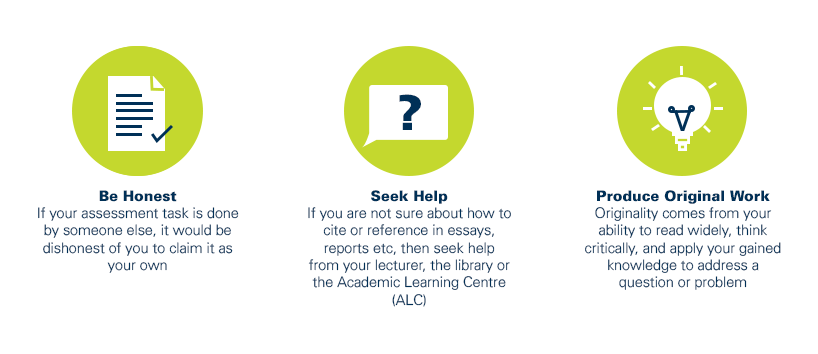
As a CQUniversity student you are expected to act honestly in all aspects of your academic work.
Any assessable work undertaken or submitted for review or assessment must be your own work. Assessable work is any type of work you do to meet the assessment requirements in the unit, including draft work submitted for review and feedback and final work to be assessed.
When you use the ideas, words or data of others in your assessment, you must thoroughly and clearly acknowledge the source of this information by using the correct referencing style for your unit. Using others’ work without proper acknowledgement may be considered a form of intellectual dishonesty.
Participating honestly, respectfully, responsibly, and fairly in your university study ensures the CQUniversity qualification you earn will be valued as a true indication of your individual academic achievement and will continue to receive the respect and recognition it deserves.
As a student, you are responsible for reading and following CQUniversity’s policies, including the Student Academic Integrity Policy and Procedure. This policy sets out CQUniversity’s expectations of you to act with integrity, examples of academic integrity breaches to avoid, the processes used to address alleged breaches of academic integrity, and potential penalties.
What is a breach of academic integrity?
A breach of academic integrity includes but is not limited to plagiarism, self-plagiarism, collusion, cheating, contract cheating, and academic misconduct. The Student Academic Integrity Policy and Procedure defines what these terms mean and gives examples.
Why is academic integrity important?
A breach of academic integrity may result in one or more penalties, including suspension or even expulsion from the University. It can also have negative implications for student visas and future enrolment at CQUniversity or elsewhere. Students who engage in contract cheating also risk being blackmailed by contract cheating services.
Where can I get assistance?
For academic advice and guidance, the Academic Learning Centre (ALC) can support you in becoming confident in completing assessments with integrity and of high standard.
What can you do to act with integrity?