Textbooks
Prescribed
Teaching Primary Mathematics 5th (2014)
Authors: Booker, G., Bond, D., Sparrow, L. and Swan, P.
Pearson Australia
Frenchs Forest, NSW, Australia
ISBN 9781486002689
Binding: Paperback
Additional Textbook Information
Copies can be purchased from the CQUni Bookshop here: http://bookshop.cqu.edu.au (search on the Unit code)
Overview
Effective numeracy instruction is central to primary school students' learning in Mathematics and all other areas of the school curriculum. This unit aims to develop skills in mathematical problem solving, modeling mathematical knowledge and personal numeracy competency skills. The student should be able to identify and select teaching and learning strategies that respond to the required Australian standards. Students are provided with concrete hands-on activities that should lead to the development of symbolic and abstract concepts. Special emphasis is also given to the four basic mathematical operations and how these are best understood by learners in primary school learning contexts including the assessment and reporting procedures specific to numeracy practices.
Details
Pre-requisites or Co-requisites
Co-requisite EDCU20036 Literacy Learning
Important note: Students enrolled in a subsequent unit who failed their pre-requisite unit, should drop the subsequent unit before the census date or within 10 working days of Fail grade notification. Students who do not drop the unit in this timeframe cannot later drop the unit without academic and financial liability. See details in the Assessment Policy and Procedure (Higher Education Coursework).
Offerings For Term 1 - 2021
Attendance Requirements
All on-campus students are expected to attend scheduled classes - in some units, these classes are identified as a mandatory (pass/fail) component and attendance is compulsory. International students, on a student visa, must maintain a full time study load and meet both attendance and academic progress requirements in each study period (satisfactory attendance for International students is defined as maintaining at least an 80% attendance record).
Recommended Student Time Commitment
Each 6-credit Postgraduate unit at CQUniversity requires an overall time commitment of an average of 12.5 hours of study per week, making a total of 150 hours for the unit.
Class Timetable
Assessment Overview
Assessment Grading
This is a graded unit: your overall grade will be calculated from the marks or grades for each assessment task, based on the relative weightings shown in the table above. You must obtain an overall mark for the unit of at least 50%, or an overall grade of 'pass' in order to pass the unit. If any 'pass/fail' tasks are shown in the table above they must also be completed successfully ('pass' grade). You must also meet any minimum mark requirements specified for a particular assessment task, as detailed in the 'assessment task' section (note that in some instances, the minimum mark for a task may be greater than 50%). Consult the University's Grades and Results Policy for more details of interim results and final grades.
All University policies are available on the CQUniversity Policy site.
You may wish to view these policies:
- Grades and Results Policy
- Assessment Policy and Procedure (Higher Education Coursework)
- Review of Grade Procedure
- Student Academic Integrity Policy and Procedure
- Monitoring Academic Progress (MAP) Policy and Procedure - Domestic Students
- Monitoring Academic Progress (MAP) Policy and Procedure - International Students
- Student Refund and Credit Balance Policy and Procedure
- Student Feedback - Compliments and Complaints Policy and Procedure
- Information and Communications Technology Acceptable Use Policy and Procedure
This list is not an exhaustive list of all University policies. The full list of University policies are available on the CQUniversity Policy site.
Feedback, Recommendations and Responses
Every unit is reviewed for enhancement each year. At the most recent review, the following staff and student feedback items were identified and recommendations were made.
Feedback from Moodle evaluation
Interactive lectures
Maintain the use of breakout rooms and explore further opportunities for interactive group learning.
Feedback from Moodle evaluation
Textbook
Maintain textbook or source similar.
Feedback from Moodle evaluation
Assessment feedback
Feedback specifically focuses on how to improve.
- Identify the numeracy demands of primary schooling contexts
- Critically examine strategies and resources to teach the numeracy skills necessary for learners to achieve identified learning outcomes and demonstrate effective numeracy in a range of learning contexts
- Identify, select and use teaching and learning strategies and resources that build on and support the development of learners' numeracy skills including mathematical applications and problem solving
- Identify appropriate numeracy assessment strategies for gathering information and making judgments about students' numeracy development
- Assess and develop personal numeracy skills
- Reflect on professional learning to describe processes and strategies that improve teaching practice and student learning
Successful completion of this unit provides opportunities for students to demonstrate the Australian Professional Standards for Teachers focus areas of:
1.1 Physical, social and intellectual development and characteristics of students
1.2 Understand how students learn
1.5 Differentiate teaching to meet the specific learning needs of students across the full range of abilities
2.1 Content and teaching strategies of the teaching area
2.2 Content selection and organisation
2.3 Curriculum, assessment and reporting
2.5 Literacy and numeracy strategies
3.2 Plan, structure and sequence learning programs
3.3 Use teaching strategies
3.4 Select and use resources
3.6 Evaluate and improve teaching programs
5.1 Assess student learning
6.1 Identify and plan professional learning needs
6.2 Engage in professional learning and improve practice
6.4 Apply professional learning and improve student learning
Alignment of Assessment Tasks to Learning Outcomes
| Assessment Tasks | Learning Outcomes | |||||
|---|---|---|---|---|---|---|
| 1 | 2 | 3 | 4 | 5 | 6 | |
| 1 - Written Assessment - 50% | ||||||
| 2 - Online Test - 50% | ||||||
Alignment of Graduate Attributes to Learning Outcomes
| Graduate Attributes | Learning Outcomes | |||||
|---|---|---|---|---|---|---|
| 1 | 2 | 3 | 4 | 5 | 6 | |
| 1 - Knowledge | ||||||
| 2 - Communication | ||||||
| 3 - Cognitive, technical and creative skills | ||||||
| 4 - Research | ||||||
| 5 - Self-management | ||||||
| 6 - Ethical and Professional Responsibility | ||||||
| 7 - Leadership | ||||||
| 8 - First Nations Knowledges | ||||||
| 9 - Aboriginal and Torres Strait Islander Cultures | ||||||
Alignment of Assessment Tasks to Graduate Attributes
| Assessment Tasks | Graduate Attributes | ||||||||
|---|---|---|---|---|---|---|---|---|---|
| 1 | 2 | 3 | 4 | 5 | 6 | 7 | 8 | 9 | |
| 1 - Written Assessment - 50% | |||||||||
| 2 - Online Test - 50% | |||||||||
Textbooks
Teaching Primary Mathematics
- Edition: 5th (2014)
- Authors: Booker , Bond , Sparrow & Swan
- Pearson Australia
- Sydney Sydney , NSW , Australia
- ISBN: 9781486002689
- Binding: Paperback
IT Resources
- CQUniversity Student Email
- Internet
- Unit Website (Moodle)
All submissions for this unit must use the referencing style: American Psychological Association 7th Edition (APA 7th edition)
For further information, see the Assessment Tasks.
r.zipf@cqu.edu.au
Week 1
Begin Date: 08 Mar 2021Module/Topic
Numeracy: Approaches to mathematics teaching and learning
Chapter
Chapter 1- Approaches to mathematics teaching and learning
Events and Submissions/Topic
Week 2
Begin Date: 15 Mar 2021Module/Topic
Numeration - whole numbers
Chapter
Chapter 3 - Numeration for whole numbers
Events and Submissions/Topic
Week 3
Begin Date: 22 Mar 2021Module/Topic
Numeration - fractions and decimals
Chapter
Chapter 4 - Numeration for fraction ideas
Events and Submissions/Topic
Week 4
Begin Date: 29 Mar 2021Module/Topic
Additive thinking
Chapter
Chapter 5 - Computation: additive thinking (pp.195-234)
Events and Submissions/Topic
Week 5
Begin Date: 05 Apr 2021Module/Topic
Chapter
Chapter 5 - Computation: additive thinking (pp.234-265)
Events and Submissions/Topic
Vacation Week
Begin Date: 12 Apr 2021Module/Topic
Chapter
Events and Submissions/Topic
Critical analysis of numeracy teaching strategies and learning activities. Due: Vacation Week Wednesday (14 Apr 2021) 12:00 am AEST
Week 6
Begin Date: 19 Apr 2021Module/Topic
Multiplicative thinking
Chapter
Chapter 6 - Computation: multiplicative thinking (pp. 266-314)
Events and Submissions/Topic
Week 7
Begin Date: 26 Apr 2021Module/Topic
Developing thinking for division
Chapter
Chapter 6 - Computation: multiplicative thinking (pp. 315-360)
Events and Submissions/Topic
Week 8
Begin Date: 03 May 2021Module/Topic
Algebra and algebraic thinking
Chapter
Chapter 7- Algebra and algebraic thinking
Events and Submissions/Topic
Week 9
Begin Date: 10 May 2021Module/Topic
Problem solving
Chapter
Chapter 2- Problem solving
Events and Submissions/Topic
Week 10
Begin Date: 17 May 2021Module/Topic
Chapter
Events and Submissions/Topic
Week 11
Begin Date: 24 May 2021Module/Topic
Teaching for meaning - Estimation and calculators
Chapter
Chapter 11 - Teaching for meaning - connecting ideas across mathematics
Events and Submissions/Topic
Week 12
Begin Date: 31 May 2021Module/Topic
Assessing numeracy
Chapter
Events and Submissions/Topic
Review/Exam Week
Begin Date: 07 Jun 2021Module/Topic
Chapter
Events and Submissions/Topic
Exam Week
Begin Date: 14 Jun 2021Module/Topic
Chapter
Events and Submissions/Topic
1 Written Assessment
Task Rationale: A plethora of teaching and learning resources are available for teachers to use in the design of their lessons. Choosing appropriate activities and resources that align with current literature and research-based best practice in teaching and learning numeracy is a professional responsibility and integral to preparation for teaching.
Task details: In this task you are required to critically examine three teaching videos (available from Moodle Assessment Task 1 Description) and decide whether they are consistent with current approaches to teaching and learning numeracy. Your report should provide a literature-based justification of your decision.
To complete the task you will need to:
1. View the three (3) teaching videos and briefly describe the mathematics concept, numeracy learning and pedagogical strategy.
2. Investigate the mathematics topic for each video using the following questions as a guide:
- What strand, sub strand, year level, content descriptor and elaboration in the Australian Curriculum: Mathematics (2016) does each address?
- What is the sequence for developing understanding of the topic?
- What approach does the literature advocate for teaching the topic?
- What are the common learning issues reported in the literature?
3. Construct a set of criteria with which you can critique and compare each video strategy to the teaching approach/s advocated in authoritative literature sources.
4. Using your criteria, decide whether the strategies are consistent with current approaches to mathematics teaching and learning, and how students learn, and justify your decision using authoritative literature sources.
5. Choose one video and use your critique to develop a lesson plan exemplar. Include annotations on the lesson plan that justify your teaching strategy choice/s, sequencing decisions, selection of resources, and evidence of how the teaching plan has been improved or enhanced.
Your assessment task submission should use a report presentation-style and include:
a) Abstract (100 - 150 words)
b) Table of contents
c) Introduction (100 - 150 words)
d) Description of the three mathematics strategies (300 - 360 words)
e) Investigation of the mathematics topic each video addresses (450 - 600 words)
f) Critique and justification of decision regarding the three mathematics strategies (600 - 690 words)
g) Conclusion (150 - 200 words)
h) References
i) Appendices - Lesson plan
(N.B. *Number of words for each part is a suggested guide)
Word count: 2000 words maximum
WORD COUNT for written assignments:
The word count is considered from the first word of the introduction to the last word of the conclusion. It excludes the cover page, abstract, contents page, reference page and appendices. It includes in-text references and direct quotations.
Vacation Week Wednesday (14 Apr 2021) 12:00 am AEST
This task is to be uploaded as a single Word file document to Moodle saved in the following format: EDCU20037_Last name_First name_Task 1
Week 7 Wednesday (28 Apr 2021)
Tasks will be returned at the conclusion of the moderation process
Criteria
Understand how students learn
Content and teaching strategies of the teaching area
Content selection and organization
Curriculum, assessment and reporting
Literacy and numeracy strategies
Plan, structure and sequence learning programs
Use teaching strategies
Select and use resources
Evaluate and improve teaching programs
Assess student learning
Communication and referencing
N.B. The full assessment criteria and standards rubric is located in the Assessment block on the Moodle site for this Unit.
- Critically examine strategies and resources to teach the numeracy skills necessary for learners to achieve identified learning outcomes and demonstrate effective numeracy in a range of learning contexts
- Identify, select and use teaching and learning strategies and resources that build on and support the development of learners' numeracy skills including mathematical applications and problem solving
- Identify appropriate numeracy assessment strategies for gathering information and making judgments about students' numeracy development
- Knowledge
- Communication
- Cognitive, technical and creative skills
- Ethical and Professional Responsibility
2 Online Test
This task comprises two parts:
1. Five on-line quizzes that are completed each week from week 6 to week 10. Each quiz comprises ten randomly selected questions to be completed in 30 minutes. Quiz questions are based on numeracy concepts aligned with the Australian Core Skills Framework levels 1-5 (25% weighting)
2. Personal numeracy learning plan and reflection (25% weighting)
Task specific details
1. Five on-line quizzes:
- 1 attempt only at each quiz.
- 10 questions per quiz
- 1 mark per question
- 30 minutes to complete each quiz.
Each weekly quiz will be open for normal working days during the week only (i.e Week 6 quiz will be open from Monday of Week 6 through to Friday of Week 6)
Once you complete the quiz and submit, your overall score only will be available. Answers will be released once the quiz has closed for that week. You are not able to go back in and attempt the quiz again.
Your responses for each quiz will be recorded and contribute 25% to your overall grade.
2. Personal numeracy learning plan and reflection
You are to write a 1000 word (maximum) reflective statement outlining your strengths and challenges with respect to your personal numeracy, a professional learning plan to address the challenges identified and the implications for student learning.
This reflective statement must include:
a) Your numeracy strengths and challenges as identified through self-reflection and on-line quiz performance.
b) A personal plan for professional learning outlining both short term and long term goals, and the professional learning resources you plan to draw on.
c) A justification for your plan that links to scholarly literature.
d) A preliminary evaluation of the effectiveness of the plan for your short term goals, and an informed reflection on the relationship between professional learning, improved practice and improved student learning.
Week 12 Wednesday (2 June 2021) 12:00 am AEST
Report must be uploaded as a single Word file document to Moodle saved in the following format: EDCU20037_Last name_First name_Task 2
Exam Week Wednesday (16 June 2021)
Marked tasks are returned at the conclusion of moderation.
Criteria
-
Identification of personal numeracy strengths and challenge - Personal Numeracy Learning Plan
- Justification of Personal Numeracy Learning Plan
- Evaluation and reflection on Personal Numeracy Learning Plan and implications for improved student learning
- Written communication, presentation and referencing.
The full assessment criteria and standards rubric is located in the Assessment block on the Moodle site for this Unit.
- Identify the numeracy demands of primary schooling contexts
- Identify, select and use teaching and learning strategies and resources that build on and support the development of learners' numeracy skills including mathematical applications and problem solving
- Assess and develop personal numeracy skills
- Reflect on professional learning to describe processes and strategies that improve teaching practice and student learning
- Knowledge
- Communication
- Cognitive, technical and creative skills
- Self-management
- Ethical and Professional Responsibility
As a CQUniversity student you are expected to act honestly in all aspects of your academic work.
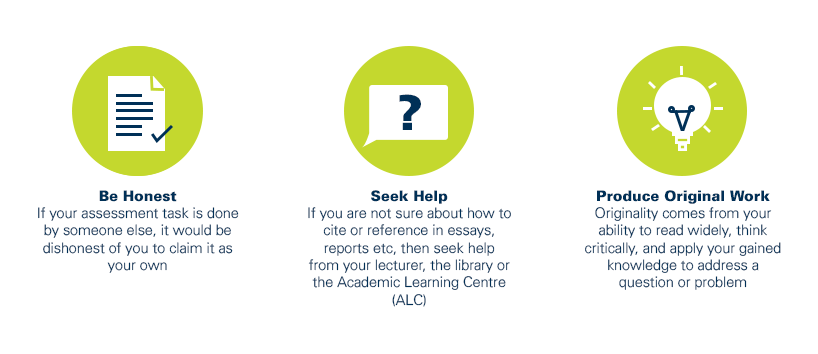
Any assessable work undertaken or submitted for review or assessment must be your own work. Assessable work is any type of work you do to meet the assessment requirements in the unit, including draft work submitted for review and feedback and final work to be assessed.
When you use the ideas, words or data of others in your assessment, you must thoroughly and clearly acknowledge the source of this information by using the correct referencing style for your unit. Using others’ work without proper acknowledgement may be considered a form of intellectual dishonesty.
Participating honestly, respectfully, responsibly, and fairly in your university study ensures the CQUniversity qualification you earn will be valued as a true indication of your individual academic achievement and will continue to receive the respect and recognition it deserves.
As a student, you are responsible for reading and following CQUniversity’s policies, including the Student Academic Integrity Policy and Procedure. This policy sets out CQUniversity’s expectations of you to act with integrity, examples of academic integrity breaches to avoid, the processes used to address alleged breaches of academic integrity, and potential penalties.
What is a breach of academic integrity?
A breach of academic integrity includes but is not limited to plagiarism, self-plagiarism, collusion, cheating, contract cheating, and academic misconduct. The Student Academic Integrity Policy and Procedure defines what these terms mean and gives examples.
Why is academic integrity important?
A breach of academic integrity may result in one or more penalties, including suspension or even expulsion from the University. It can also have negative implications for student visas and future enrolment at CQUniversity or elsewhere. Students who engage in contract cheating also risk being blackmailed by contract cheating services.
Where can I get assistance?
For academic advice and guidance, the Academic Learning Centre (ALC) can support you in becoming confident in completing assessments with integrity and of high standard.
What can you do to act with integrity?