Overview
In this unit, you will extend your professional knowledge about teaching and learning in numeracy and Mathematics to develop deep understanding of the structure, sequencing and links between critical concepts and skills in content across the year levels in the Australian Curriculum: Mathematics. You will examine research to identify issues or challenges to the development of mathematical understanding in key stages of the learning progression as a guide for planning lesson sequences and developing and interpreting assessment for diagnostic purposes. You will use data from your research to design and justify differentiated teaching and learning activities for specific sub-strands of the curriculum that cater for students at a range of ability levels and overcome identified barriers to the development of mathematical proficiency and improve the transfer of mathematical reasoning, logic and analysis to problem-solving situations. Your personal numeracy competence will be further enhanced in this unit as you construct marking guides for diagnostic assessment using appropriate and accurate mathematical procedures and communication.
Details
Pre-requisites or Co-requisites
Pre-requisite EDCU20037 Numeracy Learning
Important note: Students enrolled in a subsequent unit who failed their pre-requisite unit, should drop the subsequent unit before the census date or within 10 working days of Fail grade notification. Students who do not drop the unit in this timeframe cannot later drop the unit without academic and financial liability. See details in the Assessment Policy and Procedure (Higher Education Coursework).
Offerings For Term 2 - 2026
Attendance Requirements
All on-campus students are expected to attend scheduled classes - in some units, these classes are identified as a mandatory (pass/fail) component and attendance is compulsory. International students, on a student visa, must maintain a full time study load and meet both attendance and academic progress requirements in each study period (satisfactory attendance for International students is defined as maintaining at least an 80% attendance record).
Recommended Student Time Commitment
Each 6-credit Postgraduate unit at CQUniversity requires an overall time commitment of an average of 12.5 hours of study per week, making a total of 150 hours for the unit.
Class Timetable
Assessment Overview
Assessment Grading
This is a graded unit: your overall grade will be calculated from the marks or grades for each assessment task, based on the relative weightings shown in the table above. You must obtain an overall mark for the unit of at least 50%, or an overall grade of 'pass' in order to pass the unit. If any 'pass/fail' tasks are shown in the table above they must also be completed successfully ('pass' grade). You must also meet any minimum mark requirements specified for a particular assessment task, as detailed in the 'assessment task' section (note that in some instances, the minimum mark for a task may be greater than 50%). Consult the University's Grades and Results Policy for more details of interim results and final grades.
All University policies are available on the CQUniversity Policy site.
You may wish to view these policies:
- Grades and Results Policy
- Assessment Policy and Procedure (Higher Education Coursework)
- Review of Grade Procedure
- Student Academic Integrity Policy and Procedure
- Academic Progression Policy and Procedure
- Student Refund and Credit Balance Policy and Procedure
- Complaints Policy and Procedure
- Information and Communications Technology Acceptable Use Policy and Procedure
This list is not an exhaustive list of all University policies. The full list of University policies are available on the CQUniversity Policy site.
Feedback, Recommendations and Responses
Every unit is reviewed for enhancement each year. At the most recent review, the following staff and student feedback items were identified and recommendations were made.
Feedback from SUTE comment data.
Students recognised the usefulness of the knowledge and skills gained and the contribution of the unit towards achieving study goals.
Review and enhance learning materials to align with current expectations of Initial Teacher Education courses and Australian Education Authorities.
- Analyse the structure and organisation of content in the mathematics curriculum to identify key stages in concept development as a focus for teaching, learning and assessment
- Research and apply evidence-based pedagogical approaches that are responsive to misconceptions or barriers to learning in Mathematics for students from a range of ability levels, characteristics and experiential backgrounds
- Propose and justify strategies and approaches to teaching Mathematics that promote the inclusive participation, understanding and mathematical proficiency of students from Aboriginal and Torres Strait Islander backgrounds and students with disability
- Design assessment strategies and marking guides for collecting and interpreting data and reporting on students’ progress and achievement of knowledge and skills in Mathematics
- Justify teaching strategies and the selection and use of resources that scaffold students’ understanding of core mathematical concepts
- Identify opportunities for students to use ICTs for purposeful participation in learning experiences to gain mathematical knowledge and proficiency
- Participate in moderation for the purpose of developing shared understanding of student learning needs and achievement.
Successful completion of this unit provides opportunities for students to demonstrate the Australian Professional Standards for Teachers focus areas of:
1.2 Understand how students learn
1.4 Strategies for teaching Aboriginal and Torres Strait Islander students
1.5 Differentiate teaching to meet the specific learning needs of students across the full range of abilities
1.6 Strategies to support full participation of students with disability
2.1 Content and teaching strategies of the teaching area
2.2 Content selection and organisation
2.3 Curriculum, assessment and reporting
2.6 Information and Communication Technology (ICT)
3.2 Plan, structure and sequence learning programs
3.3 Use teaching strategies
3.4 Select and use resources
4.1 Support student participation
5.1 Assess student learning
5.2 Provide feedback to students on their learning
5.3 Make consistent and comparable judgements
5.5 Report on student achievement
Alignment of Assessment Tasks to Learning Outcomes
| Assessment Tasks | Learning Outcomes | ||||||
|---|---|---|---|---|---|---|---|
| 1 | 2 | 3 | 4 | 5 | 6 | 7 | |
| 1 - Written Assessment - 50% | |||||||
| 2 - Written Assessment - 50% | |||||||
Alignment of Graduate Attributes to Learning Outcomes
| Graduate Attributes | Learning Outcomes | ||||||
|---|---|---|---|---|---|---|---|
| 1 | 2 | 3 | 4 | 5 | 6 | 7 | |
| 1 - Knowledge | |||||||
| 2 - Communication | |||||||
| 3 - Cognitive, technical and creative skills | |||||||
| 4 - Research | |||||||
| 5 - Self-management | |||||||
| 6 - Ethical and Professional Responsibility | |||||||
| 7 - Leadership | |||||||
| 8 - First Nations Knowledges | |||||||
| 9 - Aboriginal and Torres Strait Islander Cultures | |||||||
Textbooks
There are no required textbooks.
IT Resources
- CQUniversity Student Email
- Internet
- Unit Website (Moodle)
All submissions for this unit must use the referencing style: American Psychological Association 7th Edition (APA 7th edition)
For further information, see the Assessment Tasks.
c.murdoch@cqu.edu.au
Australian Curriculum: Mathematics V9
Begin Date: 13 Jul 2026Module/Topic
Understanding primary school mathematics. The 'what' and the 'why'.
Chapter
Events and Submissions/Topic
Teacher planning: designing assessment and instruction
Begin Date: 20 Jul 2026Module/Topic
Delivering explicit numeracy instruction followed by a progressive removal of scaffolding as students become more proficient through a combination of underpinning mathematical concepts and skills (numerical, spatial, graphical, statistical, and algebraic); mathematical thinking and strategies; and general thinking skills as appropriate to discipline and discipline-specific curriculum and pedagogical studies.
Chapter
Australian Education Research Organisation (AERO).
Topic: Explicit instruction
Explicit instruction | Australian Education Research Organisation
Events and Submissions/Topic
Assessment practices: formative (diagnostic) and summative
Begin Date: 27 Jul 2026Module/Topic
Understand the role of assessment for learning (diagnostic assessment) inform the planning process.
Diagnose areas of strength and weaknesses (class) and plan responses.
Know what is meant by formative, diagnostic and summative assessment
Chapter
Australian Education Research Organisation (AERO).
Formative assessment. Gathering and interpreting information to progress student learning. (2022).
Events and Submissions/Topic
Differentiation: responding to data
Begin Date: 03 Aug 2026Module/Topic
Apply Universal Design for Learning principles in the process of designing instruction and assessment.
How to sequence tasks within a lesson that build upon each other, meet students where they are in their learning and help them understand the progression of skills needed to attain mastery.
Chapter
Events and Submissions/Topic
The Proficiencies and positive dispositions by design
Begin Date: 10 Aug 2026Module/Topic
The key features of coherent and deliberate planning and sequencing of tasks and lessons including curriculum-aligned learning objectives, clear descriptions of how students will show evidence of mastery, the common progression of learning in a subject area and the critical curriculum knowledge needed for students to progress.
Chapter
Events and Submissions/Topic
Reasoning
Begin Date: 17 Aug 2026Module/Topic
The importance of independent problem-solving once a student approaches proficiency in underpinning mathematical concepts. Address how to develop mathematical reasoning skills as a foundation for independence and confidence.
Chapter
Events and Submissions/Topic
Vacation Week
Begin Date: 24 Aug 2026Module/Topic
Chapter
Events and Submissions/Topic
Assessment Task 1
Designing Assessment 'for' and 'of' student learning in Mathematics
Due: Monday (24 Aug 2026) 11:45 pm AEST
Designing Assessment 'for' and 'of' student learning in Mathematics Due: Vacation Week Monday (24 Aug 2026) 11:45 pm AEST
Diverse learners, inclusive education and MTSS (Tier 1)
Begin Date: 31 Aug 2026Module/Topic
Examining how to develop learning opportunities that meet diverse student needs whilst maintaining rigorous expectations, analysing strategies for creating assessment tools that provide clear expectations whilst accommodating different abilities and backgrounds.
Chapter
Events and Submissions/Topic
Learner engagement and feedback. Statistical Investigations.
Begin Date: 07 Sep 2026Module/Topic
Moving beyond the Learning Pit.
The teacher as a coach.
Chapter
Teaching Primary Mathematics - Chapter 10 pp. 604
Edition: 6th (2020)
Authors: George Booker, Denise Bond, Rebecca Seah
Pearson
Sydney , NSW , Australia
ISBN: 9781488615597
An ebook of this text is available through the CQU library and is accessible through the eReading list in Moodle.
Binding: Paperback
Events and Submissions/Topic
Resources: selection and evaluation. Probability simulations.
Begin Date: 14 Sep 2026Module/Topic
Chapter
Teaching Primary Mathematics - Chapter 10 pp. 633
Edition: 6th (2020)
Authors: George Booker, Denise Bond, Rebecca Seah
Pearson
Sydney , NSW , Australia
ISBN: 9781488615597
An ebook of this text is available through the CQU library and is accessible through the eReading list in Moodle.
Binding: Paperback
Events and Submissions/Topic
Common misconceptions and planning to avoid them. Reflexive practice.
Begin Date: 21 Sep 2026Module/Topic
Seeing the world as a Mathematician.
Chapter
13 Rules That Expire
The National Council of Teachers of Mathematics, Inc
www.nctm.org
Teaching Children Mathematics Vol, 21, No. 1
August 2014
Events and Submissions/Topic
Week 11
Begin Date: 28 Sep 2026Module/Topic
Chapter
Events and Submissions/Topic
Assessment Task 2
Planning for effective teaching and learning in Mathematics
Due: Monday (28 Sept 2026) 11:45 pm AEST
Planning for effective teaching and learning in Mathematics Due: Week 11 Monday (28 Sept 2026) 11:45 pm AEST
Week 12
Begin Date: 05 Oct 2026Module/Topic
Chapter
Events and Submissions/Topic
Exam Week
Begin Date: 12 Oct 2026Module/Topic
Chapter
Events and Submissions/Topic
Vacation/Exam Week
Begin Date: 19 Oct 2026Module/Topic
Chapter
Events and Submissions/Topic
1 Written Assessment
Designing assessment tasks for formative and summative purposes requires an understanding of how students learn mathematics, the iterative and connected nature of mathematical concepts and the sequence for developing understanding in a topic area, through pedagogical practices for learning which build mathematical understanding, problem solving, reasoning and fluency.
The task requires you to design an assessment package for three connected elements of an achievement standard in the Australian Curriculum: Mathematics. One of the elements must be from the Number strand, the second from the Algebra strand and the third from either the Measurement, Geometry, Statistics or Probability strands. Together, the three elements determine your chosen topic.
In doing so you will demonstrate teaching practices of Assessing (evaluating learning), Reflecting (analysing practices and impact) and Appraising (using evident to adjust future strategies).
Your justification must include how the assessment design supports explicit teaching approaches appropriate to Mathematics that build mathematical modelling and computational thinking processes and results in deep mathematical understanding appropriate to the level description of the year of learning.
You will identify specific achievement standard statements and connected content descriptions for the topic at a chosen year level to inform the development of formative and summative assessment tasks.
You will consider the sequence of achievement across year levels to determine the expected prior knowledge and future learning in relation to the topic. Early Childhood students will focus on the Foundation – Year 2 curriculum. This means that early childhood students may need to refer to the Early Years Learning Framework.
The standards-aligned, task -specific marking guide for the summative task will assist you to determine the learner’s level of understanding and skill development for reporting purposes.
You will design formative tasks to be used to diagnose potential barriers to success in the learning of the topic.
The formative (diagnostic) and summative assessment tasks and task-specific marking guide should be referenced to the Australian Curriculum: Mathematics achievement standards and pre-mapped content descriptions (ACARA, 2022) and be structured to allow students to demonstrate proficiency in mathematics (problem solving, reasoning, understanding and fluency) for the topic chosen.
The summative task marking guide will articulate the qualities that support teachers to make valid and reliable decisions that identify students working at, above or below the expected year level standard.
The design of the formative task will provide focus for planning differentiated teaching and learning for students and will allow teacher(s) to establishing learning goals for students of varying abilities and characteristics and determining next steps teaching, from analysing data from the task.
The design of assessment must be justified through reference to curriculum documents and other relevant sources and show evidence of professional knowledge of the sequence for the topic. Your justification must include how the assessment design supports explicit teaching approaches that build mathematical modelling and computational fluency.
A marking guide for the formative task should include sufficient detail to allow teachers to make reliable judgements on student responses to assist a user in establishing learning goals for students of varying abilities and plan quality differentiated teaching practices during the unit, prior to summative assessment.
You need to share the design of your formative (diagnostic) task and summative task and standards-aligned task-specific marking guide with either a peer or a practising teacher to initiate a moderation conversation.
The purpose of this collaboration is to quality assure the validity, accessibility and reliability of the artefacts that you have designed. From this professional conversation, report whether your tasks and marking guides and would be supportive of teachers in planning for differentiated instruction and making consistent and comparable judgements about student learning.
For this part of the task, you and the person with whom you are collaborating with should use the QCAA quality assurance checklist to review the formative task and the summative assessment task and marking guide. You should commentate on the aspects for improvement that were identified.
The checklist can be found here.
Your submission should include:
• A description outlining your topic area for a year level of Australian Curriculum: Mathematics (ACARA, 2022) and sequences for development of the topic area components (current year level, prior and subsequent year levels) with included identification of embedded conceptual knowledge important for student understanding to be fostered.
• You must also include overview outlining the sequence for your topic (weekly focuses x 4). This overview will be further developed in AT2 to include teaching strategies that will be applied to build both conceptual understanding and fluency in your chosen topic.
• A formative task (student activities), summative task (description and student activities) with sample responses for students ‘at’ and ‘above’ level expected levels and standards-aligned, task-specific marking guide for the topic area specific to the year level chosen. These artefacts will form an appendix for the submission and will not be included in the word count.
• Justification of the items included on the formative task as the basis for establishing learning goals and planning differentiated instruction for students at the full range of ability levels.
• Justification of how the design of learning and assessment supports explicit teaching approaches that simultaneously build mathematical modelling and computational thinking.
• A summary of the ‘before assessment takes place’ moderation process, including responses to the quality assurance checklist and evaluation of the effectiveness of the summative task and marking guide highlighting decisions informed by profession learning to ensure validity, accessibility and reliability.
• Appropriate terminology and references to authoritative sources.
Word count - 2000 maximum
WORD COUNT for written assignments:
The word count is considered from the first word of the introduction to the last word of the conclusion. It excludes the cover page, abstract, contents page, reference page and appendices. It includes in-text references and direct quotations.
Your task may be penalised for not adhering to the word count.
Assessment Due Date - 24 August 2026 (Monday)
Weighting - 50%
Within this assessment, the use of Gen AI agents is as follows:
AI tool scale level: Level 2 - You may use Al for planning, idea development, and research. Your final submission should show how you have developed and refined these ideas. Any misuse or lack of disclosure regarding the use of AI tools will be considered a breach of academic integrity.
Please note: The 72-Hour grace period applies to Assessment Task 1.
If you need longer than 72 hours, you'll still need to use the normal Assessment Extension System process.
Learning Outcomes Assessed
1. Analyse the structure and organisation of content in the mathematics curriculum to identify key stages in concept development as a focus for teaching, learning and assessment.
Design assessment strategies and marking guides for collecting and interpreting data and reporting on students’ progress and achievement of knowledge and skills in Mathematics.
4. Analyse the structure and organisation of content in the mathematics curriculum to identify key stages in concept development as a focus for teaching, learning and assessment.
Design assessment strategies and marking guides for collecting and interpreting data and reporting on students’ progress and achievement of knowledge and skills in Mathematics.
7. Participate in moderation for the purpose of developing shared understanding of student learning needs and achievement.
Australian Professional Standards for Teachers addressed in this task
1.2, 1.5, 2.1, 2.2, 2.3, 3.2, 5.1, 5.2, 5.3, 5.5
Vacation Week Monday (24 Aug 2026) 11:45 pm AEST
Please submit the task as one document with your name in the file name it is saved under. The document will include appendices for (1) summative task, (2) marking guide (3) formative (diagnostic) task.
Assignments will be returned after the moderation process has been completed.
Assessment will be marked against the following criteria:
- Knowledge of the content, substance and structure the Australian Curriculum: Mathematics informed by knowledge of how students learn Mathematics.
- Planning that aligns curriculum, teaching and learning, and assessment using knowledge of student learning and effective teaching and assessment strategies.
- Use and justification of strategies and resources including ICTs to support learning and engagement of diverse learners.
- Justification of pedagogical decision-making, content organisation, and resource selection in the development of the learning progression for the chosen topic through well designed learning experiences.
- Design and justification of assessment strategies and tools for making reliable judgements on students’ understanding and Mathematical proficiency for the purposes of giving feedback, differentiating instruction and reporting on student learning.
- Use of language conventions, clarity and conciseness of communication, and compliance with the APA Style Guide.
- Analyse the structure and organisation of content in the mathematics curriculum to identify key stages in concept development as a focus for teaching, learning and assessment
- Research and apply evidence-based pedagogical approaches that are responsive to misconceptions or barriers to learning in Mathematics for students from a range of ability levels, characteristics and experiential backgrounds
- Propose and justify strategies and approaches to teaching Mathematics that promote the inclusive participation, understanding and mathematical proficiency of students from Aboriginal and Torres Strait Islander backgrounds and students with disability
- Design assessment strategies and marking guides for collecting and interpreting data and reporting on students’ progress and achievement of knowledge and skills in Mathematics
- Justify teaching strategies and the selection and use of resources that scaffold students’ understanding of core mathematical concepts
- Identify opportunities for students to use ICTs for purposeful participation in learning experiences to gain mathematical knowledge and proficiency
2 Written Assessment
You are to develop a teaching plan for four weeks for mathematics for a designated primary school year level and term (e.g. Year 4, Term 3). The plan must use the Australian Curriculum: Mathematics (ACARA, 2022) and focus on content descriptions from Number and Algebra and one other content strand (i.e. Measurement, Geometry, Statistics or Probability). The teaching plan aligns with the assessment ‘for’ and ‘of’ learning in AT1.
The plan must show alignment between curriculum intent, teaching and learning and assessment. It must demonstrate coherent and deliberate planning and sequencing of tasks and lessons with curriculum-aligned learning objectives (learning intent) and clear descriptions of how students will show evidence of mastery (success criteria). It must include details of key learning experiences, checks for learning (formative assessment) and resources.
You need to prepare to teach the planned topic by researching the common progression of learning, critical curriculum knowledge and skills needed for students to progress and demonstrate awareness of common learning misconceptions of your topic. You will identify resources (digital/manipulative/visual) that promote engagement with and understanding of the core mathematical concepts for learners from a range of ability levels.
Your research should consider approaches and practices that support diverse learners, potentially describing the adjustments required for specific individuals.
In doing so you will demonstrate teaching practice of Planning (designing a sequence of lessons). You may have the opportunity to execute your plan (teach) in future Praxis.
The assessment task submission should use a presentation-style appropriate for a primary school curriculum planning document (e.g. QCAA Prep to Year 10 Unit of work plan: Mathematics P–10 Mathematics planning resources (Version 9.0) | Queensland Curriculum and Assessment Authority).
You are NOT permitted to submit a planning document from a school or C2C and/or curriculum gateway units.
The final submission should be in the form of a written report with the following sections:
● Introduction- brief outline of the context and key considerations for planning mathematics units and lessons. (approx. 200-250 words)
● Planning document for the mathematics (NOT counted in word limit)
● Discussion of the research on common learning misconceptions and catering for diverse learners that have informed your pedagogical decision-making and understanding about how students learn mathematics (approx. 500 words)
● Discussion of the ways that resources (digital, manipulatives and models) would be used to complement teaching strategies and promote deep learning of, and engagement with, the content of the chosen mathematics topic area/s of students with diverse needs and backgrounds. (approx. 200-250 words)
● Justification of the pedagogy and resources chosen to develop the identified knowledge, understanding and skills for the topic/s and planned lesson level assessment (formative assessment) of student learning in the chosen year level (approx. 400-450 words)
● References (NOT counted in word limit)
● Appendices – Unit Plan document including resources to support learning (NOT counted in word limit)
Word count for written assignments
2000 words maximum.
Your task may be penalised for not adhering to the word count.
The word count is considered from the first word of the introduction to the last word of the conclusion. It excludes the cover page, abstract, contents page, reference page and appendices. It includes in-text references and direct quotations.
Weighting
50%
Use of Generative Artificial Intelligence agents (Gen AI)
Within this assessment, the use of Gen AI agents is as follows:
AI tool scale: Level 2 - You may use Al for planning, idea development, and research. Your final submission should show how you have developed and refined these ideas. Any misuse or lack of disclosure regarding the use of AI tools will be considered a breach of academic integrity.
Please note: The 72-Hour grace period applies to Assessment Task 1.
If you need longer than 72 hours, you'll still need to use the normal Assessment Extension System process.
Learning Outcomes Assessed
1. Analyse the structure and organisation of content in the mathematics curriculum to identify key stages in concept development as a focus for teaching, learning and assessment.
2. Research and apply evidence-based pedagogical approaches that are responsive to misconceptions or barriers to learning in Mathematics for students from a range of ability levels, characteristics and experiential backgrounds.
3. Propose and justify strategies and approaches to teaching Mathematics that promote the inclusive participation, understanding and mathematical proficiency of students from Aboriginal and Torres Strait Islander backgrounds and students with disability.
4. Design assessment strategies and marking guides for collecting and interpreting data and reporting on students’ progress and achievement of knowledge and skills in mathematics.
5. Justify teaching strategies and the selection and use of resources that scaffold students’ understanding of core mathematical concepts.
6. Identify opportunities for students to use ICTs for purposeful participation in learning experiences to gain mathematical knowledge and proficiency.
Australian Professional Standards for Teachers addressed in this task
1.2, 1.4, 1.5, 1.6, 2.1, 2.2, 2.3, 2.6, 3.2, 3.3, 3.4, 4.1
Week 11 Monday (28 Sept 2026) 11:45 pm AEST
Please submit the task as one (word) document with your name in the file name it is saved under. The document will include an appendix for your four-week unit plan.
Assignments will be returned after the moderation process has been completed.
Assessment will be marked against the following criteria:
● Knowledge and understanding of the Australian Curriculum: Mathematics and critical curriculum knowledge that is needed support student understanding and skill development
● Planning that aligns curriculum, teaching and learning, and assessment using knowledge of student learning and effective teaching and assessment strategies
● Use and justification of strategies and resources including ICTs to support the learning of mathematics and engagement of students from a range of ability levels, characteristics and experiential backgrounds.
● Justification of pedagogical decision-making, content organisation, and resource selection for addressing common misconceptions and progress learning
● Design of formative assessment techniques within lessons and the lesson sequence to providing ‘in the moment’ feedback and to inform future teaching.
● Use of language conventions, clarity and conciseness of communication, and compliance with the APA Style Guide.
- Analyse the structure and organisation of content in the mathematics curriculum to identify key stages in concept development as a focus for teaching, learning and assessment
- Design assessment strategies and marking guides for collecting and interpreting data and reporting on students’ progress and achievement of knowledge and skills in Mathematics
- Participate in moderation for the purpose of developing shared understanding of student learning needs and achievement.
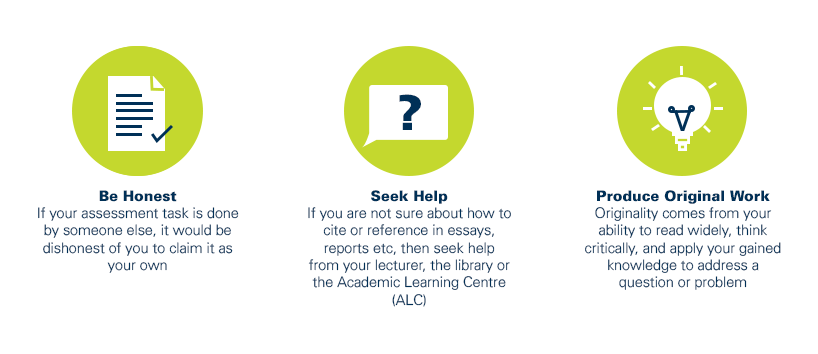
As a CQUniversity student you are expected to act honestly in all aspects of your academic work.
Any assessable work undertaken or submitted for review or assessment must be your own work. Assessable work is any type of work you do to meet the assessment requirements in the unit, including draft work submitted for review and feedback and final work to be assessed.
When you use the ideas, words or data of others in your assessment, you must thoroughly and clearly acknowledge the source of this information by using the correct referencing style for your unit. Using others’ work without proper acknowledgement may be considered a form of intellectual dishonesty.
Participating honestly, respectfully, responsibly, and fairly in your university study ensures the CQUniversity qualification you earn will be valued as a true indication of your individual academic achievement and will continue to receive the respect and recognition it deserves.
As a student, you are responsible for reading and following CQUniversity’s policies, including the Student Academic Integrity Policy and Procedure. This policy sets out CQUniversity’s expectations of you to act with integrity, examples of academic integrity breaches to avoid, the processes used to address alleged breaches of academic integrity, and potential penalties.
What is a breach of academic integrity?
A breach of academic integrity includes but is not limited to plagiarism, self-plagiarism, collusion, cheating, contract cheating, and academic misconduct. The Student Academic Integrity Policy and Procedure defines what these terms mean and gives examples.
Why is academic integrity important?
A breach of academic integrity may result in one or more penalties, including suspension or even expulsion from the University. It can also have negative implications for student visas and future enrolment at CQUniversity or elsewhere. Students who engage in contract cheating also risk being blackmailed by contract cheating services.
Where can I get assistance?
For academic advice and guidance, the Academic Learning Centre (ALC) can support you in becoming confident in completing assessments with integrity and of high standard.
What can you do to act with integrity?