Overview
Identity development and the formation of active informed citizens are fundamental goals for the education of all young Australians. These goals are reflected in curriculum documents and frameworks that guide the teaching practice of early childhood teachers in education and care settings and in the early years of formal schooling. In this unit, you will interpret and compare curriculum documents for the ways in which views of children and their connections to the world are constructed. You will review contemporary literature to evaluate and recommend pedagogies that support continuity of learning and transitions to formal schooling for young children and their engagement with the concepts, substance and structure of the Australian Curriculum for Humanities and Social Sciences (HASS). You will create and justify practical resources for teaching HASS from Foundation to Year 2 by constructing an annotated bibliography of books, artefacts, people and places that present opportunities for developing children’s literacy and numeracy capabilities at the same time as they acquire knowledge and understanding of content from the Geography and History strands of the curriculum. Your annotated bibliography will be compiled as a pedagogical resource that includes teaching strategies and learning activities for using the resources in early years classrooms to support the inclusive participation, engagement of, and respect for learners from diverse social and cultural backgrounds, including children who identify as Aboriginal and Torres Strait Islander peoples.
Details
Pre-requisites or Co-requisites
There are no requisites for this unit.
Important note: Students enrolled in a subsequent unit who failed their pre-requisite unit, should drop the subsequent unit before the census date or within 10 working days of Fail grade notification. Students who do not drop the unit in this timeframe cannot later drop the unit without academic and financial liability. See details in the Assessment Policy and Procedure (Higher Education Coursework).
Offerings For Term 3 - 2026
Attendance Requirements
All on-campus students are expected to attend scheduled classes - in some units, these classes are identified as a mandatory (pass/fail) component and attendance is compulsory. International students, on a student visa, must maintain a full time study load and meet both attendance and academic progress requirements in each study period (satisfactory attendance for International students is defined as maintaining at least an 80% attendance record).
Recommended Student Time Commitment
Each 6-credit Postgraduate unit at CQUniversity requires an overall time commitment of an average of 12.5 hours of study per week, making a total of 150 hours for the unit.
Class Timetable
Assessment Overview
Assessment Grading
This is a graded unit: your overall grade will be calculated from the marks or grades for each assessment task, based on the relative weightings shown in the table above. You must obtain an overall mark for the unit of at least 50%, or an overall grade of 'pass' in order to pass the unit. If any 'pass/fail' tasks are shown in the table above they must also be completed successfully ('pass' grade). You must also meet any minimum mark requirements specified for a particular assessment task, as detailed in the 'assessment task' section (note that in some instances, the minimum mark for a task may be greater than 50%). Consult the University's Grades and Results Policy for more details of interim results and final grades.
All University policies are available on the CQUniversity Policy site.
You may wish to view these policies:
- Grades and Results Policy
- Assessment Policy and Procedure (Higher Education Coursework)
- Review of Grade Procedure
- Student Academic Integrity Policy and Procedure
- Academic Progression Policy and Procedure
- Student Refund and Credit Balance Policy and Procedure
- Complaints Policy and Procedure
- Information and Communications Technology Acceptable Use Policy and Procedure
This list is not an exhaustive list of all University policies. The full list of University policies are available on the CQUniversity Policy site.
Feedback, Recommendations and Responses
Every unit is reviewed for enhancement each year. At the most recent review, the following staff and student feedback items were identified and recommendations were made.
Feedback from Personal communication
Student support
Continue to reach out to students to encourage engagement with the unit materials.
- Compare curriculum documents to identify similarities and differences in approaches to identity formation and building young children’s agency and understanding of the world
- Research and recommend pedagogical approaches that support the transitions of young children to formal schooling and their inclusive participation and engagement in learning the concepts, substance and structure of the Humanities and Social Sciences curriculum
- Evaluate the approach adopted in contemporary curriculum frameworks to addressing the educational goals for young Australians and supporting improved educational outcomes for Aboriginal and Torres Strait Islander children and families
- Select resources and design teaching strategies and activities for learning in the Humanities and Social Sciences that promote literacy and numeracy development and learners’ sense of identity, agency, responsibility and understanding of their interconnections with the world
- Justify approaches to resource selection, teaching and learning that support inclusive participation and engagement for all children and promote respect for Aboriginal and Torres Strait Islander peoples' cultures, histories and languages
- Analyse the content of the Humanities and Social Science learning areas to identify implications for practice in teaching about Aboriginal and Torres Strait Islander histories, cultures and languages.
Learning outcomes and assessment in this unit provide opportunities for students to engage with content and practices in the Australian Professional Standards for Teachers (Graduate Stage) focus areas of:
1.1 Physical, social and intellectual development and characteristics of students
1.2 Understand how students learn
1.3 Students with diverse linguistic, cultural, religious and socioeconomic backgrounds
1.4 Strategies for teaching Aboriginal and Torres Strait Islander students
2.1 Content and teaching strategies of the teaching area
2.4 Understand and respect Aboriginal and Torres Strait Islander people to promote reconciliation between Indigenous and non-Indigenous Australians
2.5 Literacy and numeracy strategies
3.3 Use teaching strategies
4.1 Support student participation
4.5 Use ICT safely, responsibly and ethically
Alignment of Assessment Tasks to Learning Outcomes
| Assessment Tasks | Learning Outcomes | |||||
|---|---|---|---|---|---|---|
| 1 | 2 | 3 | 4 | 5 | 6 | |
|
1.
Assessment 1
(50% of unit )
Critical Review
|
||||||
|
2.
Assessment 2
(50% of unit )
Annotated bibliography
|
||||||
Alignment of Graduate Attributes to Learning Outcomes
| Graduate Attributes | Learning Outcomes | |||||
|---|---|---|---|---|---|---|
| 1 | 2 | 3 | 4 | 5 | 6 | |
| 1 - Knowledge | ||||||
| 2 - Communication | ||||||
| 3 - Cognitive, technical and creative skills | ||||||
| 4 - Research | ||||||
| 5 - Self-management | ||||||
| 6 - Ethical and Professional Responsibility | ||||||
| 7 - Leadership | ||||||
| 8 - First Nations Knowledges | ||||||
| 9 - Aboriginal and Torres Strait Islander Cultures | ||||||
Textbooks
There are no required textbooks.
IT Resources
- CQUniversity Student Email
- Internet
- Unit Website (Moodle)
All submissions for this unit must use the referencing style: American Psychological Association 7th Edition (APA 7th edition)
For further information, see the Assessment Tasks.
l.stacchiotti@cqu.edu.au
g.busch@cqu.edu.au
Topic 1: What is identity and agency?
Begin Date: 09 Nov 2026Module/Topic
What is identity and agency?
Chapter
Brooker, L. & Woodhead, M. (Eds.). (2008). Developing positive identities. Open University.
Renshaw, L. (2009). A positive sense of identity and culture. Australian Research Alliance for Children and Youth (ARACY).
Tudball, L., Brett, P., & Gilbert, R. (2024). Teaching humanities and social sciences: teaching and learning across Australia (8th ed.). Cengage.
Events and Submissions/Topic
Topic 2: The image of the child
Begin Date: 16 Nov 2026Module/Topic
The image of the child
Chapter
Australian Government Department of Education & Australian Children’s Education and Care Quality Authority. (2022). Belonging, being & becoming: The Early Years Learning Framework for Australia V2.0. https://www.acecqa.gov.au/sites/default/files/2023-01/EYLF-2022-V2.0.pdf
Nolan, A., & Raban, B. (2015). Building leadership capacity in early childhood education. Essential Resources Educational Publishers.
Tudball, L., Brett, P., & Gilbert, R. (2024). Teaching humanities and social sciences: teaching and learning across Australia (8th ed.). Cengage.
Events and Submissions/Topic
Topic 3: The early years learning framework
Begin Date: 23 Nov 2026Module/Topic
The early years learning framework
Chapter
Australian Government Department of Education & Australian Children’s Education and Care Quality Authority. (2022). Belonging, being & becoming: The Early Years Learning Framework for Australia V2.0. https://www.acecqa.gov.au/sites/default/files/2023-01/EYLF-2022-V2.0.pdf
Edwards, S. (2012). In practice and in theory: A booklet for thinking about the five learning outcomes and the Early Years Learning Framework. Victorian Curriculum and Assessment Authority.
Tudball, L., Brett, P., & Gilbert, R. (2024). Teaching humanities and social sciences: teaching and learning across Australia (8th ed.). Cengage.
Events and Submissions/Topic
Topic 4: The Australian Curriculum - HASS
Begin Date: 30 Nov 2026Module/Topic
Australian Curriculum - HASS
Chapter
Australian Curriculum, Assessment and Reporting Authority. (n.d.). Australian Curriculum: Version 9.0. https://www.australiancurriculum.edu.au/
Catling, S. J., & Willy, T. (2018). Understanding and teaching primary geography (2nd ed.). SAGE Publications.
Tudball, L., Brett, P., & Gilbert, R. (2024). Teaching humanities and social sciences: teaching and learning across Australia (8th ed.). Cengage.
Events and Submissions/Topic
Topic 5: Transitions from EYLF to the Australian Curriculum
Begin Date: 07 Dec 2026Module/Topic
Transitions from EYLF to AC
Chapter
Australian Curriculum, Assessment and Reporting Authority. (n.d.). Australian Curriculum: Version 9.0. https://www.australiancurriculum.edu.au
Australian Children's Education and Care Quality Authority. (2023). Mapping the updated EYLF to the V9 Australian Curriculum: Example connections. https://www.acecqa.gov.au/sites/default/files/2023-01/Mapping%20the%20updated%20EYLF%20to%20the%20V9%20Australian%20Curriculum_V2.0.pdf
Australian Government Department of Education & Australian Children’s Education and Care Quality Authority. (2022). Belonging, being & becoming: The Early Years Learning Framework for Australia V2.0. https://www.acecqa.gov.au/sites/default/files/2023-01/EYLF-2022-V2.0.pdf
Connor, J., Early Childhood Australia, & Australian Curriculum, Assessment and Reporting Authority. (2011). Foundations for learning: Relationships between the Early Years Learning Framework and the Australian Curriculum. https://www.earlychildhoodaustralia.org.au/wp-content/uploads/2014/01/ECA_ACARA_Foundations_Paper_FINAL-web.pdf
Livingstone, R. (2016). Emergent curriculum... doesn't mean no need to plan. Australian Children's Education and Care Quality Authority. https://www.acecqa.gov.au/media/2076
Tudball, L., Brett, P., & Gilbert, R. (2024). Teaching humanities and social sciences: teaching and learning across Australia (8th ed.). Cengage.
Events and Submissions/Topic
Topic 6: Pedagogy - Characteristics of Early Years Pedagogy
Begin Date: 14 Dec 2026Module/Topic
Pedagogy - Characteristics of Early Years Pedagogy
Chapter
Australian Government Department of Education & Australian Children’s Education and Care Quality Authority. (2022). Belonging, being & becoming: The Early Years Learning Framework for Australia V2.0. https://www.acecqa.gov.au/sites/default/files/2023-01/EYLF-2022-V2.0.pdf
Child Australia. (2015). What is pedagogy? How does it influence our practice. https://childaustralia.org.au/wp-content/uploads/2024/05/CA-Statement-Pedagogy.pdf
Early Childhood Australia. (2023). ECA statement on play: Appendix—Play principles for educators and leaders. https://www.earlychildhoodaustralia.org.au/wp-content/uploads/2023/10/ECA-Statement-on-Play-Appendix-Play-Principles-Educators-Leaders.pdf
Queensland Government. (2019, July 2). Characteristics of age-appropriate pedagogies: Teacher and child behaviours unpacked. https://earlychildhood.qld.gov.au/newsResources/Documents/characteristics-of-age-appropriate-pedagogies-unpacked.pdf
Tudball, L., Brett, P., & Gilbert, R. (2024). Teaching humanities and social sciences: teaching and learning across Australia (8th ed.). Cengage.
Events and Submissions/Topic
Mid-Term Break
Begin Date: 21 Dec 2026Module/Topic
Chapter
Events and Submissions/Topic
Topic 7: Beliefs and values in impact pedagogical choices
Begin Date: 04 Jan 2027Module/Topic
Beliefs and Values in Impact Pedagogical Choices
Chapter
Australian Curriculum, Assessment and Reporting Authority. (n.d.). Australian Curriculum: Version 9.0. https://www.australiancurriculum.edu.au
Ciara. (2013). Promoting group work, collaborative and co-operative learning in the primary school: Tip sheet for teachers. Primary Professional Development Service.
Mardell, B., Wilson, D., Ryan, J., Ertel, K., Krechevsky, M., & Baker, M. (2016). Towards a pedagogy of play: A Project Zero working paper. Project Zero, Harvard Graduate School of Education. https://pz.harvard.edu/sites/default/files/Towards%20a%20Pedagogy%20of%20Play.pdf
Tudball, L., Brett, P., & Gilbert, R. (2024). Teaching humanities and social sciences: teaching and learning across Australia (8th ed.). Cengage.
Events and Submissions/Topic
Assessment 1 - Critical Review
Due Date: Wednesday 7th January 2027 11.45pm AEST
Word Count: 2500 words (50%)
APA Referencing 7th Edition
Critical Review Due: Week 7 Wednesday (6 Jan 2027) 11:45 pm AEST
Topic 8: Australian Curriculum - HASS - Inquiry Skills and Key Concepts
Begin Date: 11 Jan 2027Module/Topic
Australian Curriculum - HASS - Inquiry Skills and Key Concepts
Chapter
Australian Curriculum, Assessment and Reporting Authority. (n.d.). Australian Curriculum: Version 9.0. https://www.australiancurriculum.edu.au
Australian Curriculum, Assessment and Reporting Authority. (2022). F–10 curriculum HASS F–6 – Foundation Year, Year 1, 2. https://www.australiancurriculum.edu.au/f-10-curriculum/hass/foundation-year-year-1-2/
Catling, S. J., & Willy, T. (2018). Understanding and teaching primary geography (2nd ed.). SAGE Publications.
Tudball, L., Brett, P., & Gilbert, R. (2024). Teaching humanities and social sciences: teaching and learning across Australia (8th ed.). Cengage.
Events and Submissions/Topic
Topic 9: Australian curriculum - HASS - cross-curriculum priorities and general capabilities
Begin Date: 18 Jan 2027Module/Topic
Australian curriculum - HASS - cross-curriculum priorities and general capabilities
Chapter
Australian Curriculum, Assessment and Reporting Authority. (n.d.). Australian Curriculum: Version 9.0. https://www.australiancurriculum.edu.au
Australian Curriculum, Assessment and Reporting Authority. (2022). F–10 curriculum HASS F–6 – Foundation Year, Year 1, 2. https://www.australiancurriculum.edu.au/f-10-curriculum/hass/foundation-year-year-1-2/
Catling, S. J., & Willy, T. (2018). Understanding and teaching primary geography (2nd ed.). SAGE Publications.
Tudball, L., Brett, P., & Gilbert, R. (2024). Teaching humanities and social sciences: teaching and learning across Australia (8th ed.). Cengage.
Events and Submissions/Topic
Topic 10- Developing learning experiences supported by appropriate pedagogy
Begin Date: 25 Jan 2027Module/Topic
Developing Learning Experiences Supported by Appropriate Pedagogy
Drop in Q & A - link on Moodle page.
Chapter
Catling, S. J., & Willy, T. (2018). Understanding and teaching primary geography (2nd ed.). SAGE Publications.
Maxwell, A., & Mawson, B. (2015). A Kindergarten journey into sustainability through the enviroschools in the early years programme. New Zealand Journal of Teachers’ Work, 12(1), 14–29. https://doi.org/10.24135/teacherswork.v12i1.41
Queensland Curriculum and Assessment Authority. (2019, July). Planning for teaching, learning and assessment – Prep–Year 10. Queensland Government. https://www.qcaa.qld.edu.au/downloads/p_10/qld_curric_planning_p_10.pdf
Tudball, L., Brett, P., & Gilbert, R. (2024). Teaching humanities and social sciences: teaching and learning across Australia (8th ed.). Cengage.
Events and Submissions/Topic
Topic 11 - Q & A
Begin Date: 01 Feb 2027Module/Topic
Review module materials, Drop in Q and A for assessment 2 - link on Moodle page.
Chapter
Queensland Curriculum and Assessment Authority. (2019, July). Planning for teaching, learning and assessment – Prep–Year 10. Queensland Government. https://www.qcaa.qld.edu.au/downloads/p_10/qld_curric_planning_p_10.pdf
Tudball, L., Brett, P., & Gilbert, R. (2024). Teaching humanities and social sciences: teaching and learning across Australia (8th ed.). Cengage.
Events and Submissions/Topic
Topic 12 - Q & A
Begin Date: 08 Feb 2027Module/Topic
Review Moodle materials and complete student feedback surveys from SUTE.
Chapter
Catling, S. J., & Willy, T. (2018). Understanding and teaching primary geography (2nd ed.). SAGE Publications.
Maxwell, A., & Mawson, B. (2015). A Kindergarten journey into sustainability through the enviroschools in the early years programme. New Zealand Journal of Teachers’ Work, 12(1), 14–29. https://doi.org/10.24135/teacherswork.v12i1.41
Queensland Curriculum and Assessment Authority. (2019, July). Planning for teaching, learning and assessment – Prep–Year 10. Queensland Government. https://www.qcaa.qld.edu.au/downloads/p_10/qld_curric_planning_p_10.pdf
Tudball, L., Brett, P., & Gilbert, R. (2024). Teaching humanities and social sciences: teaching and learning across Australia (8th ed.). Cengage.
Events and Submissions/Topic
Assessment 2: Annotated Bibliography
Due Date: Wednesday 10th February 2027 11.45pm AEST
Word count: 2500 words (50%)
APA Referencing 7th Edition
Annotated Bibliography Due: Week 12 Wednesday (10 Feb 2027) 12:45 pm AEST
Exam Week
Begin Date: 15 Feb 2027Module/Topic
Chapter
Events and Submissions/Topic
Some of the topics will be delivered intensively from week 1 to week 6 prior to the Christmas season. We will recommence lecturers from week 9 to 12.
1 Critical Review
Task Description:
- Undertake a comparative analysis of the Early Years Learning Framework and the F-2 levels of the Australian Curriculum HASS with a particular focus on the alignment of content, substance and structure of History and Geography in F-2-year levels.
- The analysis should identify similarities and differences in the way that children’s view of the world and positioning as agentic participants are actively constructed by the practices and intended learning outcomes outlined in each document.
- Based on the analysis and independent research into learning and effective pedagogies in the Humanities and Social Sciences, propose teaching practices that implement the curriculum in ways that support effective transitions between early years settings and formal school settings in the years from Foundation to Year 2.
- The recommended strategies should support inclusive participation and engagement of all students and the development of skills for inquiry and knowledge and understanding of the key concepts of significance, continuity and change, cause and effect, place and space, interconnections, and perspectives and action.
- For each curriculum document, evaluate the success of its design in terms of meeting the educational goals for young Australians outlined in the Alice Springs (Mparntwe) Education Declaration (Council of Australian Governments, Education Council, 2019) and its expressed commitment to supporting Aboriginal and Torres Strait Islanders to reach their full potential.
- 2500 words maximum
- APA Referencing 7th Edition
AI Level 2: AI Integration (Authentic Professional Use)
GenAI is integrated as a collaborative professional tool. Within this task, this can be used for iterative refinement of drafts, data analysis support, generating structured content for review, or workflow automation.
Student Declaration (GenAI used)
When submitting this assessment task, please include the following statement on the front page of your submitted assessment response:
I confirm that I used Generative AI only as permitted for this assessment. I can explain how I used it, the judgements I made, and how I developed the submitted work. I confirm that any Generative AI use in this assessment was permitted, responsible, and transparent and has been appropriately acknowledged. GenAI was used for [briefly state purpose, e.g. brainstorming/ editing/ drafting/ analysis], and I accept responsibility for the accuracy, integrity, and final content of this submission.
Week 7 Wednesday (6 Jan 2027) 11:45 pm AEST
Critical Review
Assessments will be marked and returned to students within 3 weeks of submission
Assessment Criteria:
- Analysis of EYLF and HASS (F-2 levels) explicates the similarities and differences in the way that children’s view of the world and positioning as agentic participants are actively constructed by (1) the practices and (2) the intended learning outcomes outlined in each document
- Propose teaching practices, particularly the development of inquiry skills and key concepts, that contribute to effective transitions between early years settings and formal settings
- Research and recommended strategies should support inclusive participation and engagement of all students
- Recommend strategies that contribute to the development of skills for inquiry and knowledge and understanding of the key concepts
- Evaluate the design of each curriculum document to explicate how the text meets the educational goals for young Australians outlined in the Alice Springs (Mparntwe) Education Declaration (Council of Australian Governments, Education Council, 2019)
- Identify how the EYLF and HASS Curriculum design and suggested pedagogy contribute to supporting Aboriginal and Torres Strait Islander children reaching their full potential
Effective, scholarly and professional communication in accordance with accepted academic conventions APA 7thAI Level 2: AI Integration (Authentic Professional Use)
GenAI is integrated as a collaborative professional tool. Within this task, this can be used for iterative refinement of drafts, data analysis support, generating structured content for review, or workflow automation.Student Declaration (GenAI used)
When submitting this assessment task, please include the following statement on the front page of your submitted assessment response:
I confirm that I used Generative AI only as permitted for this assessment. I can explain how I used it, the judgements I made, and how I developed the submitted work. I confirm that any Generative AI use in this assessment was permitted, responsible, and transparent and has been appropriately acknowledged. GenAI was used for [briefly state purpose, e.g. brainstorming/ editing/ drafting/ analysis], and I accept responsibility for the accuracy, integrity, and final content of this submission.
- Compare curriculum documents to identify similarities and differences in approaches to identity formation and building young children’s agency and understanding of the world
- Research and recommend pedagogical approaches that support the transitions of young children to formal schooling and their inclusive participation and engagement in learning the concepts, substance and structure of the Humanities and Social Sciences curriculum
- Evaluate the approach adopted in contemporary curriculum frameworks to addressing the educational goals for young Australians and supporting improved educational outcomes for Aboriginal and Torres Strait Islander children and families
- Analyse the content of the Humanities and Social Science learning areas to identify implications for practice in teaching about Aboriginal and Torres Strait Islander histories, cultures and languages.
2 Annotated bibliography
Task Description:
- Construct an annotated bibliography of resources that supports teaching and learning of content descriptions outlined in the Australian Curriculum - HASS for years F – 2.
- The list of resources should include books, artefacts, human resources (people) and places (excursion sites) suitable for building the literacy and numeracy capabilities of learners across the three year levels as they engage with content from both the Geography and History strands of the curriculum.
- Each resource should be accompanied by examples of teaching strategies and learning activities for use in the classroom to develop students’ literacy and numeracy and the knowledge, understanding and skills outlined in the achievement standard for the chosen year level.
- Write a justification that draws on research and theory about how children learn to explain how the selection of resources, teaching strategies and learning activities has been designed to promote literacy and numeracy development and the inclusive participation and engagement of all learners from diverse cultural and social backgrounds.
- The justification should also explicitly outline ways in which the chosen resources and strategies encourage respect for Aboriginal and Torres Strait Islander cultures, histories and languages to promote reconciliation between Indigenous and non-Indigenous Australians.
- 2500 words maximum
- APA Referencing 7th Edition
AI Level 2: AI Integration (Authentic Professional Use)
GenAI is integrated as a collaborative professional tool. Within this task, this can be used for iterative refinement of drafts, data analysis support, generating structured content for review, or workflow automation.
Student Declaration (GenAI used)
When submitting this assessment task, please include the following statement on the front page of your submitted assessment response:
I confirm that I used Generative AI only as permitted for this assessment. I can explain how I used it, the judgements I made, and how I developed the submitted work. I confirm that any Generative AI use in this assessment was permitted, responsible, and transparent and has been appropriately acknowledged. GenAI was used for [briefly state purpose, e.g. brainstorming/ editing/ drafting/ analysis], and I accept responsibility for the accuracy, integrity, and final content of this submission.
Week 12 Wednesday (10 Feb 2027) 12:45 pm AEST
Annotated Bibliography
Assessments will be marked and returned to students within 3 weeks of submission
Assessment Criteria:
- Construction of an annotated bibliography of resources that support teaching and learning of content descriptions outlined in the Australian Curriculum - HASS for years F – 2
- Explicit articulation of how the selected resources support the building the literacy and numeracy general capabilities of learners
- Identification and discussion of the teaching strategies and learning activities for selected resources
- Explicit justification of how the selection of resources, teaching strategies and learning activities has been designed to promote the inclusive participation and engagement of all learners from diverse cultural and social backgrounds
- Explicit justification of how the chosen resources and strategies encourage respect for Aboriginal and Torres Strait Islander cultures, histories and languages to promote reconciliation between Indigenous and non-Indigenous Australians
- Effective, scholarly and professional communication in accordance with accepted academic conventions APA 7th
- Research and recommend pedagogical approaches that support the transitions of young children to formal schooling and their inclusive participation and engagement in learning the concepts, substance and structure of the Humanities and Social Sciences curriculum
- Select resources and design teaching strategies and activities for learning in the Humanities and Social Sciences that promote literacy and numeracy development and learners’ sense of identity, agency, responsibility and understanding of their interconnections with the world
- Justify approaches to resource selection, teaching and learning that support inclusive participation and engagement for all children and promote respect for Aboriginal and Torres Strait Islander peoples' cultures, histories and languages
- Analyse the content of the Humanities and Social Science learning areas to identify implications for practice in teaching about Aboriginal and Torres Strait Islander histories, cultures and languages.
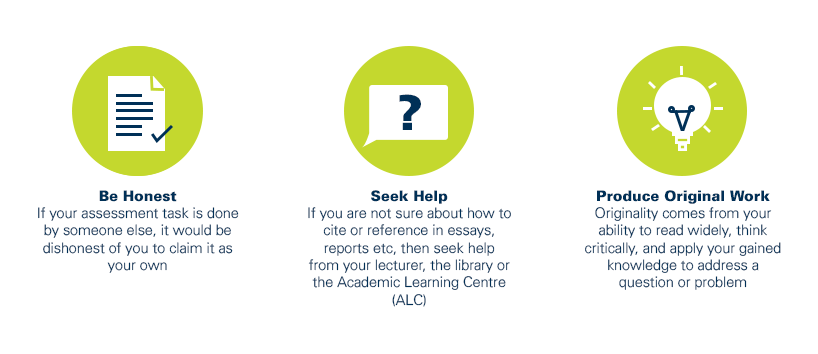
As a CQUniversity student you are expected to act honestly in all aspects of your academic work.
Any assessable work undertaken or submitted for review or assessment must be your own work. Assessable work is any type of work you do to meet the assessment requirements in the unit, including draft work submitted for review and feedback and final work to be assessed.
When you use the ideas, words or data of others in your assessment, you must thoroughly and clearly acknowledge the source of this information by using the correct referencing style for your unit. Using others’ work without proper acknowledgement may be considered a form of intellectual dishonesty.
Participating honestly, respectfully, responsibly, and fairly in your university study ensures the CQUniversity qualification you earn will be valued as a true indication of your individual academic achievement and will continue to receive the respect and recognition it deserves.
As a student, you are responsible for reading and following CQUniversity’s policies, including the Student Academic Integrity Policy and Procedure. This policy sets out CQUniversity’s expectations of you to act with integrity, examples of academic integrity breaches to avoid, the processes used to address alleged breaches of academic integrity, and potential penalties.
What is a breach of academic integrity?
A breach of academic integrity includes but is not limited to plagiarism, self-plagiarism, collusion, cheating, contract cheating, and academic misconduct. The Student Academic Integrity Policy and Procedure defines what these terms mean and gives examples.
Why is academic integrity important?
A breach of academic integrity may result in one or more penalties, including suspension or even expulsion from the University. It can also have negative implications for student visas and future enrolment at CQUniversity or elsewhere. Students who engage in contract cheating also risk being blackmailed by contract cheating services.
Where can I get assistance?
For academic advice and guidance, the Academic Learning Centre (ALC) can support you in becoming confident in completing assessments with integrity and of high standard.
What can you do to act with integrity?