Overview
Recent research from neuroscience highlights the dynamic and interconnected nature of learning, emphasizing neuroplasticity and the brain’s ability to adapt and build new pathways. Understandings about the brain, its architecture and how it processes information provides evidence for how children learn and the implications for planning and enacting learning experiences with children. In this unit, you will examine your existing understandings about how the brain works and engage with the educational neuroscience and the application of this knowledge to the classroom context will be deepened. You will propose implications for teaching and outline some possible challenges that you may encounter as you begin to apply understandings from neuroscience.
Details
Pre-requisites or Co-requisites
There are no requisites for this unit.
Important note: Students enrolled in a subsequent unit who failed their pre-requisite unit, should drop the subsequent unit before the census date or within 10 working days of Fail grade notification. Students who do not drop the unit in this timeframe cannot later drop the unit without academic and financial liability. See details in the Assessment Policy and Procedure (Higher Education Coursework).
Offerings For Term 2 - 2026
Attendance Requirements
All on-campus students are expected to attend scheduled classes - in some units, these classes are identified as a mandatory (pass/fail) component and attendance is compulsory. International students, on a student visa, must maintain a full time study load and meet both attendance and academic progress requirements in each study period (satisfactory attendance for International students is defined as maintaining at least an 80% attendance record).
Recommended Student Time Commitment
Each 6-credit Undergraduate unit at CQUniversity requires an overall time commitment of an average of 12.5 hours of study per week, making a total of 150 hours for the unit.
Class Timetable
Assessment Overview
Assessment Grading
This is a graded unit: your overall grade will be calculated from the marks or grades for each assessment task, based on the relative weightings shown in the table above. You must obtain an overall mark for the unit of at least 50%, or an overall grade of 'pass' in order to pass the unit. If any 'pass/fail' tasks are shown in the table above they must also be completed successfully ('pass' grade). You must also meet any minimum mark requirements specified for a particular assessment task, as detailed in the 'assessment task' section (note that in some instances, the minimum mark for a task may be greater than 50%). Consult the University's Grades and Results Policy for more details of interim results and final grades.
All University policies are available on the CQUniversity Policy site.
You may wish to view these policies:
- Grades and Results Policy
- Assessment Policy and Procedure (Higher Education Coursework)
- Review of Grade Procedure
- Student Academic Integrity Policy and Procedure
- Academic Progression Policy and Procedure
- Student Refund and Credit Balance Policy and Procedure
- Complaints Policy and Procedure
- Information and Communications Technology Acceptable Use Policy and Procedure
This list is not an exhaustive list of all University policies. The full list of University policies are available on the CQUniversity Policy site.
Feedback, Recommendations and Responses
Every unit is reviewed for enhancement each year. At the most recent review, the following staff and student feedback items were identified and recommendations were made.
Feedback from Head of Course
Discontinuation of unit
No recommendations.
- Synthesise contemporary research on how the brain works including executive function and propose implications for teaching
- Analyse existing personal assumptions about the brain and learning
- Utilise research to identify the difference between novice and expert learners and consider implications for classroom practice
- Synthesise the most efficient and effective process of knowledge acquisition in the brain evident in emerging research
- Synthesise research evidence that shows why the use of self-directed approaches as a starting point for novices is ineffective and should be avoided
- Outline the process that occurs in a novice brain during progression towards mastery.
Successful completion of this unit provides opportunities for students to engage with the Australian Professional Standards for Teachers (Graduate Career Stage) focus areas of:
1.1 Physical, social and intellectual development and characteristics of students
1.2 Understand how students learn
1.3 Students with diverse linguistic, cultural, religious and socioeconomic backgrounds
1.5 Differentiate teaching to meet the specific learning needs of students across the full range of abilities
4.1 Support student participation
Alignment of Assessment Tasks to Learning Outcomes
| Assessment Tasks | Learning Outcomes | |||||
|---|---|---|---|---|---|---|
| 1 | 2 | 3 | 4 | 5 | 6 | |
| 1 - Presentation - 50% | ||||||
| 2 - Creative work - 50% | ||||||
Alignment of Graduate Attributes to Learning Outcomes
| Graduate Attributes | Learning Outcomes | |||||
|---|---|---|---|---|---|---|
| 1 | 2 | 3 | 4 | 5 | 6 | |
| 1 - Communication | ||||||
| 2 - Problem Solving | ||||||
| 3 - Critical Thinking | ||||||
| 4 - Information Literacy | ||||||
| 5 - Team Work | ||||||
| 6 - Information Technology Competence | ||||||
| 7 - Cross Cultural Competence | ||||||
| 8 - Ethical practice | ||||||
| 9 - Social Innovation | ||||||
| 10 - First Nations Knowledges | ||||||
| 11 - Aboriginal and Torres Strait Islander Cultures | ||||||
Textbooks
There are no required textbooks.
IT Resources
- CQUniversity Student Email
- Internet
- Unit Website (Moodle)
All submissions for this unit must use the referencing style: American Psychological Association 7th Edition (APA 7th edition)
For further information, see the Assessment Tasks.
l.k.donohue@cqu.edu.au
Week 1
Begin Date: 13 Jul 2026Module/Topic
The First 1000 Days
Module 1 — The Developing Brain
Chapter
- Centre for Community Child Health (2017). The first thousand days: An evidence paper summary.
- Royal Children’s Hospital Melbourne. Strong foundations: Getting it right in the first 1000 days.
- Fox, S. E., Levitt, P., & Nelson, C. A. (2010). How the timing and quality of early experiences influence the development of brain architecture. Child Development, 81(1), 28–40.
Events and Submissions/Topic
Formative Activity: Write a 300-word pre-reflection capturing your existing assumptions about how the brain develops.
Forum Post #1: Post one assumption you held and what shifted after engaging with this week’s multimodal texts.
AT1 Milestone: AT1 brief released; Part A pre-reflection drafted.
Week 2
Begin Date: 20 Jul 2026Module/Topic
Stress and the Developing Brain
Module 1 — The Developing Brain
Chapter
• Center on the Developing Child, Harvard University (2009). Excessive stress disrupts the architecture of the developing brain: Working Paper No. 3.
• Center on the Developing Child. What are ACEs? And how do they relate to toxic stress?
• Center on the Developing Child (2020). The Brain Architects podcast: Brain architecture — laying the foundation [Audio podcast, 33:42].
• Center on the Developing Child (2019). What is epigenetics? Experiences affect children’s genes.
Events and Submissions/Topic
Formative Activity: Identify one protective factor you would build into your future classroom and locate the evidence behind your choice.
Forum Post #2: Share your protective factor and evidence anchor; respond to two peers.
AT1 Milestone: Part A first draft saved to the Forum for peer feedback.
Week 3
Begin Date: 27 Jul 2026Module/Topic
Environments and Interactions that Support Brain Development
Module 1 — The Developing Brain
Chapter
- Center on the Developing Child, Harvard University. Serve and return.
- Center on the Developing Child, Harvard University. Brain-building through play: Activities for infants, toddlers and children.
- Education Scotland. Schemas: Learning through play.
- Atherton, F., & Nutbrown, C. (2013). Understanding schemas and young children: From birth to three. Sage. [Chapters on schema identification].
Events and Submissions/Topic
Formative Activity: Observe and name two schemas in a short play-based video clip provided in Moodle.
Forum Post #3: Share a mini-case and propose one change to environment or interaction, justified from this week’s research.
AT1 Milestone: Animation tool selected for Part B; 100-word AI-use plan documented.
Week 4
Begin Date: 03 Aug 2026Module/Topic
Neuromyths
Module 2 — Brain Research: Implications for Learning in Classrooms
Chapter
- Howard-Jones, P. A. (2014). Neuroscience and education: Myths and messages. Nature Reviews Neuroscience, 15, 817–824.
- Carter, M., Van Bergen, P., Stephenson, J., Newall, C., & Sweller, N. (2020). Prevalence, predictors and sources of information regarding neuromyths in an Australian cohort of preservice teachers. Australian Journal of Teacher Education, 45(10).
- Technology Networks (2019). A lesson in neuromyths [Video, 2:48].
Events and Submissions/Topic
Formative Activity: Audit three personal/professional assumptions against the readings; classify as fact, myth or partial truth.
Forum Post #4: Post one neuromyth you previously believed, its origin, and the evidence that challenged it.
AT1 Milestone: Animation storyboard + Part B narration script (v1) drafted.
Week 5
Begin Date: 10 Aug 2026Module/Topic
Executive Function
Module 2 — Brain Research: Implications for Learning in Classrooms
Chapter
- Center on the Developing Child, Harvard University (2011). Building the brain’s “air traffic control” system: How early experiences shape the development of executive function.
- Center on the Developing Child, Harvard University (2012). In Brief: Executive function — Skills for life and learning.
- Australian Education Research Organisation (2023). Executive functions: Early childhood learning trajectories.
- Diamond, A. (2013). Executive functions. Annual Review of Psychology, 64, 135–168.
Events and Submissions/Topic
Formative Activity: Map birth-to-twelve stages of working memory, inhibitory control and cognitive flexibility with one classroom example per skill.
Forum Post #5: Describe one EF behaviour you have observed and what it reveals about the learner.
AT1 Milestone: Part C implications (three) drafted; Part D APA reference list assembled.
Week 6
Begin Date: 17 Aug 2026Module/Topic
Novice Learners
Module 2 — Brain Research: Implications for Learning in Classrooms
Chapter
- Office of Educational Improvement, Medical College of Wisconsin (2022). Cognitive load theory: A guide to applying cognitive load theory to your teaching.
- Centre for Education Statistics and Evaluation (2017). Cognitive load theory: Research that teachers really need to understand. NSW Department of Education.
- Boudreau, E. (2019). The novice to expert shift. Harvard Graduate School of Education.
- Kirschner, P., Sweller, J., & Clark, R. (2006). Why minimal guidance during instruction does not work. Educational Psychologist, 41(2), 75–86.
Events and Submissions/Topic
Formative Activity: Peer-review workshop in tutorials — swap AT1 drafts against the AT1 rubric.
Forum Post #6: Post your two strongest implications for teachers (one prior-to-school, one primary) with evidence anchors.
AT1 DUE: AT1 Presentation due Friday 21 Aug 2026, 23:59 AEST.
AT1 Oral Presentation with Accompanying Media Due: Week 6 Friday (21 Aug 2026) 11:59 pm AEST
AT2 Creative Installation with Accompanying Script Due: Week 6 Friday (21 Aug 2026) 11:59 pm AEST
Vacation Week
Begin Date: 24 Aug 2026Module/Topic
No scheduled content.
Chapter
- Self-directed catch-up; AT2 brief released for review.
Events and Submissions/Topic
AT2 Milestone: AT2 brief released; concept-incubation notebook begun.
Week 7
Begin Date: 31 Aug 2026Module/Topic
Explicit Instruction
Module 2 — Brain Research: Implications for Learning in Classrooms
Chapter
- Australian Education Research Organisation (2023). Managing cognitive load optimises learning.
- Australian Education Research Organisation (2023). Explicit instruction optimises learning.
- Rosenshine, B. (2012). Principles of instruction: Research-based strategies that all teachers should know. American Educator, Spring, 12–39.
- Centre for Education Statistics and Evaluation (2018). Cognitive load theory in practice: Examples for the classroom. NSW Department of Education.
Events and Submissions/Topic
Formative Activity: Build a one-page poster of strategies that reduce cognitive load and encourage schema development.
Forum Post #7: Propose your AT2 installation concept (one chosen) and the three strongest anchor sources you will cite.
AT2 Milestone: Installation concept proposal posted to Forum 7 by Friday.
Week 8
Begin Date: 07 Sep 2026Module/Topic
Fostering Executive Function Skills in Early Childhood
Module 3 — Implications for Teaching
Chapter
- Center on the Developing Child, Harvard University. Enhancing and practicing executive function skills with children from infancy to adolescence.
- Community Connections Solutions Australia (2021). Self-regulation: A foundation for wellbeing and involved learning.
- O’Connor, A. (2017). EYFS Best Practice — All about… memory. Nursery World.
Events and Submissions/Topic
Formative Activity: Build a one-page handout of five evidence-based memory strategies, mapped to an age band you select.
Forum Post #8: Post your handout and identify which strategy you would prioritise for novices and why.
AT2 Milestone: Annotated bibliography of 8 sources submitted via Moodle.
Week 9
Begin Date: 14 Sep 2026Module/Topic
Supporting Executive Function in School Settings: Evidence-Based Teaching Strategies
Module 3 — Implications for Teaching
Chapter
Australian Education Research Organisation (2021). Explicit instruction: Know how to teach your students.
Australian Education Research Organisation (2023). Teaching for how students learn: A model of teaching and learning.
Frey, N., & Fisher, D. (2013). Gradual release of responsibility instructional framework. ASCD.
Events and Submissions/Topic
Formative Activity: Watch a scaffolded-practice demonstration; select one explicit-teaching strategy and explain its research base using CESE (2018) or Rosenshine (2012).
Forum Post #9: Post one worked example or fading sequence and explain why it suits novice learners.
AT2 Milestone: 500-word draft of the AT2 novice-to-mastery section submitted for tutor feedback.
Week 10
Begin Date: 21 Sep 2026Module/Topic
Intentional Teaching with Play and Discovery Approaches
Module 3 — Implications for Teaching
Chapter
- Danniels, E., & Pyle, A. (2018). Defining play-based learning. Encyclopedia on Early Childhood Development.
- Australian Education Research Organisation (2025). Play-based learning with intentionality: Discussion paper.
- Edwards, S. (2017). Play-based learning and intentional teaching: Forever different? Australasian Journal of Early Childhood, 42(2), 4–11.
- ACECQA (2022). EYLF practices — play-based learning and intentionality information sheet
Events and Submissions/Topic
Formative Activity: Plan a 15-minute intentional play-based experience showing how you would scaffold one EF skill.
Forum Post #10: Share your plan; identify the moment of teacher decision-making and the evidence guiding it.
AT2 Milestone: 1000-word AT2 draft (installation rationale + implications) submitted for self-review.
Week 11
Begin Date: 28 Sep 2026Module/Topic
Assessing and Planning to Support Executive Function and Self-Regulation
Module 3 — Implications for Teaching
Chapter
Australian Education Research Organisation (2024). Early childhood learning trajectories: Executive function.
Queensland Curriculum and Assessment Authority (2025). Fostering executive functions — Kindergarten research insights.
Madanipour, P., Garvis, S., Cohrssen, C., & Pendergast, D. (2025). Early childhood teachers’ understanding of executive functions and strategies employed to facilitate them. Journal of Early Childhood Education Research, 14(1), 73–104.
Events and Submissions/Topic
Formative Activity: Use the AERO trajectories to plan one observation tool you would use to assess working memory, inhibitory control or cognitive flexibility.
Forum Post #11: Post your assessment tool and one anticipated teaching response based on a hypothetical observation.
AT2 Milestone: Final AT2 draft uploaded to Turnitin for similarity check.
Week 12
Begin Date: 05 Oct 2026Module/Topic
Chapter
Events and Submissions/Topic
Exam Week
Begin Date: 12 Oct 2026Module/Topic
Critical Reflections on Practice
Module 3 — Implications for Teaching
Chapter
- Reid, A. (2021, August 17). Teachers use many teaching approaches to impart knowledge. Pitting one against another harms education. The Conversation.
- Organisation for Economic Co-operation and Development (2025). Unlocking high-quality teaching. OECD Publishing.
- Australian Science Teachers Association (2025). Position paper on the misrepresentation of explicit teaching and inquiry teaching.
Events and Submissions/Topic
Formative Activity: Critically reflect on EYLF principles, the NQS and APST in light of brain research; identify one tension and one resolution for your practice.
Forum Post #12: Synthesis post: How will you balance explicit teaching and inquiry/play-based approaches in your classroom?
AT2 DUE: AT2 Creative work + script due Friday 09 Oct 2026, 23:59 AEST.
Vacation/Exam Week
Begin Date: 19 Oct 2026Module/Topic
Chapter
Events and Submissions/Topic
1 Presentation
Task description
You will develop a recorded oral presentation (with accompanying PowerPoint, Prezi or similar media). Submit the recording (or link), the supporting media, and the script.
Structure
• Part A — Existing assumptions: Outline your existing assumptions about how the brain develops and where they were derived from.
• Part B — Contemporary research synthesis: Drawing on Module 1, synthesise how the brain works and how this research has challenged your existing understandings. Include a short animation that illustrates how the brain works. You may use AI to support development of the animation, but you must write the accompanying text. All AI-generated components must be acknowledged.
• Part C — Implications for teaching: Conclude with three emerging implications for teachers (covering prior-to-school settings and primary classrooms).
• Part D — Reference list: APA 7 reference list; ensure all sources are acknowledged.
Key details
• Weighting: 50% · Due: End of Week 6 — Friday 21 August 2026, 23:59 AEST
• Submission: Recording (or link), supporting media, and script uploaded via Moodle
• ULOs assessed: 1, 2, 5
• Graduate attributes: Communication; Problem solving; Critical thinking; Ethical practice (AI use)
AI Assessment Scale: Level 2
You may use AI for planning, idea development, and research. Your final submission should show how you have
developed and refined these ideas. Any misuse or lack of disclosure regarding AI tools will be considered a breach of
academic integrity. Please include an AI Use Statement on the cover page of all submitted assessment tasks.
Please note: The 72-Hour grace period applies to this assessment task.
If you need longer than 72 hours, you'll still need to use the normal Assessment Extension System process.
Week 6 Friday (21 Aug 2026) 11:59 pm AEST
Submit recorded oral presentation, supporting media, and the supporting script via Moodle.
Assignments are returned once the moderation process has been completed.
· Synthesise contemporary research on how the brain works and propose implications for teaching
· Communicate a deep understanding of contemporary research on how the brain works
· Analyse existing personal assumptions about the brain and learning
· Personal and academic literacy
No submission method provided.
- Synthesise contemporary research on how the brain works including executive function and propose implications for teaching
- Analyse existing personal assumptions about the brain and learning
- Synthesise research evidence that shows why the use of self-directed approaches as a starting point for novices is ineffective and should be avoided
2 Creative work
Task description
Drawing on Module 2 and Module 3, prepare a creative representation (“installation”) of your analysis of the literature on how children learn and propose implications for teaching children in prior-to-school settings and primary classrooms. The creative work is accompanied by a 1500-word text that explains the implications for teaching and proposes some of the challenges you may encounter; the text must be supported by relevant literature (APA 7).
Knowledge demonstrated
•
• Knowledge of what it means to be a “novice” learner in comparison to an “expert”.
• Knowledge of and skill in the related implications for practice.
• Knowledge of the most efficient and effective process of knowledge acquisition in the brain, including the function of memory and the concept of cognitive overload.
• Knowledge of the process that occurs in a novice brain during progression towards mastery, and knowledge of the need to adjust practice in response.
• Knowledge of how executive function can be fostered through intentional teaching, including the complementary roles of explicit instruction and play/inquiry approaches.
• Knowledge and understanding of common neuromyths and the impact of their perpetuation.
Key details
• Weighting: 50% · Due: End of Week 12 — Friday 09 October 2026, 23:59 AEST
• Submission: Photo/video documentation of the installation + 1500-word accompanying text uploaded via Moodle
• ULOs assessed: 3, 4, 6
• Graduate attributes: Critical thinking; Communication; Problem solving
AI Assessment Scale: Level 2
You may use AI for planning, idea development, and research. Your final submission should show how you have
developed and refined these ideas. Any misuse or lack of disclosure regarding AI tools will be considered a breach of
academic integrity. Please include an AI Use Statement on the cover page of all submitted assessment tasks.
Please note: The 72-Hour grace period applies to this assessment task.
If you need longer than 72 hours, you'll still need to use the normal Assessment Extension System process.
Week 6 Friday (21 Aug 2026) 11:59 pm AEST
Submit photo/video documentation of the installation + 1500-word accompanying text uploaded via Moodle
Assignments are released after moderation is completed.
1. Utilise research to identify the difference between novice and expert learners and consider implications for classroom practice
2. Synthesise the most efficient and effective process of knowledge acquisition in the brain evident in emerging research
3. Outline the process that occurs in a novice brain during progression towards mastery
No submission method provided.
- Utilise research to identify the difference between novice and expert learners and consider implications for classroom practice
- Synthesise the most efficient and effective process of knowledge acquisition in the brain evident in emerging research
- Outline the process that occurs in a novice brain during progression towards mastery.
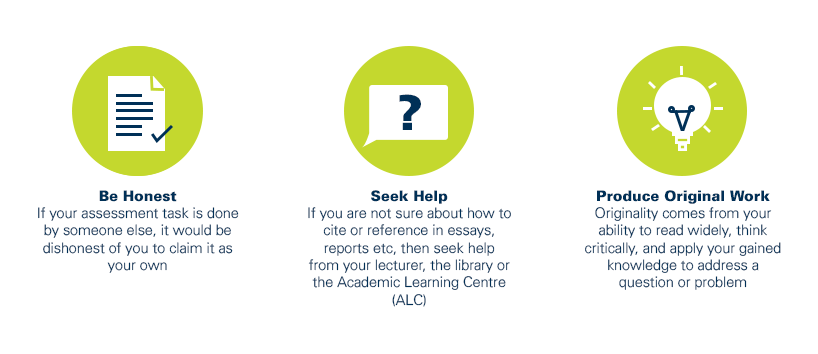
As a CQUniversity student you are expected to act honestly in all aspects of your academic work.
Any assessable work undertaken or submitted for review or assessment must be your own work. Assessable work is any type of work you do to meet the assessment requirements in the unit, including draft work submitted for review and feedback and final work to be assessed.
When you use the ideas, words or data of others in your assessment, you must thoroughly and clearly acknowledge the source of this information by using the correct referencing style for your unit. Using others’ work without proper acknowledgement may be considered a form of intellectual dishonesty.
Participating honestly, respectfully, responsibly, and fairly in your university study ensures the CQUniversity qualification you earn will be valued as a true indication of your individual academic achievement and will continue to receive the respect and recognition it deserves.
As a student, you are responsible for reading and following CQUniversity’s policies, including the Student Academic Integrity Policy and Procedure. This policy sets out CQUniversity’s expectations of you to act with integrity, examples of academic integrity breaches to avoid, the processes used to address alleged breaches of academic integrity, and potential penalties.
What is a breach of academic integrity?
A breach of academic integrity includes but is not limited to plagiarism, self-plagiarism, collusion, cheating, contract cheating, and academic misconduct. The Student Academic Integrity Policy and Procedure defines what these terms mean and gives examples.
Why is academic integrity important?
A breach of academic integrity may result in one or more penalties, including suspension or even expulsion from the University. It can also have negative implications for student visas and future enrolment at CQUniversity or elsewhere. Students who engage in contract cheating also risk being blackmailed by contract cheating services.
Where can I get assistance?
For academic advice and guidance, the Academic Learning Centre (ALC) can support you in becoming confident in completing assessments with integrity and of high standard.
What can you do to act with integrity?