Overview
In this unit the focus is on students in the pre-adolescent and adolescent years. In this unit you will develop further understandings about the ways in which educators create supportive learning environments that are responsive to students needs. In particular, you will identify strategies to promote positive wellness and mental health for yourself and for your students. You will articulate a developed understanding of the links between risk and protective factors, wellness and learning, and use examples from your environment and community to develop analytical and practical knowledge of the notion of wellbeing and mental, emotional and social health as a community concern. Throughout this unit you will reflect upon the ways in which learning and wellbeing are linked and how a learner’s individual, school and community experiences can impact on wellbeing. You will also consider your own wellbeing and explore enabling strategies that will support the efficacy of your own professional practice.
Details
Pre-requisites or Co-requisites
There are no requisites for this unit.
Important note: Students enrolled in a subsequent unit who failed their pre-requisite unit, should drop the subsequent unit before the census date or within 10 working days of Fail grade notification. Students who do not drop the unit in this timeframe cannot later drop the unit without academic and financial liability. See details in the Assessment Policy and Procedure (Higher Education Coursework).
Offerings For Term 2 - 2026
Attendance Requirements
All on-campus students are expected to attend scheduled classes - in some units, these classes are identified as a mandatory (pass/fail) component and attendance is compulsory. International students, on a student visa, must maintain a full time study load and meet both attendance and academic progress requirements in each study period (satisfactory attendance for International students is defined as maintaining at least an 80% attendance record).
Recommended Student Time Commitment
Each 6-credit Undergraduate unit at CQUniversity requires an overall time commitment of an average of 12.5 hours of study per week, making a total of 150 hours for the unit.
Class Timetable
Assessment Overview
Assessment Grading
This is a graded unit: your overall grade will be calculated from the marks or grades for each assessment task, based on the relative weightings shown in the table above. You must obtain an overall mark for the unit of at least 50%, or an overall grade of 'pass' in order to pass the unit. If any 'pass/fail' tasks are shown in the table above they must also be completed successfully ('pass' grade). You must also meet any minimum mark requirements specified for a particular assessment task, as detailed in the 'assessment task' section (note that in some instances, the minimum mark for a task may be greater than 50%). Consult the University's Grades and Results Policy for more details of interim results and final grades.
All University policies are available on the CQUniversity Policy site.
You may wish to view these policies:
- Grades and Results Policy
- Assessment Policy and Procedure (Higher Education Coursework)
- Review of Grade Procedure
- Student Academic Integrity Policy and Procedure
- Academic Progression Policy and Procedure
- Student Refund and Credit Balance Policy and Procedure
- Complaints Policy and Procedure
- Information and Communications Technology Acceptable Use Policy and Procedure
This list is not an exhaustive list of all University policies. The full list of University policies are available on the CQUniversity Policy site.
Feedback, Recommendations and Responses
Every unit is reviewed for enhancement each year. At the most recent review, the following staff and student feedback items were identified and recommendations were made.
Feedback from SUTE
Revise the assessment tasks.
Revise assessment tasks to ensure they are both manageable for students and directly relevant to the unit's learning outcomes.
Feedback from Student comments
Clarify assessment task 1.
Assessment Task 1 description will be revised to ensure clear, logical instructions that students can easily follow and understand.
- Identify and critique relevant policies, relationships, organisations and networks that support the wellbeing of individuals and communities
- Examine the range of risk and protective factors that impact on the wellbeing of pre-adolescent and adolescent individuals from diverse social and cultural backgrounds
- Evaluate strategies and processes that can support and maximise individual and community wellbeing, belonging and safety in physical, social and cyber environments
- Identify strategies that contribute to the maintenance of personal and professional wellbeing of educators
- Discuss the role of educators in the promotion of social, emotional and mental wellbeing to enhance student learning in rapidly changing 21st century contexts
- Communicate an explicit commitment to the wellbeing of learners through defence of socially just classroom practice and strategies for building productive partnerships with students, parents and carers and communities.
Successful completion of this unit provides opportunities for students to engage with the Australian Professional Standards for Teachers (Graduate Career Stage) focus areas of:
1.1 Physical, social and intellectual development and characteristics of students
1.3 Students with diverse linguistic, cultural, religious and socioeconomic backgrounds
3.7 Engage parents/carers in the educative process
4.4 Maintain student safety
6.1 Identify and plan professional learning needs
6.2 Engage in professional learning and improve practice
7.1 Meet professional ethics and responsibilities
7.3 Engage with the parents/carers
7.4 Engage with professional teaching networks and broader communities
Alignment of Assessment Tasks to Learning Outcomes
| Assessment Tasks | Learning Outcomes | |||||
|---|---|---|---|---|---|---|
| 1 | 2 | 3 | 4 | 5 | 6 | |
| 1 - Written Assessment - 50% | ||||||
| 2 - Written Assessment - 50% | ||||||
Alignment of Graduate Attributes to Learning Outcomes
| Graduate Attributes | Learning Outcomes | |||||
|---|---|---|---|---|---|---|
| 1 | 2 | 3 | 4 | 5 | 6 | |
| 1 - Communication | ||||||
| 2 - Problem Solving | ||||||
| 3 - Critical Thinking | ||||||
| 4 - Information Literacy | ||||||
| 5 - Team Work | ||||||
| 6 - Information Technology Competence | ||||||
| 7 - Cross Cultural Competence | ||||||
| 8 - Ethical practice | ||||||
| 9 - Social Innovation | ||||||
| 10 - First Nations Knowledges | ||||||
| 11 - Aboriginal and Torres Strait Islander Cultures | ||||||
Alignment of Assessment Tasks to Graduate Attributes
| Assessment Tasks | Graduate Attributes | ||||||||||
|---|---|---|---|---|---|---|---|---|---|---|---|
| 1 | 2 | 3 | 4 | 5 | 6 | 7 | 8 | 9 | 10 | 11 | |
| 1 - Written Assessment - 50% | |||||||||||
| 2 - Written Assessment - 50% | |||||||||||
Textbooks
There are no required textbooks.
IT Resources
- CQUniversity Student Email
- Internet
- Unit Website (Moodle)
All submissions for this unit must use the referencing style: American Psychological Association 7th Edition (APA 7th edition)
For further information, see the Assessment Tasks.
r.vanderburg@cqu.edu.au
Week 1 - Middle School Students: Wellbeing, Safety & Resilience
Begin Date: 13 Jul 2026Module/Topic
- Who are the Middle Years Students?
- What is wellbeing, safety and resilience?
- What is the link between wellbeing & learning for students?
Chapter
Events and Submissions/Topic
Week 2 - Vulnerability of Middle Years Students and why is this such a concern?
Begin Date: 20 Jul 2026Module/Topic
- What is happening for Middle Years Students?
- What makes Middle School Students vulnerable?
- Potential sources of risks.
- What does the data say about Middle Years Students' wellbeing & learning?
Chapter
- Young Minds Matter: The Mental Health of Australian Children & Adolescents
- Student Wellbeing, Engagement & Learning Across the Middle Years
Events and Submissions/Topic
Week 3 - Australian Education Contexts: What is Australia's Response?
Begin Date: 27 Jul 2026Module/Topic
- What responsibilities do we have as teachers to support, promote and maintain student wellbeing and safety?
- Schools' response to student wellbeing.
Chapter
- Alice Springs (Mparntwe) Education Declaration
- National & State Wellbeing Frameworks
- Education Resources - Trauma, Mental Health and Bullying
Events and Submissions/Topic
Week 4 - The Role of External Resources & Organisations - Community Network, Physical & Online Services
Begin Date: 03 Aug 2026Module/Topic
- What is the role of external resources, and how can they assist with Middle Years students' wellbeing, resilience and safety?
- External Resource Scan
Chapter
- Be You
- Headspace
- E-Safety Commission
- Resilience Project
Events and Submissions/Topic
Week 5 - Resiliency Builders: Risk Mitigating & Protective Factors and the Role of Teachers
Begin Date: 10 Aug 2026Module/Topic
- What does mitigating risk and protective factors look like for Middle Years students?
- Evaluation of resources using the Resiliency Wheel Framework in different environments.
Chapter
- Resiliency Wheel Framework
Events and Submissions/Topic
Week 6 - Personal & Professional Resiliency
Begin Date: 17 Aug 2026Module/Topic
- What is the importance of personal and professional resiliency?
- Being self-aware
Chapter
- Teacher Resilience Model
Events and Submissions/Topic
Break Week
Begin Date: 24 Aug 2026Module/Topic
Chapter
Events and Submissions/Topic
Week 7 - Pre-service Teacher & Graduate Teacher Resiliency
Begin Date: 31 Aug 2026Module/Topic
- Self-care strategies
- Support networks for teachers
Chapter
- Be You for Pre-service Teachers
- BRITE
- Teacher Wellbeing Australia
Events and Submissions/Topic
Assessment Task 1 Due
Assessment Task 1 - Wellbeing Context: literature, policy and community resource scan Due: Week 7 Wednesday (2 Sept 2026) 11:45 pm AEST
Week 8 - Exploring Wellbeing Frameworks
Begin Date: 07 Sep 2026Module/Topic
- Comparing Wellbeing Frameworks against Resiliency Builders
Chapter
- Circle of Courage
- PERMA & PERMA+
- Social & Emotional Learning (SEL)
- Resilience Doughnut
- ARACY Nest
Events and Submissions/Topic
Week 9 - Whole School & Classroom Environments
Begin Date: 14 Sep 2026Module/Topic
- Establishing Learning Environment Culture
- Curriculum & Pedagogy Strategies
- Relationship Building/Partnerships
- Policies & Procedures
Chapter
Events and Submissions/Topic
Week 10 - Whole School Initiatives: Wellbeing & Learning Resources and Strategies
Begin Date: 21 Sep 2026Module/Topic
- Wellbeing initiatives and the development of strategies for whole school and classroom contexts
Chapter
- Growth Mindset
- Institute of Positive Education
- Be You Schools
- Positive Behaviour for Learning (PBL)
Events and Submissions/Topic
Week 11 - Communication and Justification of the Wellbeing and Safety of Students
Begin Date: 28 Sep 2026Module/Topic
- Education Stakeholders
- Australian Professional Standards
- Council of Parents & Citizens Association
Chapter
- Parents as Partners
Events and Submissions/Topic
Week 12 - Sharing & Review Week
Begin Date: 05 Oct 2026Module/Topic
- Sharing Frameworks, pedagogical strategies and self-care strategies
- Review and Reflection
Chapter
Events and Submissions/Topic
Assessment Task 2 Due
Assessment Task 2 - Educator Context: Personal meets Professional Reflection & Creation of School Wellbeing Framework Due: Week 12 Wednesday (7 Oct 2026) 12:00 am AEST
Exam Week
Begin Date: 12 Oct 2026Module/Topic
Chapter
Events and Submissions/Topic
Vacation/Exam Week
Begin Date: 19 Oct 2026Module/Topic
Chapter
Events and Submissions/Topic
Use of Generative Artificial Intelligence (AI) in Assessment Materials
Generative artificial intelligence (AI) tools may have been used by academic/teaching staff in the design of this assessment task and/or associated marking resources (for example, for initial drafting, rubric development, or feedback scaffolding).
Any AI‑assisted content has been critically reviewed and refined by academic staff. The final assessment design, marking criteria, and feedback processes reflect academic judgement and comply with CQUniversity assessment and academic integrity requirements.
1 Written Assessment
Task Description
This assessment consists of three distinct yet interconnected components that examine well-being, resilience, and safety in the middle years.
The task is designed to develop your understanding of:
- student wellbeing, resilience, and safety
- factors that place young people at risk
- community, curriculum, and legislative supports available to schools
- strategies that help teachers foster resilience and mitigate risk among middle years students
The three parts build upon one another. The risk factors identified in Part A should inform the resource package developed in Part B. The "At a Glance" overview in Part B.1 should represent the broad range of potential risks affecting middle years students. From this broader overview, select two risk factors to explore in Parts B.2, B.3, and C. The resource selected for analysis in Part C must be drawn from the resource package created in Part B.
Part A: Written Report/Essay (1500 words)
Prepare a written report or essay that presents your understanding of student wellbeing, resilience, and safety in relation to middle years students and the contemporary Australian educational context.
Support your discussion with relevant scholarly literature and research.
Your report should address the following:
1. Wellbeing, Resilience, and Safety
- Define wellbeing, resilience, and safety.
- Explain the significance of these concepts for young people during the middle years.
2. The Australian Educational Context
- Describe the current Australian educational context in which wellbeing promotion occurs.
- Consider contemporary challenges, priorities, and initiatives that influence student wellbeing and safety.
3. Students at Risk
- Identify characteristics, environments, experiences, and backgrounds that may place young people at risk of negative wellbeing outcomes.
- Examine factors that may increase vulnerability and contribute to students being identified as "at risk."
Part B: Resource Package
Develop a resource package that demonstrates your understanding of contemporary issues that may affect the well-being and safety of middle-years students. This package should be designed as a practical, professional resource for teachers and others who support young people.
Part B.1: "At a Glance" Overview
Create a one-page visual representation of the broad range of potential risk sources that may affect middle-years students. This overview should represent the full landscape of potential risks, not only the two risk factors selected for deeper exploration in Parts B.2 and B.3.
Examples may include:
- cyberbullying
- domestic and family violence
- substance use
- mental health concerns
- self-harm
- online safety
- discrimination
- homelessness
A concept map, infographic, diagram, or similar format may be used.
Part B.2: Community Resource Bank
From the broader overview in Part B.1, select two risk factors to explore in depth. For each of your two selected risk factors, identify and annotate a minimum of three external community resources.
For each resource:
- include active hyperlinks where possible
- identify specific webpages or resources rather than organisation homepages where appropriate
- provide a brief annotation (two to three sentences) explaining how the resource may support, promote, or maintain the wellbeing and safety of middle years students
Part B.3: Curriculum, Policy, and Legislative Supports
For each of your two selected risk factors, identify at least one relevant curriculum document, policy, framework, or legislative document and explain briefly how it supports schools in addressing that risk factor.
Relevant documents may include:
- Australian Curriculum (ACARA)
- Queensland Curriculum and Assessment Authority (QCAA)
- Department of Education frameworks
- Child Protection policies
- Codes of Conduct and Ethics
- Student wellbeing frameworks
Part C: Alignment to the Resiliency Wheel and Evaluation (800 words)
Select one key resource from the resource package developed in Part B.
Using the Resiliency Wheel (Henderson, 2007), demonstrate how the selected resource contributes to resilience building.
Part C.1: Alignment to the Resiliency Wheel
Align the resource to the six Resiliency Builders presented in the Resiliency Wheel.
This may be presented as:
- a table
- a visual representation
- another clearly organised format
Your alignment should identify how the resource provides opportunities to:
- reduce or mitigate risk factors
- strengthen protective factors
- build resilience among middle years students
Not every Resiliency Builder will be addressed equally; however, you should consider how the resource contributes to each of the six resilience-building domains.
Part C.2: Written Evaluation (800 words)
Evaluate the effectiveness of the selected resource in relation to the six Resiliency Builders.
Your evaluation should consider:
- the strengths of the resource
- its capacity to mitigate the identified risk factor
- its contribution to resilience building
- any limitations of the resource
- how teachers could use the resource to support wellbeing, safety, and resilience among middle years students
Support your evaluation with relevant literature where appropriate.
Word Count Requirements
Part A: 1500 words
Part B: No word count applies.
Part C.2: 800 words
Unless otherwise stated, word counts are calculated from the first word of the introduction to the final word of the conclusion.
Includes: in-text citations; direct quotations.
Does not include: cover page; abstract; table of contents; reference list; appendices.
AI Assessment scale tool:
Level 2 - You can use AI for planning, idea development, and research. Your final submission should demonstrate how you have developed and refined these ideas. Any misuse or failure to disclose the use of AI tools will be regarded as a breach of academic integrity.
AI-generated content for your critique and review.
Please refer to the Moodle Assessment tile for specific details.
Please note: The word count is considered from the introduction's first word to the conclusion's last word (unless specifically stated in the Task Description). It excludes the cover page, abstract, contents page, reference page and appendices. It includes in-text references and direct quotations.
The 72-hour grace period applies to Assessments 1 and 2.
If you are unable to submit Assessment 1 or Assessment 2 by the due date, you may submit within the 72-hour grace period without applying for an extension.
Important: The 72-hour grace period is included within any approved extension period. It is not added on top of an extension.
For example:
If you receive a 4-day extension, your new due date is 4 days after the original due date. You do not receive an additional 72-hour grace period after those 4 days.
Students who require more than 72 hours beyond the original due date must apply through the University's Assessment Extension System and provide the required supporting documentation.
Please ensure you submit extension requests as early as possible if circumstances arise that may affect your ability to meet assessment deadlines.
Week 7 Wednesday (2 Sept 2026) 11:45 pm AEST
Vacation/Exam Week Friday (23 Oct 2026)
Assessments will be marked, moderated and returned to students in a timely manner that provides sufficient feedback for the completion of Assessment Task 2.
- Research-informed examination demonstrating understandings of the vulnerability of middle years students and the factors (characteristics and diverse backgrounds) that could impact their well-being, resilience, and safety within school and community systems. (Australian Professional Standards for Teachers 1.1, 1.3 & 4.4).
- Demonstration of a broad range of potential risk sources for middle years students, along with explicit identification and description of both external resources (professionals, community representatives, and organisations) and school-based resources (curriculum, legislation, and personnel) that can be used to maintain and support students' wellbeing and safety. (Australian Professional Standards for Teachers 4.4 & 7.4).
- Evaluation of a key resource for one source of contemporary risk (identified in Part B) using the Resiliency Wheel to determine how the resource provides both opportunities for mitigating risk factors and building resilience for middle years students. (Australian Professional Standards for Teachers 4.4).
- Personal written competencies that convey the ‘student well-being’ context, utilising knowledge of academic practices and conventions.
- Identify and critique relevant policies, relationships, organisations and networks that support the wellbeing of individuals and communities
- Examine the range of risk and protective factors that impact on the wellbeing of pre-adolescent and adolescent individuals from diverse social and cultural backgrounds
- Evaluate strategies and processes that can support and maximise individual and community wellbeing, belonging and safety in physical, social and cyber environments
- Identify strategies that contribute to the maintenance of personal and professional wellbeing of educators
- Communication
- Critical Thinking
- Information Literacy
- Team Work
- Information Technology Competence
- Cross Cultural Competence
- Ethical practice
2 Written Assessment
Personal Meets Professional: Wellbeing and Resilience Assessment Task
Task Description
This is an individual written task consisting of two connected parts. Insights gained from Part A may inform your understanding of teacher wellbeing and resilience as you design your Whole School Wellbeing Framework in Part B.
Note: The word count applies to written components only. The Wellbeing Framework in Part B is not included in the word count.
Part A: Journal Entries — Personal Meets Professional: Wellbeing and Resilience Reflection (1000 words)
Being a teacher in the 21st century presents numerous challenges, both personally and professionally. Critically reflecting on your own wellbeing, resilience, support networks, and self-care strategies will help you identify how these relate to your future work as a teacher and the development of teacher resilience.
A minimum of three journal entries is required, totalling approximately 1000 words. Across your entries, you must address at least four of the following focus areas:
- personal wellbeing
- resilience
- support networks
- self-care strategies
- professional identity
- preparedness for teaching
This ensures your reflection demonstrates both depth within individual entries and breadth across the range of factors that contribute to teacher wellbeing and resilience.
Reflection should move beyond description and consider the implications of your experiences for your future role as a teacher. For example, rather than simply describing a challenging experience, consider what it revealed about your support networks, self-care strategies, or professional resilience, and what this means for your work as a teacher.
You may choose to utilise the Resilient Teacher Model to identify the dimensions your personal strategies align with, helping you recognise which strategies may be beneficial in your future teaching practice.
Journal entries should be written in the first person and do not require academic referencing.
Part B: Wellbeing Framework and Justification (1000-word justification, no word count for Wellbeing Framework)
Wellbeing committees are present in schools, and part of their role is to promote whole-school and classroom strategies that support the entire school community. In this part of the task, you will create a Whole School Wellbeing Framework and write a justification grounded in current research and literature.
To guide the development of your framework, you may draw on existing wellbeing frameworks shared in this unit (such as the Circle of Courage, Resiliency Wheel, or PERMA model) or develop your own original framework.
Framework Format
Please present your framework as a one-page visual model suitable for display throughout the school and for communication to all stakeholders. The framework may be presented as a visual model, infographic, table, flowchart, or other professional format appropriate for communication to school stakeholders.
Framework Content
Your framework must include specific strategies and activities for both whole-school and classroom environments and engage the wider school community, including teachers, students, parents, and caregivers.
Your framework must include strategies addressing each of the following domains:
- Learning environments: at both the whole-school and classroom levels
- Curriculum and pedagogy: at both the whole-school and classroom levels
- Relationship building: at both the whole-school and the classroom level
Policies and procedures: at both the whole-school and classroom levels
Written Justification
Your 1000-word justification should be supported by relevant contemporary research, policy documents, and professional literature where appropriate, and should explain:
- The need for the framework, including how and why you have selected or developed it.
- The ways the framework can support teachers' work, with reference to the Australian Professional Standards for Teachers (particularly Standard 4).
- How the framework fosters student wellbeing and creates safe, supportive learning environments.
- How the framework could be communicated and shared with parents and caregivers to promote meaningful partnerships that support student wellbeing.
Word Count Requirements
Part A: 1000 words
Part B justification: 1000 words
Part B framework: No word count applies.
Word counts are calculated from the first word of the introduction to the final word of the conclusion.
Includes: in-text citations; direct quotations.
Does not include: cover page; abstract; table of contents; reference list; appendices.
AI Assessment scale tool:
Level 2 - You may use AI for planning, idea development, and research. Your final submission should demonstrate how you have developed and refined these ideas. Any misuse or failure to disclose the use of AI tools will be regarded as a breach of academic integrity.
AI-generated content for your critique and review.
Please refer to the Moodle Assessment tile for specific details.
Important Deadline Requirements:
This assessment needs to be completed and submitted before commencing your practical placement (PRAC). This requirement ensures that you can dedicate your full attention to your practical experience without any unresolved academic duties.
Extension Policy: Extensions may be considered appropriately; however, any approved extension cannot extend beyond your PRAC commencement date. The assessment must be completed before commencing your practical placement, regardless of any extension granted.
If you anticipate challenges meeting the deadline or would like to discuss a potential extension, please reach out to me at your earliest convenience to explore your options and ensure compliance with the PRAC timing requirements.
Please note: The word count is calculated from the first word of the introduction to the last word of the conclusion (unless specifically stated in the Task Description). It excludes the cover page, abstract, contents page, reference page, and appendices. It includes in-text references and direct quotations.
The 72-hour grace period applies to Assessments 1 and 2.
If you are unable to submit Assessment 1 or Assessment 2 by the due date, you may submit within the 72-hour grace period without applying for an extension.
Important: The 72-hour grace period is included within any approved extension period. It is not added on top of an extension.
For example:
If you receive a 4-day extension, your new due date is 4 days after the original due date. You do not receive an additional 72-hour grace period after those 4 days.
Students who require more than 72 hours beyond the original due date must apply through the University's Assessment Extension System and provide the required supporting documentation.
Please ensure you submit extension requests as early as possible if circumstances arise that may affect your ability to meet assessment deadlines.
Week 12 Wednesday (7 Oct 2026) 12:00 am AEST
Vacation/Exam Week Friday (23 Oct 2026)
Assessment Task 2 will be returned to students within appropriate time-frames that accommodate marking, moderation and the finalisation of grades.
- Critical reflection and self-study on cultivating personal resilience to identify and discuss potential professional resilience, self-care strategies, and professional learning needs as a future teacher. (Australian Professional Standards for Teachers 6.1).
- Presentation of a comprehensive school wellbeing framework that identifies strategies to support students' wellbeing and safety within the entire school and classroom environments. This framework considers the learning environment, curriculum, pedagogy, relationship building, and relevant policies and procedures (Australian Professional Standards for Teachers 4.4).
- Justifying the developed whole school framework by utilising contemporary research and the Australian Professional Standards for Teachers to articulate the selection of the framework, integrated whole school and classroom strategies, as well as the commitment to enhancing student wellbeing and safety through constructive partnerships with students, parents/carers, and the community. (Australian Professional Standards for Teachers - Standard 4).
- Demonstrated personal written competencies that reflect knowledge of academic practices and conventions.
- Identify strategies that contribute to the maintenance of personal and professional wellbeing of educators
- Discuss the role of educators in the promotion of social, emotional and mental wellbeing to enhance student learning in rapidly changing 21st century contexts
- Communicate an explicit commitment to the wellbeing of learners through defence of socially just classroom practice and strategies for building productive partnerships with students, parents and carers and communities.
- Communication
- Problem Solving
- Critical Thinking
- Ethical practice
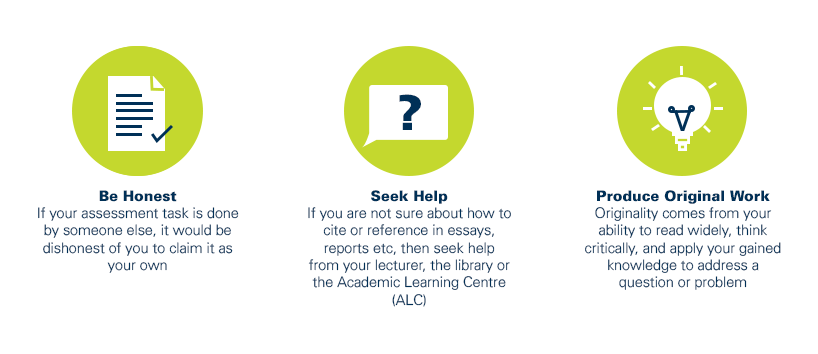
As a CQUniversity student you are expected to act honestly in all aspects of your academic work.
Any assessable work undertaken or submitted for review or assessment must be your own work. Assessable work is any type of work you do to meet the assessment requirements in the unit, including draft work submitted for review and feedback and final work to be assessed.
When you use the ideas, words or data of others in your assessment, you must thoroughly and clearly acknowledge the source of this information by using the correct referencing style for your unit. Using others’ work without proper acknowledgement may be considered a form of intellectual dishonesty.
Participating honestly, respectfully, responsibly, and fairly in your university study ensures the CQUniversity qualification you earn will be valued as a true indication of your individual academic achievement and will continue to receive the respect and recognition it deserves.
As a student, you are responsible for reading and following CQUniversity’s policies, including the Student Academic Integrity Policy and Procedure. This policy sets out CQUniversity’s expectations of you to act with integrity, examples of academic integrity breaches to avoid, the processes used to address alleged breaches of academic integrity, and potential penalties.
What is a breach of academic integrity?
A breach of academic integrity includes but is not limited to plagiarism, self-plagiarism, collusion, cheating, contract cheating, and academic misconduct. The Student Academic Integrity Policy and Procedure defines what these terms mean and gives examples.
Why is academic integrity important?
A breach of academic integrity may result in one or more penalties, including suspension or even expulsion from the University. It can also have negative implications for student visas and future enrolment at CQUniversity or elsewhere. Students who engage in contract cheating also risk being blackmailed by contract cheating services.
Where can I get assistance?
For academic advice and guidance, the Academic Learning Centre (ALC) can support you in becoming confident in completing assessments with integrity and of high standard.
What can you do to act with integrity?