Overview
In this unit, you will gain awareness of your professional obligations, roles and responsibilities in relation to the Disability Standards for Education and the way these standards inform policy and procedures for meeting the needs of students with disabilities in inclusive school settings. You will build knowledge of the definitions and criteria used to categorise disabilities in educational environments and explore the concept of “person first” approaches to meeting the needs of learners with disability in the middle years of schooling. You will take an holistic view of supporting the access and participation of learners with special needs and evaluate specific differentiation, accommodation and management strategies to make recommendations that support inclusion, wellbeing, safety and learning of all students in inclusive mainstream settings. You will research and document examples of good practice for consulting with students, parents, specialist services and wider community support agencies and demonstrate knowledge of how to access and facilitate partnerships that improve the educational outcomes for individuals with disabilities.
Details
Pre-requisites or Co-requisites
Pre-requisite: EDED20493 Diversity and Inclusion
Important note: Students enrolled in a subsequent unit who failed their pre-requisite unit, should drop the subsequent unit before the census date or within 10 working days of Fail grade notification. Students who do not drop the unit in this timeframe cannot later drop the unit without academic and financial liability. See details in the Assessment Policy and Procedure (Higher Education Coursework).
Offerings For Term 3 - 2026
Attendance Requirements
All on-campus students are expected to attend scheduled classes - in some units, these classes are identified as a mandatory (pass/fail) component and attendance is compulsory. International students, on a student visa, must maintain a full time study load and meet both attendance and academic progress requirements in each study period (satisfactory attendance for International students is defined as maintaining at least an 80% attendance record).
Recommended Student Time Commitment
Each 6-credit Postgraduate unit at CQUniversity requires an overall time commitment of an average of 12.5 hours of study per week, making a total of 150 hours for the unit.
Class Timetable
Assessment Overview
| Assessment Task | Part Weighting (% of assessment) |
Assessment Security Level | Gen AI Guidance Levels |
|---|---|---|---|
| 1. Examining the Disability Standards for Education 2005 (50% of unit ) | |||
| Examining the Disability Standards for Education 2005 (Written Assessment) | 100% of 50% | Low | AI-Assisted (Guided Collaboration) |
| 2. Adjustments for students with specific needs (50% of unit ) | |||
| Adjustments for students with specific needs (Written Assessment) | 100% of 50% | Low | AI-Assisted (Guided Collaboration) |
Assessment Grading
This is a graded unit: your overall grade will be calculated from the marks or grades for each assessment task, based on the relative weightings shown in the table above. You must obtain an overall mark for the unit of at least 50%, or an overall grade of 'pass' in order to pass the unit. If any 'pass/fail' tasks are shown in the table above they must also be completed successfully ('pass' grade). You must also meet any minimum mark requirements specified for a particular assessment task, as detailed in the 'assessment task' section (note that in some instances, the minimum mark for a task may be greater than 50%). Consult the University's Grades and Results Policy for more details of interim results and final grades.
All University policies are available on the CQUniversity Policy site.
You may wish to view these policies:
- Grades and Results Policy
- Assessment Policy and Procedure (Higher Education Coursework)
- Review of Grade Procedure
- Student Academic Integrity Policy and Procedure
- Academic Progression Policy and Procedure
- Student Refund and Credit Balance Policy and Procedure
- Complaints Policy and Procedure
- Information and Communications Technology Acceptable Use Policy and Procedure
This list is not an exhaustive list of all University policies. The full list of University policies are available on the CQUniversity Policy site.
Feedback, Recommendations and Responses
Every unit is reviewed for enhancement each year. At the most recent review, the following staff and student feedback items were identified and recommendations were made.
Feedback from Email and in-class communication with students.
Currency of learning materials.
Continue offering current readings and research.
Feedback from SUTE and email communication with students.
Alignment between assessment task and feedback.
Ensure alignment of feedback to assessment tasks.
Feedback from Student comments.
Broad focus of unit.
Expand the range of examples provided to students.
- Appraise the roles and responsibilities of educational stakeholders under legislation and policy for students with disabilities
- Propose processes that overcome barriers to successful inclusion of students with disabilities
- Evaluate strategies that support the psychological wellbeing, behaviour, accessibility and learning of students with special needs within whole class groups
- Explain the rationale for accommodations and modifications that support the learning and social needs of students with disabilities
- Interpret research literature and primary data sources to make recommendations that support the needs of students with disabilities.
Successful completion of this unit provides opportunities for students to demonstrate the Australian Professional Standards for Teachers focus areas of:
1.1 Physical, social and intellectual development and characteristics of students
1.5 Differentiate teaching to meet the specific learning needs of students across the full range of abilities
1.6 Strategies to support full participation of students with disability
2.6 Information and Communication Technology (ICT)
3.7 Engage parents/carers in the educative process
4.1 Support student participation
4.3 Manage challenging behaviour
4.4 Maintain student safety
6.2 Engage in professional learning and improve practice
6.4 Apply professional learning and improve student learning
7.2 Comply with legislative, administrative and organisational requirements
7.3 Engage with the parents/carers
7.4 Engage with professional teaching networks and broader communities
Alignment of Assessment Tasks to Learning Outcomes
| Assessment Tasks | Learning Outcomes | ||||
|---|---|---|---|---|---|
| 1 | 2 | 3 | 4 | 5 | |
|
1.
Assessment 1
(50% of unit )
Written Assessment
|
|||||
|
2.
Assessment 2
(50% of unit )
Written Assessment
|
|||||
Alignment of Graduate Attributes to Learning Outcomes
| Graduate Attributes | Learning Outcomes | ||||
|---|---|---|---|---|---|
| 1 | 2 | 3 | 4 | 5 | |
| 1 - Knowledge | |||||
| 2 - Communication | |||||
| 3 - Cognitive, technical and creative skills | |||||
| 4 - Research | |||||
| 5 - Self-management | |||||
| 6 - Ethical and Professional Responsibility | |||||
| 7 - Leadership | |||||
| 8 - First Nations Knowledges | |||||
| 9 - Aboriginal and Torres Strait Islander Cultures | |||||
Textbooks
There are no required textbooks.
IT Resources
- CQUniversity Student Email
- Internet
- Unit Website (Moodle)
All submissions for this unit must use the referencing style: American Psychological Association 7th Edition (APA 7th edition)
For further information, see the Assessment Tasks.
s.murket@cqu.edu.au
Week 1
Begin Date: 09 Nov 2026Module/Topic
Statistics and facts about different abilities
- Terminology
- Prevalence
- Models of disability
Chapter
Children and youth (Australian Institute of Health and Welfare, 2024)
Disability statistics (Australian Disability Network, 2024)
What is neurodiversity? (Australian Disability Network, 2024)
About giftedness (Australian Association for the Education of the Gifted and Talented, 2021)
Events and Submissions/Topic
Week 2
Begin Date: 16 Nov 2026Module/Topic
Professional and legislative obligations
- Disability Standards for Education 2005
- Legislating for the rights of the child
- Nationally Consistent Collection of Data on School Students with Disability (NCCD)
Chapter
Disability Discrimination Act 1992 (DDA 1992; Australian Government, 1992)
Disability Standards for Education 2005 (DSE 2005; Australian Government, 2005)
Summary of the 2020 Review of the Disability Standards for Education 2005 (Department of Education, Skills and Employment, 2021)
Nationally consistent collection of data on school students with disability (NCCD; Australian Government - Education Services, 2022)
Inclusive education policy (Department of Education (2021) or equivalent from your State Education Department)
Events and Submissions/Topic
Week 3
Begin Date: 23 Nov 2026Module/Topic
Identification and assessment
- Identity, labelling and the rights of the individual
- Early identification
- Asynchronous development
- Tests, data and funding
Chapter
Student diversity (ACARA, 2026)
NCCD quick guide 2026 (NCCD, 2026)
50 characteristics of a gifted child: The definitive checklist (Gifted Children Australia, 2026)
Events and Submissions/Topic
Week 4
Begin Date: 30 Nov 2026Module/Topic
Taking a team approach
- Collaboration with internal stakeholders
- Collaboration with external stakeholders
Chapter
Allied health professions (Allied Health Professions Australia, n.d.)
Transitions to school for children with disability or developmental delay (Australian Education Research Organisation, 2023)
Let’s collaborate! Strategies to improve inclusion of students with extensive support needs (Zarate et al., 2024)
Events and Submissions/Topic
Week 5
Begin Date: 07 Dec 2026Module/Topic
Formal and informal adjustments
- Types and levels of adjustments
- Reasonable adjustments resourcing (RAR) allocation
- Universal design for learning (UDL)
- Adjustments for behavioural reasons
Chapter
How students learn best: An overview of the learning process and the
most effective teaching practices (Australian Education Research Organisation, 2023)
Selecting the Level of Adjustment - NCCD document (Australian Government Department of Education, 2022)
Universal Design for Learning guidelines graphic (CAST, 2024)
Australia at an educational crossroads: Special schools and inclusive education (Cumming et al., 2024)
Support for students with disability [or equivalent from your State Education Department] (The State of Queensland - Department of Education, 2026)
Students with diverse needs [or equivalent section] from your State Education Department’s website (The State of Queensland - Department of Education, 2026)
Conceptualising a fairness framework for assessment adjusted practices for students with disability: An empirical study (Rasooli et al., 2021)
Events and Submissions/Topic
Week 6
Begin Date: 14 Dec 2026Module/Topic
Students with academic needs
- Simplifying content
- Extending content
- Modifying content
- Assistive technologies and instructional practices
Chapter
Education (ADHD Australia, 2026)
The relationship among children's learning disabilities, working memory, and problem behaviours in a classroom setting: Three case studies (Alloway & Carpenter, 2020)
Dyslexia, Dysgraphia and Dyscalculia? (Australian Dyslexia Association, 2023)
Meeting the needs and potentials of high-ability, high-performing, and gifted students via differentiation (Nicholas et al., 2024)
Supportive factors in inclusive mathematics education: Mathematics teachers' perspective (Vodickova et al., 2023)
Events and Submissions/Topic
Mid-Term Break
Begin Date: 21 Dec 2026Module/Topic
Chapter
Events and Submissions/Topic
Week 7
Begin Date: 04 Jan 2027Module/Topic
Students with communication or sensory needs
- Autism Spectrum Disorder
- Communication needs
- Hearing impairment
- Vision impairment
- Assistive technologies and instructional practices
Chapter
What is autism? Autism is a different brilliant (Aspect - Autism Spectrum Australia, n.d.)
“Come willing to learn”: experiences of parents advocating for their children with severe vision impairments in Australian mainstream education (Cain et al., 2024)
Supporting deaf and hard-of-hearing people in your life - in an education setting (DeafNav, n.d.)
School support services (Language Disorder Australia, 2025)
Events and Submissions/Topic
Week 8
Begin Date: 11 Jan 2027Module/Topic
Students with physical and wellness needs
- Mobility needs
- Physical impairment
- Physical wellness
- Psychological wellness
- Assistive technologies and instructional practice
Chapter
The health of Australia's children (Australian Institute of Health and Welfare, 2022)
About Cerebral Palsy (Cerebral Palsy Alliance, 2026)
Don’t wait until they’re well: School policy and technology to keep sick kids connected (Gilmour, 2021)
Adolescents with and without physical disabilities: Which processes protect their self-esteem? (Pinquart & Behle, 2021)
Ronald McDonald Learning Program (Ronald McDonald House, 2018)
Understanding physical impairment in young children (Tait - Chapter 15 in Hyde et al., 2022)
Events and Submissions/Topic
Week 9
Begin Date: 18 Jan 2027Module/Topic
Students with multiple or complex needs
- Navigating complex needs
- Balancing multiple needs
- Assistive technologies and instructional practices
Chapter
Autistic children and adolescents who have ADHD (Attwood & Garnett, 2024)
Berry street education model (Berry Street, 2026)
Our study of 267,000 kids reveals the hidden burden of multiple developmental conditions (Lin & Davidson, 2025)
Inclusion and participation of students with profound intellectual and multiple disabilities (Maes et al., 2020)
The overlooked role of modalities in multi-exceptional children (Silverman, 2024)
Events and Submissions/Topic
Week 10
Begin Date: 25 Jan 2027Module/Topic
Chapter
Events and Submissions/Topic
Week 11
Begin Date: 01 Feb 2027Module/Topic
Chapter
Events and Submissions/Topic
Week 12
Begin Date: 08 Feb 2027Module/Topic
Chapter
Events and Submissions/Topic
Exam Week
Begin Date: 15 Feb 2027Module/Topic
Chapter
Events and Submissions/Topic
Week 12
Begin Date: 07 Feb 2028Module/Topic
Chapter
Events and Submissions/Topic
The mid-term break will occur from Friday 18 December 2026 until Monday 4 January 2027.
1. Examining the Disability Standards for Education 2005 ( 50% of unit )
Written Assessment
Develop a 2000-word information product that applies recommendations from the 2020 Review of the Disability Standards for Education 2005.
Base the information product on Harley, Tyra or Cindy’s stories found inside the Resources and Tools portal of the NCCD's website. The audience will be the stakeholders at your most recent school placement.
Part A - Transition processes and differentiated teaching strategies. [APST 1.1, 4.1 & 7.2]
a) Outline appropriate transition processes and differentiated teaching strategies to support inclusive student participation and engagement in classroom activities best suited to the selected student’s psychological wellbeing, behaviour, accessibility and learning needs.
b) Appraise how well the proposed processes align with key legislation, the rights and responsibilities of educational stakeholders, and your State or Territory's inclusive education policies and processes.
c) Using specific examples, adapt the transition processes and strategies to suit your most recent placement context and explain how they address barriers to inclusion.
Part B - Involvement of stakeholders. [APST 3.7 & 7.3]
a) Identify strategies staff could implement to maintain the interrelated involvement of key stakeholders including parents/carers in the educative process.
b) Critique the strategies considering the recommendations from the 2020 Review of the DSE 2005 and current Australian research.
c) Select the most appropriate strategies and illustrate how they would assist educative stakeholders to enhance the selected student’s participation in learning opportunities on the same basis as their peers in a sensitive and confidential manner.
Part C - Professional development and use of resources. [APST 1.5, 1.6, 6.4 & 7.4]
a) Summarise professional development avenues plus teaching and learning resources that may assist with the successful inclusion of your selected student.
b) Assess the relevance of the avenues and resources on the selected student’s learning and wellbeing.
c) Present the reflexivity you engaged in whilst assessing the avenues and resources.
Note:
• If you have not yet undertaken a school placement, please refer to the illustrations of practice resource in the Assessment tile.
• All parts are equally weighted. Section (a) of each part may be generated with an AI tool and has a total value of 5%. Sections (b) and (c) must show how you have assessed, refined and/or reflected on the information in section (a) (40%).
• Citations are expected in all (b) and (c) sections. All researched-based citations must be from the unit or published from 2020 onwards unless a seminal work.
• Report style formatting is recommended including the use of subheadings and dot points.
• A brief introduction and conclusion are recommended.
• The tone of the report should be a professional conversation rather than an academic discussion.
Generative AI Guidance Level
Level 2: AI Integration (Authentic Professional Use)
GenAI is integrated as a collaborative professional tool. Within this task, this can be used for iterative refinement of drafts, data analysis support, generating structured content for review, or workflow automation.
Student Declaration
On the title page of your submission, include one of the following statements:
I confirm that I completed this assessment independently and did not use Generative AI or any other unauthorised assistance. Or,
I confirm that I used Generative AI only as permitted for this assessment. I can explain how I used it, the judgements I made, and how I developed the submitted work. I confirm that any Generative AI use in this assessment was permitted, responsible, and transparent and has been appropriately acknowledged. GenAI was used for [briefly state purpose, e.g. brainstorming/ editing/ drafting/ analysis], and I accept responsibility for the accuracy, integrity, and final content of this submission.
72-hour Grace Period
The 72-hour grace period is available after the assessment due date to support students who experience unexpected difficulties that prevent them from submitting on time. This means you have an extra 72 hours to submit this task without any academic penalty. If you need longer than 72 hours, you will need to use the normal Assessment Extension System process and apply for an extension of time for submission without academic penalty being applied.
Word Count
At CQUniversity, the word count is considered from the first word of the introduction to the last word of the conclusion. It excludes the cover page, abstract, contents page, reference page and appendices. It includes in-text references and direct quotations. Word count for this task is 2000 words.
Weighting
50%
Week 5 Friday (11 Dec 2026) 11:45 pm AEST
Assessment Task 1 will be marked, moderated and returned to students in a timely manner that provides sufficient time for feedback to inform Assessment Task 2 submission.
• Selection, appraisal and adaptation of relevant inclusive transition processes and differentiated teaching strategies applicable to the selected student's psychological wellbeing, behaviour, accessibility and learning needs. [APST 1.1, 4.1 & 7.2]
• Identification, critique and illustration of strategies designed to maintain parent/carer and other stakeholder involvement sensitively and confidentially in the educative process. [APST 3.7 & 7.3]
• Summary and assessment of professional development avenues plus teaching and learning resources relevant to the selected student's wellbeing and learning needs. Presentation of engagement in reflexivity. [APST 1.5, 1.6, 6.4 & 7.4]
• Application of academic literacy and integrity.
- Appraise the roles and responsibilities of educational stakeholders under legislation and policy for students with disabilities
- Propose processes that overcome barriers to successful inclusion of students with disabilities
2. Adjustments for students with specific needs ( 50% of unit )
Written Assessment
Assessment Type
Written Assessment
Part A (1200-1500 words)
Create a profile of two fictitious students drawn from two different student groupings covered during Weeks 6-9. One student must have a medically diagnosed special need. Your audience is another educator who will be teaching these
students.
For each student:
- Using the current literature, summarise the student's possible academic, biological, and social functioning. Ensure positive and challenging aspects are considered. [APST 1.1 & 6.2]
- List assistive aids or other ICT resources the student might use. State the relevance of each. [APST 2.6]
- List a range of collaborative strategies with parents/carers and other stakeholders such as external professionals, community representatives and service providers. Demonstrate how the collaboration broadens your professional
knowledge and practice in supporting students with a range of needs. Explain how working effectively, sensitively and confidentially with parents/carers could be maintained throughout the educative process. [APST 3.7, 7.3 &
7.4]
Part B (1200-1500 words)
- Using a previously taught lesson and transition (to a break or another lesson) as a basis, provide brief contextual information about a hypothetical class. Outline demographic details, year level, subject and curriculum focus. Both
profiled students from Part A are members of this class. - Based on the planned classroom activities, show your ability to cater for all students in your hypothetical class, including the focal students profiled in Part A, by proposing specific inclusive accommodations and modifications which:
o promotes student wellbeing, learning, and safety,
o support inclusive social participation and engagement,
o implements proactive approaches to managing challenging behaviour. - Justify these adjustments and demonstrate how the adjustments comply with school and/or system, curriculum and legislative requirements. [APST 1.5, 1.6, 4.1, 4.3 & 4.4]
- Document specific ways you will take ownership of your professional learning and your mental health when interacting with a group of students like your hypothetical class. [APST 6.4]
Note:
- If you have not yet undertaken a school placement, please refer to the illustrations of practice resource in the Assessment tile.
- A brief introduction and a conclusion are recommended.
- Citations are expected in every section. All researched-based citations must be from the unit or published from 2020 onwards.
- Concise formatting is recommended, e.g., tables, dot points, or simple graphics.
- Parts A and B are equally weighted. All sub-sections are equally weighted.
- Aim for quality over quantity of strategies.
- No appendices are to be included.
Generative AI Guidance Level
Level 2: AI Integration (Authentic Professional Use)
GenAI is integrated as a collaborative professional tool. Within this task, this can be used for iterative refinement of drafts, data analysis support, generating structured content for review, or workflow automation.
Student Declaration
On the title page of your submission, include one of the following statements:
I confirm that I completed this assessment independently and did not use Generative AI or any other unauthorised assistance. Or,
I confirm that I used Generative AI only as permitted for this assessment. I can explain how I used it, the judgements I made, and how I developed the submitted work. I confirm that any Generative AI use in this assessment was permitted, responsible, and transparent and has been appropriately acknowledged. GenAI was used for [briefly state purpose, e.g. brainstorming/ editing/ drafting/ analysis], and I accept responsibility for the accuracy, integrity, and final content of this submission.
72-hour Grace Period
The 72-hour grace period is available after the assessment due date to support students who experience unexpected difficulties that prevent them from submitting on time. This means you have an extra 72 hours to submit this task without any academic penalty. If you need longer than 72 hours, you will need to use the normal Assessment Extension System process and apply for an extension of time for submission without academic penalty being applied.
Word Count
At CQUniversity, the word count is considered from the first word of the introduction to the last word of the conclusion. It excludes the cover page, abstract, contents page, reference page and appendices. It includes in-text references and direct quotations. Word count for this task is 3500 words.
Week 10 Friday (29 Jan 2027) 11:45 pm AEST
Assessment Task 2 will be returned to students within appropriate timeframes that accommodate marking, moderation and preparation for Certification of Grades.
- Creation of profiles showing students' individuality. [APST 1.1 & 6.2]
- Identification of aids and resources for use by the student. [APST 2.6]
- Compilation of collaborative strategies with internal and external stakeholders, including parents/carers. [APST 3.7 & 7.4]
- Explanation of how sensitivity and confidentiality towards the students and their family will be maintained throughout the educative process. [APST 7.3]
- Documentation of adjustments which address student well-being, learning, safety, social participation, and challenging behaviours. [APST 1.5, 1.6, 4.1 & 4.3]
- Justification of adjustments and demonstration of compliance with educational and legal requirements. [APST 4.4]
- Reflection on ways of engaging in professional learning and attending to your own mental health. [APST 6.2 & 6.4]
- Application of academic literacy and integrity.
- Appraise the roles and responsibilities of educational stakeholders under legislation and policy for students with disabilities
- Propose processes that overcome barriers to successful inclusion of students with disabilities
- Evaluate strategies that support the psychological wellbeing, behaviour, accessibility and learning of students with special needs within whole class groups
- Explain the rationale for accommodations and modifications that support the learning and social needs of students with disabilities
- Interpret research literature and primary data sources to make recommendations that support the needs of students with disabilities.
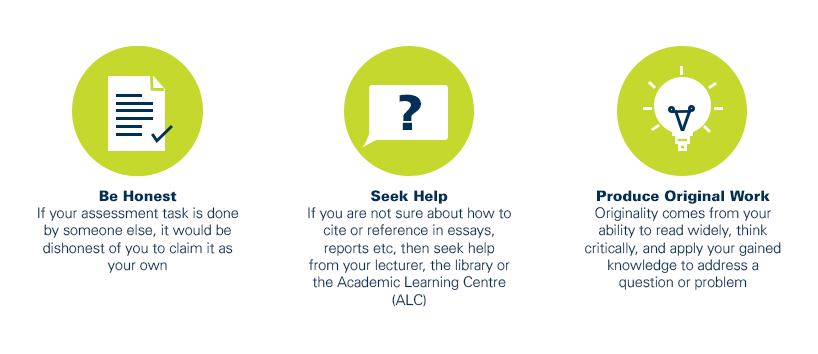
As a CQUniversity student you are expected to act honestly in all aspects of your academic work.
Any assessable work undertaken or submitted for review or assessment must be your own work. Assessable work is any type of work you do to meet the assessment requirements in the unit, including draft work submitted for review and feedback and final work to be assessed.
When you use the ideas, words or data of others in your assessment, you must thoroughly and clearly acknowledge the source of this information by using the correct referencing style for your unit. Using others’ work without proper acknowledgement may be considered a form of intellectual dishonesty.
Participating honestly, respectfully, responsibly, and fairly in your university study ensures the CQUniversity qualification you earn will be valued as a true indication of your individual academic achievement and will continue to receive the respect and recognition it deserves.
As a student, you are responsible for reading and following CQUniversity’s policies, including the Student Academic Integrity Policy and Procedure. This policy sets out CQUniversity’s expectations of you to act with integrity, examples of academic integrity breaches to avoid, the processes used to address alleged breaches of academic integrity, and potential penalties.
What is a breach of academic integrity?
A breach of academic integrity includes but is not limited to plagiarism, self-plagiarism, collusion, cheating, contract cheating, and academic misconduct. The Student Academic Integrity Policy and Procedure defines what these terms mean and gives examples.
Why is academic integrity important?
A breach of academic integrity may result in one or more penalties, including suspension or even expulsion from the University. It can also have negative implications for student visas and future enrolment at CQUniversity or elsewhere. Students who engage in contract cheating also risk being blackmailed by contract cheating services.
Where can I get assistance?
For academic advice and guidance, the Academic Learning Centre (ALC) can support you in becoming confident in completing assessments with integrity and of high standard.
What can you do to act with integrity?