Overview
In this unit, you will explore how First Nations' cultures and ways of learning connect and interact with those experienced in university settings. You will begin by analysing the concepts of culture and identity, then examine Frist Nations cultures, identities, and approaches to learning alongside university culture and learning practices. Building on this understanding, you will evaluate strategies for integrating these different ways of learning to create respectful and inclusive educational experiences. Throughout the unit, you will also how your own personal values can support respectful engagement and acceptance of diversity within Australia.
Details
Pre-requisites or Co-requisites
There are no requisites for this unit.
Important note: Students enrolled in a subsequent unit who failed their pre-requisite unit, should drop the subsequent unit before the census date or within 10 working days of Fail grade notification. Students who do not drop the unit in this timeframe cannot later drop the unit without academic and financial liability. See details in the Assessment Policy and Procedure (Higher Education Coursework).
Offerings For Term 3 - 2026
Attendance Requirements
All on-campus students are expected to attend scheduled classes - in some units, these classes are identified as a mandatory (pass/fail) component and attendance is compulsory. International students, on a student visa, must maintain a full time study load and meet both attendance and academic progress requirements in each study period (satisfactory attendance for International students is defined as maintaining at least an 80% attendance record).
Recommended Student Time Commitment
Each 6-credit Non-award unit at CQUniversity requires an overall time commitment of an average of 12.5 hours of study per week, making a total of 150 hours for the unit.
Class Timetable
Assessment Overview
| Assessment Task | Part Weighting (% of assessment) |
Assessment Security Level | Gen AI Guidance Levels |
|---|---|---|---|
| 1. ASSESSMENT 1 (20% of unit ) | |||
| Interactive Oral Assessment 1 (Interactive Oral Assessments) | 100% of 20% | High | No Gen AI Use |
| 2. ASSESSMENT 2 (20% of unit ) | |||
| Learning Portfolio A (Portfolio) | 100% of 20% | Low | AI-Assisted (Guided Collaboration) |
| 3. ASSESSMENT 3 (40% of unit ) | |||
| Interactive Oral Assessment 2 (Interactive Oral Assessments) | 100% of 40% | High | No Gen AI Use |
| 4. ASSESSMENT 4 (20% of unit ) | |||
| Learning Portfolio B (Portfolio) | 100% of 20% | Low | AI-Assisted (Guided Collaboration) |
Assessment Grading
This is a graded unit: your overall grade will be calculated from the marks or grades for each assessment task, based on the relative weightings shown in the table above. You must obtain an overall mark for the unit of at least 50%, or an overall grade of 'pass' in order to pass the unit. If any 'pass/fail' tasks are shown in the table above they must also be completed successfully ('pass' grade). You must also meet any minimum mark requirements specified for a particular assessment task, as detailed in the 'assessment task' section (note that in some instances, the minimum mark for a task may be greater than 50%). Consult the University's Grades and Results Policy for more details of interim results and final grades.
All University policies are available on the CQUniversity Policy site.
You may wish to view these policies:
- Grades and Results Policy
- Assessment Policy and Procedure (Higher Education Coursework)
- Review of Grade Procedure
- Student Academic Integrity Policy and Procedure
- Academic Progression Policy and Procedure
- Student Refund and Credit Balance Policy and Procedure
- Complaints Policy and Procedure
- Information and Communications Technology Acceptable Use Policy and Procedure
This list is not an exhaustive list of all University policies. The full list of University policies are available on the CQUniversity Policy site.
Feedback, Recommendations and Responses
Every unit is reviewed for enhancement each year. At the most recent review, the following staff and student feedback items were identified and recommendations were made.
Feedback from Students
Weekly contact with students was well received, with positive feedback highlighting its value in supporting engagement and connection.
Continue providing consistent weekly contact with students during the teaching term to foster connection, engagement, and academic progress.
Feedback from Unit Coordinator
Introduce Interactive Oral Assessments as an authentic assessment approach to address the challenges and opportunities presented by AI in tertiary education.
Implement Interactive Oral Assessments as a complementary assessment strategy to strengthen assessment integrity in an AI-enabled learning environment.
- Describe culture and identity as social constructs
- Examine First Nations Australian's cultures, identities and knowledge systems
- Explain how universities operate as cultural institutions and how this may influence students' experiences of learning and belonging
- Compare First Nations Australian's and Western knowledge systems on how they influence learning and educational experiences
- Reflect on personal perspectives and learning in relation to First Nation's knowledges and higher education.
Alignment of Assessment Tasks to Learning Outcomes
| Assessment Tasks | Learning Outcomes | ||||
|---|---|---|---|---|---|
| 1 | 2 | 3 | 4 | 5 | |
|
1.
Assessment 1
(20% of unit )
Interactive Oral Assessments
|
|||||
|
2.
Assessment 2
(20% of unit )
Portfolio
|
|||||
|
3.
Assessment 3
(40% of unit )
Interactive Oral Assessments
|
|||||
|
4.
Assessment 4
(20% of unit )
Portfolio
|
|||||
Alignment of Graduate Attributes to Learning Outcomes
| Graduate Attributes | Learning Outcomes | ||||
|---|---|---|---|---|---|
| 1 | 2 | 3 | 4 | 5 | |
| 1 - Self Management | |||||
| 2 - Communication | |||||
| 3 - Information Literacy | |||||
| 4 - Information Technology Competence | |||||
| 5 - Problem Solving | |||||
| 6 - Critical Thinking | |||||
| 7 - Cross-Cultural Competence | |||||
| 8 - Ethical Practice | |||||
| 9 - First Nations Knowledges | |||||
Textbooks
There are no required textbooks.
IT Resources
- CQUniversity Student Email
- Internet
- Unit Website (Moodle)
All submissions for this unit must use the referencing style: Harvard (author-date)
For further information, see the Assessment Tasks.
l.armstrong@cqu.edu.au
n.lamb@cqu.edu.au
Week 1
Begin Date: 09 Nov 2026Module/Topic
Culture and Learning
Chapter
Events and Submissions/Topic
Week 2
Begin Date: 16 Nov 2026Module/Topic
Culture and Identity 1
Chapter
Events and Submissions/Topic
Week 3
Begin Date: 23 Nov 2026Module/Topic
Culture and Identity 2
Chapter
Events and Submissions/Topic
Week 4
Begin Date: 30 Nov 2026Module/Topic
Aboriginal and Torres Strait Islander Ways of Learning
Chapter
Events and Submissions/Topic
Week 5
Begin Date: 07 Dec 2026Module/Topic
University Culture
Chapter
Events and Submissions/Topic
Week 6
Begin Date: 14 Dec 2026Module/Topic
University Ways of Learning
Chapter
Events and Submissions/Topic
Mid Term Break
Begin Date: 21 Dec 2026Module/Topic
Enjoy your Break
Chapter
Events and Submissions/Topic
Week 7
Begin Date: 04 Jan 2027Module/Topic
Cultures Within University
Chapter
Events and Submissions/Topic
Week 8
Begin Date: 11 Jan 2027Module/Topic
Combining Ways of Learning
Chapter
Events and Submissions/Topic
Week 9
Begin Date: 18 Jan 2027Module/Topic
Racism at University
Chapter
Events and Submissions/Topic
Week 10
Begin Date: 25 Jan 2027Module/Topic
Culture and Leadership
Chapter
Events and Submissions/Topic
Week 11
Begin Date: 01 Feb 2027Module/Topic
Aboriginal and Torres Strait Islander Culture and Leadership
Chapter
Events and Submissions/Topic
Week 12
Begin Date: 08 Feb 2027Module/Topic
Unit Review
Chapter
Events and Submissions/Topic
Exam Week
Begin Date: 15 Feb 2027Module/Topic
Chapter
Events and Submissions/Topic
Unit Coordinator: Laurie Armstrong
Email: l.armstrong@cqu.edu.au
Telephone: 07 4930 9251
Mobile: 0418 791 373
1. ASSESSMENT 1 ( 20% of unit )
Interactive Oral Assessments
This Interactive Oral Assessment (IOA) comprises two components (Part A + Part B). Both parts are completed simultaneously via a Zoom meeting with the IOA Facilitator.
Weighting: 20% (Part A 10% and Part B 10%)
- Book your IOA appointment by the end of Week 3 using the following link: https://interact.cqu.edu.au/s/steps---interactive-assessments/appointments/topics/229
- The online zoom meeting will be conducted during Weeks 4 and 5
Part A - Presentation
Develop a 5 – 10 min oral presentation about your identity and culture. The presentation must include PowerPoint slides to support your key points. These can incorporate visual elements (such as images, graphics, or short video clips) to engage your audience. You will present this via an online Zoom meeting during Weeks 4 and 5. You will need to book an available time by the end of Week 3. If you have not previously presented on Zoom using PowerPoint, the IOA facilitator will guide you through this process.
- Practise to ensure your presentation fits within the 5 – 10 min limit.
- Use visuals to enhance - not replace - your spoken content.
- Speak clearly and with confidence
- Support your ideas with personal experiences, cultural knowledge and reflections from the unit materials where appropriate.
Part B - Conversation
Part B is a 5 – 10 min interactive oral activity involving you and the IOA Facilitator. After you ask for any questions, the IOA Facilitator will engage with you in a conversation about your presentation. You will be asked questions related to your presentation. These could include:
- How do you understand culture and identity as a social construct?
- How do you relate your culture and identity to First Nations cultures + identities?
- Are there similarities between your culture and those of First Nations peoples?
This short conversation is not meant to be stressful but will allow you the opportunity to practise engaging this way with the IOA Facilitator in preparation for Assessment 4: Interactive Oral Assessment 2.
To prepare for your IOA:
- Read the instructions for Assessment 1 on the unit Moodle site.
- Book your IOA appointment for Week 4 or 5 by the end of Week 3 using the link provided on the Assessment 1 Moodle page.
- Engage with supporting resources provided in the unit material.
- Seek clarification from your Unit Coordinator if you have any questions.
- Practise using Zoom to ensure your microphone and camera are working properly.
- Join your IOA at least 5 minutes early. You may be placed in a Zoom waiting room until your facilitator admits you.
Please find further details on the Culture and Learning Moodle site. Go to the ASSESSMENT tile and click on the Interactive Oral Assessment 1 Link and read through the instructions for this assignment.
Use of Artificial Intelligence (AI)
Level 2. AI Planning - You may use AI for planning, idea development, and research. Your final submission should show how you have developed and refined these ideas. (Source: Perkins, M., Roe, J. and Furze, L. 2024, “The AI Assessment Scale Revisited: A framework for educational assessment")
Further information about this requirement will be provided by the teaching staff in the unit.
Week 5 Friday (11 Dec 2026) 11:55 pm AEST
Follow the instructions on Moodle to schedule your individual Interactive Oral Assessments by the due date.
Feedback will be provided two weeks after the due date or two weeks after the IOA appointment, whichever is later.
Understands Key Concepts (30%)
Ability to explain Indigenous ways of learning, University ways of learning and how these may be different or similar. Ability to explore different experiences at university, including First Nations experiences and their own.
Understands Different Perspectives (25%)
Ability to reflect on own ways of learning in comparison with First Nation’s perspectives and how both relate to learning at university. Ability to analyse a range of differing perspectives and the implications this may have for universities becoming more culturally inclusive.
Reflection on Learning (30%)
Ability to reflect and critically engage with learning material. Ability to articulate how learning has shaped their understanding.
Communication (15%)
Ability to demonstrate clear and confident communication skills, including use of appropriate language and academic conventions (such as referencing), as well as manage any technical responsibilities and attendance for the IOA.
- Describe culture and identity as social constructs
- Reflect on personal perspectives and learning in relation to First Nation's knowledges and higher education.
2. ASSESSMENT 2 ( 20% of unit )
Portfolio
Portfolio items will be written in response to a specific theme, encouraging you to reflect on your learning, connect it to your experiences and engage with unit materials. It is strongly recommended that portfolio items be completed weekly. You are encouraged to include content from the week and will need to reference the source material, whether it has been directly or indirectly used. Learning portfolio A is worth 20% of your final grade.
- Complete three written paragraph responses.
- Use the prompt questions related to Weeks 2 – 4 to guide your written responses. The prompt questions are included below.
- Write 150 – 200 words for each entry (total word count 450 – 600 words)
Include any references used as per the Harvard Referencing style of Referencing available on Moodle.
Please find full details on the Culture and Learning Moodle site. Go to the ASSESSMENT tile and click on the Learning Portfolio A link. This is also where you will submit your assignment. Please ensure that you submit it as a Word document (PDF files are not appropriate for this assignment).
Formatting
Use 1.5 or double line spacing and a clear font such as Times New Roman 12 or Arial 11, and include page numbering. Upload your paragraph and reference list to Moodle as one Word document. The Word document should have your name and student number on it, as well as the unit code and name (ie. EDED40351: Culture and Learning).
Use of Artificial Intelligence (AI)
Level 2. AI Planning - You may use AI for planning, idea development, and research. Your final submission should show how you have developed and refined these ideas. (Source: Perkins, M., Roe, J. and Furze, L. 2024, “The AI Assessment Scale Revisited: A framework for educational assessment")
Further information about this requirement will be provided by the teaching staff in the unit.
Week 6 Friday (18 Dec 2026) 11:55 pm AEST
Feedback will be provided no later than two weeks after the due date or the submission date, whichever is later.
- Clarity of the learning experiences demonstrating critical reflection and personal engagement in the Portfolio responses.
- Understanding and application of unit concepts
- Ability to observe and describe reactions to the resource material reflecting engagement with weekly materials.
- Grammar and spelling, including paragraph structure, legibility and format as part of academic communication, including final word count and the number of portfolio responses submitted.
- Examine First Nations Australian's cultures, identities and knowledge systems
- Explain how universities operate as cultural institutions and how this may influence students' experiences of learning and belonging
- Reflect on personal perspectives and learning in relation to First Nation's knowledges and higher education.
3. ASSESSMENT 3 ( 40% of unit )
Interactive Oral Assessments
Assessment 3 is an interview that will discuss your written responses for Learning Portfolio B. You will need to submit a draft of your written responses to three written responses related to the portfolio questions in Weeks 5 – 9. Your responses will then be the basis of a conversation with the IOA Facilitator to help clarify your thoughts and discuss unit material related to the topics. This assessment is worth 40% of your final grade. Note: you do not need to submit all five portfolio items for Learning Portfolio B. Select the three you wish to submit and provide a draft of these items.
If you have not completed a draft of the three items, then you will need to provide an outline of how you will address the portfolio questions. You will need to submit your draft to the IOA Facilitator by email three days before your booked IOA appointment.
How to Prepare for the IOA
The interview will be similar to the one completed as of Assessment 1; however, this is a more heavily weighted assessment and will require more time and preparation.
To prepare for this IOA you will need to have engaged with the unit material and have prepared written responses to the weekly questions in the Learning Portfolio B. You might also try to anticipate the questions that may be asked in the context of discussing your responses. The conversation with the IOA facilitator will be formulated based upon your draft responses and will be aimed at helping to discuss the topic in a conversational, but deeper discussion.
Please make sure you are familiar with the unit material prior to your IOA as this will help you to complete this assessment. If you have any questions regarding this assessment, then please contact the Unit Coordinator.
To prepare for your IOA:
- Read the scenario and related materials on the unit Moodle site.
- Book your IOA appointment for Week 10 or 11 by the end of Week 9 using the link provided on the Assessment 3 Moodle page.
- Engage with supporting resources available on the Moodle page for Assessment 3.
- Seek clarification from your Unit Coordinator if you have any questions.
- Practise using Zoom to ensure your microphone and camera are working properly.
- Join your IOA at least 5 minutes early. You may be placed in a Zoom waiting room until your facilitator admits you.
Please find full details on the Culture and Learning Moodle site. Go to the ASSESSMENT tile and click on the Interactive Oral Assessment 3 link. This is also where you will submit your Cover Page. Please ensure that you submit it as a Word document (PDF files are not appropriate for this assignment.)
Use of Artificial Intelligence (AI)
Level 2. AI Planning - You may use AI for planning, idea development, and research. Your final submission should show how you have developed and refined these ideas. (Source: Perkins, M., Roe, J. and Furze, L. 2024, “The AI Assessment Scale Revisited: A framework for educational assessment")
Further information about this requirement will be provided by the teaching staff in the unit.
Week 11 Friday (5 Feb 2027) 11:55 pm AEST
Please use Interact to book your IOA by the end of Week 9. The appointments will take place during Weeks 10 + 11
Feedback will be provided no later than two weeks after the due date or the IOA appointment, whichever is later.
Understands Key Concepts (30%)
Ability to explain Indigenous ways of learning, University ways of learning and how these may be different or similar. Ability to explore different experiences at University, including First Nations experiences and their own.
Understands Different Perspectives (25%)
Ability to reflect on own ways of learning in comparison with First Nation’s perspectives and how both relate to learning at university. Ability to analyse a range of differing perspectives and the implications this may have for universities becoming more culturally inclusive.
Reflection on Learning (30%)
Ability to reflect and critically engage with learning material. Ability to articulate how learning has shaped their understanding.
Communication (15%)
Ability to demonstrate clear and confident communication skills, including use of appropriate language and academic conventions (such as referencing), as well as manage technical responsibilities and attendance for the IOA.
- Examine First Nations Australian's cultures, identities and knowledge systems
- Explain how universities operate as cultural institutions and how this may influence students' experiences of learning and belonging
- Compare First Nations Australian's and Western knowledge systems on how they influence learning and educational experiences
- Reflect on personal perspectives and learning in relation to First Nation's knowledges and higher education.
4. ASSESSMENT 4 ( 20% of unit )
Portfolio
These Portfolio items will be written in response to a specific theme, encouraging you to reflect on your learning, connect it to your experiences and engage with unit materials. It is strongly recommended that portfolio items be completed weekly. You are encouraged to include content from the week and will need to reference the source material, whether it has been directly or indirectly used. This assessment is worth 20% of your final grade.
This assessment is linked to Assessment 3 – Interactive Oral Assessment 2. The feedback provided in this conversation will help direct you to complete the portfolio responses for Learning Portfolio B.
Please find full details on the Culture and Learning Moodle site. Go to the ASSESSMENT tile and click on the Learning portfolio B link. This is also where you will submit your assignment. Please ensure that you submit it as a Word document (PDF files are not appropriate for this assignment).
Include any references used as per the Harvard Referencing style of referencing available on Moodle.
Formatting
Use 1.5 or double line spacing and a clear font such as Times New Roman 12 or Arial 11, and include page numbering. Upload your paragraph and reference list to Moodle as one Word document. The Word document should have your name and student number on it, as well as the unit code and name (ie. EDED40351: Culture and Learning).
Use of Artificial Intelligence (AI)
Level 2. AI Planning - You may use AI for planning, idea development, and research. Your final submission should show how you have developed and refined these ideas. (Source: Perkins, M., Roe, J. and Furze, L. 2024, “The AI Assessment Scale Revisited: A framework for educational assessment")
Further information about this requirement will be provided by the teaching staff in the unit.
Week 12 Friday (12 Feb 2027) 11:55 pm AEST
Feedback will be provided no later than two weeks after the due date or submission date, whichever is later.
- Clarity of the learning experiences demonstrating critical reflection and personal engagement in the Portfolio responses.
- Understanding and application of unit concepts.
- Ability to observe and describe reactions to the resource material reflecting engagement with weekly materials.
- Grammar and spelling, including paragraph structure, legibility and format as part of academic communication, including final word count and the number of portfolio responses submitted.
- Explain how universities operate as cultural institutions and how this may influence students' experiences of learning and belonging
- Compare First Nations Australian's and Western knowledge systems on how they influence learning and educational experiences
- Reflect on personal perspectives and learning in relation to First Nation's knowledges and higher education.
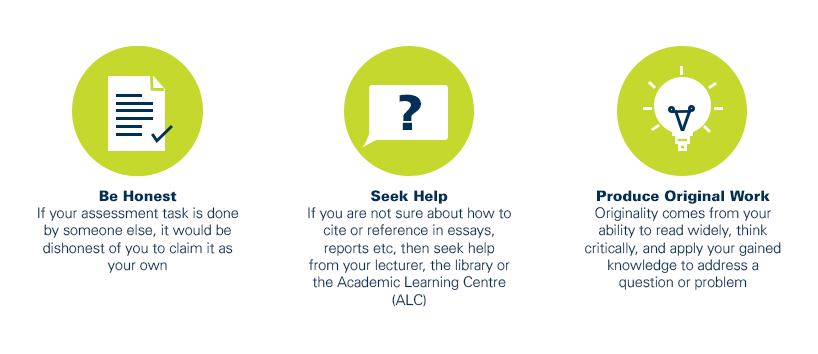
As a CQUniversity student you are expected to act honestly in all aspects of your academic work.
Any assessable work undertaken or submitted for review or assessment must be your own work. Assessable work is any type of work you do to meet the assessment requirements in the unit, including draft work submitted for review and feedback and final work to be assessed.
When you use the ideas, words or data of others in your assessment, you must thoroughly and clearly acknowledge the source of this information by using the correct referencing style for your unit. Using others’ work without proper acknowledgement may be considered a form of intellectual dishonesty.
Participating honestly, respectfully, responsibly, and fairly in your university study ensures the CQUniversity qualification you earn will be valued as a true indication of your individual academic achievement and will continue to receive the respect and recognition it deserves.
As a student, you are responsible for reading and following CQUniversity’s policies, including the Student Academic Integrity Policy and Procedure. This policy sets out CQUniversity’s expectations of you to act with integrity, examples of academic integrity breaches to avoid, the processes used to address alleged breaches of academic integrity, and potential penalties.
What is a breach of academic integrity?
A breach of academic integrity includes but is not limited to plagiarism, self-plagiarism, collusion, cheating, contract cheating, and academic misconduct. The Student Academic Integrity Policy and Procedure defines what these terms mean and gives examples.
Why is academic integrity important?
A breach of academic integrity may result in one or more penalties, including suspension or even expulsion from the University. It can also have negative implications for student visas and future enrolment at CQUniversity or elsewhere. Students who engage in contract cheating also risk being blackmailed by contract cheating services.
Where can I get assistance?
For academic advice and guidance, the Academic Learning Centre (ALC) can support you in becoming confident in completing assessments with integrity and of high standard.
What can you do to act with integrity?