Overview
In this unit you will extend your professional knowledge and skills through tutorials, workshops and a kindergarten placement comprising a 25-day block placement. You will participate in tutorials to build both theoretical and practical knowledge of the strategies that teachers use to create learning environments underpinned by responsive relationships with children and that support wellbeing, belonging, and learning. Additionally, you will analyse the impact of different approaches to classroom management/guiding behaviour on student learning and apply your understanding of legislation and principles that inform how educators support children to manage their own behaviour and respond appropriately to the behaviour of others. You will apply knowledge gained from curriculum and early childhood units you have studied to plan, implement, respond to and evaluate learning experiences that incorporate the principles and pedagogies outlined in Belonging, Being and Becoming: The Early Years Learning Framework for Australia (AGDE 2022). Pedagogies that support children's engagement with, and learning in, literacy and numeracy will be implemented during the professional placement. Using ICTs with young children to improve learning are also employed in the placement. You will monitor your professional learning through critical reflection, and will select and evaluate evidence to add to your ePortfolio to demonstrate selected focus areas of the Australian Professional Standards for Teachers.
Details
Pre-requisites or Co-requisites
Prerequisite:- Students must have successfully completed EDFE11038 (Professional Practice 1), EDCU12044 (Literacy and Numeracy for Teachers), EDEC11027 (Early Childhood Pedagogies) & EDEC11026 (The Arts and Learning in the Early Years) to be eligible for enrolment in this unit and placement in a setting for completion of the practical component.
Important note: Students enrolled in a subsequent unit who failed their pre-requisite unit, should drop the subsequent unit before the census date or within 10 working days of Fail grade notification. Students who do not drop the unit in this timeframe cannot later drop the unit without academic and financial liability. See details in the Assessment Policy and Procedure (Higher Education Coursework).
Offerings For Term 2 - 2026
Attendance Requirements
All on-campus students are expected to attend scheduled classes - in some units, these classes are identified as a mandatory (pass/fail) component and attendance is compulsory. International students, on a student visa, must maintain a full time study load and meet both attendance and academic progress requirements in each study period (satisfactory attendance for International students is defined as maintaining at least an 80% attendance record).
Recommended Student Time Commitment
Each 6-credit Undergraduate unit at CQUniversity requires an overall time commitment of an average of 12.5 hours of study per week, making a total of 150 hours for the unit.
Class Timetable
Assessment Overview
Assessment Grading
This is a pass/fail (non-graded) unit. To pass the unit, you must pass all of the individual assessment tasks shown in the table above.
All University policies are available on the CQUniversity Policy site.
You may wish to view these policies:
- Grades and Results Policy
- Assessment Policy and Procedure (Higher Education Coursework)
- Review of Grade Procedure
- Student Academic Integrity Policy and Procedure
- Academic Progression Policy and Procedure
- Student Refund and Credit Balance Policy and Procedure
- Complaints Policy and Procedure
- Information and Communications Technology Acceptable Use Policy and Procedure
This list is not an exhaustive list of all University policies. The full list of University policies are available on the CQUniversity Policy site.
Feedback, Recommendations and Responses
Every unit is reviewed for enhancement each year. At the most recent review, the following staff and student feedback items were identified and recommendations were made.
Feedback from Feedback
Tutorial focus
Ensure clarity pertaining to the focus for each tutorial
- Interpret observed behaviour to identify possible causes and apply responsive strategies that maintain classroom relationships and engaged learning
- Use system and/or kindergarten policies and knowledge of strategies for guiding behaviour and creating safe supportive learning environments to plan proactively for effective classroom management
- Select strategies that facilitate positive interactions, promote wellbeing, belonging and learning and facilitate the continuation of centre routines
- Plan and implement learning experiences that promote the engagement and participation of all learners and are responsive to their characteristics, stage of development and social, cultural and linguistic backgrounds
- Reflect on planning, teaching and assessment of student outcomes to improve teaching practice and promote learning and engagement
- Use the Australian Professional Standards for Teachers to monitor professional learning and identify strategies for responding to feedback and self-evaluation to improve practice.
Successful completion of this unit provides opportunities for students to engage with the Australian Professional Standards for Teachers (Graduate Career Stage) focus areas of:
1.1 Physical, social and intellectual development and characteristics of students
1.2 Understand how students learn
1.3 Students with diverse linguistic, cultural, religious and socioeconomic backgrounds
1.5 Differentiate teaching to meet the specific learning needs of students across the full range of abilities
2.2 Content selection and organisation
2.3 Curriculum, assessment and reporting
2.5 Literacy and numeracy strategies
2.6 Information and communication technology (ICT)
3.1 Establish challenging learning goals
3.2 Plan, structure and sequence learning programs
3.3 Use teaching strategies
3.4 Select and use resources
3.5 Use effective classroom communication
3.6 Evaluate and improve teaching programs
4.1 Support student participation
4.2 Manage classroom activities
4.3 Manage challenging behaviour
4.4 Maintain student safety
4.5 Use ICT safely, responsibly and ethically
5.1 Assess student learning
5.2 Provide feedback to students on their learning
6.1 Identify and plan professional learning needs
6.2 Engage in professional learning and improve practice
6.3 Engage with colleagues and improve practice
6.4 Apply professional learning and improve student learning
7.1 Meet professional ethics and responsibilities
7.2 Comply with legislative, administrative and organisational requirements
Evidence of meeting the standards will be at a level appropriate for students' current progress through the course of study. Assessment tasks for this unit may be included in a portfolio and used as evidence of progress towards demonstrating the standards at Graduate Level and the focus for identifying learning goals.
Additionally, students build understandings required by the registering body for early childhood (ACECQA - Australian Children's Education and Care Authority) including, for example, guiding behaviour and engaging young learners, curriculum approaches, teaching methods and strategies and catering to children with diverse needs, including CALD children. Content linked to Belonging, Being and Becoming: The Early Years Learning Framework for Australia (AGDE, 2022) is examined also.
Alignment of Assessment Tasks to Learning Outcomes
| Assessment Tasks | Learning Outcomes | |||||
|---|---|---|---|---|---|---|
| 1 | 2 | 3 | 4 | 5 | 6 | |
| 1 - Professional Practice Plans (learning plans) - 0% | ||||||
| 2 - Written Assessment - 0% | ||||||
| 3 - Online Quiz(zes) - 0% | ||||||
| 4 - Professional Practice Placement - 0% | ||||||
| 5 - Portfolio - 0% | ||||||
Alignment of Graduate Attributes to Learning Outcomes
| Graduate Attributes | Learning Outcomes | |||||
|---|---|---|---|---|---|---|
| 1 | 2 | 3 | 4 | 5 | 6 | |
| 1 - Communication | ||||||
| 2 - Problem Solving | ||||||
| 3 - Critical Thinking | ||||||
| 4 - Information Literacy | ||||||
| 5 - Team Work | ||||||
| 6 - Information Technology Competence | ||||||
| 7 - Cross Cultural Competence | ||||||
| 8 - Ethical practice | ||||||
| 9 - Social Innovation | ||||||
| 10 - First Nations Knowledges | ||||||
| 11 - Aboriginal and Torres Strait Islander Cultures | ||||||
Textbooks
There are no required textbooks.
IT Resources
- CQUniversity Student Email
- Internet
- Unit Website (Moodle)
- Online Discussion Forum
All submissions for this unit must use the referencing style: American Psychological Association 7th Edition (APA 7th edition)
For further information, see the Assessment Tasks.
g.busch@cqu.edu.au
m.g.wyland@cqu.edu.au
a.ambrosetti@cqu.edu.au
Week 1: Expectations and Models of Discipline
Begin Date: 13 Jul 2026Module/Topic
Roles, responsibilities and expectations of professional conduct
The Code of Ethics
Models of Discipline
Introducing the Queensland Kindergarten Guidelines
QKLG focus: Developing a strong sense of identity
Revisiting Belonging, Being and Becoming: The Early Years Learning Framework
Australian Professional Standards for Teachers
Chapter
Please see the links on Moodle. A detailed reading list is provided.
Events and Submissions/Topic
- Introduction to unit and assessment tasks.
- Moodle navigation and locating of resources needed for placement and support.
Week 2: Essential Skills for Classroom Management
Begin Date: 20 Jul 2026Module/Topic
Essential skills for classroom management
Policy imperatives in compulsory and non-compulsory settings in relation to guiding behaviour
Links to the ACECQA National Quality Framework and Standards
Pedagogy of play
QKLG focus: Developing a connectedness
Chapter
Please see the links on Moodle. A detailed reading list is provided.
Events and Submissions/Topic
- Identify essential skills for classroom management.
- Recognise that policy imperatives shape what happens in relation to managing children's behaviour.
- Identify the requirements for a guiding behaviour policy in the non-compulsory years.
- Identify play as an important pedagogy for your work in kindergartens.
- Examine another component of the QKLG. C&K services use Building Waterfalls. Both the QKLG and Building Waterfalls are endorsed for use in QLD and reflect the intent of the EYLF.
Week 3: Behaviour Analysis, Pedagogy of Provocation, Routines and Transitions
Begin Date: 27 Jul 2026Module/Topic
ABC model of behaviour analysis
Pedagogy of provocation
Routines and transitions - practices and opportunities for learning
AITSL Standards
QKLG focus: Developing a strong sense of wellbeing
Chapter
Please see the links on Moodle. A detailed reading list is provided.
Events and Submissions/Topic
Formative assessment: A copy of your completed WIL placement compliance form to be uploaded into the SONIA as per instructions on Moodle.
Due Date: Friday 31 July 2026
- Recognise the ABC approach to behaviour.
- Identify routines and rituals in the day of a kindergarten.
- Identify transitions in the kindergarten program.
- Recognise routines and transitions as learning opportunities.
- Recognise the pedagogy of provocation as important in kindergarten programs.
- Examine another component of the QKLG.
Week 4: Features of Positive Learning Environments
Begin Date: 03 Aug 2026Module/Topic
Features of positive learning environments - Place-based pedagogies
AITSL Standard 4: Create and maintain supportive and safe learning environments
The environment as the third teacher
Interactional and temporal environments
Caring Spaces
Pedagogy of listening
QKLG focus: Developing confident and involved learners
Chapter
Please see the links on Moodle. A detailed reading list is provided.
Events and Submissions/Topic
- Identify what AITSL says about the environment.
- Apply understanding about the environment as the third teacher and think about how this influences behaviour.
- Identify the various dimensions of the environment.
- Apply the various dimensions of the environment.
- Think about caring spaces.
- Apply the pedagogy of listening.
- Continue to explore the QKLG.
Week 5: Building Children's Belonging and Wellbeing
Begin Date: 10 Aug 2026Module/Topic
Circle of security and attachments
Building children's belonging and wellbeing
Building spaces intentionally – creating an environmental plan
Identify aesthetics as important in the design of learning environments
QKLG focus: Developing effective communicators (Communicating)
Chapter
Please see the links on Moodle. A detailed reading list is provided.
Events and Submissions/Topic
- Apply understandings of the circle of security to your work with young children.
- Identify attachment as an important component of building relationships and supporting positive behaviour.
- Apply understanding about the environment as the third teacher and think about how this influences behaviour.
- Identify the various spaces in the environment and begin to pay attention to aesthetics.
- Draft a vision for your environmental plan for a space in the centre.
- Continue to explore the QKLG with a focus on the environment and children as effective communicators (communicating).
Week 6: Guiding Children's Behaviour in Early Childhood Settings
Begin Date: 17 Aug 2026Module/Topic
Introducing the work of Louise Porter
Thinking about our beliefs about children and how this may shape the way we support behaviour
Considering how to identify the impact of the learning experiences on student
Research about the effects of guidance, thinking about rewards and punishment
Wondering about ICT's in kindergarten
Chapter
Please see the links on Moodle. A detailed reading list is provided.
Events and Submissions/Topic
(Louise Porter material and this week's Moodle topic may prove useful for your assessment 1)
Written Assessment 1: Creating a supportive learning environment and guiding behaviour
Date Due: Week 6 - Friday 21st August 2026,
11.45pm AEST
A 72-hour grace period is available after the assessment due date to support students who experience unexpected difficulties that prevent them from submitting on time. This means you have an extra 72 hours to submit your task without any academic penalty.
LEVEL 2 GEN AI Planning is permitted for this assessment.
Creating a supportive learning environment and guiding behaviour Due: Week 6 Friday (21 Aug 2026) 11:45 pm AEST
Vacation Week: First of single day visits to kindergarten begins
Begin Date: 24 Aug 2026Module/Topic
Single day visits to kindergarten begin this week.
This will be arranged by the WIL team, and they will notify you once your placement site has been confirmed.
Chapter
Events and Submissions/Topic
Week 7: Guiding Children's Behaviour in Early Childhood Settings Cont.
Begin Date: 31 Aug 2026Module/Topic
Thinking about challenging behaviour
Looking for causes, considering the KU material
Examples of developing a behaviour plan for an
individual
Modelling desired behaviours
Building our understanding of the NQS
Learning stories: EYLF in Action
Constructing learning stories
Chapter
Please see the links on Moodle. A detailed reading list is provided.
Events and Submissions/Topic
- Consider the origins of inconsiderate behaviour/challenging behaviour.
- Construct a behaviour guidance plan for one child in your setting.
- Identify why rewards and punishments may not be the best choice.
- Support the development of self-esteem and use acknowledgement.
- Begin constructing a learning story (looking at different models).
Week 8: Teaching Strategies for Explaining, Questioning and Listening
Begin Date: 07 Sep 2026Module/Topic
Teaching strategies for explaining questioning and listening
Play-based Learning and Intentionality
Developing a vision of intent for building relationships with young children – developing our interactions with children and supporting children to engage in interactions
Thinking about intentional teaching
Constructing a lesson plan/learning experience for a group time
Chapter
Please see the links on Moodle. A detailed reading list is provided.
Events and Submissions/Topic
- Develop a vision of intent for relationships.
- Consider the meaning of intentional teaching.
- Identify where in the relevant curriculum that intentional teaching is discussed.
- Identify the process that supports you to be intentional in your teaching and unpack the strategies suggested that support you to be intentional.
- Recognise that children are intentional also
recognise the importance of interactions, listening and relationships to the enactment of intentional tea.
Week 9: Curriculum Decision-making
Begin Date: 14 Sep 2026Module/Topic
Thinking about what pedagogy of place might mean
Curriculum decision making
Long and shorter term planning
Identifying spaces/opportunities for intentional teaching
Further work on constructing a lesson plan/learning experience
Chapter
Please see the links on Moodle. A detailed reading list is provided.
Events and Submissions/Topic
- Articulate the nature of curriculum construction in a kindergarten setting.
- Acknowledge the importance of long term planning for your setting
- Develop daily and weekly plans for your setting.
- Identify spaces/opportunities for intentional teaching.
- Construct a lesson plan for whole group or small group times (music, story time etc)
Week 10: Collecting and Analysing Information About Children and their Learning
Begin Date: 21 Sep 2026Module/Topic
Collecting information to make informed judgements about children and their learning
Tools for collecting information
Interpreting data collected to inform the placement on a continua of learning
Observation recording an analysis
Kindergarten transition statements
Supporting children with developmental needs/disabilities transitioning to prep
An overview of the continua
Links to Assessment Task 3
Chapter
Please see the links on Moodle. A detailed reading list is provided.
Events and Submissions/Topic
Formative Assessment: Online Compulsory Quiz Due Friday 25 September 2026, 11.45 PM AEST
You will complete a 15-question quiz based on the content from the unit (weeks 1-10). To pass this task and proceed to the placement, 100% (that is 15 from 15) needs to be achieved.
- Articulate to collect information about children's learning and development.
- Collate this information to make informed judgments.
- Interpret data to place a child on a continua of learning.
ONLINE QUIZ Due: Week 10 Friday (25 Sept 2026) 11:45 pm AEST
Week 11: Engaging in Reflection
Begin Date: 28 Sep 2026Module/Topic
Reflection as central to improving
teaching
How is reflection discussed in the EYLF and the QKLG?
Types of reflection
Barriers to critical reflection
Chapter
Please see the links on Moodle. A detailed reading list is provided.
Events and Submissions/Topic
- Explain the difference between general reflection and critical reflection.
- Realise the importance of reflective processes in learning to become a teacher.
- Identify potential barriers for reflection and establish reflective practice procedures.
- Utilize reflection as a tool for the enactment of the relevant early years framework (EYLF or QKLG)
Week 12: Developing Professional Goals
Begin Date: 05 Oct 2026Module/Topic
Professional Goal setting and ethical behaviour with young children and families
Revisiting the ECA Code of Ethics
Setting yourself up for success
Chapter
Please see the links on Moodle. A detailed reading list is provided.
Events and Submissions/Topic
- Identify realistic professional goals that can be achieved during your professional practice experiences.
- Use the Australian Professional Standards for Teachers to support reflection and goal setting.
- Enact interactions with a mentor so that you can refine your goals.
Exam Week: 20-day professional placement kindergarten begins
Begin Date: 12 Oct 2026Module/Topic
Chapter
Events and Submissions/Topic
Summative Assessment 2: Professional Practice Placement on completion of 5-day visits
20-day Kindergarten placement begins 12 October - 6th November
Summative Assessment Assesment 3: ePortfolio: Profiling, Planning and Reflecting due one week after completion of your PP2 Kindergarten placement. (13th November 2026)
Vacation/Exam Week
Begin Date: 19 Oct 2026Module/Topic
Chapter
Events and Submissions/Topic
1 Professional Practice Plans (learning plans)
Assignment One.
Part A
Creating a supportive learning environment and guiding behaviour
Create a plan for one whole session (part of a daily plan) that you might be required to manage and teach in your placement kindergarten classroom. The plan may be a morning, middle or afternoon session and should be written up on the daily planning format provided on the course Moodle site.
As a minimum, your plan must include transition to the activity and transition to a following activity. So, you could plan for the following:
Transitioning the children to a group time (eg: story time, music time) and then transitioning the children from the group time. You would also include your plan for the group time and for at least one other activity for which you are responsible.
It is suggested that you use the 4 columns on the template to record time frames, goals for each activity and for your focus child, a brief outline of the introduction, body and conclusion of activities and resources required. In the final column, record strategies and considerations for guiding behaviour and organising a positive classroom learning environment at each stage of the planned session.
Part B
WRITE A JUSTIFICATION OF A MAXIMUM OF *500 WORDS, THAT
(a) explains how your selected strategies align with the centre/kindergarten policy, relevant National Quality Standards (NQS) and established classroom rules/practices in your kindergarten classroom; and
(b) justifies how your selected strategies will achieve each of the following outcomes:
· Create a positive and supportive learning environment that encourages participation of the children · Guide behaviour that may arise during the planned session
· Impacts on student learning and achievement of the learning goals for the planned lessons / activities that align with the Belonging, Being and Becoming: The Early Years Learning Framework for Australia (EYLF) or the relevant state framework. In Queensland you may use the Queensland Kindergarten Learning Guideline or C&K’s early childhood curriculum Listening and Learning Together: C&K Curriculum Approach.
Level 2 GEN AI Planning is permitted for this assessment.
A 72-hour grace period is available after the assessment due date to support students who experience unexpected difficulties that prevent them from submitting on time. This means you have an extra 72 hours to submit your task without any academic penalty.
Week 6 Friday (21 Aug 2026) 11:45 pm AEST
72-hour grace period applies to the submission of this assessment.
Week 8 Monday (7 Sept 2026)
Assessments will be marked and returned to students within 3 weeks of submission
Knowledge and understanding of practical strategies for guiding the behaviour of young children.
Application of centre-based approaches and established classroom rules, practices and routines.
Understanding of the teacher’s role in creating supportive and inclusive learning environments.
Knowledge and understanding of the skills for guiding behaviour that apply to a kindergarten setting and their impact on children's learning.
Professional levels of personal literacy.
- Reflect on planning, teaching and assessment of student outcomes to improve teaching practice and promote learning and engagement
2 Written Assessment
a) Formative assessment - Completion of placement compliance form. You will access and complete this form through the SONIA placement system. Once you have agreed to each of the statements and submitted the form, it will be available to download through SONIA. A copy of this completed form needs to be uploaded to the assessment link as per Moodle instructions.
b) Formative assessment - Compulsory Online Quiz. You will complete a 15-question quiz based on the content from the unit (weeks 1-10). To pass this task and proceed to placement, 100% (that is 15 out of 15) needs to be achieved. You are able to take the quiz as many times as needed to achieve 100%. Failure to complete the quiz will result in cancellation of your placement. Due before placement.
c) You will undertake a 25-day supervised placement in a kindergarten setting as detailed below and complete all tasks outlined in the Information and Guidelines Booklet for Professional Practice 2: Kindergarten. These tasks include the development of a behaviour plan for a focus child and the enactment of pedagogies that support wellbeing and belonging of all children.
You will plan for small group sessions and build to taking responsibility for half days and at least one full day by the end of the five-week block. Application of your knowledge about the pervasive nature of literacy and numeracy within play and everyday experiences in the kindergarten will be documented. You will use ICTs to support children’s interests and learning and plan for, document and enact strategies that support play and are responsive to children’s emerging interests. Your professional behaviour will be guided by the Early Childhood Code of Ethics, requirements articulated in the NQS and in the Professional Practice Handbook.
The placement will be organised by the relevant University Professional Practice Coordinator on each campus and consists of:
25 assessable days to be completed in a block
An up-to-date working portfolio must be maintained throughout the placement. Explicit guidance about the organisation of the portfolio is provided in the Information and Guidelines booklet. The working portfolio should include a copy of the behaviour plan; your vision of intent for how you plan to build relationships; the centre policy pertaining to behaviour and interactions; a copy of the daily routines and written observations of the routines. In addition, you will need to include records of all observations, planning, evaluation and reflection conducted throughout the placement.
Assessment for the day placement is as per Standards and Guide to Making Judgements on the Final Summative Report in the PP2 booklet.
Assessment Due Date
On completion of five-week block placement.
Return Date to Students
Feedback on this assessment task will be provided by the Mentor Teacher using the reporting documents in the Information and Reporting booklet.
Weighting
Pass/Fail
Interpret observed behaviour to identify possible causes and apply responsive strategies that maintain classroom relationships and engaged learning
Use system and/or kindergarten policies and knowledge of strategies for guiding behaviour and creating safe supportive learning environments to plan proactively for effective classroom management
Select strategies that facilitate positive interactions, promote wellbeing, belonging and learning and facilitate the continuation of centre routines
Plan and implement learning experiences that promote the engagement and participation of all learners and are responsive to their characteristics, stage of development and social, cultural and linguistic backgrounds
Reflect on planning, teaching and assessment of student outcomes to improve teaching practice and promote learning and engagement
Use the Australian Professional Standards for Teachers to monitor professional learning and identify strategies for responding to feedback and self-evaluation to improve practice.
- Interpret observed behaviour to identify possible causes and apply responsive strategies that maintain classroom relationships and engaged learning
- Use system and/or kindergarten policies and knowledge of strategies for guiding behaviour and creating safe supportive learning environments to plan proactively for effective classroom management
- Select strategies that facilitate positive interactions, promote wellbeing, belonging and learning and facilitate the continuation of centre routines
3 Online Quiz(zes)
The online quiz available in the Moodle Site and must be completed before going on placement.
Week 10 Friday (25 Sept 2026) 11:45 pm AEST
Students will access the online quiz on Moodle link and must be completed before attending your placement.
- Select strategies that facilitate positive interactions, promote wellbeing, belonging and learning and facilitate the continuation of centre routines
4 Professional Practice Placement
- Interpret observed behaviour to identify possible causes and apply responsive strategies that maintain classroom relationships and engaged learning
- Use system and/or kindergarten policies and knowledge of strategies for guiding behaviour and creating safe supportive learning environments to plan proactively for effective classroom management
- Select strategies that facilitate positive interactions, promote wellbeing, belonging and learning and facilitate the continuation of centre routines
- Plan and implement learning experiences that promote the engagement and participation of all learners and are responsive to their characteristics, stage of development and social, cultural and linguistic backgrounds
- Reflect on planning, teaching and assessment of student outcomes to improve teaching practice and promote learning and engagement
- Use the Australian Professional Standards for Teachers to monitor professional learning and identify strategies for responding to feedback and self-evaluation to improve practice.
5 Portfolio
Select a sequence of learning experiences/activities that you planned and implemented during your Professional Practice 2 placement for your portfolio. This could be developed from your observations of children’s play and interactions or teacher initiated. Your planned learning experiences/activities should align with the Early Years Learning Framework V2.0 (Australian Government Department of Education [AGDE], 2022) or the relevant state framework. Your planning must show links to the learning outcomes of the framework guiding your curriculum decision-making and show practices that align with the Early Years Learning Framework or framework guiding your curriculum decision-making. You need to include documentation from the selected learning experiences/activities to show “what children know, can do and understand” (AGDE, 2022, p. 25). Create your portfolio by selecting the following artefacts:
- A copy of the learning activities/experiences
- Documentation that you have collated – this might include photographs of children engaging in the activity/learning experience, conversation transcripts and copies of children’s work samples, anecdotes of observations
- Copies of classroom observations completed by your supervising teacher at least one of which should focus on an aspect of your teaching in at least one of your chosen activities.
- A copy of your vision of intent for building relationships with the children in the kindergarten and your behaviour plan for one child
- A copy of the environmental plan you developed for a space and your plan for a provocation space that considers beauty and aesthetics
Write an evaluation of your teaching practice based on the artefacts you have selected. You should make explicit links between the evidence of your practice as shown in your portfolio and your engagement with specific descriptors from the Australian Professional Standards for Teachers outlined on the Final Summative Report for your Professional Practice placement. Your evaluation should be approximately 1000 words in length (no more than 1500) and should include reflection on the following questions:
* How did you sequence/organise learning experiences to scaffold the children’s learning?
* What pedagogical practices and resources did you use to enhance students’ learning and interests? How effective were your choices?
* What formative assessment strategies did you use to check on students’ learning progress? How effective were these strategies in providing information you could use to plan subsequent learning experiences and support the learning of the children in your kindergarten group
This assessment task is to be submitted no later than one week after the conclusion of your placement for Professional Practice 2. The portfolio should be created using a website of your choice, eg Wiki, Wix, Weebly. You must ensure that you make your website private - however, you need to ensure that the lecturer/s have access if you have it password protected.
Use of Generative Artificial Intelligence agents (Gen AI) Within this assessment, the use of Microsoft Copilot, Chat GPT or other Gen AI agents is as follows: No Gen AI can be used at any point during this assessment.
You should upload a word document to the link for Assessment Task 3 on Moodle with the username and password for your website for viewing and marking by your lecturer.
NOTE: This assessment task provides opportunities for reflection on the Australian Professional Standards for Teachers and teachers' responsibility for creating supportive learning environments. The task provides evidence for demonstrating aspects of the Australian Professional Standards for Teachers focus areas 6.1 and 7.
Assessment Due Date: 1 week after the completion of placement
Return Date to Students
Feedback on the final assessment task will be provided via the criteria sheet following moderation and certification of grades.
Weighting
Pass/Fail
Minimum mark or grade
Pass
TASK DESCRIPTION
Select a sequence of learning experiences/activities that you planned and implemented during your Professional Practice 2 placement for your portfolio. This could be developed from your observations of children’s play and interactions or teacher initiated. Your planned learning experiences/activities should align with the Early Years Learning Framework V2.0 (Australian Government Department of Education [AGDE], 2022) or the relevant state framework. Your planning must show links to the learning outcomes of the framework guiding your curriculum decision-making and show practices that align with the Early Years Learning Framework or framework guiding your curriculum decision-making. You need to include documentation from the selected learning experiences/activities to show “what children know, can do and understand” (AGDE, 2022, p. 25).Create your portfolio by selecting the following artefacts:
A copy of the learning activities/experiences
Documentation that you have collated – this might include photographs of children engaging in the activity/learning experience, conversation transcripts and copies of children’s work samples, anecdotes of observations
Copies of classroom observations completed by your supervising teacher at least one of which should focus on an aspect of your teaching in at least one of your chosen activities.
A copy of your vision of intent for building relationships with the children in the kindergarten and your behaviour plan for one child
A copy of the environmental plan you developed for a space and your plan for a provocation space that considers beauty and aesthetics
Write an evaluation of your teaching practice based on the artefacts you have selected. You should make explicit links between the evidence of your practice as shown in your portfolio and your engagement with specific descriptors from the Australian Professional Standards for Teachers outlined on the Final Summative Report for your Professional Practice placement. Your evaluation should be approximately 1000 words in length (no more than 1500) and should include reflection on the following questions:
How did you sequence/organise learning experiences to scaffold the children’s learning?
What pedagogical practices and resources did you use to enhance students’ learning and interests? How effective were your choices?
What formative assessment strategies did you use to check on students’ learning progress? How effective were these strategies in providing information you could use to plan subsequent learning experiences and support the learning of the children in your kindergarten group
This assessment task is to be submitted no later than one week after the conclusion of your placement for Professional Practice 2. The portfolio should be created using a website of your choice, eg Wiki, Wix, Weebly. You must ensure that you make your website private - however, you need to ensure that the lecturer/s have access if you have it password protected.
Use of Generative Artificial Intelligence agents (Gen AI)Within this assessment, the use of Microsoft Copilot, Chat GPT or other Gen AI agents is as follows: No Gen AI can be used at any point during this assessment.
You should upload a word document to the link for Assessment Task 3 on Moodle with the username and password for your website for viewing and marking by your lecturer.
NOTE: This assessment task provides opportunities for reflection on the Australian Professional Standards for Teachers and teachers' responsibility for creating supportive learning environments. The task provides evidence for demonstrating aspects of the Australian Professional Standards for Teachers focus areas 6.1 and 7.
Assessment Due Date
The ePortfolio is due one week after the completion of the placement
Return Date to Students
Feedback on the final assessment task will be provided via the criteria sheet following moderation and certification of grades.
Weighting
Pass/Fail
Minimum mark or grade
Pass
Assessment Criteria
1. Justification for planning decisions and teaching strategies that align with the relevant learning framework
2. Evaluation of the appropriateness of formative assessment techniques for monitoring student learning
3. Knowledge and understanding of teaching and classroom management strategies/guiding behaviour for creating positive and supportive learning environments
4. Understanding of the need to respond to the learning needs of diverse student groups
5. Reflection on feedback to identify teaching strengths and set professional learning goals
- Reflect on planning, teaching and assessment of student outcomes to improve teaching practice and promote learning and engagement
- Use the Australian Professional Standards for Teachers to monitor professional learning and identify strategies for responding to feedback and self-evaluation to improve practice.
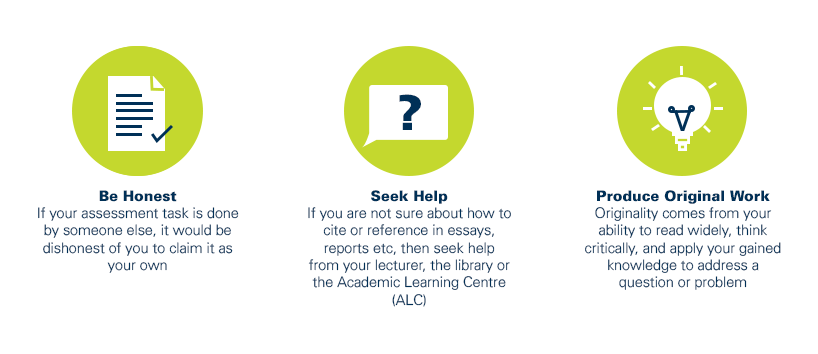
As a CQUniversity student you are expected to act honestly in all aspects of your academic work.
Any assessable work undertaken or submitted for review or assessment must be your own work. Assessable work is any type of work you do to meet the assessment requirements in the unit, including draft work submitted for review and feedback and final work to be assessed.
When you use the ideas, words or data of others in your assessment, you must thoroughly and clearly acknowledge the source of this information by using the correct referencing style for your unit. Using others’ work without proper acknowledgement may be considered a form of intellectual dishonesty.
Participating honestly, respectfully, responsibly, and fairly in your university study ensures the CQUniversity qualification you earn will be valued as a true indication of your individual academic achievement and will continue to receive the respect and recognition it deserves.
As a student, you are responsible for reading and following CQUniversity’s policies, including the Student Academic Integrity Policy and Procedure. This policy sets out CQUniversity’s expectations of you to act with integrity, examples of academic integrity breaches to avoid, the processes used to address alleged breaches of academic integrity, and potential penalties.
What is a breach of academic integrity?
A breach of academic integrity includes but is not limited to plagiarism, self-plagiarism, collusion, cheating, contract cheating, and academic misconduct. The Student Academic Integrity Policy and Procedure defines what these terms mean and gives examples.
Why is academic integrity important?
A breach of academic integrity may result in one or more penalties, including suspension or even expulsion from the University. It can also have negative implications for student visas and future enrolment at CQUniversity or elsewhere. Students who engage in contract cheating also risk being blackmailed by contract cheating services.
Where can I get assistance?
For academic advice and guidance, the Academic Learning Centre (ALC) can support you in becoming confident in completing assessments with integrity and of high standard.
What can you do to act with integrity?