Overview
In Professional Practice 3, you will participate in tutorials, practical workshops and an assessable classroom placement. The placement comprises a 20-day continuous block to enhance your ability to design, adapt and implement teaching sequences that cater to the diverse needs of learners in mainstream classrooms. You will develop an understanding of the use of assessment for learning as integral to informed curriculum decision-making and differentiation practices. You will apply this knowledge in classroom contexts to modify lesson plans and learning sequences in all curriculum learning areas in response to class profiling data that accurately records the strengths, needs and preferred learning styles of individuals and groups. Alongside this, you will develop formative and summative assessment strategies for monitoring student learning and achieving alignment between curriculum, pedagogy and assessment. During this placement, you will practise the use of a range of teaching strategies including questioning techniques and the provision of timely descriptive feedback to build effective relationships with learners and improve student outcomes.
Details
Pre-requisites or Co-requisites
Prerequisite:- Students must have successfully completed EDCU13020 and either EDFE12042 or EDFE11039
Important note: Students enrolled in a subsequent unit who failed their pre-requisite unit, should drop the subsequent unit before the census date or within 10 working days of Fail grade notification. Students who do not drop the unit in this timeframe cannot later drop the unit without academic and financial liability. See details in the Assessment Policy and Procedure (Higher Education Coursework).
Offerings For Term 3 - 2026
Attendance Requirements
All on-campus students are expected to attend scheduled classes - in some units, these classes are identified as a mandatory (pass/fail) component and attendance is compulsory. International students, on a student visa, must maintain a full time study load and meet both attendance and academic progress requirements in each study period (satisfactory attendance for International students is defined as maintaining at least an 80% attendance record).
Recommended Student Time Commitment
Each 6-credit Undergraduate unit at CQUniversity requires an overall time commitment of an average of 12.5 hours of study per week, making a total of 150 hours for the unit.
Class Timetable
Assessment Overview
Assessment Grading
This is a pass/fail (non-graded) unit. To pass the unit, you must pass all of the individual assessment tasks shown in the table above.
All University policies are available on the CQUniversity Policy site.
You may wish to view these policies:
- Grades and Results Policy
- Assessment Policy and Procedure (Higher Education Coursework)
- Review of Grade Procedure
- Student Academic Integrity Policy and Procedure
- Academic Progression Policy and Procedure
- Student Refund and Credit Balance Policy and Procedure
- Complaints Policy and Procedure
- Information and Communications Technology Acceptable Use Policy and Procedure
This list is not an exhaustive list of all University policies. The full list of University policies are available on the CQUniversity Policy site.
Feedback, Recommendations and Responses
Every unit is reviewed for enhancement each year. At the most recent review, the following staff and student feedback items were identified and recommendations were made.
Feedback from Self Reflection and Marker Feedback
Criteria descriptors
Review criteria for Assessment tasks 2 and 5.
Feedback from Self Reflection and Student Feedback
Assessment task 2 template
Review assessment task 2 template.
Feedback from Student Feedback
Assessment task 2
Continue to provide authentic context.
Feedback from Student and Colleague/Peer/Marker Feedback
Unit materials
Continue to refine and adapt unit materials to reflect contemporary teaching.
- Formulate assessment activities for the purpose of monitoring student achievement
- Apply strategies that modify learning sequences, pedagogy, content and assessment in response to individual and class profiling data
- Appraise the content of a proposed learning sequence to plan activities that overcome possible difficulties or make links to the prior knowledge of students with varying abilities
- Select teaching methods with an appropriate level of teacher control and student responsibility to scaffold learning for students and groups of varying ability levels
- Write explicit learning goals and task-specific standards for the purpose of explicit instruction and making consistent judgments on the quality of students’ work
- Analyse work samples and assessment information to support the delivery of feedback and design interventions to address specific learning issues
- Participate in collegial partnerships to improve practice and formulate responsive approaches to identified learning needs
- Critically reflect on professional learning using feedback, self-evaluation and the Australian Professional Standards for Teachers.
Successful completion of this unit provides opportunities for students to engage with the Australian Professional Standards for Teachers (Graduate Career Stage) focus areas of:
1.1 Physical, social and intellectual development and characteristics of students
1.2 Understand how students learn
1.3 Students with diverse linguistic, cultural, religious and socioeconomic backgrounds
1.5 Differentiate teaching to meet the specific learning needs of students across the full range of abilities
2.1 Content and teaching strategies of the teaching area
2.2 Content selection and organisation
2.3 Curriculum, assessment and reporting
2.5 Literacy and numeracy strategies
2.6 Information and Communication Technology (ICT)
3.1 Establish challenging learning goals
3.2 Plan, structure and sequence learning programs
3.3 Use teaching strategies
3.4 Select and use resources
3.5 Use effective classroom communication
3.6 Evaluate and improve teaching programs
4.1 Support student participation
4.2 Manage classroom activities
4.4 Maintain student safety
4.5 Use ICT safely, responsibly and ethically
5.1 Assess student learning
5.2 Provide feedback to students on their learning
5.3 Make consistent and comparable judgements
5.4 Interpret student data
5.5 Report on student achievement
6.1 Identify and plan professional learning needs
6.2 Engage in professional learning and improve practice
7.4 Engage with professional teaching networks and broader communities
6.3 Engage with colleagues and improve practice
6.4 Apply professional learning and improve student learning
7.1 Meet professional ethics and responsibilities
Alignment of Assessment Tasks to Learning Outcomes
| Assessment Tasks | Learning Outcomes | |||||||
|---|---|---|---|---|---|---|---|---|
| 1 | 2 | 3 | 4 | 5 | 6 | 7 | 8 | |
|
1.
Assessment 1
(Pass/Fail)
Part 1 -
Professional Practice Plans (learning plans)
|
||||||||
|
2.
Assessment 2
(Pass/Fail)
Part 1 -
Written Assessment
|
||||||||
|
3.
Assessment 3
(Pass/Fail)
Part 1 -
Online Quiz(zes)
|
||||||||
|
4.
Assessment 4
(Pass/Fail)
Part 1 -
Professional Practice Placement
|
||||||||
|
5.
Assessment 5
(Pass/Fail)
Part 1 -
Reflective Practice Assignment
|
||||||||
Alignment of Graduate Attributes to Learning Outcomes
| Graduate Attributes | Learning Outcomes | |||||||
|---|---|---|---|---|---|---|---|---|
| 1 | 2 | 3 | 4 | 5 | 6 | 7 | 8 | |
| 1 - Communication | ||||||||
| 2 - Problem Solving | ||||||||
| 3 - Critical Thinking | ||||||||
| 4 - Information Literacy | ||||||||
| 5 - Team Work | ||||||||
| 6 - Information Technology Competence | ||||||||
| 7 - Cross Cultural Competence | ||||||||
| 8 - Ethical practice | ||||||||
| 9 - Social Innovation | ||||||||
| 10 - First Nations Knowledges | ||||||||
| 11 - Aboriginal and Torres Strait Islander Cultures | ||||||||
Textbooks
Rigor and Differentiation in the Classroom: Tools and Strategies
- Edition: 1 (2019)
- Authors: Barbara R Blackburn
- Routledge - Taylor & Francis Group
- New York New York , America
- ISBN: 9781351185905
IT Resources
- CQUniversity Student Email
- Internet
- Unit Website (Moodle)
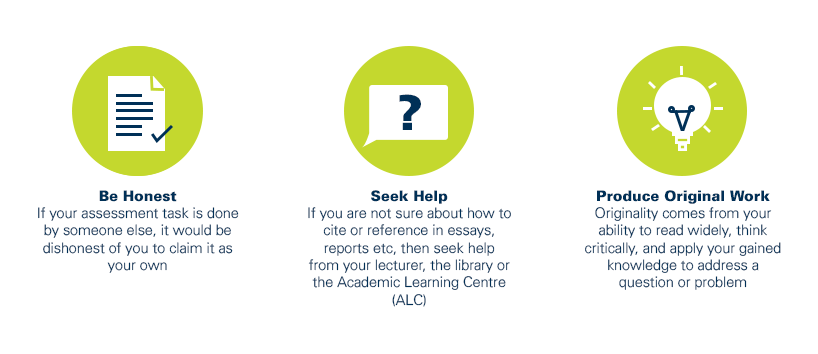
As a CQUniversity student you are expected to act honestly in all aspects of your academic work.
Any assessable work undertaken or submitted for review or assessment must be your own work. Assessable work is any type of work you do to meet the assessment requirements in the unit, including draft work submitted for review and feedback and final work to be assessed.
When you use the ideas, words or data of others in your assessment, you must thoroughly and clearly acknowledge the source of this information by using the correct referencing style for your unit. Using others’ work without proper acknowledgement may be considered a form of intellectual dishonesty.
Participating honestly, respectfully, responsibly, and fairly in your university study ensures the CQUniversity qualification you earn will be valued as a true indication of your individual academic achievement and will continue to receive the respect and recognition it deserves.
As a student, you are responsible for reading and following CQUniversity’s policies, including the Student Academic Integrity Policy and Procedure. This policy sets out CQUniversity’s expectations of you to act with integrity, examples of academic integrity breaches to avoid, the processes used to address alleged breaches of academic integrity, and potential penalties.
What is a breach of academic integrity?
A breach of academic integrity includes but is not limited to plagiarism, self-plagiarism, collusion, cheating, contract cheating, and academic misconduct. The Student Academic Integrity Policy and Procedure defines what these terms mean and gives examples.
Why is academic integrity important?
A breach of academic integrity may result in one or more penalties, including suspension or even expulsion from the University. It can also have negative implications for student visas and future enrolment at CQUniversity or elsewhere. Students who engage in contract cheating also risk being blackmailed by contract cheating services.
Where can I get assistance?
For academic advice and guidance, the Academic Learning Centre (ALC) can support you in becoming confident in completing assessments with integrity and of high standard.
What can you do to act with integrity?