Overview
This unit has the dual purpose of preparing you to apply content knowledge and pedagogical content knowledge in your area of primary specialisation while enhancing your religious literacy and understanding of both the knowledge components of the Catholic religion and its living components (or “practice”) within broader Catholic communities. You will design teaching and learning experiences that develop general capabilities underpinning the Australian curriculum framework and have a positive impact on students’ understanding of key curriculum concepts in an area of specialisation from your course of study. You will create resources that illustrate exemplary practice in classroom and remote learning contexts and share these resources in a community of practice that replicates the collaborative processes that underpin continuous improvement in the teaching profession. As a pre-service teacher in the Catholic strand of your course, you will collect evidence of your understanding of, and engagement with, the people, places, resources and language of Religious Education in contemporary Catholic school settings. In preparation for employment interviews in the Catholic Education system, you will develop a portfolio that incorporates a personal professional philosophy expressing your understanding of your role in Catholic schools as places of learning and your responsibilities for engagement with faith communities that value and practice social justice principles as a way of expressing and living out Christian beliefs.
Details
Pre-requisites or Co-requisites
Students enrol in this unit concurrently with EDFE14021 so that a context is created for the completion of the practical assessment.
Important note: Students enrolled in a subsequent unit who failed their pre-requisite unit, should drop the subsequent unit before the census date or within 10 working days of Fail grade notification. Students who do not drop the unit in this timeframe cannot later drop the unit without academic and financial liability. See details in the Assessment Policy and Procedure (Higher Education Coursework).
Offerings For Term 2 - 2026
Attendance Requirements
All on-campus students are expected to attend scheduled classes - in some units, these classes are identified as a mandatory (pass/fail) component and attendance is compulsory. International students, on a student visa, must maintain a full time study load and meet both attendance and academic progress requirements in each study period (satisfactory attendance for International students is defined as maintaining at least an 80% attendance record).
Recommended Student Time Commitment
Each 6-credit Undergraduate unit at CQUniversity requires an overall time commitment of an average of 12.5 hours of study per week, making a total of 150 hours for the unit.
Class Timetable
Assessment Overview
Assessment Grading
This is a graded unit: your overall grade will be calculated from the marks or grades for each assessment task, based on the relative weightings shown in the table above. You must obtain an overall mark for the unit of at least 50%, or an overall grade of 'pass' in order to pass the unit. If any 'pass/fail' tasks are shown in the table above they must also be completed successfully ('pass' grade). You must also meet any minimum mark requirements specified for a particular assessment task, as detailed in the 'assessment task' section (note that in some instances, the minimum mark for a task may be greater than 50%). Consult the University's Grades and Results Policy for more details of interim results and final grades.
All University policies are available on the CQUniversity Policy site.
You may wish to view these policies:
- Grades and Results Policy
- Assessment Policy and Procedure (Higher Education Coursework)
- Review of Grade Procedure
- Student Academic Integrity Policy and Procedure
- Academic Progression Policy and Procedure
- Student Refund and Credit Balance Policy and Procedure
- Complaints Policy and Procedure
- Information and Communications Technology Acceptable Use Policy and Procedure
This list is not an exhaustive list of all University policies. The full list of University policies are available on the CQUniversity Policy site.
Feedback, Recommendations and Responses
Every unit is reviewed for enhancement each year. At the most recent review, the following staff and student feedback items were identified and recommendations were made.
Feedback from Student emails
Engaging and useful content
Maintain high levels of student engagement
- Interpret and evaluate local documents and different approaches to teaching religion in contemporary Catholic schools
- Analyse the relationships, roles and responsibilities of various stakeholders in defining the nature and purpose of religious education in Catholic schools
- Reflect on practice to validate a personal professional philosophy as a future teacher in the Catholic schooling system
- Analyse curriculum to plan lessons and learning sequences that reflect the content, substance and structure of a learning area or discipline
- Design teaching and learning resources using knowledge of learning theory, content knowledge and pedagogical content knowledge for a specialised curriculum learning area
- Apply communication skills that support understanding of curriculum concepts for students with a diverse range of characteristics and abilities
- Participate in evaluation and feedback processes to improve teaching practice and student learning outcomes.
This unit meets the requirements of the updated Program Standards for Accreditation of initial teacher education courses in Australia. The practical assessment task and the eportfolio task provide opportunities for students to collect evidence of the achievement of all focus areas of the Australian Professional Standards for Teachers (Graduate Level). In addition, this units meets the curriculum requirements for accreditation to teach in Catholic schools and to teach Religious Education in the Catholic system in all Australian Dioceses.
Alignment of Assessment Tasks to Learning Outcomes
| Assessment Tasks | Learning Outcomes | ||||||
|---|---|---|---|---|---|---|---|
| 1 | 2 | 3 | 4 | 5 | 6 | 7 | |
| 1 - Practical Assessment - 50% | |||||||
| 2 - Portfolio - 50% | |||||||
Alignment of Graduate Attributes to Learning Outcomes
| Graduate Attributes | Learning Outcomes | ||||||
|---|---|---|---|---|---|---|---|
| 1 | 2 | 3 | 4 | 5 | 6 | 7 | |
| 1 - Communication | |||||||
| 2 - Problem Solving | |||||||
| 3 - Critical Thinking | |||||||
| 4 - Information Literacy | |||||||
| 5 - Team Work | |||||||
| 6 - Information Technology Competence | |||||||
| 7 - Cross Cultural Competence | |||||||
| 8 - Ethical practice | |||||||
| 9 - Social Innovation | |||||||
| 10 - First Nations Knowledges | |||||||
| 11 - Aboriginal and Torres Strait Islander Cultures | |||||||
Textbooks
There are no required textbooks.
IT Resources
- CQUniversity Student Email
- Internet
- Unit Website (Moodle)
All submissions for this unit must use the referencing style: American Psychological Association 7th Edition (APA 7th edition)
For further information, see the Assessment Tasks.
k.aprile@cqu.edu.au
a.brown2@cqu.edu.au
Week 1
Begin Date: 13 Jul 2026Module/Topic
Primary/Early Childhood Specialisation Focus
- Expert content knowledge and pedagogical content knowledge
- Planning for highly effective classroom practice
- Connecting with learners in class and remote learning contexts
- Planning a professional development session
- Feedback and evaluating teaching practice
Catholic Education Strand Content Overview
Topic 1: What makes us Catholic?
- Catholic Identity
- Catholic schools and a Catholic way of seeing the world
Topic 2: Church documents on Catholic education
Topic 3: Engagement with Catholic school communities
- Catholic School Identity
- What is Catholic school identity
- Life on the frontier
- Catholic pedagogy - witness, specialist and moderator
Topic 4: Enhancing Catholic school identity
- Post critical belief scale
- The Melbourne scale
- The Victoria scale
- Recontextualisation
Chapter
Events and Submissions/Topic
Please note that all topics for this unit are covered in the intensive schedule completed prior to the commencement of the Professional Practice 4 placement. The timetable schedules separate zoom tutorials for both the Specialisation focus (Weeks 1 - 3 only) and the Catholic Education content (Weeks 1 - 5). See the Virtual Classroom tile on Moodle to access tutorials.
Week 2
Begin Date: 20 Jul 2026Module/Topic
Chapter
Events and Submissions/Topic
Week 3
Begin Date: 27 Jul 2026Module/Topic
Chapter
Events and Submissions/Topic
Week 4
Begin Date: 03 Aug 2026Module/Topic
Chapter
Events and Submissions/Topic
Week 5
Begin Date: 10 Aug 2026Module/Topic
Chapter
Events and Submissions/Topic
Week 6
Begin Date: 17 Aug 2026Module/Topic
Chapter
Events and Submissions/Topic
Vacation Week
Begin Date: 24 Aug 2026Module/Topic
Chapter
Events and Submissions/Topic
Week 7
Begin Date: 31 Aug 2026Module/Topic
Chapter
Events and Submissions/Topic
Week 8
Begin Date: 07 Sep 2026Module/Topic
Chapter
Events and Submissions/Topic
Week 9
Begin Date: 14 Sep 2026Module/Topic
Chapter
Events and Submissions/Topic
Week 10
Begin Date: 21 Sep 2026Module/Topic
Chapter
Events and Submissions/Topic
Week 11
Begin Date: 28 Sep 2026Module/Topic
Chapter
Events and Submissions/Topic
Week 12
Begin Date: 05 Oct 2026Module/Topic
Chapter
Events and Submissions/Topic
Exam Week
Begin Date: 12 Oct 2026Module/Topic
Chapter
Events and Submissions/Topic
Vacation/Exam Week
Begin Date: 19 Oct 2026Module/Topic
Chapter
Events and Submissions/Topic
1 Practical Assessment
You will create a Professional Resource Package modelling highly effective teaching practice that draws on the content knowledge and pedagogical content knowledge that you have developed in your area of specialisation. This package could be used by teachers in classroom contexts or parents/carers who are supporting students in remote learning contexts.
The Professional Resource Package contains four parts as outlined below. You must complete all parts of the task and submit all required documentation as outlined in each part below for final assessment.
Part 1: Preparation of a Professional Resource Package
Select a grade of your choice from one of the approved specialist learning areas for your course. These areas are English, Mathematics or Science if you are enrolled in CC12 Bachelor of Education (Primary) or English if you are enrolled in CC14 Bachelor of Education (Early Childhood).
Part 1 (a)
- Source and modify an existing learning sequence (approximately 5 lessons) that develops knowledge, understanding and skills of a curriculum learning area or general capabilities embedded in curriculum content that students at the selected year level must learn to complete a meaningful summative task.
- Create a brief written overview of the learning sequence that explains the curriculum intent; proposed teaching and learning; and assessment.
- Select a concept from the learning sequence that is challenging for students to learn. Within the written overview, identify where in the sequence of lessons the challenging concept would be introduced to support students to complete a meaningful summative task.
- Create a video resource (no more than 6 minutes in length), targeted at students, that could be played in a classroom or online learning environment to support students' understanding and application of the concept for meaningful purposes.
You need to consider how to make the learning accessible to students from a wide range of abilities and backgrounds.
Part 1 (b)
- Identify and select a lesson from the learning sequence you have created in Part 1(a). (This should NOT be the same lesson that uses the video to teach the challenging concept.)
- Create a lesson plan and associated resources to demonstrate how you would teach the selected lesson.
- Use your lesson plan to write a script that illustrates how the lesson would be implemented with learners to support their engagement in the planned activities and their achievement of the intended learning goal.
What to submit for Part 1:
- The lesson sequence
- A brief written overview of the learning sequence
- Video file of the challenging/difficult concept
- Lesson plan
- All resources that are part of the lesson plan
- Script
Part 2: Explaining how to use the Professional Resource Package
Create a Professional Development PowerPoint Presentation with notes pages or voiceover that explains how teachers can use the Professional Resource Package you have created in Part 1a and 1b. The presentation must include the following features:
· Explanation of why the learning is important for students in the chosen year level
· Identification of common misconceptions or challenges that present barriers to learning for some students
· Key features of the teaching strategies you have modelled that promote the ways of working in your specialisation and/or have a positive impact on student learning
· Terminology that is important to use to support student understanding and achievement of learning intentions
· Examples of questions that can be used to check for understanding
· Examples of expected student responses to activities included in the lesson
· Suggestions for follow-up activities that provide meaningful opportunities for students to apply/practise the knowledge and skills that are the focus of the intended learning
What to submit for Part 2: A copy of the Professional Development PowerPoint presentation.
Part 3: Evaluation of Part 1 and Part 2
You will create an evaluation sheet seeking feedback on specific aspects of your resources. For example,
- the design of the resources,
- delivery of the content,
- selection of teaching strategies,
- fitness for purpose in meeting the needs of an intended audience.
You will work with a teaching colleague or peer for the purposes of evaluation and feedback on the Professional Resource Package you created in Part 1(a), Part 1(b) and Part 2.
What to submit for Part 3:
A copy of a completed evaluation sheet showing the feedback you received from a peer (which includes the questions you posed for seeking feedback on your resources/presentation.)
Part 4: Reflection on the feedback received in Part 3
For this part of the task, you will write a brief reflection of no more than 500 words addressing the feedback that you received in Part 3. Your reflection should defend and justify teaching strategies that you believe will have a positive impact on student learning and identify any adjustments or changes you would make to either the presentation or the resources in response to feedback.
What to submit for Part 4:
The written reflection and reference page.
Use of Generative Artificial Intelligence agents (Gen AI)
Within this assessment, the use of Gen AI agents is as follows:
- Gen AI content is used to generate ideas and general structures
- Gen AI can be used for content editing.
Week 5 Thursday (13 Aug 2026) 11:45 pm AEST
The task will be returned following moderation.
Alignment between planning, teaching and learning and curriculum intent
Evidence of content knowledge and pedagogical content knowledge in an area of curriculum specialisation
Explanation and justification of planning and teaching decisions
Critical reflection on the impact of teaching practice on student learning
- Analyse curriculum to plan lessons and learning sequences that reflect the content, substance and structure of a learning area or discipline
- Design teaching and learning resources using knowledge of learning theory, content knowledge and pedagogical content knowledge for a specialised curriculum learning area
- Apply communication skills that support understanding of curriculum concepts for students with a diverse range of characteristics and abilities
- Participate in evaluation and feedback processes to improve teaching practice and student learning outcomes.
2 Portfolio
This task contains two parts: Part A and Part B as described below. You must complete both parts of the task.
Part A
Throughout the period of your final professional experience placement of PP4, collect evidence that illustrates your understanding of the Catholic Identity of schools in the Catholic Diocese of Rockhampton.
The evidence you select should demonstrate your knowledge of Church and local documents related to a school’s Catholic Identity.
Suitable evidence could include images, photographs of icons, extracts from the school mission statement as well as records of staff meetings, professional development sessions, observation notes from school liturgies and other school / community practices and experiences, or interviews and discussions with key staff responsible for enhancing the Catholic Identity of the School.
Structure your submission using the following headings:
Catholic schools are called to be:
- Welcoming and inclusive communities
- Places of faith and reason
- Places of prayer, ritual and liturgy
- Places of care and attention to the needs of others
In 300 to 500 words for each section explain how the evidence you collected enacts the mission of Catholic Education in your school and how you as a teacher can support this.
Engagement with course materials must be evident in your submission.
Your evidence should be organised and presented as a single file (e.g. Document in word of pdf format, PowerPoint, or any other suitable electronic format).
Part B
Maurice Ryan (1997, p. 2) in “Foundations of Religious Education in Catholic Schools” poses the question: “Is the (Catholic) school meant to be a place of nurture for people in the Christian faith, or is it meant to teach an understanding of Christianity in particular and religion in general?”
Write a critical reflection that explains and evaluates your understanding of the role and responsibilities of teachers in the Catholic Education system. Your reflection should be written to include your emerging personal professional philosophy as a future teacher within this system.
The reflection should answer / respond to the question framed by Ryan and make specific reference to the evidence you have included in Part A, course materials, Church documents including The Mission of Catholic education in Queensland, that shape the identity and purpose of contemporary Catholic schools.
Length: Word limits do not apply to the collection of evidence given the multimodal format. Annotations should be no more than 25 words for each piece of evidence included.The reflection should be 1000 words in length.
Use of Generative Artificial Intelligence agents (Gen AI)
Within this assessment, the use of Gen AI agents is as follows:
Gen AI tools may be used for content editing only.
Week 11 Monday (28 Sept 2026) 11:45 pm AEST
Feedback on this task will be returned following moderation
Understanding of teachers’ professional roles in achieving the purposes of Catholic education (APST 6.4, 7.1)
Knowledge of human, physical and information resources and networks that support teachers’ professional learning and contribute to improved teaching practice and engagement with Catholic school communities (APST 6.2, 7.2, 7.3, 7.4)
Critical reflection on the ethical, institutional, collegial and community responsibilities of teachers in the Catholic schooling system (APST 6.3, 7.1, 7.2, 7.4)
- Interpret and evaluate local documents and different approaches to teaching religion in contemporary Catholic schools
- Analyse the relationships, roles and responsibilities of various stakeholders in defining the nature and purpose of religious education in Catholic schools
- Reflect on practice to validate a personal professional philosophy as a future teacher in the Catholic schooling system
- Participate in evaluation and feedback processes to improve teaching practice and student learning outcomes.
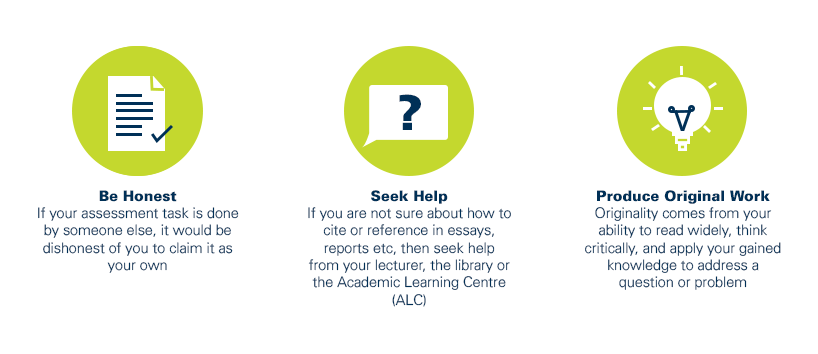
As a CQUniversity student you are expected to act honestly in all aspects of your academic work.
Any assessable work undertaken or submitted for review or assessment must be your own work. Assessable work is any type of work you do to meet the assessment requirements in the unit, including draft work submitted for review and feedback and final work to be assessed.
When you use the ideas, words or data of others in your assessment, you must thoroughly and clearly acknowledge the source of this information by using the correct referencing style for your unit. Using others’ work without proper acknowledgement may be considered a form of intellectual dishonesty.
Participating honestly, respectfully, responsibly, and fairly in your university study ensures the CQUniversity qualification you earn will be valued as a true indication of your individual academic achievement and will continue to receive the respect and recognition it deserves.
As a student, you are responsible for reading and following CQUniversity’s policies, including the Student Academic Integrity Policy and Procedure. This policy sets out CQUniversity’s expectations of you to act with integrity, examples of academic integrity breaches to avoid, the processes used to address alleged breaches of academic integrity, and potential penalties.
What is a breach of academic integrity?
A breach of academic integrity includes but is not limited to plagiarism, self-plagiarism, collusion, cheating, contract cheating, and academic misconduct. The Student Academic Integrity Policy and Procedure defines what these terms mean and gives examples.
Why is academic integrity important?
A breach of academic integrity may result in one or more penalties, including suspension or even expulsion from the University. It can also have negative implications for student visas and future enrolment at CQUniversity or elsewhere. Students who engage in contract cheating also risk being blackmailed by contract cheating services.
Where can I get assistance?
For academic advice and guidance, the Academic Learning Centre (ALC) can support you in becoming confident in completing assessments with integrity and of high standard.
What can you do to act with integrity?