Overview
Learning and teaching in the latter middle years of learning (Years 7 to 9) in selected learning areas, is the focus of this unit. The influences, interpretation and implementation of lower secondary school curriculum frameworks are examined critically for the purposes of designing effective pedagogies. A range of topics is examined including curriculum development, teaching and learning resources, teaching strategies, pedagogical approaches, assessment and school work programs relevant to the pre-service teacher’s two teaching areas. Critical use is made of relevant sources of information including curriculum and policy documents to promote professional teaching through the selection of appropriate teachable content to enable the design of quality learning experiences using a range of pedagogies and the development of assessment strategies that promote learning in lower secondary school contexts.
Details
Pre-requisites or Co-requisites
Students must have successfully accumulated 48 credit points to be eligible to enrol in this unit. This includes the successful completion of 1 x Level 1 and 1 x Advanced level unit per Discipline Teaching Area.
Important note: Students enrolled in a subsequent unit who failed their pre-requisite unit, should drop the subsequent unit before the census date or within 10 working days of Fail grade notification. Students who do not drop the unit in this timeframe cannot later drop the unit without academic and financial liability. See details in the Assessment Policy and Procedure (Higher Education Coursework).
Offerings For Term 2 - 2026
Attendance Requirements
All on-campus students are expected to attend scheduled classes - in some units, these classes are identified as a mandatory (pass/fail) component and attendance is compulsory. International students, on a student visa, must maintain a full time study load and meet both attendance and academic progress requirements in each study period (satisfactory attendance for International students is defined as maintaining at least an 80% attendance record).
Recommended Student Time Commitment
Each 12-credit Undergraduate unit at CQUniversity requires an overall time commitment of an average of 25 hours of study per week, making a total of 300 hours for the unit.
Class Timetable
Assessment Overview
Assessment Grading
This is a graded unit: your overall grade will be calculated from the marks or grades for each assessment task, based on the relative weightings shown in the table above. You must obtain an overall mark for the unit of at least 50%, or an overall grade of 'pass' in order to pass the unit. If any 'pass/fail' tasks are shown in the table above they must also be completed successfully ('pass' grade). You must also meet any minimum mark requirements specified for a particular assessment task, as detailed in the 'assessment task' section (note that in some instances, the minimum mark for a task may be greater than 50%). Consult the University's Grades and Results Policy for more details of interim results and final grades.
All University policies are available on the CQUniversity Policy site.
You may wish to view these policies:
- Grades and Results Policy
- Assessment Policy and Procedure (Higher Education Coursework)
- Review of Grade Procedure
- Student Academic Integrity Policy and Procedure
- Academic Progression Policy and Procedure
- Student Refund and Credit Balance Policy and Procedure
- Complaints Policy and Procedure
- Information and Communications Technology Acceptable Use Policy and Procedure
This list is not an exhaustive list of all University policies. The full list of University policies are available on the CQUniversity Policy site.
Feedback, Recommendations and Responses
Every unit is reviewed for enhancement each year. At the most recent review, the following staff and student feedback items were identified and recommendations were made.
Feedback from Student Evaluation
Require more 'real world' examples of unit / lesson plans.
More best practice examples of unit plans and lesson plans to be annotated and present in content and lectures.
Feedback from Student Evaluation
Consistency of learning across different Learning Areas.
Continual review of learning materials and tutorials across specific Learning Areas and more robust pre moderation with Tutors.
- Use and understand curriculum frameworks relevant to your two teaching areas at a lower secondary school level
- Engage with teaching and learning resources relevant to your two teaching areas at a lower secondary school level
- Interpret and manipulate teaching strategies relevant to your two teaching areas at a lower secondary school level
- Design pedagogies appropriate for the implementation of your relevant curriculum frameworks
- Outline assessment strategies both formative and summative relevant to your two teaching areas at a lower secondary school level.
Successful completion of this unit provides opportunities for students to engage with the following Australian Professional Standards for Teachers (Graduate Career Stage) focus areas:
1.5 Differentiate teaching to meet the specific learning needs of students across the full range of abilities
2.1 Content and teaching strategies of the teaching area
2.2 Content selection and organisation
2.3 Curriculum, assessment and reporting
2.5 Literacy and numeracy strategies
3.2 Plan, structure and sequence learning programs
3.3 Use teaching strategies
3.4 Select and use resources
5.1 Assess student learning
7.2 Comply with legislative, administrative and organisational requirements
Successful completion of this unit provides opportunities for students to meet the following Core Content Learning Outcomes:
2.1 Knowledge of and skill in planning and sequencing content and tasks so that they become increasingly challenging and incorporate spacing and retrieval practice.
Successful completion of this unit provides opportunities for students to demonstrate knowledge of the following Core Content focus areas:
2.1.1 The key features of coherent and deliberate planning and sequencing of tasks and lessons including curriculum-aligned learning objectives, clear descriptions of how students will show evidence of mastery, the common progression of learning in a subject area and the critical curriculum knowledge needed for students to progress.
2.1.2 How to plan a sequence of lessons that incorporate spacing and retrieval practice, build upon each other, meet students where they are in their learning and help students retrieve past learning and consolidate it in long-term memory.
2.1.3 How to sequence tasks within a lesson that build upon each other, meet students where they are in their learning and help them understand the progression of skills needed to attain mastery.
2.3.1 How to pitch an introductory lesson at an appropriate level, before starting a new unit of work, by identifying where a student is in their learning through assessing what they know, or think they know.
2.3.2 How to use formative assessment practices to gather and interpret information about student learning as learning is taking place – for example, use of simple, low-key assessments such as exit slips, quick quizzes or targeted oral questioning to prompt students to articulate their reasoning and identify common student misconceptions.
2.3.3 How to design summative assessment to assess students against a standard or benchmark to gain an understanding of the level of mastery attained.
2.3.4 How to produce and use developmental rubrics with criteria tailored to the specific task and/or work samples so that students understand what is expected.
2.3.5 How to provide feedback as learning is taking place that is specific, honest, constructive, and clear, and uses explicit teaching strategies to re-teach concepts, scaffold, or correct misconceptions as necessary.
4.1.1 The content covered in the Australian Curriculum Aboriginal and Torres Strait Islander Histories and Cultures cross-curriculum priority across stages and subjects.
Alignment of Assessment Tasks to Learning Outcomes
| Assessment Tasks | Learning Outcomes | ||||
|---|---|---|---|---|---|
| 1 | 2 | 3 | 4 | 5 | |
| 1 - Portfolio - 5% | |||||
| 2 - Portfolio - 45% | |||||
| 3 - Portfolio - 5% | |||||
| 4 - Portfolio - 45% | |||||
Alignment of Graduate Attributes to Learning Outcomes
| Graduate Attributes | Learning Outcomes | ||||
|---|---|---|---|---|---|
| 1 | 2 | 3 | 4 | 5 | |
| 1 - Communication | |||||
| 2 - Problem Solving | |||||
| 3 - Critical Thinking | |||||
| 4 - Information Literacy | |||||
| 5 - Team Work | |||||
| 6 - Information Technology Competence | |||||
| 7 - Cross Cultural Competence | |||||
| 8 - Ethical practice | |||||
| 9 - Social Innovation | |||||
| 10 - First Nations Knowledges | |||||
| 11 - Aboriginal and Torres Strait Islander Cultures | |||||
Textbooks
Teaching Middle Years: Rethinking Curriculum, Pedagogy, and Assessment
- 4th Edition (2025)
- Authors: Donna Pendergast, Katherine Main, Nan Bahr
- Routledge
- Abingdon Abingdon , Oxon , England
- ISBN: 9781032603070
Additional Textbook Information
This Textbook provides essential foundational knowledge, is used in other units within the Bachelor of Education (Secondary), and will be a valuable resource for you as a graduate teacher.
IT Resources
- CQUniversity Student Email
- Internet
- Unit Website (Moodle)
All submissions for this unit must use the referencing style: American Psychological Association 7th Edition (APA 7th edition)
For further information, see the Assessment Tasks.
d.j.petersen@cqu.edu.au
Week 1
Begin Date: 13 Jul 2026Module/Topic
Topic 1: The Australian Curriculum
Chapter
Pendergast, D., Main, K., & Bahr, N. (Eds.). (2021). Teaching middle years: Rethinking curriculum, pedagogy, and assessment (4th ed.). Allen & Unwin (Chapter 1).
Events and Submissions/Topic
Week 2
Begin Date: 20 Jul 2026Module/Topic
Topic 2: School Contexts and Curriculum Planning
Chapter
Ewing, R., Le Cornu, R. & Groundwater-Smith, S. (2014). Teaching challenges and dilemmas. (Chapter 5 - The learning environment)
Events and Submissions/Topic
Learning Area 1 Zoom Tutorial - AT 1.
Week 3
Begin Date: 27 Jul 2026Module/Topic
Topic 3: Unit Planning (including Sequencing Teaching and Learning)
Chapter
Pendergast, D., Main, K., & Bahr, N. (Eds.). (2021). Teaching middle years: Rethinking curriculum, pedagogy, and assessment (4th ed.). Allen & Unwin (Chapter 6)
Killen, R. (2015). Effective Teaching Strategies: Lessons from Research and Practice. (7th ed.). pp. 81-89.
Ewing, R., Le Cornu, R. & Groundwater-Smith, S. (2014). Teaching challenges and dilemmas. (Chapter 8 - Planning and preparing for teaching)
Events and Submissions/Topic
Learning Area Zoom 1 Tutorial - AT 1.
Week 4
Begin Date: 03 Aug 2026Module/Topic
Topic 4: Middle Years Learners and DIfferentiation
Chapter
Pendergast, D., Main, K., & Bahr, N. (Eds.). (2021). Teaching middle years: Rethinking curriculum, pedagogy, and assessment (4th ed.). Allen & Unwin (Chapter 2, 3, 4, 5, 7, 8)
Tomlinson, C. (2014). The differentiated classroom: Responding to the needs of all learners. (Instructional Strategies - from Chapters 7 & 8)
Events and Submissions/Topic
Week 5
Begin Date: 10 Aug 2026Module/Topic
Topic 5: Australian Curriculum General Capabilities and Cross-Curriculum Priorities
Chapter
Pendergast, D., Main, K., & Bahr, N. (Eds.). (2021). Teaching middle years: Rethinking curriculum, pedagogy, and assessment (4th ed.). Allen & Unwin (Chapter 9 & 10)
Events and Submissions/Topic
Week 6
Begin Date: 17 Aug 2026Module/Topic
Topic 6: Lesson Planning
Chapter
Butt, G. (2008). Lesson planning (3rd ed). pp. 60-68.
Events and Submissions/Topic
Vacation Week
Begin Date: 24 Aug 2026Module/Topic
Chapter
Events and Submissions/Topic
Week 7
Begin Date: 31 Aug 2026Module/Topic
Topic 7: Pedagogical Approaches and Pedagogical Content Knowledge (PCK)
Chapter
Pendergast, D., Main, K., & Bahr, N. (Eds.). (2021). Teaching middle years: Rethinking curriculum, pedagogy, and assessment (4th ed.). Allen & Unwin (Chapter 15, 16, 17, 18)
Howell, J. (2014). Teaching & learning: building effective pedagogies. pp. 60-70.
Events and Submissions/Topic
Week 8
Begin Date: 07 Sep 2026Module/Topic
Topic 8: Teaching Strategies, Learning Experiences and Resources
Chapter
Killen, R. (2015). Effective teaching strategies: Lessons from research and practice. (7th ed.) (Teaching strategies selections across Chapters 5 - 13)
Events and Submissions/Topic
Week 9
Begin Date: 14 Sep 2026Module/Topic
Topic 9: Assessment Design
Chapter
Pendergast, D., Main, K., & Bahr, N. (Eds.). (2021). Teaching middle years: Rethinking curriculum, pedagogy, and assessment (4th ed.). Allen & Unwin (Chapter 20)
Howell, J. (2014). Teaching & learning: building effective pedagogies. pp. 427-434.
Events and Submissions/Topic
Week 10
Begin Date: 21 Sep 2026Module/Topic
Assessment Task 2
Chapter
Events and Submissions/Topic
Learning Area 2 Zoom Tutorial - AT2.
Week 11
Begin Date: 28 Sep 2026Module/Topic
Assessment Task 2
Chapter
Events and Submissions/Topic
Learning Area 2 Zoom Tutorial - AT2.
Week 12
Begin Date: 05 Oct 2026Module/Topic
Chapter
Events and Submissions/Topic
Exam Week
Begin Date: 12 Oct 2026Module/Topic
Chapter
Events and Submissions/Topic
Vacation/Exam Week
Begin Date: 19 Oct 2026Module/Topic
Chapter
Events and Submissions/Topic
Use of Generative Artificial Intelligence (AI) in Learning Materials
Generative artificial intelligence (AI) tools may have been used by academic/teaching staff in the development of learning materials and/or associated teaching resources (for example, for initial drafting, content organisation, activity generation, image creation, editing, summarisation, or accessibility support). Any AI-assisted content has been critically reviewed, refined, and contextualised by academic staff. The final learning materials, teaching activities, and guidance provided reflect academic judgement and align with CQUniversity learning, teaching, accessibility, and academic integrity requirements.
Use of Generative Artificial Intelligence (AI) in Assessment Materials
Generative artificial intelligence (AI) tools may have been used by academic/teaching staff in the design of this assessment task and/or associated marking resources (for example, for initial drafting, rubric development, or feedback scaffolding).
Any AI‑assisted content has been critically reviewed and refined by academic staff. The final assessment design, marking criteria, and feedback processes reflect academic judgement and comply with CQUniversity assessment and academic integrity requirements.
1 Portfolio
This task requires you to apply core concepts of the unit to develop a Portfolio of Teaching and Learning materials based around a unit of work in one of your Learning Areas for a Middle Years class. The Portfolio will demonstrate your ability to interpret and implement curriculum frameworks to design effective pedagogies in your selected Learning Area, using a school context and a detailed class profile of a Middle Years class.
Part A will be used to build the skills and knowledge required for you to complete the finalised unit overview and lesson plan (AT1 Part B) and to provide opportunities for you to receive feedback as you start to build and develop your ideas.
The following components are to be completed on the ‘Assessment Task 1 - Unit of Work Overview and Lesson Plan Template’. The Part A task components include:
- Unit Overview
- Context and Cohort Considerations
- Assessment (Summative)
- Achievement Standard
- Content Descriptions
- General Capabilities (Literacy and Numeracy)
- Learning Intentions and Success Criteria (Week 1& 2 only)
- Sequence of Key Teaching and Learning Experiences including formative assessment (Week 1 & 2 only)
Please note the following requirements of the Unit Overview:
- Unit planning must use the Australian Curriculum Version 9 and focus on Years 7, 8 or 9.
- You will be planning the teaching and learning for a unit of work that is 4-5 weeks in duration (equivalent to 10-15 lessons in total).
- If your teaching area typically delivers longer units of work, your planning will focus on the first or last 4-5 weeks of the unit of work encompassing the period of learning before and leading up to a significant formative or summative assessment task.
- You are to assume that all lessons are timetabled for 70 minutes.
Week 4 Thursday (6 Aug 2026) 11:59 pm AEST
Week 5 Thursday (13 Aug 2026)
1. Knowledge and understanding of curriculum frameworks relevant to your Learning Area at a lower secondary school level including:
- Compliance with legislative, administration and organisational requirements;
- Content selection and organisation;
- Planning and sequencing content and tasks so that they become increasingly challenging and incorporate spacing and retrieval practice.
2. Knowledge and understanding of how to interpret and manipulate teaching strategies relevant to your Learning Area at a lower secondary school level including:
- Use of appropriate teaching strategies;
- Literacy and Numeracy strategies.
3. Knowledge and understanding of assessment strategies both formative and summative relevant to your Learning Area at a lower secondary school level.
AI Assessment Scale: Level 3
You may use AI to assist with specific tasks such as drafting text, refining, and evaluating your work. You must critically evaluate and modify any AI-generated content. Any misuse or lack of disclosure regarding AI tools will be considered a breach of academic integrity.
By submitting this assessment, you confirm that any Generative AI use as specified in this task, that you have reviewed the output, and that the submitted work reflects your own understanding, knowledge and intended meaning.
Please note: The 72-Hour grace period applies to AT1.
If you need longer than 72 hours, you will still need to use the normal Assessment Extension System process.
- Use and understand curriculum frameworks relevant to your two teaching areas at a lower secondary school level
- Engage with teaching and learning resources relevant to your two teaching areas at a lower secondary school level
- Interpret and manipulate teaching strategies relevant to your two teaching areas at a lower secondary school level
- Design pedagogies appropriate for the implementation of your relevant curriculum frameworks
- Outline assessment strategies both formative and summative relevant to your two teaching areas at a lower secondary school level.
2 Portfolio
This task requires you to apply core concepts of the unit to develop a Portfolio of Teaching and Learning materials based around a unit of work in one of your Learning Areas for a Middle Years class. The Portfolio will demonstrate your ability to interpret and implement curriculum frameworks to design effective pedagogies in your selected Learning Area, using a school context and a detailed class profile of a Middle Years class.
Part B task components will reflect the key understandings explored in Moodle materials and the work you have already done in Part A of the assessment task. This section of the task requires you to:
- Develop a 4 – 5 week unit overview (continue from Part A);
- Design one detailed lesson plan from this unit;
- Provide a justification of your planning choices.
Unit Overview
The following components are to be completed on the ‘Assessment Task 1 - Unit of Work Overview and Lesson Plan Template’ found in the AT 1 Resources section of the Assessment Information and Resources tile within Moodle. The Part B task components include:
- Unit Overview
- Context and Cohort Considerations
- Assessment (Summative)
- Achievement Standard
- Content Descriptions
- General Capabilities (Literacy and Numeracy)
- Learning Intentions and Success Criteria
- Sequence of Key Teaching and Learning Experiences including formative assessment
Adjustments (Differentiation) - Resources
Please note the following requirements of the Unit Overview:
- Unit planning must use the Australian Curriculum Version 9 and focus on Years 7, 8 or 9.
- You will be planning the teaching and learning for a unit of work that is 4-5 weeks in duration (equivalent to 10-15 lessons in total).
- If your teaching area typically delivers longer units of work, your planning will focus on the first or last 4-5 weeks of the unit of work encompassing the period of learning before and leading up to a significant formative or summative assessment task.
- You are to assume that all lessons are timetabled for 70 minutes.
Lesson Plan
A detailed lesson plan that is drawn from your unit of work will be used to demonstrate your understanding of differentiated teaching strategies and resources suitable for the needs of Middle Years learners focussed on Literacy or Numeracy in your Learning Area. The lesson plan is to be completed on the ‘Assessment Task 1 - Unit of Work Overview and Lesson Plan Template’. The Lesson Plan must demonstrate:
- The development of Learning Area-specific literacy or numeracy skills specific to the unit of work;
- An understanding of differentiation for diverse learners through teaching strategies and the use of resources.
- You will create and submit (as Appendix A) all of the resources (or links to) referred to in this lesson plan that will be used to support student engagement (focused on literacy or numeracy), demonstrating how resources can be differentiated for different students' needs.
Justification (1600 words)
Write a justification of your planning process that will include:
- Specific examples that are drawn from your planning of the unit overview, detailed lesson plan and resources (e.g. In Week 3, Lesson 4, students …)
- References to literature and the appropriate curriculum to support your planning decisions.
Your Justification will address the following areas:
- Middle Years / School Context: a statement about the contextual elements that influenced your planning for teaching. (approx. 400 words):
- Justify why this unit of work is relevant to 21st century Middle Years learners;
- Explain how your knowledge of the particular cohort of learners (include a detailed profile as an Appendix B) and the particular school context influenced the design of the unit.
- Unit Planning: a justification of the planning elements that informed the unit design. (approx. 600 words):
- Explain how this unit is informed by the intent of the curriculum in your chosen teaching area;
- Discuss the selection, organisation and sequencing of content in your unit;
- Explain how resources have been selected and utilised to support differentiated teaching and learning in this unit.
- Lesson Planning: justify how your lesson plan represents Learning Area-specific literacy or numeracy planning and differentiation to promote learning. (approx. 600 words)
- Explain the purpose of this lesson in the overall unit of work and justify how the approach to pedagogy and learning activities contributes to developing students' Learning Area-specific literacy or numeracy skills.
- Using examples from the lesson plan and the associated resources, explain how you have considered the diverse needs of learners that are indicated in your cohort profile.
- Explain how you have planned and sequenced content to show how learning can become increasingly challenging and incorporate spacing and retrieval practice.
Week 7 Thursday (3 Sept 2026) 11:59 pm AEST
Week 9 Thursday (17 Sept 2026)
1. Knowledge, understanding and justification of curriculum frameworks relevant to your Learning Area at a lower secondary school level including:
- Compliance with legislative, administration and organisational requirements;
- Content selection and organisation;
- Planning and sequencing content and tasks so that they become increasingly challenging and incorporate spacing and retrieval practice.
2. Knowledge, understanding and justification of teaching and learning resources relevant to your Learning Area at a lower secondary school level including:
- Selection and use of resources.
3. Knowledge, understanding and justification of how to interpret and manipulate teaching strategies relevant to your Learning Area at a lower secondary school level including:
- Use of appropriate teaching strategies;
- Literacy and Numeracy strategies.
4. Knowledge, understanding and justification of how to design pedagogies appropriate for the implementation of your relevant curriculum framework including:
- Differentiated teaching to meet the specific learning needs of all students;
5. Knowledge and understanding of assessment strategies both formative and summative relevant to your Learning Area at a lower secondary school level.
6. Effective written communication skills utilised in presentation of work including:
- Critical evaluation of key concepts and theories through connections between scholarly references and students’ work.
Word Count
The word count is considered from the first word of the introduction to the last word of the conclusion. It excludes the cover page, abstract, contents page, reference page and appendices. It includes in-text references and direct quotations. Word count for this assignment: 1600 words (Justification only).
AI Assessment Scale: Level 3
You may use AI to assist with specific tasks such as drafting text, refining, and evaluating your work. You must critically evaluate and modify any AI-generated content. Any misuse or lack of disclosure regarding AI tools will be considered a breach of academic integrity.
By submitting this assessment, you confirm that any Generative AI use as specified in this task, that you have reviewed the output, and that the submitted work reflects your own understanding, knowledge and intended meaning.
Please note: The 72-Hour grace period applies to AT1.
If you need longer than 72 hours, you will still need to use the normal Assessment Extension System process.
- Use and understand curriculum frameworks relevant to your two teaching areas at a lower secondary school level
- Engage with teaching and learning resources relevant to your two teaching areas at a lower secondary school level
- Interpret and manipulate teaching strategies relevant to your two teaching areas at a lower secondary school level
- Design pedagogies appropriate for the implementation of your relevant curriculum frameworks
- Outline assessment strategies both formative and summative relevant to your two teaching areas at a lower secondary school level.
3 Portfolio
This task requires you to apply core concepts of the unit to develop a Portfolio of Teaching and Learning materials based around a unit of work in one of your Learning Areas for a Middle Years class. The Portfolio will demonstrate your ability to interpret and implement curriculum frameworks to design effective pedagogies in your selected Learning Area, using a school context and a detailed class profile of a Middle Years class.
Part A will be used to build the skills and knowledge required for you to complete the finalised unit overview and lesson plan (AT1 Part B) and to provide opportunities for you to receive feedback as you start to build and develop your ideas.
The following components are to be completed on the ‘Assessment Task 1 - Unit of Work Overview and Lesson Plan Template’. The Part A task components include:
- Unit Overview
- Context and Cohort Considerations
- Assessment (Summative)
- Achievement Standard
- Content Descriptions
- General Capabilities (Literacy and Numeracy)
- Learning Intentions and Success Criteria (Week 1& 2 only)
- Sequence of Key Teaching and Learning Experiences including formative assessment (Week 1 & 2 only)
Please note the following requirements of the Unit Overview:
- Unit planning must use the Australian Curriculum Version 9 and focus on Years 7, 8 or 9.
- You will be planning the teaching and learning for a unit of work that is 4-5 weeks in duration (equivalent to 10-15 lessons in total).
- If your teaching area typically delivers longer units of work, your planning will focus on the first or last 4-5 weeks of the unit of work encompassing the period of learning before and leading up to a significant formative or summative assessment task.
- You are to assume that all lessons are timetabled for 70 minutes.
Week 9 Thursday (17 Sept 2026) 11:59 pm AEST
Week 10 Thursday (24 Sept 2026)
1. Knowledge and understanding of curriculum frameworks relevant to your Learning Area at a lower secondary school level including:
- Compliance with legislative, administration and organisational requirements;
- Content selection and organisation;
- Planning and sequencing content and tasks so that they become increasingly challenging and incorporate spacing and retrieval practice.
2. Knowledge and understanding of how to interpret and manipulate teaching strategies relevant to your Learning Area at a lower secondary school level including:
- Use of appropriate teaching strategies;
- Literacy and Numeracy strategies.
3. Knowledge and understanding of assessment strategies both formative and summative relevant to your Learning Area at a lower secondary school level.
AI Assessment Scale: Level 3
You may use AI to assist with specific tasks such as drafting text, refining, and evaluating your work. You must critically evaluate and modify any AI-generated content. Any misuse or lack of disclosure regarding AI tools will be considered a breach of academic integrity.
By submitting this assessment, you confirm that any Generative AI use as specified in this task, that you have reviewed the output, and that the submitted work reflects your own understanding, knowledge and intended meaning.
Please note: The 72-Hour grace period applies to AT2.
If you need longer than 72 hours, you will still need to use the normal Assessment Extension System process.
- Use and understand curriculum frameworks relevant to your two teaching areas at a lower secondary school level
- Engage with teaching and learning resources relevant to your two teaching areas at a lower secondary school level
- Interpret and manipulate teaching strategies relevant to your two teaching areas at a lower secondary school level
- Design pedagogies appropriate for the implementation of your relevant curriculum frameworks
- Outline assessment strategies both formative and summative relevant to your two teaching areas at a lower secondary school level.
4 Portfolio
This task requires you to apply core concepts of the unit to develop a Portfolio of Teaching and Learning materials based around a unit of work in one of your Learning Areas for a Middle Years class. The Portfolio will demonstrate your ability to interpret and implement curriculum frameworks to design effective pedagogies in your selected Learning Area, using a school context and a detailed class profile of a Middle Years class.
Part B task components will reflect the key understandings explored in Moodle materials and the work you have already done in Part A of the assessment task. This section of the task requires you to:
- Develop a 4 – 5 week unit overview (continue from Part A);
- Design one detailed lesson plan from this unit;
- Provide a justification of your planning choices.
Unit Overview
The following components are to be completed on the ‘Assessment Task 1 - Unit of Work Overview and Lesson Plan Template’ found in the AT 1 Resources section of the Assessment Information and Resources tile within Moodle. The Part B task components include:
- Unit Overview
- Context and Cohort Considerations
- Assessment (Summative)
- Achievement Standard
- Content Descriptions
- General Capabilities (Literacy and Numeracy)
- Learning Intentions and Success Criteria
- Sequence of Key Teaching and Learning Experiences including formative assessment
Adjustments (Differentiation) - Resources
Please note the following requirements of the Unit Overview:
- Unit planning must use the Australian Curriculum Version 9 and focus on Years 7, 8 or 9.
- You will be planning the teaching and learning for a unit of work that is 4-5 weeks in duration (equivalent to 10-15 lessons in total).
- If your teaching area typically delivers longer units of work, your planning will focus on the first or last 4-5 weeks of the unit of work encompassing the period of learning before and leading up to a significant formative or summative assessment task.
- You are to assume that all lessons are timetabled for 70 minutes.
Lesson Plan
A detailed lesson plan that is drawn from your unit of work will be used to demonstrate your understanding of differentiated teaching strategies and resources suitable for the needs of Middle Years learners focussed on Literacy or Numeracy in your Learning Area. The lesson plan is to be completed on the ‘Assessment Task 1 - Unit of Work Overview and Lesson Plan Template’. The Lesson Plan must demonstrate:
- The development of Learning Area-specific literacy or numeracy skills specific to the unit of work;
- An understanding of differentiation for diverse learners through teaching strategies and the use of resources.
- You will create and submit (as Appendix A) all of the resources (or links to) referred to in this lesson plan that will be used to support student engagement (focused on literacy or numeracy), demonstrating how resources can be differentiated for different students' needs.
Justification (1600 words)
Write a justification of your planning process that will include:
- Specific examples that are drawn from your planning of the unit overview, detailed lesson plan and resources (e.g. In Week 3, Lesson 4, students …)
- References to literature and the appropriate curriculum to support your planning decisions.
Your Justification will address the following areas:
- Middle Years / School Context: a statement about the contextual elements that influenced your planning for teaching. (approx. 400 words):
- Justify why this unit of work is relevant to 21st century Middle Years learners;
- Explain how your knowledge of the particular cohort of learners (include a detailed profile as an Appendix B) and the particular school context influenced the design of the unit.
- Unit Planning: a justification of the planning elements that informed the unit design. (approx. 600 words):
- Explain how this unit is informed by the intent of the curriculum in your chosen teaching area
- Discuss the selection, organisation and sequencing of content in your unit;
- Explain how formative assessment strategies to assess students' development of the knowledge and skills needed to demonstrate their learning in the final summative assessment task have been incorporated in the unit.
- Lesson Planning: justify how your lesson plan represents Learning Area-specific literacy or numeracy planning and formative assessment to promote learning. (approx. 600 words)
- Explain the purpose of this lesson in the overall unit of work and justify how the approach to pedagogy and learning activities contributes to developing students' Learning Area-specific literacy or numeracy skills.
- Discuss how the focus on literacy or numeracy in the lesson plan assists students to prepare for the unit’s summative assessment task and how the teacher will check for understanding of the subject-specific literacy or numeracy skills in this lesson.
- Explain how you have planned and sequenced content to show how learning can become increasingly challenging and incorporate spacing and retrieval practice.
Week 12 Thursday (8 Oct 2026) 11:59 pm AEST
Exam Week Thursday (15 Oct 2026)
1. Knowledge, understanding and justification of curriculum frameworks relevant to your Learning Area at a lower secondary school level including:
- Compliance with legislative, administration and organisational requirements;
- Content selection and organisation;
- Planning and sequencing content and tasks so that they become increasingly challenging and incorporate spacing and retrieval practice.
2. Knowledge, understanding and justification of teaching and learning resources relevant to your Learning Area at a lower secondary school level including:
- Selection and use of resources.
3. Knowledge, understanding and justification of how to interpret and manipulate teaching strategies relevant to your Learning Area at a lower secondary school level including:
- Use of appropriate teaching strategies;
- Literacy and Numeracy strategies.
4. Knowledge and understanding of how to design pedagogies appropriate for the implementation of your relevant curriculum framework including:
- Differentiated teaching to meet the specific learning needs of all students;
5. Knowledge and understanding and justification of assessment strategies both formative and summative relevant to your Learning Area at a lower secondary school level.
6. Effective written communication skills utilised in presentation of work including:
- Critical evaluation of key concepts and theories through connections between scholarly references and students’ work.
Word Count
The word count is considered from the first word of the introduction to the last word of the conclusion. It excludes the cover page, abstract, contents page, reference page and appendices. It includes in-text references and direct quotations. Word count for this assignment: 1600 words (Justification only).
AI Assessment Scale: Level 3
You may use AI to assist with specific tasks such as drafting text, refining, and evaluating your work. You must critically evaluate and modify any AI-generated content. Any misuse or lack of disclosure regarding AI tools will be considered a breach of academic integrity.
By submitting this assessment, you confirm that any Generative AI use as specified in this task, that you have reviewed the output, and that the submitted work reflects your own understanding, knowledge and intended meaning.
Please note: The 72-Hour grace period applies to AT2.
If you need longer than 72 hours, you will still need to use the normal Assessment Extension System process.
No submission method provided.
- Use and understand curriculum frameworks relevant to your two teaching areas at a lower secondary school level
- Engage with teaching and learning resources relevant to your two teaching areas at a lower secondary school level
- Interpret and manipulate teaching strategies relevant to your two teaching areas at a lower secondary school level
- Design pedagogies appropriate for the implementation of your relevant curriculum frameworks
- Outline assessment strategies both formative and summative relevant to your two teaching areas at a lower secondary school level.
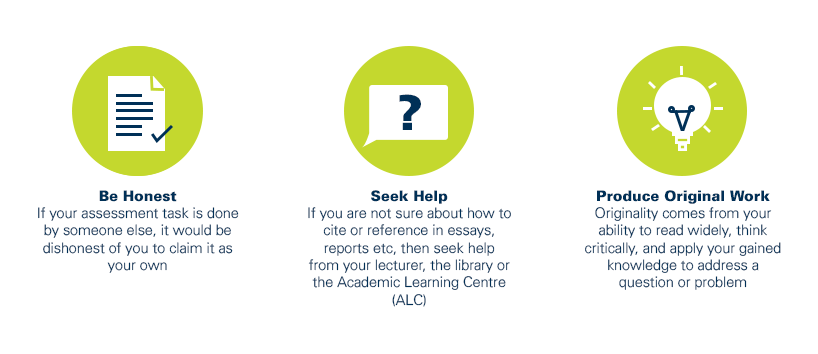
As a CQUniversity student you are expected to act honestly in all aspects of your academic work.
Any assessable work undertaken or submitted for review or assessment must be your own work. Assessable work is any type of work you do to meet the assessment requirements in the unit, including draft work submitted for review and feedback and final work to be assessed.
When you use the ideas, words or data of others in your assessment, you must thoroughly and clearly acknowledge the source of this information by using the correct referencing style for your unit. Using others’ work without proper acknowledgement may be considered a form of intellectual dishonesty.
Participating honestly, respectfully, responsibly, and fairly in your university study ensures the CQUniversity qualification you earn will be valued as a true indication of your individual academic achievement and will continue to receive the respect and recognition it deserves.
As a student, you are responsible for reading and following CQUniversity’s policies, including the Student Academic Integrity Policy and Procedure. This policy sets out CQUniversity’s expectations of you to act with integrity, examples of academic integrity breaches to avoid, the processes used to address alleged breaches of academic integrity, and potential penalties.
What is a breach of academic integrity?
A breach of academic integrity includes but is not limited to plagiarism, self-plagiarism, collusion, cheating, contract cheating, and academic misconduct. The Student Academic Integrity Policy and Procedure defines what these terms mean and gives examples.
Why is academic integrity important?
A breach of academic integrity may result in one or more penalties, including suspension or even expulsion from the University. It can also have negative implications for student visas and future enrolment at CQUniversity or elsewhere. Students who engage in contract cheating also risk being blackmailed by contract cheating services.
Where can I get assistance?
For academic advice and guidance, the Academic Learning Centre (ALC) can support you in becoming confident in completing assessments with integrity and of high standard.
What can you do to act with integrity?