Overview
The unit provides a practical 'hands on' learning context through which Textile Technology processes and production skills and knowledge are applied to creatively respond to textile design challenges. It engages with practical, theoretical and pedagogical aspects of Textile Technology as appropriate discipline content knowledge for teaching Home Economics and Design and Technologies in secondary schools.
Details
Pre-requisites or Co-requisites
There are no requisites for this unit.
Important note: Students enrolled in a subsequent unit who failed their pre-requisite unit, should drop the subsequent unit before the census date or within 10 working days of Fail grade notification. Students who do not drop the unit in this timeframe cannot later drop the unit without academic and financial liability. See details in the Assessment Policy and Procedure (Higher Education Coursework).
Offerings For Term 2 - 2026
Attendance Requirements
All on-campus students are expected to attend scheduled classes - in some units, these classes are identified as a mandatory (pass/fail) component and attendance is compulsory. International students, on a student visa, must maintain a full time study load and meet both attendance and academic progress requirements in each study period (satisfactory attendance for International students is defined as maintaining at least an 80% attendance record).
Recommended Student Time Commitment
Each 6-credit Undergraduate unit at CQUniversity requires an overall time commitment of an average of 12.5 hours of study per week, making a total of 150 hours for the unit.
Class Timetable
Assessment Overview
Assessment Grading
This is a graded unit: your overall grade will be calculated from the marks or grades for each assessment task, based on the relative weightings shown in the table above. You must obtain an overall mark for the unit of at least 50%, or an overall grade of 'pass' in order to pass the unit. If any 'pass/fail' tasks are shown in the table above they must also be completed successfully ('pass' grade). You must also meet any minimum mark requirements specified for a particular assessment task, as detailed in the 'assessment task' section (note that in some instances, the minimum mark for a task may be greater than 50%). Consult the University's Grades and Results Policy for more details of interim results and final grades.
All University policies are available on the CQUniversity Policy site.
You may wish to view these policies:
- Grades and Results Policy
- Assessment Policy and Procedure (Higher Education Coursework)
- Review of Grade Procedure
- Student Academic Integrity Policy and Procedure
- Academic Progression Policy and Procedure
- Student Refund and Credit Balance Policy and Procedure
- Complaints Policy and Procedure
- Information and Communications Technology Acceptable Use Policy and Procedure
This list is not an exhaustive list of all University policies. The full list of University policies are available on the CQUniversity Policy site.
Feedback, Recommendations and Responses
Every unit is reviewed for enhancement each year. At the most recent review, the following staff and student feedback items were identified and recommendations were made.
Feedback from Student email
Some steps in the assessment tasks need clarification.
Revise assessment tasks so they are communicated clearly.
Feedback from Student email
Learning environment provided by the UC feels welcoming, safe, and engaging.
Maintain safe and supportive learning environment for students.
Feedback from Student email
Variety and clarity of the materials supported my learning and helped me feel confident in completing the assessment tasks.
Maintain useful and real-world learning materials.
- Design and create textile products
- Apply theories and pedagogies to teach textile technology
- Explore innovative textile processes and production skills and knowledge
- Investigate ethical and sustainable textile contexts
- Adhere to Workplace Health and Safety considerations when engaging in textile technology production.
Nil
Alignment of Assessment Tasks to Learning Outcomes
| Assessment Tasks | Learning Outcomes | ||||
|---|---|---|---|---|---|
| 1 | 2 | 3 | 4 | 5 | |
| 1 - Practical Assessment - 0% | |||||
| 2 - Written Assessment - 40% | |||||
| 3 - Portfolio - 60% | |||||
Alignment of Graduate Attributes to Learning Outcomes
| Graduate Attributes | Learning Outcomes | ||||
|---|---|---|---|---|---|
| 1 | 2 | 3 | 4 | 5 | |
| 1 - Communication | |||||
| 2 - Problem Solving | |||||
| 3 - Critical Thinking | |||||
| 4 - Information Literacy | |||||
| 5 - Team Work | |||||
| 6 - Information Technology Competence | |||||
| 7 - Cross Cultural Competence | |||||
| 8 - Ethical practice | |||||
| 9 - Social Innovation | |||||
| 10 - First Nations Knowledges | |||||
| 11 - Aboriginal and Torres Strait Islander Cultures | |||||
Textbooks
Nelson Textiles and Design Preliminary and HSC
- Second Edition (2013)
- Authors: Lynda Peters, Christine Castle
- Nelson Cengage Learning Australia
- South Melbourne South Melbourne , Victoria , Australia
- ISBN: 9780170210713
- Binding: Paperback
Additional Textbook Information
This text will also be used in EDSE14001 Fashion Design and will serve as a valuable future teaching resource.
IT Resources
- CQUniversity Student Email
- Internet
- Unit Website (Moodle)
- MS Teams
All submissions for this unit must use the referencing style: American Psychological Association 7th Edition (APA 7th edition)
For further information, see the Assessment Tasks.
j.deagon@cqu.edu.au
RESIDENTIAL SCHOOL - Orientation Week (Pre-Week 1)
Begin Date: 08 Jul 2026Module/Topic
3-day Residential School (all days compulsory)
Wednesday 8 July 2026 to Friday 10 July 2026
Venue: The Cathedral College, Rockhampton
Chapter
Emailed to students and available in Moodle: Instruction booklet, sewing kit list to be purchased and pattern booklet to print and cut out paper patterns.
Bring to Residential School:
- Full list of items in the sewing kit
- Pattern Booklet and cut out patterns
- Textbook
- Appropriate footwear and attire
- Morning tea and lunch
Events and Submissions/Topic
Assessment Task 1 will be completed by the final day of the Residential School.
Week 1
Begin Date: 13 Jul 2026Module/Topic
Start with a Spark: Exploring Textile Design & Big Ideas
Chapter
Be introduced to textile design as a creative and human-centred practice. Explore how designers respond to people, purposes, materials and constraints, and begin thinking about textiles as both functional and expressive.
Events and Submissions/Topic
You will start generating early ideas for Assessment Task 2 (AT2) by considering possible users, contexts and design directions informed by your Residential School experience.
Assessment scaffolding:
- Begin brainstorming ideas for AT2
- Identify potential design contexts, audiences and textile applications
Week 2
Begin Date: 20 Jul 2026Module/Topic
Designing with Heart: Creating for Real People and Real Needs
Chapter
Focus on human-centred design by exploring how textile solutions respond to real users, clients or communities. Investigate needs, preferences, environments and constraints to guide thoughtful design decisions.
Events and Submissions/Topic
Checkpoint: AT2 Design Brief Proposal.
Week 3
Begin Date: 27 Jul 2026Module/Topic
From Idea to Plan: Crafting Your Design Story
Chapter
Learn how to structure a clear and purposeful design brief that guides creative work while allowing flexibility. Apply the design process (Investigate, Generate, Develop, Produce, Evaluate) to organise your thinking.
Events and Submissions/Topic
Draft the structure of your AT2 design brief. Check that the brief provides enough structure to guide the work while still allowing flexibility, interpretation and creative response.
Week 4
Begin Date: 03 Aug 2026Module/Topic
What Makes Great Design? Judging, Tweaking & Improving
Chapter
Explore how textile work is evaluated through criteria, standards and evidence. Develop clear ways to assess both process and product, aligned with your design intentions.
Events and Submissions/Topic
Checkpoint: AT2 Draft Rubric. Share or submit a draft rubric with 3–5 criteria and four levels of achievement. Check that the rubric clearly matches the design brief.
Week 5
Begin Date: 10 Aug 2026Module/Topic
Show It Off! Building Digital Portfolios & Designing in the Digital Age
Chapter
Create a digital space to document and communicate design thinking. Explore ethical and responsible use of digital tools (including GenAI) and consider how portfolios can support learning and reflection.
Events and Submissions/Topic
Select and set up your AT2 digital portfolio platform. Create the portfolio structure and begin 3–4 entries. Draft your AI Use Statement and check that the platform is appropriate for the intended audience and context.
Week 6
Begin Date: 17 Aug 2026Module/Topic
Design with Meaning: Culture, Sustainability & Storytelling in Textiles
Chapter
Explore textile practices, histories and techniques through respectful investigation of Aboriginal and Torres Strait Islander, Asian and Pacific textile traditions. Consider sustainability, including circular design, upcycling, responsible material use, ethical production and meaningful design choices.
Events and Submissions/Topic
Strengthen AT2 by embedding cultural, ethical and sustainability considerations into the design brief, rubric and digital portfolio. Add or revise portfolio content that supports thoughtful textile decision-making.
Vacation Week
Begin Date: 24 Aug 2026Module/Topic
Chapter
Events and Submissions/Topic
Week 7
Begin Date: 31 Aug 2026Module/Topic
Touch, Test, Transform: Playing with Fabrics and Techniques
Chapter
Explore how materials, fibres and techniques influence textile outcomes. Experiment with how textiles function, feel and communicate meaning across contexts. Communicate textile ideas clearly through instructions, visuals, prompts, examples and process documentation.
Events and Submissions/Topic
Finalise and submit AT2. Check that the submission includes the design brief, profile/planning scaffold, marking rubric, digital textile learning portfolio and AI Use Statement.
Human-Centred Textile Design Brief, Rubric & Digital Learning Portfolio Due: Week 7 Monday (31 Aug 2026) 11:45 pm AEST
Week 8
Begin Date: 07 Sep 2026Module/Topic
Let’s Make It Real: Turning Your Idea into a Textile Creation
Chapter
Shift from planning to making. Interpret your own design brief as a learner and begin designing your textile product. This is where your ideas start to take shape as a practical and meaningful textile outcome.
Events and Submissions/Topic
Assessment scaffolding (AT3 begins):
- Analyse your design brief requirements
- Complete the Profile scaffold you designed in AT2 to clearly define who you are designing for and why by interviewing someone.
- Use this profile to guide your design decisions, materials and techniques
- Select your textile product, materials and techniques
- Identify project constraints and directions
Week 9
Begin Date: 14 Sep 2026Module/Topic
Experiment, Play, Refine: Growing Your Design Ideas
Chapter
Develop textile design ideas through visual research, sketching, annotation, material exploration and technique testing. Justify design decisions in relation to purpose, human need, cultural context, sustainability and material behaviour.
Events and Submissions/Topic
Develop annotated design ideas and select a final direction. Justify your material choices, techniques, cultural or ethical considerations, and how the design responds to the intended purpose or need.
Week 10
Begin Date: 21 Sep 2026Module/Topic
Plan Like a Pro: Getting Ready to Build Your Project
Chapter
Plan and manage a textile project by considering time, cost, materials, equipment, construction sequence, risk management and safe practice.
Events and Submissions/Topic
Checkpoint: AT3 Textile Project Plan. Share or submit a project plan including time, budget, resources, equipment, construction sequence, WHS and risk management considerations.
Week 11
Begin Date: 29 Sep 2026Module/Topic
Sew, Solve, Snap! Making and Capturing Your Process
Chapter
Construct your textile product while documenting your process. Capture decisions, problem-solving and technique development through images and notes.
Events and Submissions/Topic
Continue construction of the textile product. Take progress photographs, including evidence of safe technique. Draft a step-by-step process guide or production sequence for the creative portfolio.
Week 12
Begin Date: 05 Oct 2026Module/Topic
Showtime! Reflecting, Celebrating & Sharing Your Creation
Chapter
Evaluate textile outcomes against the design brief, human needs, material choices, sustainability, technical quality and design intent. Reflect on skill development, problem-solving, time management, creativity and future application.
Events and Submissions/Topic
Complete the textile product, evaluation, reflection and creative portfolio. Use your AT2 rubric to assess your final product and portfolio. Edit and polish AT3 for final submission.
Designed Solution: Textile Product & Creative Portfolio Due: Week 12 Friday (9 Oct 2026) 11:45 pm AEST
Exam Week
Begin Date: 12 Oct 2026Module/Topic
Chapter
Events and Submissions/Topic
Vacation/Exam Week
Begin Date: 19 Oct 2026Module/Topic
Chapter
Events and Submissions/Topic
1 Practical Assessment
During the 3-day intensive Residential School, you will use a wide range of textile skills and techniques to construct samplers and display them in a portfolio. The portfolio must be communicated and organised suitably for use as a classroom learning and teaching resource. In addition to building your confidence to manipulate textile materials and equipment, you will learn strategies to organise, manage and teach in this high-risk environment through an experience in a school-based textiles classroom. All practical tasks and portfolio construction will occur during the 3-day workshop.
You are required to upload a self-management checklist with photographs of your textile products and portfolio pages via Moodle within 3 days after completing the Residential School.
Practical tasks include, however, are not limited to:
1. Sewing samplers:
- Seams
- Hems
- Zips
- Patch Pocket
- Front Hip Pocket
- Darts
- Gathering – interfaced band
- Set in sleeve
- Neckline facing
2. Pencil case and bag
3. Boxer shorts (block pattern)
4. Dyes and Natural Dyes
5. Embellishments & Artistic Effects
6. Display Portfolio
You will be supported by your facilitator at Residential School to develop all activities. See Moodle for information sheet, sewing kit list, pattern booklet and self-management checklist.
AI Assessment scale tool
Level 1: You must not use Al at any point during the assessment. You must demonstrate your core skills and knowledge. Any misuse or lack of disclosure regarding the use of AI tools will be considered a breach of academic integrity.
This assessment must be submitted by the specified due date and time. Due to the nature of this task, the standard 72-hour grace period does not apply. We recognise that unexpected circumstances may arise, and encourage students to reach out as early as possible if they are experiencing difficulties, so that appropriate support or adjustments can be considered in line with university policy.
Portfolio to be completed before end of Residential School. Completed self-management checklist and photographs uploaded via Moodle by start of Week 1
Ongoing feedback provided during Residential School
- Create: textiles samplers and products using a range of techniques and materials
- Perform: a range of practical skills
- Select: designs, materials and techniques to satisfy task requirements and includes sustainability considerations
- Communicate: information and instructions suitable for secondary school audiences
- Manage: plans and resources
- Comply: Workplace Health and Safety requirements suitable for sewing environments
- Design and create textile products
- Apply theories and pedagogies to teach textile technology
- Explore innovative textile processes and production skills and knowledge
- Investigate ethical and sustainable textile contexts
- Adhere to Workplace Health and Safety considerations when engaging in textile technology production.
2 Written Assessment
In this assessment, you will develop a human-centred textile design resource package that supports the creation of innovative textile solutions for a human, client, or community need. This task positions you as a designer and educator, translating textile knowledge into a structured, applied design framework.
While the resource is aligned to secondary Textiles Technology contexts (Years 7–10), the focus of this assessment is on design thinking, human-centred practice, and the communication of ideas through textile-based solutions—skills that are transferable across education, design, and community settings. This assessment provides the foundation for AT3, where you will enact your own design brief.
Assessment Components
You will submit:
- A Human-Centred Design Brief
- A Marking Rubric
- A Digital Textile Learning Portfolio
- An AI Use Statement
1. Human-Centred Design Brief (500–800 words)
Develop a scaffolded design brief that supports learners to design and create a textile solution for a defined human, client, or community need.
Your design brief must:
- Clearly communicate the design context, challenge, and expectations
- Structure the design process: investigate → design → produce → evaluate.
- Be appropriate for a defined learner group (e.g. middle years or equivalent learning context)
Human-centred design must be central, including:
- Identification of a human, client, or community
- Definition of a need, problem, or design opportunity
- Consideration of function, context, and constraints
- Evaluation of design outcomes in relation to human needs
You must include a Human/Client Profile scaffold (e.g., template or guiding prompts) to support investigation of human needs and design considerations.
The design brief should balance clear structure with flexibility, allowing for diverse and creative design outcomes.
The brief must also:
- Incorporate culturally responsive perspectives, including Aboriginal and Torres Strait Islander, Asian, or Pacific textile practices, in a meaningful and respectful way
- Embed sustainability and ethical design principles
- Integrate a minimum of five textile skills developed during AT1 Residential School, demonstrating your capacity to translate practical textile techniques into pedagogical application:
- Construction techniques (e.g., seams, hems, pockets, closures, darts, etc)
- Decorative techniques, embellishments and artistic effects (e.g., natural dyes, felting techniques, appliqué, embroidery, fabric painting, block stencils, etc)
2. Marking Rubric
Develop a rubric aligned to relevant Australian Curriculum achievement standards.
Your rubric must include:
- 3–5 criteria
- Four levels of achievement
- Clear, discriminating descriptors
3. Digital Textile Learning Portfolio (3–5 entries)
Create a curated digital learning portfolio that supports learners to successfully complete your design brief.
This portfolio should:
- Use an appropriate digital platform for educational contexts
- Include 3-5 entries (100-150 words each with images or videos)
- Align with key stages of the design process (e.g. human profile, materials, cultural influences, skill development)
4. AI Assessment Scale: Level 2
You must include an AI Use Statement with your submission. You may use AI for planning, idea development, research, and creating the user profile template. Your final submission should show how you have developed and refined these ideas. Any misuse or lack of disclosure regarding AI tools will be considered a breach of academic integrity.
5. 72-Hour Grace Period
The 72-hour grace period applies to this assessment. If you need longer than 72 hours, you must apply through the Assessment Extension System.
Week 7 Monday (31 Aug 2026) 11:45 pm AEST
It is anticipated that students will receive feedback 2 weeks after submission.
- Apply: curriculum-aligned textile knowledge and teaching techniques
- Construct: an effective design brief and associated rubric
- Create: a digital learning platform that scaffolds learning and inspires engagement
- Communicate: clearly and professionally in writing and digital presentation
- Reflect: critical and ethical engagement with cultural and sustainability issues
- Apply theories and pedagogies to teach textile technology
- Investigate ethical and sustainable textile contexts
3 Portfolio
In this assessment, you will bring your human-centred design brief (Assessment 2) to life through the creation of a small-scale textile product and an accompanying creative portfolio. You will apply your Human/Client Profile to guide decision-making, ensuring your design responds meaningfully to a defined human, client, or community need.
This task positions you as both a designer and reflective practitioner, applying human-centred design processes through material practice and critical reflection. While aligned to secondary Textiles Technology contexts, the focus of this assessment is on design thinking, textile production, and the communication of ideas through making, supporting transferable capabilities across education, design, and community settings.
Part 1: Textile Product
You will design and construct a small textile artefact informed by your human-centred design brief.
Your final product must:
- Align with your defined human-centred design context and intended outcome
- Incorporate a minimum of five technical or decorative techniques (e.g., seams, closures, appliqué, interfacing, embroidery)
- Demonstrate informed material selection and application
- Reflect sustainability and ethical design principles (e.g., repurposed materials, natural processes, responsible resource use)
- Include at least one culturally responsive design element informed by Aboriginal and Torres Strait Islander and/or Asia and Pacific textile practices
- Be achievable within the given timeframe and scope
Part 2: Creative Portfolio
You will develop a curated portfolio that documents and communicates your design thinking, process, and outcomes.
Submit your portfolio as either:
- An extension of your Digital Textile Learning Portfolio (Assessment 2), or
- A single compiled PDF (A3 format recommended), incorporating visual and written elements
Portfolio Requirements
1. Design Thinking and Planning
- Refined summary of your design brief, including key constraints and considerations
- Completed Human/Client Profile, demonstrating application of your human-centred design framework
- Annotated concept sketches demonstrating idea development
- Justification of material and technique selections in relation to human needs
2. Production and Process
- A project plan outlining time, cost, materials, equipment, and risk considerations
- Visual documentation of key stages of production
- A clear, sequenced representation of your making process
3. Evaluation
- Critical evaluation of your final textile outcome, including functionality, quality, and responsiveness to human needs
- Reflection on your application of the design process (investigate, generate, produce, evaluate)
- Application of your Assessment 2 rubric to assess your outcome, supported by brief justification
4. Self-Reflection (approx. 300 words)
- Insights into your learning throughout the unit
- Reflection on your development of design thinking, textile practice, and professional capabilities
Submission Format
Submit either:
- An extended digital portfolio with clearly identified AT3 components, or
- A PDF portfolio submission
AI Assessment scale tool
Level 3: You may use AI to assist with specific tasks such as drafting text, refining and evaluating your work. You must critically evaluate and modify any AI-generated content you use. Any misuse or lack of disclosure regarding the use of AI tools will be considered a breach of academic integrity.
GenAI must not be used to create final visual, product, or portfolio elements. A transparency statement is encouraged if you use GenAI.
72-Hour Grace Period
The 72-hour grace period applies to this assessment. If you need longer than 72 hours, you must apply through the Assessment Extension System.
Week 12 Friday (9 Oct 2026) 11:45 pm AEST
Feedback on the final assessment task will be provided prior to certification of grades.
- Design and construct: a textile product that demonstrates a range of practical skills and techniques
- Communicate and justify: design thinking
- Plan and manage: a small-scale textile design project
- Apply: curriculum knowledge and teaching strategies
- Evaluate and reflect: designed solution and professional learning.
- Design and create textile products
- Apply theories and pedagogies to teach textile technology
- Explore innovative textile processes and production skills and knowledge
- Investigate ethical and sustainable textile contexts
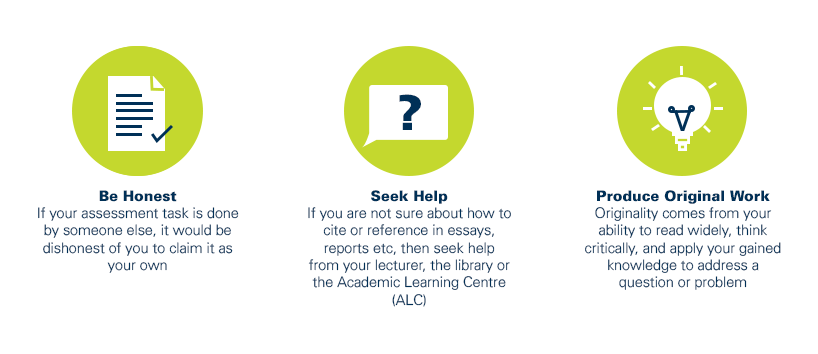
As a CQUniversity student you are expected to act honestly in all aspects of your academic work.
Any assessable work undertaken or submitted for review or assessment must be your own work. Assessable work is any type of work you do to meet the assessment requirements in the unit, including draft work submitted for review and feedback and final work to be assessed.
When you use the ideas, words or data of others in your assessment, you must thoroughly and clearly acknowledge the source of this information by using the correct referencing style for your unit. Using others’ work without proper acknowledgement may be considered a form of intellectual dishonesty.
Participating honestly, respectfully, responsibly, and fairly in your university study ensures the CQUniversity qualification you earn will be valued as a true indication of your individual academic achievement and will continue to receive the respect and recognition it deserves.
As a student, you are responsible for reading and following CQUniversity’s policies, including the Student Academic Integrity Policy and Procedure. This policy sets out CQUniversity’s expectations of you to act with integrity, examples of academic integrity breaches to avoid, the processes used to address alleged breaches of academic integrity, and potential penalties.
What is a breach of academic integrity?
A breach of academic integrity includes but is not limited to plagiarism, self-plagiarism, collusion, cheating, contract cheating, and academic misconduct. The Student Academic Integrity Policy and Procedure defines what these terms mean and gives examples.
Why is academic integrity important?
A breach of academic integrity may result in one or more penalties, including suspension or even expulsion from the University. It can also have negative implications for student visas and future enrolment at CQUniversity or elsewhere. Students who engage in contract cheating also risk being blackmailed by contract cheating services.
Where can I get assistance?
For academic advice and guidance, the Academic Learning Centre (ALC) can support you in becoming confident in completing assessments with integrity and of high standard.
What can you do to act with integrity?