Overview
This unit introduces you to engineering surveying techniques and spatial sciences. It outlines the fundamental principles of the plane and geodetic surveying, such as measurements of distances, elevations, and angles. You will learn surveying methods such as triangulation and traversing and use industry-relevant software QGIS or equivalent to develop skills in mapping and visualisation. This unit also introduces you to concepts related to automated survey instruments, errors and survey adjustments, computerised processing of survey data, and a range of advanced surveying tools such as GPS, laser scanners, and drones. You will also develop teamwork and communication skills necessary to implement such systems in the civil construction and mining industries.
Details
Pre-requisites or Co-requisites
Prerequisite: MATH11218 Applied Mathematics or MATH11160 Technology Mathematics.
Important note: Students enrolled in a subsequent unit who failed their pre-requisite unit, should drop the subsequent unit before the census date or within 10 working days of Fail grade notification. Students who do not drop the unit in this timeframe cannot later drop the unit without academic and financial liability. See details in the Assessment Policy and Procedure (Higher Education Coursework).
Offerings For Term 1 - 2026
Attendance Requirements
All on-campus students are expected to attend scheduled classes - in some units, these classes are identified as a mandatory (pass/fail) component and attendance is compulsory. International students, on a student visa, must maintain a full time study load and meet both attendance and academic progress requirements in each study period (satisfactory attendance for International students is defined as maintaining at least an 80% attendance record).
Recommended Student Time Commitment
Each 6-credit Undergraduate unit at CQUniversity requires an overall time commitment of an average of 12.5 hours of study per week, making a total of 150 hours for the unit.
Class Timetable
Assessment Overview
Assessment Grading
This is a graded unit: your overall grade will be calculated from the marks or grades for each assessment task, based on the relative weightings shown in the table above. You must obtain an overall mark for the unit of at least 50%, or an overall grade of 'pass' in order to pass the unit. If any 'pass/fail' tasks are shown in the table above they must also be completed successfully ('pass' grade). You must also meet any minimum mark requirements specified for a particular assessment task, as detailed in the 'assessment task' section (note that in some instances, the minimum mark for a task may be greater than 50%). Consult the University's Grades and Results Policy for more details of interim results and final grades.
All University policies are available on the CQUniversity Policy site.
You may wish to view these policies:
- Grades and Results Policy
- Assessment Policy and Procedure (Higher Education Coursework)
- Review of Grade Procedure
- Student Academic Integrity Policy and Procedure
- Academic Progression Policy and Procedure
- Student Refund and Credit Balance Policy and Procedure
- Complaints Policy and Procedure
- Information and Communications Technology Acceptable Use Policy and Procedure
This list is not an exhaustive list of all University policies. The full list of University policies are available on the CQUniversity Policy site.
Feedback, Recommendations and Responses
Every unit is reviewed for enhancement each year. At the most recent review, the following staff and student feedback items were identified and recommendations were made.
Feedback from SUTE
Students would benefit from earlier access to QGIS setup guidance and practical learning resources.
The introductory tutorial should be held earlier in the term, and the resources will be released sooner, in line with the study schedule.
Feedback from SUTE UC's reflection
Students would benefit from clearer assessment requirements and more transparent marking criteria.
More detailed assessment requirements and rubrics should be provided in future offerings to clarify performance expectations and grading criteria.
Feedback from SUTE
Students noted that the unit structure supported their learning.
The current unit structure should be maintained, with ongoing refinement to ensure consistent delivery throughout the term.
- Recognise and discuss basic concepts and principles of engineering surveying and spatial sciences
- Perform spatial computations in two and three dimensions
- Apply surveying principles in civil and mining engineering works such as setting-out, earthwork calculations, and underground surveying
- Apply advanced techniques to perform spatial computations and solve a range of measurements and data management problems
- Demonstrate a professional level of communication and teamwork.
The Learning Outcomes for this unit are linked with the Engineers Australia Stage 1 Competency Standards for Professional Engineers in the areas of 1. Knowledge and Skill Base, 2. Engineering Application Ability and 3. Professional and Personal Attributes at the following levels:
Introductory
1.2 Conceptual understanding of the mathematics, numerical analysis, statistics, and computer and information sciences which underpin the engineering discipline. (LO: 1N 2N 3N 4N )
2.2 Fluent application of engineering techniques, tools, and resources. (LO: 1N 2N 3N 4N )
3.1 Ethical conduct and professional accountability. (LO: 2N 3N 4N 5N )
Intermediate
1.1 Comprehensive, theory-based understanding of the underpinning natural and physical sciences and the engineering fundamentals applicable to the engineering discipline. (LO: 1N 2I 3I 4N)
1.3 In-depth understanding of specialist bodies of knowledge within the engineering discipline. (LO: 1I 2I 3I 4N)
2.1 Application of established engineering methods to complex engineering problem solving. (LO: 1N 2I 3I 4N)
3.2 Effective oral and written communication in professional and lay domains. (LO: 1N 2N 3N 4I 5N )
3.4 Professional use and management of information. (LO: 3N 4I 5N)
3.6 Effective team membership and team leadership. (LO: 2N 3N 4N 5I)
Note: LO refers to the Learning Outcome number(s) which link to the competency and the levels: N – Introductory, I – Intermediate, and A - Advanced.
Refer to the Engineering Undergraduate Course Moodle site for further information on Engineers Australia's Stage 1 Competency Standard for Professional Engineers and course level mapping information https://moodle.cqu.edu.au/course/view.php?id=1511
Alignment of Assessment Tasks to Learning Outcomes
| Assessment Tasks | Learning Outcomes | ||||
|---|---|---|---|---|---|
| 1 | 2 | 3 | 4 | 5 | |
| 1 - Written Assessment - 20% | |||||
| 2 - Written Assessment - 40% | |||||
| 3 - Project (applied) - 40% | |||||
Alignment of Graduate Attributes to Learning Outcomes
| Graduate Attributes | Learning Outcomes | ||||
|---|---|---|---|---|---|
| 1 | 2 | 3 | 4 | 5 | |
| 1 - Communication | |||||
| 2 - Problem Solving | |||||
| 3 - Critical Thinking | |||||
| 4 - Information Literacy | |||||
| 5 - Team Work | |||||
| 6 - Information Technology Competence | |||||
| 7 - Cross Cultural Competence | |||||
| 8 - Ethical practice | |||||
| 9 - Social Innovation | |||||
| 10 - First Nations Knowledges | |||||
| 11 - Aboriginal and Torres Strait Islander Cultures | |||||
Textbooks
Engineering Surveying
- Edition: 6th (2007)
- Authors: W. Schofield and M. Breach
- Taylor and Francis
- London London , United Kingdom
- ISBN: 978-0-7506-6949-8
- Binding: Other
Surveying for Civil and Mine Engineers (Acquire the Skills in Weeks)
- Edition: 2nd (2020)
- Authors: John Walker and Joseph L. Awange
- Springer
- Bentley Bentley , WA , Australia
- ISBN: 978-3-030-45802-7, 3030458032
- Binding: Other
IT Resources
- CQUniversity Student Email
- Internet
- Unit Website (Moodle)
- QGIS Software
All submissions for this unit must use the referencing style: Harvard (author-date)
For further information, see the Assessment Tasks.
f.tahmoorian@cqu.edu.au
Week 1
Begin Date: 09 Mar 2026Module/Topic
Basic Concepts of Surveying
Chapter
- Chapter 1 of Surveying for Civil and Mine Engineers (Walker et al.)
- Chapters 1 & 2 of Engineering Surveying (Schofield and Breach)
Events and Submissions/Topic
Week 2
Begin Date: 16 Mar 2026Module/Topic
Levelling and its practical application
Chapter
- Chapters 2 & 3 of Surveying for Civil and Mine Engineers (Walker et al.)
- Chapters 3 & 8 of Engineering Surveying (Schofield and Breach)
Events and Submissions/Topic
Week 3
Begin Date: 23 Mar 2026Module/Topic
Distance Measurement
Chapter
- Chapter 4 of Surveying for Civil and Mine Engineers (Walker et al.)
- Chapter 3 of Engineering Surveying (Schofield and Breach)
Events and Submissions/Topic
Week 4
Begin Date: 30 Mar 2026Module/Topic
Angle Measurement
Introduction to QGIS
Chapter
- Chapter 4 of Surveying for Civil and Mine Engineers (Walker et al.)
- Chapter 5 of Engineering Surveying (Schofield and Breach)
Events and Submissions/Topic
Week 5
Begin Date: 06 Apr 2026Module/Topic
Traversing & Triangulation
QGIS- Vector data basics
Chapter
- Chapter 5 & 16 of Surveying for Civil and Mine Engineers (Walker et al.)
- Chapters 6 & 7 of Engineering Surveying (Schofield and Breach)
Events and Submissions/Topic
Week 6
Begin Date: 13 Apr 2026Module/Topic
Earthworks (Quantities, Sections, Contours)
QGIS- Coordinate systems
Chapter
- Chapters 8 & 9 of Surveying for Civil and Mine Engineers (Walker et al.)
- Chapter 11 of Engineering Surveying (Schofield and Breach)
Events and Submissions/Topic
Vacation Week
Begin Date: 20 Apr 2026Module/Topic
MID-TERM BREAK
Chapter
Events and Submissions/Topic
Week 7
Begin Date: 27 Apr 2026Module/Topic
Curves
QGIS- Working with vector data
Chapter
- Chapters 10, 11, 12 &13 of Surveying for Civil and Mine Engineers (Walker et al.)
- Chapter 10 of Engineering Surveying (Schofield and Breach)
Events and Submissions/Topic
Week 8
Begin Date: 04 May 2026Module/Topic
Setting out Works
QGIS- Raster data basic
Chapter
- Chapter 15 of Surveying for Civil and Mine Engineers (Walker et al.)
- Chapter 12 of Engineering Surveying (Schofield and Breach)
Events and Submissions/Topic
Week 9
Begin Date: 11 May 2026Module/Topic
Mine and Underground Surveying
QGIS- Create a map
Chapter
- Chapter 7 of Surveying for Civil and Mine Engineers (Walker et al.)
- Chapter 13 of Engineering Surveying (Schofield and Breach)
Events and Submissions/Topic
Week 10
Begin Date: 18 May 2026Module/Topic
Digital and Mass Survey Methods
Chapter
- Chapter 14 of Engineering Surveying (Schofield and Breach)
Events and Submissions/Topic
Week 11
Begin Date: 25 May 2026Module/Topic
Introduction of GPS and advanced surveying methods
Chapter
- Chapters 14 & 16 of Surveying for Civil and Mine Engineers (Walker et al.)
- Chapter 9 of Engineering Surveying (Schofield and Breach)
Events and Submissions/Topic
Week 12
Begin Date: 01 Jun 2026Module/Topic
Review
Chapter
Events and Submissions/Topic
Exam Week
Begin Date: 08 Jun 2026Module/Topic
Chapter
Events and Submissions/Topic
Vacation/Exam Week
Begin Date: 15 Jun 2026Module/Topic
Chapter
Events and Submissions/Topic
1 Written Assessment
This assessment task relates to unit LO1. It allows you to demonstrate your understanding of the concepts and theories covered in Weeks 1 to 4. This written assessment will consist of a number of questions (usually 6 to 8), similar to the unit tutorial questions, on the topics covered in the first four weeks of the term. You must submit your written assessment individually as a single PDF file, along with any supplementary documents, such as Excel files.
A detailed marking rubric outlining the assessment criteria and performance expectations will be available on Moodle.
AI ASSESSMENT SCALE - NO AI
You must not use AI at any point during the assessment. You must demonstrate your core skills and knowledge. Any use of AI in this assessment constitutes a breach of academic integrity and may result in a failing grade.
Week 5 Wednesday (8 Apr 2026) 11:59 pm AEST
Week 7 Wednesday (29 Apr 2026)
Each question in this assignment will be assessed separately on the criterion of accuracy and correctness.
- Correct application of mathematics and arithmetic
- Answers clearly identified
- Correct results
In addition, the assignment as a whole will be assessed against the following criteria:
Evidence of correct procedures
- All necessary steps in the analysis are present in the correct order
- Clear presentation of mathematical and arithmetical working, linking given details of the problem to the results obtained
- Evidence of checking results (mathematical, graphical, logic, common sense)
Evidence of understanding of the topic
- Explanation of choices made in the analysis (why is the procedure required, why this particular procedure)
- Interpretation of results, e.g., limitations, direction of vectors
Professional presentation
- The work (job) is clearly identified (problem, date, analyst)
- A clear statement of each problem, its details, and requirements
- Logical layout of analysis
- Appropriate use of diagrams, clear diagrams
- Correct use of terminology, conventions
- Clear English in the explanation of the procedure and interpretation of the results.
A similarity check will always be done before marking the submitted assignments for all students. Upon detection of any plagiarism, including i) similarity between submitted reports within the same cohort or ii) with the previous cohorts or iii) submitted works to other institutes or iv) using the material provided by cheating websites, will result in failing that assignment without marking, and the student will be reported to the CQU Academic Misconduct team for further actions.
Use of AI to prepare a report will also be checked. If AI use is detected, the submission may not be accepted, resulting in failure of the submitted assessment item.
- Recognise and discuss basic concepts and principles of engineering surveying and spatial sciences
2 Written Assessment
This assessment task relates to the unit LO 1, 2, and 3. This assessment task aims to allow you to demonstrate your understanding of the concepts and theories covered in the unit by Week 9.
This written assessment will consist of several small projects (usually 3 to 4) covering topics delivered during the term, including angle and distance measurement, area and volume calculation, contour map preparation, and earthwork estimation.
You must submit your written assessment individually, as a single PDF file, along with any supplementary documents, such as Excel files. Further details on the projects and assessment requirements will be provided on Moodle by Week 3.
A detailed marking rubric outlining the assessment criteria and performance expectations for each project will be provided on Moodle.
AI ASSESSMENT SCALE - NO AI
You must not use AI at any point during the assessment. You must demonstrate your core skills and knowledge. Any use of AI in this assessment constitutes a breach of academic integrity and may result in a failing grade.
Week 10 Wednesday (20 May 2026) 11:59 pm AEST
Please submit as a PDF file, along with any supplementary documents, such as Excel files.
Week 12 Wednesday (3 June 2026)
Each project in this assignment will be assessed separately for criterion accuracy and correct results.
- Correct application of mathematics and arithmetic
- Answers clearly identified
- Correct results
In addition, the assignment as a whole will be assessed against the following criteria:
Evidence of correct procedures
- All necessary steps in the analysis are present in the correct order
- Clear presentation of mathematical and arithmetical working, linking the given details of the problem to the results obtained
- Evidence of checking results (mathematical, graphical, logic-common sense)
Evidence of an understanding of the topic
- Explanation of choices made in the analysis (why is the procedure required, why this particular procedure)
- Interpretation of results, e.g., limitations, the direction of vectors
Professional presentation
- The work (job) is clearly identified (problem, date, analyst)
- A clear statement of each problem, its details, and requirements
- Logical layout of analysis
- Appropriate use of diagrams, clear diagrams
- Correct use of terminology, conventions
- Clear English in the explanation of the procedure and interpretation of the results.
A similarity check will always be done before marking the submitted assignments for all students. Upon detection of any plagiarism, including i) similarity between submitted reports within the same cohort or ii) with the previous cohorts or iii) submitted works to other institutes or iv) using the material provided by cheating websites, will result in failing that assignment without marking, and the student will be reported to the CQU Academic Misconduct team for further actions.
Use of AI to prepare a report will also be checked. If AI use is detected, the submission may not be accepted, resulting in failure of the submitted assessment item.
- Recognise and discuss basic concepts and principles of engineering surveying and spatial sciences
- Perform spatial computations in two and three dimensions
- Apply surveying principles in civil and mining engineering works such as setting-out, earthwork calculations, and underground surveying
3 Project (applied)
This assessment task relates to the unit's LO 2, 3, 4, and 5. It aims to allow you to demonstrate your understanding of the concepts and theories covered in the unit and to develop a geospatial map using QGIS.
The report should be prepared and submitted as a team. The report template, assessment details, and requirements will be made available on Moodle by Week 5.
The assessment comprises two components: a team report (50%) and an individual portfolio (50%). The report will be prepared and submitted as a team. The individual portfolio must be submitted individually. The portfolio should be approximately 4-5 pages in length, and must document evidence of your individual contributions, technical work, and reflections related to the project. This may include, for example, annotated screenshots of QGIS processing steps, data preparation outputs, calculations, and a brief reflection on your contribution to the team project. The individual portfolio is used to verify authentic contribution and technical engagement with the project.
A detailed marking rubric and guidance on the required portfolio contents and your team report will be provided on Moodle to support the preparation of this assessment.
AI ASSESSMENT SCALE - AI PLANNING
You may use AI for planning, idea development, and research. Your final submission should demonstrate how you have developed and refined these ideas. Note that any use of AI must be acknowledged (tool and purpose), and you remain responsible for accuracy, originality, and proper referencing.
Week 12 Wednesday (3 June 2026) 11:59 pm AEST
After the final grade release
This assessment will be evaluated using the following criteria.
1- Team Report (50%)
- Team report quality (structure, method, interpretation, referencing)
- Map quality (data preparation, symbology, layout, accuracy, metadata)
- Application of appropriate methodology with correct referencing
- Evidence of checking and validating results
- Interpretation of results and clarity of technical communication
2. Individual Portfolio (50%)
- Individual portfolio evidence demonstrating authentic contribution
- Technical engagement with QGIS and geospatial data preparation
- Evidence of correct procedures and workflow documentation
- Explanation of choices made in the analysis
- Reflection on individual contribution and learning
Each team submission will be assessed once, and a grade will be awarded to individual students based on the team report (50%) and the individual portfolio (50%).
Academic Integrity
A similarity check will be conducted for all submissions. Any suspected academic misconduct, including plagiarism or contract cheating, will be managed in accordance with CQUniversity Academic Integrity procedures and may result in a failing grade for the assessment.
- Perform spatial computations in two and three dimensions
- Apply surveying principles in civil and mining engineering works such as setting-out, earthwork calculations, and underground surveying
- Apply advanced techniques to perform spatial computations and solve a range of measurements and data management problems
- Demonstrate a professional level of communication and teamwork.
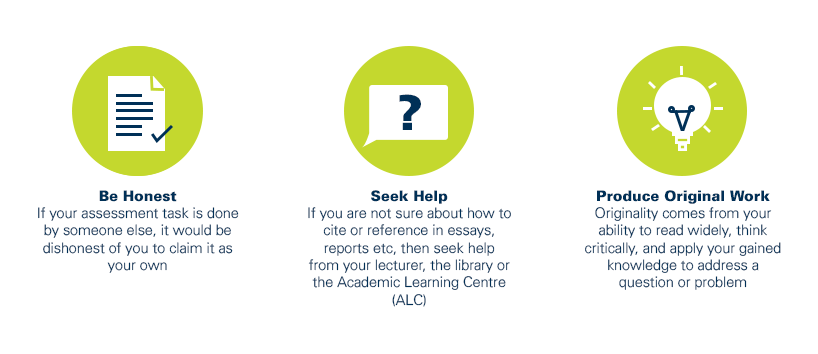
As a CQUniversity student you are expected to act honestly in all aspects of your academic work.
Any assessable work undertaken or submitted for review or assessment must be your own work. Assessable work is any type of work you do to meet the assessment requirements in the unit, including draft work submitted for review and feedback and final work to be assessed.
When you use the ideas, words or data of others in your assessment, you must thoroughly and clearly acknowledge the source of this information by using the correct referencing style for your unit. Using others’ work without proper acknowledgement may be considered a form of intellectual dishonesty.
Participating honestly, respectfully, responsibly, and fairly in your university study ensures the CQUniversity qualification you earn will be valued as a true indication of your individual academic achievement and will continue to receive the respect and recognition it deserves.
As a student, you are responsible for reading and following CQUniversity’s policies, including the Student Academic Integrity Policy and Procedure. This policy sets out CQUniversity’s expectations of you to act with integrity, examples of academic integrity breaches to avoid, the processes used to address alleged breaches of academic integrity, and potential penalties.
What is a breach of academic integrity?
A breach of academic integrity includes but is not limited to plagiarism, self-plagiarism, collusion, cheating, contract cheating, and academic misconduct. The Student Academic Integrity Policy and Procedure defines what these terms mean and gives examples.
Why is academic integrity important?
A breach of academic integrity may result in one or more penalties, including suspension or even expulsion from the University. It can also have negative implications for student visas and future enrolment at CQUniversity or elsewhere. Students who engage in contract cheating also risk being blackmailed by contract cheating services.
Where can I get assistance?
For academic advice and guidance, the Academic Learning Centre (ALC) can support you in becoming confident in completing assessments with integrity and of high standard.
What can you do to act with integrity?