Overview
Advanced Water Engineering will introduce you to different components of the hydrologic cycle that are essential for designing complex water infrastructures. In this unit, you will discuss concepts of probability and uncertainty governing water resources projects. You will estimate design rainfall and losses, and peak flows and volumes for engineering design. You will also be introduced to the design of pipe networks for water supply and collection of wastewater and stormwater. You will also learn how to apply the concept of Water Sensitive Urban Design (WSUD). In completing these tasks, you must use appropriate technical language in written communication and work in teams to solve problems.
Details
Pre-requisites or Co-requisites
There are no requisites for this unit.
Important note: Students enrolled in a subsequent unit who failed their pre-requisite unit, should drop the subsequent unit before the census date or within 10 working days of Fail grade notification. Students who do not drop the unit in this timeframe cannot later drop the unit without academic and financial liability. See details in the Assessment Policy and Procedure (Higher Education Coursework).
Offerings For Term 2 - 2026
Attendance Requirements
All on-campus students are expected to attend scheduled classes - in some units, these classes are identified as a mandatory (pass/fail) component and attendance is compulsory. International students, on a student visa, must maintain a full time study load and meet both attendance and academic progress requirements in each study period (satisfactory attendance for International students is defined as maintaining at least an 80% attendance record).
Recommended Student Time Commitment
Each 12-credit Postgraduate unit at CQUniversity requires an overall time commitment of an average of 25 hours of study per week, making a total of 300 hours for the unit.
Class Timetable
Assessment Overview
Assessment Grading
This is a graded unit: your overall grade will be calculated from the marks or grades for each assessment task, based on the relative weightings shown in the table above. You must obtain an overall mark for the unit of at least 50%, or an overall grade of 'pass' in order to pass the unit. If any 'pass/fail' tasks are shown in the table above they must also be completed successfully ('pass' grade). You must also meet any minimum mark requirements specified for a particular assessment task, as detailed in the 'assessment task' section (note that in some instances, the minimum mark for a task may be greater than 50%). Consult the University's Grades and Results Policy for more details of interim results and final grades.
All University policies are available on the CQUniversity Policy site.
You may wish to view these policies:
- Grades and Results Policy
- Assessment Policy and Procedure (Higher Education Coursework)
- Review of Grade Procedure
- Student Academic Integrity Policy and Procedure
- Academic Progression Policy and Procedure
- Student Refund and Credit Balance Policy and Procedure
- Complaints Policy and Procedure
- Information and Communications Technology Acceptable Use Policy and Procedure
This list is not an exhaustive list of all University policies. The full list of University policies are available on the CQUniversity Policy site.
Feedback, Recommendations and Responses
Every unit is reviewed for enhancement each year. At the most recent review, the following staff and student feedback items were identified and recommendations were made.
Feedback from SUTE
Students felt that the learning materials were less useful than anticipated.
Feedback highlights the need for improving the manageability of the course content within the allotted timeframe and the effectiveness of the learning materials. A review of the course design, including the pacing and integration of learning materials, is recommended to better align with student workload expectations.
Feedback from SUTE
Students feedback indicated a need for more targeted feedback from the lecturer across a range of topics covered in this unit.
To address this concern, it is recommended to increase the frequency of feedback particularly on clarifying complex concepts and supporting student engagement. Additionally, providing group feedback immediately after the assessments could prove to be more effective.
Feedback from SUTE
Students expected the unit requirements to be explained during lectures, with particular focus on assessments.
A decline in student response data in this category from previous terms indicates that students found the assessment expectations and/or learning objectives unclear. To address this, it is recommended to provide more detailed, criterion-specific rubrics and a dedicated assessment briefing session at the start of the term, aligning with the project-based learning modality.
Feedback from SUTE
Student feedback indicated that learning gains from the assessments were limited.
It is recommended that the assessment design be reviewed to enhance stronger alignment with learning outcomes and additional feedback opportunities integrated into the unit to better support student learning and skill development.
- Formulate, plan, manage and complete projects individually or in teams considering stakeholder requirements and principles of sustainable development and communicate the outcomes professionally
- Design different components of urban water distribution, wastewater collection and stormwater collection systems
- Analyse a range of WSUD assets for a given urban setting
- Assess the hydrology of a catchment and estimate design floods.
Alignment of Assessment Tasks to Learning Outcomes
| Assessment Tasks | Learning Outcomes | |||
|---|---|---|---|---|
| 1 | 2 | 3 | 4 | |
| 1 - Project (applied) - 30% | ||||
| 2 - Project (applied) - 30% | ||||
| 3 - In-class Test(s) - 40% | ||||
Alignment of Graduate Attributes to Learning Outcomes
| Graduate Attributes | Learning Outcomes | |||
|---|---|---|---|---|
| 1 | 2 | 3 | 4 | |
| 1 - Knowledge | ||||
| 2 - Communication | ||||
| 3 - Cognitive, technical and creative skills | ||||
| 4 - Research | ||||
| 5 - Self-management | ||||
| 6 - Ethical and Professional Responsibility | ||||
| 7 - Leadership | ||||
| 8 - First Nations Knowledges | ||||
| 9 - Aboriginal and Torres Strait Islander Cultures | ||||
Textbooks
Water Resources Engineering
- Edition: THIRD (2013)
- Authors: David A. Chin
- Pearson
- Harlow Harlow , Essex CM202 2JE , UK
- ISBN: 0132833212 / 9780132833219
- Binding: eBook
IT Resources
- CQUniversity Student Email
- Internet
- Unit Website (Moodle)
- MUSIC software
- HECRAS software
All submissions for this unit must use the referencing style: Harvard (author-date)
For further information, see the Assessment Tasks.
u.bhattarai@cqu.edu.au
Week 1
Begin Date: 13 Jul 2026Module/Topic
Probability and statistics in water resources engineering
- Introduction to the unit
- Probability distribution functions
- Risks and uncertainty
- Frequency analysis of gauged data
- Introduction to Project 1: Stormwater drainage strategy and Water Sensitive Urban Design
Chapter
Events and Submissions/Topic
Week 2
Begin Date: 20 Jul 2026Module/Topic
Probability models and estimation of floods at gauged stations
- Probability models
- Rating curves
- Flood frequency analysis
- Regional flood frequency estimation
- ARR
Chapter
Events and Submissions/Topic
Project 1: Stormwater drainage strategy and Water Sensitive Urban Design Part A
Week 2 (Friday 09:00 AM)
Week 3
Begin Date: 27 Jul 2026Module/Topic
Runoff routing and design of detention basins
- Stormwater management elements
- Detention basins
- Hydrologic runoff routing
- Introduction to MUSIC modelling for water sensitive urban design
Chapter
Events and Submissions/Topic
Week 4
Begin Date: 03 Aug 2026Module/Topic
Water-Sensitive Urban Design I
- Stormwater management principles
- Urban stormwater
- Stormwater pollutants
- WSUD asset types
Chapter
Events and Submissions/Topic
Week 5
Begin Date: 10 Aug 2026Module/Topic
Water-Sensitive Urban Design II
- Principles of WSUD continued
- WSUD asset types continued
Chapter
Events and Submissions/Topic
Project 1: Stormwater drainage strategy and Water Sensitive Urban Design Part B
Week 5 (Friday 09:00 AM)
Week 6
Begin Date: 17 Aug 2026Module/Topic
Design rainfall
- Spatial and temporal distribution of rainfall
- IFD, DDF and PMP
- Areal Reduction Factors from ARR
- Flood modelling HEC-RAS overview
- Introduction to Project 2: Urban Infrastructure and flood modelling
Chapter
Events and Submissions/Topic
Vacation Week
Begin Date: 24 Aug 2026Module/Topic
Break week
Chapter
Events and Submissions/Topic
Week 7
Begin Date: 31 Aug 2026Module/Topic
Urban drainage I: Longitudinal drainage
- Elements of longitudinal drainage
- Design philosophy and steps
- Hydrologic method for flow estimation
- Kerb and channel design
- Field inlet design
- Access chamber design
- Pipe design
- Urban stormwater network design
Chapter
Events and Submissions/Topic
Project 2: Urban Infrastructure and flood modelling: Part A Week 7 (Friday 09:00 AM)
Week 8
Begin Date: 07 Sep 2026Module/Topic
Urban drainage II- Cross drainage
- Culvert design
- Sizing and inlet structures
- Hydraulic design fundamentals (allowable headwater, tailwater, operating conditions)
- Outlet velocity and energy
- Design checks
Chapter
Events and Submissions/Topic
Week 9
Begin Date: 14 Sep 2026Module/Topic
Rainfall losses and temporal patterns
- Hydrologic processes and runoff generation
- Rainfall losses
- Types of loss models
- Rainfall bursts and pre-burst
- ARR19 Regional loss information
- Using ARR Data Hub
Chapter
Events and Submissions/Topic
Week 10
Begin Date: 21 Sep 2026Module/Topic
Flood hydrograph modelling and climate change
- Conceptual representation of catchments
- Types of rainfall-runoff models
- Routing
- Impacts of climate change on water resources
- Adaptation to climate change
Chapter
Events and Submissions/Topic
Week 11
Begin Date: 28 Sep 2026Module/Topic
Design of Water Supply Distribution System
- Design data
- Reliability of water supply
- Demand calculation and allocation
- Distribution system layout
- System components
- Challenges and sustainability
Chapter
Events and Submissions/Topic
Week 12
Begin Date: 05 Oct 2026Module/Topic
Design of Wastewater Collection System
- Quantity of wastewater
- Hydraulics of pipes
- Sanitary sewer system components
- Application of design guidelines
Chapter
Events and Submissions/Topic
Project 2: Urban Infrastructure and flood modelling: Part B Week 12 (Friday 09:00 AM)
Exam Week
Begin Date: 12 Oct 2026Module/Topic
In-class test
Duration: 2 hours
Type: Open book
Content: Topics covered from Week 1 - 12
Chapter
Events and Submissions/Topic
Vacation/Exam Week
Begin Date: 19 Oct 2026Module/Topic
Chapter
Events and Submissions/Topic
1 Project (applied)
Project 1: Stormwater drainage strategy and Water Sensitive Urban Design
Duration: Weeks 1–5
Submission Milestones:
Week 2 – Scope and preliminary progress [Letter to the council]-10% marks
Week 5 – Final report submission -90% marks
In this project, you will develop a Stormwater Drainage Strategy report for a designated site, intended to support a development application to the local council. The objective is to evaluate the hydrologic and hydraulic impacts of urban development, particularly changes in water quality and quantity, and to propose appropriate mitigation strategies to address adverse post-development conditions.
This task will involve:
The design of a detention basin tailored to the site’s hydrologic context
Integration of Water-Sensitive Urban Design (WSUD) principles and practices in urban design using MUSIC model
An assessment of flood risk using deterministic and probabilistic approaches
Part A Week 2 (Friday 09:00 AM) and Part B Week 5 (Friday 09:00 AM)
Both Part A and Part B will be returned 14 days after their respective submission dates.
The assessment will be marked based on the followings:
1. Technical Accuracy & Application 40%; Must score ≥50% in this criterion to pass the project overall
2. Design Quality & Innovation 35%; Must score ≥50% in this criterion to pass the project overall
3. Structure, Communication & Clarity 15%; Only considered if Criteria 1 and 2 thresholds are satisfied
4. Engagement with Feedback and Reflection 10%; Only considered if Criteria 1 and 2 thresholds are satisfied
Scores in Criteria 3 and 4 are not awarded if the core technical work is deemed inadequate.
AI Assessment Scale (AIAS) Level: AI Collaboration
You may use AI responsibly and ethically to assist with specific tasks such as in the planning phase, idea development, and research, language/grammar check and refining your work. Your final submission should show how you have developed and refined these ideas. You must critically evaluate and modify any AI based content you use. Declare and reference any AI use. Use of AI is not permitted for carrying out the analysis or performing calculations in this assessment.
- Formulate, plan, manage and complete projects individually or in teams considering stakeholder requirements and principles of sustainable development and communicate the outcomes professionally
- Design different components of urban water distribution, wastewater collection and stormwater collection systems
- Analyse a range of WSUD assets for a given urban setting
2 Project (applied)
Project 2: Urban Infrastructure and flood modelling
Duration: Weeks 6–12
Submission Milestones:
Week 7 – Scope and preliminary progress -10% marks
Week 12 – Final report submission -90% marks
This project focuses on the comprehensive water infrastructure planning for a proposed residential development. Your task is to design drainage system that includes:
Stormwater drainage infrastructure (longitudinal and cross drainage)
Flood modelling using HEC-RAS
Analysis of flood characteristics and identification of critical areas
The analysis must address:
Flood behaviour under different AEP rainfall events
Stormwater system layout, flow estimation, pipe sizing, gradients and pressure requirements
Critical evaluation and comparison of water supply and sewerage guidelines
Part A Week 7 (Friday 09:00 AM) and Part B Week 12 (Friday 09:00 AM)
Both Part A and Part B will be returned 14 days after their respective submission dates.
The assessment will be marked based on the followings:
1. Technical Accuracy & Application 40%; Must score ≥50% in this criterion to pass the project overall
2. Design Quality & Innovation 35%; Must score ≥50% in this criterion to pass the project overall
3. Structure, Communication & Clarity 15%; Only considered if Criteria 1 and 2 thresholds are satisfied
4. Engagement with Feedback and Reflection 10%; Only considered if Criteria 1 and 2 thresholds are satisfied
Scores in Criteria 3 and 4 are not awarded if the core technical work is deemed inadequate.
AI Assessment Scale (AIAS) Level: AI Collaboration
You may use AI responsibly and ethically to assist with specific tasks such as in the planning phase, idea development, and research, language/grammar check and refining your work. Your final submission should show how you have developed and refined these ideas. You must critically evaluate and modify any AI based content you use. Declare and reference any AI use. Use of AI is not permitted for carrying out the analysis or performing calculations in this assessment.
You must submit a single PDF report along with supporting HEC‑RAS project (sing compressed .zip file), and one calculation .xlsx file. Include a team contribution statement identifying roles and tasks in the report.
- Formulate, plan, manage and complete projects individually or in teams considering stakeholder requirements and principles of sustainable development and communicate the outcomes professionally
- Assess the hydrology of a catchment and estimate design floods.
3 In-class Test(s)
The time-restricted exam-style class test will cover all learning outcomes of the unit. You need to review all the content delivered throughout the term. The format and exact date and time of the test will be published in week 11.
Exact test timetable will be published/advised in Week 11.
After the certification of the grades.
The following assessment criteria will be used for assessing the test:
The correctness of the answers;
The correct process was followed; and
Accuracy of the calculations.
AI ASSESSMENT SCALE - NO AI
You must not use Al at any point during the assessment. You must demonstrate your core skills and knowledge.
- Design different components of urban water distribution, wastewater collection and stormwater collection systems
- Analyse a range of WSUD assets for a given urban setting
- Assess the hydrology of a catchment and estimate design floods.
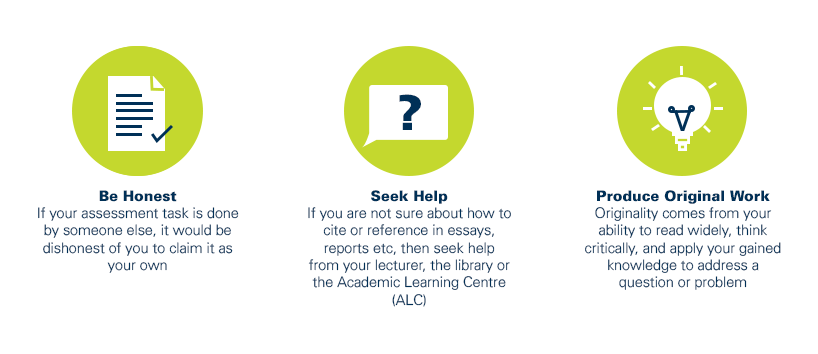
As a CQUniversity student you are expected to act honestly in all aspects of your academic work.
Any assessable work undertaken or submitted for review or assessment must be your own work. Assessable work is any type of work you do to meet the assessment requirements in the unit, including draft work submitted for review and feedback and final work to be assessed.
When you use the ideas, words or data of others in your assessment, you must thoroughly and clearly acknowledge the source of this information by using the correct referencing style for your unit. Using others’ work without proper acknowledgement may be considered a form of intellectual dishonesty.
Participating honestly, respectfully, responsibly, and fairly in your university study ensures the CQUniversity qualification you earn will be valued as a true indication of your individual academic achievement and will continue to receive the respect and recognition it deserves.
As a student, you are responsible for reading and following CQUniversity’s policies, including the Student Academic Integrity Policy and Procedure. This policy sets out CQUniversity’s expectations of you to act with integrity, examples of academic integrity breaches to avoid, the processes used to address alleged breaches of academic integrity, and potential penalties.
What is a breach of academic integrity?
A breach of academic integrity includes but is not limited to plagiarism, self-plagiarism, collusion, cheating, contract cheating, and academic misconduct. The Student Academic Integrity Policy and Procedure defines what these terms mean and gives examples.
Why is academic integrity important?
A breach of academic integrity may result in one or more penalties, including suspension or even expulsion from the University. It can also have negative implications for student visas and future enrolment at CQUniversity or elsewhere. Students who engage in contract cheating also risk being blackmailed by contract cheating services.
Where can I get assistance?
For academic advice and guidance, the Academic Learning Centre (ALC) can support you in becoming confident in completing assessments with integrity and of high standard.
What can you do to act with integrity?