Overview
In this unit, you will work in a team to analyse and design electrical power and control systems by applying PSSE or equivalent industry software. You will also focus on renewables, promoting the United Nations Sustainable Development Goal 7: Affordable and Clean Energy. On satisfactory completion, you will be able to investigate solutions for contemporary engineering problems, plan and control project work in a team environment, research current practice in this discipline, execute evidence-based decision-making, check and evaluate the validity of information, and prepare professional documentation for a project.
Details
Pre-requisites or Co-requisites
Prerequisites: ENEE13021 Power System Analysis and Design AND ENEE13019 Control Systems Analysis and Design
Important note: Students enrolled in a subsequent unit who failed their pre-requisite unit, should drop the subsequent unit before the census date or within 10 working days of Fail grade notification. Students who do not drop the unit in this timeframe cannot later drop the unit without academic and financial liability. See details in the Assessment Policy and Procedure (Higher Education Coursework).
Offerings For Term 1 - 2026
Attendance Requirements
All on-campus students are expected to attend scheduled classes - in some units, these classes are identified as a mandatory (pass/fail) component and attendance is compulsory. International students, on a student visa, must maintain a full time study load and meet both attendance and academic progress requirements in each study period (satisfactory attendance for International students is defined as maintaining at least an 80% attendance record).
Recommended Student Time Commitment
Each 12-credit Undergraduate unit at CQUniversity requires an overall time commitment of an average of 25 hours of study per week, making a total of 300 hours for the unit.
Class Timetable
Assessment Overview
Assessment Grading
This is a graded unit: your overall grade will be calculated from the marks or grades for each assessment task, based on the relative weightings shown in the table above. You must obtain an overall mark for the unit of at least 50%, or an overall grade of 'pass' in order to pass the unit. If any 'pass/fail' tasks are shown in the table above they must also be completed successfully ('pass' grade). You must also meet any minimum mark requirements specified for a particular assessment task, as detailed in the 'assessment task' section (note that in some instances, the minimum mark for a task may be greater than 50%). Consult the University's Grades and Results Policy for more details of interim results and final grades.
All University policies are available on the CQUniversity Policy site.
You may wish to view these policies:
- Grades and Results Policy
- Assessment Policy and Procedure (Higher Education Coursework)
- Review of Grade Procedure
- Student Academic Integrity Policy and Procedure
- Academic Progression Policy and Procedure
- Student Refund and Credit Balance Policy and Procedure
- Complaints Policy and Procedure
- Information and Communications Technology Acceptable Use Policy and Procedure
This list is not an exhaustive list of all University policies. The full list of University policies are available on the CQUniversity Policy site.
Feedback, Recommendations and Responses
Every unit is reviewed for enhancement each year. At the most recent review, the following staff and student feedback items were identified and recommendations were made.
Feedback from In-class feedback
Students appreciated that the project in this unit provided an opportunity to learn a commercial software tool (PSSE) and to gain insight into how renewable integration projects are conducted in the real-world industry setting.
This good practice should be continued..
Feedback from Unit evaluation
Students suggested that the unit requirements were not clearly stated.
In the next offering, ensure that unit requirements are clearly articulated and communicated to students through both Moodle and during the initial lectures.
Feedback from Unit evaluation
Students suggested that more learning materials should be provided.
Review the existing learning materials available on Moodle and ensure that relevant supplementary resources are added or updated to support students' learning needs throughout the term.
Feedback from Unit evaluation
Students suggested the unit content should be reviewed to ensure its usefulness and relevance to their degree.
Conduct a thorough review of the unit’s content to ensure alignment with current industry practices and the learning outcomes of the degree. Update or replace topics and activities as needed to ensure the unit delivers relevant, practical, and discipline-specific skills that enhance graduate employability.
- Perform advanced load flow, stability, and power quality calculations using commercial software
- Tune power system controllers to obtain the desired performance
- Design power transmission infrastructure and renewable generation and storage systems for a reliable power supply
- Apply the Australian Standards, National Electricity rules and general principles of sustainable development
- Present design outcomes professionally as a report, short conference paper and presentation
- Communicate, work and learn, both individually and in teams, in a professional manner.
The Learning Outcomes for this unit are linked with the Engineers Australia Stage 1 Competency Standards for Professional Engineers in the areas of 1. Knowledge and Skill Base, 2. Engineering Application Ability and 3. Professional and Personal Attributes at the following levels:
Intermediate
1.4 Discernment of knowledge development and research directions within the engineering discipline. (LO: 1I 2I 3I 4I)
1.5 Knowledge of engineering design practice and contextual factors impacting the engineering discipline. (LO: 1I 2I 3I 4I)
2.2 Fluent application of engineering techniques, tools, and resources. (LO: 1I 2I 3I 4I)
3.3 Creative, innovative, and proactive demeanor. (LO: 5I 6I)
Advanced
1.1 Comprehensive, theory-based understanding of the underpinning natural and physical sciences and the engineering fundamentals applicable to the engineering discipline. (LO: 1A 2A 3A 4I)
1.2 Conceptual understanding of the mathematics, numerical analysis, statistics, and computer and information sciences which underpin the engineering discipline. (LO: 1A 2A 3A 4A)
1.3 In-depth understanding of specialist bodies of knowledge within the engineering discipline. (LO: 1I 2I 3I 4A)
1.6 Understanding of the scope, principles, norms, accountabilities, and bounds of sustainable engineering practice in the specific discipline. (LO: 4A)
2.1 Application of established engineering methods to complex engineering problem-solving. (LO: 1I 2I 3I 4A)
2.3 Application of systematic engineering synthesis and design processes. (LO: 3A 4A)
2.4 Application of systematic approaches to the conduct and management of engineering projects. (LO: 4A)
3.2 Effective oral and written communication in professional and lay domains. (LO: 5A)
3.4 Professional use and management of information. (LO: 3A 4A)
3.5 Orderly management of self, and professional conduct. (LO: 4I 5I 6A)
3.6 Effective team membership and team leadership. (LO: 5A 6A)
Note: LO refers to the Learning Outcome number(s) which link to the competency and the levels: N – Introductory, I – Intermediate, and A - Advanced.
Refer to the Engineering Undergraduate Course Moodle site for further information on Engineers Australia's Stage 1 Competency Standard for Professional Engineers and course-level mapping information https://moodle.cqu.edu.au/course/view.php?id=1511
Alignment of Assessment Tasks to Learning Outcomes
| Assessment Tasks | Learning Outcomes | |||||
|---|---|---|---|---|---|---|
| 1 | 2 | 3 | 4 | 5 | 6 | |
| 1 - Online Test - 20% | ||||||
| 2 - Online Test - 20% | ||||||
| 3 - Portfolio - 60% | ||||||
Alignment of Graduate Attributes to Learning Outcomes
| Graduate Attributes | Learning Outcomes | |||||
|---|---|---|---|---|---|---|
| 1 | 2 | 3 | 4 | 5 | 6 | |
| 1 - Communication | ||||||
| 2 - Problem Solving | ||||||
| 3 - Critical Thinking | ||||||
| 4 - Information Literacy | ||||||
| 5 - Team Work | ||||||
| 6 - Information Technology Competence | ||||||
| 7 - Cross Cultural Competence | ||||||
| 8 - Ethical practice | ||||||
| 9 - Social Innovation | ||||||
| 10 - First Nations Knowledges | ||||||
| 11 - Aboriginal and Torres Strait Islander Cultures | ||||||
Textbooks
Control Systems Engineering
- Edition: 8th edn (2019)
- Authors: Norman S. Nise
- Wiley
- Hoboken Hoboken , NJ , USA
- ISBN: 9781119561880
- Binding: Paperback
Power System Analysis and Design
- 7th SI Edition (2022)
- Authors: J. Duncan Glover, Mulukutla Sarma, Thomas Overbye, Adam B. Birchfield
- Cengage Learning
- Boston Boston , MA , USA
- ISBN: 9780357676196
- Binding: Paperback
IT Resources
- CQUniversity Student Email
- Internet
- Unit Website (Moodle)
- MATLAB and Simulink Suite Software (For students without access to a CQUni campus), see the Textbook and Resources section for more information
- PSS/E Xplore Link for download supplied on Moodle and in project specification
All submissions for this unit must use the referencing style: Harvard (author-date)
For further information, see the Assessment Tasks.
k.emami@cqu.edu.au
Week 1
Begin Date: 09 Mar 2026Module/Topic
Review of Load Flow and fault calculations, models of power system components review of PSS/E
Chapter
Chapters 6-9, of Glover, Sarma, and Overbye
Events and Submissions/Topic
Week 2
Begin Date: 16 Mar 2026Module/Topic
Power system dynamics, classical machine model, swing equation, critical clearing time, detailed machine models,, simulation using PSSE
Chapter
Chapter 11 of Glover, Sarma and Overbye
Events and Submissions/Topic
Week 3
Begin Date: 23 Mar 2026Module/Topic
Review of Control Theory, transfer functions, Linear State space models, exciters and governors, modelling of exciters and governors, in PSSE, AEMO Specifications for damping
Chapter
Refer to ENEE13019 notes on transfer functions and linear modelling, Nise chapters 2,3 , Glover et al chapters 11 and 12 and PSSE Models document
Events and Submissions/Topic
Online Test 1 opens on Tuesday of Week 3 (24 March 2026)
Week 4
Begin Date: 30 Mar 2026Module/Topic
Review of Compensator design, modelling of voltage response of synchronous machine, exciter tuning, effect of fast exciters on dynamic stability
Chapter
Refer to ENEE13019 notes on root locus design.and time domain response. See Nise chapters 4,8 and 9
Events and Submissions/Topic
Week 5
Begin Date: 06 Apr 2026Module/Topic
Modelling of Solar PV and Wind, effect on system performance, AS4777 Effects of low system inertia, storage options, low voltage ride through issues
Chapter
PSS/E models document and AS4777
Events and Submissions/Topic
Week 6
Begin Date: 13 Apr 2026Module/Topic
Power System Quality, harmonics, sources effects and modelling
Chapter
AS/NZS 61000.3.2:2003
Events and Submissions/Topic
Vacation Week
Begin Date: 20 Apr 2026Module/Topic
Chapter
Events and Submissions/Topic
Week 7
Begin Date: 27 Apr 2026Module/Topic
Other aspects of power quality - flicker and negative sequence, estimation, effect of and on renewable generation
Chapter
National Electricity Rules (NER) chapter 5
AS/NZS61000.3.7:2001
Events and Submissions/Topic
Project Progress Report is due on Friday of Week 7 (1 May 2026) at 11:55 pm AEST
Week 8
Begin Date: 04 May 2026Module/Topic
Introduction to the NER clauses for connection, NER clauses S5.2.5.1 - S5.2.5.6
Chapter
NER chapter 5
Events and Submissions/Topic
Week 9
Begin Date: 11 May 2026Module/Topic
Introduction to the NER clauses for connection, NER clauses S5.2.5.7 - S5.2.5.14 and S5.2.6.1, S5.2.6.2
Chapter
Events and Submissions/Topic
Week 10
Begin Date: 18 May 2026Module/Topic
Introduction to the Australian electricity market, market impact of renewables, Sustainability triple bottom line
Chapter
Events and Submissions/Topic
Online Test 2 opens on Tuesday of Week 10 (19 May 2026)
Week 11
Begin Date: 25 May 2026Module/Topic
Review of unit and portfolio requeirements
Chapter
Events and Submissions/Topic
Week 12
Begin Date: 01 Jun 2026Module/Topic
Question and Answer session regarding project
Chapter
Events and Submissions/Topic
Exam Week
Begin Date: 08 Jun 2026Module/Topic
Chapter
Events and Submissions/Topic
Vacation/Exam Week
Begin Date: 15 Jun 2026Module/Topic
Chapter
Events and Submissions/Topic
1 Online Test
This quiz is designed to assess students’ understanding of key foundational topics introduced in Weeks 1 and 2 of the unit. The assessment covers the following areas:
- Load Flow Analysis
- Power System Dynamics
- Machine Modelling
- The Swing Equation
- Critical Clearing Time
- Associated PSS®E practical activities related to the project work
Quiz Structure and Conditions
- Comprises 20 randomly selected multiple-choice questions drawn from a question bank
- Available only within a designated availability window
- Must be completed within the allocated time limit once commenced
- One attempt only is permitted
Preparation Guidance
Students are strongly encouraged to review:
- Lecture slides and recordings
- Tutorial and workshop materials
- Practice exercises and project-related PSS®E activities
Guidelines on AI Tool Usage
- AI Assessment Scale: No AI
This assessment must be completed without the use of AI tools such as ChatGPT, Copilot, or other generative technologies, even if completed outside a controlled environment. However, students may use basic grammar and spelling aids (e.g., Grammarly) to refine written expression, provided these tools do not assist with solving the numerical problems or generating content.
Please ensure your submission reflects your own understanding and problem-solving process.
72-hour Grace Period
Online quizzes are exempted from the 72-hour submission grace period and must be completed by the stated submission date/time.
Additional Information
Detailed instructions, dates, and access links are provided on the unit Moodle site.
Week 4 Monday (30 Mar 2026) 11:55 pm AEST
Feedback will be accessible immediately after the quiz is completed.
Assessment Criteria and Feedback
- All multiple-choice questions are automatically graded upon submission.
- An indicative score will be displayed immediately after completion.
- Detailed feedback and final marks will be released on Moodle after the quiz availability window has closed.
Performance Expectations
- Questions primarily assess conceptual understanding with minimal numerical calculations.
- To achieve a high mark, students are advised to thoroughly review:
- Lecture materials and recordings
- Workshop and tutorial content
- Relevant practice activities
Weighting
Online Test 1 contributes 20% to the overall unit grade.
- Perform advanced load flow, stability, and power quality calculations using commercial software
2 Online Test
This quiz assesses students’ understanding of key concepts covered in Weeks 1–9 of the unit, including:
Detailed Synchronous Machines
- Excitation Systems (Exciters)
- Power System Stabilizers
- Renewable Generation
- Power System Quality
- Relevant PSS®E modelling and practical applications
Quiz Structure and Conditions
- Comprises 20 randomly selected multiple-choice questions drawn from a question bank.
- Available only within a designated availability window.
- Must be completed within the allocated time limit once commenced.
- One attempt only is permitted.
Preparation Guidance
Students are strongly encouraged to review all relevant lecture materials, tutorial content, workshop exercises, and PSS®E practice activities prior to attempting the quiz.
Guidelines on AI Tool Usage
- AI Assessment Scale: No AI
This assessment must be completed without the use of AI tools such as ChatGPT, Copilot, or any other generative technologies, regardless of whether the quiz is undertaken in a controlled or uncontrolled environment.
Basic grammar and spelling aids (e.g., Grammarly) may be used solely to refine written expression, provided these tools do not assist with solving numerical problems or generating assessment content.
Students must ensure that all responses reflect their own understanding and problem-solving process.
72-Hour Grace Period
Online quizzes are exempt from the 72-hour submission grace period and must be completed by the stated submission date and time.
Additional Information
Detailed instructions, key dates, and access links are available on the unit Moodle site.
Week 11 Monday (25 May 2026) 11:55 pm AEST
Feedback will be accessible immediately after the quiz is completed.
Assessment Criteria and Feedback
- All multiple-choice questions are automatically graded upon submission.
- An indicative score will be displayed immediately after completion.
- Detailed feedback and final marks will be released on Moodle after the quiz availability window has closed.
Performance Expectations
- Questions primarily assess conceptual understanding with minimal numerical calculations.
- To achieve a high mark, students are advised to thoroughly review:
- Lecture materials and recordings
- Workshop and tutorial content
- Relevant practice activities
Weighting
Online Test 2 contributes 20% to the overall unit grade.
- Tune power system controllers to obtain the desired performance
3 Portfolio
The portfolio consists of three key components:
- A progress report, due at 11:55 PM AEST on Friday of Week 7
- A final report, peer assessment and a recorded group presentation, both due at 11:55 PM AEST on Friday of Week 13
Grading criteria for these tasks will be provided on Moodle. While these are group submissions, individual marks will be determined based on self and peer assessments for the reports and individual performance in the presentation. Self and peer assessments will be conducted through the university’s Self and Peer Assessment (SPA) system, with further details available on Moodle.
Assessment Weighting:
- Progress Report: 20%
- Presentation: 10%
- Final Report: 30% (including 5% from self and peer assessment)
- Total Portfolio Weighting: 60% of the overall unit grade
Students are advised to review the assessment criteria on Moodle and ensure timely submissions.
Guidelines on AI Tool Usage
- AI Assessment Scale: AI Planning
AI can be used for pre-task activities like brainstorming, outlining, and research. Tools such as speech-to-text, note converters, and image generators (for design) are allowed but must not replace core skills. If you significantly refine AI-generated ideas using your own knowledge, the content is considered your own and doesn’t require citation. However, if there’s no clear evidence of substantial changes, the work will be treated as AI-assisted at the idea stage.
Exam Week Friday (12 June 2026) 11:55 pm AEST
Progress Report due 11:55 PM Friday 1 May 2026 (week 7), Final Report and recorded presentation due 11:55 pm Friday 12 June 2026 (week 13)
Within two weeks of due date
Progress Report (20%)
- Technical Accuracy in:
- Load flow-based analysis and design
- Detailed machine modeling
- Modeling of exciters, PSSs, and critical clearing time calculations
- Tuning of exciters
- Communication & Teamwork:
- Clear statement of issues and challenges
- Evidence of intra- and inter-team communication
- Inclusion of a team charter and self and peer assessments
- Project Planning:
- A structured plan for future work, including a Gantt chart
- Report Quality:
- Concise and well-structured writing with correct grammar, spelling, and formatting
Final Report (30%)
- Technical Accuracy (including all aspects from the progress report, plus):
- Estimation of harmonic issues related to solar plant installation
- Assessment of power quality issues such as flicker and phase unbalance
- Sizing of energy storage solutions
- Modeling of renewable energy sources in PSS/E
- Evaluation of the impact of solar integration on system stability and mitigation measures
- Sustainability analysis across the triple bottom line framework
- Assessment of National Electricity Rules (NER) clauses
- Impact on the electricity market
- Addressing feedback received from the Progress Report in a separate section
- Communication & Teamwork:
- Clear statement of issues encountered
- Evidence of intra- and inter-team communication
- Team charter updates where necessary
- Self and peer assessments
- Risk Assessment:
- Identification and evaluation of potential project risks
- Report Quality:
- Concise, well-structured writing with proper grammar, spelling, and formatting
- Recommendations:
- Well-supported conclusions and practical recommendations
Project Presentation (10%)
Type: Recorded Group Presentation
- The presentation should not exceed 10 minutes in duration.
- PowerPoint slides with audio and the presenter’s video are acceptable.
- All group members must actively participate.
- Important: Simply reading the PowerPoint slides while standing next to a computer is not acceptable. Groups using this approach will receive minimal marks.
- Technical Content:
- Covers key aspects from the final report, including sustainability, risk assessment, and recommendations
- Clarity & Delivery:
- Well-organized and visually clear slides
- Presentation is 10 minutes or less
- Team Participation:
- Active participation of all team members
- Individual performance in presenting content effectively
Students are encouraged to review the assessment criteria carefully and ensure their submissions meet the required standards.
- Perform advanced load flow, stability, and power quality calculations using commercial software
- Tune power system controllers to obtain the desired performance
- Design power transmission infrastructure and renewable generation and storage systems for a reliable power supply
- Apply the Australian Standards, National Electricity rules and general principles of sustainable development
- Present design outcomes professionally as a report, short conference paper and presentation
- Communicate, work and learn, both individually and in teams, in a professional manner.
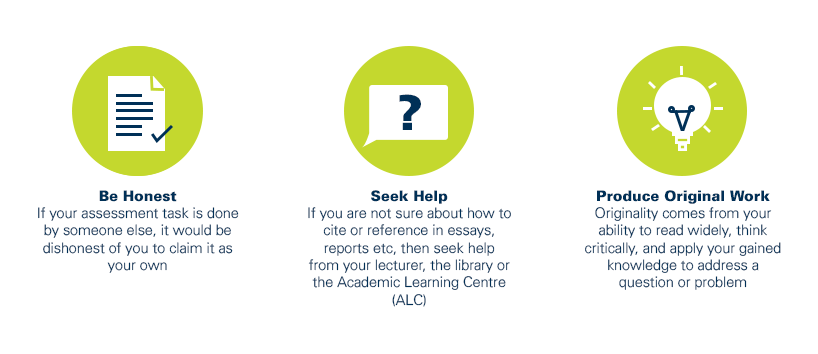
As a CQUniversity student you are expected to act honestly in all aspects of your academic work.
Any assessable work undertaken or submitted for review or assessment must be your own work. Assessable work is any type of work you do to meet the assessment requirements in the unit, including draft work submitted for review and feedback and final work to be assessed.
When you use the ideas, words or data of others in your assessment, you must thoroughly and clearly acknowledge the source of this information by using the correct referencing style for your unit. Using others’ work without proper acknowledgement may be considered a form of intellectual dishonesty.
Participating honestly, respectfully, responsibly, and fairly in your university study ensures the CQUniversity qualification you earn will be valued as a true indication of your individual academic achievement and will continue to receive the respect and recognition it deserves.
As a student, you are responsible for reading and following CQUniversity’s policies, including the Student Academic Integrity Policy and Procedure. This policy sets out CQUniversity’s expectations of you to act with integrity, examples of academic integrity breaches to avoid, the processes used to address alleged breaches of academic integrity, and potential penalties.
What is a breach of academic integrity?
A breach of academic integrity includes but is not limited to plagiarism, self-plagiarism, collusion, cheating, contract cheating, and academic misconduct. The Student Academic Integrity Policy and Procedure defines what these terms mean and gives examples.
Why is academic integrity important?
A breach of academic integrity may result in one or more penalties, including suspension or even expulsion from the University. It can also have negative implications for student visas and future enrolment at CQUniversity or elsewhere. Students who engage in contract cheating also risk being blackmailed by contract cheating services.
Where can I get assistance?
For academic advice and guidance, the Academic Learning Centre (ALC) can support you in becoming confident in completing assessments with integrity and of high standard.
What can you do to act with integrity?