Overview
Continuing professional development (CPD) is an essential activity for any practicing engineer. Engineers and other professionals engage in CPD for a variety of reasons, including staying up-to-date with current developments in their discipline, professional networking, and facilitating career progression. In this unit, you will demonstrate your commitment to CPD by undertaking and recording professional practice exposure. You will reflect on what you have learned from professional practice activities, and you will develop a strategic approach to personal and professional growth in the workplace.
Details
Pre-requisites or Co-requisites
Students must have completed at least 48 Unit Credits in CV82 Master of Engineering before enrolling in this unit.
Important note: Students enrolled in a subsequent unit who failed their pre-requisite unit, should drop the subsequent unit before the census date or within 10 working days of Fail grade notification. Students who do not drop the unit in this timeframe cannot later drop the unit without academic and financial liability. See details in the Assessment Policy and Procedure (Higher Education Coursework).
Offerings For Term 3 - 2026
Attendance Requirements
All on-campus students are expected to attend scheduled classes - in some units, these classes are identified as a mandatory (pass/fail) component and attendance is compulsory. International students, on a student visa, must maintain a full time study load and meet both attendance and academic progress requirements in each study period (satisfactory attendance for International students is defined as maintaining at least an 80% attendance record).
Recommended Student Time Commitment
Each 0-credit Postgraduate unit at CQUniversity requires an overall time commitment of an average of 0 hours of study per week, making a total of 0 hours for the unit.
Class Timetable
Assessment Overview
| Assessment Task | Part Weighting (% of assessment) |
Assessment Security Level | Gen AI Guidance Levels |
|---|---|---|---|
| 1. Continuing Professional Development (CPD) Presentation (Pass/Fail ) | |||
| Continuing Professional Development (CPD) Presentation (Presentation) | 100% | Medium | AI-Assisted (Guided Collaboration) |
| 2. Continuing Professional Development (CPD) Portfolio (Pass/Fail ) | |||
| Continuing Professional Development (CPD) Portfolio (Portfolio) | 100% | Low | AI-Assisted (Guided Collaboration) |
Assessment Grading
This is a pass/fail (non-graded) unit. To pass the unit, you must pass all of the individual assessment tasks shown in the table above.
All University policies are available on the CQUniversity Policy site.
You may wish to view these policies:
- Grades and Results Policy
- Assessment Policy and Procedure (Higher Education Coursework)
- Review of Grade Procedure
- Student Academic Integrity Policy and Procedure
- Academic Progression Policy and Procedure
- Student Refund and Credit Balance Policy and Procedure
- Complaints Policy and Procedure
- Information and Communications Technology Acceptable Use Policy and Procedure
This list is not an exhaustive list of all University policies. The full list of University policies are available on the CQUniversity Policy site.
Feedback, Recommendations and Responses
Every unit is reviewed for enhancement each year. At the most recent review, the following staff and student feedback items were identified and recommendations were made.
Feedback from SUTE
Students appreciated the use of effective and useful learning materials that supported their understanding of the unit.
Providing high-quality and relevant learning materials should continue to support students’ understanding and engagement with the unit content.
Feedback from Unit Coordinator evaluation based on workshop attendance and observations.
Consider scheduling the workshop at a time that maximises accessibility for all students.
The workshop should be offered at suitable times to ensure all students have access and the opportunity to participate.
- Evaluate individual professional needs to ensure continuing professional development
- Analyse the structure, products and services of an engineering organisation
- Apply skills and knowledge developed in an academic course to engineering practice in an engineering organisation
- Reflect on and map Engineers Australia's Stage 1 Competency Standards to professional practice activities
- Develop a strategic approach to personal and professional growth in the workplace.
The Learning Outcomes for this unit are linked with the Engineers Australia Stage 1 Competency Standards for Professional Engineers in the areas of 1. Knowledge and Skill Base, 2. Engineering Application Ability and 3. Professional and Personal Attributes at the following levels:
Intermediate
1.1 Comprehensive, theory-based understanding of the underpinning natural and physical sciences and the engineering fundamentals applicable to the engineering discipline. (LO: 3I )
1.2 Conceptual understanding of the mathematics, numerical analysis, statistics, and computer and information sciences that underpin the engineering discipline. (LO: 3I )
1.3 In-depth understanding of specialist bodies of knowledge within the engineering discipline. (LO: 2I 3I )
1.4 Discernment of knowledge development and research directions within the engineering discipline. (LO: 3I )
1.5 Knowledge of engineering design practice and contextual factors impacting the engineering discipline. (LO: 3I )
2.3 Application of systematic engineering synthesis and design processes. (LO: 3I )
2.4 Application of systematic approaches to the conduct and management of engineering projects. (LO: 3I )
3.2 Effective oral and written communication in professional and lay domains. (LO: 3I 4I 5I )
3.3 Creative, innovative and pro-active demeanour. (LO: 3I )
3.4 Professional use and management of information. (LO: 1I 3I 4I )
3.5 Orderly management of self and professional conduct. (LO: 3I 5I )
3.6 Effective team membership and team leadership. (LO: 1I 3I )
Advanced
1.6 Understanding of the scope, principles, norms, accountabilities and bounds of sustainable engineering practice in the specific discipline. (LO: 1I 3A )
2.1 Application of established engineering methods to complex engineering problem solving. (LO: 2I 3A 5I )
3.1 Ethical conduct and professional accountability. (LO: 3A 4I 5A )
Note: LO refers to the Learning Outcome number(s) which link to the competency and the levels: N – Introductory, I – Intermediate and A - Advanced.
Refer to the Engineering Postgraduate Units Moodle site for further information on the Engineers Australia's Stage 1 Competency Standard for Professional Engineers and course level mapping information
https://moodle.cqu.edu.au/course/view.php?id=11382
Alignment of Assessment Tasks to Learning Outcomes
| Assessment Tasks | Learning Outcomes | ||||
|---|---|---|---|---|---|
| 1 | 2 | 3 | 4 | 5 | |
|
1.
Assessment 1
(Pass/Fail )
Presentation
|
|||||
|
2.
Assessment 2
(Pass/Fail )
Portfolio
|
|||||
Alignment of Graduate Attributes to Learning Outcomes
| Graduate Attributes | Learning Outcomes | ||||
|---|---|---|---|---|---|
| 1 | 2 | 3 | 4 | 5 | |
| 1 - Knowledge | |||||
| 2 - Communication | |||||
| 3 - Cognitive, technical and creative skills | |||||
| 4 - Research | |||||
| 5 - Self-management | |||||
| 6 - Ethical and Professional Responsibility | |||||
| 7 - Leadership | |||||
| 8 - First Nations Knowledges | |||||
Textbooks
There are no required textbooks.
IT Resources
- CQUniversity Student Email
- Internet
- Unit Website (Moodle)
- Australian Standards (through CQU library)
All submissions for this unit must use the referencing style: Harvard (author-date)
For further information, see the Assessment Tasks.
x.yang@cqu.edu.au
Week 1
Begin Date: 09 Nov 2026Module/Topic
Commencement of work on presentation and portfolio preparations.
Chapter
N/A
Events and Submissions/Topic
Activity: Gather your professional exposures and experiences and populate them into the Continuing Professional Development (CPD) record sheet.
Week 2
Begin Date: 16 Nov 2026Module/Topic
Work on presentation and portfolio preparations.
Chapter
N/A
Events and Submissions/Topic
Activity: Complete your CPD record sheet, making sure that the total hours add up to at least 480 hours.
Week 3
Begin Date: 23 Nov 2026Module/Topic
Attend workshop class on CPD requirements and work on presentation and portfolio preparations.
Chapter
N/A
Events and Submissions/Topic
Activity: Obtain evidence for each entry in the CPD record sheet. Each evidence must clearly state the company/provider's name, the duration of experience and the number of hours and the nature of the experience. The evidence must also be verifiable by having valid and full contact information.
Week 4
Begin Date: 30 Nov 2026Module/Topic
Work on presentation and portfolio preparations.
Chapter
N/A
Events and Submissions/Topic
Activity: Continue to gather necessary evidence required for the CPD record sheet.
Week 5
Begin Date: 07 Dec 2026Module/Topic
Work on presentation and portfolio preparations.
Chapter
N/A
Events and Submissions/Topic
Activity: Continue to gather necessary evidence required for the CPD record sheet.
Week 6
Begin Date: 14 Dec 2026Module/Topic
Work on presentation and portfolio preparations.
Chapter
N/A
Events and Submissions/Topic
Activity: Aim to have all evidence available at this stage.
Mid-Term Break
Begin Date: 21 Dec 2026Module/Topic
Chapter
Events and Submissions/Topic
Week 7
Begin Date: 04 Jan 2027Module/Topic
Work on presentation and portfolio preparations.
Chapter
N/A
Events and Submissions/Topic
Activity: For each evidence, write a descriptive narrative which consists of the following 4 compulsory components:
1. A certification of evidence: e.g. a letter from the employer or company, certificate of attendance or completion of training, etc. Only certifications that could be verified are acceptable.
2. A description: gives a brief overview of the evidence and explains what it is.
3. An analysis: explains why you chose to include that evidence, including its relevance to the particular element of competence as listed in Section 9 of this portfolio.
4. A reflective statement is a thoughtful statement that tells what this evidence means to you. Your comments should express your commitment to professional growth and tell how you will apply your understanding in the future.
Week 8
Begin Date: 11 Jan 2027Module/Topic
Submit the CPD presentation.
Chapter
N/A
Events and Submissions/Topic
Activity: Complete the descriptive narratives for the evidence used in the CPD record sheet.
1. Self-assess and reflect on the various attributes as per the Engineers Australia's Stage 1 Competency Standard for professional engineers. Prepare the CPD Portfolio presentation using the provided PowerPoint template.
2. Prepare CPD PowerPoint Slides.
3. Prepare and record a 10 minutes long formal CPD presentation video.
4. Submit the recorded video.
Week 9
Begin Date: 18 Jan 2027Module/Topic
Work on portfolio preparations.
Chapter
N/A
Events and Submissions/Topic
Activity: Working on the CPD Portfolio document
Continuing Professional Development (CPD) Presentation
Due: Week 9 Friday (22 Jan 2027) 11:59 pm AEST
Continuing Professional Development (CPD) Presentation Due: Week 9 Friday (22 Jan 2027) 11:59 pm AEST
Week 10
Begin Date: 25 Jan 2027Module/Topic
Work on portfolio preparations.
Chapter
N/A
Events and Submissions/Topic
Activity: Work on the CPD portfolio.
Week 11
Begin Date: 01 Feb 2027Module/Topic
Work on portfolio.
Chapter
N/A
Events and Submissions/Topic
Activity: Prepare your CPD portfolio.
Week 12
Begin Date: 08 Feb 2027Module/Topic
Submit the portfolio document.
Chapter
N/A
Events and Submissions/Topic
Activity: Complete the CPD Portfolio document
Continuing Professional Development (CPD) Portfolio Due:
Week 12 Friday (12 Feb 2027) 11:59 pm AEST
Continuing Professional Development (CPD) Portfolio Due: Week 12 Friday (12 Feb 2027) 11:59 pm AEST
Exam Week
Begin Date: 15 Feb 2027Module/Topic
N/A
Chapter
N/A
Events and Submissions/Topic
N/A
1. Continuing Professional Development (CPD) Presentation ( Pass/Fail )
Presentation
This assessment is based on a pass-or-fail nature. You are required to present your case as an engineer to demonstrate how you acquired a specific skill outlined in Engineers Australia's Stage 1 Competency Standards for Professional Engineers through your industry experience. Your presentation should detail the context of the work experience, the skills you focused on, the challenges you encountered, and the steps you took to develop and refine these skills. Additionally, you need to reflect on how these skills contribute to your professional growth and how you plan to utilise it in your future engineering career.
The following items are expected to be included in the video presentation.
a) Formatting and presentation of report: A professional portfolio report is to be submitted using the PPT template and guidelines provided on Moodle.
b) Resume- Create a professional resume. You must use the provided template to prepare your resume. Carefully consider who you nominate as referees, ensuring they are relevant to your experiences. Referees may be contacted to verify the information claimed in your portfolio.
c) CPD record sheet- Record your CPD hours. This is the core information of your CPD portfolio. The hours claimed for your professional practices must be presented using the CPD record sheet provided. The table should clearly show at least 480 hours of professional experience.
d) Summative mapping and reflection: Map your skills against the Engineers Australia Stage 1 Standard for professional engineers. You must describe how you have met each of the standards, reflect on the skills you have developed or enhanced through your professional experiences, and explain how you will utilize them in your future career. This mapping must be prepared using the provided template.
e) Professional evidence: For each piece of evidence that you use in your CPD portfolio, you must articulate it in the professional evidence section. If the evidence is missing from this section, it will not be counted as valid and acceptable evidence for claiming the professional hours. Details on how to articulate evidence are explained in the portfolio template. Each piece of evidence must include four major components: a) a certification of evidence, b) a description, c) an analysis and d) a reflective statement. Evidence that is missing or incomplete in its articulation will be considered invalid.
The students MUST submit all required assessments by their due dates as no late submission will be accepted (this is professional practice). If an extension is required, please ensure the extension request reaches the Unit Coordinator AT LEAST 72 hours prior to the deadline unless specified otherwise in the assessment tasks. Application for an extension after the due date may not be acceptable. According to the Assessment Policy, Section 5.16, the acceptable reasons for extension are disability, medical or health-related condition, hardship (serious accident), compassionate circumstances (death of a family member) etc., with evidence.
Week 9 Friday (22 Jan 2027) 11:59 pm AEST
CPD Presentation
Week 11 Friday (5 Feb 2027)
Presentation assessment will be returned to students within 2 weeks after submission
The presentation will be assessed based on 5 major criteria namely:
1. Presentation: This assesses your verbal communication and presentation skills. The details of marking for this criteria is provided in the presentation marking sheet. You must achieve 50% mark for this criteria to pass this Unit.
2. Resume: You must effectively convey your education and employment history and your key skills and attributes.
3. CPD record sheet: this is the core information of your CPD portfolio. The total hour claimed for your professional practices must be presented using the CPD record sheet provided. You must demonstrate at least 480 hours of professional experiences to pass this Unit and this must be clearly evident in this table.
4. Summative mapping and reflections: this is your mapping of your skills against the Engineers Australia Stage 1 Standard for professional engineers. You must describe how you have met each of the standards and reflect on what skills you have developed or enhanced through your professional experiences and how you will utilize them in your future career. This mapping must be presented using the provided template. The marking criteria for this mapping is given in the portfolio document marking sheet.
5. Evidences: For each of the evidences that you use in your CPD portfolio, you must articulate it in the "Evidence"s section. If the evidence is missing, it will not be counted and the associated claiming hours will not be accepted. 5. Details of how to articulate evidence is explained during the CPD workshop in Week 3 and also in the portfolio
template document. In brief, for each evidence, you must have fourcompulsory pieces of information, namely 1) certification of evidence; 2) description; 3) analysis and 4) reflective statement. Evidences that have missing or incomplete articulation will be invalid and cannot be counted toward the hour claims.
The details of the marking criteria of individual items are provided in the portfolio marking sheet available on Moodle.
- Evaluate individual professional needs to ensure continuing professional development
- Analyse the structure, products and services of an engineering organisation
- Apply skills and knowledge developed in an academic course to engineering practice in an engineering organisation
- Reflect on and map Engineers Australia's Stage 1 Competency Standards to professional practice activities
- Develop a strategic approach to personal and professional growth in the workplace.
2. Continuing Professional Development (CPD) Portfolio ( Pass/Fail )
Portfolio
This assessment is also based on a pass-or-fail nature. The portfolio is an opportunity to demonstrate that you have accumulated professional experience equivalent to 480 hours of industry and/or professional engineering work. Through this portfolio, you need to convince the assessors that you have met Engineers Australia's Stage 1 Competency Standards for Professional Engineers by providing verifiable evidence of at least 480 hours of professional engineering practices and by reflecting on and self-assessing your gained knowledge and skills against these standards. The following items are expected to be present in the portfolio submissions.
a) Formatting and presentation of report: A professional portfolio report is to be submitted using the template and guidelines provided on Moodle.
b) Resume- Create a professional resume. You must use the provided template to prepare your resume. Carefully consider who you nominate as referees, ensuring they are relevant to your experiences. Referees may be contacted to verify the information claimed in your portfolio.
c) CPD record sheet- Record your CPD hours. This is the core information of your CPD portfolio. The hours claimed for your professional practices must be presented using the CPD record sheet provided. The table should clearly show at least 480 hours of professional experience.
d) Summative mapping and reflection: Map your skills against the Engineers Australia Stage 1 Standard for professional engineers. You must describe how you have met each of the standards, reflect on the skills you have developed or enhanced through your professional experiences, and explain how you will utilize them in your future career. This mapping must be prepared using the provided template.
e) Professional evidence: For each piece of evidence that you use in your CPD portfolio, you must articulate it in the professional evidence section. If the evidence is missing from this section, it will not be counted as valid and acceptable evidence for claiming the professional hours. Details on how to articulate evidence are explained in the portfolio template. Each piece of evidence must include four major components: a) a certification of evidence, b) a description, c) an analysis and d) a reflective statement. Evidence that is missing or incomplete in its articulation will be considered invalid.
The students MUST submit all required assessments by their due dates as no late submission will be accepted (this is professional practice). If an extension is required, please ensure the extension request reaches the Unit Coordinator AT LEAST 72 hours prior to the deadline unless specified otherwise in the assessment tasks. Application for an extension after the due date may not be acceptable.
According to the Assessment Policy, Section 5.16, the acceptable reasons for extension are disability, medical or health-related condition, hardship (serious accident), compassionate circumstances (death of a family member) etc., with evidence.
Week 12 Friday (12 Feb 2027) 11:59 pm AEST
Continuing Professional Development (CPD) Portfolio
Marked portfolio will be returned to students after certification of grades.
The portfolio will be assessed based on quality of submission, written communication and reports presentation skills. Its assessment criteria is the same as the presentation assessment criteria. The details of the marking criteria of individual items are provided in the portfolio marking sheet available on Moodle. Each of the submission items will be assessed as pass or fail. You must mast pass all individual submission items to pass the assessment.
- Evaluate individual professional needs to ensure continuing professional development
- Analyse the structure, products and services of an engineering organisation
- Apply skills and knowledge developed in an academic course to engineering practice in an engineering organisation
- Reflect on and map Engineers Australia's Stage 1 Competency Standards to professional practice activities
- Develop a strategic approach to personal and professional growth in the workplace.
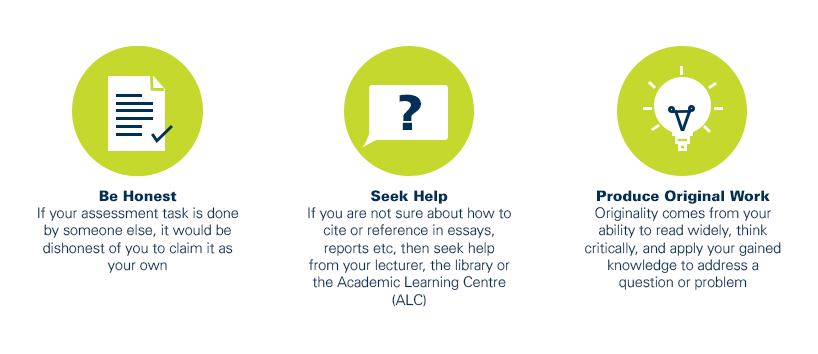
As a CQUniversity student you are expected to act honestly in all aspects of your academic work.
Any assessable work undertaken or submitted for review or assessment must be your own work. Assessable work is any type of work you do to meet the assessment requirements in the unit, including draft work submitted for review and feedback and final work to be assessed.
When you use the ideas, words or data of others in your assessment, you must thoroughly and clearly acknowledge the source of this information by using the correct referencing style for your unit. Using others’ work without proper acknowledgement may be considered a form of intellectual dishonesty.
Participating honestly, respectfully, responsibly, and fairly in your university study ensures the CQUniversity qualification you earn will be valued as a true indication of your individual academic achievement and will continue to receive the respect and recognition it deserves.
As a student, you are responsible for reading and following CQUniversity’s policies, including the Student Academic Integrity Policy and Procedure. This policy sets out CQUniversity’s expectations of you to act with integrity, examples of academic integrity breaches to avoid, the processes used to address alleged breaches of academic integrity, and potential penalties.
What is a breach of academic integrity?
A breach of academic integrity includes but is not limited to plagiarism, self-plagiarism, collusion, cheating, contract cheating, and academic misconduct. The Student Academic Integrity Policy and Procedure defines what these terms mean and gives examples.
Why is academic integrity important?
A breach of academic integrity may result in one or more penalties, including suspension or even expulsion from the University. It can also have negative implications for student visas and future enrolment at CQUniversity or elsewhere. Students who engage in contract cheating also risk being blackmailed by contract cheating services.
Where can I get assistance?
For academic advice and guidance, the Academic Learning Centre (ALC) can support you in becoming confident in completing assessments with integrity and of high standard.
What can you do to act with integrity?