Overview
This unit will introduce you to the fundamentals of analog and digital electronics. You will learn basic fundamental laws of circuit analysis, and the working principles of commonly used active and passive electronic components such as resistor, capacitor, inductor, diode, transistor, operational amplifier, and their applications. This unit will provide you with sufficient knowledge of Boolean algebra necessary to understand digital electronics. You will learn logic gates, combinational logic circuit, logic minimisation, flip-flops, counter, and other basic digital logic circuits, and their applications. You will develop skills in analysing electronic circuits and modelling analog and digital circuits using industry-standard simulation software. You will design analog and digital systems for real-world applications and verify their functionality in simulations. You must also complete compulsory practical activities that involve building electronic circuits to strengthen your knowledge further. This unit promotes the UN sustainable development Goal 12 - Responsible Consumption and Production by developing electronic circuits to reduce wasteful consumption.
Details
Pre-requisites or Co-requisites
Pre-requisite: ENEG11009 Fundamentals of Sustainable Energy AND (MATH11160 Technology Mathematics OR MATH11218 Applied Mathematics)
Important note: Students enrolled in a subsequent unit who failed their pre-requisite unit, should drop the subsequent unit before the census date or within 10 working days of Fail grade notification. Students who do not drop the unit in this timeframe cannot later drop the unit without academic and financial liability. See details in the Assessment Policy and Procedure (Higher Education Coursework).
Offerings For Term 1 - 2026
Attendance Requirements
All on-campus students are expected to attend scheduled classes - in some units, these classes are identified as a mandatory (pass/fail) component and attendance is compulsory. International students, on a student visa, must maintain a full time study load and meet both attendance and academic progress requirements in each study period (satisfactory attendance for International students is defined as maintaining at least an 80% attendance record).
Recommended Student Time Commitment
Each 6-credit Undergraduate unit at CQUniversity requires an overall time commitment of an average of 12.5 hours of study per week, making a total of 150 hours for the unit.
Class Timetable
Assessment Overview
Assessment Grading
This is a graded unit: your overall grade will be calculated from the marks or grades for each assessment task, based on the relative weightings shown in the table above. You must obtain an overall mark for the unit of at least 50%, or an overall grade of 'pass' in order to pass the unit. If any 'pass/fail' tasks are shown in the table above they must also be completed successfully ('pass' grade). You must also meet any minimum mark requirements specified for a particular assessment task, as detailed in the 'assessment task' section (note that in some instances, the minimum mark for a task may be greater than 50%). Consult the University's Grades and Results Policy for more details of interim results and final grades.
All University policies are available on the CQUniversity Policy site.
You may wish to view these policies:
- Grades and Results Policy
- Assessment Policy and Procedure (Higher Education Coursework)
- Review of Grade Procedure
- Student Academic Integrity Policy and Procedure
- Academic Progression Policy and Procedure
- Student Refund and Credit Balance Policy and Procedure
- Complaints Policy and Procedure
- Information and Communications Technology Acceptable Use Policy and Procedure
This list is not an exhaustive list of all University policies. The full list of University policies are available on the CQUniversity Policy site.
Feedback, Recommendations and Responses
Every unit is reviewed for enhancement each year. At the most recent review, the following staff and student feedback items were identified and recommendations were made.
Feedback from UC's observation
In-class learning checks and assessment reminders improved submission timeliness and reduced the number of extension requests.
This practice should continue.
Feedback from SUTE
There is an opportunity to provide more descriptive feedback on written assessments.
Feedback on written assessments should guide students on how to improve and learn from their mistakes.
Feedback from SUTE
Some students would benefit from clearer links between unit materials and the skills required of electrical engineers.
Connections between unit materials and the essential knowledge and skills of electrical engineers should be explicitly highlighted in class whenever relevant.
- Determine the behaviour and operation of basic electronic devices by utilising fundamental circuit laws
- Understand number systems and their hardware implementation in digital information processing systems
- Analyse the operation of analog and digital electronic circuits using industry-standard simulation tools
- Validate electronic circuit operations using simulation and measurement
- Design analog and digital electronic circuits for real-world applications by interpreting functional requirements
- Communicate professionally using electronic engineering terminology, symbol and diagram that conform to Australian and international standards.
The Learning Outcomes for this unit are linked with the Engineers Australia Stage 1 Competency Standards for Professional Engineers in the areas of 1. Knowledge and Skill Base, 2. Engineering Application Ability and 3. Professional and Personal Attributes at the following levels:
Introductory 1.4 Discernment of knowledge development and research directions within the engineering discipline. (LO: 4N 5N ) 1.5 Knowledge of engineering design practice and contextual factors impacting the engineering discipline. (LO: 4N 5N ) 1.6 Understanding of the scope, principles, norms, accountabilities and bounds of sustainable engineering practice in the specific discipline. (LO: 6N ) 3.1 Ethical conduct and professional accountability. (LO: 6N ) 3.3 Creative, innovative and pro-active demeanour. (LO: 6N ) 3.5 Orderly management of self, and professional conduct. (LO: 6N )
Intermediate 1.1 Comprehensive, theory-based understanding of the underpinning natural and physical sciences and the engineering fundamentals applicable to the engineering discipline. (LO: 1I 2I ) 1.2 Conceptual understanding of the mathematics, numerical analysis, statistics, and computer and information sciences which underpin the engineering discipline. (LO: 1I 2I 3I ) 1.3 In-depth understanding of specialist bodies of knowledge within the engineering discipline. (LO: 1I 2I 3I 4N 5N ) 2.1 Application of established engineering methods to complex engineering problem solving. (LO: 3I 4I 5I ) 2.4 Application of systematic approaches to the conduct and management of engineering projects. (LO: 4N 5I ) 3.2 Effective oral and written communication in professional and lay domains. (LO: 6I ) 3.4 Professional use and management of information. (LO: 6I )
Advanced 2.2 Fluent application of engineering techniques, tools and resources. (LO: 3I 4I 5A ) 2.3 Application of systematic engineering synthesis and design processes. (LO: 4I 5A )
Note: LO refers to the Learning Outcome number(s) which link to the competency and the levels: N – Introductory, I – Intermediate and A - Advanced.
Refer to the Engineering Undergraduate Course Moodle site for further information on the Engineers Australia's Stage 1 Competency Standard for Professional Engineers and course level mapping information
Alignment of Assessment Tasks to Learning Outcomes
| Assessment Tasks | Learning Outcomes | |||||
|---|---|---|---|---|---|---|
| 1 | 2 | 3 | 4 | 5 | 6 | |
| 1 - Online Quiz(zes) - 40% | ||||||
| 2 - Practical and Written Assessment - 30% | ||||||
| 3 - Project (applied) - 30% | ||||||
Alignment of Graduate Attributes to Learning Outcomes
| Graduate Attributes | Learning Outcomes | |||||
|---|---|---|---|---|---|---|
| 1 | 2 | 3 | 4 | 5 | 6 | |
| 1 - Communication | ||||||
| 2 - Problem Solving | ||||||
| 3 - Critical Thinking | ||||||
| 4 - Information Literacy | ||||||
| 5 - Team Work | ||||||
| 6 - Information Technology Competence | ||||||
| 7 - Cross Cultural Competence | ||||||
| 8 - Ethical practice | ||||||
| 9 - Social Innovation | ||||||
| 10 - First Nations Knowledges | ||||||
| 11 - Aboriginal and Torres Strait Islander Cultures | ||||||
Textbooks
Digital Fundamentals, Global Edition VitalSource eBook
- 11th Global Edition (2015)
- Authors: Thomas L Floyd
- Pearson
- NJ , USA
- ISBN: 9781292075990
- Binding: eBook
Electronic Devices, Conventional Current Version
- Global Edition, 10th Edition (2018)
- Authors: Thomas L. Floyd
- Pearson
- NJ , USA
- ISBN: 9781292223018
- Binding: eBook
Additional Textbook Information
Both textbooks are available online as eBooks through the CQUniversity library, with a limited number of concurrent users. Students are, therefore, encouraged to obtain their own copies for regular reading and easy reference throughout the study term.
IT Resources
- CQUniversity Student Email
- Internet
- Unit Website (Moodle)
- Pdf creator/scanner
- MS Office (mainly Word and Powerpoint)
- Zoom Video Conference Application
- Windows 8 or later PC with admin rights to install software and USB port to operate USB Oscilloscope
- NI Multisim Software (license provided by CQU)
- Microsoft Teams - camera and microphone
All submissions for this unit must use the referencing style: Harvard (author-date)
For further information, see the Assessment Tasks.
l.bui@cqu.edu.au
Week 1
Begin Date: 09 Mar 2026Module/Topic
Basic analog concepts and circuit theory
Chapter
Course Resource Online (CRO)
Events and Submissions/Topic
Week 2
Begin Date: 16 Mar 2026Module/Topic
Diode and diode applications
Chapter
Chapters 1 and 2 of Electronic Devices, Conventional Current Version, Global 10th Edition
Events and Submissions/Topic
Week 3
Begin Date: 23 Mar 2026Module/Topic
Special purpose diodes and bipolar junction transistor (BJT)
Chapter
Chapters 3 and 4 of Electronic Devices, Conventional Current Version, Global 10th Edition
Events and Submissions/Topic
Online Quiz 1 Due: Week 3, Thursday at 23:59 AEST (covering materials for Weeks 1 and 2)
Week 4
Begin Date: 30 Mar 2026Module/Topic
Transistor bias circuits and BJT amplifiers
Chapter
Chapters 5 and 6 of Electronic Devices, Conventional Current Version, Global 10th Edition
Events and Submissions/Topic
Week 5
Begin Date: 06 Apr 2026Module/Topic
Operational amplifiers and operational amplifiers with feedback
Chapter
Chapters 12 of Electronic Devices, Conventional Current Version, Global 10th Edition
Events and Submissions/Topic
Online Quiz 2 Due: Week 5, Thursday at 23:59 AEST (covering materials for Weeks 3 and 4)
Week 6
Begin Date: 13 Apr 2026Module/Topic
Basic op-amp circuits and special-purpose op-amp circuits
Chapter
Chapters 13 and 14 of Electronic Devices, Conventional Current Version, Global 10th Edition
Events and Submissions/Topic
Vacation Week
Begin Date: 20 Apr 2026Module/Topic
No class
Chapter
Events and Submissions/Topic
Online Quiz 3 Due: Study break week, Thursday at 23:59 AEST (covering materials for Weeks 5 and 6)
Week 7
Begin Date: 27 Apr 2026Module/Topic
Number systems, operations, codes and logic gates
Chapter
Chapters 2 and 3 of Digital Fundamentals, Global 11th Edition
Events and Submissions/Topic
Week 8
Begin Date: 04 May 2026Module/Topic
Boolean algebra and logic simplification
Chapter
Chapter 4 of Digital Fundamentals, Global 11th Edition
Events and Submissions/Topic
Week 9
Begin Date: 11 May 2026Module/Topic
Combinational logic analysis
Chapter
Chapter 5 of Digital Fundamentals, Global 11th Edition
Events and Submissions/Topic
Online Quiz 4 Due: Week 9, Thursday at 23:59 AEST (covering materials for Weeks 7 and 8)
Week 10
Begin Date: 18 May 2026Module/Topic
Functions of combinational logic
Chapter
Chapter 6 of Digital Fundamentals, Global 11th Edition
Events and Submissions/Topic
Week 11
Begin Date: 25 May 2026Module/Topic
Latches, flip-flops and timers
Chapter
Chapter 7 of Digital Fundamentals, Global 11th Edition
Events and Submissions/Topic
Online Quiz 5 Due: Week 11, Thursday at 23:59 AEST (covering materials for Weeks 9 and 10)
Week 12
Begin Date: 01 Jun 2026Module/Topic
Counters
Chapter
Chapter 9 of Digital Fundamentals, Global 11th Edition
Events and Submissions/Topic
Exam Week
Begin Date: 08 Jun 2026Module/Topic
Chapter
Events and Submissions/Topic
Online Quiz 6 Due: Week 13, Thursday at 23:59 AEST (covering materials for Weeks 11 and 12)
Electronics Design Assessment Due: Exam Week Thursday (11 June 2026) 11:59 pm AEST
Vacation/Exam Week
Begin Date: 15 Jun 2026Module/Topic
Chapter
Events and Submissions/Topic
-
Textbooks
The two prescribed textbooks for this unit are available as online e-books through the CQUniversity Library, with access limited to three concurrent users. Students are expected to read the relevant sections of the textbook(s) each week as part of their learning activities. They must ensure reliable access to the textbooks throughout the term. Obtaining a personal copy of the books is strongly recommended to support effective learning. -
Residential School
Attendance at the residential school is compulsory. Students must nominate their residential school campus by the end of Week 3. Students with prior electronics experience who are confident in completing laboratory work without supervision may apply to undertake home-based laboratory activities. This option, however, requires approval from the unit coordinator, the purchase of an electronic lab kit, and access to appropriate test equipment. To seek approval, students must contact the unit coordinator before Week 3 to discuss their intention, skills and circumstances.
1 Online Quiz(zes)
The unit includes six online quizzes designed to assess students’ understanding of material covered in the two weeks preceding each quiz. Each quiz contains multiple-choice and short calculation questions. There is no time limit, and multiple attempts are allowed. For each attempt, the system randomly selects questions from a question bank. The final quiz mark is calculated as the average of all attempts, enabling students to improve their performance through subsequent attempts.
Each quiz opens two weeks before its closing date, and all attempts must be completed within this period. Students are strongly advised to review the relevant learning materials before attempting each quiz. Collectively, the six quizzes contribute 40% to the final unit mark, and students must achieve a minimum overall score of 50% across all quizzes to pass the unit.
Quizzes 1 to 6 are due on the Thursday of Weeks 3, 5, 7, 9, 11, and 13, respectively.
AI ASSESSMENT SCALE - NO AI
You must not use Al at any point during the assessment. You must demonstrate your core skills and knowledge.
IMPORTANT NOTE: This assessment is exempt from the 72-hour submission grace period and must be completed by the stated submission date/time.
Students must complete the quiz by its due date, i.e., Thursday of the relevant week, as specified in the teaching schedule and assessment information. For detailed information and submission deadline, please refer to the specific quiz instructions available in the Unit Moodle site.
Quiz result and feedback will be available to students after the quiz is closed.
Correct numerical answer or selection of the best answer among the available multiple-choice options.
- Determine the behaviour and operation of basic electronic devices by utilising fundamental circuit laws
- Understand number systems and their hardware implementation in digital information processing systems
2 Practical and Written Assessment
The laboratory for this unit will be conducted around mid-term during the residential school at multiple campuses. Students must nominate and register their preferred residential school campus on the unit Moodle by the end of Week 3. Details of the venue and residential school timetable are available on the unit Moodle at the start of the term.
The laboratory covers analog electronics topics, including diodes, rectifiers, bipolar junction transistors, and operational amplifiers. Laboratory instructions and marking rubrics are provided in the laboratory document available on the unit Moodle. The laboratory is a compulsory learning and assessment activity. Students are encouraged to work in groups of up to five, with one laboratory report submitted per group by the due date.
Each student’s laboratory mark is calculated from two components: the group report mark and an individual scaling factor. The report mark is the mark given to the report and common to all group members, while the individual scaling factor can vary among the group's members from 0 to 100% and is determined as the average of peer assessments, including self-assessment. Each student must complete a confidential online peer assessment on the unit Moodle to evaluate individual contributions. Failure to submit a valid peer assessment will result in a 50% reduction of the peer assessment component for the student concerned.
Students with prior electronics experience who are confident in completing the laboratory work without supervision may apply to undertake the laboratory at home. This option, however, requires prior approval from the unit coordinator. For consideration, students must contact the unit coordinator before the end of Week 3 to discuss their intentions, skills, and experience for assessment.
AI ASSESSMENT SCALE - NO AI
You must not use Al at any point during the assessment. You must demonstrate your core skills and knowledge.
IMPORTANT NOTE: This assessment is exempt from the 72-hour submission grace period and must be completed by the stated submission date/time.
Week 8 Thursday (7 May 2026) 11:59 pm AEST
Submit one PDF laboratory report and one ZIP file containing only the required and relevant Multisim simulation files, as specified in the laboratory document, per group. In addition, each group member must complete a confidential online peer assessment on the unit Moodle for all group members, including themselves.
Week 10 Thursday (21 May 2026)
Marks and feedback for the lab report will be provided within two weeks of the submission due date.
- Connect electronic components correctly using pin diagrams, power requirements, and connection procedures.
- Test electronic devices with appropriate laboratory test equipment.
- Troubleshoot electronic circuits using suitable procedures and laboratory test equipment.
- Use simulation software to analyse electronic circuits.
- Obtain accurate simulation and measurement results.
- Report results clearly, neatly, and professionally, including all necessary technical information and diagrams.
- Determine the behaviour and operation of basic electronic devices by utilising fundamental circuit laws
- Analyse the operation of analog and digital electronic circuits using industry-standard simulation tools
- Validate electronic circuit operations using simulation and measurement
- Communicate professionally using electronic engineering terminology, symbol and diagram that conform to Australian and international standards.
3 Project (applied)
This assessment involves designing a circuit to address a real-world problem using concepts from both analog and digital electronics. It is a simulation-based design, submitted individually as a single design report. The report must include system requirement analysis, design of individual sub-circuits, and integration of these sub-circuits into a fully functional system that meets the design specifications. Detailed assessment instructions are available in the design task description document available on the unit Moodle.
AI ASSESSMENT SCALE - AI PLANNING
You may use AI for planning, idea development, and research. Your final submission should show how you have developed and refined these ideas.
Exam Week Thursday (11 June 2026) 11:59 pm AEST
Submit a single PDF design report and a single zip file containing only the necessary and relevant Multisim simulation files, as instructed in the design task description document available on the Unit Moodle site
Marks and feedback for the design report will be provided to students after the grade moderation day.
- Develop a circuit solution that meets real-world operational requirements.
- Use a modular design approach by breaking the circuit into functional blocks.
- Design each functional block using concepts learned in the unit.
- Select suitable electronic components for implementing each functional block.
- Justify component selection through relevant analysis.
- Explore circuit options using calculations and simulations.
- Integrate functional blocks to design the final circuit.
- Simulate the final circuit to verify functionalities against the design specifications.
- Present design and operational results clearly, correctly, and in accordance with the industry standards, including all necessary technical details, diagrams, symbols, and circuit representations.
- Analyse the operation of analog and digital electronic circuits using industry-standard simulation tools
- Validate electronic circuit operations using simulation and measurement
- Design analog and digital electronic circuits for real-world applications by interpreting functional requirements
- Communicate professionally using electronic engineering terminology, symbol and diagram that conform to Australian and international standards.
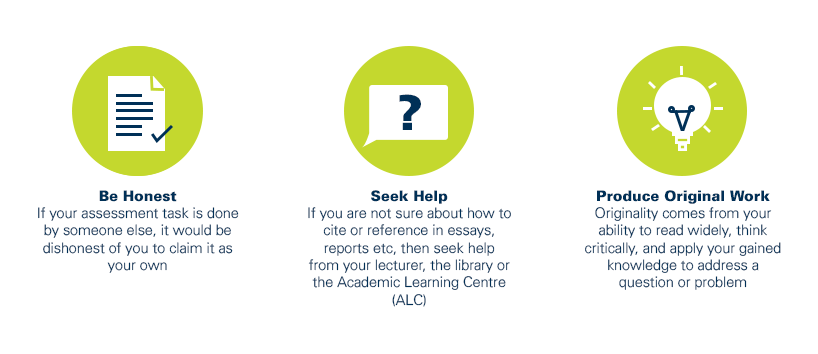
As a CQUniversity student you are expected to act honestly in all aspects of your academic work.
Any assessable work undertaken or submitted for review or assessment must be your own work. Assessable work is any type of work you do to meet the assessment requirements in the unit, including draft work submitted for review and feedback and final work to be assessed.
When you use the ideas, words or data of others in your assessment, you must thoroughly and clearly acknowledge the source of this information by using the correct referencing style for your unit. Using others’ work without proper acknowledgement may be considered a form of intellectual dishonesty.
Participating honestly, respectfully, responsibly, and fairly in your university study ensures the CQUniversity qualification you earn will be valued as a true indication of your individual academic achievement and will continue to receive the respect and recognition it deserves.
As a student, you are responsible for reading and following CQUniversity’s policies, including the Student Academic Integrity Policy and Procedure. This policy sets out CQUniversity’s expectations of you to act with integrity, examples of academic integrity breaches to avoid, the processes used to address alleged breaches of academic integrity, and potential penalties.
What is a breach of academic integrity?
A breach of academic integrity includes but is not limited to plagiarism, self-plagiarism, collusion, cheating, contract cheating, and academic misconduct. The Student Academic Integrity Policy and Procedure defines what these terms mean and gives examples.
Why is academic integrity important?
A breach of academic integrity may result in one or more penalties, including suspension or even expulsion from the University. It can also have negative implications for student visas and future enrolment at CQUniversity or elsewhere. Students who engage in contract cheating also risk being blackmailed by contract cheating services.
Where can I get assistance?
For academic advice and guidance, the Academic Learning Centre (ALC) can support you in becoming confident in completing assessments with integrity and of high standard.
What can you do to act with integrity?