Overview
In this unit, you will build on your electronics knowledge previously acquired. You will learn more about power semiconductor devices and their modeling, such as diodes, silicon-controlled rectifiers (SCRs), metal oxide silicon field effect transistors (MOSFETs), and isolated gate bipolar junction transistors (IGBTs), including their theory of operation and limitations. You will also learn to calculate thermal dissipation requirements of power semiconductors and to choose suitable heat sinks. You will be introduced to the concepts of alternating current (AC) to direct current (DC), AC to AC, DC to DC, and DC to AC converters. You will analyse circuits and it's waveforms using Fourier analysis. You will also review different types of motors and learn about their drives and control, including DC motor drives and AC motor drives. You will learn to design/develop power electronics solutions and test them by simulation and prototyping in the lab. In this unit, you must complete compulsory practical activities. Refer to the Engineering Undergraduate Course Moodle site for proposed dates.
Details
Pre-requisites or Co-requisites
Prerequisites: (ENEX12002 Introductory Electronics OR ENEE13018 Analogue Electronics) AND (ENEX12001 Electrical Power and Machines OR ENEE12015 Electrical Power Engineering) ENEE12015 Electrical Power Engineering may be studied as a co-requisite.
Important note: Students enrolled in a subsequent unit who failed their pre-requisite unit, should drop the subsequent unit before the census date or within 10 working days of Fail grade notification. Students who do not drop the unit in this timeframe cannot later drop the unit without academic and financial liability. See details in the Assessment Policy and Procedure (Higher Education Coursework).
Offerings For Term 2 - 2026
Attendance Requirements
All on-campus students are expected to attend scheduled classes - in some units, these classes are identified as a mandatory (pass/fail) component and attendance is compulsory. International students, on a student visa, must maintain a full time study load and meet both attendance and academic progress requirements in each study period (satisfactory attendance for International students is defined as maintaining at least an 80% attendance record).
Recommended Student Time Commitment
Each 6-credit Undergraduate unit at CQUniversity requires an overall time commitment of an average of 12.5 hours of study per week, making a total of 150 hours for the unit.
Class Timetable
Assessment Overview
Assessment Grading
This is a graded unit: your overall grade will be calculated from the marks or grades for each assessment task, based on the relative weightings shown in the table above. You must obtain an overall mark for the unit of at least 50%, or an overall grade of 'pass' in order to pass the unit. If any 'pass/fail' tasks are shown in the table above they must also be completed successfully ('pass' grade). You must also meet any minimum mark requirements specified for a particular assessment task, as detailed in the 'assessment task' section (note that in some instances, the minimum mark for a task may be greater than 50%). Consult the University's Grades and Results Policy for more details of interim results and final grades.
All University policies are available on the CQUniversity Policy site.
You may wish to view these policies:
- Grades and Results Policy
- Assessment Policy and Procedure (Higher Education Coursework)
- Review of Grade Procedure
- Student Academic Integrity Policy and Procedure
- Academic Progression Policy and Procedure
- Student Refund and Credit Balance Policy and Procedure
- Complaints Policy and Procedure
- Information and Communications Technology Acceptable Use Policy and Procedure
This list is not an exhaustive list of all University policies. The full list of University policies are available on the CQUniversity Policy site.
Feedback, Recommendations and Responses
Every unit is reviewed for enhancement each year. At the most recent review, the following staff and student feedback items were identified and recommendations were made.
Feedback from In class.
Students enjoyed the LabVolt practicums and the reinforcement of theory work.
It is proposed that further work should be done to provide more links between the theoretical work and practicums, both in the laboratory instruction documents and during the actual laboratory sessions.
Feedback from Unit evaluation.
Students felt that more useful feedback could be given on assignments.
It is proposed that more information on typical errors and corrections should be drafted before marking assignments, so that appropriate comments may be pasted for the student's benefit.
- Explain the construction of power semiconductor devices, their principle of operation, and their suitability for various switching functions
- Model power electronic devices for accurate circuit analysis, including their thermal performance
- Analyse and model the operation of single-phase and three-phase power electronic circuits, including alternating current (AC) to direct current (DC), AC to AC, DC to DC, and DC to AC topologies
- Compare and select power electronic components, converters, and drives for electromechanical/mechatronic systems
- Analyse and design variable speed motor drives and controllers for different types of electric motors and evaluate their performances
- Solve real-life problems and communicate professionally using power electronics terminology
- Work collaboratively and autonomously and communicate professionally in presenting your solutions.
The Learning Outcomes for this unit are linked with the Engineers Australia Stage 1 Competency Standards for Professional Engineers in the areas of 1. Knowledge and Skill Base, 2. Engineering Application Ability and 3. Professional and Personal Attributes at the following levels:
Intermediate
Advanced
Refer to the Engineering Undergraduate Course Moodle site for further information on the Engineers Australia's Stage 1 Competency Standard for Professional Engineers and course level mapping information
Alignment of Assessment Tasks to Learning Outcomes
| Assessment Tasks | Learning Outcomes | ||||||
|---|---|---|---|---|---|---|---|
| 1 | 2 | 3 | 4 | 5 | 6 | 7 | |
| 1 - Written Assessment - 20% | |||||||
| 2 - Written Assessment - 20% | |||||||
| 3 - Practical and Written Assessment - 20% | |||||||
| 4 - Online Test - 40% | |||||||
Alignment of Graduate Attributes to Learning Outcomes
| Graduate Attributes | Learning Outcomes | ||||||
|---|---|---|---|---|---|---|---|
| 1 | 2 | 3 | 4 | 5 | 6 | 7 | |
| 1 - Communication | |||||||
| 2 - Problem Solving | |||||||
| 3 - Critical Thinking | |||||||
| 4 - Information Literacy | |||||||
| 5 - Team Work | |||||||
| 6 - Information Technology Competence | |||||||
| 7 - Cross Cultural Competence | |||||||
| 8 - Ethical practice | |||||||
| 9 - Social Innovation | |||||||
| 10 - First Nations Knowledges | |||||||
| 11 - Aboriginal and Torres Strait Islander Cultures | |||||||
Textbooks
Power Electronics Devices, Circuits, and Applications
- 4th Edition (International) (2014)
- Authors: Muhammad H. Rashid
- Pearson Education Ltd.
- Harlaw Harlaw , Essex , England
- ISBN: 978-0-273-76908-8
The hardcopy or electronic version is suitable.
- Binding: Paperback
IT Resources
- CQUniversity Student Email
- Internet
- Unit Website (Moodle)
- Office software (e.g. Microsoft Office, Open Office etc)
- Multisim 14.0 Education Edition or later (should be able access / install as a CQU student).
All submissions for this unit must use the referencing style: Harvard (author-date)
For further information, see the Assessment Tasks.
p.jansevanrensburg@cqu.edu.au
Week 1
Begin Date: 13 Jul 2026Module/Topic
Introduction to Power Electronics
Power Diodes and LRC Circuits
Chapter
Chapters 1 & 2
Events and Submissions/Topic
Week 2
Begin Date: 20 Jul 2026Module/Topic
Diode Rectifiers
Chapter
Chapter 3
Events and Submissions/Topic
Week 3
Begin Date: 27 Jul 2026Module/Topic
Power Transistors
Chapter
Chapter 4
Events and Submissions/Topic
Week 4
Begin Date: 03 Aug 2026Module/Topic
DC - DC Convertors
Chapter
Chapter 5
Events and Submissions/Topic
Week 5
Begin Date: 10 Aug 2026Module/Topic
DC - AC Converters
Chapter
Chapter 6
Events and Submissions/Topic
Week 6
Begin Date: 17 Aug 2026Module/Topic
Multilevel Inverters
Chapter
Chapter 8
Events and Submissions/Topic
Assignment 1 Due: Week 6 Wednesday (19 Aug 2026) 10:00 pm AEST
Vacation Week
Begin Date: 24 Aug 2026Module/Topic
Chapter
Events and Submissions/Topic
Week 7
Begin Date: 31 Aug 2026Module/Topic
Thyristors
Controlled Rectifiers
Chapter
Chapters 9 & 10
Events and Submissions/Topic
Week 8
Begin Date: 07 Sep 2026Module/Topic
AC Voltage Controllers
Chapter
Chapter 11
Events and Submissions/Topic
Week 9
Begin Date: 14 Sep 2026Module/Topic
DC Drives
Chapter
Chapter 14
Events and Submissions/Topic
Week 10
Begin Date: 21 Sep 2026Module/Topic
AC Drives
Chapter
Chapter 15
Events and Submissions/Topic
Week 11
Begin Date: 28 Sep 2026Module/Topic
Resonant Pulse Inverters
Chapter
Chapter 7
Events and Submissions/Topic
Compulsory Residential School
(Mon + Tue only).
Week 12
Begin Date: 05 Oct 2026Module/Topic
Introduction to Renewable Energy
Chapter
Chapter 16
Events and Submissions/Topic
Exam Week
Begin Date: 12 Oct 2026Module/Topic
Chapter
Events and Submissions/Topic
Final Online Test typically conducted during the exam period, date and time to be confirmed on unit website around Week 9.
Vacation/Exam Week
Begin Date: 19 Oct 2026Module/Topic
Chapter
Events and Submissions/Topic
We endeavour to run labs on all QLD campuses this term, pending successful commissioning of new equipment and Lab Supervisor availability.
1 Written Assessment
This individual assignment together with feedback, helps to prepare you for the final exam.
The unit content from Weeks 1 to 4 will be tested in Assignment 1. Questions will be largely analysis based.
Individual work is mandatory - this is a take-home test. None of your steps or solutions may be discussed or divulged to a fellow student.
Please refer to the CQU plagiarism policy - a signed cover page declaring individual work is required.
The assignment questions will be released on the unit website at least 2 weeks before the assignment is due to be submitted.
To prevent electronic plagiarism, typed submissions are not acceptable. Students should scan clear and legible hand written work for online submission as a PDF file.
AI ASSESSMENT SCALE - NO AI
This assessment must be completed without the use of AI tools such as ChatGPT, Copilot, or other generative technologies, even if completed outside a controlled environment.
However, students may use basic search, grammar and spelling aids, provided these tools do not assist with analysis or generating content.
This assessment is exempted from the 72-hour submission grace period and must be completed by the stated submission date/time.
Week 6 Wednesday (19 Aug 2026) 10:00 pm AEST
We strive to return assessments to students within 2 weeks.
Marks will be allocated for the followings:
- Application of theoretical fundamentals.
- Explanation of reasons to apply specific theory or method to solve a given problem where applicable.
- Correct circuit diagrams/schematics and relevant input/output waveforms.
- Correct mathematical working and correct answers.
- All work and intermediate steps must be shown with justification of steps taken.
- Assignments must be tidy and legible.
- Explain the construction of power semiconductor devices, their principle of operation, and their suitability for various switching functions
- Model power electronic devices for accurate circuit analysis, including their thermal performance
- Compare and select power electronic components, converters, and drives for electromechanical/mechatronic systems
- Work collaboratively and autonomously and communicate professionally in presenting your solutions.
2 Written Assessment
This individual analysis and design based assignment helps to prepare you for the final exam.
The unit content from Weeks 5 to 9 will be tested in Assignment 2.
Individual work is mandatory - this is a take-home test. None of your steps or solutions may be discussed or divulged to a fellow student.
Please refer to the CQU plagiarism policy - a signed cover page declaring individual work is required.
The assignment questions will be released on the unit website at least 2 weeks before the assignment is due to be submitted.
To prevent electronic plagiarism, typed submissions are not acceptable. Students should scan clear and legible hand written work for online submission as a PDF file.
AI ASSESSMENT SCALE - NO AI
This assessment must be completed without the use of AI tools such as ChatGPT, Copilot, or other generative technologies, even if completed outside a controlled environment.
However, students may use basic search, grammar and spelling aids, provided these tools do not assist with analysis or generating content.
This assessment is exempted from the 72-hour submission grace period and must be completed by the stated submission date/time.
Week 9 Wednesday (16 Sept 2026) 10:00 pm AEST
We strive to return assessments to students within 2 weeks.
Marks will be allocated for the followings:
- Application of theoretical fundamentals.
- Correct theory or method deployed to analyse and/or design power electronic circuitry where applicable.
- Correct circuit diagrams/schematics and relevant input/output waveforms.
- Correct mathematical working and correct answers.
- All work and intermediate steps must be shown with justification of steps taken.
- Assignments must be tidy and legible.
- Analyse and model the operation of single-phase and three-phase power electronic circuits, including alternating current (AC) to direct current (DC), AC to AC, DC to DC, and DC to AC topologies
- Analyse and design variable speed motor drives and controllers for different types of electric motors and evaluate their performances
- Solve real-life problems and communicate professionally using power electronics terminology
3 Practical and Written Assessment
Laboratory attendance is compulsory (and take note, this assessment is exempted from the 72-hour grace period).
For the report a 50% minimum is required in order to pass the unit. Laboratory sessions are to be published on the unit website.
This assessment item consists of a series of laboratory experiments on plug-and-play power electronic circuits and drives.
Teams of 3 students should be formed, and only ONE combined report needs to be submitted by ALL students for a complete record.
Each student should submit a personal signed cover page declaring the team work done, specifying the other team members' names.
Team reports must be professional and typed, including references.
Photographic evidence is required to prove that the various circuits were constructed and measurements were obtained - for this reason it is required that a team member's hand or fingers be included in all your photographs as a 'signature'.
Detailed explanations of these experiments and how to carry them out will be posted on the unit website at the start of the term.
AI ASSESSMENT SCALE - NO AI
This assessment must be completed without the use of AI tools such as ChatGPT, Copilot, or other generative technologies, even if completed outside a controlled environment.
However, students may use basic search, grammar and spelling aids, provided these tools do not assist with analysis or generating content.
This assessment is exempted from the 72-hour submission grace period and must be completed by the stated submission date/time.
Week 12 Monday (5 Oct 2026) 10:00 pm AEST
We strive to return assessments to students within 2 weeks.
Laboratory Exercise Reports will be graded using the following criteria:
- Correct description of laboratory concepts and procedures;
- Correct calculations, analysis and thinking;
- Photographic evidence that circuits were constructed by the team;
- Correct measurements, answers and units;
- Photographic and other evidence that correct results / measurements were obtained by the team;
- Discussion and understanding of laboratory results;
- Team reports must be professional and typed, including references;
- All laboratory exercises must be attempted.
- Explain the construction of power semiconductor devices, their principle of operation, and their suitability for various switching functions
- Compare and select power electronic components, converters, and drives for electromechanical/mechatronic systems
- Solve real-life problems and communicate professionally using power electronics terminology
- Work collaboratively and autonomously and communicate professionally in presenting your solutions.
4 Online Test
This Final Online Test will typically be held before/during the University exam period. The exact date and time will be confirmed on the unit website.
The Final Online Test will be released on the day. 5 Hours is typically allowed, but this includes 30 minutes for scanning and uploading.
This assessment will be an 'open resource' test including the internet, but you will be required to sign a declaration of individual work done, and that you have not shared or uploaded the questions over the internet. Also, no forum posts allowed, nor contact with fellow students or any person proficient in the field, neither virtual contact via the internet to exchange information etc.
To prevent electronic plagiarism, typed submissions are not acceptable. Students should submit clear and legible hand written work and screenshots of any Excel or Multisim work as a single PDF file.
It is strongly advised to take one a break during the 5-hour period and also to eat and drink something.
Late penalties will be deducted at 20% per hour (or proportional part).
Questions during the first 3 hours will be taken via email and where necessary, responses will be sent out to everyone via forum emails.
AI ASSESSMENT SCALE - NO AI
This assessment must be completed without the use of AI tools such as ChatGPT, Copilot, or other generative technologies, even if completed outside a controlled environment.
However, students may use basic search, grammar and spelling aids, provided these tools do not assist with analysis or generating content.
This assessment is exempted from the 72-hour submission grace period and must be completed by the stated submission date/time.
The Final Online Test date to be published on the unit website around Week 9.
Per CQU policy and because of time pressures before certification of grades, limited feedback will be given for the final online test.
Marks will be allocated for the followings:
- Application of theoretical fundamentals.
- Correct theory or method deployed to analyse and/or design power electronic circuitry where applicable.
- Correct circuit diagrams/schematics and relevant input/output waveforms.
- Correct mathematical working and correct answers.
- All work and intermediate steps must be shown with justification of steps taken.
- Work must be tidy and legible.
- Model power electronic devices for accurate circuit analysis, including their thermal performance
- Analyse and model the operation of single-phase and three-phase power electronic circuits, including alternating current (AC) to direct current (DC), AC to AC, DC to DC, and DC to AC topologies
- Analyse and design variable speed motor drives and controllers for different types of electric motors and evaluate their performances
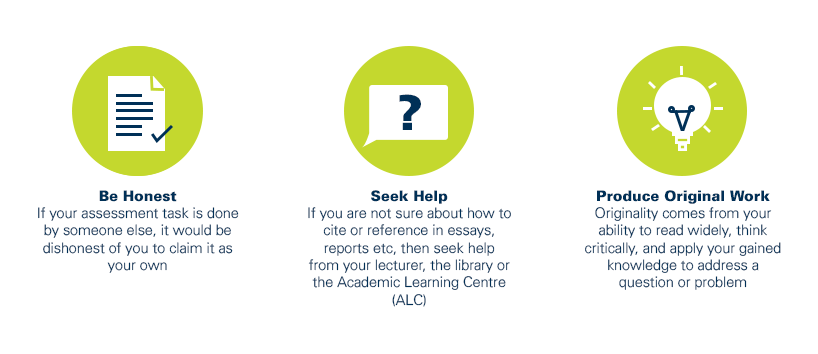
As a CQUniversity student you are expected to act honestly in all aspects of your academic work.
Any assessable work undertaken or submitted for review or assessment must be your own work. Assessable work is any type of work you do to meet the assessment requirements in the unit, including draft work submitted for review and feedback and final work to be assessed.
When you use the ideas, words or data of others in your assessment, you must thoroughly and clearly acknowledge the source of this information by using the correct referencing style for your unit. Using others’ work without proper acknowledgement may be considered a form of intellectual dishonesty.
Participating honestly, respectfully, responsibly, and fairly in your university study ensures the CQUniversity qualification you earn will be valued as a true indication of your individual academic achievement and will continue to receive the respect and recognition it deserves.
As a student, you are responsible for reading and following CQUniversity’s policies, including the Student Academic Integrity Policy and Procedure. This policy sets out CQUniversity’s expectations of you to act with integrity, examples of academic integrity breaches to avoid, the processes used to address alleged breaches of academic integrity, and potential penalties.
What is a breach of academic integrity?
A breach of academic integrity includes but is not limited to plagiarism, self-plagiarism, collusion, cheating, contract cheating, and academic misconduct. The Student Academic Integrity Policy and Procedure defines what these terms mean and gives examples.
Why is academic integrity important?
A breach of academic integrity may result in one or more penalties, including suspension or even expulsion from the University. It can also have negative implications for student visas and future enrolment at CQUniversity or elsewhere. Students who engage in contract cheating also risk being blackmailed by contract cheating services.
Where can I get assistance?
For academic advice and guidance, the Academic Learning Centre (ALC) can support you in becoming confident in completing assessments with integrity and of high standard.
What can you do to act with integrity?