Overview
This unit is specifically designed for you to apply the processes of research investigation by analysing, reflecting on, and critiquing an area of your professional practice. You will engage in a problem-based learning approach within an authentic workplace learning environment, ensuring that your investigation is relevant to industry needs. You’ll apply an appropriate research methodology that suits your research problem. By the end of this unit, you will have developed a project proposal to implement in the follow-on unit, Engineering Research Project Implementation.
Details
Pre-requisites or Co-requisites
Students must have completed a minimum of 36 credit points before they can enrol in this unit.
Important note: Students enrolled in a subsequent unit who failed their pre-requisite unit, should drop the subsequent unit before the census date or within 10 working days of Fail grade notification. Students who do not drop the unit in this timeframe cannot later drop the unit without academic and financial liability. See details in the Assessment Policy and Procedure (Higher Education Coursework).
Offerings For Term 1 - 2026
Attendance Requirements
All on-campus students are expected to attend scheduled classes - in some units, these classes are identified as a mandatory (pass/fail) component and attendance is compulsory. International students, on a student visa, must maintain a full time study load and meet both attendance and academic progress requirements in each study period (satisfactory attendance for International students is defined as maintaining at least an 80% attendance record).
Recommended Student Time Commitment
Each 12-credit Postgraduate unit at CQUniversity requires an overall time commitment of an average of 25 hours of study per week, making a total of 300 hours for the unit.
Class Timetable
Assessment Overview
Assessment Grading
This is a graded unit: your overall grade will be calculated from the marks or grades for each assessment task, based on the relative weightings shown in the table above. You must obtain an overall mark for the unit of at least 50%, or an overall grade of 'pass' in order to pass the unit. If any 'pass/fail' tasks are shown in the table above they must also be completed successfully ('pass' grade). You must also meet any minimum mark requirements specified for a particular assessment task, as detailed in the 'assessment task' section (note that in some instances, the minimum mark for a task may be greater than 50%). Consult the University's Grades and Results Policy for more details of interim results and final grades.
All University policies are available on the CQUniversity Policy site.
You may wish to view these policies:
- Grades and Results Policy
- Assessment Policy and Procedure (Higher Education Coursework)
- Review of Grade Procedure
- Student Academic Integrity Policy and Procedure
- Academic Progression Policy and Procedure
- Student Refund and Credit Balance Policy and Procedure
- Complaints Policy and Procedure
- Information and Communications Technology Acceptable Use Policy and Procedure
This list is not an exhaustive list of all University policies. The full list of University policies are available on the CQUniversity Policy site.
Feedback, Recommendations and Responses
Every unit is reviewed for enhancement each year. At the most recent review, the following staff and student feedback items were identified and recommendations were made.
Feedback from SUTE
Assessment feedback could be more detailed by clearly specifying actions to improve and correct errors.
Students should receive feedback on specific actions to correct errors or improve performance for any assessment criteria not fully met.
Feedback from UC's observation
In-person presentations enabled students to showcase their projects, enhancing both their learning experience and skills.
This practice should be continued.
Feedback from UC's observation
Students face challenges balancing time between internships and research projects.
Students should be encouraged to discuss thesis requirements with internship providers to seek flexibility.
- Identify a suitable problem related to the study discipline
- Develop research questions including identifying keywords
- Conduct an in-depth review of related literature using appropriate tools
- Develop appropriate methodologies to deliver the research aims and objectives
- Communicate professionally with all stakeholders
- Professionally present the project plan in a seminar and defend the methodology adopted.
Alignment of Assessment Tasks to Learning Outcomes
| Assessment Tasks | Learning Outcomes | |||||
|---|---|---|---|---|---|---|
| 1 | 2 | 3 | 4 | 5 | 6 | |
| 1 - Written Assessment - 35% | ||||||
| 2 - Presentation - 15% | ||||||
| 3 - Written Assessment - 50% | ||||||
Alignment of Graduate Attributes to Learning Outcomes
| Graduate Attributes | Learning Outcomes | |||||
|---|---|---|---|---|---|---|
| 1 | 2 | 3 | 4 | 5 | 6 | |
| 1 - Knowledge | ||||||
| 2 - Communication | ||||||
| 3 - Cognitive, technical and creative skills | ||||||
| 4 - Research | ||||||
| 5 - Self-management | ||||||
| 6 - Ethical and Professional Responsibility | ||||||
| 7 - Leadership | ||||||
| 8 - First Nations Knowledges | ||||||
| 9 - Aboriginal and Torres Strait Islander Cultures | ||||||
Textbooks
There are no required textbooks.
IT Resources
- CQUniversity Student Email
- Internet
- Unit Website (Moodle)
- Microsoft Office
- Microsoft Project
- Microsoft Visio
- Zoom
All submissions for this unit must use the referencing style: Harvard (author-date)
For further information, see the Assessment Tasks.
n.khandoker@cqu.edu.au
Week 1
Begin Date: 09 Mar 2026Module/Topic
Unit Introduction & Teaching Arrangements
Chapter
Events and Submissions/Topic
Activity:
- Set up a weekly 30-minute meeting with your academic advisor.
- Establish a communication strategy for efficient and regular interaction with your advisor.
Week 2
Begin Date: 16 Mar 2026Module/Topic
Project Problem Statement
Chapter
Events and Submissions/Topic
Activity:
- Define and articulate the project problem.
- Identify the rationales for addressing the problem.
- Contextualize the problem’s significance and impact.
- Develop a clear and concise project problem statement (PPS).
Week 3
Begin Date: 23 Mar 2026Module/Topic
Scientific Literature Review
Chapter
Events and Submissions/Topic
Activity:
- Conduct a literature review on related problems and solutions.
- Position the project within existing research.
- Define a single project aim and a few supporting objectives.
- Formulate one research question per project objective.
Week 4
Begin Date: 30 Mar 2026Module/Topic
Generative AI & Literature Research
Chapter
Events and Submissions/Topic
Activity:
- Write the literature review by synthesizing key findings.
- Identify the most suitable approach to solve the project problem.
Week 5
Begin Date: 06 Apr 2026Module/Topic
Project Risk Assessment & Management
Chapter
Events and Submissions/Topic
Activity:
- Identify and assess project risks.
- Develop mitigation strategies and assign responsibilities.
- Complete the project risk assessment form.
- Obtain approval for the risk management plan from the laboratory technical staff.
Week 6
Begin Date: 13 Apr 2026Module/Topic
Academic Writing & Referencing
Chapter
Events and Submissions/Topic
Activity:
- Finalize the literature review with proper in-text citations.
- Compile references following CQUniversity guidelines.
Project Problem Statement and Literature Review Due: Week 6 Friday (17 Apr 2026) 12:00 am AEST
Vacation Week
Begin Date: 20 Apr 2026Module/Topic
None teaching week.
Chapter
Events and Submissions/Topic
Continue to work on your project.
Week 7
Begin Date: 27 Apr 2026Module/Topic
Project Methodology Development
Chapter
Events and Submissions/Topic
Activity:
- Identify the best approach to address the problem from the literature review analysis.
- Develop a detailed step-by-step methodology for the project.
- Document the methodology with supporting literature.
Week 8
Begin Date: 04 May 2026Module/Topic
Project Planning & Budgeting
Chapter
Events and Submissions/Topic
Activity:
- Break the project into logical steps.
- Identify key milestones and schedule activities.
- Present the schedule using a Work Breakdown Structure (WBS) and Gantt chart.
- Determine required resources and their acquisition costs.
- Create and justify the project budget.
- Secure budget approval before Week 13.
Week 9
Begin Date: 11 May 2026Module/Topic
Academic Presentation
Chapter
Events and Submissions/Topic
Activity:
- Prepare presentation slides that focus on the project's problem statement and methodology.
- Limit the presentation to 12 minutes.
- Confirm the availability of the advisor and reviewers.
- Rehearse with the academic advisor and incorporate feedback.
- Submit slides at least 24 hours before the scheduled presentation.
Week 10
Begin Date: 18 May 2026Module/Topic
Project Presentation to an Academic Panel
No workshop this week.
Chapter
Events and Submissions/Topic
Activity:
- Present to a panel including your advisor and reviewers.
- Gather feedback on the project problem statement and methodology.
- Address feedback in the planning thesis.
- Complete the planning thesis draft and submit it to the advisor for review.
Project Proposal Presentation Due: Week 10 Monday (18 May 2026) 11:00 pm AEST
Week 11
Begin Date: 25 May 2026Module/Topic
Planning Thesis Development
No workshop this week.
Chapter
Events and Submissions/Topic
Activity:
- Revise the thesis based on the presentation feedback.
- Submit the draft to the advisor for review.
Week 12
Begin Date: 01 Jun 2026Module/Topic
Finalizing & Submitting the Planning Thesis
No workshop this week.
Chapter
Events and Submissions/Topic
Activity:
- Finalize the thesis and ensure all feedback is incorporated.
- Submit the thesis before the deadline on Monday, Week 13.
Exam Week
Begin Date: 08 Jun 2026Module/Topic
Chapter
Events and Submissions/Topic
Continue working on your project
Project Proposal (Planning Thesis) Due: Exam Week Monday (8 June 2026) 11:45 pm AEST
Vacation/Exam Week
Begin Date: 15 Jun 2026Module/Topic
Chapter
Events and Submissions/Topic
1 Written Assessment
You will develop a clear project problem statement by defining the issues in a way that a layperson can understand. Justify the need for solving the problem by highlighting its significance and benefits.
Conduct a detailed literature review on the project problem. Using relevant sources, describe existing issues and critically analyse potential solutions to identify the most effective approach. Instead of merely summarising the literature, demonstrate your understanding by critically evaluating the information and arguing for the best solution. The primary focus should be on analysing and discussing literature findings in relation to the project problem.
Support your arguments with relevant literature to ensure academic rigour. Proper in-text citations and a complete reference list must be included, following CQU referencing guidelines.
From the problem statement, formulate a clear project aim, derive several project objectives and research questions aligned with the aim, and define the project's scope and expected outcomes. Additionally, identify key stakeholders involved in the project.
Finally, your attendance record, calculated up to to the end of Week 6, will contribute 5% to the total mark for this assessment.
AI assessment scale: AI PLANNING
You may use Al for planning, idea development, and research. Your final submission should show how you have developed and refined these ideas.
Week 6 Friday (17 Apr 2026) 12:00 am AEST
This assignment is marked by the academic advisor. Submission of a single PDF file using a link on the unit Moodle website.
Week 8 Friday (8 May 2026)
Check with your academic advisor for mark and feedback on this assignment, typically available about one to two weeks after the due date.
This assessment will be marked based on the following:
- Submission of an assessment cover sheet with relevant information.
- Inclusion of appropriate front matter.
- Adherence to academic report writing and formatting standards.
- Proper citation and referencing of literature following CQU guidelines.
- A clear and concise project problem statement that is understandable to a layperson.
- Placement of the project problem within the context of existing literature.
- Justification of the needs and benefits of solving the problem.
- Definition of a clear and single project aim.
- Articulation of a few project objectives aligned with the project aim.
- Formulation of the research questions corresponding to the project objectives.
- Critical analysis of literature to identify the most effective approach to solve the project problem.
- Definition of the project scope.
- Specification of project outcomes and deliverables.
- Identification of project stakeholders.
- Submission of a record of weekly attendance, including meeting minutes.
Additional Criteria
- Inclusion of a focused literature review relevant to the project problem.
- Use of relevant and high-quality literature.
- Demonstration of understanding through interpretation rather than description of literature.
- In-depth discussion of the literature findings concerning the project problem.
The detailed assessment criteria will be available on the Unit Moodle website.
Lastly, please ensure that your submission is free from AI-generated content without proper acknowledgement. All submissions will be checked, and if AI-generated content is suspected, the result will be put on hold. The submission will then be reported to the academic integrity team for further investigation and recommendation.
- Identify a suitable problem related to the study discipline
- Develop research questions including identifying keywords
- Conduct an in-depth review of related literature using appropriate tools
- Communicate professionally with all stakeholders
2 Presentation
Project Proposal Presentation
Students must deliver a 12-minute oral presentation on their project proposal during Week 10. The presentation should focus on:
- The project problem statement (PPS)
- The proposed project methodology
- The proof of concept for the proposed research methodology.
A scheduled face-to-face or online session will be organised. If presenting online, presenters must keep their video turned on during the session.
Submission Requirements
- Presentation slides must be submitted to the Unit Moodle at least 24 hours before the presentation session. A mark penalty is applied for late submission.
- Each student will have 12 minutes to present, followed by 8 minutes of Q&A.
Important: The presentation will not be rescheduled. Extension requests will not be accepted for this assessment task.
AI assessment scale: AI PLANNING
You may use Al for planning, idea development, and research. Your final submission should show how you have developed and refined these ideas.
Week 10 Monday (18 May 2026) 11:00 pm AEST
The presentation schedule will be posted on the Unit Moodle website.
Week 12 Monday (1 June 2026)
This assessment will be marked by two academic reviewers. Students will receive verbal feedback during their presentation and written feedback within two weeks after the presentation date.
The presentation will be marked based on the following criteria:
- Clear and concise articulation of the project problem statement (PPS).
- Placement of the project problem within the general context and existing literature that is understandable to a layperson.
- Justification for solving the project problem.
- Description of possible methods for solving the project problems.
- Clear articulation of the best method to solve the project problem in layman’s terms.
- Explanation of the steps to answer research questions and achieve project objectives.
- Clear description of the project’s outcomes and deliverables.
- Presentation of the project’s current progress.
- Providing the concluding remarks.
- Quality of the presentation slides and visual aids.
- Delivery of the presentation (style and engagement).
- Adherence to the allocated presentation time.
- Effective handling of Q&A.
Detailed assessment criteria and the presentation schedule will be available on the unit Moodle website.
Lastly, please ensure that your presentation is free from AI-generated content without proper acknowledgement. All submissions will be checked, and if unethical AI-generated content is suspected, the result will be put on hold. The submission will then be reported to the academic integrity team for further investigation and recommendation.
- Develop appropriate methodologies to deliver the research aims and objectives
- Professionally present the project plan in a seminar and defend the methodology adopted.
3 Written Assessment
This final assessment requires students to consolidate information from the previous assessments into a coherent thesis. An essential part of this assessment item is a concrete research methodology and a project plan. Students are also expected to show progress in their work as proof of concept of the proposed research methodology. All feedback from the academic advisor and reviewers must be addressed, and a separate document outlining how the feedback was incorporated must be included.
Thesis Requirements:
The thesis will be assessed by two academic reviewers based on the following criteria:
- Thesis Cover Page
- Executive Summary (Abstract)
- Acknowledgements
- Declaration of Original Work (Including No Use of Generative AI)
- Table of Contents
- List of Figures & Tables
- List of Terms (Acronyms)
- Introduction, including the Project Problem Statement (PPS).
- Literature Review
- Methodology
- Project Plan (Scheduling & Budgeting)
- Risk Assessment & Management
- Project Progress to Date
- Discussion & Conclusions
- References
- Appendices, including:
- A document detailing how the academic advisor and reviewer feedback was addressed.
- A complete record of weekly meeting minutes.
- Other relevant supporting information.
Important Information:
- Submission Deadlines: All assessments must be submitted on time. Late submissions will incur a mark penalty.
- Extension Requests: Must be submitted to the Unit Coordinator at least 72 hours before the deadline (unless specified otherwise). Requests made after the due date may not be accepted.
- Valid Extension Reasons (Section 5.16): Includes disability, medical conditions, hardship (e.g., serious accident), or compassionate circumstances (e.g., death of a family member). Supporting evidence must be dated within 14 days of the deadline.
- Late Submission Penalty:
A 5% deduction per day from the total available marks will apply for each day the submission is overdue, as per the University Assessment Policy (Section 5.42).
AI assessment scale: AI PLANNING
You may use Al for planning, idea development, and research. Your final submission should show how you have developed and refined these ideas.
Exam Week Monday (8 June 2026) 11:45 pm AEST
Submit a single PDF thesis file via the designated link on the unit Moodle website before the deadline.
This assessment will be marked by two academic reviewers. The thesis result will be withheld until the certification of grades.
The project proposal (i.e., the planning thesis) will be assessed based on the quality of its content, as well as the comprehensiveness and rigour of the information, results, and discussions.
The detailed assessment criteria will be available on the Unit Moodle website.
Lastly, please ensure that your thesis is free from AI-generated content without proper acknowledgement. All submissions will be checked, and if unethical AI-generated content is suspected, the result will be put on hold. The submission will then be reported to the academic integrity team for further investigation and recommendation.
- Identify a suitable problem related to the study discipline
- Develop research questions including identifying keywords
- Conduct an in-depth review of related literature using appropriate tools
- Develop appropriate methodologies to deliver the research aims and objectives
- Communicate professionally with all stakeholders
- Professionally present the project plan in a seminar and defend the methodology adopted.
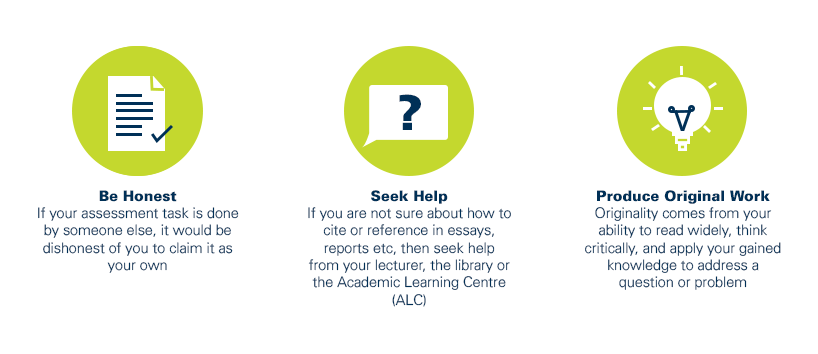
As a CQUniversity student you are expected to act honestly in all aspects of your academic work.
Any assessable work undertaken or submitted for review or assessment must be your own work. Assessable work is any type of work you do to meet the assessment requirements in the unit, including draft work submitted for review and feedback and final work to be assessed.
When you use the ideas, words or data of others in your assessment, you must thoroughly and clearly acknowledge the source of this information by using the correct referencing style for your unit. Using others’ work without proper acknowledgement may be considered a form of intellectual dishonesty.
Participating honestly, respectfully, responsibly, and fairly in your university study ensures the CQUniversity qualification you earn will be valued as a true indication of your individual academic achievement and will continue to receive the respect and recognition it deserves.
As a student, you are responsible for reading and following CQUniversity’s policies, including the Student Academic Integrity Policy and Procedure. This policy sets out CQUniversity’s expectations of you to act with integrity, examples of academic integrity breaches to avoid, the processes used to address alleged breaches of academic integrity, and potential penalties.
What is a breach of academic integrity?
A breach of academic integrity includes but is not limited to plagiarism, self-plagiarism, collusion, cheating, contract cheating, and academic misconduct. The Student Academic Integrity Policy and Procedure defines what these terms mean and gives examples.
Why is academic integrity important?
A breach of academic integrity may result in one or more penalties, including suspension or even expulsion from the University. It can also have negative implications for student visas and future enrolment at CQUniversity or elsewhere. Students who engage in contract cheating also risk being blackmailed by contract cheating services.
Where can I get assistance?
For academic advice and guidance, the Academic Learning Centre (ALC) can support you in becoming confident in completing assessments with integrity and of high standard.
What can you do to act with integrity?