Overview
Aerospace vehicles are powered using a range of energy sources. The design of current aircraft power plants needs to minimise the impact of air travel on the environment while improving passenger safety, comfort and costs. In this unit, you will learn the fundamentals of various types of combustion engines and the parameters that affect their performance. You will also be introduced to the various forms of renewable energy such as solar, wind and hydrogen, and energy storage systems such as batteries and fuel cells, focusing on their applicability in the aviation context. You will build on your knowledge of propulsion systems and learn about strategies to improve the efficiency of jet engines. This unit will also cover future fuels and energy sources, engine emission standards and improving the sustainability of air travel through harnessing waste energy and minimising engine emissions.
Details
Pre-requisites or Co-requisites
Prerequisite: Gas Turbine Engines
Important note: Students enrolled in a subsequent unit who failed their pre-requisite unit, should drop the subsequent unit before the census date or within 10 working days of Fail grade notification. Students who do not drop the unit in this timeframe cannot later drop the unit without academic and financial liability. See details in the Assessment Policy and Procedure (Higher Education Coursework).
Offerings For Term 2 - 2026
Attendance Requirements
All on-campus students are expected to attend scheduled classes - in some units, these classes are identified as a mandatory (pass/fail) component and attendance is compulsory. International students, on a student visa, must maintain a full time study load and meet both attendance and academic progress requirements in each study period (satisfactory attendance for International students is defined as maintaining at least an 80% attendance record).
Recommended Student Time Commitment
Each 6-credit Undergraduate unit at CQUniversity requires an overall time commitment of an average of 12.5 hours of study per week, making a total of 150 hours for the unit.
Class Timetable
Assessment Overview
Assessment Grading
This is a graded unit: your overall grade will be calculated from the marks or grades for each assessment task, based on the relative weightings shown in the table above. You must obtain an overall mark for the unit of at least 50%, or an overall grade of 'pass' in order to pass the unit. If any 'pass/fail' tasks are shown in the table above they must also be completed successfully ('pass' grade). You must also meet any minimum mark requirements specified for a particular assessment task, as detailed in the 'assessment task' section (note that in some instances, the minimum mark for a task may be greater than 50%). Consult the University's Grades and Results Policy for more details of interim results and final grades.
All University policies are available on the CQUniversity Policy site.
You may wish to view these policies:
- Grades and Results Policy
- Assessment Policy and Procedure (Higher Education Coursework)
- Review of Grade Procedure
- Student Academic Integrity Policy and Procedure
- Academic Progression Policy and Procedure
- Student Refund and Credit Balance Policy and Procedure
- Complaints Policy and Procedure
- Information and Communications Technology Acceptable Use Policy and Procedure
This list is not an exhaustive list of all University policies. The full list of University policies are available on the CQUniversity Policy site.
Feedback, Recommendations and Responses
Every unit is reviewed for enhancement each year. At the most recent review, the following staff and student feedback items were identified and recommendations were made.
Feedback from In-class student feedback
Students expressed a preference for more hands-on activities to complement the unit's theoretical content.
It is recommended to incorporate additional practical exercises or project-based activities to enhance experiential learning and better engage students with the unit content.
- Analyse the performance of various combustion engines and propulsion systems
- Evaluate the feasibility of using renewable energy sources such as solar, wind and hydrogen and various energy storage systems for air transportation applications
- Propose emission reduction strategies that suit a given air transport system in various jurisdictions
- Document professional documentation of the solutions and analysis process using relevant terminology, diagrams and standard symbols.
Alignment of Assessment Tasks to Learning Outcomes
| Assessment Tasks | Learning Outcomes | |||
|---|---|---|---|---|
| 1 | 2 | 3 | 4 | |
| 1 - Written Assessment - 20% | ||||
| 2 - Written Assessment - 20% | ||||
| 3 - Project (applied) - 30% | ||||
| 4 - Online Test - 30% | ||||
Alignment of Graduate Attributes to Learning Outcomes
| Graduate Attributes | Learning Outcomes | |||
|---|---|---|---|---|
| 1 | 2 | 3 | 4 | |
| 1 - Communication | ||||
| 2 - Problem Solving | ||||
| 3 - Critical Thinking | ||||
| 4 - Information Literacy | ||||
| 5 - Team Work | ||||
| 6 - Information Technology Competence | ||||
| 7 - Cross Cultural Competence | ||||
| 8 - Ethical practice | ||||
| 9 - Social Innovation | ||||
| 10 - First Nations Knowledges | ||||
| 11 - Aboriginal and Torres Strait Islander Cultures | ||||
Textbooks
Aircraft and Automobile Propulsion: A Textbook
- Edition: 1st edn (2013)
- Authors: Shekhar, H
- Alpha Science International
- Oxford Oxford , UK
- ISBN: 9781842659755
- Binding: eBook
Fundamentals and Applications of Renewable Energy
- 1st edition (2020)
- Authors: Kanoglu, M, Cengel, Y & Cimbala, JM
- McGraw Hill
- Sydney Sydney , NSW , Australia
- ISBN: 9781842659755
- Binding: eBook
IT Resources
- CQUniversity Student Email
- Internet
- Unit Website (Moodle)
All submissions for this unit must use the referencing style: Harvard (author-date)
For further information, see the Assessment Tasks.
a.k.azad@cqu.edu.au
Week 1
Begin Date: 13 Jul 2026Module/Topic
Different cycles for aircraft engines
Chapter
Chapter 1, Himanshu Shekhar
Events and Submissions/Topic
Tutorial: Problems based on different cycles for aircraft engines.
Week 2
Begin Date: 20 Jul 2026Module/Topic
Various propulsions for aircrafts
Chapter
Chapter 2, Himanshu Shekhar
Events and Submissions/Topic
Tutorial: Problems based on various propulsions for aircrafts.
Week 3
Begin Date: 27 Jul 2026Module/Topic
Internal combustion engines and their performances
Chapter
Chapters 3-4, Himanshu Shekhar
Events and Submissions/Topic
Tutorial: Problems based on Internal combustion engines and their performances.
Week 4
Begin Date: 03 Aug 2026Module/Topic
Carburation, fuel injection and lubrication
Chapter
Chapters 6 and 7, Himanshu Shekhar
Events and Submissions/Topic
Tutorial: Problems based on carburation, fuel injection and lubrication.
Week 5
Begin Date: 10 Aug 2026Module/Topic
Introduction to renewable energy
Chapter
Chapter 1, Kanoglu et al.
Events and Submissions/Topic
Tutorial: Problems based on renewable energy.
Written assessment 1 (Individual) Due: Week 5 Friday (14 Aug 2026) 11:59 pm AEST
Week 6
Begin Date: 17 Aug 2026Module/Topic
Fundamentals of solar energy
Chapter
Chapter 3, Kanoglu et al.
Events and Submissions/Topic
Tutorial: Problems based on fundamentals of solar energy.
Vacation Week (18 August - 24 August)
Begin Date: 24 Aug 2026Module/Topic
No class and tutorial
Chapter
Events and Submissions/Topic
Week 7
Begin Date: 31 Aug 2026Module/Topic
Solar energy applications
Chapter
Chapter 4, Kanoglu et al.
Events and Submissions/Topic
Tutorial: Problems based on Solar energy applications.
Week 8
Begin Date: 07 Sep 2026Module/Topic
Wind energy and its applications
Chapter
Chapter 5, Kanoglu et al.
Events and Submissions/Topic
Tutorial: Problems based on wind energy and its applications.
Week 9
Begin Date: 14 Sep 2026Module/Topic
Biomass energy and its applications
Chapter
Chapter 8, Kanoglu et al.
Events and Submissions/Topic
Tutorial: Problems based on biomass energy and its applications.
Written assessment 2 (Individual) Due: Week 9 Friday (18 Sept 2026) 11:59 pm AEST
Week 10
Begin Date: 21 Sep 2026Module/Topic
Hydrogen and fuel cells. Different energy storage systems.
Chapter
Chapter 10, Kanoglu et al.
Events and Submissions/Topic
Tutorial: Problems based on Hydrogen, fuel cells and Different energy storage systems.
Week 11
Begin Date: 28 Sep 2026Module/Topic
Review class
Chapter
Events and Submissions/Topic
No tutorial
Team Project (Applied) Due: Week 11 Friday (2 Oct 2026) 11:59 pm AEST
Week 12
Begin Date: 05 Oct 2026Module/Topic
Online test preparation week
Chapter
Events and Submissions/Topic
No tutorial
Online Test Due: Week 12 Tuesday (6 Oct 2026) 10:00 am AEST
Exam Week
Begin Date: 12 Oct 2026Module/Topic
Chapter
Events and Submissions/Topic
Vacation/Exam Week
Begin Date: 19 Oct 2026Module/Topic
Chapter
Events and Submissions/Topic
1 Written Assessment
Assessment 1 is an individual task, contributing 20% of the total unit grade. It assesses content covered in Weeks 1 to 4, including lectures and tutorials, and requires students to demonstrate theoretical understanding, critical thinking, analytical capability, and problem-solving skills.
The assessment questions and corresponding marking rubric will be made available on the unit Moodle site. This task plays a significant role in evaluating and strengthening students’ understanding of key subject concepts.
All responses must be submitted as a single PDF file via Moodle within the specified deadline. Email submissions will not be accepted under any circumstances. Students are expected to carefully interpret each question and engage with relevant lecture materials, tutorials, and Moodle resources. In addition, independent research using textbooks, peer-reviewed journal articles, and other credible academic sources is strongly encouraged.
Where applicable, students should utilise appropriate software tools for the preparation of diagrams, figures, and equations. While there is no prescribed word limit, responses should be comprehensive, well-structured, and fully address all assessment requirements.
Detailed submission instructions and further assessment guidelines will be provided on Moodle.
AI ASSESSMENT SCALE - NO AI
You must not use Al at any point during the assessment. You must demonstrate your core skills and knowledge.
Week 5 Friday (14 Aug 2026) 11:59 pm AEST
5% marks will be deducted for each day of delayed submission without prior approval
Week 7 Friday (4 Sept 2026)
Marks and comments will be uploaded to Moodle
Each question in the assessment will be evaluated independently against specific marking criteria, which will be made available in Moodle. Key assessment criteria include, but are not limited to, the following:
- Appropriate formatting and clear structuring of responses
- Neat, legible, and professionally presented work
- Demonstrated understanding of concepts, including correct procedures, working, and solutions
- Accuracy of results, appropriate use of terminology (scientific language), and adherence to disciplinary conventions
- Correct application of referencing and citation standards where applicable
- Timely submission in accordance with the assessment due date
- Ethical academic practice, including appropriate acknowledgement of the work and contributions of others
Where diagrams and/or mathematical equations are required, students are expected to use suitable tools to ensure clarity, accuracy, and professional presentation quality.
Students are strongly encouraged to submit their work on or before the specified deadline to avoid penalties. In accordance with CQU policy, late submissions without prior approval will incur a deduction of 5% of the total available marks per calendar day.
PLEASE NOTE THAT THERE IS NO OPPORTUNITY TO RESUBMIT OR REDO THIS ASSESSMENT.
- Analyse the performance of various combustion engines and propulsion systems
2 Written Assessment
Assessment 2 is an individual assessment task, contributing 20% of the total unit grade, and covers content from Weeks 5 to 8. The assessment questions and marking rubric will be made available on Moodle. Additional assessment details will be released in Week 5.
Students are required to submit their completed work as a single PDF file via the Moodle submission link within the specified deadline. Email submissions will not be accepted under any circumstances.
Students are expected to carefully review each question and engage thoroughly with lecture materials, tutorials, and Moodle resources. They are also encouraged to extend their understanding through independent research using textbooks, peer-reviewed journal articles, and other credible academic sources.
Where applicable, appropriate digital tools should be used to ensure a clear and professional presentation of diagrams and equations. While no fixed word count is specified, students are expected to provide comprehensive, well-structured, and well-reasoned responses that demonstrate a sound understanding of the subject matter.
AI ASSESSMENT SCALE - NO AI
You must not use Al at any point during the assessment. You must demonstrate your core skills and knowledge.
Week 9 Friday (18 Sept 2026) 11:59 pm AEST
5% marks will be deducted for each day of delayed submission without prior approval
Week 11 Friday (2 Oct 2026)
Marks and comments will be uploaded to Moodle
Each question in the assessment will be evaluated independently against specific marking criteria, which will be made available in Moodle. Key assessment criteria include, but are not limited to, the following:
Appropriate formatting and clear structuring of responses
Neat, legible, and professionally presented work
Demonstrated understanding of concepts, including correct procedures, working, and solutions
Accuracy of results, appropriate use of terminology (scientific language), and adherence to disciplinary conventions
Correct application of referencing and citation standards where applicable
Timely submission in accordance with the assessment due date
Ethical academic practice, including appropriate acknowledgement of the work and contributions of others
Where diagrams and/or mathematical equations are required, students are expected to use suitable tools to ensure clarity, accuracy, and professional presentation quality.
Students are strongly encouraged to submit their work on or before the specified deadline to avoid penalties. In accordance with CQU policy, late submissions without prior approval will incur a deduction of 5% of the total available marks per calendar day.
PLEASE NOTE THAT THERE IS NO OPPORTUNITY TO RESUBMIT OR REDO THIS ASSESSMENT.
- Evaluate the feasibility of using renewable energy sources such as solar, wind and hydrogen and various energy storage systems for air transportation applications
- Propose emission reduction strategies that suit a given air transport system in various jurisdictions
- Document professional documentation of the solutions and analysis process using relevant terminology, diagrams and standard symbols.
3 Project (applied)
This assessment is a team-based applied project, contributing 30% to the overall unit grade, with a minimum pass requirement of 50%. Students are required to form teams of 3 to 4 members, although team size may be adjusted slightly depending on enrolment numbers.
Teams are expected to commence work at the beginning of the term and complete the project by Week 11. This collaborative assessment is designed to develop and demonstrate students’ teamwork, communication, and applied problem-solving capabilities in a professional context.
Comprehensive details regarding the project scope, submission requirements, and key deadlines will be made available on the unit Moodle site.
AI ASSESSMENT SCALE - AI PLANNING
You may use Al for planning, idea development, and research. Your final submission should show how you have developed and refined these ideas.
Week 11 Friday (2 Oct 2026) 11:59 pm AEST
5% marks will be deducted for each day of delayed submission without prior approval
The assessment marks will be provided along with the certification of Grades.
This assessment is a team-based applied project, contributing 30% towards the overall unit grade, with a minimum pass requirement of 50%. Students are required to form teams of 3 to 4 members, although slight variations in team size may occur depending on enrolment numbers.
Teams are expected to commence work at the beginning of the term and complete the project by Week 11. This assessment is designed to foster the development of professional competencies, including teamwork, communication, and applied problem-solving within an engineering context.
Comprehensive details regarding the project scope, submission requirements, and key milestones will be provided on the unit Moodle site.
Individual team member’s marks can be calculated with the following equation:
Individual team member’s marks = Total marks obtained by the team x (Individual contribution / Equal team contribution).
For example,
- A team (Team A) obtained a 27 out of 30 (30 is the maximum mark for assessment 3).
- Team A has three members. Contributions of Member 1, member 2 and Member 3 are 32%, 33% and 35% (total team contribution =100%, average contribution=33.33%), respectively.
- The marks for each team member as per the previous equation are:
- Marks for member 1 = 27 x 32/33.33 = 25.92
- Marks for member 2 = 27 x 33/33.33 = 26.73
- Marks for member 3 = 27 x 35/33.33 = 28.35
Students are advised to submit the assessment item on or before the deadline to avoid the delay penalty. As per the CQU Policy, 5% marks per day will be deducted for any delayed submission without prior approval.
PLEASE NOTE THAT THERE IS NO OPPORTUNITY TO RESUBMIT OR REDO THIS ASSESSMENT.
- Propose emission reduction strategies that suit a given air transport system in various jurisdictions
- Document professional documentation of the solutions and analysis process using relevant terminology, diagrams and standard symbols.
4 Online Test
The online test will be conducted simultaneously for all students, and you must complete it at a location with a stable internet connection, access to a scanner, and a functioning webcam for monitoring purposes. The test is a closed-book assessment, meaning textbooks, notes, and online resources are not permitted; however, calculators are allowed, and relevant equations will be provided at the end of the question paper. The test will assess all learning outcomes and cover content from Weeks 1 to 10, comprising a mix of short-answer, descriptive, and calculation-based questions. It will be held during the university’s official exam period, with the exact date and time announced in Weeks 9–10.
The test duration is two hours, followed by an additional 30 minutes allocated for scanning and uploading your answers via the Moodle submission link. All responses must be written on A4-sized paper and compiled into a single PDF file not exceeding 100 MB in size. The submission link will close exactly three hours from the test start time, and late submissions will not be accepted under any circumstances. Email submissions are strictly prohibited. Detailed test guidelines will be made available on Moodle prior to the assessment.
Please note that there is no opportunity to retake the online test before or after the scheduled date.
If you are unable to find a scanner, you can use your mobile phone to scan and upload the answer scripts.
Please find a list of Camera Scan apps below that are suitable for this.
- Adobe Scan (DC) https://adobescan.app.link/d/1n1NntFHTkb
- Microsoft Lens https://apps.apple.com/au/app/microsoft-lens-pdf-scanner/id975925059
- SwiftScan https://swiftscan.app/en/index.html
- CamScanner https://www.camscanner.com/
- ClearScan https://clearscanapp.com/
AI ASSESSMENT SCALE - NO AI
You must not use Al at any point during the assessment. You must demonstrate your core skills and knowledge.
Note: This assessment is exempt from the 72-hour submission grace period and must be completed by the stated submission date/time.
Week 12 Tuesday (6 Oct 2026) 10:00 am AEST
The assessment marks will be provided along with the certification of Grades.
Each question in the test will be assessed separately for criterion accuracy and correct results. A question will be deemed to have been completed if the student has shown a correct procedure and sound understanding of the work.
- Analyse the performance of various combustion engines and propulsion systems
- Evaluate the feasibility of using renewable energy sources such as solar, wind and hydrogen and various energy storage systems for air transportation applications
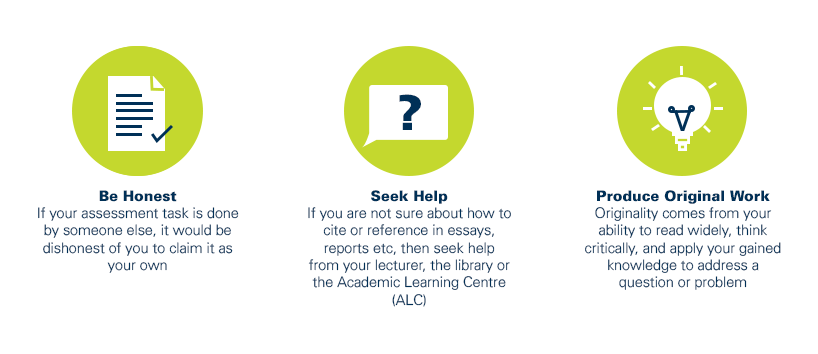
As a CQUniversity student you are expected to act honestly in all aspects of your academic work.
Any assessable work undertaken or submitted for review or assessment must be your own work. Assessable work is any type of work you do to meet the assessment requirements in the unit, including draft work submitted for review and feedback and final work to be assessed.
When you use the ideas, words or data of others in your assessment, you must thoroughly and clearly acknowledge the source of this information by using the correct referencing style for your unit. Using others’ work without proper acknowledgement may be considered a form of intellectual dishonesty.
Participating honestly, respectfully, responsibly, and fairly in your university study ensures the CQUniversity qualification you earn will be valued as a true indication of your individual academic achievement and will continue to receive the respect and recognition it deserves.
As a student, you are responsible for reading and following CQUniversity’s policies, including the Student Academic Integrity Policy and Procedure. This policy sets out CQUniversity’s expectations of you to act with integrity, examples of academic integrity breaches to avoid, the processes used to address alleged breaches of academic integrity, and potential penalties.
What is a breach of academic integrity?
A breach of academic integrity includes but is not limited to plagiarism, self-plagiarism, collusion, cheating, contract cheating, and academic misconduct. The Student Academic Integrity Policy and Procedure defines what these terms mean and gives examples.
Why is academic integrity important?
A breach of academic integrity may result in one or more penalties, including suspension or even expulsion from the University. It can also have negative implications for student visas and future enrolment at CQUniversity or elsewhere. Students who engage in contract cheating also risk being blackmailed by contract cheating services.
Where can I get assistance?
For academic advice and guidance, the Academic Learning Centre (ALC) can support you in becoming confident in completing assessments with integrity and of high standard.
What can you do to act with integrity?