Overview
This unit represents the capstone of your studies in environmental health. The content in this unit integrates the aspects of environmental health theory and practice covered within other environmental health units by focusing on current policy issues, strategies, tools and approaches.Using a range of real world environmental health scenarios, you will be challenged to apply your knowledge and skills to assess, manage and communicate the associated risks to public health. During residential school, you will develop your practical skills in risk assessment and management practices related to a range of contemporary and emerging environmental health issues in the field. Topics covered in this unit include environmental health policy making, health impact assessment, the use of decision support tools, strategic and operational management.
Details
Pre-requisites or Co-requisites
Prereq: ENVH11001 Health & the Environment; ENVH12001 Food Safety; ENVH12002 Environmental Health Law; ENVH12003 Environmental Toxicology
Important note: Students enrolled in a subsequent unit who failed their pre-requisite unit, should drop the subsequent unit before the census date or within 10 working days of Fail grade notification. Students who do not drop the unit in this timeframe cannot later drop the unit without academic and financial liability. See details in the Assessment Policy and Procedure (Higher Education Coursework).
Offerings For Term 2 - 2026
Attendance Requirements
All on-campus students are expected to attend scheduled classes - in some units, these classes are identified as a mandatory (pass/fail) component and attendance is compulsory. International students, on a student visa, must maintain a full time study load and meet both attendance and academic progress requirements in each study period (satisfactory attendance for International students is defined as maintaining at least an 80% attendance record).
Recommended Student Time Commitment
Each 6-credit Undergraduate unit at CQUniversity requires an overall time commitment of an average of 12.5 hours of study per week, making a total of 150 hours for the unit.
Class Timetable
Assessment Overview
Assessment Grading
This is a graded unit: your overall grade will be calculated from the marks or grades for each assessment task, based on the relative weightings shown in the table above. You must obtain an overall mark for the unit of at least 50%, or an overall grade of 'pass' in order to pass the unit. If any 'pass/fail' tasks are shown in the table above they must also be completed successfully ('pass' grade). You must also meet any minimum mark requirements specified for a particular assessment task, as detailed in the 'assessment task' section (note that in some instances, the minimum mark for a task may be greater than 50%). Consult the University's Grades and Results Policy for more details of interim results and final grades.
All University policies are available on the CQUniversity Policy site.
You may wish to view these policies:
- Grades and Results Policy
- Assessment Policy and Procedure (Higher Education Coursework)
- Review of Grade Procedure
- Student Academic Integrity Policy and Procedure
- Academic Progression Policy and Procedure
- Student Refund and Credit Balance Policy and Procedure
- Complaints Policy and Procedure
- Information and Communications Technology Acceptable Use Policy and Procedure
This list is not an exhaustive list of all University policies. The full list of University policies are available on the CQUniversity Policy site.
Feedback, Recommendations and Responses
Every unit is reviewed for enhancement each year. At the most recent review, the following staff and student feedback items were identified and recommendations were made.
Feedback from Unit Coordinator reflection
Some problem solving tasks are becoming dated.
Develop new case studies.
- Assess the risks to public health relating to a range of environmental health issues
- Formulate strategies, using a variety of tools and approaches, to effectively manage contemporary and emerging environmental health hazards and issues
- Assess your own strengths and weaknesses, and those of others, when working in a team context
- Evaluate a variety of approaches to environmental health policy making
This unit relates to the following criteria for accreditation by Environmental Health Australia:
C1: Knowledge of written and verbal communication techniques and strategies suitable for diverse audiences, purposes and contexts.C2: Knowledge of strategies to build collaboration, work in teams, mediate, educate, advocate, and influence outcomes and deal with difficult situations.
C3: Basic principles of reflective practice and self-development for effective communication.
E1: Understanding of the core principles, frameworks for and procedures involved in risk assessment for environmental health contexts.
E2: Critical evaluation of evidence underpinning environmental health risk assessment.
E3: Introduction to risk management principles and evaluation of risk management options.
L10: Knowledge of compliance options (legislative and non- legislative) including their strengths, limitations and legislative requirements.
L15: Introduction to key government strategies and intergovernmental agreements in the context of environmental health.
L16: Introduction to policy and program development and evaluation techniques.
M1: Introduction to decision support tools (e.g. risk analysis, cost-benefit analysis, etc.).
M3: Introduction to strategic and operational planning.
M4: Introduction to key government protocols in the context of environmental health
P3: Introduction to linkages between environment and health.
P4: Introduction to linkages between environment and health policies and programs.
P6: Introduction to environmentaland health impact assessment.
P8: Introduction to how environmental health principles are applied in policy development and decision making
R5: Problem solving using systems thinking and critical judgement.
Alignment of Assessment Tasks to Learning Outcomes
| Assessment Tasks | Learning Outcomes | |||
|---|---|---|---|---|
| 1 | 2 | 3 | 4 | |
| 1 - Portfolio - 25% | ||||
| 2 - Group Discussion - 40% | ||||
| 3 - Written Assessment - 35% | ||||
Alignment of Graduate Attributes to Learning Outcomes
| Graduate Attributes | Learning Outcomes | |||
|---|---|---|---|---|
| 1 | 2 | 3 | 4 | |
| 1 - Communication | ||||
| 2 - Problem Solving | ||||
| 3 - Critical Thinking | ||||
| 4 - Information Literacy | ||||
| 5 - Team Work | ||||
| 6 - Information Technology Competence | ||||
| 7 - Cross Cultural Competence | ||||
| 8 - Ethical practice | ||||
| 9 - Social Innovation | ||||
| 10 - First Nations Knowledges | ||||
| 11 - Aboriginal and Torres Strait Islander Cultures | ||||
Alignment of Assessment Tasks to Graduate Attributes
| Assessment Tasks | Graduate Attributes | ||||||||||
|---|---|---|---|---|---|---|---|---|---|---|---|
| 1 | 2 | 3 | 4 | 5 | 6 | 7 | 8 | 9 | 10 | 11 | |
| 1 - Portfolio - 25% | |||||||||||
| 2 - Group Discussion - 40% | |||||||||||
| 3 - Written Assessment - 35% | |||||||||||
Textbooks
Environmental Health Policy
- Edition: 1st (2006)
- Authors: Ball, David
- Open University Press, McGraw Hill Education
- Maidenhead Maidenhead , Berkshire , United Kingdom
- ISBN: 9780335218431
The full text of this book is available online through the CQUniversity Library. There is no need for students to purchase this text.
- Binding: Paperback
IT Resources
- CQUniversity Student Email
- Internet
- Unit Website (Moodle)
- ZOOM Videoconferencing software is recommended for student collaboration. A ZOOM account is available with your student credentials.
All submissions for this unit must use the referencing styles below:
For further information, see the Assessment Tasks.
l.bricknell@cqu.edu.au
Week 1
Begin Date: 13 Jul 2026Module/Topic
Module 1: Risk and environmental health policy
Chapter
Overview
Chapter 1 Introduction to environmental health policy
Events and Submissions/Topic
Week 2
Begin Date: 20 Jul 2026Module/Topic
Module 1: Risk and environmental health policy
Chapter
Chapter 2 The emergence of risk assessment
Chapter 3 A model for human health risk assessment
Events and Submissions/Topic
Week 3
Begin Date: 27 Jul 2026Module/Topic
Module 1: Risk and environmental health policy
Chapter
Chapter 4 Hazard identification
Chapter 5 The dose-response relationship
Events and Submissions/Topic
Week 4
Begin Date: 03 Aug 2026Module/Topic
Module 1: Risk and environmental health policy
Chapter
Chapter 6 Exposure assessment
Chapter 7 Risk characterisation
Events and Submissions/Topic
Environmental health problem solving (Part A- Topic 1) Due Friday 5:00 PM AEST
Week 5
Begin Date: 10 Aug 2026Module/Topic
RESIDENTIAL SCHOOL
Chapter
Events and Submissions/Topic
Sessions will finish by 3pm on the Friday to allow students to catch later afternoon/evening flights.
Monday 10/08/2026- Friday 14/08/2026
9am-5pm
Rockhampton Campus Room 32/1.48
Week 6
Begin Date: 17 Aug 2026Module/Topic
Module 2: Approaches to environmental health policy (rational action)
Chapter
Chapter 8 Economic appraisal
Chapter 9 The management of ionising radiation
Chapter 10 Environment and safety
Events and Submissions/Topic
Vacation Week
Begin Date: 24 Aug 2026Module/Topic
Chapter
Events and Submissions/Topic
Week 7
Begin Date: 31 Aug 2026Module/Topic
Module 2: Approaches to environmental health policy (beyond rational action)
Chapter
Chapter 11 An introduction to alternate theories of risk
Chapter 12 Risk perception and the psychometric paradigm
Events and Submissions/Topic
Environmental health problem solving (Part A- Topic 2) Due Friday 5:00 PM AEST
Week 8
Begin Date: 07 Sep 2026Module/Topic
Module 2: Approaches to environmental health policy (alternate approaches)
Chapter
Chapter 13 Cultural theory
Chapter 14 Environmental, social and health impact assessment
Events and Submissions/Topic
Week 9
Begin Date: 14 Sep 2026Module/Topic
Module 2: Approaches to environmental health policy (alternate approaches)
Chapter
Chapter 15 Environmental risk ranking
Chapter 16 Alternatives assessment to precaution
Events and Submissions/Topic
Environmental health problem solving (Part A- Topic 3) Due Friday 5:00 PM AEST
Week 10
Begin Date: 21 Sep 2026Module/Topic
Module 3: Policy making: global and local initiatives
Chapter
Chapter 17 From risk communication to participatory decision making
Chapter 18 Philosophy, politics and prejudice
Events and Submissions/Topic
Environmental health problem solving (Part B) Due Friday 5:00 PM AEST
Week 11
Begin Date: 28 Sep 2026Module/Topic
Module 3: Policy making: global and local initiatives (cont'd)
Chapter
Chapter 19 Issues of local policy
Chapter 20 Issues of global policy
Events and Submissions/Topic
Week 12
Begin Date: 05 Oct 2026Module/Topic
Review
Chapter
Events and Submissions/Topic
Exam Week
Begin Date: 12 Oct 2026Module/Topic
Chapter
Events and Submissions/Topic
Vacation/Exam Week
Begin Date: 19 Oct 2026Module/Topic
Chapter
Events and Submissions/Topic
1 Portfolio
Details
While at residential school, you will be involved in a number of on-site inspections. Prepare a portfolio of your observations. For each inspection, you should include:
- the name and address of the premises
- the operator's name
- the name of the on-site contact person/s
- a description of the premises, including its general location, operations, employment details, etc.
- an assessment of existing or potential environmental health problem areas/issues, including a general assessment of risk, considering aspects such as risks to public health, environmental protection, reputation, legal obligations and financial issues.
- recommendations for mitigation or improvement.
The inclusion of photographs, sketches or maps is encouraged where appropriate.
These are reports of your observations, so it is not necessary to be formatted as if you are writing a formal report. It should be comprehensive and use appropriate terminology but you do not need to write this in a formal style. Professional notes are suitable.
Level of GenAI use allowed:
Level 1: You must not use Al at any point during the assessment. You must demonstrate your core skills and knowledge.
Week 6 Friday (21 Aug 2026) 11:45 pm AEST
Week 8 Friday (11 Sept 2026)
Your submission will be graded according to the following criteria:
Relevance (30%)
- Processes of assessment used are aligned to the site conditions
- Hazards identified/assessed are appropriate
- Observations are relevant and accurate
Validity (40%)
- Depth and extent of discussion, i.e., understanding of concepts and observations
- Accuracy of the risk assessment
- Judgment and reasoning, i.e., assertions made based on level of critical thought, analysis and synthesis
- Depth and extent of evidence used
Organisation (20%)
- Consideration of required components of the assigned task
- Structure and flow of information
- Professionalism of expression
- Coherence and clarity of expression (spelling, grammar, syntax)
Presentation (10%)
- Style and formatting in accordance with required academic standards
- Typographical matters
- Referencing protocols
- Length
- Assess the risks to public health relating to a range of environmental health issues
- Communication
- Problem Solving
- Critical Thinking
- Cross Cultural Competence
- Ethical practice
2 Group Discussion
Details
Part A: Environmental health problem solving (75%)
Three real-world environmental health problems will be presented to the class for discussion throughout the term. In groups, your task is to develop a strategy to manage the risk to public health using a variety of approaches. How you go about solving the problem is up to you as a group but you will have a limited time in which to achieve an outcome. You will need to research the issue using the body of scholarly literature and propose solutions based on the evidence. You should not wait until the end of the set period for discussion to participate in these discussions, but become involved throughout. Timeliness of your posting will be considered when your postings are graded. You are required to contribute positively, actively and in a timely manner to the team problem-solving processes. You should document your discussions and the decision-making process. You are encouraged to use the Microsoft Teams environment to complete this activity. More information will be provided on Moodle.
Part B: Team participation (25%)
- Complete a Self and Peer Assessment (SPA) task evaluating the quality of participation from each of your team members and an assessment of your own contribution. This activity will contribute 15% of the grade allocated to this assessment task.
- Complete a short reflection (no more than 500 words) on the way in which the team environment contributed to the problem-solving process and ways in which you could have participated to make work more effective. This activity will contribute 10% of the grade allocated to this assessment task.
Level of GenAI use allowed:
Level 2: You may use Al for planning, idea development, and research. Your final submission should show how you have developed and refined these ideas.
If you have used AI in ANY way for the preparation of this assessment task, you MUST acknowledge it, identifying which tool you have used and how you have used it.
Friday of Weeks 4, 7 and 9. SPA and Reflection are due in Week 10.
Friday of Weeks 6, 9 and 11.
Grades for this assessment will be awarded based on the quality of your contributions and the extent of your team participation in your postings. Contributing to the team by simply answering the questions will earn a Pass grade. Higher grades will be awarded for responses demonstrating advanced understanding of the environmental health issues, the risk management process and the unit learning outcomes.
Part A: Environmental health problem solving (75%)
- relevance of the discussion to the problem under consideration
- depth and quality of discussion
- factual accuracy of the discussion
- quality of the conclusions
- effectiveness and applicability of proposed management strategies
Part B: Team Participation (25%)
- Reliability
- Time management
- Group dynamics
- Depth of reflection
- Assess the risks to public health relating to a range of environmental health issues
- Formulate strategies, using a variety of tools and approaches, to effectively manage contemporary and emerging environmental health hazards and issues
- Assess your own strengths and weaknesses, and those of others, when working in a team context
- Communication
- Problem Solving
- Critical Thinking
- Information Literacy
- Team Work
- Information Technology Competence
3 Written Assessment
Your final assessment item is an analysis of government policy relating to an environmental health issue of importance. The issue that you choose is up to you, but you should be careful to choose one which has current policies in existence. Policies can be state, national or international (or a combination) in scope.
Report
Your report needs to use a generic report format and clearly discuss:
- Introduction- your chosen issue, a background to the problem and a rationale for government policy to address it.
- A summary of existing policy
- A discussion of the theoretical approach used for current policy (refer to your textbook for these theoretical approaches)
- A critical analysis of the strengths and weaknesses of the policy in regard to past successes/failures and future factors that may influence the environmental health issue you have chosen.
- Recommendations- what you recommend be done based on your analysis. You should consider alternative theoretical approaches to how policy on this topic could be developed or improved in the future.
Word count: 4000 words, excluding references (± 10%)
Level of GenAI use allowed:
Level 2: You may use Al for planning, idea development, and research. Your final submission should show how you have developed and refined these ideas.
If you have used AI in ANY way for the preparation of this assessment task, you MUST acknowledge it, identifying which tool you have used and how you have used it.
Week 12 Friday (9 Oct 2026) 5:00 pm AEST
Prior to certification of grades.
Your submission will be graded according to the following criteria. A more detailed marking rubric will be provided on Moodle.
Relevance (30%)
- Choice of topic
- Alignment with unit content
- Factual accuracy
- Alignment with theoretical approach/es
- Alignment of submission to the assigned task
- Connections between genAI prompts, discussion and evidence
- Relevance and quality of sources
Validity (40%)
- Depth and extent of analysis
- Originality of the submission
- Depth of discussion connecting theory to practice
- Depth and extent of critique of genAI output
- Judgement and reasoning, i.e., assertions made based on level of critical thought, analysis and synthesis
- Depth and extent of evidence used
Organisation (20%)
- Consideration of required components of the assigned task
- Structure and flow of information
- Coherence and clarity of expression (spelling, grammar, syntax)
Presentation (10%)
- Style and formatting in accordance with required academic standards
- Typographical matters
- Referencing protocols
- Length
- Evaluate a variety of approaches to environmental health policy making
- Communication
- Critical Thinking
- Information Literacy
- Cross Cultural Competence
- Ethical practice
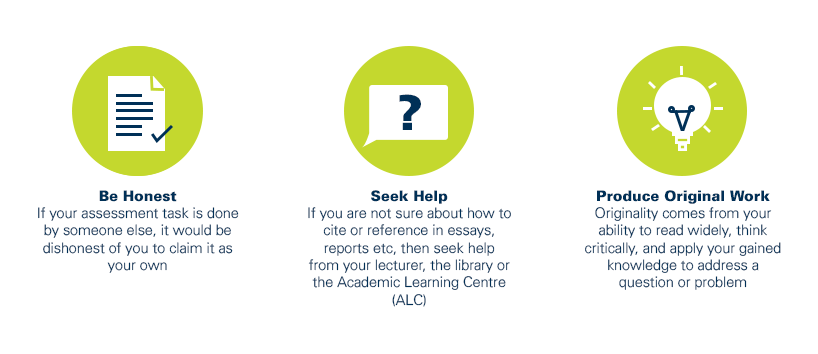
As a CQUniversity student you are expected to act honestly in all aspects of your academic work.
Any assessable work undertaken or submitted for review or assessment must be your own work. Assessable work is any type of work you do to meet the assessment requirements in the unit, including draft work submitted for review and feedback and final work to be assessed.
When you use the ideas, words or data of others in your assessment, you must thoroughly and clearly acknowledge the source of this information by using the correct referencing style for your unit. Using others’ work without proper acknowledgement may be considered a form of intellectual dishonesty.
Participating honestly, respectfully, responsibly, and fairly in your university study ensures the CQUniversity qualification you earn will be valued as a true indication of your individual academic achievement and will continue to receive the respect and recognition it deserves.
As a student, you are responsible for reading and following CQUniversity’s policies, including the Student Academic Integrity Policy and Procedure. This policy sets out CQUniversity’s expectations of you to act with integrity, examples of academic integrity breaches to avoid, the processes used to address alleged breaches of academic integrity, and potential penalties.
What is a breach of academic integrity?
A breach of academic integrity includes but is not limited to plagiarism, self-plagiarism, collusion, cheating, contract cheating, and academic misconduct. The Student Academic Integrity Policy and Procedure defines what these terms mean and gives examples.
Why is academic integrity important?
A breach of academic integrity may result in one or more penalties, including suspension or even expulsion from the University. It can also have negative implications for student visas and future enrolment at CQUniversity or elsewhere. Students who engage in contract cheating also risk being blackmailed by contract cheating services.
Where can I get assistance?
For academic advice and guidance, the Academic Learning Centre (ALC) can support you in becoming confident in completing assessments with integrity and of high standard.
What can you do to act with integrity?