Overview
Applied Ecology is the science of understanding and managing natural living resources. Over-harvesting of exploited species, habitat loss, and the spread of invasive species are among the world’s most pressing environmental issues. Solutions to these problems are complex, but firmly embedded in the fundamental tenets of ecological knowledge and theory. This unit will provide you with a broad perspective of the field of applied ecology by working across different ecological levels (ecosystem, community, population and species) and issues, in the process you will explore how ecological knowledge and theory is applied to the management of natural living resources.
Details
Pre-requisites or Co-requisites
Pre-requisites ZOOL11005 Foundation Animal Biology and BOTN11004 Foundation Plant Biology or BIOL11099 Living Systems and BIOL11100 Functional Biology or BIOL11102 and ENVR11014. Anti-requisite BIOL13031 - Ecology: Theory and Application
Important note: Students enrolled in a subsequent unit who failed their pre-requisite unit, should drop the subsequent unit before the census date or within 10 working days of Fail grade notification. Students who do not drop the unit in this timeframe cannot later drop the unit without academic and financial liability. See details in the Assessment Policy and Procedure (Higher Education Coursework).
Offerings For Term 2 - 2026
Attendance Requirements
All on-campus students are expected to attend scheduled classes - in some units, these classes are identified as a mandatory (pass/fail) component and attendance is compulsory. International students, on a student visa, must maintain a full time study load and meet both attendance and academic progress requirements in each study period (satisfactory attendance for International students is defined as maintaining at least an 80% attendance record).
Recommended Student Time Commitment
Each 6-credit Undergraduate unit at CQUniversity requires an overall time commitment of an average of 12.5 hours of study per week, making a total of 150 hours for the unit.
Class Timetable
Assessment Overview
Assessment Grading
This is a graded unit: your overall grade will be calculated from the marks or grades for each assessment task, based on the relative weightings shown in the table above. You must obtain an overall mark for the unit of at least 50%, or an overall grade of 'pass' in order to pass the unit. If any 'pass/fail' tasks are shown in the table above they must also be completed successfully ('pass' grade). You must also meet any minimum mark requirements specified for a particular assessment task, as detailed in the 'assessment task' section (note that in some instances, the minimum mark for a task may be greater than 50%). Consult the University's Grades and Results Policy for more details of interim results and final grades.
All University policies are available on the CQUniversity Policy site.
You may wish to view these policies:
- Grades and Results Policy
- Assessment Policy and Procedure (Higher Education Coursework)
- Review of Grade Procedure
- Student Academic Integrity Policy and Procedure
- Academic Progression Policy and Procedure
- Student Refund and Credit Balance Policy and Procedure
- Complaints Policy and Procedure
- Information and Communications Technology Acceptable Use Policy and Procedure
This list is not an exhaustive list of all University policies. The full list of University policies are available on the CQUniversity Policy site.
Feedback, Recommendations and Responses
Every unit is reviewed for enhancement each year. At the most recent review, the following staff and student feedback items were identified and recommendations were made.
Feedback from Self-reflection
Explore alternative forms of assessment.
Introduce alternative forms of assessment beyond traditional quizzes/written report formats.
Feedback from Self-reflection
Change and update residential school activities.
Update residential school activities to align with alternative forms of assessment that measure understanding through practical application and reflection.
- Describe how ecological principles are applied to the protection, management, and restoration of terrestrial and aquatic living resources and ecosystems
- Discuss the elements, concepts, and theories of population and community structure and dynamics
- Apply integrated knowledge of population, community and ecosystem ecology to real world situations using industry standard methods
- Develop and utilise the skills necessary to undertake ecological fieldwork successfully and to analyse ecological data/models.
Alignment of Assessment Tasks to Learning Outcomes
| Assessment Tasks | Learning Outcomes | |||
|---|---|---|---|---|
| 1 | 2 | 3 | 4 | |
| 1 - Online Quiz(zes) - 40% | ||||
| 2 - Practical Assessment - 30% | ||||
| 3 - Practical Assessment - 30% | ||||
Alignment of Graduate Attributes to Learning Outcomes
| Graduate Attributes | Learning Outcomes | |||
|---|---|---|---|---|
| 1 | 2 | 3 | 4 | |
| 1 - Communication | ||||
| 2 - Problem Solving | ||||
| 3 - Critical Thinking | ||||
| 4 - Information Literacy | ||||
| 5 - Team Work | ||||
| 6 - Information Technology Competence | ||||
| 7 - Cross Cultural Competence | ||||
| 8 - Ethical practice | ||||
| 9 - Social Innovation | ||||
| 10 - First Nations Knowledges | ||||
| 11 - Aboriginal and Torres Strait Islander Cultures | ||||
Alignment of Assessment Tasks to Graduate Attributes
| Assessment Tasks | Graduate Attributes | ||||||||||
|---|---|---|---|---|---|---|---|---|---|---|---|
| 1 | 2 | 3 | 4 | 5 | 6 | 7 | 8 | 9 | 10 | 11 | |
| 1 - Online Quiz(zes) - 40% | |||||||||||
| 2 - Practical Assessment - 30% | |||||||||||
| 3 - Practical Assessment - 30% | |||||||||||
Textbooks
Applied Ecology Monitoring, managing, and conserving
- (2017)
- Authors: Anne Goodenough and Adam Hart
- ISBN: 9780198723288
E-book ISBN: 9780192535795
IT Resources
- CQUniversity Student Email
- Internet
- Unit Website (Moodle)
All submissions for this unit must use the referencing style: Harvard (author-date)
For further information, see the Assessment Tasks.
a.carton@cqu.edu.au
Week 1
Begin Date: 13 Jul 2026Module/Topic
Foundational Frameworks
Chapter
Events and Submissions/Topic
Week 2
Begin Date: 20 Jul 2026Module/Topic
Principles of Ecological Monitoring
Chapter
Events and Submissions/Topic
Week 3
Begin Date: 27 Jul 2026Module/Topic
Ecological Indicators
Chapter
Events and Submissions/Topic
Week 4
Begin Date: 03 Aug 2026Module/Topic
Monitoring at Scale
Chapter
Events and Submissions/Topic
Theory Quiz 1 will open 6:00am (AEST) Friday of Week 4
Week 5
Begin Date: 10 Aug 2026Module/Topic
Exploitation of Marine Food Webs I
Chapter
Events and Submissions/Topic
Theory Quiz 1 will closed 11:55pm (AEST) Monday of Week 5
Week 6
Begin Date: 17 Aug 2026Module/Topic
Residential School
Chapter
Events and Submissions/Topic
Tuesday to Thursday 18/08/2026 to 20/08/2026 (8:30 AM - 5:00 PM)
Vacation Week
Begin Date: 24 Aug 2026Module/Topic
Chapter
Events and Submissions/Topic
Week 7
Begin Date: 31 Aug 2026Module/Topic
Residential School Outcomes: Summary, Data, and Statistical Analysis
Chapter
Events and Submissions/Topic
Week 8
Begin Date: 07 Sep 2026Module/Topic
Exploitation of Marine Food Webs II
Chapter
Events and Submissions/Topic
Week 9
Begin Date: 14 Sep 2026Module/Topic
Catchment Dynamics
Chapter
Events and Submissions/Topic
Theory Quiz 2 will open 6:00am (AEST) Friday of Week 9
Week 10
Begin Date: 21 Sep 2026Module/Topic
Applied Forestry
Chapter
Events and Submissions/Topic
Theory Quiz 2 will closed 11:55pm (AEST) Monday of Week 10
Week 11
Begin Date: 28 Sep 2026Module/Topic
Wildlife and Conservation
Chapter
Events and Submissions/Topic
Week 12
Begin Date: 05 Oct 2026Module/Topic
Capstone Session
Chapter
Events and Submissions/Topic
Theory Quiz 3 will open 6:00am (AEST) Friday of Week 11
Theory Quiz 3 will close 11:55pm (AEST) Monday of Week 12
Survey Report: Assessing the Impact of Urban Landscapes on Microbat Abundance and Activity Due: Week 12 Wednesday (7 Oct 2026) 11:55 pm AEST
1 Online Quiz(zes)
This assessment task consists of online quizzes designed to evaluate your progressive understanding of core theoretical frameworks, field methodologies, and resource management strategies in applied ecology. The task focuses on your ability to recall and apply fundamental ecological principles, interpret environmental data, and apply conceptual models to practical scenarios.
The assessment is structured into three distinct thematic blocks designed to assess your learning across the term:
Theme 1: Foundational Monitoring and Ecological Indicators (Weeks 2, 3, and 4). This section evaluates your understanding of the principles of environmental monitoring design, the logistics of monitoring at scale (including manual field and advanced technological methods), and the selection and application of robust ecological indicators.
Theme 2: Marine Food Webs and Catchment Dynamics (Weeks 5, 8, and 9). This section examines the structural and trophic dynamics of marine systems, the ecological impacts of exploiting marine food webs with reference to wild capture fisheries, and the biophysical interactions within catchments, focusing heavily on how upstream land management influences downstream aquatic environments.
Theme 3: Applied Forestry and Wildlife and Conservation (Weeks 10 and 11). The final section tests your knowledge of applied forestry and silvicultural, and wildlife conservation frameworks.
The 72-hour grace period does not apply to this assessment.
Level of GenAI use allowed:
Level 1: You must not use Al at any point during the assessment. You must demonstrate your core skills and knowledge.
Quiz 1 due 11:55pm Monday Week 5, Quiz 2 due 11:55pm Monday Week 10, Quiz 3 due 11:55pm Monday Week 12
Immediately following online submission.
Students will be evaluated on their cumulative understanding of unit content through a series of periodic online assessments. Marks will be allocated based on the following specific criteria:
- Accuracy and Technical Correctness
- Completeness and Scientific Rigor
- Application of Correct Discipline Specific Knowledge
Students are permitted one (1) attempt per quiz. Once a quiz is started, it must be completed within the allocated time window. Each quiz evaluates learning from the previous weeks of study material. Missing a quiz window without an approved extension will result in a mark of zero for that quiz.
Academic Integrity and Misconduct: This assessment measures individual student capability and understanding. Under no circumstances are students permitted to share quiz questions, screenshots, draft responses, or final answers with peers, online forums, or generative AI platforms. Collusion, unauthorised collaboration, or distributing assessment questions constitutes a direct breach of university academic integrity policies, and may result in formal academic misconduct penalties.
- Describe how ecological principles are applied to the protection, management, and restoration of terrestrial and aquatic living resources and ecosystems
- Discuss the elements, concepts, and theories of population and community structure and dynamics
- Communication
- Critical Thinking
- Information Literacy
2 Practical Assessment
This task requires you to translate raw fisheries data into formal scientific communication. Using data collected during the residential school, you will investigate the age and growth demographics of three teleost fish species.
This task evaluates your technical proficiency across:
- Sample Analysis: Examine fish scales under a microscope to identify age markers.
- Growth Modeling: Perform back-calculations to determine year-to-year growth, and apply the Von Bertalanffy growth equation to calculate lifetime growth trajectories.
- Reporting: Synthesise your findings into a technical publication (formatted either as a peer-reviewed manuscript or a professional Government agency report).
Submission Requirements:
Your final report must include publication-quality data visualisations, sound statistical justifications, and a structured discussion that contextualises your data within current primary scientific literature. To guide you through the technical writing and analysis process, a dedicated data interpretation session will be held at the end of the residential school practical. This session will cover data organisation, statistical mechanics, and structural expectations for your final submission.
Level of GenAI use allowed:
Level 2: You may use Al for planning, idea development, and research. Your final submission should show how you have developed and refined these ideas.
Week 11 Friday (2 Oct 2026) 11:55 pm AEST
Upload your presentation to the drop box on the unit Moodle site.
Vacation/Exam Week Friday (23 Oct 2026)
Assessment, feedback and marking rubric returned via the unit Moodle site
Submissions will be rigorously evaluated against a comprehensive rubric available on the unit Moodle.
The assessment framework is structured around the following key areas:
- Scientific Rigor, Completeness, and Methodology: Clear and systemic reporting of all relevant field or laboratory observations, data-collection steps, and analytical tools utilised during the residential school. Correct execution of quantitative data processing, including the mathematical modeling of teleost fish growth trajectories and cohort dynamics.
- Critical Discussion and Industry Application: A sophisticated evaluation of the generated results, directly contextualizing findings within modern, peer-reviewed fisheries management literature and predictive growth modeling frameworks. Critical discussion detailing how teleost growth assessments apply directly to the management of exploited wild stocks or aquaculture systems, explicitly highlighting the structural limitations of the models deployed.
- Structural Mechanics and Professional Presentation: Professional curation of all technical data displays. Figures, data, tables, and spatial diagrams must be formatted to industry/academic publication standards. Flawless inline referencing of all figures, tables, and data models within the main body text. High-level clarity, logical sequence of arguments, advanced sentence structure, and precise scientific grammar and punctuation.
- Constraints and Reference Mechanics: Meticulous application of the author-date citation style (Harvard Referencing Framework) across both inline citations and the final bibliography, utilizing current and authoritative academic literature. Strict adherence to the professional threshold of a 2,000-word limit (excluding data tables and reference lists).
Further details of the assessment criteria and rubric will be available on the unit Moodle and discussed with students at the conclusion of the Residential School.
- Discuss the elements, concepts, and theories of population and community structure and dynamics
- Apply integrated knowledge of population, community and ecosystem ecology to real world situations using industry standard methods
- Develop and utilise the skills necessary to undertake ecological fieldwork successfully and to analyse ecological data/models.
- Problem Solving
- Critical Thinking
- Team Work
- Information Technology Competence
- Ethical practice
3 Practical Assessment
In this assessment task, you will step into the role of an environmental consultant or wildlife ecologist to conduct a microchiropteran (microbat) survey using industry standard bioacoustic monitoring technology. Utilising real-world ultrasonic data collected using Anabat detectors, you will use industry-standard analysis software to process, analyse, and identify echolocation calls.
This task evaluates your technical proficiency across biological species classification, biotic signal processing, and ecological data visualization. Your analysis and subsequent technical brief will require you to execute the following steps:
- Acoustic Filter Engineering: Design and implement customised data filters within Anabat Insight analysis software to isolate high-quality bat calls, systematically removing structural environmental background noise (e.g., wind, insect noise, vegetation feedback). Filter design will be via a combination of the use of known species-specific call metrics and the use of Generative Design (AI).
- Species Identification (ID): Analyse call parameters, such as call type, characteristic frequency, slope, and duration, against regional reference keys to compile an accurate inventory of the microbat species present. Identified calls will then be referenced against voucher calls held by the Australian Bat Acoustic Call Library (Terrestrial Ecosystem Research Network, https://ecoacoustics.tern.org.au/).
- Metrics Extraction: Quantify the total volume of recorded calls and map distinct temporal activity patterns (e.g., peak activity times).
- Final Deliverable Structure: You will synthesise your methodology and findings into a concise Bioacoustic Survey Technical Brief.
Your submission must include:
- Formal documentation of the parameters of each bioacoustic filter used and the logic in your design process.
- A comprehensive species inventory matrix outlining the species found.
- Data visualisations (graphs/charts) illustrating absolute call frequencies, temporal activity patterns, and call abundance.
- A brief ecological discussion referencing local biodiversity frameworks or guidelines (e.g., Queensland state survey standards).
To assist you with the task of writing up, general assistance with the interpretation and analysis of data will be provided at the conclusion of the activity during the Residential School.
Level of GenAI use allowed:
Level 2: You may use Al for planning, idea development, and research. Your final submission should show how you have developed and refined these ideas.
Week 12 Wednesday (7 Oct 2026) 11:55 pm AEST
Upload your presentation to the drop box on the unit Moodle site.
Vacation/Exam Week Friday (23 Oct 2026)
Assessment, feedback and marking rubric returned via the unit Moodle
Submissions will be evaluated against professional environmental consultancy and conventional scientific standards.
Marks are allocated across the following four integrated performance criteria:
1. Scientific Rigor, Completeness, and Methodology: Systematic and complete reporting of all relevant field observations, data-collection steps, and software filters engineered within Anabat Insight. Explicit inclusion of all relevant methods, baseline observations, and data sets relating to the assessment of species diversity. Analytical accuracy relating to precise species inventories and accurate species-specific data.
2. Critical Discussion and Ecological Contextualisation: A sophisticated evaluation of your findings contextualised directly within current, peer-reviewed literature regarding ecological sampling techniques that seek to measure and quantify species diversity. Critical discussion regarding how the assessment of species diversity and specific habitat classifications apply to ecological management and/or conservation initiatives. Objective Assessment of differences in species temporal and/or spatial differences in habit use. Clear, scientifically sound evaluation of the operational scope, biases, and structural limitations of the deployed sampling technologies and bioacoustic filters.
3. Structural Mechanics and Professional Presentation: Publication quality figures and tables of all technical data displays. Species diversity matrices, software filter logic logs, activity histograms, and data tables must be formatted cleanly to publication standards, featuring descriptive captions and clear axis labeling. Correct inline referencing and cross-referencing of all figures, tables, and diagrams within the main narrative body. High-level clarity, logical organization, advanced sentence sequencing, and precise scientific grammar, syntax, and punctuation. Correct application of the author-date citation style (Harvard Referencing Framework) across all inline citations and the final bibliography, utilising current, authoritative, and relevant academic literature.
Further details of the assessment criteria and rubric will be available on the unit Moodle and discussed with students at the conclusion of the Residential School.
- Discuss the elements, concepts, and theories of population and community structure and dynamics
- Apply integrated knowledge of population, community and ecosystem ecology to real world situations using industry standard methods
- Develop and utilise the skills necessary to undertake ecological fieldwork successfully and to analyse ecological data/models.
- Problem Solving
- Critical Thinking
- Team Work
- Information Technology Competence
- Ethical practice
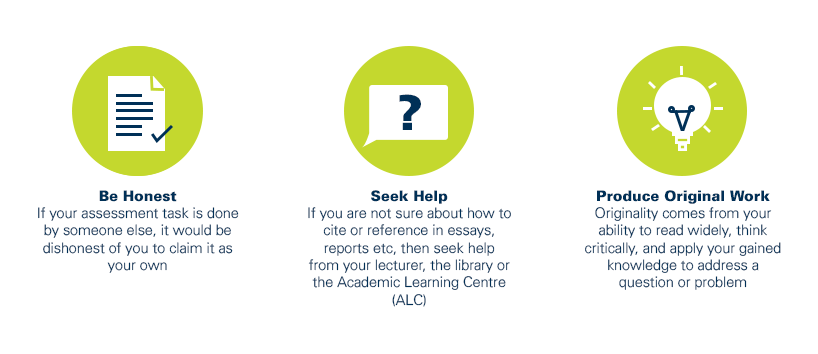
As a CQUniversity student you are expected to act honestly in all aspects of your academic work.
Any assessable work undertaken or submitted for review or assessment must be your own work. Assessable work is any type of work you do to meet the assessment requirements in the unit, including draft work submitted for review and feedback and final work to be assessed.
When you use the ideas, words or data of others in your assessment, you must thoroughly and clearly acknowledge the source of this information by using the correct referencing style for your unit. Using others’ work without proper acknowledgement may be considered a form of intellectual dishonesty.
Participating honestly, respectfully, responsibly, and fairly in your university study ensures the CQUniversity qualification you earn will be valued as a true indication of your individual academic achievement and will continue to receive the respect and recognition it deserves.
As a student, you are responsible for reading and following CQUniversity’s policies, including the Student Academic Integrity Policy and Procedure. This policy sets out CQUniversity’s expectations of you to act with integrity, examples of academic integrity breaches to avoid, the processes used to address alleged breaches of academic integrity, and potential penalties.
What is a breach of academic integrity?
A breach of academic integrity includes but is not limited to plagiarism, self-plagiarism, collusion, cheating, contract cheating, and academic misconduct. The Student Academic Integrity Policy and Procedure defines what these terms mean and gives examples.
Why is academic integrity important?
A breach of academic integrity may result in one or more penalties, including suspension or even expulsion from the University. It can also have negative implications for student visas and future enrolment at CQUniversity or elsewhere. Students who engage in contract cheating also risk being blackmailed by contract cheating services.
Where can I get assistance?
For academic advice and guidance, the Academic Learning Centre (ALC) can support you in becoming confident in completing assessments with integrity and of high standard.
What can you do to act with integrity?