Overview
In this unit, you will discuss the aetiology of lifestyle-related diseases with a focus on physical activity and exercise as a prevention and treatment strategy. You will gain a basic understanding of the physiological effects of physical activity and exercise, and be able to identify interventions to improve physical activity and reduce sedentary behaviour at the individual, community, and population level. You will gain fundamental knowledge and skills associated with measurement of physical activity, health and exercise, and apply this knowledge for the purpose of health-related research/study and exercise prescription.
Details
Pre-requisites or Co-requisites
There are no requisites for this unit.
Important note: Students enrolled in a subsequent unit who failed their pre-requisite unit, should drop the subsequent unit before the census date or within 10 working days of Fail grade notification. Students who do not drop the unit in this timeframe cannot later drop the unit without academic and financial liability. See details in the Assessment Policy and Procedure (Higher Education Coursework).
Offerings For Term 1 - 2026
Attendance Requirements
All on-campus students are expected to attend scheduled classes - in some units, these classes are identified as a mandatory (pass/fail) component and attendance is compulsory. International students, on a student visa, must maintain a full time study load and meet both attendance and academic progress requirements in each study period (satisfactory attendance for International students is defined as maintaining at least an 80% attendance record).
Recommended Student Time Commitment
Each 6-credit Undergraduate unit at CQUniversity requires an overall time commitment of an average of 12.5 hours of study per week, making a total of 150 hours for the unit.
Class Timetable
Assessment Overview
Assessment Grading
This is a graded unit: your overall grade will be calculated from the marks or grades for each assessment task, based on the relative weightings shown in the table above. You must obtain an overall mark for the unit of at least 50%, or an overall grade of 'pass' in order to pass the unit. If any 'pass/fail' tasks are shown in the table above they must also be completed successfully ('pass' grade). You must also meet any minimum mark requirements specified for a particular assessment task, as detailed in the 'assessment task' section (note that in some instances, the minimum mark for a task may be greater than 50%). Consult the University's Grades and Results Policy for more details of interim results and final grades.
All University policies are available on the CQUniversity Policy site.
You may wish to view these policies:
- Grades and Results Policy
- Assessment Policy and Procedure (Higher Education Coursework)
- Review of Grade Procedure
- Student Academic Integrity Policy and Procedure
- Academic Progression Policy and Procedure
- Student Refund and Credit Balance Policy and Procedure
- Complaints Policy and Procedure
- Information and Communications Technology Acceptable Use Policy and Procedure
This list is not an exhaustive list of all University policies. The full list of University policies are available on the CQUniversity Policy site.
Feedback, Recommendations and Responses
Every unit is reviewed for enhancement each year. At the most recent review, the following staff and student feedback items were identified and recommendations were made.
Feedback from ESSA external accreditation review panel
Recommended to replace online quizzes to in-class test for accreditation purposes.
It is recommended that the three online quizzes be removed and replaced with an in-class test that will be completed during the mandatory residential school.
Feedback from SUTE Unit Comments
Students recommended releasing content within Tiles from the start of the Term rather than rolling it out each week.
It is recommended that the content of PPT slides within each tile be released from the start of the term, with lectures to continue being delivered weekly.
Feedback from Unit Coordinator and ESSA external accreditation review panel
Recommended to review assessment items and percentage weighting of assessments.
It is recommended that the Unit Coordinator review and complete a unit update proposal.
- Describe the role of physical activity and sedentary behaviours in the aetiology, prevention, and management of lifestyle-related diseases with an Australian focus
- Describe populations at risk of insufficient physical activity or sedentary behaviours, and how population, community, and individual level interventions can improve health outcomes
- Collect and interpret physical fitness and health measurements obtained during practical sessions or case studies
- Apply the elements of exercise prescription and delivery principles
- Demonstrate professional practice and ethical behaviour expected in exercise and sport science settings.
Alignment of Assessment Tasks to Learning Outcomes
| Assessment Tasks | Learning Outcomes | ||||
|---|---|---|---|---|---|
| 1 | 2 | 3 | 4 | 5 | |
| 1 - Online Quiz(zes) - 10% | |||||
| 2 - Written Assessment - 60% | |||||
| 3 - On-campus Activity - 30% | |||||
Alignment of Graduate Attributes to Learning Outcomes
| Graduate Attributes | Learning Outcomes | ||||
|---|---|---|---|---|---|
| 1 | 2 | 3 | 4 | 5 | |
| 1 - Communication | |||||
| 2 - Problem Solving | |||||
| 3 - Critical Thinking | |||||
| 4 - Information Literacy | |||||
| 5 - Team Work | |||||
| 6 - Information Technology Competence | |||||
| 7 - Cross Cultural Competence | |||||
| 8 - Ethical practice | |||||
| 9 - Social Innovation | |||||
| 10 - First Nations Knowledges | |||||
| 11 - Aboriginal and Torres Strait Islander Cultures | |||||
Textbooks
There are no required textbooks.
IT Resources
- CQUniversity Student Email
- Internet
- Unit Website (Moodle)
- Computer - ability to access study materials, including instructional videos and scan and upload assessment.
- Microsoft Office or equivalent (wordprocessing)
- Printer for printing assessment
All submissions for this unit must use the referencing style: American Psychological Association 7th Edition (APA 7th edition)
For further information, see the Assessment Tasks.
s.fien@cqu.edu.au
Week 1
Begin Date: 09 Mar 2026Module/Topic
Introduction to the Unit
What is Physical Activity, Fitness, and Health?
Chapter
Readings available on ESSC11001 Moodle page
Events and Submissions/Topic
Week 2
Begin Date: 16 Mar 2026Module/Topic
Physical Activity Guidelines
Diverse Populations and Cultural Sensitivity
Chapter
Readings available on ESSC11001 Moodle page
Events and Submissions/Topic
Week 3
Begin Date: 23 Mar 2026Module/Topic
Pre-screening and Risk Assessments
Functional Assessments Across the Lifespan
Chapter
Readings available on ESSC11001 Moodle page
Events and Submissions/Topic
Week 4
Begin Date: 30 Mar 2026Module/Topic
Exercise Prescription Principles
Chapter
Readings available on ESSC11001 Moodle page
Events and Submissions/Topic
Online Quiz
Opens Week 4 Tuesday (31 March 2026) 9:00 am AEST
Closes Week 5 Tuesday (7 April 2026) 11:59 pm AEST
Week 5
Begin Date: 06 Apr 2026Module/Topic
Cardiorespiratory Assessment, Prescription, and Delivery
Chapter
Readings available on ESSC11001 Moodle page
Events and Submissions/Topic
Week 6
Begin Date: 13 Apr 2026Module/Topic
Strength Assessment, Prescription, and Delivery
Chapter
Readings available on ESSC11001 Moodle page
Events and Submissions/Topic
Vacation Week
Begin Date: 20 Apr 2026Module/Topic
No lecture
Chapter
No readings
Events and Submissions/Topic
Week 7
Begin Date: 27 Apr 2026Module/Topic
Other Elements of Fitness
Chapter
Readings available on ESSC11001 Moodle page
Events and Submissions/Topic
Week 8
Begin Date: 04 May 2026Module/Topic
Implementation, Behavioural Strategies, and Monitoring and Evaluation of Programs
Chapter
Readings available on ESSC11001 Moodle page
Events and Submissions/Topic
Week 9
Begin Date: 11 May 2026Module/Topic
Evidence-Based Practice
Public Health and Community Programs
Chapter
Readings available on ESSC11001 Moodle page
Events and Submissions/Topic
Cairns on-campus activity assessment
Wednesday & Thursday (13 May – 14 May 2026) 8:00am - 5:00pm AEST
Week 10
Begin Date: 18 May 2026Module/Topic
Summary and Review
Chapter
Readings available on ESSC11001 Moodle page
Events and Submissions/Topic
Mackay on-campus activity assessment
Tuesday & Wednesday (19 May – 20 May 2026) 8:00am - 5:00pm AEST
Rockhampton on-campus activity assessment
Saturday & Sunday (23 May - 24 May 2026) 8:00am - 5:00pm AEST
Week 11
Begin Date: 25 May 2026Module/Topic
ALC Session - APA Referencing and Basic Writing Skills
Chapter
Events and Submissions/Topic
Week 12
Begin Date: 01 Jun 2026Module/Topic
No lecture content
Chapter
Events and Submissions/Topic
Exam Week
Begin Date: 08 Jun 2026Module/Topic
Chapter
Events and Submissions/Topic
Vacation/Exam Week
Begin Date: 15 Jun 2026Module/Topic
Chapter
Events and Submissions/Topic
This unit includes a compulsory on-campus practical activity (residential school). You must attend the residential school specific to your mode of enrolment as outlined below. If you prefer to attend an alternate session to that specified for your enrolment mode, please contact the Unit Coordinator to discuss attendance at an alternative residential school. Please see the CQUniversity Handbook and the unit Moodle site for up-to-date information. Please ensure you complete your class registration via MyCQU. Residential school allocations will be finalised at the end of Week 2.
Cairns (CNS) and mixed-mode (MIX) students living in the area surrounding Cairns
If you are enrolled as a Cairns student or enrolled as a mixed-mode student who lives in the area surrounding Cairns, you are required to attend the residential school scheduled on the Cairns campus (Exercise and Sport Sciences Laboratories located at the Cairns Basketball Association Headquarters) during Week 9 on Wednesday 13th May and Thursday 14th May 2026 (8:00 am to 5:00 pm AEST).
Mackay (MKY or MKC) and mixed-mode (MIX) students living in the area surrounding Mackay
If you are enrolled as a Mackay student or enrolled as a mixed-mode student who lives in the area surrounding Mackay, you are required to attend the residential school scheduled on the Mackay City Campus (90 Sydney Street, Bld 4, Exercise and Sport Sciences Laboratories) during Week 10 on Tuesday 19th May and Wednesday 20th May 2026 (8:00 am to 5:00 pm AEST).
Rockhampton (ROK) and mixed-mode (MIX) students in all other areas
If you are enrolled as a Rockhampton student or enrolled as a mixed-mode student who lives in all other areas outside of Cairns and Mackay, you are required to attend the residential school scheduled on the Rockhampton North Campus (Bld 81, Exercise and Sport Sciences Laboratories) during Week 10 on Saturday 23rd May and Sunday 24th May 2026 (8:00 am to 5:00 pm AEST).
Note for mixed-mode (MIX) students
The Cairns and Mackay residential schools are specifically for those enrolled as a CNS or MKY/MKC student or MIX student living in those regions. If the Cairns or Mackay residential schools reach the cap number, and you do not live in the surrounding area, you may be reallocated to the Rockhampton residential school. This is due to limited teaching and space resources in Cairns and Mackay.
1 Online Quiz(zes)
This assessment task comprises of one (1) online quiz made up of multiple choice, matching, and fill-in-the-blank questions. The online quiz is to be completed on your own. It is your responsibility to log on to Moodle and complete each the online quiz during the time they are available.
Online Quiz (10% of overall grade)
The Online Quiz will be held in Week 4 and assess content from Weeks 1 – 3 (inclusive). Online Quiz questions will be related to lectures and compulsory readings associated with Weeks 1 – 3 (inclusive). Online Quiz will contain 30 questions and you will have 45 minutes to complete this Online Quiz.
You can only attempt Online Quiz once and it must be completed in a single session. You cannot save your answers and return to this Online Quiz at a later time.
Online Quiz will be available during the following times:
Opening date: Week 4 Tuesday (31 March 2026) 9:00 am AEST.
Closing date: Week 5 Tuesday (7 April 2026) 11:59 pm AEST.
You must log into Moodle during this time period and complete Online Quiz 1 before the closing date and time.
The due date for the online quiz opens Week 4 Tuesday (31 March 2026) 9:00 am AEST and closes Week 5 Tuesday (7 April 2026) 11:59 pm AEST.
Marks will be made available immediately after you have completed the online quiz. The answers to each question will become available following the closure of the quiz.
Questions will be graded as correct/incorrect via the Moodle online quiz system, and tabulated to give you your mark for the online quiz.
The 72-hour grace period does not apply to this assessment. In the absence of an approved extension there will be no late submissions will be allowed for any of the online quizzes that make up this assessment task.
Level of GenAI use allowed:
Level 1 - No AI. You must not use AI at any point during this assessment. You must demonstrate your core skills and knowledge.
Generative AI Acknowledgement quiz
This assessment must be completed individually by each student. Prior to accessing the Online Quiz, you will be required to complete a GenAI Declaration. Only when you complete and submit the GenAI Declaration will you be able to access the Online Quiz. There are no marks attributed to the GenAI Declaration; however, it secures acknowledgement that no part of the assessment task was completed by another person, group, or artificial intelligence unless explicitly required.
- Describe the role of physical activity and sedentary behaviours in the aetiology, prevention, and management of lifestyle-related diseases with an Australian focus
- Describe populations at risk of insufficient physical activity or sedentary behaviours, and how population, community, and individual level interventions can improve health outcomes
2 On-campus Activity
This assessment involves two (2) parts:
1. In-class test (30% weighting)
2. Residential school participation and workbook (pass/fail)
In-class test
The in‑class test forms the first component of this assessment and contributes 30% of the overall unit grade. This test will be completed at the commencement of the residential school, prior to undertaking any on‑campus activities. The purpose of the in‑class test is to evaluate your understanding of key theoretical concepts, foundational knowledge, and preparatory material required for successful participation in the residential school activities.
The in‑class test is divided into two equally weighted sections:
- 15% derived from content delivered during Weeks 1–8, including lectures, weekly readings, and associated learning materials.
- 15% derived from the pre‑readings and the laboratory manual, which must be read prior to attending the residential school.
You are expected to arrive at the residential school prepared to demonstrate your knowledge of these materials. The test assesses your readiness for the practical components of the unit and ensures you have engaged with the theoretical and procedural content necessary for safe and effective participation in the On‑Campus Activity (residential school).
Residential school participation and workbook
Participation
Compulsory attendance and active participation in the On-Campus Activity of the unit delivered during a residential school. You are required to attend and actively participate in ONE of the residential schools (i.e., you must complete/perform each activity unless you have a medical certificate or have spoken to the Unit Coordinator excusing your participation).
To actively participate, you must:
1. Sign the attendance sheet. Please note there will be multiple attendance sheets to sign throughout the
residential school.
2. Actively participate in each of the tasks delivered throughout the residential school.
Further details regarding these residential schools can be found in the Term Specific Information section of the ESSC11001 Unit Profile, on the unit Moodle site, and via the CQUniversity Handbook.
Workbook
You are required to submit your On-Campus Activity Workbook which is linked to the knowledge, demonstrated skills, and data related to your attendance and participation in ONE of the residential schools you attend. You must complete your On-Campus Activity Workbook in Word format (.doc or .docx) using the template available on Moodle.
On-Campus Activity Workbook (PASS/FAIL):
- Must be submitted as one typed document using the Word template provided on the ESSC11001 Moodle page.
- Any section of the workbook that contains copies of handwritten notes will not be marked.
Workbooks to be submitted at the end the residential school you participate in (5pm AEST Day 2), refer to Term Specific information for the dates. In the absence of an approved extension, any submissions received after the due date will incur penalties in accordance with the CQUniversity Assessment Policy and Procedure (Higher Education Coursework).
Your On-Campus Activity Workbook grade will be returned via the ESSC11001 Moodle page two (2) weeks after submission.
Participation
Attendance at the On-Campus Activity (residential school), with sufficient participation, upholding professional conduct, and completion of skills.
If you miss any part of the residential school without an approved reason, there will NOT be an opportunity to simply ‘catch up’ at any time.
The Assessment Policy and Procedure (Higher Education Coursework) outlines acceptable reasons for adjusting assessment. If you do not attend one of the residential schools and provide a valid reason with supporting documentation, then an attempt to make alternate arrangements will be made in consultation with the Deputy Dean of Learning and Teaching or equivalent manager.
Workbook
Sufficient detail of your written answers in the On-Campus Activity Workbook will result in a passing grade for this assessment.
If your workbook does not contain sufficient information, you will be given one (1) attempt to resubmit the workbook.
Failure to attend and submit an On-Campus Activity Workbook with sufficient detail will result in a fail grade for this assessment item, and you will be unable to pass this unit.
The 72-hour grace period does not apply to this assessment. In the absence of an approved extension there will be
no late submissions will be allowed for any of the online quizzes that make up this assessment task.
Level of GenAI use allowed:
Level 1 - No AI. You must not use AI at any point during this assessment. You must demonstrate your core skills and knowledge.
- Collect and interpret physical fitness and health measurements obtained during practical sessions or case studies
- Apply the elements of exercise prescription and delivery principles
- Demonstrate professional practice and ethical behaviour expected in exercise and sport science settings.
3 Written Assessment
The Written Assessment will consist of questions relating to the content that is delivered throughout this unit:
- Professional practice and ethics
- Physical activity guidelines and diverse populations
- Pre-screening and fitness assessment
- Exercise prescription and goal setting
- Cardiorespiratory assessment, training, and monitoring
- Strength assessment, training, and monitoring
- Other components of fitness
- Behaviour change and program delivery
- Evidence-based practice
Written Assessment (60% of your final grade):
- Should be completed individually.
- Must be submitted as one typed document using the Word template provided on the ESSC11001 Moodle page.
- Any section of the workbook that contains copies of handwritten notes will not be marked.
- Answers should be correctly referenced where appropriate, and a reference list should be included at the end of the workbook.
Week 12 Tuesday (2 June 2026) 11:59 pm AEST
In the absence of an approved extension, any submissions received after the due date will incur penalties in accordance with the CQUniversity Assessment Policy and Procedure (Higher Education Coursework).
Your Written Assessment grade will be returned via the ESSC11001 Moodle page two (2) weeks after the due date (19 June 2025).
Grades for this assessment will be based on the correctness of written responses based on unit content and using data collected during the On-Campus Activity (residential school).
If your assessment is submitted after the 72-hr grace period or after an approved extension has expired, a late penalty of 5% per day or part thereof is applied. This is 5% of the total available marks not marks achieved.
Level of GenAI use allowed:
Level 1 - No AI. You must not use AI at any point during this assessment. You must demonstrate your core skills and knowledge.
- Describe the role of physical activity and sedentary behaviours in the aetiology, prevention, and management of lifestyle-related diseases with an Australian focus
- Describe populations at risk of insufficient physical activity or sedentary behaviours, and how population, community, and individual level interventions can improve health outcomes
- Collect and interpret physical fitness and health measurements obtained during practical sessions or case studies
- Apply the elements of exercise prescription and delivery principles
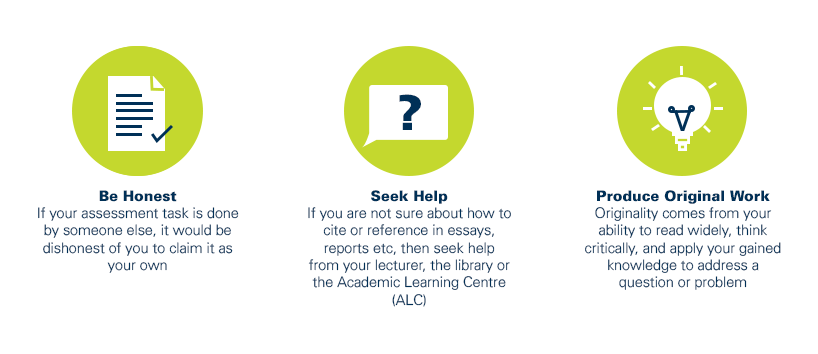
As a CQUniversity student you are expected to act honestly in all aspects of your academic work.
Any assessable work undertaken or submitted for review or assessment must be your own work. Assessable work is any type of work you do to meet the assessment requirements in the unit, including draft work submitted for review and feedback and final work to be assessed.
When you use the ideas, words or data of others in your assessment, you must thoroughly and clearly acknowledge the source of this information by using the correct referencing style for your unit. Using others’ work without proper acknowledgement may be considered a form of intellectual dishonesty.
Participating honestly, respectfully, responsibly, and fairly in your university study ensures the CQUniversity qualification you earn will be valued as a true indication of your individual academic achievement and will continue to receive the respect and recognition it deserves.
As a student, you are responsible for reading and following CQUniversity’s policies, including the Student Academic Integrity Policy and Procedure. This policy sets out CQUniversity’s expectations of you to act with integrity, examples of academic integrity breaches to avoid, the processes used to address alleged breaches of academic integrity, and potential penalties.
What is a breach of academic integrity?
A breach of academic integrity includes but is not limited to plagiarism, self-plagiarism, collusion, cheating, contract cheating, and academic misconduct. The Student Academic Integrity Policy and Procedure defines what these terms mean and gives examples.
Why is academic integrity important?
A breach of academic integrity may result in one or more penalties, including suspension or even expulsion from the University. It can also have negative implications for student visas and future enrolment at CQUniversity or elsewhere. Students who engage in contract cheating also risk being blackmailed by contract cheating services.
Where can I get assistance?
For academic advice and guidance, the Academic Learning Centre (ALC) can support you in becoming confident in completing assessments with integrity and of high standard.
What can you do to act with integrity?