Overview
In Measurement and Evaluation in Health Science you will learn when to apply and how to interpret the results of the most commonly utilised statistics used across a variety of fields of study. This unit will introduce you to statistical methods that will allow you to make appropriate decisions about research outcomes and evaluate research findings. This is a practical unit that will develop your skills in the use of statistical software to organise, analyse, and report statistical outcomes.
Details
Pre-requisites or Co-requisites
There are no requisites for this unit.
Important note: Students enrolled in a subsequent unit who failed their pre-requisite unit, should drop the subsequent unit before the census date or within 10 working days of Fail grade notification. Students who do not drop the unit in this timeframe cannot later drop the unit without academic and financial liability. See details in the Assessment Policy and Procedure (Higher Education Coursework).
Offerings For Term 2 - 2026
Attendance Requirements
All on-campus students are expected to attend scheduled classes - in some units, these classes are identified as a mandatory (pass/fail) component and attendance is compulsory. International students, on a student visa, must maintain a full time study load and meet both attendance and academic progress requirements in each study period (satisfactory attendance for International students is defined as maintaining at least an 80% attendance record).
Recommended Student Time Commitment
Each 6-credit Undergraduate unit at CQUniversity requires an overall time commitment of an average of 12.5 hours of study per week, making a total of 150 hours for the unit.
Class Timetable
Assessment Overview
Assessment Grading
This is a graded unit: your overall grade will be calculated from the marks or grades for each assessment task, based on the relative weightings shown in the table above. You must obtain an overall mark for the unit of at least 50%, or an overall grade of 'pass' in order to pass the unit. If any 'pass/fail' tasks are shown in the table above they must also be completed successfully ('pass' grade). You must also meet any minimum mark requirements specified for a particular assessment task, as detailed in the 'assessment task' section (note that in some instances, the minimum mark for a task may be greater than 50%). Consult the University's Grades and Results Policy for more details of interim results and final grades.
All University policies are available on the CQUniversity Policy site.
You may wish to view these policies:
- Grades and Results Policy
- Assessment Policy and Procedure (Higher Education Coursework)
- Review of Grade Procedure
- Student Academic Integrity Policy and Procedure
- Academic Progression Policy and Procedure
- Student Refund and Credit Balance Policy and Procedure
- Complaints Policy and Procedure
- Information and Communications Technology Acceptable Use Policy and Procedure
This list is not an exhaustive list of all University policies. The full list of University policies are available on the CQUniversity Policy site.
Feedback, Recommendations and Responses
Every unit is reviewed for enhancement each year. At the most recent review, the following staff and student feedback items were identified and recommendations were made.
Feedback from Student feedback
Assessment questions are clearly linked to lecture content, keeping this format aids student learning.
It is recommended that the unit coordinator should attempt to maintain a clear link between lecture content and assessment requirements.
Feedback from Self-reflection
Online quizzes had to be removed from the assessment tasks to meet an updated external accreditation requirement. An attempt should be made to ensure the new assessment format follows a logical progression of the statistical abilities presented during the unit.
It is recommended that the unit coordinator attempt to create novel assessments that match the knowledge presented to students during the unit.
Feedback from Student feedback
The unit coordinator was enthusiastic, relatable, and kept lectures interesting while speaking about statistics which helped students retain information presented in class.
It is recommended that the unit coordinator attempt to maintain an engaging learning environment.
- Identify fundamental statistical terminology and theory
- Demonstrate knowledge and ability in collating, organising, and displaying research data
- Apply statistical software to analyse, manage, and interpret statistical outcomes
Alignment of Assessment Tasks to Learning Outcomes
| Assessment Tasks | Learning Outcomes | ||
|---|---|---|---|
| 1 | 2 | 3 | |
| 1 - Written Assessment - 25% | |||
| 2 - Written Assessment - 35% | |||
| 3 - Written Assessment - 40% | |||
Alignment of Graduate Attributes to Learning Outcomes
| Graduate Attributes | Learning Outcomes | ||
|---|---|---|---|
| 1 | 2 | 3 | |
| 1 - Communication | |||
| 2 - Problem Solving | |||
| 3 - Critical Thinking | |||
| 4 - Information Literacy | |||
| 5 - Team Work | |||
| 6 - Information Technology Competence | |||
| 7 - Cross Cultural Competence | |||
| 8 - Ethical practice | |||
| 9 - Social Innovation | |||
| 10 - First Nations Knowledges | |||
| 11 - Aboriginal and Torres Strait Islander Cultures | |||
Textbooks
There are no required textbooks.
IT Resources
- CQUniversity Student Email
- Internet
- Unit Website (Moodle)
- Word
- Adobe Acrobat Reader (or similar) software for viewing PDF documents
- Excel
- Jamovi (free statistics analysis program)
- Paint
All submissions for this unit must use the referencing style: American Psychological Association 7th Edition (APA 7th edition)
For further information, see the Assessment Tasks.
v.dalbo@cqu.edu.au
j.guy@cqu.edu.au
Week 1
Begin Date: 13 Jul 2026Module/Topic
Lecture: Unit introduction and Fundamentals of Statistics
Lab: Entering and manipulating data using Excel
Chapter
Introduction to Statistics pages 231-234
Events and Submissions/Topic
Week 2
Begin Date: 20 Jul 2026Module/Topic
Lecture: Fundamentals of Statistics Continued
Lab: Introduction to Jamovi
Chapter
Introduction to Statistics pages 10-28, 34-39, 131-135
Events and Submissions/Topic
Week 3
Begin Date: 27 Jul 2026Module/Topic
Lecture: The Bell Curve and the Importance of Random Sampling
Lab: Checking Data for Normality
Chapter
Introduction to Statistics pages 44-51
Events and Submissions/Topic
Week 4
Begin Date: 03 Aug 2026Module/Topic
Lecture: Understanding Significance Testing
Lab: APA Formatting and When to Use Tables and Figures in Research
Chapter
Introduction to Statistics pages 222-224, 235-237, 238-241
Events and Submissions/Topic
Written Assessment 1 Due: Week 4 Friday (7 Aug 2026) 5:00 pm AEST
Week 5
Begin Date: 10 Aug 2026Module/Topic
Lecture: Pearson's Product Moment Correlation
Lab: Understanding Pearson's Correlations
Chapter
Introduction to Statistics pages 164-174
Events and Submissions/Topic
Week 6
Begin Date: 17 Aug 2026Module/Topic
Lecture: Bringing the Scientific Method and Statistics Together
Lab: No lab
Chapter
Introduction to Statistics pages 337-355, 369-376, 375-389
Events and Submissions/Topic
Vacation Week
Begin Date: 24 Aug 2026Module/Topic
Chapter
Events and Submissions/Topic
Week 7
Begin Date: 31 Aug 2026Module/Topic
Lecture: Dependent t-tests
Lab: Understanding Dependent t-tests
Chapter
Events and Submissions/Topic
Week 8
Begin Date: 07 Sep 2026Module/Topic
Lecture: Independent t-tests
Lab: Understanding Independent t-tests
Chapter
Introduction to Statistics pages 406-411
Events and Submissions/Topic
Week 9
Begin Date: 14 Sep 2026Module/Topic
Lecture: Within group ANOVAs
Lab: Understanding Within Group ANOVA
Chapter
Events and Submissions/Topic
Week 10
Begin Date: 21 Sep 2026Module/Topic
Lecture: Between group ANOVAs
Lab: Understanding Between Group ANOVA
Chapter
Events and Submissions/Topic
Week 11
Begin Date: 28 Sep 2026Module/Topic
Lecture: RM ANOVAs
Lab: Understanding RM ANOVA
Chapter
Events and Submissions/Topic
Week 12
Begin Date: 05 Oct 2026Module/Topic
Lecture: No Lecture
Lab: No lab
Chapter
Events and Submissions/Topic
Exam Week
Begin Date: 12 Oct 2026Module/Topic
Chapter
Events and Submissions/Topic
Vacation/Exam Week
Begin Date: 19 Oct 2026Module/Topic
Chapter
Events and Submissions/Topic
1 Written Assessment
Written Assessment 1 will cover unit content including lectures, labs, and readings from Weeks 1-3. Questions will assess your understanding of unit content (e.g., why is random sampling important) and your ability to work with data (e.g., correctly set up a data sheet, or given a set of data run the proper analysis and properly interpret the results). Submit your answers to the assessment questions on the Word document provided to you on Moodle. Do not change the provided template (e.g., move or remove the rubrics) and keep all text provided in black font. Type your answers using red font. Put your name and student number on the top of the first page of your assessment.
Plagiarism: The assessment submission will be checked for plagiarism. You are advised to familiarise yourself with CQUniversity's Academic Integrity Policy and Procedure. Any assessments suspected of plagiarism or any other type of academic misconduct will be addressed in accordance to the relevant policies noted in the unit profile.
Word count: If applicable a word count will be provided for the specific question. Words exceeding the word count will not be read.
References: References are not required as questions should be answered using unit content.
Extensions: Extensions will only be granted in accordance with CQUniversity policy. Extensions must be submitted submitted through Moodle.
Late submissions: Assessments submitted late will incur penalties in accordance with CQUniversity policy.
File submission: Upload your file (answers) in a Word format (.doc or .docx). The instructor must receive an acceptable file that is readable. If an unacceptable/corrupt file is submitted your assessment will be considered late until an acceptable file is submitted. Late penalties will be incurred in accordance with CQUniversity policy.
Level of GenAI use allowed: Level 1: No AI. This assessment item must be completed entirely without Al assistance, ensuring that students rely solely on their existing knowledge, understanding, and skills.
Week 4 Friday (7 Aug 2026) 5:00 pm AEST
Any assessment received after 5:00 PM AEST will be graded as late.
Week 6 Friday (21 Aug 2026)
Points will be awarded on your ability to correctly answer the assessment questions. Points will not be allocated to sections that are plagiarised in accordance with CQUniversity policy. A detailed grading rubric is available on Moodle.
- Identify fundamental statistical terminology and theory
2 Written Assessment
Written Assessment 2 will cover unit content including lectures, labs, and readings from Weeks 1-5. Questions will assess your understanding of unit content and your ability to work with data. Submit your answers to the assessment questions on the Word document provided to you on Moodle. Do not change the provided template (e.g., move or remove the rubrics) and keep all text provided in black font. Type your answers using red font. Put your name and student number on the top of the first page of your assessment.
Plagiarism: The assessment submission will be checked for plagiarism. You are advised to familiarise yourself with CQUniversity's Academic Integrity Policy and Procedure. Any assessments suspected of plagiarism or any other type of academic misconduct will be addressed in accordance to the relevant policies noted in the unit profile.
Word count: If applicable a word count will be provided for the specific question. Words exceeding the word count will not be read.
References: References are not required as questions should be answered using unit content.
Extensions: Extensions will only be granted in accordance with CQUniversity policy. Extensions must be submitted submitted through Moodle.
Late submissions: Assessments submitted late will incur penalties in accordance with CQUniversity policy.
File submission: Upload your file (answers) in a Word format (.doc or .docx). The instructor must receive an acceptable file that is readable. If an unacceptable/corrupt file is submitted your assessment will be considered late until an acceptable file is submitted. Late penalties will be incurred in accordance with CQUniversity policy.
Level of GenAI use allowed: Level 1: No AI. This assessment item must be completed entirely without Al assistance, ensuring that students rely solely on their existing knowledge, understanding, and skills.
Week 6 Friday (21 Aug 2026) 5:00 pm AEST
Any assessment received after 5:00 PM AEST will be graded as late.
Week 8 Friday (11 Sept 2026)
Points will be awarded on your ability to correctly answer the assessment questions. Points will not be allocated to sections that are plagiarised in accordance with CQUniversity policy. A detailed grading rubric is available on Moodle.
- Identify fundamental statistical terminology and theory
- Demonstrate knowledge and ability in collating, organising, and displaying research data
- Apply statistical software to analyse, manage, and interpret statistical outcomes
3 Written Assessment
Written Assessment 3 will cover unit content including lectures, labs, and readings from Weeks 1-12. Questions will assess your understanding of unit content and your ability to work with data. Submit your answers to the assessment questions on the Word document provided to you on Moodle. Do not change the provided template (e.g., move or remove the rubrics) and keep all text provided in black font. Type your answers using red font. Put your name and student number on the top of the first page of your assessment.
Plagiarism: The assessment submission will be checked for plagiarism. You are advised to familiarise yourself with CQUniversity's Academic Integrity Policy and Procedure. Any assessments suspected of plagiarism or any other type of academic misconduct will be addressed in accordance to the relevant policies noted in the unit profile.
Word count: If applicable a word count will be provided for the specific question. Words exceeding the word count will not be read.
References: References are not required as questions should be answered using unit content.
Extensions: Extensions will only be granted in accordance with CQUniversity policy. Extensions must be submitted submitted through Moodle.
Late submissions: Assessments submitted late will incur penalties in accordance with CQUniversity policy.
File submission: Upload your file (answers) in a Word format (.doc or .docx). The instructor must receive an acceptable file that is readable. If an unacceptable/corrupt file is submitted your assessment will be considered late until an acceptable file is submitted. Late penalties will be incurred in accordance with CQUniversity policy.
Level of GenAI use allowed: Level 1: No AI. This assessment item must be completed entirely without Al assistance, ensuring that students rely solely on their existing knowledge, understanding, and skills.
Week 12 Friday (9 Oct 2026) 5:00 pm AEST
Any assessment received after 5:00 PM AEST will be graded as late.
Vacation/Exam Week Friday (23 Oct 2026)
Points will be awarded on your ability to correctly answer the assessment questions. Points will not be allocated to sections that are plagiarised in accordance with CQUniversity policy. A detailed grading rubric is available on Moodle.
- Identify fundamental statistical terminology and theory
- Demonstrate knowledge and ability in collating, organising, and displaying research data
- Apply statistical software to analyse, manage, and interpret statistical outcomes
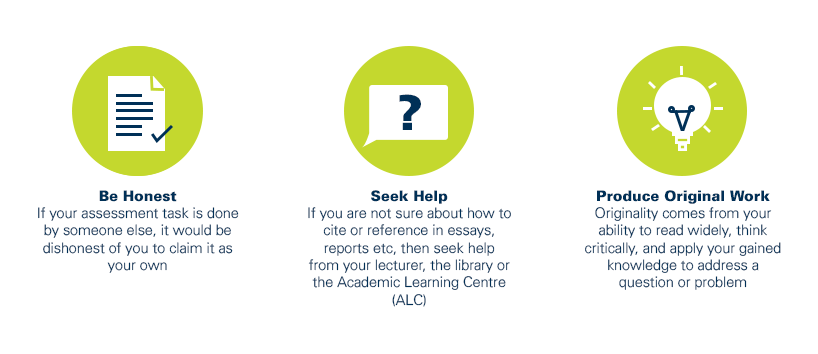
As a CQUniversity student you are expected to act honestly in all aspects of your academic work.
Any assessable work undertaken or submitted for review or assessment must be your own work. Assessable work is any type of work you do to meet the assessment requirements in the unit, including draft work submitted for review and feedback and final work to be assessed.
When you use the ideas, words or data of others in your assessment, you must thoroughly and clearly acknowledge the source of this information by using the correct referencing style for your unit. Using others’ work without proper acknowledgement may be considered a form of intellectual dishonesty.
Participating honestly, respectfully, responsibly, and fairly in your university study ensures the CQUniversity qualification you earn will be valued as a true indication of your individual academic achievement and will continue to receive the respect and recognition it deserves.
As a student, you are responsible for reading and following CQUniversity’s policies, including the Student Academic Integrity Policy and Procedure. This policy sets out CQUniversity’s expectations of you to act with integrity, examples of academic integrity breaches to avoid, the processes used to address alleged breaches of academic integrity, and potential penalties.
What is a breach of academic integrity?
A breach of academic integrity includes but is not limited to plagiarism, self-plagiarism, collusion, cheating, contract cheating, and academic misconduct. The Student Academic Integrity Policy and Procedure defines what these terms mean and gives examples.
Why is academic integrity important?
A breach of academic integrity may result in one or more penalties, including suspension or even expulsion from the University. It can also have negative implications for student visas and future enrolment at CQUniversity or elsewhere. Students who engage in contract cheating also risk being blackmailed by contract cheating services.
Where can I get assistance?
For academic advice and guidance, the Academic Learning Centre (ALC) can support you in becoming confident in completing assessments with integrity and of high standard.
What can you do to act with integrity?