Overview
In this unit you will examine the principles and scope of practice of a clinical exercise physiologist within an inter-professional environment. The contemporary challenges of the Australian healthcare sector will also be explored. This unit will focus on legislation, regulations, and professional and behavioural standards, as well as ethical, cultural, and legal responsibilities as they apply to the clinical exercise physiology profession. You will also explore the application of behaviour change theories to support engagement. Finally, you will develop advanced communication skills for fostering effective collaborative and respectful interactions with clients and other health professionals.
Details
Pre-requisites or Co-requisites
There are no requisites for this unit.
Important note: Students enrolled in a subsequent unit who failed their pre-requisite unit, should drop the subsequent unit before the census date or within 10 working days of Fail grade notification. Students who do not drop the unit in this timeframe cannot later drop the unit without academic and financial liability. See details in the Assessment Policy and Procedure (Higher Education Coursework).
Offerings For Term 1 - 2026
Attendance Requirements
All on-campus students are expected to attend scheduled classes - in some units, these classes are identified as a mandatory (pass/fail) component and attendance is compulsory. International students, on a student visa, must maintain a full time study load and meet both attendance and academic progress requirements in each study period (satisfactory attendance for International students is defined as maintaining at least an 80% attendance record).
Recommended Student Time Commitment
Each 6-credit Postgraduate unit at CQUniversity requires an overall time commitment of an average of 12.5 hours of study per week, making a total of 150 hours for the unit.
Class Timetable
Assessment Overview
Assessment Grading
This is a graded unit: your overall grade will be calculated from the marks or grades for each assessment task, based on the relative weightings shown in the table above. You must obtain an overall mark for the unit of at least 50%, or an overall grade of 'pass' in order to pass the unit. If any 'pass/fail' tasks are shown in the table above they must also be completed successfully ('pass' grade). You must also meet any minimum mark requirements specified for a particular assessment task, as detailed in the 'assessment task' section (note that in some instances, the minimum mark for a task may be greater than 50%). Consult the University's Grades and Results Policy for more details of interim results and final grades.
All University policies are available on the CQUniversity Policy site.
You may wish to view these policies:
- Grades and Results Policy
- Assessment Policy and Procedure (Higher Education Coursework)
- Review of Grade Procedure
- Student Academic Integrity Policy and Procedure
- Academic Progression Policy and Procedure
- Student Refund and Credit Balance Policy and Procedure
- Complaints Policy and Procedure
- Information and Communications Technology Acceptable Use Policy and Procedure
This list is not an exhaustive list of all University policies. The full list of University policies are available on the CQUniversity Policy site.
- Critically examine contemporary healthcare environments in accordance with ethically relevant legislation, regulations, and standards that apply to accredited exercise physiologists
- Critically examine the principles of professional practice and behaviour within professional, ethical, and legal frameworks of clinical exercise physiology
- Appraise established theories of behavioural change strategies to facilitate safe treatment, improve health outcomes, increase engagement, motivation, and adherence, and empower self-management of health conditions
- Employ highly developed communication skills to facilitate in-person and telepractice/telehealth service delivery, considering client needs, preferences, health and digital literacy, and accessibility factors, while fostering effective collaborative and respectful interactions with other health professionals.
Learning outcomes of this unit are linked to the following Exercise Physiology Professional Standards for Exercise and Sports Science Australia.
Element 1.2.1: Practice with integrity within the scope of practice for an AEP, the ESSA Code of Professional Conduct and Ethical Practice, and jurisdictional Codes of Conduct
Element 1.2.2: Practice in accordance with ethically relevant legislation, regulations, and standards that apply to AEPs including privacy, confidentiality, data security, informed consent, and record-keeping
Element 1.2.3: Differentiate and select verbal and non-verbal communication strategies that are contextually appropriate, timely, accessible, and respectful to clients, population groups, and relevant others
Element 1.2.4: Develop effective, concise, respectful, and informative clinical documentation, including case notes and reports, and apply appropriate record keeping practices
Element 2.2.1: Integrate knowledge of anatomy, physiology, pathophysiology, and other determinants of health and function and apply these to inform safe and effective movement, physical activity, and exercise-based interventions for individuals and population groups throughout all stages of their life
Element 2.2.2: Examine principles of biopsychosocial care, value-based care, person-centred care, and social and cultural determinants of health and apply this to promote health and well-being for individual clients and population groups
Element 2.2.6: Apply clinical, ethical, and evidence-based decision-making to formulate appropriate interventions and recommendations and communicate the expected outcomes
Element 2.2.7: Explain national, state, and compensable scheme frameworks across the health care, aged care, and disability sectors, and the requirements for AEPs working in these settings
Element 2.2.8: Evaluate and apply contextual learning principles and behaviour change strategies to improve health outcomes, increase engagement, motivation, and adherence, and empower self-management of health conditions
Element 3.2.6: Communicate appropriate client support strategies to facilitate in-person and telepractice/telehealth service delivery which considers client needs, preferences, health and digital literacy, and accessibility factors
Alignment of Assessment Tasks to Learning Outcomes
| Assessment Tasks | Learning Outcomes | |||
|---|---|---|---|---|
| 1 | 2 | 3 | 4 | |
| 1 - Online Test - 20% | ||||
| 2 - Essay - 40% | ||||
| 3 - Presentation - 40% | ||||
Alignment of Graduate Attributes to Learning Outcomes
| Graduate Attributes | Learning Outcomes | |||
|---|---|---|---|---|
| 1 | 2 | 3 | 4 | |
| 1 - Knowledge | ||||
| 2 - Communication | ||||
| 3 - Cognitive, technical and creative skills | ||||
| 4 - Research | ||||
| 5 - Self-management | ||||
| 6 - Ethical and Professional Responsibility | ||||
| 7 - Leadership | ||||
| 8 - First Nations Knowledges | ||||
| 9 - Aboriginal and Torres Strait Islander Cultures | ||||
Textbooks
There are no required textbooks.
IT Resources
- CQUniversity Student Email
- Internet
- Unit Website (Moodle)
- Microsoft Office (or equivalent) software for preparation of assessment items in the appropriate format.
- WebCam
- Adobe Acrobat Reader (or similar) software for viewing PDF documents
- Access to computer/laptop
- ZOOM Videoconferencing software
All submissions for this unit must use the referencing style: American Psychological Association 7th Edition (APA 7th edition)
For further information, see the Assessment Tasks.
n.sandral@cqu.edu.au
j.guy@cqu.edu.au
Week 1
Begin Date: 09 Mar 2026Module/Topic
Lecture:
Introduction to subject - The Clinical Exercise Physiology Profession.
Tutorial:
Introduction to the discipline, employment opportunities, discipline governance, assessment task description and guidance.
Chapter
Readings will be made available on the Moodle site.
Events and Submissions/Topic
Week 2
Begin Date: 16 Mar 2026Module/Topic
Lecture:
Australia's Health: Health based on socioeconomic status; Rural and remote health; Disability; Aboriginal and Torres Strait Islander health; The Australia healthcare system.
Tutorial:
Special consideration for the broad populations addressed in the weekly lecture, including healthcare disparities and specialised health services.
Chapter
Readings will be made available on the Moodle site.
Events and Submissions/Topic
Week 3
Begin Date: 23 Mar 2026Module/Topic
Lecture:
Scope of Practice for an AEP, the ESSA Code of Professional Conduct and Ethical Practice and jurisdictional Codes of Conduct.
Tutorial:
Detail discussion of relevant ESSA documentation.
Chapter
Readings will be made available on the Moodle site.
Events and Submissions/Topic
Week 4
Begin Date: 30 Mar 2026Module/Topic
Lecture:
How to practice in accordance with ethically relevant legislation, regulations and standards that apply to AEP's.
Tutorial:
Case studies of compliant and non-compliant practice.
Chapter
Reading will be made available on the Moodle site.
Events and Submissions/Topic
Week 5
Begin Date: 06 Apr 2026Module/Topic
Lecture:
National, state, and compensable scheme frameworks across the health care, aged care, and disability sectors, and the requirements for AEPs working in these settings/Working within Medicare, DVA, NDIS and other third party/ compensable schemes.
Tutorial:
Examples of client referral pathways for compensable schemes, outcome expectations from scheme referrals and limitations to service delivery withing various schemes.
Chapter
Readings will be made available of the Moodle site.
Events and Submissions/Topic
Week 6
Begin Date: 13 Apr 2026Module/Topic
Lecture:
Information Management within Healthcare Environments including privacy, confidentiality, data security, informed consent, and record-keeping.
Tutorial:
Collection, storage and sharing of information. Data analytics including the use of AI in note taking and reporting.
Chapter
Readings will be made available on the Moodle site.
Events and Submissions/Topic
Vacation Week
Begin Date: 20 Apr 2026Module/Topic
No content during Vacation Week.
Chapter
Events and Submissions/Topic
Week 7
Begin Date: 27 Apr 2026Module/Topic
Lecture:
Social Determinants of Health and Chronic Disease.
Tutorial:
Case studies discussing social determinants of health across different population, conditions, and the lifespan.
Chapter
Readings will be made available of the Moodle site.
Events and Submissions/Topic
Online Test due
Opens: Week 7 Monday (27 April 2026) 9:00am AEDT
Closes: Week 7 Wednesday (29 April 2026) 5:00pm AEDT
Week 8
Begin Date: 04 May 2026Module/Topic
Lecture:
Cultural Competence for Healthcare professionals.
Tutorial:
Case studies on developing and managing cross cultural therapeutic relationships.
Chapter
Readings will be made available on the Moodle site.
Events and Submissions/Topic
Week 9
Begin Date: 11 May 2026Module/Topic
Lecture:
Principles of biopsychosocial care, value-based care, person-centered care, and social and cultural determinants of health and apply this to promote health and well-being for individual clients and population groups.
Tutorial:
Development of case studies that demonstrate different models of care.
Chapter
Readings will be made available on the Moodle site.
Events and Submissions/Topic
Week 10
Begin Date: 18 May 2026Module/Topic
Lecture:
Behavior Change in Healthcare Settings: Theories of behavior change; Approaches to behavior change in CEP.
Tutorial:
Case study of implementing health behavior change.
Identifying and overcoming barriers to behavior change using motivational interviewing
Importance of therapeutic relationships
Chapter
Readings will be made available on the Moodle site.
Events and Submissions/Topic
Week 11
Begin Date: 25 May 2026Module/Topic
Lecture:
Communicate appropriate client support strategies to facilitate in-person and tele practice/telehealth service delivery which considers client needs, preferences, health and digital literacy, and accessibility factors.
Tutorial:
Case studies demonstrating the barriers and facilitators to effective communication with various stakeholders and using different technologies.
Chapter
Readings will be made available on the Moodle site.
Events and Submissions/Topic
Week 12
Begin Date: 01 Jun 2026Module/Topic
Lecture:
Working effectively with multi-disciplinary teams (interprofessional collaboration)
Tutorial:
Case study demonstrating interdisciplinary collaboration for patient care including: Identifying potential collaborators; Communication with collaborators inc. referrals; Developing interprofessional networks; and examples of interprofessional boundaries and overlap
Chapter
Readings will be made available on the Moodle site.
Events and Submissions/Topic
Exam Week
Begin Date: 08 Jun 2026Module/Topic
Chapter
Events and Submissions/Topic
Vacation/Exam Week
Begin Date: 15 Jun 2026Module/Topic
Chapter
Events and Submissions/Topic
1 Online Test
In this assessment, you will be required to complete an online test comprising of a variety of questions related to the unit content taught from weeks 1 to 6 (inclusive). There will be a variety of question styles used for this online test. You will need to review weekly content, readings and tutorials and will cover the broad areas of AEP scope of practice, national, state, and compensable scheme frameworks across the health care, aged care, and disability sectors, requirements for AEPs working in these settings, contextual learning principles and behaviour change strategies to improve health outcomes, increase engagement, motivation, and adherence, and empower self-management of health conditions.
Opens: Week 7 Monday (27 April 2026) 9:00am AEDT
Closes: Week 7 Wednesday (29 April 2026) 5:00pm AEDT
Time limit: 60 minutes.
Attempts: You will be permitted one attempt at the test.
The online test should be completed on a computer, as attempting the test on a smartphone can result in your session being ended in the event of a phone call or notification. You can only attempt the online test once and it must be completed in a single session. You cannot save your answers and return to the test at a later time.
Level of GenAI use allowed: Level 1: You must not use Al at any point during the assessment. You must demonstrate your core skills and knowledge.
The 72-hour grace period does not apply to this assessment.
Marks and individual feedback will be made available via the ESSC28006 Moodle site within 2 weeks of the online test closing.
You will be assessed on your critical knowledge and understanding pertaining to:
- AEP scope of practice
- National, state, and compensable scheme frameworks across the health care, aged care, and disability sectors
- Requirements for AEPs working in these settings
- Contextual learning principles and behaviour change strategies to improve health outcomes, increase engagement, motivation, and adherence, and empower self-management of health conditions.
Responses to the online test will be graded as correct/incorrect via the Moodle online test system. For questions with text-based responses (e.g. fill-in-the-blank or short answer) you should take care with spelling (Australian English) and grammar, as auto-marked responses are spelling and grammar sensitive. The number of marks will be highlighted if more than one mark is allocated for that particular part of the question.
- Critically examine contemporary healthcare environments in accordance with ethically relevant legislation, regulations, and standards that apply to accredited exercise physiologists
- Critically examine the principles of professional practice and behaviour within professional, ethical, and legal frameworks of clinical exercise physiology
2 Essay
In this assessment, you will be required to critically examine the intersection of biopsychosocial principles, value-based care and person-centered care. The discussion must be framed specifically within the Australian regional and rural health context incorporating a detail analysis of the social and cultural determinants of health.
You are expected to present a comprehensive review of literature delivered in a professional manner and supported by recent (within the past five (5) years), relevant references.
Your essay must address the following questions (as a guide):
Intersection of Care Principles
- How do biopsychosocial, value-based, and person-centered care overlap, and where might their objectives conflict when applied to chronic disease management?
- What is the relationship between person-centered care and value-based health frameworks?
- How do the biopsychosocial principles improve health outcomes in rural and remote Australia?
- In a value-based care framework, how are "outcomes" defined when working with clients who have complex presentations or multiple comorbidities?
Social and Cultural Determinants of Health
- How do socioeconomic status and disability act as barriers to health literacy and digital literacy in regional Australia, and how should an AEP account for this in their communication?
- What role do social and cultural determinants play in regional healthcare?
- What does the literature suggest regarding the cultural safety and competence required to improve health outcomes for Aboriginal and Torres Strait Islander peoples in rural settings?
- In what ways do social determinants (e.g., transport, local food security, social support) influence a rural client’s ability to adhere to long-term exercise-based interventions?
- How do social determinants impact AEP service delivery in rural areas?
Australian Regional and Rural Health Context
- What are the specific contemporary challenges of the Australian healthcare sector that uniquely impact service delivery for Accredited Exercise Physiologists (AEPs) in non-metropolitan areas?
- How does geographical isolation exacerbate the impact of chronic disease, and what literature exists on the effectiveness of telepractice/telehealth in mitigating these rural-specific barriers?
- How must an AEP adapt behaviour change strategies to empower self-management in communities where there is limited access to traditional clinical facilities?
Legislative and Professional Frameworks
- How do national compensable schemes like Medicare, DVA, and the NDIS impact the "accessibility factors" of exercise physiology services for rural populations?
- What are the ethical and legal responsibilities of an AEP when practicing inter-professionally in a regional environment with limited allied health resources?
- How do Codes of Conduct and the ESSA Code of Professional Conduct shape the way person-centered care is documented and reported in rural practice?
This assessment evaluates your ability to synthesise complex healthcare frameworks and apply them to the unique challenges of the Australian rural health landscape.
The essay will be 2000-2500 words in length (not including a cover page and references and be prepared according to the following instructions:
- Document type: Microsoft Word (.doc or .docx)
- Page size: A4
- Font: Calibri 12 point
- Line spacing: Double spaced throughout
- Language: Australia English
- Margins: 2.54cm on all sides
- Tables and Figures: May be used but titles and footnotes will be included in the word count.
Level of GenAI use allowed: Level 2: You may use AL for planning, idea development and research. Your final submission should show how you have developed and refined these ideas.
Week 8 Friday (8 May 2026) 5:00 pm AEST
Marks for the essay will be available two weeks following the due date.
The essay will be marked using the criteria described below:
1. Synthesis of Healthcare Frameworks
• Ability to critically examine the overlap and potential conflicts between biopsychosocial, value-based, and person-centered care within chronic disease management.
• Depth of analysis regarding how "outcomes" are defined in a value-based framework for clients with complex comorbidities.
• Evaluation of how biopsychosocial principles specifically improve health outcomes in rural and remote Australian settings.
2. Analysis of Social and Cultural Determinants
• Analysis of how socioeconomic status and disability impact health and digital literacy, and the subsequent adjustments required for effective communication by an Accredited Exercise Physiologist (AEP).
• Integration of literature regarding the cultural safety and competence necessary to improve health outcomes for Aboriginal and Torres Strait Islander peoples in rural areas.
• Examination of how factors such as transport, food security, and social support influence a client's ability to adhere to long-term exercise interventions.
3. Application to Regional and Professional Practice
• Identification of specific challenges impacting AEP service delivery in non-metropolitan areas, including the exacerbation of chronic disease due to geographical isolation.
• Critique of the effectiveness of telehealth and the ability to adapt behaviour change strategies for communities with limited access to traditional clinical facilities.
• Evaluation of the ethical and legal responsibilities of an AEP when working in regional environments with limited allied health resources.
4. Legislative and Professional Compliance
• Analysis of how Medicare, DVA, and the NDIS impact the accessibility of exercise physiology services for rural populations.
• Evidence of how the ESSA Code of Professional Conduct and general professional codes shape documentation and reporting within a person-centered care model.
5. Quality of Research and Communication
• Delivery of a comprehensive review of literature supported by recent, relevant references.
• Adherence to the following technical requirements:
◦ Word Count: 200–2500 words (excluding cover page and references).
◦ Formatting: Calibri 12pt font, double-spaced, A4 size, and 2.54cm margins.
◦ Language: Use of Australian English.
◦ Professional presentation and correct use of tables or figures (noting their titles and footnotes count toward the total word length)
No submission method provided.
- Critically examine contemporary healthcare environments in accordance with ethically relevant legislation, regulations, and standards that apply to accredited exercise physiologists
- Critically examine the principles of professional practice and behaviour within professional, ethical, and legal frameworks of clinical exercise physiology
- Employ highly developed communication skills to facilitate in-person and telepractice/telehealth service delivery, considering client needs, preferences, health and digital literacy, and accessibility factors, while fostering effective collaborative and respectful interactions with other health professionals.
3 Presentation
For this assessment, you are required to apply the principles of biopsychosocial care, value-based care, person-centred care, and social and cultural determinants of health, within an Australian regional and rural health context, by developing a presentation pitched at promoting health for individual clients and people within these population groups and behaviour change at an individual level. You will develop and deliver a telehealth health promotion presentation specifically designed for an Australian regional and rural health context. The primary goal of the presentation is to advocate for health promotion and behaviour change at an individual level, while also considering the needs of specific population groups within these communities. This is a presentation utilising the knowledge gained in Assessment Task 2 applied to a 'real-life' health promotion setting.
Your presentation must demonstrate a deep integration of the following core principles:
• Biopsychosocial care.
• Value-based care.
• Person-centred care.
• Social and cultural determinants of health.
In addition to the health promotion content, you must include practical information for your target audience regarding how to access national and state-level compensable schemes. As this is a telehealth-based delivery, the presentation should be structured for digital engagement.
You must attain a mark of 50% or higher in this assessment task to pass this unit.
Level of GenAI use allowed: Level 2: You may use AL for planning, idea development and research. Your final submission should show how you have developed and refined these ideas.
The 72-hour grace period does not apply to this assessment.
Exam Week Wednesday (10 June 2026) 5:00 pm AEST
Students will book in small groups to complete presentations - Monday/Tuesday/Wednesday of Exam/Review Week. See the ESSC28006 Moodle page for more details.
Marks will be made available after certification of grades.
Students will be evaluated based on their ability to:
1. Application of Care Principles: Demonstrate a clear and practical application of biopsychosocial, value-based, and person-centred care within the presentation content.
2. Contextual Awareness: Effectively address the unique challenges of Australian regional and rural health, including the impact of social and cultural determinants on the target audience.
3. Health Promotion and Behaviour Change: Develop persuasive content that promotes health and outlines clear strategies for individual behaviour change.
4. Information on Compensable Schemes: Provide accurate and accessible guidance on navigating and accessing state and national compensable schemes.
5. Telehealth Delivery Excellence: Utilise the telehealth format effectively to communicate health promotion messages to the intended audience.
- Appraise established theories of behavioural change strategies to facilitate safe treatment, improve health outcomes, increase engagement, motivation, and adherence, and empower self-management of health conditions
- Employ highly developed communication skills to facilitate in-person and telepractice/telehealth service delivery, considering client needs, preferences, health and digital literacy, and accessibility factors, while fostering effective collaborative and respectful interactions with other health professionals.
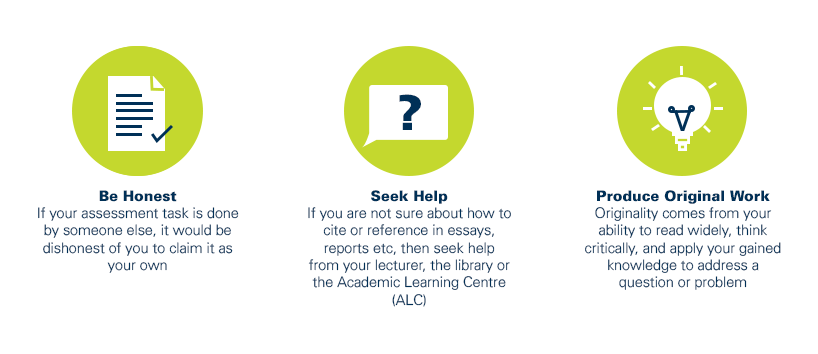
As a CQUniversity student you are expected to act honestly in all aspects of your academic work.
Any assessable work undertaken or submitted for review or assessment must be your own work. Assessable work is any type of work you do to meet the assessment requirements in the unit, including draft work submitted for review and feedback and final work to be assessed.
When you use the ideas, words or data of others in your assessment, you must thoroughly and clearly acknowledge the source of this information by using the correct referencing style for your unit. Using others’ work without proper acknowledgement may be considered a form of intellectual dishonesty.
Participating honestly, respectfully, responsibly, and fairly in your university study ensures the CQUniversity qualification you earn will be valued as a true indication of your individual academic achievement and will continue to receive the respect and recognition it deserves.
As a student, you are responsible for reading and following CQUniversity’s policies, including the Student Academic Integrity Policy and Procedure. This policy sets out CQUniversity’s expectations of you to act with integrity, examples of academic integrity breaches to avoid, the processes used to address alleged breaches of academic integrity, and potential penalties.
What is a breach of academic integrity?
A breach of academic integrity includes but is not limited to plagiarism, self-plagiarism, collusion, cheating, contract cheating, and academic misconduct. The Student Academic Integrity Policy and Procedure defines what these terms mean and gives examples.
Why is academic integrity important?
A breach of academic integrity may result in one or more penalties, including suspension or even expulsion from the University. It can also have negative implications for student visas and future enrolment at CQUniversity or elsewhere. Students who engage in contract cheating also risk being blackmailed by contract cheating services.
Where can I get assistance?
For academic advice and guidance, the Academic Learning Centre (ALC) can support you in becoming confident in completing assessments with integrity and of high standard.
What can you do to act with integrity?