Overview
In this unit, you will undertake 120 hours of practicum placement that contributes towards the total hours required for accreditation as an accredited exercise physiologist with Exercise and Sports Science Australia (ESSA). You will work under the supervision of an accredited exercise physiologist in the design and implementation of exercise and physical activity interventions for people with, or at risk of, chronic or complex health conditions. You will reflect on aspects of this work to build your skillset as an independent practitioner.
Details
Pre-requisites or Co-requisites
There are no requisites for this unit.
Important note: Students enrolled in a subsequent unit who failed their pre-requisite unit, should drop the subsequent unit before the census date or within 10 working days of Fail grade notification. Students who do not drop the unit in this timeframe cannot later drop the unit without academic and financial liability. See details in the Assessment Policy and Procedure (Higher Education Coursework).
Offerings For Term 2 - 2026
Attendance Requirements
All on-campus students are expected to attend scheduled classes - in some units, these classes are identified as a mandatory (pass/fail) component and attendance is compulsory. International students, on a student visa, must maintain a full time study load and meet both attendance and academic progress requirements in each study period (satisfactory attendance for International students is defined as maintaining at least an 80% attendance record).
Recommended Student Time Commitment
Each 6-credit Postgraduate unit at CQUniversity requires an overall time commitment of an average of 12.5 hours of study per week, making a total of 150 hours for the unit.
Class Timetable
Assessment Overview
Assessment Grading
This is a pass/fail (non-graded) unit. To pass the unit, you must pass all of the individual assessment tasks shown in the table above.
All University policies are available on the CQUniversity Policy site.
You may wish to view these policies:
- Grades and Results Policy
- Assessment Policy and Procedure (Higher Education Coursework)
- Review of Grade Procedure
- Student Academic Integrity Policy and Procedure
- Academic Progression Policy and Procedure
- Student Refund and Credit Balance Policy and Procedure
- Complaints Policy and Procedure
- Information and Communications Technology Acceptable Use Policy and Procedure
This list is not an exhaustive list of all University policies. The full list of University policies are available on the CQUniversity Policy site.
- Expertly demonstrate advanced practice skills in clinical exercise physiology within workplaces, independently designing, implementing, adapting, and evaluating safe and effective clinical exercise physiology services
- Critically examine knowledge and application in clinical reasoning and reflection in healthcare practice
- Expertly demonstrate effective skills in communication, professional conduct and adherence to relevant codes of conduct, ethical, legal, safety, cultural and privacy responsibilities in clinical exercise physiology.
Element 1.2.1: Practice with integrity within the scope of practice for an AEP, the ESSA Code of Professional Conduct and Ethical Practice, and jurisdictional Codes of Conduct
Element 1.2.2: Practice in accordance with ethically relevant legislation, regulations, and standards that apply to AEPs including privacy, confidentiality, data security, informed consent, and record-keeping
Element 1.2.3: Differentiate and select verbal and non-verbal communication strategies that are contextually appropriate, timely, accessible, and respectful to clients, population groups, and relevant others
Element 1.2.4: Develop effective, concise, respectful, and informative clinical documentation, including case notes and reports, and apply appropriate record keeping practices
Element 1.2.5: Practice in a culturally safe, inclusive, sensitive, respectful, and responsive way and according to person-centred care principles
Element 1.2.6: Practice collaboratively and effectively with other professionals, including seeking feedback and input to inform decision-making, delegating tasks, and referring to other professionals and services where appropriate
Element 1.2.7: Develop reflective practices through self-reflection, seeking and engaging with feedback from colleagues and clients, critically evaluating service delivery and outcomes, and engaging in ongoing learning
Element 1.2.8: Demonstrate leadership and the ability to advocate for client access to AEP services and appropriate health care
Element 2.2.1: Integrate knowledge of anatomy, physiology, pathophysiology, and other determinants of health and function and apply these to inform safe and effective movement, physical activity, and exercise-based interventions for individuals and population groups throughout all stages of their life
Element 2.2.3: Evaluate physiological responses and adaptations to acute and chronic exercise for clients across the full health spectrum
Element 2.2.4: Evaluate the effect of commonly prescribed medications, diagnostic procedures, medical, surgical, and other interventions on both resting and exercise-related physiological responses across the full health spectrum
Element 2.2.6: Apply clinical, ethical, and evidence-based decision-making to formulate appropriate interventions and recommendations and communicate the expected outcomes
Element 2.2.8: Evaluate and apply contextual learning principles and behaviour change strategies to improve health outcomes, increase engagement, motivation, and adherence, and empower self-management of health conditions
Element 3.2.4: Distinguish, record, report, and appropriately action changing risk factors and adverse signs and symptoms that may arise before, during, and after assessments and interventions
Element 3.2.5: Evaluate and record assessment outcomes in a timely and accurate manner to inform practice and communicate outcomes and relevance to goals effectively to clients and relevant others
Element 3.2.6: Communicate appropriate client support strategies to facilitate in-person and telepractice/telehealth service delivery which considers client needs, preferences, health and digital literacy, and accessibility factors
Element 3.2.7: Distinguish when client needs are outside of scope or competence and take appropriate, timely actions including engaging effectively with other professionals
Element 3.2.8: Choose and use relevant technology and equipment efficiently, effectively, and safely
Element 4.2.2: Design, prescribe, deliver, and monitor safe and effective movement, physical activity, and exercise-based interventions for clients with complex presentations, including those with acute and chronic health conditions and multiple comorbidities
Element 4.2.3: Formulate and apply strategies to manage risks, evaluate progress, and adapt recommendations and interventions in partnership with clients based on needs and measured outcomes
Element 4.2.4: Create and apply inclusive, respectful, and effective communication strategies to educate and engage clients in informed decision-making about purpose, benefits, risks, options, and costs for proposed interventions, expected outcomes, and strategies for future prevention
Element 4.2.5: Apply and evaluate exercise prescription, health behaviour, and lifestyle change strategies and education, in partnership with clients to increase engagement, motivation and adherence, and improve health and well-being
Element 4.2.6: Formulate strategies during treatment to empower clients to undertake safe and effective self-management during and following discharge from interventions
Element 4.2.7: Communicate effectively and respectfully with clients and relevant others about progress and outcomes of interventions, including appropriate reporting
Element 4.2.8: Evaluate effectiveness of interventions and their outcomes including the selection, interpretation, and reporting of outcome measures to inform future practice
Alignment of Assessment Tasks to Learning Outcomes
| Assessment Tasks | Learning Outcomes | ||
|---|---|---|---|
| 1 | 2 | 3 | |
| 1 - Learning logs / diaries / Journal / log books - 0% | |||
| 2 - Professional Practice Placement - 0% | |||
| 3 - Reflective Practice Assignment - 0% | |||
Alignment of Graduate Attributes to Learning Outcomes
| Graduate Attributes | Learning Outcomes | ||
|---|---|---|---|
| 1 | 2 | 3 | |
| 1 - Knowledge | |||
| 2 - Communication | |||
| 3 - Cognitive, technical and creative skills | |||
| 4 - Research | |||
| 5 - Self-management | |||
| 6 - Ethical and Professional Responsibility | |||
| 7 - Leadership | |||
| 8 - First Nations Knowledges | |||
| 9 - Aboriginal and Torres Strait Islander Cultures | |||
Textbooks
Exercise and Sports Science Australia's Outcome Measures for Exercise Physiologists: Ensuring Evidence-Based Practice Book
- (2014)
- Authors: Jessica Hanson, Kristy Hastings, and Nicole Marlow
- ISBN: 9780987306593
Printed or electronic PDF version is acceptable.
Reflective Practice in the Sport and Exercise Sciences Critical Perspectives, Pedagogy, and Applied Case Studies
- (2023)
- Authors: Brendan Cropley, Zoe Knowles, Andy Miles, Emma Huntley
- Routledge
- ISBN: 9781032056944
Additional Textbook Information
Printed or electronic PDF version is acceptable for textbook.
IT Resources
- CQUniversity Student Email
- Internet
- Unit Website (Moodle)
- Computer - ability to access study materials, including instructional videos and scan and upload assessment.
- Zoom account (Free)
- Adobe Acrobat Reader (or similar) software for viewing PDF documents
- Office software (e.g. Microsoft Office, Open Office etc)
All submissions for this unit must use the referencing style: American Psychological Association 7th Edition (APA 7th edition)
For further information, see the Assessment Tasks.
s.fien@cqu.edu.au
Week 1
Begin Date: 13 Jul 2026Module/Topic
Tutorial: Introduction to Clinical Placement and Practicum Assessments and Ethical and Professional Practice
Chapter
Prescribed textbook and supplementary readings
Events and Submissions/Topic
Mandatory tutorial for information regarding Work Integrated Learning (placement). See the ESSC28009 Moodle site for the specific date, time, and Zoom link.
Week 2
Begin Date: 20 Jul 2026Module/Topic
Approaches to Care and Clinical Reasoning in Placement
Placement
Chapter
Prescribed textbook and supplementary readings
Events and Submissions/Topic
Week 3
Begin Date: 27 Jul 2026Module/Topic
Sustainable Placement Practice and Reflective Foundations
Placement
Chapter
Prescribed textbook and supplementary readings
Events and Submissions/Topic
Week 4
Begin Date: 03 Aug 2026Module/Topic
Reflective Practice
Placement
Chapter
Prescribed textbook and supplementary readings
Events and Submissions/Topic
Week 5
Begin Date: 10 Aug 2026Module/Topic
Placement
Chapter
Prescribed textbook and supplementary readings
Events and Submissions/Topic
Week 6
Begin Date: 17 Aug 2026Module/Topic
Placement
Chapter
Prescribed textbook and supplementary readings
Events and Submissions/Topic
Vacation Week
Begin Date: 24 Aug 2026Module/Topic
Placement
Chapter
Prescribed textbook and supplementary readings
Events and Submissions/Topic
Week 7
Begin Date: 31 Aug 2026Module/Topic
Placement
Chapter
Prescribed textbook and supplementary readings
Events and Submissions/Topic
Week 8
Begin Date: 07 Sep 2026Module/Topic
Placement
Chapter
Prescribed textbook and supplementary readings
Events and Submissions/Topic
Week 9
Begin Date: 14 Sep 2026Module/Topic
Placement
Chapter
Prescribed textbook and supplementary readings
Events and Submissions/Topic
Week 10
Begin Date: 21 Sep 2026Module/Topic
Placement
Chapter
Prescribed textbook and supplementary readings
Events and Submissions/Topic
Record of Student Engagement and Logbook Due: Week 10 Friday (25 Sept 2026) 11:59 pm AEST
Professional Practice Evaluation Due: Week 10 Friday (25 Sept 2026) 11:59 pm AEST
Reflective Practice Assignment Due: Week 10 Friday (25 Sept 2026) 11:59 pm AEST
Week 11
Begin Date: 28 Sep 2026Module/Topic
No lecture or placement during this week
Chapter
Events and Submissions/Topic
Week 12
Begin Date: 05 Oct 2026Module/Topic
No lecture or placement during this week
Chapter
Events and Submissions/Topic
Exam Week
Begin Date: 12 Oct 2026Module/Topic
Chapter
Events and Submissions/Topic
Vacation/Exam Week
Begin Date: 19 Oct 2026Module/Topic
Chapter
Events and Submissions/Topic
In this unit, you will undertake a minimum 120-hour practicum placement that contributes towards the total hours required for eligibility for accreditation as an Accredited Exercise Physiologist with Exercise and Sports Science Australia. You will work under the supervision of an Accredited Exercise Physiologist in the design and implementation of exercise and physical activity interventions for people with or at risk of chronic or complex health conditions. You will reflect on aspects of this work to build your skillset as an independent practitioner.
You must complete your mandatory checks and student nomination form on Sonia. You are not able to begin until all mandatory checks have been completed via Sonia. You should contact the WIL team as soon as possible to arrange your Professional Practice Placement if you have not already received your Professional Practice Placement nomination form. Please note you may be required to travel and make necessary work arrangements to complete the minimum 120 hours (minimum 5-week period, based on supervisor and student availability during the time period) of Professional Practice Placement in this unit. Further WIL information is available on the ESSC28009 Moodle site.
Please note: Failure to comply with the Professional Practice Placement agreement for any site regarding student attendance, expectations, behaviour, or communication during a placement may result in cancellation of all Professional Practice Placements at that site. Consequently, this situation may result in a Fail grade being awarded for the unit to which non-compliance applies and rescheduling of Professional Practice Placement site(s) for other units where WIL activities are required.
1 Learning logs / diaries / Journal / log books
In this assessment task, you will provide details and evidence of your minimum 120 hours of ESSA-approved placement and be assessed on how this evidence aligns with ESSA Accredited Exercise Physiologist (AEP) professional attributes. Your evidence presented in this assessment will be graded as Pass or Fail.
A separate Record of Student Engagement and Logbook must be completed for each unit and each site. You must complete the templates available on the ESSC28009 Moodle site. When completing this assessment, please ensure you check the ESSC28009 box as the relevant ESSC unit. The Record of Student Engagement must also be signed by your placement supervisor prior to submission.
An example of the level of detail required for the Record of Student Engagement and Logbook will be made available on the ESSC28009 Moodle site.
The 72-hour grace period does not apply to this assessment.
Level of GenAI use allowed:
Level 1: You must not use Al at any point during the assessment. You must demonstrate your core skills and knowledge.
Your Record of Student Engagement and Logbook is due one (1) week post completion of your placement. The latest your RSE and Logbook can be submitted is Week 10 Friday (25 September 2026) 11:59 pm AEST. In the event your documentation contains insufficient detail or is incomplete and requires resubmission. In the absence of an approved extension, any submissions received after the due date will not be graded and you may not be able to pass this unit.
Your Record of Student Engagement and Logbook will be returned within two (2) weeks of submission.
The Record of Student Engagement and Logbook are graded on a Pass/Fail basis. Sufficient detail is required regarding the client description and description of services, reference to the appropriate ESSA AEP professional attributes, as well as the detail and adequacy of the placement hours.
Your Record of Student Engagement will be marked according to the following criteria to comply with the guidelines stipulated by ESSA:
- Sufficient detail of dates, hours, client(s) description (anonymised), description of services, supervisor's name, and supervisor's signature. Reference to the appropriate ESSA AEP professional attributes (available on the ESSC28009 Moodle site) completed during placement. This document will be typed and uploaded as a .doc, .docx, or PDF file.
Your Logbook will be marked according to the following criteria to comply with the guidelines stipulated by ESSA:
- A breakdown of hours using the Logbook is included and submitted alongside your Record of Student Engagement. This document will be typed and uploaded as an XLMS or XLS file.
An example of the level of detail required for the Record of Student Engagement and Logbook will be made available on the ESSC28009 Moodle site.
Records of Student Engagement and Logbook Template that do not contain sufficient detail, are not signed by the placement supervisor, or are not clearly typed, will be returned for corrections. You may not be able to pass this assessment item or this unit unless the Record of Student Engagement and Logbook Template meets the requirements described above, which are in accordance with ESSA standards. If a Record of Student Engagement and/or Logbook is returned for corrections, you will be given one (1) opportunity to resubmit that Record of Student Engagement and/or Logbook.
- Expertly demonstrate effective skills in communication, professional conduct and adherence to relevant codes of conduct, ethical, legal, safety, cultural and privacy responsibilities in clinical exercise physiology.
2 Professional Practice Placement
In this assessment task, you will undertake a minimum 120 hours of placement (minimum 5-week period) under the supervision of an ESSA-approved placement site and be assessed on your competency as a student Exercise Physiologist. Your competency in this assessment will be graded as Pass or Fail.
You are required to submit two (2) Professional Placement Evaluations.
Professional Practice Evaluation 1 is due at the completion of 60 hours (mid-point).
Professional Practice Evaluation 2 is due at the completion of 120 hours (end-point).
Irrespective of when you commence your placement, both Evaluations must be submitted by Week 10 Friday, 25 September 2026, 11:59 pm AEST. In the event your documentation contains insufficient detail or is incomplete and requires resubmission, the resubmission must be no later than Week 11 Friday, 2 October 2026, 11:59 pm AEST.
The Professional Practice Evaluation assessment item comprises an assessment tool that you and your placement supervisor will complete regarding your goals, performance, and capabilities while on placement. It is expected that you and your placement supervisor complete the Professional Practice Evaluations together. This should be viewed as an open process designed to enhance your placement experience and exercise assessment, prescription, and delivery skills. You must complete the templates available on the ESSC28009 Moodle site for Professional Placement Evaluation 1, which documents the first 60 hours of your placement, and for Professional Placement Evaluation 2, which documents the second 60 hours of your placement. During your placement, you will be evaluated by your placement supervisor at the end of 60 hours and at the end of 120 hours of placement. Together, Professional Placement Evaluation 1 and Professional Placement Evaluation 2 must show evidence of your competency in completing your minimum 120-hour placement. In the absence of an approved extension, evaluations that do not contain sufficient detail or are not completed by the placement supervisor(s) will be returned for corrections, and you may not be able to pass this assessment item or this unit, unless the evaluations are completed according to these instructions. You will have one (1) opportunity to resubmit returned evaluations.
Please Note: Failure to comply with the Professional Practice Placement agreement for any site with regard to student attendance, expectations, behaviour, or communication during a placement may result in cancellation of all placements at that site, as this may be reflected within your evaluation. Consequently, this may result in a Fail grade being awarded for the unit to which non-compliance applies and rescheduling of placement site(s) for other units where WIL activities are required.
The 72-hour grace period does not apply to this assessment.
Level of GenAI use allowed:
Level 1: You must not use Al at any point during the assessment. You must demonstrate your core skills and knowledge.
Further details regarding placement and this assessment task will be made available on the ESSC28009 Moodle site.
Professional Practice Evaluation 1 (formative assessment) must be submitted immediately on completion of the first 60 hours of your placement. Professional Practice Evaluation 2 (summative assessment) must be submitted on immediately on completion of the final 60 hours of your placement. Irrespective of when you commence your placement, both Evaluations must be submitted by Week 10 Friday (25 September 2026) 11:59 pm AEST. In the event your documentation contains insufficient detail or is incomplete and requires resubmission, the resubmission must be no later than Week 11 Friday (2 October 2026) 11:59 pm AEST. In the absence of an approved extension, any submissions received after the due date will not be graded and you may not be able to pass this unit
Professional Practice Evaluations will be returned within two (2) weeks of submission.
The Professional Practice Evaluations comprises an assessment tool that your placement supervisor will complete regarding your performance and competency while on placement. The evaluation tool shall consist of two sections: Professional Practice Competencies and Exercise Physiology Competencies.
Professional Practice Evaluation 1 is a formative assessment, and the outcomes of this assessment are used to help identify areas in which you are doing well in and areas that need improvement. As a result of your Evaluation 1, you may need to re-evaluate your attendance and activities that you are undertaking during placement. For example, additional hours or further activities (e.g. assessment or delivery) may be required.
Professional Practice Evaluation 2 is a summative assessment, and you must attain the minimum pass mark to pass this assessment item.
A template for this assessment will be made available on the ESSC28009 Moodle site, covering these areas:
Professional Practice Competencies
- Professional behaviour and demeanor
- Ethical & Legal Practice
- Communication & Documentation
- Cultural Safety & Person-Centred Care
- Collaboration & Professional Relationships
- Leadership & Development
Exercise Physiology Standards
- Clinical Knowledge & Evidence-Based Decision-Making
- Holistic & Person-Centred Care
- Assessment, Safety, & Risk Management
- Exercise Prescription & Intervention Delivery
- Monitoring, Adaptation, Behaviour Change & Outcomes Communication
Students should familiarise themselves with the relevant scope of practice before undertaking practicum activities.
- Expertly demonstrate advanced practice skills in clinical exercise physiology within workplaces, independently designing, implementing, adapting, and evaluating safe and effective clinical exercise physiology services
- Critically examine knowledge and application in clinical reasoning and reflection in healthcare practice
- Expertly demonstrate effective skills in communication, professional conduct and adherence to relevant codes of conduct, ethical, legal, safety, cultural and privacy responsibilities in clinical exercise physiology.
3 Reflective Practice Assignment
In this assessment task, you are required to write a reflection regarding your time during placement. You are to reflect on the positive and negative experiences related to the following AEP professional attributes:
- Professional practice
- Foundational knowledge
- Assessment and client management
- Design and delivery of exercise-based interventions
In order to protect the confidentiality of clients, students, or staff at your placement, you should not disclose any personal information that can identify individuals in your reflections, for example name(s) of the client, students, staff, or the organisation. Most importantly, you need to be genuine and honest in your reflections. This assessment item will require you to reflect on the incident in a way that contributes to your personal and professional growth and development. This assessment task should be submitted in the provided Word document template, which is available on the unit Moodle website.
The 72-hour grace period does not apply to this assessment.
Level of GenAI use allowed:
Level 1: You must not use Al at any point during the assessment. You must demonstrate your core skills and knowledge.
Further details regarding placement and this assessment task will be made available on the ESSC28009 Moodle site.
Week 10 Friday (25 Sept 2026) 11:59 pm AEST
Week 12 Friday (9 Oct 2026)
Your Reflective Practice Assignment will be returned within two (2) weeks of submission.
Your Reflective Practice Assignment will consist of answering five (5) questions that relate to your placement. Written responses also require you to use appropriate references and literature.
- What went well;
- What can you improve upon for the next placement site;
- What were the outcomes from these scenarios, and what were the contributors to the outcome;
- What have you learnt about (your) practice from your reflection on your placement experience; and
- How might your practice change and develop as a result of your experience.
This is a Pass/Fail assessment item. To pass, you must achieve 50% or greater of the total marks available. A detailed marking rubric is available on the unit Moodle website.
Reflective Practice Assignments that do not contain sufficient detail, are not signed by the placement supervisor, or are not clearly typed, will be returned for corrections. You may not be able to pass this assessment item or this unit unless the Reflective Practice Assignment meets the requirements described above, which are in accordance with ESSA standards. If a Reflective Practice Assignment is returned for corrections, you will be given one (1) opportunity to resubmit your Reflective Practice Assignment.
- Critically examine knowledge and application in clinical reasoning and reflection in healthcare practice
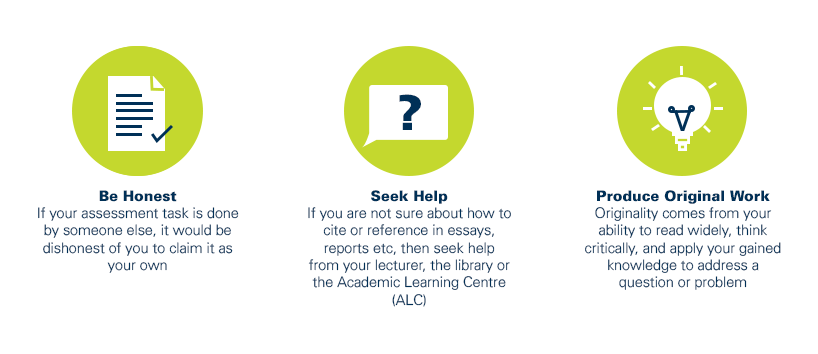
As a CQUniversity student you are expected to act honestly in all aspects of your academic work.
Any assessable work undertaken or submitted for review or assessment must be your own work. Assessable work is any type of work you do to meet the assessment requirements in the unit, including draft work submitted for review and feedback and final work to be assessed.
When you use the ideas, words or data of others in your assessment, you must thoroughly and clearly acknowledge the source of this information by using the correct referencing style for your unit. Using others’ work without proper acknowledgement may be considered a form of intellectual dishonesty.
Participating honestly, respectfully, responsibly, and fairly in your university study ensures the CQUniversity qualification you earn will be valued as a true indication of your individual academic achievement and will continue to receive the respect and recognition it deserves.
As a student, you are responsible for reading and following CQUniversity’s policies, including the Student Academic Integrity Policy and Procedure. This policy sets out CQUniversity’s expectations of you to act with integrity, examples of academic integrity breaches to avoid, the processes used to address alleged breaches of academic integrity, and potential penalties.
What is a breach of academic integrity?
A breach of academic integrity includes but is not limited to plagiarism, self-plagiarism, collusion, cheating, contract cheating, and academic misconduct. The Student Academic Integrity Policy and Procedure defines what these terms mean and gives examples.
Why is academic integrity important?
A breach of academic integrity may result in one or more penalties, including suspension or even expulsion from the University. It can also have negative implications for student visas and future enrolment at CQUniversity or elsewhere. Students who engage in contract cheating also risk being blackmailed by contract cheating services.
Where can I get assistance?
For academic advice and guidance, the Academic Learning Centre (ALC) can support you in becoming confident in completing assessments with integrity and of high standard.
What can you do to act with integrity?