Overview
This unit covers the analysis of property investment over time taking financial and business risk factors into account. You will examine property investments from the financial perspective. You will gain insight into real estate as an investment and how it differs from investment in financial instruments. You will produce an investment appraisal report examining an income producing property asset.
Details
Pre-requisites or Co-requisites
FINC19011 Business Finance
Important note: Students enrolled in a subsequent unit who failed their pre-requisite unit, should drop the subsequent unit before the census date or within 10 working days of Fail grade notification. Students who do not drop the unit in this timeframe cannot later drop the unit without academic and financial liability. See details in the Assessment Policy and Procedure (Higher Education Coursework).
Offerings For Term 2 - 2026
Attendance Requirements
All on-campus students are expected to attend scheduled classes - in some units, these classes are identified as a mandatory (pass/fail) component and attendance is compulsory. International students, on a student visa, must maintain a full time study load and meet both attendance and academic progress requirements in each study period (satisfactory attendance for International students is defined as maintaining at least an 80% attendance record).
Recommended Student Time Commitment
Each 6-credit Undergraduate unit at CQUniversity requires an overall time commitment of an average of 12.5 hours of study per week, making a total of 150 hours for the unit.
Class Timetable
Assessment Overview
Assessment Grading
This is a graded unit: your overall grade will be calculated from the marks or grades for each assessment task, based on the relative weightings shown in the table above. You must obtain an overall mark for the unit of at least 50%, or an overall grade of 'pass' in order to pass the unit. If any 'pass/fail' tasks are shown in the table above they must also be completed successfully ('pass' grade). You must also meet any minimum mark requirements specified for a particular assessment task, as detailed in the 'assessment task' section (note that in some instances, the minimum mark for a task may be greater than 50%). Consult the University's Grades and Results Policy for more details of interim results and final grades.
All University policies are available on the CQUniversity Policy site.
You may wish to view these policies:
- Grades and Results Policy
- Assessment Policy and Procedure (Higher Education Coursework)
- Review of Grade Procedure
- Student Academic Integrity Policy and Procedure
- Academic Progression Policy and Procedure
- Student Refund and Credit Balance Policy and Procedure
- Complaints Policy and Procedure
- Information and Communications Technology Acceptable Use Policy and Procedure
This list is not an exhaustive list of all University policies. The full list of University policies are available on the CQUniversity Policy site.
Feedback, Recommendations and Responses
Every unit is reviewed for enhancement each year. At the most recent review, the following staff and student feedback items were identified and recommendations were made.
Feedback from UC Reflection
Continue regular revison of resources and recordings
Resources will continue to be progressively updated
Feedback from School and discipline experience
Assessment security due to AI Misuse suggests transition to some oral assessment
Revise assessment to include significant secure assessment
- Analyse the processes involved in investments in property
- Evaluate alternative property investment strategies
- Apply discounted cash flow techniques to property investments
- Incorporate risk analysis into practical investment studies.
The Australian Property Institute (API) has accredited this unit as part of the Bachelor of Property course. This unit contributes to the core knowledge field of the API in Property Finance which includes property investment and it forms pre-requisite studies to the Advanced Valuation unit (PROP19003). The learning outcomes for the unit and the assessments have been designed around the accreditation requirements.
Alignment of Assessment Tasks to Learning Outcomes
| Assessment Tasks | Learning Outcomes | |||
|---|---|---|---|---|
| 1 | 2 | 3 | 4 | |
| 1 - Practical Assessment - 50% | ||||
| 2 - Oral Examination - 40% | ||||
| 3 - Written Assessment - 10% | ||||
Alignment of Graduate Attributes to Learning Outcomes
| Graduate Attributes | Learning Outcomes | |||
|---|---|---|---|---|
| 1 | 2 | 3 | 4 | |
| 1 - Communication | ||||
| 2 - Problem Solving | ||||
| 3 - Critical Thinking | ||||
| 4 - Information Literacy | ||||
| 5 - Team Work | ||||
| 6 - Information Technology Competence | ||||
| 7 - Cross Cultural Competence | ||||
| 8 - Ethical practice | ||||
| 9 - Social Innovation | ||||
| 10 - First Nations Knowledges | ||||
| 11 - Aboriginal and Torres Strait Islander Cultures | ||||
Textbooks
There are no required textbooks.
IT Resources
- CQUniversity Student Email
- Internet
- Unit Website (Moodle)
- CoreLogic RPData property information system
- EndNote: referencing software available from CQUniversity Library.
- The Property Program Gateway
- Spreadsheet, e.g. Excel: some prior experience is useful as the unit introduces advanced spreadsheet skills. Consider sourcing training exercises before starting the unit if you are weak with spreadsheets or mathematics. Consider contacting the Academic Learning Centre for personal training in spreadsheet use if appropriate.
All submissions for this unit must use the referencing style: American Psychological Association 7th Edition (APA 7th edition)
For further information, see the Assessment Tasks.
g.small@cqu.edu.au
01 Real Estate as Investment
Begin Date: 13 Jul 2026Module/Topic
Real Estate as Investment
Chapter
1 & 2
Events and Submissions/Topic
02 Property Investment Strategies
Begin Date: 20 Jul 2026Module/Topic
Property Investment Strategies
Chapter
3
Events and Submissions/Topic
03 Discounted Cash Flow Appraisal
Begin Date: 27 Jul 2026Module/Topic
Discounted Cash Flow Appraisal
Chapter
6 & 7
Events and Submissions/Topic
04 Taxation and Property Investment
Begin Date: 03 Aug 2026Module/Topic
Taxation and Property Investment
Chapter
5
Events and Submissions/Topic
05 Risk and Uncertainty Modelling
Begin Date: 10 Aug 2026Module/Topic
Risk and Uncertainty Modelling
Chapter
9
Events and Submissions/Topic
06 Debt Markets and Investment Strategies
Begin Date: 17 Aug 2026Module/Topic
Debt Markets and Investment Strategies
Chapter
4 & 13
Events and Submissions/Topic
Vacation Week
Begin Date: 24 Aug 2026Module/Topic
Chapter
Events and Submissions/Topic
07 Forecasting Theory
Begin Date: 31 Aug 2026Module/Topic
Forecasting Theory
Chapter
8
Events and Submissions/Topic
08 Historical Trends, Culture & Risk
Begin Date: 07 Sep 2026Module/Topic
Historical Trends, Culture & Risk
Chapter
14
Events and Submissions/Topic
09 Money and Interest Rate Theory
Begin Date: 14 Sep 2026Module/Topic
Money and Interest Rate Theory
Chapter
12
Events and Submissions/Topic
Investment Appraisal Assignment due on Friday.
Investment Appraisal Due: Week 9 Friday (18 Sept 2026) 11:59 pm AEST
10 Property Development Investment
Begin Date: 21 Sep 2026Module/Topic
Property Development Investment
Chapter
Events and Submissions/Topic
11 Wealth Effects within property
Begin Date: 28 Sep 2026Module/Topic
Wealth Effects within property
Chapter
15
Events and Submissions/Topic
Investment Appraisal Assignment returned on Friday.
12 Portfolio Investment
Begin Date: 05 Oct 2026Module/Topic
Portfolio Investment
Chapter
10
Events and Submissions/Topic
Exam Week
Begin Date: 12 Oct 2026Module/Topic
Chapter
Events and Submissions/Topic
Vacation/Exam Week
Begin Date: 19 Oct 2026Module/Topic
Chapter
Events and Submissions/Topic
1 Practical Assessment
An advanced investment appraisal of an actual property using Discounted Cash Flow analysis. This assignment will give you experience using the techniques currently employed in the appraisal of major investment properties. In this exercise you will use as your case study an actual property of your choice, source actual data relevant to its investment performance, and perform advanced investment appraisal analysis. It provides the opportunity to apply analysis techniques developed in class on an actual property. It will use a simple property to facilitate the acquisition of the relevant data, but the analysis will go beyond what is commonly applied to simple investment properties. Having completed this assignment you will be able to analyse a wide range of investment properties, from the very simple to the most complex.
This assessment requires adherence to the guidelines on the use of artificial intelligence tools as specified in the Artificial Intelligence Assessment Scale (AIAS). Any misuse or lack of disclosure regarding the use of AI tools will be considered a breach of academic integrity. Any AI generated text must be clearly marked as a quote, presented in a distinctive font colour and its source acknowledged as such.
Week 9 Friday (18 Sept 2026) 11:59 pm AEST
Submit MS Word & Excel compatible formats (eg. .doc. .docx, .rtf, .xls, .xlsx, Open Office format). Pdf format will not be accepted.
Week 11 Friday (2 Oct 2026)
Submission with extensions will be returned two weeks after their submission.
The Assignment will be marked using criteria and rubrics available in detail on the Moodle site. The general grading expectations may be found in the General Grading Rubrics for Property Economics Units found on the Property Gateway. The criteria for this assignment are as follows:
| Criterion | |
| 1 | Presentation |
| 2 | Property Description |
| 3 | Economic Outlook |
| 4 | Data Quality |
| 5 | Risk Analysis |
| 6 | DCF Model (Test data) |
| 7 | Practitioner Contact |
| 8 | Negative Gearing |
| 9 | Insightfulness |
- Analyse the processes involved in investments in property
- Evaluate alternative property investment strategies
- Apply discounted cash flow techniques to property investments
- Incorporate risk analysis into practical investment studies.
2 Oral Examination
A list of questions will be issued no later than the end of week two. There will be 12-16 questions in total, either as discrete questions or options within general questions. They will cover topics spanning the entire unit, but will not include mathematical questions. At the end of term each member of the class will be scheduled to have a 10-15 minute recorded oral discussion using Zoom. Four questions from the list will be randomly selected and given to the student, from which one may be selected to discuss.
Exam Week Monday (12 Oct 2026) 11:45 pm AEST
Individual student bookings during exam week will be scheduled between weeks ten and twelve.
As an exam, the only feedback will be the final grades which will be released on the grade certification date.
Overall mastery of unit content.
Conceptual mastery
Consistency and logic
Evidence of further reading
Insightfulness
- Analyse the processes involved in investments in property
- Evaluate alternative property investment strategies
- Apply discounted cash flow techniques to property investments
- Incorporate risk analysis into practical investment studies.
3 Written Assessment
An Excel file will be available for downloading at 6am on the day of the examination. Students are to enter their student number into the spreadsheet to be issued with data.
Answers to be entered into the spreadsheet in designated cells, saved to a file name beginning with student surname and given name. Completed files to be unloaded to Moodle before due date and time.
Vacation/Exam Week Monday (19 Oct 2026) 9:00 am AEST
This is part of the final exam hence grade will be released on the grade certification date.
Conceptual mastery and mathematical precision
- Evaluate alternative property investment strategies
- Apply discounted cash flow techniques to property investments
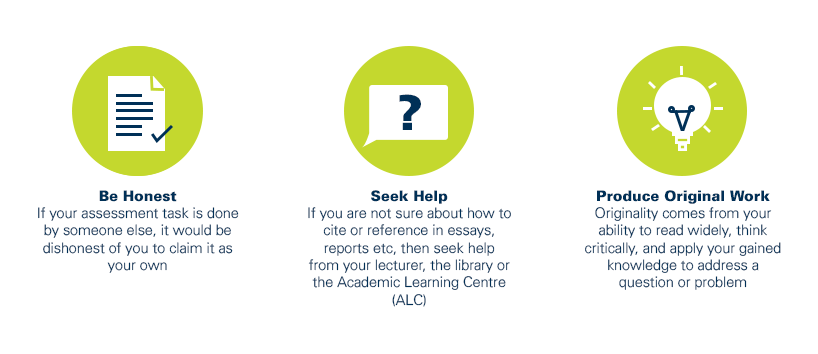
As a CQUniversity student you are expected to act honestly in all aspects of your academic work.
Any assessable work undertaken or submitted for review or assessment must be your own work. Assessable work is any type of work you do to meet the assessment requirements in the unit, including draft work submitted for review and feedback and final work to be assessed.
When you use the ideas, words or data of others in your assessment, you must thoroughly and clearly acknowledge the source of this information by using the correct referencing style for your unit. Using others’ work without proper acknowledgement may be considered a form of intellectual dishonesty.
Participating honestly, respectfully, responsibly, and fairly in your university study ensures the CQUniversity qualification you earn will be valued as a true indication of your individual academic achievement and will continue to receive the respect and recognition it deserves.
As a student, you are responsible for reading and following CQUniversity’s policies, including the Student Academic Integrity Policy and Procedure. This policy sets out CQUniversity’s expectations of you to act with integrity, examples of academic integrity breaches to avoid, the processes used to address alleged breaches of academic integrity, and potential penalties.
What is a breach of academic integrity?
A breach of academic integrity includes but is not limited to plagiarism, self-plagiarism, collusion, cheating, contract cheating, and academic misconduct. The Student Academic Integrity Policy and Procedure defines what these terms mean and gives examples.
Why is academic integrity important?
A breach of academic integrity may result in one or more penalties, including suspension or even expulsion from the University. It can also have negative implications for student visas and future enrolment at CQUniversity or elsewhere. Students who engage in contract cheating also risk being blackmailed by contract cheating services.
Where can I get assistance?
For academic advice and guidance, the Academic Learning Centre (ALC) can support you in becoming confident in completing assessments with integrity and of high standard.
What can you do to act with integrity?