Overview
Remote sensing is one of the most important and widely applied methods for monitoring natural and built environments. Satellite images help society understand the Earth's atmospheric, terrestrial, and aquatic environments. Information extracted from images is used to map and monitor land cover and biophysical changes (i.e. land-use change, vegetation health, crop yields, ozone concentration, soil moisture). Satellite images are often integrated into Geographic Information Systems (GIS) to support environmental management. In this unit, you will learn the spectral and spatial concepts that underpin multi-band image biophysical classification schemes. You will spend time practising image acquisition, processing and interpretation steps. Given the continued proliferation of satellite and airborne vehicle acquired images, such skills will increasingly be in demand.
Details
Pre-requisites or Co-requisites
Completion of 18 credit points
Important note: Students enrolled in a subsequent unit who failed their pre-requisite unit, should drop the subsequent unit before the census date or within 10 working days of Fail grade notification. Students who do not drop the unit in this timeframe cannot later drop the unit without academic and financial liability. See details in the Assessment Policy and Procedure (Higher Education Coursework).
Offerings For Term 1 - 2026
Attendance Requirements
All on-campus students are expected to attend scheduled classes - in some units, these classes are identified as a mandatory (pass/fail) component and attendance is compulsory. International students, on a student visa, must maintain a full time study load and meet both attendance and academic progress requirements in each study period (satisfactory attendance for International students is defined as maintaining at least an 80% attendance record).
Recommended Student Time Commitment
Each 6-credit Undergraduate unit at CQUniversity requires an overall time commitment of an average of 12.5 hours of study per week, making a total of 150 hours for the unit.
Class Timetable
Assessment Overview
Assessment Grading
This is a graded unit: your overall grade will be calculated from the marks or grades for each assessment task, based on the relative weightings shown in the table above. You must obtain an overall mark for the unit of at least 50%, or an overall grade of 'pass' in order to pass the unit. If any 'pass/fail' tasks are shown in the table above they must also be completed successfully ('pass' grade). You must also meet any minimum mark requirements specified for a particular assessment task, as detailed in the 'assessment task' section (note that in some instances, the minimum mark for a task may be greater than 50%). Consult the University's Grades and Results Policy for more details of interim results and final grades.
All University policies are available on the CQUniversity Policy site.
You may wish to view these policies:
- Grades and Results Policy
- Assessment Policy and Procedure (Higher Education Coursework)
- Review of Grade Procedure
- Student Academic Integrity Policy and Procedure
- Academic Progression Policy and Procedure
- Student Refund and Credit Balance Policy and Procedure
- Complaints Policy and Procedure
- Information and Communications Technology Acceptable Use Policy and Procedure
This list is not an exhaustive list of all University policies. The full list of University policies are available on the CQUniversity Policy site.
Feedback, Recommendations and Responses
Every unit is reviewed for enhancement each year. At the most recent review, the following staff and student feedback items were identified and recommendations were made.
Feedback from Self-reflection
A review of assessments is necessary
Assessments should be reviewed to improve their alignment with the unit learning outcomes.
Feedback from Student Feedback during tutorial, Self-reflection
Schedule a live weekly tutorial to complement pre-recorded lectures and other materials provided on Moodle.
The weekly one-hour live tutorial should be continued, as students who attend find the sessions highly beneficial
- Explain spatial, spectral, radiometric and temporal characteristics of remotely sensed data
- Evaluate the capabilities and limitations of optical, multispectral satellite remote sensing image processing
- Create maps of selected earth observation parameters using satellite image processing techniques.
Nil
Alignment of Assessment Tasks to Learning Outcomes
| Assessment Tasks | Learning Outcomes | ||
|---|---|---|---|
| 1 | 2 | 3 | |
| 1 - Practical and Written Assessment - 20% | |||
| 2 - Practical and Written Assessment - 30% | |||
| 3 - Case Study - 50% | |||
Alignment of Graduate Attributes to Learning Outcomes
| Graduate Attributes | Learning Outcomes | ||
|---|---|---|---|
| 1 | 2 | 3 | |
| 1 - Communication | |||
| 2 - Problem Solving | |||
| 3 - Critical Thinking | |||
| 4 - Information Literacy | |||
| 5 - Team Work | |||
| 6 - Information Technology Competence | |||
| 7 - Cross Cultural Competence | |||
| 8 - Ethical practice | |||
| 9 - Social Innovation | |||
| 10 - First Nations Knowledges | |||
| 11 - Aboriginal and Torres Strait Islander Cultures | |||
Textbooks
There are no required textbooks.
Additional Textbook Information
Students will use Remote Sensing in this unit. Therefore, they will need access to a computer (desktop or laptop). They will also need reliable internet access. Instructions on how to install the software will be provided on the Moodle site.
IT Resources
- CQUniversity Student Email
- Internet
- Unit Website (Moodle)
All submissions for this unit must use the referencing style: Harvard (author-date)
For further information, see the Assessment Tasks.
r.koech@cqu.edu.au
Week 1
Begin Date: 09 Mar 2026Module/Topic
Satellite Earth Observation
Chapter
Events and Submissions/Topic
Week 2
Begin Date: 16 Mar 2026Module/Topic
Electromagnetic Radiation
Chapter
Events and Submissions/Topic
Week 3
Begin Date: 23 Mar 2026Module/Topic
Satellite Sensor Specifications
Chapter
Events and Submissions/Topic
Week 4
Begin Date: 30 Mar 2026Module/Topic
Remote Sensing Software
Chapter
Events and Submissions/Topic
Week 5
Begin Date: 06 Apr 2026Module/Topic
Image Concepts
Chapter
Events and Submissions/Topic
Week 6
Begin Date: 13 Apr 2026Module/Topic
Image Preparation
Chapter
Events and Submissions/Topic
Vacation Week
Begin Date: 20 Apr 2026Module/Topic
Chapter
Events and Submissions/Topic
Week 7
Begin Date: 27 Apr 2026Module/Topic
Image Enhancement
Chapter
Events and Submissions/Topic
Week 8
Begin Date: 04 May 2026Module/Topic
Landcover Classification
Chapter
Events and Submissions/Topic
Week 9
Begin Date: 11 May 2026Module/Topic
Measuring Vegetation Health
Chapter
Events and Submissions/Topic
Week 10
Begin Date: 18 May 2026Module/Topic
Analysis Accuracy
Chapter
Events and Submissions/Topic
Week 11
Begin Date: 25 May 2026Module/Topic
Landcover Change Detection
Chapter
Events and Submissions/Topic
Week 12
Begin Date: 01 Jun 2026Module/Topic
Earth Observation Options
Chapter
Events and Submissions/Topic
Exam Week
Begin Date: 08 Jun 2026Module/Topic
Chapter
Events and Submissions/Topic
Vacation/Exam Week
Begin Date: 15 Jun 2026Module/Topic
Chapter
Events and Submissions/Topic
1 Practical and Written Assessment
Practical and Written Assessment 1 is a submission of short answer questions, worked exercises, and the result of image processing exercises of weeks 1, 2 and 3. The questions are in a Microsoft Word file in Moodle, which you can download and use as your template (i.e., type in your answers and insert maps). The GEOG13015 Moodle site provides detailed assessment task instructions.
Level of GenAI use allowed:
Level 2: You may use Al for planning, idea development, and research. Your final submission should show how you have developed and refined these ideas.
Week 5 Monday (6 Apr 2026) 9:00 am AEST
Vacation Week Monday (20 Apr 2026)
The GEOG13015 Moodle site provides detailed marking criteria – a synopsis of which is:
- Completeness of the answer concerning the learning material;
- Readability/suitability of submitted images/diagrams (tables/figures);
- Within any expressed word limits (noted in the exercise if applicable); and
- Sentence construction, argument structure, and readability of short answers.
- Explain spatial, spectral, radiometric and temporal characteristics of remotely sensed data
2 Practical and Written Assessment
Practical and Written Assessment 2 is a submission of short answer questions, worked exercises, and the result of image processing exercises of weeks 4, 5 and 6. The questions are in a Microsoft Word file in Moodle, which you can download and use as your template (i.e., type in your answers and insert maps). The GEOG13015 Moodle site provides detailed assessment task instructions.
Level of GenAI use allowed:
Level 2: You may use Al for planning, idea development, and research. Your final submission should show how you have developed and refined these ideas.
Week 8 Monday (4 May 2026) 9:00 am AEST
Week 10 Monday (18 May 2026)
The GEOG13015 Moodle site also provides detailed marking criteria – a synopsis of which is:
- Completeness of the answer concerning the learning material;
- Readability/suitability of submitted diagrams (tables/figures);
- Within any expressed word limits (noted in the exercise if applicable); and
- Sentence construction, argument structure, and readability of short answers.
- Evaluate the capabilities and limitations of optical, multispectral satellite remote sensing image processing
3 Case Study
This Case Study is a submission of some short answer questions, worked exercises, and the result of image processing exercises of weeks 7 to 11. The questions are in a Microsoft Word file in Moodle, which you can download and use as your template (i.e., type in your answers and insert maps). The GEOG13015 Moodle site provides detailed assessment task instructions.
Level of GenAI use allowed:
Level 2: You may use Al for planning, idea development, and research. Your final submission should show how you have developed and refined these ideas.
Week 12 Friday (5 June 2026) 11:00 pm AEST
Exam Week Friday (12 June 2026)
The GEOG13015 Moodle site also provides detailed marking criteria – a synopsis of which is:
- The written answers are well structured and engage readers.
- The land cover classified image set is complete and well presented.
- The vegetation index and difference image sets are complete and well presented.
- Short answers reflect an understanding of satellite remote sensing image processing.
- Within any expressed word and submission time limits.
- Create maps of selected earth observation parameters using satellite image processing techniques.
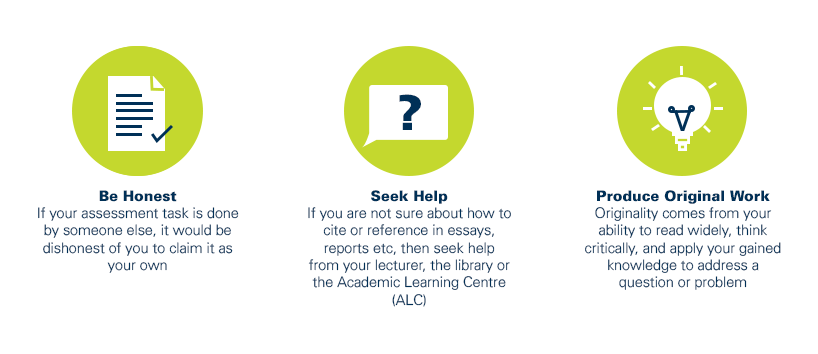
As a CQUniversity student you are expected to act honestly in all aspects of your academic work.
Any assessable work undertaken or submitted for review or assessment must be your own work. Assessable work is any type of work you do to meet the assessment requirements in the unit, including draft work submitted for review and feedback and final work to be assessed.
When you use the ideas, words or data of others in your assessment, you must thoroughly and clearly acknowledge the source of this information by using the correct referencing style for your unit. Using others’ work without proper acknowledgement may be considered a form of intellectual dishonesty.
Participating honestly, respectfully, responsibly, and fairly in your university study ensures the CQUniversity qualification you earn will be valued as a true indication of your individual academic achievement and will continue to receive the respect and recognition it deserves.
As a student, you are responsible for reading and following CQUniversity’s policies, including the Student Academic Integrity Policy and Procedure. This policy sets out CQUniversity’s expectations of you to act with integrity, examples of academic integrity breaches to avoid, the processes used to address alleged breaches of academic integrity, and potential penalties.
What is a breach of academic integrity?
A breach of academic integrity includes but is not limited to plagiarism, self-plagiarism, collusion, cheating, contract cheating, and academic misconduct. The Student Academic Integrity Policy and Procedure defines what these terms mean and gives examples.
Why is academic integrity important?
A breach of academic integrity may result in one or more penalties, including suspension or even expulsion from the University. It can also have negative implications for student visas and future enrolment at CQUniversity or elsewhere. Students who engage in contract cheating also risk being blackmailed by contract cheating services.
Where can I get assistance?
For academic advice and guidance, the Academic Learning Centre (ALC) can support you in becoming confident in completing assessments with integrity and of high standard.
What can you do to act with integrity?