Overview
On successful completion of this unit you will have an appreciation of social determinants on your own and others' health outcomes. You will understand how early childhood experiences, culture, ethnicity, gender, socioeconomic status and education play out to influence health at individual, community and societal levels. You will explore the impacts of racism, sexism, poverty and inequality on social gradients and the short and long term effects on health. You will also explore the social protective factors of community connectedness and identity and be introduced to key social innovation concepts. Finally, you will have the opportunity to refine your academic searching and writing skills through the literacy and information literacy resources provided in this unit.
Details
Pre-requisites or Co-requisites
There are no requisites for this unit.
Important note: Students enrolled in a subsequent unit who failed their pre-requisite unit, should drop the subsequent unit before the census date or within 10 working days of Fail grade notification. Students who do not drop the unit in this timeframe cannot later drop the unit without academic and financial liability. See details in the Assessment Policy and Procedure (Higher Education Coursework).
Offerings For Term 1 - 2026
Attendance Requirements
All on-campus students are expected to attend scheduled classes - in some units, these classes are identified as a mandatory (pass/fail) component and attendance is compulsory. International students, on a student visa, must maintain a full time study load and meet both attendance and academic progress requirements in each study period (satisfactory attendance for International students is defined as maintaining at least an 80% attendance record).
Recommended Student Time Commitment
Each 6-credit Undergraduate unit at CQUniversity requires an overall time commitment of an average of 12.5 hours of study per week, making a total of 150 hours for the unit.
Class Timetable
Assessment Overview
Assessment Grading
This is a graded unit: your overall grade will be calculated from the marks or grades for each assessment task, based on the relative weightings shown in the table above. You must obtain an overall mark for the unit of at least 50%, or an overall grade of 'pass' in order to pass the unit. If any 'pass/fail' tasks are shown in the table above they must also be completed successfully ('pass' grade). You must also meet any minimum mark requirements specified for a particular assessment task, as detailed in the 'assessment task' section (note that in some instances, the minimum mark for a task may be greater than 50%). Consult the University's Grades and Results Policy for more details of interim results and final grades.
All University policies are available on the CQUniversity Policy site.
You may wish to view these policies:
- Grades and Results Policy
- Assessment Policy and Procedure (Higher Education Coursework)
- Review of Grade Procedure
- Student Academic Integrity Policy and Procedure
- Academic Progression Policy and Procedure
- Student Refund and Credit Balance Policy and Procedure
- Complaints Policy and Procedure
- Information and Communications Technology Acceptable Use Policy and Procedure
This list is not an exhaustive list of all University policies. The full list of University policies are available on the CQUniversity Policy site.
Feedback, Recommendations and Responses
Every unit is reviewed for enhancement each year. At the most recent review, the following staff and student feedback items were identified and recommendations were made.
Feedback from Student feedback via unit evaluation and in-person comments.
Some students reported difficulty accessing the free online textbook chapters, despite the library confirming that access should not be affected by the large cohort size.
Review the accessibility and usability of the free online textbook chapters to ensure a smooth experience for all students. Consider reinstating the previously prescribed textbook to better support student engagement and ease of access.
Feedback from Student feedback via unit evaluation, email, and in-person comments
Students consistently reported feeling supported and engaged, with positive feedback on the clarity of expectations and the relevance of content to their future careers.
Continue to prioritise clear communication of unit expectations and maintain a supportive, inclusive learning environment. Retain the current structure and teaching approach that links foundational health concepts to real-world practice, as this has been well received by students across disciplines.
- Explain social determinants of health from an individual scale
- Explain social determinants of health across community and national/global scales
- Relate social determinants of health to community connectedness and identity
- Demonstrate appropriate referencing in academic writing
- Develop an appropriate argument in an academic essay
- Locate and evaluate relevant information using library tools and digital technologies, including responsible and ethical use of AI tools
- Explain how social determinants of health influence the health and well-being of Aboriginal and Torres Strait Islander peoples
Not applicable.
Alignment of Assessment Tasks to Learning Outcomes
| Assessment Tasks | Learning Outcomes | ||||||
|---|---|---|---|---|---|---|---|
| 1 | 2 | 3 | 4 | 5 | 6 | 7 | |
| 1 - Written Assessment - 20% | |||||||
| 2 - Online Quiz(zes) - 30% | |||||||
| 3 - Written Assessment - 50% | |||||||
Alignment of Graduate Attributes to Learning Outcomes
| Graduate Attributes | Learning Outcomes | ||||||
|---|---|---|---|---|---|---|---|
| 1 | 2 | 3 | 4 | 5 | 6 | 7 | |
| 1 - Communication | |||||||
| 2 - Problem Solving | |||||||
| 3 - Critical Thinking | |||||||
| 4 - Information Literacy | |||||||
| 5 - Team Work | |||||||
| 6 - Information Technology Competence | |||||||
| 7 - Cross Cultural Competence | |||||||
| 8 - Ethical practice | |||||||
| 9 - Social Innovation | |||||||
| 10 - First Nations Knowledges | |||||||
| 11 - Aboriginal and Torres Strait Islander Cultures | |||||||
Textbooks
Social Determinants of Health: A Comparative Approach
- Edition: 2nd (2019)
- Authors: Davidson, A
- Oxford University Press
- Don Mills Don Mills , Ontario , Canada
- ISBN: 978-0-19-903220-4
The textbook is available online as an eBook via a 'rent' or 'buy' purchase. Students may also use the first edition. Relevant chapter readings will be provided for the textbook's first and second editions for those who wish to use it throughout the term.
Additional readings will be provided throughout the term.
- Binding: Paperback
IT Resources
- CQUniversity Student Email
- Internet
- Unit Website (Moodle)
- Computer - ability to access study materials, access Zoom application for meetings and view instructional videos.
All submissions for this unit must use the referencing styles below:
For further information, see the Assessment Tasks.
a.oorloff@cqu.edu.au
Week 1: Social Determinants of Health
Begin Date: 09 Mar 2026Module/Topic
Social Determinants of Health
Chapter
Refer to Week 1 eReading list via Moodle
Events and Submissions/Topic
Live ISL and Zoom session
Week 2: Socioeconomic Status (SES): Income
Begin Date: 16 Mar 2026Module/Topic
Socioeconomic Status (SES): Income
Chapter
Refer to Week 2 eReading list via Moodle
Events and Submissions/Topic
Live ISl and Zoom session
Week 3: Socioeconomic Status (SES): Employment
Begin Date: 23 Mar 2026Module/Topic
Socioeconomic Status (SES): Employment
Chapter
Refer to Week 3 eReading list via Moodle
Events and Submissions/Topic
Live ISL and Zoom session
Week 4: Socioeconomic Status (SES): Education
Begin Date: 30 Mar 2026Module/Topic
Socioeconomic Status (SES): Education
Chapter
Refer to Week 4 eReading list via Moodle
Events and Submissions/Topic
Live ISL and Zoom session
Week 5: Culture and Ethnicity
Begin Date: 06 Apr 2026Module/Topic
Culture and Ethnicity
Chapter
Refer to Week 5 eReading list via Moodle
Events and Submissions/Topic
Live ISL and Zoom session
Case Study Analysis Due: Week 5 Friday (10 Apr 2026) 4:00 pm AEST
Week 6: Early Childhood Experiences
Begin Date: 13 Apr 2026Module/Topic
Early Childhood Experiences
Chapter
Refer to Week 6 eReading list via Moodle
Events and Submissions/Topic
Live ISL and Zoom session
Vacation Week
Begin Date: 20 Apr 2026Module/Topic
Mid-term break
Chapter
Events and Submissions/Topic
No Live ISL and Zoom session this week
Week 7: Gender
Begin Date: 27 Apr 2026Module/Topic
Gender
Chapter
Refer to Week 7 eReading list via Moodle
Events and Submissions/Topic
Live ISL and Zoom session
Assessment 2, Quiz 1 Opens: Week 7 Friday (1 May 2026) 12:00 am AEST
Week 8: Social and Community Connection
Begin Date: 04 May 2026Module/Topic
Week 8: Social and Community Connection
Chapter
Refer to Week 8 eReading list via Moodle
Events and Submissions/Topic
Live ISL and Zoom session
Week 9: Healthy Neighbourhoods
Begin Date: 11 May 2026Module/Topic
Healthy Neighbourhoods
Chapter
Refer to Week 9 eReading list via Moodle
Events and Submissions/Topic
Live ISL and Zoom session
Week 10: Population Health - Shifting the Scale
Begin Date: 18 May 2026Module/Topic
Population Health - Shifting the Scale
Chapter
Refer to Week 10 eReading list via Moodle
Events and Submissions/Topic
No Live ISL and Zoom session this week
Assessment 2, Quiz 1 Due: Week 10 Monday (18 May 2026), quiz closes 4:00 pm AEST
Week 11: Lived Experience of the Social Determinants of Health
Begin Date: 25 May 2026Module/Topic
Lived Experience of the Social Determinants of Health
Chapter
Revise relevant readings in preparation for Assessment 3
Events and Submissions/Topic
No Live ISL and Zoom session this week
Assessment 2, Quiz 2, Parts A and B Due: Week 11 Monday (25 May 2026) 4:00 pm AEST
Week 12: Assessment 3, Essay, Question & Answer Week
Begin Date: 01 Jun 2026Module/Topic
Assessment 3, Essay, Question & Answer Week
Chapter
Revise relevant readings in preparation for Assessment 3
Events and Submissions/Topic
Live ISL and Zoom Session
Essay Due: Week 12 Friday (5 June 2026) 4:00 pm AEST
Exam Week
Begin Date: 08 Jun 2026Module/Topic
Chapter
Events and Submissions/Topic
Vacation/Exam Week
Begin Date: 15 Jun 2026Module/Topic
Chapter
Events and Submissions/Topic
1 Written Assessment
Weighting: 20%
Word length: 750 words (Cover page and reference list excluded; 10% leeway applies)
Due date: Friday, Week 5
Submission: Online via Moodle - submit as a Word doc, size 12 font, double-line spacing, acceptable fonts include Arial, Times New Roman, or Calibri
Description:
Understanding how the social determinants of health shape individual and community wellbeing is essential for effective, equitable health practice. This assessment requires you to analyse a realistic case scenario to demonstrate how broader social, cultural, and economic factors influence health outcomes, access to care, and engagement with health services.
Through this task, you will apply unit concepts to a practical health scenario and reflect on how an awareness of social determinants informs your future role as a health professional.
Task:
Choose ONE case scenario from the list provided in Moodle and complete a case study analysis addressing the following three sections:
1. Social Determinants of Health
Identify and describe at least THREE social determinants of health evident in the scenario (choose from: income, education, employment, culture).
Explain how these determinants may influence:
- Health outcomes
- Access to healthcare
- Engagement with care and/or healthcare professionals
2. Reflection on Professional Practice
Reflect on how understanding these social determinants will shape your approach to practice in your chosen discipline.
- Students in generalist degrees (e.g. Public Health, Allied Health, Health Sciences) are not required to identify a specific job role if they do not yet know their future vocational area - see the assessment description sheet for further information.
- Focus on how this understanding will shape your thinking, communication, decision‑making, or advocacy as a future health professional.
3. Aboriginal and Torres Strait Islander Considerations
Reflect on how the scenario might differ if the client/patient were Aboriginal or Torres Strait Islander, and how this would shape your professional response.
Consider:
- Additional or amplified social determinants (e.g. racism, mistrust of healthcare, intergenerational trauma, connection to Country and community)
- How these factors may affect engagement or outcomes related to health
- How would you ensure your professional practice aligns with culturally safe and respectful care for Aboriginal and Torres Strait Islander peoples
Level of GenAI Use Allowed:
Level 2: You may use AI for planning, idea development, and structuring your response.
Your final submission must demonstrate your own understanding and application of unit concepts.
In accordance with CQUniversity policy, please note that if you used Generative Artificial Intelligence (GenAI) tools for the aforementioned permitted uses, then you MUST include a declaration on your assessment cover page stating the use of Generative Artificial Intelligence and how it was used
Week 5 Friday (10 Apr 2026) 4:00 pm AEST
Please submit as a Word document.
Week 7 Monday (27 Apr 2026)
Identification and explanation of relevant social determinants (40%)
Reflection and insight related to health practice (25%)
Cultural safety and responsiveness in relation to Aboriginal and Torres Strait Islander peoples (25%)
Clarity, structure, and appropriate referencing (10%)
See the Moodle site for a detailed marking rubric.
- Explain social determinants of health from an individual scale
- Locate and evaluate relevant information using library tools and digital technologies, including responsible and ethical use of AI tools
- Explain how social determinants of health influence the health and well-being of Aboriginal and Torres Strait Islander peoples
2 Online Quiz(zes)
There are two components to the online quizzes.
Quiz 1: The first online quiz relates to the social determinants of health. It is open-book and contains fifteen (15) questions. The quiz is completed online. It contributes a possible 15 marks (15%) towards the final grade for the unit. Only one attempt is possible on this quiz. Quiz 1 opens on Friday of Week 7 and closes at 4:00 pm AEST on Monday of Week 10.
Quiz 2: The second online quiz relates to Social Innovation and involves: A) completion of the CQUniversity iChange Module, and B) answering three multiple-choice questions that relate to social innovation. This assessment contributes 15 marks (15%) towards the final grade for the unit. The iChange Module can be accessed via the CQUniversity Social Innovation website; details are provided on the unit Moodle page. iChange is an online module that contains six social innovation-themed units and quizzes. Once completed, you will be issued a completion certificate.
You may commence the iChange module at any time during the term; however, you must have completed it, uploaded your completion certificate (Part A), and answered the associated Social Innovation multiple-choice questions (Part B) by 4:00 pm AEST, Monday of Week 11.
Level of GenAI Use Allowed:
Level 1: You must not use GenAl at any point during the assessment. You must demonstrate your core skills and knowledge.
Note: A 72-hour grace period does not apply for Quiz 1.
Quiz 1 closes 4:00 pm AEST, Monday of Week 10 (18 May 2026). Quiz 2 must be completed by 4:00 pm AEST, Monday of Week 11 (25 May 2026).
Results of Quiz 1 will be released one week after the quiz has closed.
Each question in Quiz 1 and Quiz 2 (Part B) are worth 1 mark each. By uploading your iChange completion certificate (Quiz 2, Part A), you will automatically earn the 12 marks this task is worth.
- Explain social determinants of health from an individual scale
- Explain social determinants of health across community and national/global scales
- Relate social determinants of health to community connectedness and identity
- Explain how social determinants of health influence the health and well-being of Aboriginal and Torres Strait Islander peoples
3 Written Assessment
Weighting: 50%
Word length: 1,500–2,000 words
Due date: Friday, Week 12
Submission: Online via Moodle - submit as a Word doc, size 12 font, double-line spacing, acceptable fonts include Arial, Times New Roman, or Calibri
Must Pass: This is a must‑pass assessment. Students must submit this assignment and achieve at least 50% to be eligible to pass the unit.
Description
Strong social and community connections are critical for both mental and physical health. Social connectedness support feelings of belonging, care, and value, and has been shown to reduce the risk of depression, chronic disease, and early mortality. In contrast, loneliness and social isolation are associated with poorer health outcomes and increased vulnerability.
This assessment explores the protective role of social and/or community connectedness by examining the lived experience of individuals who have experienced social disconnection. You will apply unit concepts and evidence to a realistic case study to demonstrate how connection can support health and well-being.
Task
You will be provided with five case study characters on the Moodle site.
Choose ONE character and write an essay that explores how social and/or community connectedness could be protective for that character’s health.
Your essay must:
- Focus on one specific avenue for connection (of your choosing), such as: Community or social groups, cultural, recreational, or volunteer activities
- Explain how and why this form of connection would benefit the character’s mental health, physical health, and overall wellbeing
- Draw on relevant unit concepts and scholarly evidence
- Clearly link your discussion to the chosen character’s circumstances
Level of Generative AI use allowed:
Level 2: You may use Al for planning, idea development and research. Your final submission should show how you have developed and refined these ideas.
In accordance with CQUniversity policy, please note that if you used Generative Artificial Intelligence tools for the aforementioned permitted uses, then you MUST include a declaration on your assessment cover page stating the use of Generative Artificial Intelligence and how it was used.
Week 12 Friday (5 June 2026) 4:00 pm AEST
Exam Week Monday (22 June 2026)
Structure and Presentation – Clear introduction and conclusion, logical paragraphing, and correct formatting (15%)
Content and Argument – Strong, character‑focused discussion of connectedness and health, supported by evidence (75%)
Referencing – Accurate in‑text citations and reference list using APA or Harvard (10%)
See the Moodle site for a detailed marking rubric.
- Explain social determinants of health across community and national/global scales
- Relate social determinants of health to community connectedness and identity
- Demonstrate appropriate referencing in academic writing
- Develop an appropriate argument in an academic essay
- Locate and evaluate relevant information using library tools and digital technologies, including responsible and ethical use of AI tools
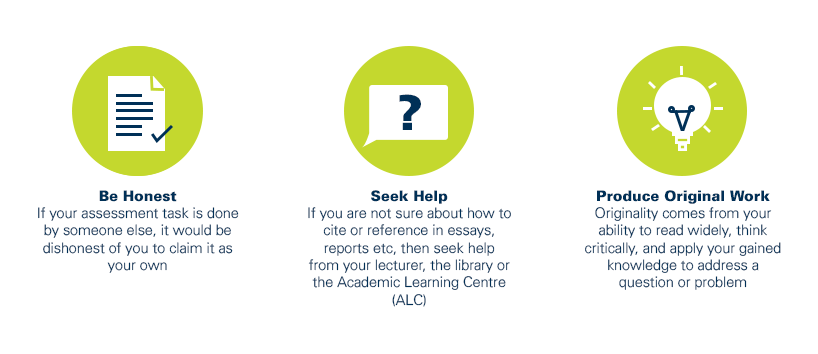
As a CQUniversity student you are expected to act honestly in all aspects of your academic work.
Any assessable work undertaken or submitted for review or assessment must be your own work. Assessable work is any type of work you do to meet the assessment requirements in the unit, including draft work submitted for review and feedback and final work to be assessed.
When you use the ideas, words or data of others in your assessment, you must thoroughly and clearly acknowledge the source of this information by using the correct referencing style for your unit. Using others’ work without proper acknowledgement may be considered a form of intellectual dishonesty.
Participating honestly, respectfully, responsibly, and fairly in your university study ensures the CQUniversity qualification you earn will be valued as a true indication of your individual academic achievement and will continue to receive the respect and recognition it deserves.
As a student, you are responsible for reading and following CQUniversity’s policies, including the Student Academic Integrity Policy and Procedure. This policy sets out CQUniversity’s expectations of you to act with integrity, examples of academic integrity breaches to avoid, the processes used to address alleged breaches of academic integrity, and potential penalties.
What is a breach of academic integrity?
A breach of academic integrity includes but is not limited to plagiarism, self-plagiarism, collusion, cheating, contract cheating, and academic misconduct. The Student Academic Integrity Policy and Procedure defines what these terms mean and gives examples.
Why is academic integrity important?
A breach of academic integrity may result in one or more penalties, including suspension or even expulsion from the University. It can also have negative implications for student visas and future enrolment at CQUniversity or elsewhere. Students who engage in contract cheating also risk being blackmailed by contract cheating services.
Where can I get assistance?
For academic advice and guidance, the Academic Learning Centre (ALC) can support you in becoming confident in completing assessments with integrity and of high standard.
What can you do to act with integrity?