Overview
This comprehensive unit serves as an introduction to hospitality management's fundamental principles and practices. You will gain a solid foundation in the core concepts and skills required to succeed in the dynamic hospitality industry. You will explore key topics such as customer service, front office operations, food and beverage management, and event planning through a blend of theoretical knowledge and authentic applications. You will engage in hands-on activities, case studies, and interactive discussions to reinforce your understanding of hospitality management fundamentals.
Details
Pre-requisites or Co-requisites
There are no requisites for this unit.
Important note: Students enrolled in a subsequent unit who failed their pre-requisite unit, should drop the subsequent unit before the census date or within 10 working days of Fail grade notification. Students who do not drop the unit in this timeframe cannot later drop the unit without academic and financial liability. See details in the Assessment Policy and Procedure (Higher Education Coursework).
Offerings For Term 1 - 2026
Attendance Requirements
All on-campus students are expected to attend scheduled classes - in some units, these classes are identified as a mandatory (pass/fail) component and attendance is compulsory. International students, on a student visa, must maintain a full time study load and meet both attendance and academic progress requirements in each study period (satisfactory attendance for International students is defined as maintaining at least an 80% attendance record).
Recommended Student Time Commitment
Each 6-credit Undergraduate unit at CQUniversity requires an overall time commitment of an average of 12.5 hours of study per week, making a total of 150 hours for the unit.
Class Timetable
Assessment Overview
Assessment Grading
This is a graded unit: your overall grade will be calculated from the marks or grades for each assessment task, based on the relative weightings shown in the table above. You must obtain an overall mark for the unit of at least 50%, or an overall grade of 'pass' in order to pass the unit. If any 'pass/fail' tasks are shown in the table above they must also be completed successfully ('pass' grade). You must also meet any minimum mark requirements specified for a particular assessment task, as detailed in the 'assessment task' section (note that in some instances, the minimum mark for a task may be greater than 50%). Consult the University's Grades and Results Policy for more details of interim results and final grades.
All University policies are available on the CQUniversity Policy site.
You may wish to view these policies:
- Grades and Results Policy
- Assessment Policy and Procedure (Higher Education Coursework)
- Review of Grade Procedure
- Student Academic Integrity Policy and Procedure
- Academic Progression Policy and Procedure
- Student Refund and Credit Balance Policy and Procedure
- Complaints Policy and Procedure
- Information and Communications Technology Acceptable Use Policy and Procedure
This list is not an exhaustive list of all University policies. The full list of University policies are available on the CQUniversity Policy site.
Feedback, Recommendations and Responses
Every unit is reviewed for enhancement each year. At the most recent review, the following staff and student feedback items were identified and recommendations were made.
Feedback from Peer feedback from discipline colleagues
In-class activities
In-class activities that would facilitate student teamwork should be incorporated in the early phase of the term, so that positive group dynamics and group work foundations could be set for the benefit of Assessment 3 Group Work.
- Explain the fundamental principles of professional practice within the hospitality and tourism industry context
- Apply critical thinking skills to identify and analyse problems and issues related to hospitality management
- Communicate issues logically, concisely, coherently, and accurately in both written and oral formats, adapting the communication style to suit diverse audiences within the hospitality and tourism industry
- Collaborate effectively in a team to contribute to group dynamics, share responsibilities, and work towards common goals in the context of hospitality management scenarios
- Engage in reflective practice, and evaluate personal learning experiences in hospitality management.
Alignment of Assessment Tasks to Learning Outcomes
| Assessment Tasks | Learning Outcomes | ||||
|---|---|---|---|---|---|
| 1 | 2 | 3 | 4 | 5 | |
| 1 - Case Study - 0% | |||||
| 2 - Presentation - 50% | |||||
| 3 - Group Work - 50% | |||||
Alignment of Graduate Attributes to Learning Outcomes
| Graduate Attributes | Learning Outcomes | ||||
|---|---|---|---|---|---|
| 1 | 2 | 3 | 4 | 5 | |
| 1 - Communication | |||||
| 2 - Problem Solving | |||||
| 3 - Critical Thinking | |||||
| 4 - Information Literacy | |||||
| 5 - Team Work | |||||
| 6 - Information Technology Competence | |||||
| 7 - Cross Cultural Competence | |||||
| 8 - Ethical practice | |||||
| 9 - Social Innovation | |||||
| 10 - First Nations Knowledges | |||||
| 11 - Aboriginal and Torres Strait Islander Cultures | |||||
Textbooks
1. Hospitality Management: International Introduction
- Edition: 1 (2025)
- Authors: Simon Hudson
- Routledge
- ISBN: 9781032624211
IT Resources
- CQUniversity Student Email
- Internet
- Unit Website (Moodle)
All submissions for this unit must use the referencing style: American Psychological Association 7th Edition (APA 7th edition)
For further information, see the Assessment Tasks.
e.konovalov@cqu.edu.au
Week 1
Begin Date: 09 Mar 2026Module/Topic
An introduction to hospitality
Chapter
Chapter 1
Events and Submissions/Topic
Unit Assessments Overview
Week 2
Begin Date: 16 Mar 2026Module/Topic
Lodging
Chapter
Chapter 2
Events and Submissions/Topic
Work on the first assessment
Week 3
Begin Date: 23 Mar 2026Module/Topic
The structure of the hotel industry
Chapter
Chapter 3
Events and Submissions/Topic
Submit the first assessment by the due date
Case study Due: Week 3 Thursday (26 Mar 2026) 11:59 pm AEST
Week 4
Begin Date: 30 Mar 2026Module/Topic
Hotel Management
Chapter
Chapter 4
Events and Submissions/Topic
Start working on the second assessment
Week 5
Begin Date: 06 Apr 2026Module/Topic
Food & beverage management I and II
Chapter
Chapters 5 and 6
Events and Submissions/Topic
Continue working on the second assessment
Week 6
Begin Date: 13 Apr 2026Module/Topic
Cruise industry
Chapter
Chapters 7
Events and Submissions/Topic
Continue working on the second assessment
Vacation Week
Begin Date: 20 Apr 2026Module/Topic
Chapter
Events and Submissions/Topic
Week 7
Begin Date: 27 Apr 2026Module/Topic
Attractions, theme parks & casinos
Events, meetings & conventions, banquets
Chapter
Chapter 8
Chapter 9
Events and Submissions/Topic
Continue working on the second assessment
Week 8
Begin Date: 04 May 2026Module/Topic
Customer service and the servicescape
Chapter
Chapter 10
Events and Submissions/Topic
Submit the second assessment by the due date
Week 9
Begin Date: 11 May 2026Module/Topic
Marketing for hospitality
Chapter
Chapter 11
Events and Submissions/Topic
Start working on the final assessment
Presentation Due: Week 9 Monday (11 May 2026) 11:59 pm AEST
Week 10
Begin Date: 18 May 2026Module/Topic
Sustainability in the hospitality sector
Chapter
Chapter 12
Events and Submissions/Topic
Continue working on the final assessment
Week 11
Begin Date: 25 May 2026Module/Topic
Innovation and entrepreneurship in hospitality
Chapter
Chapter 13
Events and Submissions/Topic
Continue working on the final assessment
Week 12
Begin Date: 01 Jun 2026Module/Topic
Careers in hospitality
Chapter
Chapter 14
Events and Submissions/Topic
Submit the final assessment by the due date
Grant Proposal Due: Week 12 Friday (5 June 2026) 11:59 pm AEST
Exam Week
Begin Date: 08 Jun 2026Module/Topic
Chapter
Events and Submissions/Topic
Vacation/Exam Week
Begin Date: 15 Jun 2026Module/Topic
Chapter
Events and Submissions/Topic
1 Case Study
Task: Short Report
Type: Individual
Weighting: 0% (to pass the subject, you must pass this assessment)
Length: 500-700 words
Purpose:
This task helps you apply key concepts from Weeks 1–3 by exploring how a real North Queensland hospitality business combines sustainability, guest experience, and effective management.
Instructions for Students:
Write a short report (500–700 words) responding to the following:
1. Lodging Type & Unique Features
Describe what type of accommodation Thala Beach Nature Reserve is. What makes it unique and different from a typical hotel or resort?
2. Sustainability in Practice
Choose one sustainability practice at Thala Beach and explain why it is important in the hospitality industry. Describe how this practice could be applied in a hospitality business you would like to work in one day.
3. Guest Experience & Cultural Connection
How does Thala Beach create memorable guest experiences? Include at least one example and explain how you would adapt this experience to suit a different location or guest type.
4. Leadership & Planning
Based on what you’ve learned in class, how do you think leadership and planning contribute to Thala Beach’s success?
Evidence of research and referencing: Provide a list of at least 4 references from peer-reviewed journal articles, textbooks, government reports, and authentic internet sources. References should follow the APA style.
The case study will be marked either ‘Satisfactory’ or ‘Not yet satisfactory’ using the criteria outlined in the rubric for the assessment below. You must have a Pass/Satisfactory result for this assessment to pass the unit overall.
Level of GenAI use allowed:
Level 2: You may use Al for planning, idea development, and research. Your final submission should show how you have developed and refined these ideas.
You may choose to use GenAI assistive tools to support your assessment development on the condition that:
1. You disclose what GenAI tool you have used (e.g. Grammarly; CoPilot/ChatGPT)
2. You disclose how and why you have used it (e.g. to assist with editing my writing; to generate the first draft of a response, etc.)
In case you choose to use AI tools, you must include an AI acknowledgement statement (place it after the assessment cover page, ensure that the statement summarises the tools used and the scope of AI contribution to your work).
Week 3 Thursday (26 Mar 2026) 11:59 pm AEST
Week 5 Thursday (9 Apr 2026)
Feedback will be provided via Moodle
| Key Criteria | Satisfactory (PASS) | Not yet satisfactory (FAIL) |
| Understanding of Concepts (20%) | Demonstrates good understanding of relevant concepts from Weeks 1–3 | Limited or no understanding of course concepts |
| Application to Case Study (30%) | Accurately applies concepts to Thala Beach with relevant examples | Misapplies or omits key aspects of the case |
| Structure & Clarity (20%) | Clear writing, logical structure, full sentences | Disorganised or unclear writing |
| Effort & Originality (20%) | Thoughtful, original responses | Minimal effort or copied content |
| Referencing (10%) | Includes at least 4 references in APA style | Fewer than 4 references |
- Apply critical thinking skills to identify and analyse problems and issues related to hospitality management
2 Presentation
Task: Recorded Presentation
Type: Individual
Weighting: 50%
Length: 10 Minutes
For this assessment, you will work individually using the knowledge provided so far in this unit to develop a 10-minute presentation about a single sustainability issue within one of the nominated hospitality sectors in Australia. Specifically, you need to complete the following tasks:
1. Discuss the prevalence and importance of the selected sustainability issue for the hospitality sector overall, as well as outline why you chose to focus on this issue by reflecting on a personal situation when you were affected by the issue. Include a personal reflection describing a real-life experience where you encountered or observed this sustainability issue. Support your reflection with a photo, receipt, or other evidence if possible.
2. Provide a brief overview of how the selected issue currently affects one of the following hospitality sectors (choose one sector based on your interest and preferences): (1) Food and Beverage; (2) Cruise Industry; (3) Attractions, Theme Parks and Casinos. Ensure to link the issue to the features of the selected sector covered in the subject materials (weeks 5-7).
3. To illustrate the selected issue in the selected hospitality sector, find a particular recent example of an Australian hospitality business (no more than 2 years old) from a mainstream media article (could be a news article, journal paper, online blog, online specialist journal article, etc; ensure to include the link to the article in your presentation). Describe how the issue affects the business, and propose a single realistic, viable, and budget-conscious solution with specific actions to improve the situation within 12 months. Critically evaluate how the selected business has responded to the issue so far. What worked, what didn’t, and why is your proposed solution more effective? Make sure to discuss how you will monitor the implementation of the suggested intervention actions and what successful change will look like for the business, i.e., how the business can establish whether the implemented actions achieved or did not achieve the nominated goal.
Record your presentation on software, such as PowerPoint, Zoom, Canva, Prezi or Teams. It is recommended to watch this video on How to Record a PowerPoint Presentation with Audio and Video [Updated] to assist you in developing your presentation. Ensure to retain a copy of your presentation files (video recording and visual aids) in a secure digital location.
Evidence of research and referencing: Provide a list of at least 10 references from peer-reviewed journal articles, textbooks, government reports, and authentic internet sources. References should follow the APA 7th style and be listed on the final presentation slide.
The presentation will be marked using the criteria outlined in the rubric for the assessment.
Level of GenAI use allowed:
Level 2: You may use Al for planning, idea development, and research. Your final submission should show how you have developed and refined these ideas.
You may choose to use GenAI assistive tools to support your assessment development on the condition that:
1. You disclose what GenAI tool you have used (e.g. Grammarly; CoPilot/ChatGPT)
2. You disclose how and why you have used it (e.g. to assist with editing my writing; to generate the first draft of a response, etc.)
In case you choose to use AI tools, you must include an AI acknowledgement statement (include a single slide at the beginning of the presentation, after the title slide) that summarises the tools used and the scope of AI contribution to your work.
Week 9 Monday (11 May 2026) 11:59 pm AEST
Week 11 Monday (25 May 2026)
Feedback will be provided via Moodle
| Key Criteria |
HD |
D | C | P | F |
| Sustainability Issue, Industry Impact & Personal Relevance (20%) | Exceptionally clear identification of issue and impact; integrates theory and sources seamlessly; personal reflection is authentic, insightful, and supported with evidence. | Clear identification of issue and impact; strong integration of theory and sources; personal reflection is relevant and supported. | Adequate identification of issue and impact; some integration of theory; personal reflection is appropriate. | Basic identification of issue and impact; limited theory use; personal reflection is present but lacks depth. | Issue and impact unclear or missing; minimal or no theory; personal reflection absent or irrelevant. |
| Sector-Specific Impact & Real-Life Business Example (20%) | Thorough and insightful analysis of issue’s impact on chosen sector; excellent use of a recent, relevant Australian business example. | Strong analysis of issue’s impact; good use of a relevant business example. | Adequate analysis; business example is relevant but not well integrated. | Basic analysis; business example is weak or only loosely connected. | Little or no analysis; business example missing or inappropriate. |
| Proposed Solution & Measures of Success (30%) | Innovative, realistic, and well-justified solution; strong use of theory; clear, measurable success indicators. | Well-developed and justified solution; good use of theory; appropriate success indicators. | Reasonable solution with some justification; measures of success are present but may lack clarity. | Basic solution with limited justification; measures of success are vague or underdeveloped. | Solution is unrealistic or unjustified; KPIs are missing or irrelevant. |
| Evidence of Research & Referencing (10%) | Excellent breadth and quality of sources; seamless integration; APA referencing format is followed precisely. | Strong research base; well-integrated sources; minor APA errors. | Satisfactory research; some integration; a few APA errors. | Limited research; weak integration; several APA errors. | Poor or no research; sources not integrated; APA style not followed. |
| Visual Aids (10%) | Visually engaging, well-structured, error-free; enhances understanding; presentation within time limit. | Clear and structured; minor errors; mostly within the time limit. | Adequate visuals, some structure and clarity; close to the time limit. | Basic visuals, some errors; slightly over/under time. | Poor visuals, disorganized or error-prone, significantly off time. |
| Presentation Skills (10%) | Highly confident delivery; excellent eye contact, pace, and expression; demonstrates deep understanding. | Confident delivery, good eye contact, and pace; clear understanding. | Competent delivery, some eye contact and expression; adequate understanding. | Basic delivery, limited eye contact or expression; understanding is evident but not strong. | Poor delivery; lacks confidence, clarity, or engagement; understanding not demonstrated. |
- Explain the fundamental principles of professional practice within the hospitality and tourism industry context
- Communicate issues logically, concisely, coherently, and accurately in both written and oral formats, adapting the communication style to suit diverse audiences within the hospitality and tourism industry
- Engage in reflective practice, and evaluate personal learning experiences in hospitality management.
3 Group Work
Task: Grant Proposal
Type: Group work
Weighting: 50%
Length: Part A – 500 words; Part B: 2,500 words
For this assessment, you will work in groups of 2-4 students using the knowledge provided so far in this unit to develop a grant proposal for a hospitality project addressing Queensland government's priorities in the Destination 2045 plan. Specifically, you need to complete the following tasks:
1. Part A: Read through the Destination 2045 Plan and brainstorm ideas for a hospitality project that addresses Queensland government priorities. Your proposal should be original and innovative. Submit a group process log (500 words) outlining how your team developed the idea, divided tasks, and incorporated feedback. Include screenshots, photos, or notes from brainstorming sessions.
2. Part B: Develop a detailed grant application for a $50,000 Queensland government grant to fund your hospitality project. You must explain why this project fits a particular town or region in Queensland and include a reflection on local tourism trends or first-hand observations (e.g., from a site visit or virtual tour). Ensure to provide an in-depth analysis of opportunities and demand niches in the industry, as well as a detailed (not general) description of the project that specifies:
(1) Project Title
(2) Project Summary (150-200 words) - briefly describe the project, its goals, and how it aligns with the objectives of the Destination 2045 program
(3) Project Objectives (500 words) – nominate specific objectives/goals that the project will aim to achieve (these must be aligned with the priorities of the Destination 2045 program). Include a section reflecting on how your project addresses specific needs or gaps in a chosen Queensland community, supported by at least one stakeholder insight (e.g., interview, email exchange, or survey).
(4) Project Description (1200 words) – here ensure to highlight how your project stands out from other hospitality businesses and explain your innovative original concept. You need to include the following sections:
a) Background and Need: Why is this project important?
b) Activities: What will you do?
c) Budget and Timeline: Key expenses and milestones over 12 months.
d) Location: Where will the project take place?
e) Proposed marketing campaign – how will you attract potential customers
(5) Monitoring and evaluation (300 words) – nominate KPIs and measures of success
(6) Risk Management (300 words) - Identify potential risks and mitigation strategies.
Ensure to incorporate the topics and concepts covered in the subject in your discussion. Your proposal must reference at least three key concepts or models discussed in Weeks 8–11 of the unit, explaining how they informed your project design.
Evidence of research and referencing: Provide a list of at least 20 references from peer-reviewed journal articles, textbooks, government reports, and authentic internet sources. References should follow the APA style and be listed at the end of your proposal.
The group grant proposal will be marked using the criteria outlined in the rubric for the assessment.
Level of GenAI use allowed:
Level 2: You may use Al for planning, idea development, and research. Your final submission should show how you have developed and refined these ideas.
You may choose to use GenAI assistive tools to support your assessment development on the condition that:
1. You disclose what GenAI tool you have used (e.g. Grammarly; CoPilot/ChatGPT)
2. You disclose how and why you have used it (e.g. to assist with editing my writing; to generate the first draft of a response, etc.)
In case you choose to use AI tools, you must include an AI acknowledgement statement (place it after the assessment cover page, ensure that the statement summarises the tools used and the scope of AI contribution to your work).
Week 12 Friday (5 June 2026) 11:59 pm AEST
The marks will be released after certification of the grades
| Key Criteria | HD | D | C | P | F |
| Group Process Log & Collaboration (10%) | Group process log demonstrates clear task division, excellent documentation of brainstorming with visuals, and strong evidence of collaboration and reflection. | Group process log demonstrates good task division, well-documented brainstorming, and good collaboration. | Group process log demonstrates some task division, basic documentation, and moderate collaboration. | Group process log demonstrates minimal task division, limited documentation, and weak collaboration. | No evidence of group formation or collaboration is provided. |
| Originality & Innovation of Project Idea (15%) | Highly original, creative, and feasible idea; clearly addresses Destination 2045 priorities and local needs. | Original and feasible idea; aligns well with Destination 2045 and local context. | Some originality; the idea is relevant but lacks innovation or depth. | The idea is basic or derivative; limited relevance to Destination 2045. | Unoriginal or inappropriate idea; no clear alignment with Destination 2045. |
| Local Context & Stakeholder Insight (10%) | Excellent integration of local tourism trends and stakeholder input; strong justification for location. | Good use of local trends and stakeholder insight; clear location rationale. | Some local context and stakeholder input, basic location rationale. | Limited local context or stakeholder input; weak location rationale. | No local context or stakeholder engagement; unclear or missing location rationale. |
| Project Objectives & Alignment (10%) | Objectives are specific, measurable, and strongly aligned with Destination 2045; excellent community relevance. | Clear and relevant objectives; good alignment with Destination 2045. | Objectives are somewhat clear, with moderate alignment with Destination 2045. | Objectives are vague or general; weak alignment with Destination 2045. | Objectives are missing or irrelevant. |
| Project Description & Structure (20%) | Comprehensive, well-structured, and compelling description; all sections are detailed and insightful. | Clear and well-organized description; most sections well-developed. | Adequate description; some sections lack depth or clarity. | Basic description; several sections are underdeveloped. | Incomplete or poorly structured description. |
| Application of Course Concepts (10%) | Excellent integration of 3+ course concepts/models from Weeks 8–11; clearly informs project design. | Good integration of course concepts; mostly relevant and well-applied. | Some integration of course concepts; limited application | Minimal reference to course concepts; weak application. | No reference to course concepts. |
| Research & Referencing (10%) | 20+ high-quality sources; APA style is followed precisely. | 20+ sources; APA style mostly correct. | 15–19 sources; APA style mostly correct. | 10–14 sources; APA style inconsistent. | Fewer than 10 sources; APA style is not followed. |
| Monitoring, Evaluation & Risk Management (10%) | Measures of success and risks are clearly defined, realistic, and well-justified; excellent mitigation strategies. | 20+ sources; APA style mostly correct. Measures of success and risks are clear and relevant, and good mitigation strategies. |
Measures of success and risks are somewhat clear, and basic mitigation strategies. | Measures of success and risks are vague, and weak mitigation strategies. | Measures of success and risks are missing or irrelevant. |
| Presentation and quality of writing (5%) | The document is professionally formatted and incorporates high-quality, relevant visuals that enhance clarity and reader engagement. The quality of writing is at a very high standard. Paragraphs are coherently connected. Correct grammar, spelling, and punctuation. | The document is well-formatted and incorporates relevant visuals that enhance clarity and reader engagement. The quality of writing is of a high standard. Paragraphs are mostly well structured. Few grammar, spelling, and punctuation mistakes. | The document is well-formatted and incorporates some visuals that enhance clarity and reader engagement. The quality of writing is of a good standard. Few grammar, spelling, and punctuation mistakes. | The document formatting is satisfactory with some appropriate visuals. Some problems with sentence structure and presentation. Frequent grammar, punctuation, and spelling mistakes. Use of inappropriate language. | The document formatting is unsatisfactory. The quality of writing is at a very poor standard, so barely understandable. Many spelling mistakes. Little or no evidence of proofreading. |
- Explain the fundamental principles of professional practice within the hospitality and tourism industry context
- Apply critical thinking skills to identify and analyse problems and issues related to hospitality management
- Communicate issues logically, concisely, coherently, and accurately in both written and oral formats, adapting the communication style to suit diverse audiences within the hospitality and tourism industry
- Collaborate effectively in a team to contribute to group dynamics, share responsibilities, and work towards common goals in the context of hospitality management scenarios
- Engage in reflective practice, and evaluate personal learning experiences in hospitality management.
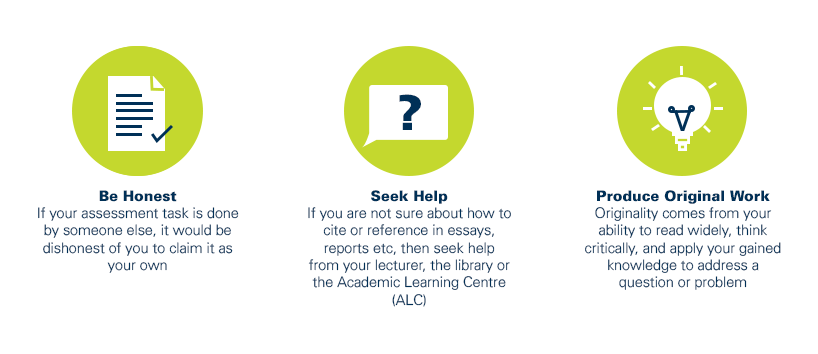
As a CQUniversity student you are expected to act honestly in all aspects of your academic work.
Any assessable work undertaken or submitted for review or assessment must be your own work. Assessable work is any type of work you do to meet the assessment requirements in the unit, including draft work submitted for review and feedback and final work to be assessed.
When you use the ideas, words or data of others in your assessment, you must thoroughly and clearly acknowledge the source of this information by using the correct referencing style for your unit. Using others’ work without proper acknowledgement may be considered a form of intellectual dishonesty.
Participating honestly, respectfully, responsibly, and fairly in your university study ensures the CQUniversity qualification you earn will be valued as a true indication of your individual academic achievement and will continue to receive the respect and recognition it deserves.
As a student, you are responsible for reading and following CQUniversity’s policies, including the Student Academic Integrity Policy and Procedure. This policy sets out CQUniversity’s expectations of you to act with integrity, examples of academic integrity breaches to avoid, the processes used to address alleged breaches of academic integrity, and potential penalties.
What is a breach of academic integrity?
A breach of academic integrity includes but is not limited to plagiarism, self-plagiarism, collusion, cheating, contract cheating, and academic misconduct. The Student Academic Integrity Policy and Procedure defines what these terms mean and gives examples.
Why is academic integrity important?
A breach of academic integrity may result in one or more penalties, including suspension or even expulsion from the University. It can also have negative implications for student visas and future enrolment at CQUniversity or elsewhere. Students who engage in contract cheating also risk being blackmailed by contract cheating services.
Where can I get assistance?
For academic advice and guidance, the Academic Learning Centre (ALC) can support you in becoming confident in completing assessments with integrity and of high standard.
What can you do to act with integrity?