Overview
In today's ever-evolving business and employment landscape, it is crucial for human resource (HR) practitioners to master the art of attracting and retaining top talent. This unit offers an overview of the functions of human resource planning, recruitment, and selection, along with the legal and ethical considerations involved. You will learn how to forecast an organisation’s future staffing needs, explore methods to attract, recruit, and select employees, and leverage HR information systems and HR analytics to drive business strategy.
Details
Pre-requisites or Co-requisites
Prerequisite: HRMT11011
Important note: Students enrolled in a subsequent unit who failed their pre-requisite unit, should drop the subsequent unit before the census date or within 10 working days of Fail grade notification. Students who do not drop the unit in this timeframe cannot later drop the unit without academic and financial liability. See details in the Assessment Policy and Procedure (Higher Education Coursework).
Offerings For Term 2 - 2026
Attendance Requirements
All on-campus students are expected to attend scheduled classes - in some units, these classes are identified as a mandatory (pass/fail) component and attendance is compulsory. International students, on a student visa, must maintain a full time study load and meet both attendance and academic progress requirements in each study period (satisfactory attendance for International students is defined as maintaining at least an 80% attendance record).
Recommended Student Time Commitment
Each 6-credit Undergraduate unit at CQUniversity requires an overall time commitment of an average of 12.5 hours of study per week, making a total of 150 hours for the unit.
Class Timetable
Assessment Overview
Assessment Grading
This is a graded unit: your overall grade will be calculated from the marks or grades for each assessment task, based on the relative weightings shown in the table above. You must obtain an overall mark for the unit of at least 50%, or an overall grade of 'pass' in order to pass the unit. If any 'pass/fail' tasks are shown in the table above they must also be completed successfully ('pass' grade). You must also meet any minimum mark requirements specified for a particular assessment task, as detailed in the 'assessment task' section (note that in some instances, the minimum mark for a task may be greater than 50%). Consult the University's Grades and Results Policy for more details of interim results and final grades.
All University policies are available on the CQUniversity Policy site.
You may wish to view these policies:
- Grades and Results Policy
- Assessment Policy and Procedure (Higher Education Coursework)
- Review of Grade Procedure
- Student Academic Integrity Policy and Procedure
- Academic Progression Policy and Procedure
- Student Refund and Credit Balance Policy and Procedure
- Complaints Policy and Procedure
- Information and Communications Technology Acceptable Use Policy and Procedure
This list is not an exhaustive list of all University policies. The full list of University policies are available on the CQUniversity Policy site.
Feedback, Recommendations and Responses
Every unit is reviewed for enhancement each year. At the most recent review, the following staff and student feedback items were identified and recommendations were made.
Feedback from Staff and student feedback
Move live classes and workshops to afternoons or evenings
Shifting scheduled workshops to later in the day would better accommodate the large proportion of students who work during standard business hours. This adjustment is likely to improve live attendance, enhance engagement, and provide students with more equitable access to real-time support.
Feedback from Staff and student feedback
Update assessment tasks to enhance industry relevance (subject to budget approval)
The current portfolio and CV assessment could be strengthened by incorporating contemporary employability elements such as LinkedIn optimisation, digital branding, or professional networking activities. Embedding these components would increase the practical value of the unit and better align assessment outcomes with current recruitment and selection practices.
Feedback from Staff feedback
Continue strengthening communication around support options
Weekly reminders, targeted outreach, and clearer messaging about the purpose and benefits of drop-in sessions should remain a priority. Reinforcing the value of real-time support and providing accessible recordings can further encourage engagement and help reduce non-submissions.
- Demonstrate comprehensive understanding of the importance of effective planning for future organisational staffing requirements including the legal and ethical considerations when recruiting and selecting staff
- Examine and justify effective job design and job analysis techniques as they relate to devising plans for future staffing needs
- Examine the most common recruitment strategies and be able to identify their accompanying benefits and risks
- Effectively manage the key issues in attracting and retaining talented people
- Investigate HR information systems and analytics used in organisations.
Alignment of Assessment Tasks to Learning Outcomes
| Assessment Tasks | Learning Outcomes | ||||
|---|---|---|---|---|---|
| 1 | 2 | 3 | 4 | 5 | |
| 1 - Online Quiz(zes) - 10% | |||||
| 2 - Portfolio - 45% | |||||
| 3 - Presentation - 45% | |||||
Alignment of Graduate Attributes to Learning Outcomes
| Graduate Attributes | Learning Outcomes | ||||
|---|---|---|---|---|---|
| 1 | 2 | 3 | 4 | 5 | |
| 1 - Communication | |||||
| 2 - Problem Solving | |||||
| 3 - Critical Thinking | |||||
| 4 - Information Literacy | |||||
| 5 - Team Work | |||||
| 6 - Information Technology Competence | |||||
| 7 - Cross Cultural Competence | |||||
| 8 - Ethical practice | |||||
| 9 - Social Innovation | |||||
| 10 - First Nations Knowledges | |||||
| 11 - Aboriginal and Torres Strait Islander Cultures | |||||
Textbooks
Recruitment and Selection : Strategies for Workforce Planning and Assessment
- Edition: 1 (2020)
- Authors: Carrie A Picardi
- SAGE Publications
- Thousand Oaks Thousand Oaks , California , United States
- ISBN: 9781483385419
- Binding: eBook
IT Resources
- CQUniversity Student Email
- Internet
- Unit Website (Moodle)
- Zoom
- Zoom access
All submissions for this unit must use the referencing style: American Psychological Association 7th Edition (APA 7th edition)
For further information, see the Assessment Tasks.
j.veres@cqu.edu.au
Week 1
Begin Date: 13 Jul 2026Module/Topic
Human Resource Planning
Chapter
Chapter 1 of the textbook
Lecture 1 PowerPoint Slides
Pre-recorded Lecture 1 Video
Additional resources in the unit Moodle site
Week 1 Learning Activities
Events and Submissions/Topic
Week 2
Begin Date: 20 Jul 2026Module/Topic
The Recruitment Strategy and Process
Chapter
Chapter 6 of the textbook
Lecture 2 PowerPoint Slides
Pre-recorded Lecture 2 Video
Additional resources in the unit Moodle site
Week 2 Learning Activities
Events and Submissions/Topic
Week 3
Begin Date: 27 Jul 2026Module/Topic
Legal Compliance and Ethical Considerations
Chapter
Chapter 2 of the textbook
Lecture 3 PowerPoint Slides
Pre-recorded Lecture 3 Video
Additional resources in the unit Moodle site
Week 3 Learning Activities
Events and Submissions/Topic
Week 4
Begin Date: 03 Aug 2026Module/Topic
Job Analysis, Design and Competency Model Development
Chapter
Chapter 3 & 4 of the textbook
Lecture 4 PowerPoint Slides
Pre-recorded Lecture 4 Video
Additional resources in the unit Moodle site
Week 4 Learning Activities
Events and Submissions/Topic
Week 5
Begin Date: 10 Aug 2026Module/Topic
Job Evaluation and Attracting the Best Talent
Chapter
Chapter 5 of the textbook
Lecture 5 PowerPoint Slides
Pre-recorded Lecture 5 Video
Additional resources in the unit Moodle site
Week 5 Learning Activities
Events and Submissions/Topic
Week 6
Begin Date: 17 Aug 2026Module/Topic
Selection and Interview Strategy
Chapter
Chapter 7 of the textbook
Lecture 6 PowerPoint Slides
Pre-recorded Lecture 6 Video
Additional resources in the unit Moodle site
Week 6 Learning Activities
Events and Submissions/Topic
Vacation Week
Begin Date: 24 Aug 2026Module/Topic
Chapter
Events and Submissions/Topic
Week 7
Begin Date: 31 Aug 2026Module/Topic
Strategic Selection Approaches
Chapter
Chapter 8 and 9 of the textbook
Lecture 7 PowerPoint Slides
Pre-recorded Lecture 7 Video
Additional resources in the unit Moodle site
Week 7 Learning Activities
Events and Submissions/Topic
Week 8
Begin Date: 07 Sep 2026Module/Topic
Contemporary Selection Methods
Chapter
Chapter 9 of the textbook
Lecture 8 PowerPoint Slides
Pre-recorded Lecture 8 Video
Additional resources in the unit Moodle site
Week 8 Learning Activities
Events and Submissions/Topic
Week 9
Begin Date: 14 Sep 2026Module/Topic
The Selection Decision and Contracts
Chapter
Chapter 10 of the textbook
Lecture 9 PowerPoint Slides
Pre-recorded Lecture 9 Video
Additional resources in the unit Moodle site
Week 9 Learning Activities
Events and Submissions/Topic
Week 10
Begin Date: 21 Sep 2026Module/Topic
Evaluation of Recruitment and Selection
Chapter
Lecture 10 PowerPoint Slides
Pre-recorded Lecture 10 Video
Additional resources in the unit Moodle site
Week 10 Learning Activities
Events and Submissions/Topic
Week 11
Begin Date: 28 Sep 2026Module/Topic
Human Resource Management Information Systems and Analytics
Chapter
Lecture 11 PowerPoint Slides
Pre-recorded Lecture 11 Video
Additional resources in the unit Moodle site
Week 11 Learning Activities
Events and Submissions/Topic
Week 12
Begin Date: 05 Oct 2026Module/Topic
International Perspectives
Chapter
Lecture 12 PowerPoint Slides
Pre-recorded Lecture 12 Video
Additional resources in the unit Moodle site
Week 12 Learning Activities
Events and Submissions/Topic
Presentation Due: Week 12 Friday (9 Oct 2026) 11:45 pm AEST
Exam Week
Begin Date: 12 Oct 2026Module/Topic
Chapter
Events and Submissions/Topic
Vacation/Exam Week
Begin Date: 19 Oct 2026Module/Topic
Chapter
Events and Submissions/Topic
1 Online Quiz(zes)
Students are to complete three (3) online quizzes. Only the top two scores will be considered toward the final Assessment 1 score.
These will be conducted during Weeks 3, 5 and 7 and are accessible through the 'Assessment Block' of the unit Moodle site.
Online quizzes open on Monday at 5.00 a.m. of the respective week and close on Sunday at 11.45 p.m. of the same week.
You may attempt each quiz once only. You may complete 10 questions in each quiz in a single 20-minute period.
There are no alternatives to online quizzes. No extensions are allowed for quizzes.
Quizzes will cover learning material from selected weeks as indicated below;
Online Quiz 1 - will cover material from Weeks 1 and 2 (5 marks)
Online Quiz 2 - will cover material from Weeks 3 and 4 (5 marks)
Online Quiz 2 - will cover material from Weeks 5 and 6 (5 marks)
Number of Quizzes: 3
Quizzes can only be completed through the unit Moodle site
A correct answer will receive full marks and an incorrect answer will not attract negative marks.
- Demonstrate comprehensive understanding of the importance of effective planning for future organisational staffing requirements including the legal and ethical considerations when recruiting and selecting staff
- Examine and justify effective job design and job analysis techniques as they relate to devising plans for future staffing needs
- Examine the most common recruitment strategies and be able to identify their accompanying benefits and risks
- Investigate HR information systems and analytics used in organisations.
2 Portfolio
This assessment requires students to prepare a portfolio. A portfolio can be seen as both a product and a process:
As a product, it holds the work records and documents you have produced during the unit and represents an edited collection of your learning achievements.
As a process, it enables you to monitor your own learning systematically, reflect on your learning performance, present a coherent account of your achievements, and obtain feedback on your learning.
This individual assessment task should be 1500 words (+/- 10%) and accounts for 45% of the marks for this unit. The portfolio comprises six (6) parts.
- Part 1 - Critical Discussion (600 words) - Significance of Recruitment and Selection - Critically discuss the significance of effective recruitment and selection to organisations in contemporary workplaces. Your discussion should demonstrate an understanding of key recruitment and selection concepts, current challenges, and relevant academic literature.
- Part 2 - Position Description (300 words) - Interview a person known to you who is currently employed in a graduate-level role and, based on information gathered about their position, prepare a Position Description (PD). The Position Description should include key responsibilities, reporting relationships, and selection criteria relevant to the role.
- Part 3 - Resume Preparation (300 words) - Locate a current job advertisement for a HR Recruitment Consultant or a similar position from a recognised employment website such as SEEK or LinkedIn. Prepare a professional resume tailored specifically to the requirements of the advertised role. You may use your preferred resume format.
- Part 4 - Resume Self-Reflection (300 words) - Reflect on and justify the decisions made when preparing your resume in Part 3. Consider factors such as format, structure, language, presentation, and alignment with the requirements of the advertised role.
- Part 5 - References (not included in the word count) - Integrate a minimum of eight (8) recent peer-reviewed scholarly references. These references should support the analysis presented in Part 1 and the reflection provided in Part 4.
- Part 6 - Appendices (not included in the word count) - You should include the following appendices: (a) interview questions and responses or a summary of the discussion used in Part 2, and (b) a copy of the job advertisement referred to in Part 3.
Important: Before commencing this task, carefully read the detailed assessment instructions and marking rubric available on the unit Moodle site.
Week 8 Friday (11 Sept 2026) 11:45 pm AEST
All submissions are to be uploaded using the respective assessment link available in the unit Moodle site.
Week 10 Friday (25 Sept 2026)
Assessments will be returned after the marking and moderation processes are completed (usually within two weeks of submission)
Your portfolio will be assessed on the extent to which it meets each of the following criteria:
- Analysis and Justification (30%) - Demonstrates critical analysis and a clearly integrated, well-developed argument across all parts of the assessment. Responses should move beyond description to evaluate the significance of recruitment and selection concepts, practices, and issues.
- Integration of Theory and Literature (20%) - Demonstrates effective integration of relevant theories, concepts, models, and frameworks from Human Resource Management literature. Academic literature should be used to support analysis, discussion, and reflection throughout the portfolio.
- Research (20%) - Demonstrates evidence of extensive research and understanding of the relevant material. Integrates a minimum of eight (8) recent peer-reviewed scholarly journal articles published from 2020 onwards. Academic sources should be relevant, credible, and used to support arguments and conclusions. Submissions that do not meet the minimum source requirement will not be eligible for a pass in this criterion.
- Self-Reflection (10%) - Demonstrates thoughtful reflection on the decisions made in developing the resume, including consideration of personal strengths, qualifications, experience, and alignment with the requirements of the selected job advertisement.
- Presentation, Referencing, Structure and Communication (20%) - Demonstrates professional presentation, logical organisation, and clear communication throughout the portfolio. Follows the required assessment structure and formatting guidelines. Uses APA 7th edition referencing consistently and accurately. Writing should be clear, concise, and free from significant spelling, grammar, and expression errors.
Penalties for late submissions are applied according to CQUniversity policy [-5% × 45 = -2.25 marks per day for every day the assessment is late. A late penalty is deducted from the total marks obtained by the student.]
Important: Plagiarism and other forms of academic misconduct are taken very seriously. Such incidents will be reported and may result in a zero mark.
For this assessment, students must adhere to the guidelines outlined in the Artificial Intelligence Assessment Scale (AIAS). You are permitted to use AI tools for planning, idea development, and research. However, your final submission should clearly demonstrate how you have developed, refined, and critically engaged with these ideas. Failure to properly disclose the use of AI tools or any misuse will be regarded as a breach of academic integrity and will be handled in accordance with the University's academic misconduct policies.
- Demonstrate comprehensive understanding of the importance of effective planning for future organisational staffing requirements including the legal and ethical considerations when recruiting and selecting staff
- Examine the most common recruitment strategies and be able to identify their accompanying benefits and risks
- Effectively manage the key issues in attracting and retaining talented people
3 Presentation
This assessment requires you to prepare and deliver a ~10-minute individual recorded presentation (15 slides, or 1500 word equivalent) in response to a business scenario provided on the unit Moodle site.
You may use PowerPoint, Zoom, or a similar presentation platform to record your presentation. You must be visible on screen for the duration of the recording so that presentation delivery skills can be assessed.
For this assessment, you will assume the role of an external HR recruitment consultant. Using the business scenario provided, you are required to select a real organisation that may be impacted by the issues described and prepare an advisory presentation for that organisation.
In your presentation, you should:
- Identify the key recruitment and selection issues affecting your chosen organisation.
- Conduct a critical analysis of the situation using relevant HR theories, concepts, and academic literature.
- Identify potential business, ethical, and legal considerations associated with the issues identified.
- Provide evidence-based recommendations to improve recruitment and selection practices within the organisation.Integrate a minimum of eight (8) recent peer-reviewed scholarly journal articles published from 2020 onwards to support your analysis and recommendations.
- Critically reflect on your recommended solutions and the process of applying HR planning, recruitment, and staffing concepts to a real-world organisational context.
The business scenario provides the industry context only. You are required to conduct your own research and apply your analysis and recommendations to a real organisation operating within that industry. Before commencing this task, carefully read the detailed assessment instructions and marking rubric available on the unit Moodle site.
Week 12 Friday (9 Oct 2026) 11:45 pm AEST
Upload through unit Moodle site
Vacation/Exam Week Friday (23 Oct 2026)
Assessments will be returned after the certification of grades
Your presentation will be assessed on the extent to which it meets each of the following criteria:
- Introduction (10%) - Provides a clear introduction to the presentation, including the business scenario, organisational context, and your role as an external HR recruitment consultant. Clearly identifies the purpose of the presentation and the key recruitment and selection issues to be addressed.
- Analysis and Application of Knowledge (15%) - Demonstrates critical analysis of the recruitment and selection issues affecting the chosen organisation. Applies relevant HR theories, concepts, models, and frameworks to support the discussion. Integrates recent peer-reviewed academic literature throughout the presentation.
- Conclusion and Recommendations (15%) - Presents clear, logical, and evidence-based recommendations that address the identified issues. Conclusions should effectively summarise the key findings and reinforce the rationale for the proposed solutions.
- References (10%) - Demonstrates appropriate use of academic and supporting sources throughout the presentation. Integrates a minimum of eight (8) recent peer-reviewed scholarly journal articles published from 2020 onwards. Uses APA 7th edition referencing accurately and consistently in both in-text citations and the reference list.
- Presentation Delivery (15%) - Demonstrates professional presentation skills through clear communication, appropriate pace, confident delivery, audience engagement, and effective verbal and non-verbal communication. The presenter should be visible throughout the recording.
- Visual Aids (15%) - Demonstrates effective use of presentation software and visual design principles. Slides should be professional, visually appealing, clearly structured, and support the communication of key ideas. Appropriate use of images, diagrams, tables, and formatting is encouraged.
- Reflection (20%) - Demonstrates critical reflection on the recommended solutions and the process of applying HR planning, recruitment, selection, and staffing concepts to a real-world organisational context. Reflection should show insight into the strengths, limitations, and implications of the proposed recommendations.
Penalties for late submissions are applied according to CQUniversity policy [-5% × 45 = -2.25 marks per day for every day the assessment is late. A late penalty is deducted from the total marks obtained by the student.]
Important: Plagiarism and academic misconduct are taken very seriously. Such incidents will be reported and may result in a zero mark.
For this assessment, students must adhere to the guidelines outlined in the Artificial Intelligence Assessment Scale (AIAS). You are permitted to use AI tools for planning, idea development, and research. However, your final submission should clearly demonstrate how you have developed, refined, and critically engaged with these ideas. Failure to properly disclose the use of AI tools or any misuse will be regarded as a breach of academic integrity and will be handled in accordance with the University's academic misconduct policies.
No submission method provided.
- Demonstrate comprehensive understanding of the importance of effective planning for future organisational staffing requirements including the legal and ethical considerations when recruiting and selecting staff
- Examine and justify effective job design and job analysis techniques as they relate to devising plans for future staffing needs
- Effectively manage the key issues in attracting and retaining talented people
- Investigate HR information systems and analytics used in organisations.
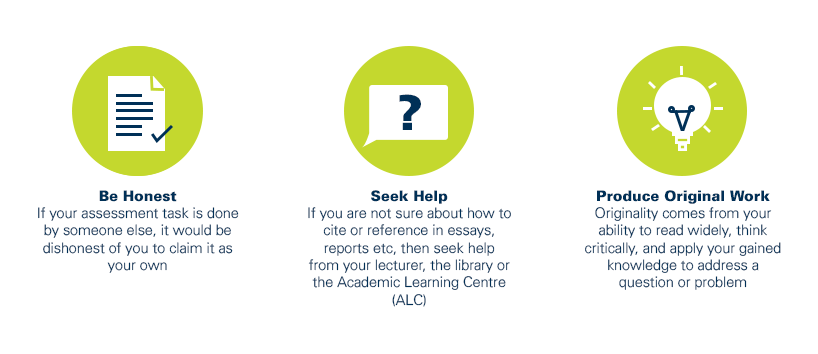
As a CQUniversity student you are expected to act honestly in all aspects of your academic work.
Any assessable work undertaken or submitted for review or assessment must be your own work. Assessable work is any type of work you do to meet the assessment requirements in the unit, including draft work submitted for review and feedback and final work to be assessed.
When you use the ideas, words or data of others in your assessment, you must thoroughly and clearly acknowledge the source of this information by using the correct referencing style for your unit. Using others’ work without proper acknowledgement may be considered a form of intellectual dishonesty.
Participating honestly, respectfully, responsibly, and fairly in your university study ensures the CQUniversity qualification you earn will be valued as a true indication of your individual academic achievement and will continue to receive the respect and recognition it deserves.
As a student, you are responsible for reading and following CQUniversity’s policies, including the Student Academic Integrity Policy and Procedure. This policy sets out CQUniversity’s expectations of you to act with integrity, examples of academic integrity breaches to avoid, the processes used to address alleged breaches of academic integrity, and potential penalties.
What is a breach of academic integrity?
A breach of academic integrity includes but is not limited to plagiarism, self-plagiarism, collusion, cheating, contract cheating, and academic misconduct. The Student Academic Integrity Policy and Procedure defines what these terms mean and gives examples.
Why is academic integrity important?
A breach of academic integrity may result in one or more penalties, including suspension or even expulsion from the University. It can also have negative implications for student visas and future enrolment at CQUniversity or elsewhere. Students who engage in contract cheating also risk being blackmailed by contract cheating services.
Where can I get assistance?
For academic advice and guidance, the Academic Learning Centre (ALC) can support you in becoming confident in completing assessments with integrity and of high standard.
What can you do to act with integrity?