Overview
Change is inevitable. As current or future employees, managers, and/or business leaders, you should not only understand the importance of change but also develop your competencies to successfully manage and lead organisational change. This unit explores the dynamics of change within a business environment characterised by volatility, uncertainty, complexity, and ambiguity. Through understanding key change theories and perspectives on leading and managing organisational change, you will develop the knowledge and skills required to respond to the pressures of a turbulent business environment and remain competitive.
Details
Pre-requisites or Co-requisites
Prerequisite:- Successful completion of 72 credit points.
Important note: Students enrolled in a subsequent unit who failed their pre-requisite unit, should drop the subsequent unit before the census date or within 10 working days of Fail grade notification. Students who do not drop the unit in this timeframe cannot later drop the unit without academic and financial liability. See details in the Assessment Policy and Procedure (Higher Education Coursework).
Offerings For Term 2 - 2026
Attendance Requirements
All on-campus students are expected to attend scheduled classes - in some units, these classes are identified as a mandatory (pass/fail) component and attendance is compulsory. International students, on a student visa, must maintain a full time study load and meet both attendance and academic progress requirements in each study period (satisfactory attendance for International students is defined as maintaining at least an 80% attendance record).
Recommended Student Time Commitment
Each 6-credit Undergraduate unit at CQUniversity requires an overall time commitment of an average of 12.5 hours of study per week, making a total of 150 hours for the unit.
Class Timetable
Assessment Overview
Assessment Grading
This is a graded unit: your overall grade will be calculated from the marks or grades for each assessment task, based on the relative weightings shown in the table above. You must obtain an overall mark for the unit of at least 50%, or an overall grade of 'pass' in order to pass the unit. If any 'pass/fail' tasks are shown in the table above they must also be completed successfully ('pass' grade). You must also meet any minimum mark requirements specified for a particular assessment task, as detailed in the 'assessment task' section (note that in some instances, the minimum mark for a task may be greater than 50%). Consult the University's Grades and Results Policy for more details of interim results and final grades.
All University policies are available on the CQUniversity Policy site.
You may wish to view these policies:
- Grades and Results Policy
- Assessment Policy and Procedure (Higher Education Coursework)
- Review of Grade Procedure
- Student Academic Integrity Policy and Procedure
- Academic Progression Policy and Procedure
- Student Refund and Credit Balance Policy and Procedure
- Complaints Policy and Procedure
- Information and Communications Technology Acceptable Use Policy and Procedure
This list is not an exhaustive list of all University policies. The full list of University policies are available on the CQUniversity Policy site.
Feedback, Recommendations and Responses
Every unit is reviewed for enhancement each year. At the most recent review, the following staff and student feedback items were identified and recommendations were made.
Feedback from Based on SUTE data
Revise group assessment
Revise the group assessment to include a more transparent way of capturing individual group member contribution. Review this at HRM discipline level before being implemented.
- Evaluate different perspectives on, and approaches to, organisational change and the change management theories and assumptions that underpin them.
- Analyse and critique an organisational change strategy, and discuss the impact of the strategy on the organisation, groups, and individuals within the organisation.
- Develop and deliver effective communications regarding change initiatives that can positively influence key organisational stakeholders.
- Engage and collaborate with team members to critically analyse organisational change strategies, enhancing teamwork and respecting and valuing diverse perspectives.
N/A
Alignment of Assessment Tasks to Learning Outcomes
| Assessment Tasks | Learning Outcomes | |||
|---|---|---|---|---|
| 1 | 2 | 3 | 4 | |
| 1 - Report - 50% | ||||
| 2 - Group Work - 50% | ||||
Alignment of Graduate Attributes to Learning Outcomes
| Graduate Attributes | Learning Outcomes | |||
|---|---|---|---|---|
| 1 | 2 | 3 | 4 | |
| 1 - Communication | ||||
| 2 - Problem Solving | ||||
| 3 - Critical Thinking | ||||
| 4 - Information Literacy | ||||
| 5 - Team Work | ||||
| 6 - Information Technology Competence | ||||
| 7 - Cross Cultural Competence | ||||
| 8 - Ethical practice | ||||
| 9 - Social Innovation | ||||
| 10 - First Nations Knowledges | ||||
| 11 - Aboriginal and Torres Strait Islander Cultures | ||||
Textbooks
Managing Organizational Change: A Multiple Perspectives Approach
- Edition: 4th (2022)
- Authors: Ian Palmer, Richard Dunford, David Buchanan
- McGraw-Hill Education
- US
- ISBN: 9781260597950
- Binding: eBook
IT Resources
- CQUniversity Student Email
- Internet
- Unit Website (Moodle)
All submissions for this unit must use the referencing style: American Psychological Association 7th Edition (APA 7th edition)
For further information, see the Assessment Tasks.
u.amarakoon@cqu.edu.au
k.lin@cqu.edu.au
Week 1
Begin Date: 13 Jul 2026Module/Topic
What is Change?
Chapter
Refer to the e-reading list for the week and Chapter One of the supplementary text
Events and Submissions/Topic
Week 2
Begin Date: 20 Jul 2026Module/Topic
Change Failure
Chapter
Refer to the e-reading list for the week
Events and Submissions/Topic
Week 3
Begin Date: 27 Jul 2026Module/Topic
Change Leadership
Chapter
Refer to the e-reading list for the week and Chapter Two of the supplementary text
Events and Submissions/Topic
Week 4
Begin Date: 03 Aug 2026Module/Topic
Change Theories
Chapter
Refer to the e-reading list for the week
Events and Submissions/Topic
Week 5
Begin Date: 10 Aug 2026Module/Topic
Resistance to Change
Chapter
Refer to the e-reading list for the week and Chapter Eight of the supplementary text
Events and Submissions/Topic
Week 6
Begin Date: 17 Aug 2026Module/Topic
Change Strategy
Chapter
Refer to the e-reading list for the week and Chapter Seven of the supplementary text
Events and Submissions/Topic
ASSESSMENT 2 - GROUP REGISTRATION
Due: Week 6 Monday (17 Aug 2026) 11:45PM AEST on Moodle
Vacation Week
Begin Date: 24 Aug 2026Module/Topic
Chapter
Events and Submissions/Topic
Review of unit materials and work towards the successful completion of assessment tasks.
Week 7
Begin Date: 31 Aug 2026Module/Topic
The Change Mindset; People; Changing Behaviours
Chapter
Refer to the e-reading list for the week and Chapter Nine of the supplementary text
Events and Submissions/Topic
Week 8
Begin Date: 07 Sep 2026Module/Topic
Change Agility
Chapter
Refer to the e-reading list for the week and Chapter Ten of the supplementary text
Events and Submissions/Topic
Week 9
Begin Date: 14 Sep 2026Module/Topic
Change in a VUCA environment
Chapter
Refer to the e-reading list for the week
Events and Submissions/Topic
Week 10
Begin Date: 21 Sep 2026Module/Topic
Decision-making in Complex and Ambiguous Environments
Chapter
Refer to the e-reading list for the week
Events and Submissions/Topic
Week 11
Begin Date: 28 Sep 2026Module/Topic
Future Directions: The "new normal"
Chapter
Refer to the e-reading list for the week
Events and Submissions/Topic
Week 12
Begin Date: 05 Oct 2026Module/Topic
Review
Chapter
Refer to the e-reading list for the week
Events and Submissions/Topic
Exam Week
Begin Date: 12 Oct 2026Module/Topic
Chapter
Events and Submissions/Topic
Vacation/Exam Week
Begin Date: 19 Oct 2026Module/Topic
Chapter
Events and Submissions/Topic
1 Report
Purpose: This assessment develops your ability to analyse organisational change in a real-world context and apply change management theories. The report focuses on evaluating strategies and providing evidence-based, practical recommendations at the organisational (macro) level, while the reflection applies theory to support individual employees through change (micro level). Together, these tasks strengthen your analytical, applied, and reflective capabilities for effective HR and change management practice.
Task Description: Assume the role of a change management consultant and critically analyse the case study/news item provided on the Moodle site.
This assessment involves two components:
a) Business report - Based on your analysis, prepare a 2000-word business report. Your report should evaluate the organisation’s change strategies, key drivers of change, and human resource development/management approaches to managing resistance. Drawing on relevant theories, you are required to provide practical and feasible recommendations that consider cultural, time, and cost constraints.
b) Critical reflection - submit a 400–500 word critical reflection (not included in the report word count). Select one employee role within the organisation (e.g., frontline employee, middle manager, HR professional). Using the ADKAR model (Awareness, Desire, Knowledge, Ability, Reinforcement), critically reflect on how you, as a change agent, would support an individual in this role throughout the change process.
References: The assessment must include a minimum of eight (8) relevant peer-reviewed journal articles, in addition to publicly available reports and organisational communications related to the selected organisation.
Important: This assessment requires students to adhere to the guidelines on the use of artificial intelligence tools as outlined in the Artificial Intelligence Assessment Scale (AIAS). Any misuse of, or failure to appropriately disclose, the use of AI tools will be treated as a breach of academic integrity. This assessment is aligned with Level 2 of the AIAS. Accordingly, AI tools may be used to support planning, idea development, and research. However, the final submission must clearly demonstrate the your own critical thinking and the development and refinement of these ideas.
Note: Please refer to the detailed 'Assessment Task Description' and the 'Marking Rubric' available in the unit Moodle site, prior to commencing this task.
Week 7 Monday (31 Aug 2026) 11:45 pm AEST
Online via the Moodle Unit site.
Marks and feedback usually will be returned approximately two (2) working weeks from submission for on-time submissions.
Business Report Marking Criteria (80%)
Analysis (15%) - Demonstrates depth and accuracy in analysing the case study/news item, including the organisation’s change strategies and context.
Theory (15%) - Effectively integrates relevant change management theories, demonstrating a strong theory–practice link.
Drivers of Change (10%) - Identifies and critically evaluates key internal and external drivers of change.
HRD/HRM Approaches (15%) - Provides a critical analysis of HRD/HRM strategies used to address resistance to change.
Recommendations (10%) - Presents practical, feasible (cost, time, cultural), and well-justified recommendations to improve change outcomes.
Research (5%) - Integrates at least the minimum required number of relevant peer-reviewed sources and high-quality organisational data.
Presentation (5%) - Demonstrates clear structure, coherent expression, and correct use of grammar, punctuation, and Australian English.
Referencing (5%) - Adheres strictly to APA 7 referencing conventions as outlined in the CQU APA Referencing Guide.
Critical Reflection Marking Criteria (20%)
Application of ADKAR (10%) - Demonstrates clear and appropriate application of all ADKAR stages (Awareness, Desire, Knowledge, Ability, Reinforcement), with a strong linkage to the selected role and organisational context.
Depth of Reflection (10%) - Demonstrates critical thinking by moving beyond description to reflection, with clear acknowledgement of real-world challenges, limitations, and complexities in supporting individual change.
No submission method provided.
- Evaluate different perspectives on, and approaches to, organisational change and the change management theories and assumptions that underpin them.
- Analyse and critique an organisational change strategy, and discuss the impact of the strategy on the organisation, groups, and individuals within the organisation.
- Develop and deliver effective communications regarding change initiatives that can positively influence key organisational stakeholders.
2 Group Work
Purpose
This assessment task gives you the opportunity to enhance your research, analysis, critical thinking and written communication skills, particularly in the areas of developing argument and report writing.
Task description
Students are required to form groups (two to three members in each group). Based on a case/news item provided to you on the unit Moodle site, each group is required to write a report and produce a recorded presentation (e.g. PowerPoint with voice over). Each member has to contribute to your group's report and presentation.
This assessment task involves multiple steps.
Step 1 - Registration of your group: It is a responsibility of students to communicate with fellow students and register as groups by the due date. More information on group registration process will be provided to you via the unit Moodle site.
Step 2 - Group Report and Presentation
- Part A - Group report - Your group is required to prepare a written report of 2000 words (+/- 10%, excluding reference list) to the executive team of the case-study organisation, addressing all key points provided to you in the assessment task description. You are also required to incorporate a minimum of twelve (12) relevant academic peer reviewed journal articles.
- Part B - Group presentation - Based on your report, your group has to prepare a 10-minute recorded presentation using an appropriate presentation tool (e.g., PowerPoint with voice over). Each member of the team has to present, and the respective presenter should be visible in the recording. You are encouraged to use innovative ways to effectively present the group's ideas to the Executive Management team of the case-study organisation. You are also required to incorporate appropriate references to support your key points.
Step 3 - Self-evaluation, contribution analysis, and reflection: Each student is required to complete and submit the confidential self-evaluation and contribution analysis document available on the unit Moodle site. The document also includes a brief reflection (250–300 words) on key learnings about change management, its practical application, and its relevance to your current and/or future career.
Penalties for late submission are applied according to the Policy.
Important: This assessment requires students to adhere to the guidelines on the use of artificial intelligence tools as specified in the Artificial Intelligence Assessment Scale (AIAS). Any misuse or lack of disclosure regarding the use of AI tools will be considered a breach of academic integrity. This assessment corresponds with Level 2 of the AIAS. Accordingly, you may use AI for planning, idea development, and research. However, your final submission must demonstrate how you have developed and refined these ideas.
Exam Week Monday (12 Oct 2026) 11:45 pm AEST
Online via the assessment link on the Moodle Unit site
Assessments will be returned after two working weeks, once the marking and moderation processes are completed.
Assessment Item 2 - Marking Criteria for the Group Report and Group Presentation
- Registration (5%) - Timely registration of all group members on Moodle by the specified due date.
- Analysis (20%) - Demonstrates thorough knowledge and critical analysis of the change management issues within a well-developed business report.
- Theory (15%) - Provides a critical and integrated review of relevant academic literature, embedded effectively within the discussion (not presented as a separate section).
- Responses (15%) - Presents appropriate, well-supported, and evidence-based responses to the identified change management issues.
- Research (10%) - Demonstrates the use of relevant and credible academic literature. To achieve a pass, the minimum required number of relevant peer-reviewed journal articles must be included.
- Referencing (5%) - Adheres strictly to APA referencing conventions as outlined in the CQU APA Referencing Guide.
- Report Format (5%) - Demonstrates professionalism in report structure, with clear expression, and accurate grammar, punctuation, and spelling in Australian English. Meets the required word count of 2000 words (+/- 10%, excluding references).
- Presentation Format and Flow (10%) - Demonstrates a professional approach to presentation, including effective use of presentation tools, appropriate visual aids, and logical flow and coherence.
- Individual Presentation Skills (5%) - Demonstrates clear, confident, and engaging delivery.
- Contribution and Reflection (10%) - Provides a thoughtful self-evaluation and contribution analysis, along with a reflective component demonstrating learning and application of change management concepts.
- Evaluate different perspectives on, and approaches to, organisational change and the change management theories and assumptions that underpin them.
- Analyse and critique an organisational change strategy, and discuss the impact of the strategy on the organisation, groups, and individuals within the organisation.
- Develop and deliver effective communications regarding change initiatives that can positively influence key organisational stakeholders.
- Engage and collaborate with team members to critically analyse organisational change strategies, enhancing teamwork and respecting and valuing diverse perspectives.
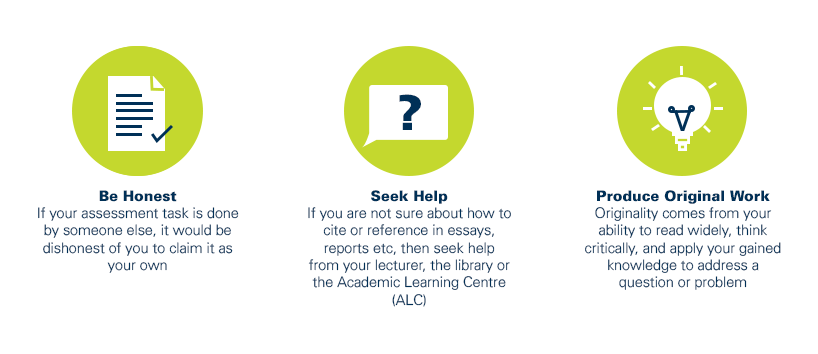
As a CQUniversity student you are expected to act honestly in all aspects of your academic work.
Any assessable work undertaken or submitted for review or assessment must be your own work. Assessable work is any type of work you do to meet the assessment requirements in the unit, including draft work submitted for review and feedback and final work to be assessed.
When you use the ideas, words or data of others in your assessment, you must thoroughly and clearly acknowledge the source of this information by using the correct referencing style for your unit. Using others’ work without proper acknowledgement may be considered a form of intellectual dishonesty.
Participating honestly, respectfully, responsibly, and fairly in your university study ensures the CQUniversity qualification you earn will be valued as a true indication of your individual academic achievement and will continue to receive the respect and recognition it deserves.
As a student, you are responsible for reading and following CQUniversity’s policies, including the Student Academic Integrity Policy and Procedure. This policy sets out CQUniversity’s expectations of you to act with integrity, examples of academic integrity breaches to avoid, the processes used to address alleged breaches of academic integrity, and potential penalties.
What is a breach of academic integrity?
A breach of academic integrity includes but is not limited to plagiarism, self-plagiarism, collusion, cheating, contract cheating, and academic misconduct. The Student Academic Integrity Policy and Procedure defines what these terms mean and gives examples.
Why is academic integrity important?
A breach of academic integrity may result in one or more penalties, including suspension or even expulsion from the University. It can also have negative implications for student visas and future enrolment at CQUniversity or elsewhere. Students who engage in contract cheating also risk being blackmailed by contract cheating services.
Where can I get assistance?
For academic advice and guidance, the Academic Learning Centre (ALC) can support you in becoming confident in completing assessments with integrity and of high standard.
What can you do to act with integrity?