Overview
LAWS11059 Statutory interpretation has a specific focus on locating and using legislation, aids to interpretation, and deployment of interpretative techniques. In this unit you will learn how to determine whether the exercise of a statutory power is invalid if a condition or procedure regulating its exercise, is breached; whether a law has a retrospective operation; whether a statutory offence contains a mental ingredient to be proved by the prosecution (mens rea), and if so, what that ingredient is; the scope of a statutory power to make delegated legislation in the light of delegated legislation, which has purportedly been made under a power; and the application of a rule in any applicable charter of human rights. A law graduate should be able to give a reasoned opinion as to the appropriate meaning of a legislative provision which takes adequate account of the law of statutory interpretation. This unit meets the LPAB requirements for statutory interpretation.
Details
Pre-requisites or Co-requisites
There are no requisites for this unit.
Important note: Students enrolled in a subsequent unit who failed their pre-requisite unit, should drop the subsequent unit before the census date or within 10 working days of Fail grade notification. Students who do not drop the unit in this timeframe cannot later drop the unit without academic and financial liability. See details in the Assessment Policy and Procedure (Higher Education Coursework).
Offerings For Term 2 - 2026
Attendance Requirements
All on-campus students are expected to attend scheduled classes - in some units, these classes are identified as a mandatory (pass/fail) component and attendance is compulsory. International students, on a student visa, must maintain a full time study load and meet both attendance and academic progress requirements in each study period (satisfactory attendance for International students is defined as maintaining at least an 80% attendance record).
Recommended Student Time Commitment
Each 6-credit Undergraduate unit at CQUniversity requires an overall time commitment of an average of 12.5 hours of study per week, making a total of 150 hours for the unit.
Class Timetable
Assessment Overview
Assessment Grading
This is a graded unit: your overall grade will be calculated from the marks or grades for each assessment task, based on the relative weightings shown in the table above. You must obtain an overall mark for the unit of at least 50%, or an overall grade of 'pass' in order to pass the unit. If any 'pass/fail' tasks are shown in the table above they must also be completed successfully ('pass' grade). You must also meet any minimum mark requirements specified for a particular assessment task, as detailed in the 'assessment task' section (note that in some instances, the minimum mark for a task may be greater than 50%). Consult the University's Grades and Results Policy for more details of interim results and final grades.
All University policies are available on the CQUniversity Policy site.
You may wish to view these policies:
- Grades and Results Policy
- Assessment Policy and Procedure (Higher Education Coursework)
- Review of Grade Procedure
- Student Academic Integrity Policy and Procedure
- Academic Progression Policy and Procedure
- Student Refund and Credit Balance Policy and Procedure
- Complaints Policy and Procedure
- Information and Communications Technology Acceptable Use Policy and Procedure
This list is not an exhaustive list of all University policies. The full list of University policies are available on the CQUniversity Policy site.
Feedback, Recommendations and Responses
Every unit is reviewed for enhancement each year. At the most recent review, the following staff and student feedback items were identified and recommendations were made.
Feedback from Student feedback
The number and weighting of assessment items should be reviewed
The assessment be reviewed by the unit coordinator for 2026.
- Locate and interpret legislation, legislative instruments and related materials and apply them to practical scenarios.
- Analyse, evaluate and apply the statutory interpretation principles from the decisions of the High Court to factual problems.
- Communicate effectively in writing the theoretical concepts underpinning approaches to statutory interpretation.
Alignment of Assessment Tasks to Learning Outcomes
| Assessment Tasks | Learning Outcomes | ||
|---|---|---|---|
| 1 | 2 | 3 | |
| 1 - Written Assessment - 20% | |||
| 2 - Written Assessment - 20% | |||
| 3 - Examination - 60% | |||
Alignment of Graduate Attributes to Learning Outcomes
| Graduate Attributes | Learning Outcomes | ||
|---|---|---|---|
| 1 | 2 | 3 | |
| 1 - Communication | |||
| 2 - Problem Solving | |||
| 3 - Critical Thinking | |||
| 4 - Information Literacy | |||
| 5 - Team Work | |||
| 6 - Information Technology Competence | |||
| 7 - Cross Cultural Competence | |||
| 8 - Ethical practice | |||
| 9 - Social Innovation | |||
| 10 - First Nations Knowledges | |||
| 11 - Aboriginal and Torres Strait Islander Cultures | |||
Textbooks
Statutory Interpretation
- Edition: Third (2026)
- Authors: Michelle Sanson
- Oxford
- Melbourne Melbourne , VIC , Australia
- ISBN: 9780190354695
IT Resources
- CQUniversity Student Email
- Internet
- Unit Website (Moodle)
- Webcam
All submissions for this unit must use the referencing style: Australian Guide to Legal Citation, 4th ed
For further information, see the Assessment Tasks.
a.mcewan@cqu.edu.au
j.french@cqu.edu.au
Week 1
Begin Date: 13 Jul 2026Module/Topic
Introduction to Statutory Interpretation
Chapter
See weekly study guide
Events and Submissions/Topic
Zoom workshop 2 hours
Week 2
Begin Date: 20 Jul 2026Module/Topic
Legislative Power
Chapter
See weekly study guide
Events and Submissions/Topic
Zoom workshop 2 hours
Week 3
Begin Date: 27 Jul 2026Module/Topic
Executive Power
Chapter
See weekly study guide
Events and Submissions/Topic
Zoom workshop 2 hours
Week 4
Begin Date: 03 Aug 2026Module/Topic
Judicial Power
Chapter
See weekly study guide
Events and Submissions/Topic
Zoom workshop 2 hours
Week 5
Begin Date: 10 Aug 2026Module/Topic
Common Law Approaches to Statutory Interpretation
Chapter
See weekly study guide
Events and Submissions/Topic
Zoom workshop 2 hours
Case Note and Critical Analysis Due: Week 5 Friday (14 Aug 2026) 11:59 pm AEST
Week 6
Begin Date: 17 Aug 2026Module/Topic
Intrinsic Materials: Statutory Components and the Text
Chapter
See weekly study guide
Events and Submissions/Topic
Zoom workshop 2 hours
Vacation Week
Begin Date: 24 Aug 2026Module/Topic
Chapter
Events and Submissions/Topic
Week 7
Begin Date: 31 Aug 2026Module/Topic
Context and Purpose
Chapter
See weekly study guide
Events and Submissions/Topic
Zoom workshop 2 hours
Week 8
Begin Date: 07 Sep 2026Module/Topic
Extrinsic Materials
Chapter
See weekly study guide
Events and Submissions/Topic
Zoom workshop 2 hours
Problem Question on Statutory Interpretation Due: Week 8 Friday (11 Sept 2026) 11:59 pm AEST
Week 9
Begin Date: 14 Sep 2026Module/Topic
Statutory Presumptions I
Chapter
See weekly study guide
Events and Submissions/Topic
Zoom workshop 2 hours
Week 10
Begin Date: 21 Sep 2026Module/Topic
Statutory Presumptions II
Chapter
See weekly study guide
Events and Submissions/Topic
Zoom workshop 2 hours
Week 11
Begin Date: 28 Sep 2026Module/Topic
Constitutional Interpretation
Chapter
See weekly study guide
Events and Submissions/Topic
Zoom workshop 2 hours
Week 12
Begin Date: 05 Oct 2026Module/Topic
Subordinate Legislation
Chapter
See weekly study guide
Events and Submissions/Topic
Zoom workshop 2 hours
Exam Week
Begin Date: 12 Oct 2026Module/Topic
Chapter
Events and Submissions/Topic
Vacation/Exam Week
Begin Date: 19 Oct 2026Module/Topic
Chapter
Events and Submissions/Topic
My contact details: a.mcewan@cqu.edu.au
Consultation Hours: I am generally available for consultation on Tuesdays and Thursdays from 10am to 12 noon (Eastern Standard Time). The best way to contact me is by email. I check my emails regularly and will get back to you to arrange a time to talk.
1 Written Assessment
This assessment has two parts, and both parts are mandatory.
Part 1: A description of the case including the facts, judicial reasoning and findings of the court.
Part 2: A short critique of the case
Full details of the assessment task will be provided on the Moodle site for this unit after the commencement of term.
Total word count: 1500 words.
Referencing: AGLC (4th edition). You do not need to include a bibliography. You must adhere to standards of academic integrity.
This assessment requires students to adhere to the guidelines on the use of artificial intelligence tools as specified in the Artificial Intelligence Assessment Scale (AIAS). Any misuse or lack of disclosure regarding the use of AI tools will be considered a breach of academic integrity. The use of AI tools or technology is prohibited in the completion of this assignment (level 1). You must not use AI tools or technology to produce substantive content in any manner. You are permitted to use technology or tools that assist with
spelling, grammar or formatting.
The assessment criteria tool will be uploaded to Moodle at the beginning of the term.
This assessment must be submitted by the specified due date and time. Due to the nature of this task, the standard 72-hour grace period does not apply. We recognise that unexpected circumstances may arise, and encourage students to reach out as early as possible if they are experiencing difficulties, so that appropriate support or adjustments can be considered in line with university policy. Students requesting any extension must submit their request together with supporting documentation via the University's assignment extension system. Any application for an extension must be made before the due date. Applications made via email will not be considered.
Extensions of more than 14 days are not available for this assessment. Due to the need to provide prompt feedback to students and the content of feedback provided, submissions received after the assessment has been returned to students cannot be accepted for academic integrity reasons. Students seeking extensions beyond this timeframe may be required to undertake a different version of the assessment task.
Week 5 Friday (14 Aug 2026) 11:59 pm AEST
Submit your paper in a Word document.
Estimated time for return is two weeks for the due date/time.
Assessment criteria based on: Demonstrated understanding of the facts, issues, judicial reasoning and findings of the court; Presented in a logical structure; Critical thinking; Written expression; AGLC referencing and acknowledgement of sources.
- Locate and interpret legislation, legislative instruments and related materials and apply them to practical scenarios.
- Communicate effectively in writing the theoretical concepts underpinning approaches to statutory interpretation.
2 Written Assessment
The assignment comprises a statutory interpretation scenario and a set of questions. Your task is to read the scenario carefully and answer the questions.
Your answer must be based on material covered in LAWS11059 Statutory Interpretation. In your answers, you must refer to case law and statute as appropriate. I expect you to engage in research to support your arguments. Total Word Count is 1200 words excluding references.
Referencing: AGLC (4th edition). You do not need to include a bibliography.
This assessment requires students to adhere to the guidelines on the use of artificial intelligence tools as specified in the Artificial Intelligence Assessment Scale (AIAS). Any misuse or lack of disclosure regarding the use of AI tools will be considered a breach of academic integrity. The use of AI tools or technology is prohibited in the completion of this assignment (level 1). You must not use AI tools or technology to produce substantive content in any manner. You are permitted to use technology or tools that assist with
spelling, grammar or formatting
You must reference your work in accordance with the Australian Guide to Legal Citation (AGLC) (4th ed) and adhere to standards of academic integrity. The assessment criteria tool will be uploaded to Moodle at the beginning of term.
Submit your assignment online in a Word Document. If you submit in any other form, such as PDF, you will have to re-submit your assignment in a Word Document for it to be marked. Submit your assignment to Moodle using the following naming convention: SURNAME_Initial_LAWS11059Ass2
This assessment must be submitted by the specified due date and time. Due to the nature of this task, the standard 72-hour grace period does not apply. We recognise that unexpected circumstances may arise, and encourage students to reach out as early as possible if they are experiencing difficulties, so that appropriate support or adjustments can be considered in line with university policy. Students requesting any extension must submit their request together with supporting documentation via the University's assignment extension system. Any application for an extension must be made before the due date. Applications made via email will not be considered. Students seeking extensions beyond this timeframe may be required to undertake a different version of the assessment task.
Week 8 Friday (11 Sept 2026) 11:59 pm AEST
Estimated time for return is two weeks for the due date/time.
Your ability to identify issues; Your knowledge of content including rules of statutory interpretation; Your ability to apply relevant law to issues; Your conclusions, Your clarity of
expression (spelling, grammar, punctuation); use of appropriate terminology; and overall structure; Your referencing complies with AGLC.
- Locate and interpret legislation, legislative instruments and related materials and apply them to practical scenarios.
- Analyse, evaluate and apply the statutory interpretation principles from the decisions of the High Court to factual problems.
- Communicate effectively in writing the theoretical concepts underpinning approaches to statutory interpretation.
Examination
Law dictionaries, Business and Law dictionaries (discipline specific dictionaries) are authorised.
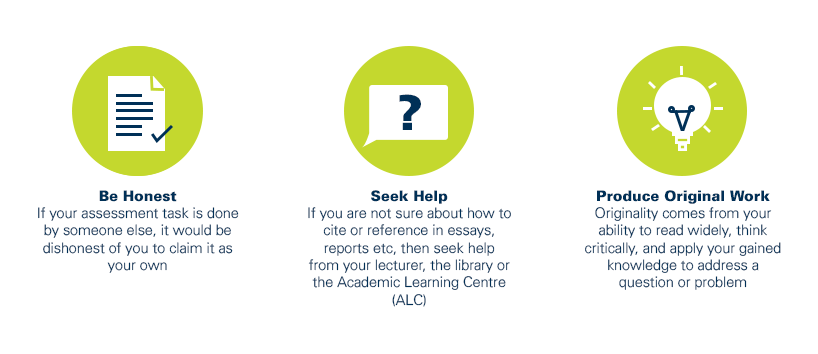
As a CQUniversity student you are expected to act honestly in all aspects of your academic work.
Any assessable work undertaken or submitted for review or assessment must be your own work. Assessable work is any type of work you do to meet the assessment requirements in the unit, including draft work submitted for review and feedback and final work to be assessed.
When you use the ideas, words or data of others in your assessment, you must thoroughly and clearly acknowledge the source of this information by using the correct referencing style for your unit. Using others’ work without proper acknowledgement may be considered a form of intellectual dishonesty.
Participating honestly, respectfully, responsibly, and fairly in your university study ensures the CQUniversity qualification you earn will be valued as a true indication of your individual academic achievement and will continue to receive the respect and recognition it deserves.
As a student, you are responsible for reading and following CQUniversity’s policies, including the Student Academic Integrity Policy and Procedure. This policy sets out CQUniversity’s expectations of you to act with integrity, examples of academic integrity breaches to avoid, the processes used to address alleged breaches of academic integrity, and potential penalties.
What is a breach of academic integrity?
A breach of academic integrity includes but is not limited to plagiarism, self-plagiarism, collusion, cheating, contract cheating, and academic misconduct. The Student Academic Integrity Policy and Procedure defines what these terms mean and gives examples.
Why is academic integrity important?
A breach of academic integrity may result in one or more penalties, including suspension or even expulsion from the University. It can also have negative implications for student visas and future enrolment at CQUniversity or elsewhere. Students who engage in contract cheating also risk being blackmailed by contract cheating services.
Where can I get assistance?
For academic advice and guidance, the Academic Learning Centre (ALC) can support you in becoming confident in completing assessments with integrity and of high standard.
What can you do to act with integrity?