Overview
In this unit you will examine law and policy related to human obligations to non-human animals in Australia. The assessment structure and unit content emphasises the development of critical thinking skills through scholarly engagement with contemporary policy and law reform debates. You will develop research skills in an area of your choosing within the scope of the topics examined. You will also be supported to reflect on and articulate reasoned positions in relation to a range of legal, regulatory, and ethical questions raised by animal protection and the law. Module One considers the history of animal law and the role of ethics, science, ideology and politics in shaping animal law and policy in Australia. Module Two explores animal law as framed by two concepts: animal welfare and animal cruelty. It examines the integration of these concepts into legislative and regulatory regimes, and animal law and policy reform. Module Three involves a weekly focus on a specific area of animal law: farmed animals, companion animals, wildlife, animals as ‘pests’, animals used in scientific research, and animals used in sport and entertainment. The unit fosters a global perspective by reflecting on relevant international law and the UN Sustainable Development Goals.
Details
Pre-requisites or Co-requisites
Co-requsite: LAWS11057 Introduction to Law.
Important note: Students enrolled in a subsequent unit who failed their pre-requisite unit, should drop the subsequent unit before the census date or within 10 working days of Fail grade notification. Students who do not drop the unit in this timeframe cannot later drop the unit without academic and financial liability. See details in the Assessment Policy and Procedure (Higher Education Coursework).
Offerings For Term 1 - 2026
Attendance Requirements
All on-campus students are expected to attend scheduled classes - in some units, these classes are identified as a mandatory (pass/fail) component and attendance is compulsory. International students, on a student visa, must maintain a full time study load and meet both attendance and academic progress requirements in each study period (satisfactory attendance for International students is defined as maintaining at least an 80% attendance record).
Recommended Student Time Commitment
Each 6-credit Undergraduate unit at CQUniversity requires an overall time commitment of an average of 12.5 hours of study per week, making a total of 150 hours for the unit.
Class Timetable
Assessment Overview
Assessment Grading
This is a graded unit: your overall grade will be calculated from the marks or grades for each assessment task, based on the relative weightings shown in the table above. You must obtain an overall mark for the unit of at least 50%, or an overall grade of 'pass' in order to pass the unit. If any 'pass/fail' tasks are shown in the table above they must also be completed successfully ('pass' grade). You must also meet any minimum mark requirements specified for a particular assessment task, as detailed in the 'assessment task' section (note that in some instances, the minimum mark for a task may be greater than 50%). Consult the University's Grades and Results Policy for more details of interim results and final grades.
All University policies are available on the CQUniversity Policy site.
You may wish to view these policies:
- Grades and Results Policy
- Assessment Policy and Procedure (Higher Education Coursework)
- Review of Grade Procedure
- Student Academic Integrity Policy and Procedure
- Academic Progression Policy and Procedure
- Student Refund and Credit Balance Policy and Procedure
- Complaints Policy and Procedure
- Information and Communications Technology Acceptable Use Policy and Procedure
This list is not an exhaustive list of all University policies. The full list of University policies are available on the CQUniversity Policy site.
Feedback, Recommendations and Responses
Every unit is reviewed for enhancement each year. At the most recent review, the following staff and student feedback items were identified and recommendations were made.
Feedback from SUTE
Assessment 3 would be more effective if integrated across the entire term, encouraging us to stay up to date and apply the material in a more practical and enjoyable way.
Assessment 3 is a discussion forum. It currently covers two weeks' content. I agree with this student's feedback and have contacted the School of Business and Law's educational development team to work on a revised assessment that will address this gap.
Feedback from SUTE
The guest speakers were exceptional and knowledgeable in their respective fields.
I will continue to invite guest speakers.
- Identify and discuss the various ethical perspectives, scientific and international developments, and politics shaping contemporary animal law and policy in Australia.
- Identify and explain federal and state responsibilities for law and policy relating to animal protection.
- Critically analyse the legal status of animals and their protection under anti-cruelty statutes and animal welfare regulations, drawing on case law, legislation, and relevant scholarly sources.
- Develop a research proposal and a research paper within the scope of topics offered, drawing on reputable legal and inter-disciplinary sources and knowledge.
There is no link between learning outcomes and external accreditation. However, the unit content and assessments support the development of 'law in context' research skills which are important to legal practice and policy development.
Alignment of Assessment Tasks to Learning Outcomes
| Assessment Tasks | Learning Outcomes | |||
|---|---|---|---|---|
| 1 | 2 | 3 | 4 | |
| 1 - Research Proposal - 30% | ||||
| 2 - Research Assignment - 50% | ||||
| 3 - Portfolio - 20% | ||||
Alignment of Graduate Attributes to Learning Outcomes
| Graduate Attributes | Learning Outcomes | |||
|---|---|---|---|---|
| 1 | 2 | 3 | 4 | |
| 1 - Communication | ||||
| 2 - Problem Solving | ||||
| 3 - Critical Thinking | ||||
| 4 - Information Literacy | ||||
| 5 - Team Work | ||||
| 6 - Information Technology Competence | ||||
| 7 - Cross Cultural Competence | ||||
| 8 - Ethical practice | ||||
| 9 - Social Innovation | ||||
| 10 - First Nations Knowledges | ||||
| 11 - Aboriginal and Torres Strait Islander Cultures | ||||
Textbooks
Animal Law: Context and Critique
- Edition: First (2022)
- Authors: Elizabeth Ellis
- Sydney University Press
- Sydney Sydney , NSW , Australia
- ISBN: 1743328516
Additional Textbook Information
For textbook purposes, the estimated enrolment is 25-30 students.
IT Resources
- CQUniversity Student Email
- Internet
- Unit Website (Moodle)
All submissions for this unit must use the referencing style: Australian Guide to Legal Citation, 4th ed
For further information, see the Assessment Tasks.
a.mcewan@cqu.edu.au
Week 1
Begin Date: 09 Mar 2026Module/Topic
Introduction to Animal Law
Chapter
See weekly study guide
Events and Submissions/Topic
Workshop 1
Week 2
Begin Date: 16 Mar 2026Module/Topic
Moral and Legal Status of Animals
Chapter
See weekly study guide
Events and Submissions/Topic
Workshop 2
Week 3
Begin Date: 23 Mar 2026Module/Topic
Australia’s Animal Protection
Framework
Chapter
See weekly study guide
Events and Submissions/Topic
Workshop 3
Week 4
Begin Date: 30 Mar 2026Module/Topic
Animal Law Research Workshop
Chapter
See weekly study guide
Events and Submissions/Topic
Workshop 4
Week 5
Begin Date: 06 Apr 2026Module/Topic
Animal Law and Policy Reform
Chapter
See weekly study guide
Events and Submissions/Topic
Workshop 5
Research Paper Proposal Due: Week 5 Friday (10 Apr 2026) 11:59 pm AEST
Week 6
Begin Date: 13 Apr 2026Module/Topic
Animal Welfare Law and Farmed Animals
Chapter
See weekly study guide
Events and Submissions/Topic
Workshop 6
Vacation Week
Begin Date: 20 Apr 2026Module/Topic
Chapter
Events and Submissions/Topic
Week 7
Begin Date: 27 Apr 2026Module/Topic
Companion Animals and the Law
Chapter
See weekly study guide
Events and Submissions/Topic
Workshop 7
Week 8
Begin Date: 04 May 2026Module/Topic
Wild Animals and the Law
Chapter
See weekly study guide
Events and Submissions/Topic
Workshop 8
Week 9
Begin Date: 11 May 2026Module/Topic
Animals Classified as ‘Pests’
Chapter
See weekly study guide
Events and Submissions/Topic
Workshop 9
Week 10
Begin Date: 18 May 2026Module/Topic
The Use of Animals in Research and Teaching
Chapter
See weekly study guide
Events and Submissions/Topic
Workshop 10
Research Assignment Due: Week 10 Friday (22 May 2026) 11:45 pm AEST
Week 11
Begin Date: 25 May 2026Module/Topic
The Use of Animals for Sport and Recreation
Chapter
See weekly study guide
Events and Submissions/Topic
Workshop 11
Week 12
Begin Date: 01 Jun 2026Module/Topic
Reflective Portfolio due
Chapter
See weekly study guide
Events and Submissions/Topic
Workshop 12
Reflective Portfolio Due: Week 12 Friday (5 June 2026) 11:45 pm AEST
Exam Week
Begin Date: 08 Jun 2026Module/Topic
Chapter
Events and Submissions/Topic
Vacation/Exam Week
Begin Date: 15 Jun 2026Module/Topic
Chapter
Events and Submissions/Topic
I am generally available for consultation on Tuesdays and Thursdays from 10am to 12 noon (Eastern Standard Time).
The best way to contact me is by email. I check my emails regularly and will get back to you to arrange a time to talk.
1 Research Proposal
The research proposal will require you to choose from a selection of topics and develop an introductory level annotated commentary. You will reflect on the significance of the topic you have chosen and complete an annotated commentary according to a template provided by the Unit Coordinator. You will be given guidance about how to complete your annotated commentary. The total assessment word limit is 1500 words.
This assessment is set at CQU AI scale level 1 - No AI. You must not use any generative AI, large language model or equivalent tools in any manner. You must reference your work in accordance with the Australian Guide to Legal Citation (AGLC) (4th ed) and adhere to standards of academic integrity. The assessment criteria tool will be uploaded to Moodle by week 1 of term.
Week 5 Friday (10 Apr 2026) 11:59 pm AEST
You must submit you work in a Word document
Estimated time for return is two weeks for the due date/time.
The assessment will be assessed according to an assessment criteria tool that focuses on: critial thinking and reflection; effective identification and use of sources; understanding of the law in context; written communication skills and referencing.
- Identify and discuss the various ethical perspectives, scientific and international developments, and politics shaping contemporary animal law and policy in Australia.
- Identify and explain federal and state responsibilities for law and policy relating to animal protection.
- Critically analyse the legal status of animals and their protection under anti-cruelty statutes and animal welfare regulations, drawing on case law, legislation, and relevant scholarly sources.
- Develop a research proposal and a research paper within the scope of topics offered, drawing on reputable legal and inter-disciplinary sources and knowledge.
2 Research Assignment
The task is to write a research paper using your assessment 1 research proposal as the basis of the paper.
This assessment is set at CQU AI scale level 1 - No AI. You must not use any generative AI, large language model or equivalent tool in any manner. The assessment will focus on the development of legal and multidisciplinary research and analysis, academic writing, and critical thinking skills.
Word count: 2000 words, excluding footnotes.
Referencing: AGLC (4th edition). You do not need to include a bibliography.
Standards of academic integrity apply to this assignment.
Assignment submission: All assignments must be submitted online in a Word Document. If you submit in any other form, such as PDF, you will be asked to re-submit your assignment in a Word Document for it to be marked.
Assignments must be typewritten and in a font of at least 12.
Submit to Moodle using the following naming convention: SURNAME_LAWS11067ResearchPap
The assignment is worth 50% of the total unit mark and will be marked according to assessment criteria that will be uploaded to Moodle.
Week 10 Friday (22 May 2026) 11:45 pm AEST
Estimated time for return is two weeks for the due date/time.
The assessment will focus on the development of legal and multidisciplinary research skills, academic writing, and
critical thinking skills. It will be assessed using an assessment criteria tool that focuses on:
structure of paper and quality of argument; analysis of the law in context; effective use of sources; evidence of
independent research and critical thinking; written communication skills and referencing.
- Identify and explain federal and state responsibilities for law and policy relating to animal protection.
- Critically analyse the legal status of animals and their protection under anti-cruelty statutes and animal welfare regulations, drawing on case law, legislation, and relevant scholarly sources.
- Develop a research proposal and a research paper within the scope of topics offered, drawing on reputable legal and inter-disciplinary sources and knowledge.
3 Portfolio
The assignment is worth 20% of the total unit mark and will be marked according to assessment criteria. The assessment criteria document will be uploaded to Moodle.
Task: You will be required to write four separate reflective responses, each focusing on a different week’s content from weeks 6 to 11. You must choose a different week for each question; you cannot use the same question for different weeks.
Each reflective response should be between 200-250 words in length. You will be provided with a template for this assessment.
You must not write a reflection on the week that is the subject of your research paper, as you cannot use the same topic for both assessments.
Word limit: The assignment word limit is 1000 words. Headings, sub-headings and footnotes will not be counted. You are required to insert a word count at the end of each reflection and a total word count at the top of the first page of your assessment.
Standards of academic integrity apply to this assignment. This assessment is set at CQU AI scale level 1 - No AI. You must not use any generative AI, large language model or equivalent tool in any manner.
Referencing: AGLC (4th edition). You do not need to include a bibliography.
Week 12 Friday (5 June 2026) 11:45 pm AEST
Estimated time for return is two weeks for the due date/time.
The assessment will be assessed according to an assessment criteria tool that focuses on: critical thinking; reflective skills and ethical practice; information literary; written communication skills.
- Identify and discuss the various ethical perspectives, scientific and international developments, and politics shaping contemporary animal law and policy in Australia.
- Identify and explain federal and state responsibilities for law and policy relating to animal protection.
- Critically analyse the legal status of animals and their protection under anti-cruelty statutes and animal welfare regulations, drawing on case law, legislation, and relevant scholarly sources.
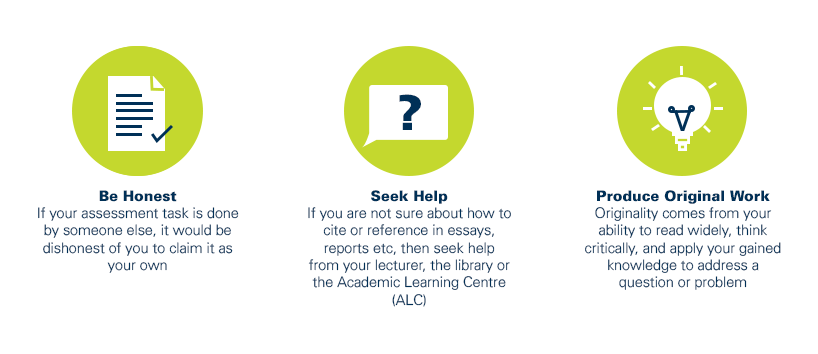
As a CQUniversity student you are expected to act honestly in all aspects of your academic work.
Any assessable work undertaken or submitted for review or assessment must be your own work. Assessable work is any type of work you do to meet the assessment requirements in the unit, including draft work submitted for review and feedback and final work to be assessed.
When you use the ideas, words or data of others in your assessment, you must thoroughly and clearly acknowledge the source of this information by using the correct referencing style for your unit. Using others’ work without proper acknowledgement may be considered a form of intellectual dishonesty.
Participating honestly, respectfully, responsibly, and fairly in your university study ensures the CQUniversity qualification you earn will be valued as a true indication of your individual academic achievement and will continue to receive the respect and recognition it deserves.
As a student, you are responsible for reading and following CQUniversity’s policies, including the Student Academic Integrity Policy and Procedure. This policy sets out CQUniversity’s expectations of you to act with integrity, examples of academic integrity breaches to avoid, the processes used to address alleged breaches of academic integrity, and potential penalties.
What is a breach of academic integrity?
A breach of academic integrity includes but is not limited to plagiarism, self-plagiarism, collusion, cheating, contract cheating, and academic misconduct. The Student Academic Integrity Policy and Procedure defines what these terms mean and gives examples.
Why is academic integrity important?
A breach of academic integrity may result in one or more penalties, including suspension or even expulsion from the University. It can also have negative implications for student visas and future enrolment at CQUniversity or elsewhere. Students who engage in contract cheating also risk being blackmailed by contract cheating services.
Where can I get assistance?
For academic advice and guidance, the Academic Learning Centre (ALC) can support you in becoming confident in completing assessments with integrity and of high standard.
What can you do to act with integrity?