Overview
This unit introduces you to the innovation ecosystem and the place of intellectual property (IP) within that ecosystem. In the first half of the unit, you will learn about Australia’s statutory IP rights, including copyright, patents, designs, and trademarks, and the associated international IP conventions and treaties. You will also consider other rights regarding confidentiality and passing off. IP is an important business asset, and in the second half of the unit, you will investigate the commercialisation of IP. To set the scene, you will look at the regulatory context – how government incentivises innovation and commercialisation. You will then consider the foundational components of commercialisation, including the concept of IP due diligences, business structuring and funding issues, negotiations, and options to monetise IP. You will spend the final two weeks of the unit investigating IP licensing, which lies at the heart of IP commercialisation. Major licensing terms, and the associated risks of anti-competitive conduct will be canvassed. Students will have the option to design their own end-of-term research assessment to cater for their particular interests, or to complete a set final paper.
Details
Pre-requisites or Co-requisites
Co-requisite LAWS11057, LAWS11059, LAWS11066 for Law students. Pre-Req of LAWS11030
Important note: Students enrolled in a subsequent unit who failed their pre-requisite unit, should drop the subsequent unit before the census date or within 10 working days of Fail grade notification. Students who do not drop the unit in this timeframe cannot later drop the unit without academic and financial liability. See details in the Assessment Policy and Procedure (Higher Education Coursework).
Offerings For Term 2 - 2026
Attendance Requirements
All on-campus students are expected to attend scheduled classes - in some units, these classes are identified as a mandatory (pass/fail) component and attendance is compulsory. International students, on a student visa, must maintain a full time study load and meet both attendance and academic progress requirements in each study period (satisfactory attendance for International students is defined as maintaining at least an 80% attendance record).
Recommended Student Time Commitment
Each 6-credit Undergraduate unit at CQUniversity requires an overall time commitment of an average of 12.5 hours of study per week, making a total of 150 hours for the unit.
Class Timetable
Assessment Overview
Assessment Grading
This is a graded unit: your overall grade will be calculated from the marks or grades for each assessment task, based on the relative weightings shown in the table above. You must obtain an overall mark for the unit of at least 50%, or an overall grade of 'pass' in order to pass the unit. If any 'pass/fail' tasks are shown in the table above they must also be completed successfully ('pass' grade). You must also meet any minimum mark requirements specified for a particular assessment task, as detailed in the 'assessment task' section (note that in some instances, the minimum mark for a task may be greater than 50%). Consult the University's Grades and Results Policy for more details of interim results and final grades.
All University policies are available on the CQUniversity Policy site.
You may wish to view these policies:
- Grades and Results Policy
- Assessment Policy and Procedure (Higher Education Coursework)
- Review of Grade Procedure
- Student Academic Integrity Policy and Procedure
- Academic Progression Policy and Procedure
- Student Refund and Credit Balance Policy and Procedure
- Complaints Policy and Procedure
- Information and Communications Technology Acceptable Use Policy and Procedure
This list is not an exhaustive list of all University policies. The full list of University policies are available on the CQUniversity Policy site.
Feedback, Recommendations and Responses
Every unit is reviewed for enhancement each year. At the most recent review, the following staff and student feedback items were identified and recommendations were made.
Feedback from Student evaluations
The content was excellent and real world relevant, particularly the Licensing modules. A text covering the fundamentals of IP (not just commercialisation) would be good but sounds like it doesn't exist. Sometimes the Business Law book wasn't available from max users in the library online.
Content continues to remain real-world relevant. There is no text that will cover the fundamentals of IP in an introductory fashion that is up to date, so the study guides continue to be the best option. Consider putting the Graw/Business Law relevant chapters into an e-Reading list.
Feedback from Student evaluations
Feedback given on Assessment 2 was dismal. The marking criteria for the last assessment was not made available.
The casual marker will not be engaged again for this unit. There is no formal marking criteria for the final assessment, because the students are allowed to choose their own topics, and in addition to these 'design your own' final assessments, there are a mix of problem and essay questions for the students to choose from and complete. For next iteration, I will provide a general rubric framed around the learning objectives for the unit to provide some assistance, but a detailed rubric is not possible for this particular assessment given the disparity in topics and formats which change each time the unit is offered.
- Identify and apply legal principles relating to confidential information, copyright, patents, designs, trade marks and the protection of business reputation.
- Assess the legal and practical steps needed to ensure that intellectual property rights remain valid and enforceable.
- Analyse and evaluate intellectual property protection issues and/or commercialisation issues, potential business and competition law risks.
Alignment of Assessment Tasks to Learning Outcomes
| Assessment Tasks | Learning Outcomes | ||
|---|---|---|---|
| 1 | 2 | 3 | |
| 1 - Online Quiz(zes) - 20% | |||
| 2 - Written Assessment - 30% | |||
| 3 - Written Assessment - 50% | |||
Alignment of Graduate Attributes to Learning Outcomes
| Graduate Attributes | Learning Outcomes | ||
|---|---|---|---|
| 1 | 2 | 3 | |
| 1 - Communication | |||
| 2 - Problem Solving | |||
| 3 - Critical Thinking | |||
| 4 - Information Literacy | |||
| 5 - Team Work | |||
| 6 - Information Technology Competence | |||
| 7 - Cross Cultural Competence | |||
| 8 - Ethical practice | |||
| 9 - Social Innovation | |||
| 10 - First Nations Knowledges | |||
| 11 - Aboriginal and Torres Strait Islander Cultures | |||
Textbooks
Commercialisation of Intellectual Property
- 1st edition (2019)
- Authors: Natalie Stoianoff, Fred Chilton, Ann L Monotti
- Lexis Nexis Butterworths
- Chatswood Chatswood , NSW , Australia
- ISBN: 9780409340648
ISBN for the e-book is: 9780409340655
- Binding: Paperback
IT Resources
- CQUniversity Student Email
- Internet
- Unit Website (Moodle)
- Webcam and microphone for participation in tutorials
All submissions for this unit must use the referencing style: Australian Guide to Legal Citation, 4th ed
For further information, see the Assessment Tasks.
j.w.king@cqu.edu.au
Unit Overview
Begin Date: 13 Jul 2026Module/Topic
Overview of intellectual property
Chapter
- Study guide, lecture video and slides for week 1;
- Natalie P Stoianoff, Fred Chilton and Anne L Monotti, Commercialisation of Intellectual Property (LexisNexis Butterworths, 2019) (Text):
- Chapter 1, 'Setting the Scene for Intellectual Property Commercialisation'; and
- Chapter 2, 'Overview of Intellectual Property Rights'.
- Any other resources as advised on Moodle.
Events and Submissions/Topic
Copyright
Begin Date: 20 Jul 2026Module/Topic
Copyright Law
Chapter
- Study guide, lecture video and slides for week 2;
- Any other resources as advised on Moodle.
Events and Submissions/Topic
Patent Law
Begin Date: 27 Jul 2026Module/Topic
Patent Law
Chapter
- Study guide, lecture video and slides for week 3;
- Any other resources as advised on Moodle.
Events and Submissions/Topic
Trade Marks
Begin Date: 03 Aug 2026Module/Topic
Trade marks
Chapter
- Study guide, lecture video and slides for week 4;
- Any other resources as advised on Moodle.
Events and Submissions/Topic
Passing Off and Australian Consumer Law
Begin Date: 10 Aug 2026Module/Topic
Passing off and Australian competition law
Chapter
- Study guide, lecture video and slides for week 5;
- Any other resources as advised on Moodle.
Events and Submissions/Topic
Designs and Confidential Information
Begin Date: 17 Aug 2026Module/Topic
Designs and Confidential Information
Chapter
- Study guide, lecture video and slides for week 6;
- Any other resources as advised on Moodle.
Events and Submissions/Topic
Vacation Week
Begin Date: 24 Aug 2026Module/Topic
Term Break
Chapter
Term Break
Events and Submissions/Topic
Regulatory Context
Begin Date: 31 Aug 2026Module/Topic
The Bigger Picture of Innovation & IP: Regulatory Context
Chapter
- Study guide, lecture video and slides for week 7;
- Text, chapter 3: 'Drivers of Innovation';
- Amanda-Jane George and Julie-Anne Tarr, 'Addressing Australia’s collaboration ‘problem’: Is there a Brave New World of innovation policy post COVID-19?' (Australian Journal of Public Administration);
- (Optional): Amanda-Jane George, Julie-Anne Tarr and Susan Bird, 'Forty Years of Freedom of Information (FOI): Accountability, Policymaking and the National Innovation and Science Agenda' (2020) 31 PLR 189-211;
- AJ George and Julie-Ann Tarr, 'A case study in innovation policymaking: standard contracts as a tool to improve university–industry collaboration' (2024) 15(5) Journal of Science & Technology Policy Management 1085;
- Any other resources as advised on Moodle.
Events and Submissions/Topic
Commercialisation I
Begin Date: 07 Sep 2026Module/Topic
Commercialisation I: Ownership and Employment Issues
Chapter
- Study guide, lecture video and slides for week 8;
- Text, chapter 4, 'Issues Regarding the Development of Intellectual Property';
- Amanda George and Julie-Anne Tarr, 'Faculty and employee ownership of inventions in Australia' (2010) 28(1) Nature Biotechnology. (You will need your CQUniversity library login to access this link);
- Any other resources as advised on Moodle.
Events and Submissions/Topic
Commercialisation II
Begin Date: 14 Sep 2026Module/Topic
Commercialisation II: Business Structures for IP Commercialisation, Funding
Chapter
- Study guide, lecture video and slides for week 9;
- Text, chapter 5, 'Structures for Commercialisation';
- Text, chapter 6, 'Funding Innovation and Commercialisation';
- (Optional) Text, chapter11, 'Security and Insolvency', **but only paragraphs 11.1-11.46;
- Any other resources as advised on Moodle.
Events and Submissions/Topic
Licensing I
Begin Date: 21 Sep 2026Module/Topic
Licensing I: Negotiation - Relational versus Adversarial Approaches (Or a Bit of Both?)
Chapter
- Study guide, lecture video and slides for week 10;
- Text, chapter 8, 'Licensing of Intellectual Property Rights';
- David Frydlinger, Tim Cummins, Kate Vitasek and Jim Bergman, 'Unpacking Relational Contracts' (Haslam College of Business, IACCM and Lindahl, 2017);
- Noel Byrne and Amanda McBratney, Licensing Technology (Jordan Publishing, 2006), chapter 4, 'Negotiating the Licensing Contract';
- AJ George and Julie-Ann Tarr, 'A case study in innovation policymaking: standard contracts as a tool to improve university–industry collaboration' (2024) 15(5) Journal of Science & Technology Policy Management 1085.
- (Optional): Captain Greg Lazton, 'The FFG Enterprise - Excellence in Asset Management through Collaboration';
- Any other resources as advised on Moodle.
Events and Submissions/Topic
Licensing II
Begin Date: 28 Sep 2026Module/Topic
Licensing II: The licensing agreement (the nuts and bolts)
Chapter
- Study guide, lecture video and slides for week 11;
- Text, chapter 9, 'Drafting Licences';
- Text, chapter 10, 'Multimedia Licensing and Commercialisation in the Age of the Digital Entrepreneur';
- Any other resources as advised on Moodle.
Events and Submissions/Topic
Licensing III
Begin Date: 05 Oct 2026Module/Topic
Licensing III: Licensing and competition law
Chapter
- Study guide, lecture video and slides for week 12;
- Any other resources as advised on Moodle.
Events and Submissions/Topic
Exam Week
Begin Date: 12 Oct 2026Module/Topic
Chapter
Events and Submissions/Topic
Vacation/Exam Week
Begin Date: 19 Oct 2026Module/Topic
Chapter
Events and Submissions/Topic
1 Online Quiz(zes)
This assessment task will consist of 10 multiple choice questions and will assess topics covered in Weeks 1 to 3.
Students will have one hour to complete the Quiz once they commence their attempt. The Quiz will include multiple choice questions only.
The Quiz will open at the start of Week 4, on Monday 3 August 2026, and will close at 11:45 pm on Friday 7 August 2026, Queensland time.
You must complete the Quiz by submitting your answers to all questions online. You have one attempt to complete and submit your answers. You must therefore complete the Quiz in one sitting. You cannot save your answers and return to them or amend them at a later date.
Open attempts will be submitted automatically when the time limit of one hour expires and/or when the due date and time is reached.
This assessment requires students to adhere to the guidelines on the use of artificial intelligence tools as specified in the Artificial Intelligence Assessment Scale (AIAS). The use of AI tools or technology is prohibited in the completion of this Quiz. This is a Level 1 AIAS assessment. Any misuse of AI tools, or failure to comply with the AI requirements for this assessment, may be considered a breach of academic integrity.
Extensions of more than 14 days are not available for this assessment. Due to the need to provide prompt feedback to students, and the content of feedback provided, submissions received after the assessment has been returned to students cannot be accepted for academic integrity reasons. Students seeking extensions beyond this timeframe will be required to undertake a different version of the assessment task.
Due to the nature of this task, the 72-hour grace period does not apply to this assessment.
Week 4 Friday (7 Aug 2026) 11:45 pm AEST
Complete and submit via link on Moodle.
Week 5 Friday (14 Aug 2026)
One week after close of quiz.
Understanding of the different IP regimes and their basic features - 40%
Understanding of the the nature and scope of copyright law - 30%
Understanding of the nature and scope of patent law - 30%
- Identify and apply legal principles relating to confidential information, copyright, patents, designs, trade marks and the protection of business reputation.
- Assess the legal and practical steps needed to ensure that intellectual property rights remain valid and enforceable.
- Analyse and evaluate intellectual property protection issues and/or commercialisation issues, potential business and competition law risks.
2 Written Assessment
This assessment will examine student's knowledge of selected topics covered up to Week 6 and it will be based on a hypothetical problem scenario. You will be required to address legal problems on IP protection with the aid of primary and secondary legal sources. See further detailed information to be released on Moodle under the Assessment tile.
Week 8 Friday (11 Sept 2026) 11:45 pm AEST
Complete and submit via link on Moodle.
Week 10 Friday (25 Sept 2026)
Two weeks from due date.
***PLEASE NOTE: this assessment is designed to develop your understanding of the various IP rights as well as your critical thinking and analytical skills in applying them to a real-world situation. Accordingly, students MUST NOT use GENERATIVE AI in completing this assessment and its associated research tasks.
Note that the lecturer runs all assessment questions through generative AI and knows how it will respond, including hallucinations and fake case names/citations. In addition, Turnitin will likely be able to detect AI usage. (Yes, I'm serious about the "no AI usage" in this unit).
If you are found to have used AI in your assessment piece, it will be graded at ZERO.
CRITERIA:
This assessment item is worth 30 marks and comprises 30% of your overall grade. It will be assessed according to the following criteria:
- identification of legal issues (5 marks, 5%);
- identification and analysis of relevant law (7.5 marks, 7.5%);
- application of the law to the factual scenario (7.5 marks, 7.5%);
- ability to provide clear, supportable conclusions (5 marks, 5%); and
- effective communication, structure and referencing (5 marks, 5%).
See the below rubric:
- Identify and apply legal principles relating to confidential information, copyright, patents, designs, trade marks and the protection of business reputation.
- Assess the legal and practical steps needed to ensure that intellectual property rights remain valid and enforceable.
- Analyse and evaluate intellectual property protection issues and/or commercialisation issues, potential business and competition law risks.
3 Written Assessment
Final research paper (min 2000, max 2200 words, exclusive of footnotes).
In this unit, you will encounter some complex subject matter which will hopefully inspire your research curiosity. For this final piece of assessment, you have 3 options:
1. Design your own assessment:
The second half of the unit material in particular is designed to get you thinking about entrepreneurship, government innovation policy and commercialisation. The material is deliberately provocative to get you thinking about your own views and opinions on the subject matter. You are encouraged to pursue your own individual research interests within the bounds of the second half of the unit material (it may straddle the first half of unit material (IP rights) but with the emphasis on a policy or commercialisation issue). You may develop your own, unique research question to pursue in consultation with the Unit Coordinator, who will be able to provide you with assistance in scoping your research question appropriately for the task.
If you decide to develop your own research question to write on, you must have emailed your paper proposal to Unit Coordinator for approval by the end of week 5. Your paper proposal must demonstrate that you have considered the following issues in order to submit the paper on time and in a well-researched manner:
- What is the research question or problem that you wish to write about? Clearly define the research problem and how you want to address it;
- Why do you want to research this issue? You should show that you have at least conducted a preliminary review of the literature to demonstrate that it is a research question worthy of study.
- How are you going to do it? You should show that you have a defined schedule for your literature review that is achievable, to allow time for the write-up of your paper and submission by the due date.
OR If you do NOT wish to develop your own research question to write on, you must submit a final individual paper on only ONE of the following topics:
2. Present a critical analysis:
Critically analyse whether existing patent law frameworks are capable of responding to inventions substantially developed through artificial intelligence-assisted research and development.
In your answer, compare the Australian approach to inventorship, entitlement and patent ownership with at least one overseas jurisdiction. You should consider whether the law’s continued focus on a human inventor is conceptually and commercially appropriate where AI systems play a significant role in identifying, generating or optimising an invention.
Your analysis should address the distinction between an invention that is merely AI-assisted and one that is claimed to be AI-generated. You should also consider the commercialisation consequences of uncertainty around inventorship and entitlement, including who may apply for a patent, who may assign rights, and whether investors or commercial partners are likely to be deterred by uncertainty in the legal framework.
In light of your analysis, discuss whether reform is required in Australia. If reform is required, identify what form it should take. If reform is not required, explain why the existing patent framework remains adequate.
This assignment requires critical analysis rather than description. You should not merely summarise cases or commentary. You should ask whether the law is coherent, whether it produces commercially workable outcomes, and whether patent law is the correct mechanism for incentivising AI-assisted innovation.
OR
3. Argue a proposition:
“Australia’s innovation policy problem is not a lack of ideas, but a failure to convert research and invention into commercially successful outcomes.”
Discuss this proposition by critically examining Australia’s innovation policy settings and their relationship with intellectual property commercialisation.
In your answer, you may consider examples such as university research commercialisation, government innovation programs, IP Australia resources, patent filing behaviour, start-up funding, collaboration between universities and industry, or past national innovation strategies. You should select specific examples and use them to support your argument.
Your discussion should consider whether Australia’s policy settings adequately support the movement from research and invention to market-ready products and services. You should also consider whether intellectual property law and government policy are working together effectively, or whether there are gaps between legal protection, funding, commercialisation skills and market adoption.
You should take a clear position. You may agree, disagree, or partly agree with the proposition, but your answer must be supported by reasoned argument, evidence and independent research. The strongest answers will go beyond general statements about innovation and will critically assess whether current policy settings actually help Australian innovators commercialise their intellectual property.
***PLEASE NOTE: this assessment is designed to develop your critical thinking and analytical skills, so students MUST NOT use GENERATIVE AI in completing this assessment and its associated research tasks. Any assessment found to have been using AI will be graded at ZERO.
To counter the potential unauthorised use of generative AI LLM models such as ChatGPT and Copilot, ALL students MUST submit a REFLECTIVE RESEARCH DIARY with this assessment to indicate (1) the resources they have consulted, (2) dates the resources were consulted, and (3) how the resources developed their thinking in the assessment. To avoid any doubt, a document with a TABLE including the following must be copied and pasted at the end of the student's final assignment:
(1) resources utilised in the assessment (designate all resources, including articles, website URLs, videos, etc. If you have referred to a resource in your work, it must be included here in the table),
(2) date(s) that the resources were consulted, and
(3) brief notes/reflection on how the resources were influential on the arguments presented in the student's final assignment. THIS IS MANDATORY, if I cannot tell how you developed your thinking in this assignment with the use of the resources, then the diary will NOT be sufficient and you will receive a grade of ZERO. A simple list of resources resembling a bibliography is NOT acceptable. This reflective research diary requirement is not difficult: as you are researching, keep your reflective diary document open, and jot down your resources as you gather them. As you then read through the resources, make notes in your diary about what you're thinking and how it is impacting on your critical analysis of the topic you've chosen. See further the rubric below. The diary attracts 10 marks or 10% of your final grade. See further the rubric below.
Pedagogically, there are good reasons - apart from reducing the risk of AI usage - for requiring you to do a reflective research diary or memorandum. These are often required for larger research projects, and will be required if you go on to do postgraduate research. So, it's a great idea to start getting into the habit of doing one "as you go" with your research now.
Note that the lecturer has already run these assessment questions through generative AI and knows how it will respond. In addition, Turnitin will likely be able to detect AI usage. (Yes, as you can gather, I'm serious about the "no AI usage" in this unit).
Exam Week Monday (12 Oct 2026) 11:45 pm AEST
Submit via link on Moodle.
Results to be released following certification of grades

- Identify and apply legal principles relating to confidential information, copyright, patents, designs, trade marks and the protection of business reputation.
- Analyse and evaluate intellectual property protection issues and/or commercialisation issues, potential business and competition law risks.
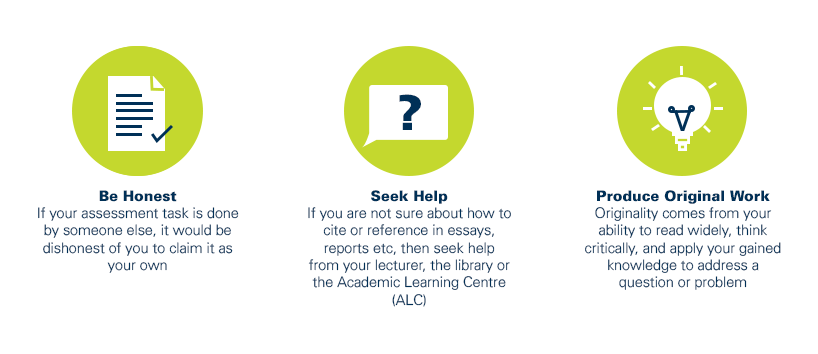
As a CQUniversity student you are expected to act honestly in all aspects of your academic work.
Any assessable work undertaken or submitted for review or assessment must be your own work. Assessable work is any type of work you do to meet the assessment requirements in the unit, including draft work submitted for review and feedback and final work to be assessed.
When you use the ideas, words or data of others in your assessment, you must thoroughly and clearly acknowledge the source of this information by using the correct referencing style for your unit. Using others’ work without proper acknowledgement may be considered a form of intellectual dishonesty.
Participating honestly, respectfully, responsibly, and fairly in your university study ensures the CQUniversity qualification you earn will be valued as a true indication of your individual academic achievement and will continue to receive the respect and recognition it deserves.
As a student, you are responsible for reading and following CQUniversity’s policies, including the Student Academic Integrity Policy and Procedure. This policy sets out CQUniversity’s expectations of you to act with integrity, examples of academic integrity breaches to avoid, the processes used to address alleged breaches of academic integrity, and potential penalties.
What is a breach of academic integrity?
A breach of academic integrity includes but is not limited to plagiarism, self-plagiarism, collusion, cheating, contract cheating, and academic misconduct. The Student Academic Integrity Policy and Procedure defines what these terms mean and gives examples.
Why is academic integrity important?
A breach of academic integrity may result in one or more penalties, including suspension or even expulsion from the University. It can also have negative implications for student visas and future enrolment at CQUniversity or elsewhere. Students who engage in contract cheating also risk being blackmailed by contract cheating services.
Where can I get assistance?
For academic advice and guidance, the Academic Learning Centre (ALC) can support you in becoming confident in completing assessments with integrity and of high standard.
What can you do to act with integrity?