Overview
This unit is designed for students who want to develop knowledge and skills in the automation of the practice of law. This unit incorporates theory, research and the practical application of legal project management, process improvement and innovation frameworks, expert systems, document and process automation, data analytics, machine learning and blockchain. Students will examine software systems that empower consumers including lawyerless internet-based systems that vend interactive documents and intelligent legal assistance. Intelligent systems designed for lawyers to produce inexpensive transactional outcomes will be considered. The challenges, threats, opportunities and ethical considerations associated with these developments will be explored. Consideration will also be given as to how governments, pro bono and community legal centres may directly benefit from automation. Through engagement with legal knowledge engineering, students will develop a legal App. No programming experience or other technical knowledge is required.
Details
Pre-requisites or Co-requisites
Co-requisites: LAWS11057 and LAWS11059, or LAWS11030
Important note: Students enrolled in a subsequent unit who failed their pre-requisite unit, should drop the subsequent unit before the census date or within 10 working days of Fail grade notification. Students who do not drop the unit in this timeframe cannot later drop the unit without academic and financial liability. See details in the Assessment Policy and Procedure (Higher Education Coursework).
Offerings For Term 1 - 2026
Attendance Requirements
All on-campus students are expected to attend scheduled classes - in some units, these classes are identified as a mandatory (pass/fail) component and attendance is compulsory. International students, on a student visa, must maintain a full time study load and meet both attendance and academic progress requirements in each study period (satisfactory attendance for International students is defined as maintaining at least an 80% attendance record).
Recommended Student Time Commitment
Each 6-credit Undergraduate unit at CQUniversity requires an overall time commitment of an average of 12.5 hours of study per week, making a total of 150 hours for the unit.
Class Timetable
Assessment Overview
Assessment Grading
This is a graded unit: your overall grade will be calculated from the marks or grades for each assessment task, based on the relative weightings shown in the table above. You must obtain an overall mark for the unit of at least 50%, or an overall grade of 'pass' in order to pass the unit. If any 'pass/fail' tasks are shown in the table above they must also be completed successfully ('pass' grade). You must also meet any minimum mark requirements specified for a particular assessment task, as detailed in the 'assessment task' section (note that in some instances, the minimum mark for a task may be greater than 50%). Consult the University's Grades and Results Policy for more details of interim results and final grades.
All University policies are available on the CQUniversity Policy site.
You may wish to view these policies:
- Grades and Results Policy
- Assessment Policy and Procedure (Higher Education Coursework)
- Review of Grade Procedure
- Student Academic Integrity Policy and Procedure
- Academic Progression Policy and Procedure
- Student Refund and Credit Balance Policy and Procedure
- Complaints Policy and Procedure
- Information and Communications Technology Acceptable Use Policy and Procedure
This list is not an exhaustive list of all University policies. The full list of University policies are available on the CQUniversity Policy site.
Feedback, Recommendations and Responses
Every unit is reviewed for enhancement each year. At the most recent review, the following staff and student feedback items were identified and recommendations were made.
Feedback from Students request: Clarification of assessment requirements in response to assessment feedback
Clarify ‘assessment requirements’
The Unit Coordinator will review marking rubrics prior to the next offering to ensure clarity, fairness, and consistent performance differentiation.
Feedback from Reviewer comment
Unit coordinator to specify plan for promotion and visibility of LAWS13019
It is proposed that the unit should be promoted more broadly within the School of Business and Law. This can occur through presentation at the next School of Business and Law meeting which should aim to raise awareness of the availability of LAWS13019 as an elective unit and for other Unit Coordinators to recommend/endorse same to their students, if possible.
Feedback from Reviewer Comments
Clarify how LAWS13019 is linked to professional employment outcomes
It is also proposed that for the next 2026 offering, LAWS13019 learning outcomes should explicitly map to the Bachelor of Laws degree structure. This could include mapping between LAWS13019 assessment tasks to key legal industry skills being made visible in the Week 1 orientation session for new students. This will help students recognise the relevance of artificial intelligence in the legal profession to their degree and employability.
Feedback from End of term feedback from students: Requested clearer explanations of unit learning outcomes
Clarify key ‘take-aways’ in Unit Profile for LAWS13019
The unit profile will be refreshed prior to the 2026 offering to highlight key take-aways from the LAWS13019 unit, such as hands-on building and operation of artificial intelligence tools, automation, legal tech, and the ability to critically evaluate the risks in using artificial intelligence products within contemporary legal practice.
Feedback from Reviewer Comments
Add competitor relevance note
Unit Profile to include statement that comparable units exist elsewhere in other Australian University offerings and that retaining LAWS13019 sustains CQU competitiveness. It should be noted on the unit profile that this unit provides greater breadth and depth into the use of artificial intelligence within the Australian Legal Profession, notably by offering a build-your-own AI solution assessment structure.
Feedback from Student feedback
Clearer explanation of assessment rubrics
Removed complex rubric descriptors and referenced proposed coordinated review process. It is proposed that rubric and assessment alignment should be reviewed by the Unit Coordinator and their direct supervisor. This should occur prior to the next offering to ensure continued rigor and transparency for the unit.
- Apply process improvement and innovation frameworks to the delivery of legal work
- Identify aspects of legal work and new forms of service delivery that can be automated
- Classify what ethical and regulatory issues are presented by lawyering using intelligent machines
- Construct a software application using teamwork that can model legal knowledge and reasoning to perform useful legal work for non lawyers as a form of social innovation.
This is not an accredited unit.
Alignment of Assessment Tasks to Learning Outcomes
| Assessment Tasks | Learning Outcomes | |||
|---|---|---|---|---|
| 1 | 2 | 3 | 4 | |
| 1 - Practical Assessment - 80% | ||||
| 2 - Group Work - 20% | ||||
Alignment of Graduate Attributes to Learning Outcomes
| Graduate Attributes | Learning Outcomes | |||
|---|---|---|---|---|
| 1 | 2 | 3 | 4 | |
| 1 - Communication | ||||
| 2 - Problem Solving | ||||
| 3 - Critical Thinking | ||||
| 4 - Information Literacy | ||||
| 5 - Team Work | ||||
| 6 - Information Technology Competence | ||||
| 7 - Cross Cultural Competence | ||||
| 8 - Ethical practice | ||||
| 9 - Social Innovation | ||||
| 10 - First Nations Knowledges | ||||
| 11 - Aboriginal and Torres Strait Islander Cultures | ||||
Textbooks
There are no required textbooks.
IT Resources
- CQUniversity Student Email
- Internet
- Unit Website (Moodle)
- MindStudio Free Account (To be discussed in class)
- Working Webcam and Microphone
All submissions for this unit must use the referencing style: Australian Guide to Legal Citation, 4th ed
For further information, see the Assessment Tasks.
c.schiavone@cqu.edu.au
j.w.king@cqu.edu.au
Week 1: Legal Automation and Product Ideation
Begin Date: 09 Mar 2026Module/Topic
“AI doesn’t have to be evil to destroy humanity – if AI has a goal and humanity just happens to come in the way, it will destroy humanity as a matter of course without even thinking about it, no hard feelings.” – Elon Musk
Overview:
We begin our journey in Legal Automation by an introduction to what Legal Automation actually is. What is legal automation? Why does it matter? And why do people care?
We kickstart our creative thinking on how to solve an existing legal problem using technology. You will be provided with an explanation of this Unit, participation and project expectations. And of course, the opportunity for you to ask questions about the materials at any time.
Key concepts: Artificial Intelligence (AI) in legal practice, creativity, and design thinking.
Achievements: We will jump straight into the first Assessment by ensuring you find a partner, whom you will work with for the remainder of this subject in creating a an application to solve an existing legal problem. In session, you will need to decide on what your legal problem will be. You have free rein over what the legal problem is that you are trying to build for/solve for by building a mobile application.
Chapter
Henrik Kniberg, 'Generative AI in a Nutshell - How to Survive and Thrive in the Age of AI' (YouTube, 21 January 2024) <https://www.youtube.com/watch?v=2IK3DFHRFfw>
Gather, 'How to use Gather as an Attendee' (YouTube, 13 April 2021) <https://www.youtube.com/watch?v=89at5EvCEvk>
Marc Andreessen, 'The Techno-Optimist Manifesto', Andreesen Horowitz (Blog, 16 October 2023) <https://a16z.com/the-techno-optimist-manifesto>
Manfred F. R. Kets de Vries, 'Will Artificial Intelligence Kill Us All?', INSEAD Knowledge (22 August 2024) <https://knowledge.insead.edu/career/will-artificial-intelligence-kill-us-all>
Events and Submissions/Topic
Weekly Zoom workshop
Week 2: Assessment Project Management and Process Mapping
Begin Date: 16 Mar 2026Module/Topic
“AI will probably most likely lead to the end of the world, but in the meantime, there'll be great companies.” – Sam Altman
Overview: You would have now been assigned a project partner and legal problem that you will build a mobile application to solve. For the first half of this workshop, we will get our hands dirty with some basic legal project management and process mapping. This will be done using another platform called Miro in what is known as a sprint format.
You will need to be ready to give your brain a workout as a sprint format is exactly how it sounds. We will be bringing the high-energy, quick decision making, realistic and human-centered thinking to the table. Be prepared to share a bit about yourself with your project partner, including what you foresee as your strengths and weaknesses for the remainder of this project.
During the second half of the workshop, teams will be provided with an hour of guided spitball. Sounds gross? A spitball in product development is where you will spitball (not literally) your ideas. A strange corporate jargon word for emptying your head of what you think is the best solution or way to solve a problem! In that sense, the second half of the session is where I hand you and your project partner the reins. Your team are the legal professionals!
Key concepts: Project management, process mapping, feasibility planning, lean and agile thinking, and automation potential.
Achievements: You will continue your Assessment 1 journey. You will learn how to apply basic legal project management techniques in Miro to structure your work efficiently and collaboratively. You will then work with your partner to determine key aspects of your research proposal and who is responsible for what in the lead up to the submission of the first Assessment.
Chapter
Miro, 'MASTER Miro in 3 Minutes: A QUICK & Effective Overview' (YouTube, 20 March 2024) <https://www.youtube.com/watch?v=r0vrPSZjWMQ>
Miro, 'Newbie to Ninja!', (Miro Board, 14 February 2025) <https://miro.com/app/board/uXjVIfOcXqY=/?share_link_id=123087466875>
Creative New Zealand, 'Create a strong concept and project plan', Community Arts Toolkit (Web Page) <https://creativenz.govt.nz/-/media/project/creative-nz/creativenz/pagedocuments/toolkits/tipsheet4_concepts_project_plan.pdf>
'The Project Management Game', thatPMGame.com (Web Page) <http://thatpmgame.com/>
Events and Submissions/Topic
Weekly Zoom workshop
Week 3: Understanding the Basics of AI Systems and Research Proposal Submission
Begin Date: 23 Mar 2026Module/Topic
“AI is a tool. The choice about how it gets deployed is ours.” – Oren Etzioni
Overview:
Now that you and your partner have outlined your legal problem and mapped your process, it’s time to dive into artificial intelligence (AI) and its role in legal automation. This week, we will introduce the fundamental principles of AI, focusing on how AI systems operate, their strengths and limitations, and their relevance in legal practice.
During the first half of the session, we will deconstruct AI models and explore how rule-based and machine learning systems function in legal applications. We will also analyse real-world legal AI tools, such as document automation platforms, predictive analytics, and legal chatbots, to understand their impact on modern legal practice.
During the second half of the session, your Project Team will receive guided feedback and peer support to refine the final details of your Research Proposal before submission.
Key concepts: AI misconceptions, ethics, risks and practical use cases relevant to legal tech.
Achievements: It's time to submit Assessment 1. In session, you will learn about the basics of AI, and gain foundational knowledge of AI and its impact on the legal profession. We will delve into the operations of some real-world AI tool, including Legal Tech, where I want to pass the mic around to get your opinion how they operate. Are they effective? Are there any risks? What ethical issues should you consider?
Chapter
MindStudio Help Center, 'MindStudio Documentation', MindStudio (Web Page) <https://help.mindstudio.ai/>
Queensland Brain Institute, 'How the brain inspires AI' (Blog Post) <https://qbi.uq.edu.au/how-brain-inspires-ai>
Michael Legg and Felicity Bell, 'Artificial Intelligence and the Legal Profession: Becoming the AI-Enhanced Lawyer' (2019) 38(2), University of Tasmania Law Review, 34 <https://www.lawsociety.com.au/sites/default/files/2020-11/Artificial%20Intelligence%20and%20the%20Legal%20Profession%20-%20Becoming%20the%20AI-Enhanced%20Lawyer.pdf>
Events and Submissions/Topic
Weekly Zoom workshop
Week 4: Chatbots, Document and Workflow Automation
Begin Date: 30 Mar 2026Module/Topic
“Within a few decades, machine intelligence will surpass human intelligence, leading to singularity, technological change so rapid and profound it represents a rupture in the fabric of human history.” – Ray Kurzweil
Overview: Now that you’ve developed a foundational understanding of AI in legal practice, this week we will explore chatbots, document automation, and workflow automation. These are three key tools that have already reshaped the legal industry and are designed to enhance efficiency, reduce costs, and streamline repetitive legal tasks, allowing lawyers to focus on more complex, high-value work.
Key concepts: AI misconceptions, ethics, risks and practical use cases relevant to legal tech.
Achievements: We will explore how legal chatbots, document automation and legal workflow automation operate in our current technological climate. Project Teams will start sketching the automation flow in preparation for next week’s application design submission.
Chapter
Catherine Bamford et al, 'Definitive Guide to Legal Document Automation for Law Firms' (Report, 30 May 2022) <https://www.legalsupportnetwork.co.uk/sites/default/files/definitive-guide-document-automation-law-firms.pdf>
Sam Mollaei, 'Top 5 Automations That Run My $10M+ Law Firm Zapier Tutorial' (YouTube, 17 March 2023) <https://www.youtube.com/watch?v=0ZoDVSziBw4>
Herbert Smith Freehills, 'Chatbots' (Web Page) <https://www.herbertsmithfreehills.com/chatbots>
Jenny Ng, Emma Haller and Angus Murray, 'The ethical chatbot: A viable solution to socio-legal issues' (2022) 47(4) Alternative Law Journal 308.
Events and Submissions/Topic
Weekly Zoom workshop
Week 5: Application Design Principles and Application Design Submission
Begin Date: 06 Apr 2026Module/Topic
“Machine intelligence is the last invention that humanity will ever need to make” – Nick Bostrom
Overview: Now that we’ve explored automation tools such as chatbots, document automation, and workflow automation, this week we shift our focus to application design principles.
Key concepts: This session is designed to progress your legal application into a structured, user-friendly, human-centered design.
Achievements: We will explore two key design concepts, being user experience (UX) and user interface (UI). You will also learn how to design seamless workflows, incorporate basic logical navigation, and automation features that can enhance the functionality of your application.
Chapter
DoNotPay, 'Your AI consumer champion' (Web Page) <https://donotpay.com/>
LawDroid, 'Work smarter with AI legal assistants' (Web Page) <https://lawdroid.com/>
Cartland Law, 'Ailira – Domestic Violence Assistant Beta Testing Now Open' (Web Page, 2019) <https://cartlandlaw.com/ailira-domestic-violence-assistant-beta-testing-now-open/>
Robert Mahari, 'The Future of AI in Law: AI Powered Justice', TEDx Talks (YouTube, 2023) <https://www.youtube.com/watch?v=dQnUrtc7I_I>
Events and Submissions/Topic
Weekly Zoom workshop
Week 6: AI and Machine Learning in Law
Begin Date: 13 Apr 2026Module/Topic
“As more and more artificial intelligence is entering into the world, more and more emotional intelligence must enter into leadership.” – Amit Ray
Overview: We will explore the distinction between rule-based and machine learning systems. We will also analyse real-world examples of both Artificial Intelligence (AI) and Machine Learning (ML).
Key concepts: Rule-based vs. machine learning models, understanding machine learning, predictive analytics, ethical and bias considerations.
Achievements: You will gain a deeper understanding of how AI and Machine Learning work, including the distinction between rule-based and machine learning systems.
Chapter
Space Kangaroo, 'Two ChatGPTs accuse each other of being AI!' (YouTube, 20 May 2024) <https://www.youtube.com/watch?v=fs7bP0WBtfU>
Ian Horowitz, 'Quick Reference Guide for Understanding AI', ITProToday (Web Page) <https://services.nwu.ac.za/sites/services.nwu.ac.za/files/files/ai/resources/Quick-reference-guide-for-understanding-AI.pdf>
Chloe Flascher, 'Generative AI and the Risk of Libel: Who Is Liable?', newlawjournal.co.uk (21 July 2023) <https://www.withersworldwide.com/Withers/files/8e/8ea61aeb-a1d1-468c-99d4-d2acc9aac768.pdf>
Events and Submissions/Topic
Weekly Zoom workshop
Break Week
Begin Date: 20 Apr 2026Module/Topic
Chapter
Events and Submissions/Topic
Week 7: Legal Applications and Prototyping
Begin Date: 27 Apr 2026Module/Topic
“The real question is, when will we draft an artificial intelligence bill of rights? What will that consist of? And who will get to decide that?”— Gray Scott
Overview: Flowing on from AI, automation, and application design principles, this week we will shift our focus to finalizing the prototype of your legal application.
In this session, we will cover low-fidelity vs. high-fidelity prototypes, iterative design, and how to create a minimum viable product (MVP).
You will learn how to turn your application design into a working prototype using MindStudio. A prototype is a preliminary model of your application.
Key concepts: Testing usability, iterative design, feedback loops, low-fidelity vs. high-fidelity prototypes.
Achievements: Hands-on prototyping in MindStudio and refinement of your application design will be key achievements as part of this workshop.
Chapter
MicroConf, 'How To Create An MVP (Minimum Viable Product)' - STEP BY STEP' (YouTube, 2022) <https://www.youtube.com/watch?v=YwEEV0wHnaA>
Paulius Cerka, Jurgita Grigiene and Gintare Sirbikyte, 'Is it possible to grant legal personality to artificial intelligence software systems?' (2017) Computer Law & Security Review 685.
Robert Corr, 'Do androids dream of electric lawyers?: The ethics of legal chatbots' (2022) 47(4) Alternative Law Journal 314.
Events and Submissions/Topic
Weekly Zoom workshop
Week 8: Consumer-Facing Legal Technology and Ethical Challenges
Begin Date: 04 May 2026Module/Topic
“A year spent in artificial intelligence is enough to make one believe in God.”—Alan Perlis
Overview: This week we turn our focus to consumer-facing legal technology, these are applications designed to empower clients, increase access to justice, and simplify legal processes for the community.
We will explore key innovations in legal technology, such as 'lawyer-less' legal platforms, automated dispute resolution and self-help legal bots. Additionally, we will critically examine the ethical challenges that arise when legal automation replaces or supplements human legal advice, particularly issues like AI bias, access to justice, data privacy, and regulatory compliance.
Key concepts: Ethical issues in legal automation, regulatory and compliance, access to justice, impact of legal technology on marginalised communities.
Achievements: You should all be gifted with the ability to critically evaluate bias, data privacy, and AI risks in legal automation after this session. You will evaluate your own legal applications for any ethical risks, and to ensure compliance with current legislation and professional conduct rules.
Chapter
Want to use ChatGPT to help prepare for court? This is what lawyers say ...', ABC News (Onlne News, 23 May 2024) <https://www.abc.net.au/news/2024-05-23/generative-ai-chatbots-responsible-use-in-court-guildelines/103863968>
Marc Queudot, Éric Charton and Marie-Jean Meurs, 'Improving access to justice with legal chatbots' (2020) 3 Stats 356.
Kevin Rawlinson, 'I want to destroy whatever I want: Bing's AI chatbot unsettles US reporter', The Guardian (Online News, 17 February 2023) <https://www.theguardian.com/technology/2023/feb/17/i-want-to-destroy-whatever-i-want-bings-ai-chatbot-unsettles-us-reporter>
Brooke K Brimo, 'How should legal ethics rules apply when artificial intelligence assists pro se litigants?' (2022) 35 The Georgetown Journal of Legal Ethics 549.
Events and Submissions/Topic
Weekly Zoom workshop
Week 9: Lawyer-Focused Automation and Data Privacy Issues
Begin Date: 11 May 2026Module/Topic
“You know what the biggest problem with pushing all-things-AI is? Wrong direction. I want AI to do my laundry and dishes so that I can do art and writing, not for AI to do my art and writing so that I can do my laundry and dishes.”—Joanna Maciejewska
Overview: This week, we shift our focus to lawyer-focused automation. These are technologies designed to enhance efficiency, accuracy, and productivity for legal professionals. While consumer-facing legal tech is designed to simplifies access to justice for the community, lawyer-focused automation streamlines workflows, improves research capabilities, and enhances decision-making specifically for those who work within the legal profession.
We will explore AI-driven legal research tools, contract analytics, case management systems, and automated billing software, understanding how they impact law firms, corporate legal departments, and the judiciary.
Alongside automation, this session will cover data privacy and security challenges. This is a critical issue in an era where AI can process vast amounts of confidential client information. Who 'owns' legal data? And how can legal professionals, including lawyers, ensure compliance with privacy regulations? What are the risks of data breaches?
Key concepts: AI in legal research and case management, data privacy, cybersecurity, legal ethics, regulatory compliance.
Achievements: You will evaluate your own legal applications for privacy risks, and determine how your application handles user data to ensure compliance with ethical and legal standards.
Chapter
Queensland Association of Independent Legal Services Inc (QAILS), 'Community legal centres’ use of technology' (Report, August 2014) <https://law.uq.edu.au/files/1260/Qld-CLCs-and-technology-August-2014.pdf>
KARE 11, 'Testing the limits of ChatGPT and discovering a dark side' (YouTube, 2023) <https://www.youtube.com/watch?v=RdAQnkDzGvc>
Law Council of Australia, Submission to Department of Industry, Sciences and Resources, Safe and Responsible AI in Australia (17 August 2023) <https://lawcouncil.au/publicassets/407df9d2-7941-ee11-948a-005056be13b5/4407%20-%20S%20-%20Safe%20and%20responsible%20AI%20in%20Australia.pdf>
Events and Submissions/Topic
Weekly Zoom workshop
Week 10: Legal Automation, the Courts and Government Agencies
Begin Date: 18 May 2026Module/Topic
“Success in creating AI would be the biggest event in human history. Unfortunately, it might also be the last, unless we learn how to avoid the risks.”— Stephen Hawking
Overview: To bring all our legal technology knowledge full circle, we turn our attention to how automation is transforming the judicial system and government agencies. Whilst previous sessions have focused on consumer legal technology and lawyer-focused automation, we now explore how courts, regulatory bodies, and even Government institutions are leveraging automation to improve efficiency, accessibility, and decision making.
We will examine AI-driven case management, digital courtrooms, automated legal aid systems, and regulatory compliance tools. We will also discuss the ethical and legal implications of government use of AI, such as automated decision-making in immigration, sentencing algorithms, and predictive policing.
Key concepts: Digital case management, AI in Government decision making, AI in law enforcement, AI in immigration, AI in sentencing within criminal justice systems.
Achievements: You should be able to articulate an informed view on the potential benefits, risks, and challenges for these different types of technology.
Chapter
Majsa Storbeck, 'Artificial Intelligence and Predictive Policing: Risks and Challenges' (Report, 2022) <https://eucpn.org/sites/default/files/document/files/PP%20%282%29.pdf>
CNBC, 'How AI Could Reinforce Biases in the Criminal Justice System' (YouTube, 2018) <https://www.youtube.com/watch?v=ZMsSc_utZ40>
Monika Zalnieriute, Submission to Australian Law Reform Commission, Judicial Impartiality (4 June 2021) <https://www.alrc.gov.au/wp-content/uploads/2021/06/3-.-Monika-Zalnieriute-Public.pdf>
Hany Farid, 'The danger of predictive algorithms in criminal justice', TEDx Talk (YouTube, 27 October 2016) <https://www.youtube.com/watch?v=p-82YeUPQh0>
Hashem Al-Ghaili, 'The Prison of the Future - Cognify' (YouTube, 2024) <https://www.youtube.com/watch?v=YFUv4_lCBLY>
Events and Submissions/Topic
Weekly Zoom workshop
Week 11: Legal Application Testing and Quality Control
Begin Date: 25 May 2026Module/Topic
"I think trust comes from transparency and control. You want to see the datasets that these models have been trained on. You want to see how this model has been built, what kind of biases it includes. That’s how you can trust the system. It’s really hard to trust something that you don’t understand.”— Clem Delangue
Overview: You are getting close to the finish line. Now that you have developed a functional prototype of your legal application, it’s time to focus on testing and quality control. This is the most crucial step for your legal application!
This week, we will explore the importance of software testing by testing your own products. These include usability testing, debugging, security reviews, and ethical compliance. Get ready to roll up your sleeves and test each other's high-fidelity user interface for your legal applications.
Key concepts: Software testing in legal technology, usability testing, debugging, performance optimisation.
Achievements: You will learn best practice for testing whether a legal application operates correctly, meets user needs, and aligns with legal and ethical standards. The goal is to identify potential issues in your legal application project with your team, before the final application submission next week.
Chapter
MIT Management, 'When AI Gets It Wrong: Addressing AI Hallucinations and Bias', AI Basics (Web Page, 2023) <https://mitsloanedtech.mit.edu/ai/basics/addressing-ai-hallucinations-and-bias/>
'LEAP AI invents family court legal case citations', AI, Algorithmic, and Automation Incidents Repository (Web Page, July 2024) <https://www.aiaaic.org/aiaaic-repository/ai-algorithmic-and-automation-incidents/leap-ai-invents-family-court-legal-case-citations>
Sasha Luccioni, 'AI Is Dangerous, but Not for the Reasons You Think', TED Talks (YouTube, 6 November 2023) <https://www.youtube.com/watch?v=eXdVDhOGqoE>
Events and Submissions/Topic
Weekly Zoom workshop
Week 12: Legal Application Showcase Extravaganza Preparation
Begin Date: 01 Jun 2026Module/Topic
“I would argue that in the long-term, failure to embrace and utilize AI may result in a lawyer not being the best and most competent advocate for their client.”—Michael Semanchik
Overview: This session is a free-for-all-style class, where teams will be given dedicated time to refine their applications and get feedback from the facilitator before the final submission. This is also your chance to ask last-minute questions, troubleshoot issues, and polish your presentation before next week's Legal Application Showcase Extravaganza (Bonanza)
Key concepts: No key concepts this week
Achievements: Here's your chance to fix any lingering issues in your application. No issues? Focus on crafting a compelling narrative around your presentation. Bonus points for any presentation that is creative and persuasive, you can't get any better than that.
Chapter
ExplainItStudios, 'Seinfeld on Public Speaking' (YouTube, 26 January 2014) <https://www.youtube.com/watch?v=yQ6giVKp9ec>
Events and Submissions/Topic
Weekly Zoom workshop
Exam Week
Begin Date: 08 Jun 2026Module/Topic
Chapter
Events and Submissions/Topic
Vacation/Exam Week
Begin Date: 15 Jun 2026Module/Topic
Chapter
Events and Submissions/Topic
This unit includes hands-on building and operation of artificial intelligence tools, automation, and legal technology, requiring a significant time commitment and weekly participation in workshops.
1 Practical Assessment
The Legal Application Product is the final assessment. It is a large project which is broken down into four key stages of development. Below is a detailed breakdown of each stage, including requirements, evaluation criteria, and expectations as part of the Assessment.
Stage 1: Research Proposal for Legal Application (20%)
Due Date: Sunday 29 March 2026 at 11:55pm
Completed as: Individual submission
Purpose: This assessment requires you to submit a research proposal outlining the legal problem you will solve with the application you will develop. The proposal should provide a well-researched definition of this legal problem, including its prevalence and impact on the community or legal sector. The research proposal should also outline the application's intended purpose, and provide a basic overview of its legal and technical framework.
Assessment Components
You will be assessed on the following key areas:
- Problem Definition and Justification (5%)
Criteria:
- Clearly defines the legal issue the application will address.
- Explains the significance and relevance of the issue.
- Justifies the need for automation in this area.
- Legal and Technological Framework (5%)
Criteria:
- Identifies relevant legal rules, regulations, and precedents.
- Discusses how automation/AI will be applied within the application, including any possible ethical issues and how they will be managed/contained.
- Provides examples of similar existing technologies in any other industry, or if there are no existing technologies, why you believe this is the case.
- Proposed Application Functionality (5%)
Criteria:
- Clearly describes how the application will work (features and user journey).
- Identifies intended users and expected benefits.
- Demonstrates feasibility and innovation.
- Research Methodology and Feasibility (5%)
Criteria:
- Outlines sources of legal research and technical data.
- Identifies potential challenges and solutions.
- Includes a basic project timeline.
Stage 2: Application Design (10%)
Due Date: Sunday 12 April 2026 at 11:55pm
Completed in: Pairs
Purpose: This assessment requires you to translate your research proposals on the same topic into a structured design for their application, including wireframes and functional workflow. The design must be logical and achievable within the remaining timeframe provided by this subject.
Assessment Components
You will be assessed on the following key areas:
- Wireframe and Proposed User Interface (5%)
Criteria:
- A clear and logical wireframe is submitted.
- Basic User interface (UI) elements are mapped out.
- Creative and innovative approach to product design and marketing.
- Functionality and Workflow (5%)
Criteria:
- Outlines how users will interact with the application.
- Specifies how basic automation/any AI will be used as part of the application.
- Provides a well-structured and human-centered user journey.
Stage 3: Legal Application (30%)
Due Date: Sunday 7 June 2026 at 11:55pm
Completed in: Pairs
Purpose: You will develop a functional legal application using MindStudio based on your research proposal and design plan. Use of the MindStudio Platform and associated activities will begin in Week 1 and continue throughout the entire Unit. This assessment will require you to build using MindStudio.
Assessment Components
You will be assessed on the following key areas:
- Technical Functionality (10%)
Criteria:
The application works as intended with minimal issues.
Features are interactive and logically structured.
- User Experience and Application Interface (5%)
Criteria:
- Clear navigation, accessible user interface, and user-friendly design.
- Legal Accuracy and Automation Integration (10%)
Criteria:
- The application correctly integrates legal principles/precedent/law and provides factually correct information.
- Automation functions enhance efficiency or increase access to justice.
- Testing & Debugging (5%)
Criteria:
- Evidence of testing and refinement of the Application.
Stage 4: Legal Application Team Presentation (20%)
Due Date: Week 13, each team will nominate a preferred time to present closer to the presentation date.
Completed in: Pairs
Purpose: You must deliver a 10–15-minute presentation showcasing your legal application, its purpose, features, and the challenges you faced. Gather will be used as the platform to facilitate presentations. You are encouraged to invite your family and friends. You are not limited on what materials you wish to rely on to present your Legal Application. Gather has a share screen option, so you are encouraged to be creative and develop multimedia/slides/video/graphics to support your presentation in pairs.
Assessment Components
You will be assessed on the following key areas:
- Clarity & Structure (5%)
Criteria:
- Presentation is well-organized and clear.
- Logical progression of information.
- Demonstration of Application (10%)
Criteria:
- Application functionality is showcased effectively.
- Features are explained in detail.
- Engagement & Delivery (5%)
Criteria:
- Confident, professional delivery.
- Engages with audience and answers questions effectively.
As components of this assessment require students to work in pairs and collaborate on the task, extensions are not available for this assessment. Due to the nature of this task, the standard 72-hour grace period does not apply.
The submissions are due in week 3, 5, 12 and 13.
Feedback will be provided after each submission point.
- Apply process improvement and innovation frameworks to the delivery of legal work
- Identify aspects of legal work and new forms of service delivery that can be automated
- Classify what ethical and regulatory issues are presented by lawyering using intelligent machines
- Construct a software application using teamwork that can model legal knowledge and reasoning to perform useful legal work for non lawyers as a form of social innovation.
2 Group Work
Attendance (10%)
You will be evaluated based on your attendance at classes over the 13-week semester. Attendance is recorded weekly for each workshop. The total attendance record score for the Unit is calculated as follows:
Attendance Record Score (%)
- 12–13 classes attended: 10% (Full marks)
- 10–11 classes attended 8%
- 8–9 classes attended 6%
- 6–7 classes attended 4%
- Fewer than 6 classes attended 0%
You can achieve full marks if you attend 12 classes or more in the attendance category. It is understandable that for medical reasons or other extenuating circumstances, you may not be able to attend a class. The CQU Special Consideration Policy applies in these instances and you are encouraged to apply for Special Consideration to ensure that your marks are not impacted by any circumstances that are outside of your control.
Contribution (10%)
You will also be evaluated based on your contributions to class discussions and engagement in activities over the 13-week semester. Contribution is recorded weekly for each 2-hour workshop. The total contribution score for the Unit is calculated as follows:
Contribution Score (%)
- Outstanding (10%): Regularly contributes insightful comments, engages deeply in discussions, actively participates in group work and peer reviews, demonstrates enthusiasm for legal technology concepts.
- Good (8%): Frequently participates, contributes meaningful ideas, asks relevant questions, engages in group work.
- Satisfactory (6%): Participates occasionally, contributes when prompted, engages in activities but does not consistently provide original insights.
- Minimal (4%): Rarely contributes to discussions, limited engagement in group work, minimal effort to participate actively.
- No Contribution (0%): Did not engage in discussions, group work, or activities.
You can also achieve full marks if you actively participate in classes. Please note that contribution shares a dependency with attendance, which means that you cannot score highly in contribution if you do not attend classes. It is understandable that you may be able to come to class but unable to fully participate due to a variety of circumstances.
In any case, if you feel comfortable in doing so, please let the Facilitator know by email (c.schiavone@cqu.edu.au) as the goal is to ensure that workshops are a safe, welcoming, inclusive and accessible space for all participants. The Facilitator does not expect contribution to be forced and is supportive of all abilities.
Attendance and contribution at workshops are assessed across the term during the workshops. Due to the nature of this assessment, extensions are not available for this particular assessment. Due to the nature of this task, the standard 72-hour grace period does not apply.
Students will not be required to submit any proof of attendance or participation as part of this Assessment, attendance and contribution for each student will be marked during class time.
Via Moodle gradebook.
See task description.
No submission method provided.
- Construct a software application using teamwork that can model legal knowledge and reasoning to perform useful legal work for non lawyers as a form of social innovation.
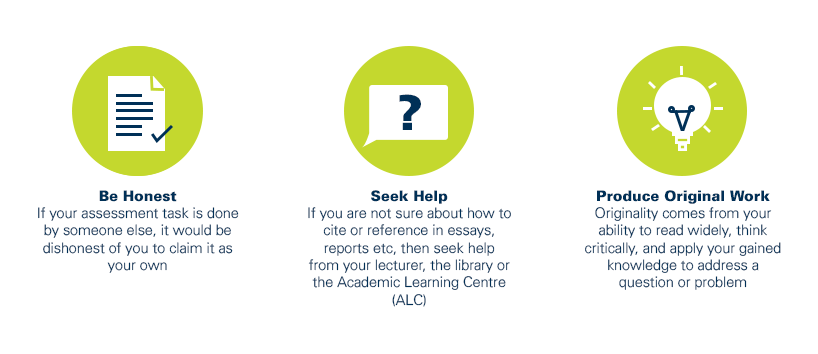
As a CQUniversity student you are expected to act honestly in all aspects of your academic work.
Any assessable work undertaken or submitted for review or assessment must be your own work. Assessable work is any type of work you do to meet the assessment requirements in the unit, including draft work submitted for review and feedback and final work to be assessed.
When you use the ideas, words or data of others in your assessment, you must thoroughly and clearly acknowledge the source of this information by using the correct referencing style for your unit. Using others’ work without proper acknowledgement may be considered a form of intellectual dishonesty.
Participating honestly, respectfully, responsibly, and fairly in your university study ensures the CQUniversity qualification you earn will be valued as a true indication of your individual academic achievement and will continue to receive the respect and recognition it deserves.
As a student, you are responsible for reading and following CQUniversity’s policies, including the Student Academic Integrity Policy and Procedure. This policy sets out CQUniversity’s expectations of you to act with integrity, examples of academic integrity breaches to avoid, the processes used to address alleged breaches of academic integrity, and potential penalties.
What is a breach of academic integrity?
A breach of academic integrity includes but is not limited to plagiarism, self-plagiarism, collusion, cheating, contract cheating, and academic misconduct. The Student Academic Integrity Policy and Procedure defines what these terms mean and gives examples.
Why is academic integrity important?
A breach of academic integrity may result in one or more penalties, including suspension or even expulsion from the University. It can also have negative implications for student visas and future enrolment at CQUniversity or elsewhere. Students who engage in contract cheating also risk being blackmailed by contract cheating services.
Where can I get assistance?
For academic advice and guidance, the Academic Learning Centre (ALC) can support you in becoming confident in completing assessments with integrity and of high standard.
What can you do to act with integrity?