Overview
Legal Advocacy and Court Skills concerns the skills and knowledge needed for making persuasive legal arguments before a court of law. The unit covers preparing for court, navigating court files and court forms, legal ethics, and courtroom etiquette, making oral submissions and advocating a theory of the case when doing appearance work in a court. The unit assessments include two moots to simulate virtual courtroom hearings.
Details
Pre-requisites or Co-requisites
Pre-requisites: 48cp of Laws Units including LAWS11057 and LAWS13010.
Important note: Students enrolled in a subsequent unit who failed their pre-requisite unit, should drop the subsequent unit before the census date or within 10 working days of Fail grade notification. Students who do not drop the unit in this timeframe cannot later drop the unit without academic and financial liability. See details in the Assessment Policy and Procedure (Higher Education Coursework).
Offerings For Term 3 - 2026
Attendance Requirements
All on-campus students are expected to attend scheduled classes - in some units, these classes are identified as a mandatory (pass/fail) component and attendance is compulsory. International students, on a student visa, must maintain a full time study load and meet both attendance and academic progress requirements in each study period (satisfactory attendance for International students is defined as maintaining at least an 80% attendance record).
Recommended Student Time Commitment
Each 6-credit Undergraduate unit at CQUniversity requires an overall time commitment of an average of 12.5 hours of study per week, making a total of 150 hours for the unit.
Class Timetable
Assessment Overview
| Assessment Task | Part Weighting (% of assessment) |
Assessment Security Level | Gen AI Guidance Levels |
|---|---|---|---|
| 1. Interlocutory Application (40% of unit · 2 parts ) | |||
| Part 1 – Interlocutory Application - Written Submissions (Written Assessment) | 50% of 40% | Low | AI-Assisted (Guided Collaboration) |
| Part 2 – Interlocutory Application - Mock Court Hearing (Practical Assessment) | 50% of 40% | High | No Gen AI Use |
| 2. Final Mock Court Hearing (60% of unit · 2 parts ) | |||
| Part 1 – Final Mock Court Hearing - Written Submissions (Written Assessment) | 50% of 60% | Low | AI-Assisted (Guided Collaboration) |
| Part 2 – Final Mock Court Hearing - Oral Submissions (Practical Assessment) | 50% of 60% | High | No Gen AI Use |
Assessment Grading
This is a graded unit: your overall grade will be calculated from the marks or grades for each assessment task, based on the relative weightings shown in the table above. You must obtain an overall mark for the unit of at least 50%, or an overall grade of 'pass' in order to pass the unit. If any 'pass/fail' tasks are shown in the table above they must also be completed successfully ('pass' grade). You must also meet any minimum mark requirements specified for a particular assessment task, as detailed in the 'assessment task' section (note that in some instances, the minimum mark for a task may be greater than 50%). Consult the University's Grades and Results Policy for more details of interim results and final grades.
All University policies are available on the CQUniversity Policy site.
You may wish to view these policies:
- Grades and Results Policy
- Assessment Policy and Procedure (Higher Education Coursework)
- Review of Grade Procedure
- Student Academic Integrity Policy and Procedure
- Academic Progression Policy and Procedure
- Student Refund and Credit Balance Policy and Procedure
- Complaints Policy and Procedure
- Information and Communications Technology Acceptable Use Policy and Procedure
This list is not an exhaustive list of all University policies. The full list of University policies are available on the CQUniversity Policy site.
- Work individually and in teams to present persuasive written submissions and oral arguments in a professional and ethical manner
- Work individually and in teams to research and critically analyse primary sources to formulate and support oral and written arguments for mock court hearings
The learning outcomes for this unit are not governed by the Legal Practioner's Admissions Board as it is not a Priestley 11 knowledge area.
Alignment of Assessment Tasks to Learning Outcomes
| Assessment Tasks | Learning Outcomes | |
|---|---|---|
| 1 | 2 | |
|
1.
Assessment 1
(40% of unit · 2 parts
)
Part 1 -
Written Assessment
Part 2 -
Practical Assessment
|
||
|
2.
Assessment 2
(60% of unit · 2 parts
)
Part 1 -
Written Assessment
Part 2 -
Practical Assessment
|
||
Alignment of Graduate Attributes to Learning Outcomes
| Graduate Attributes | Learning Outcomes | |
|---|---|---|
| 1 | 2 | |
| 1 - Communication | ||
| 2 - Problem Solving | ||
| 3 - Critical Thinking | ||
| 4 - Information Literacy | ||
| 5 - Team Work | ||
| 6 - Information Technology Competence | ||
| 7 - Cross Cultural Competence | ||
| 8 - Ethical practice | ||
| 9 - Social Innovation | ||
| 10 - First Nations Knowledges | ||
Textbooks
Learning to Litigate: A Guide for Young Lawyers
- (2022)
- Authors: Alison Hammond and Neil Williams SC
- Federation Press
- ISBN: 9781760024079
IT Resources
- CQUniversity Student Email
- Internet
- Unit Website (Moodle)
- Microphone and camera for use with Zoom
All submissions for this unit must use the referencing style: Australian Guide to Legal Citation, 4th ed
For further information, see the Assessment Tasks.
r.boivin@cqu.edu.au
Week 1
Begin Date: 09 Nov 2026Module/Topic
Module 1: Qualities and Skills of Advocates
Chapter
Neil Williams SC and Alison Hammond, Learning to Litigate (Federation Press, 2022), Chapeters 4, 5 and 6.
Reference readings in Study Guide.
Events and Submissions/Topic
Weekly Zoom Workshop.
Week 2
Begin Date: 16 Nov 2026Module/Topic
Module 2: Ethics and Etiquette
Chapter
Neil Williams SC and Alison Hammond, Learning to Litigate (Federation Press, 2022), Chapters 4, 5 and 6
Reference readings in Study Guide.
Events and Submissions/Topic
Weekly Zoom Workshop.
Week 3
Begin Date: 23 Nov 2026Module/Topic
Module 3: Tasks of the Legal Advocate
Chapter
See the readings list in the Study Guide.
Events and Submissions/Topic
Weekly Zoom Workshop.
Week 4
Begin Date: 30 Nov 2026Module/Topic
No classes this week - Module 4 will take place in week 6.
Chapter
Events and Submissions/Topic
Week 5
Begin Date: 07 Dec 2026Module/Topic
No classes this week - Module 4 will take place in week 6.
Chapter
Events and Submissions/Topic
Weekly Zoom Workshop.
Week 6
Begin Date: 14 Dec 2026Module/Topic
Module 4: Preparation for Trial
Chapter
Neil Williams SC and Alison Hammond, Learning to Litigate (Federation Press, 2022), Chapters 7, 8, 9 and 10.
Reference readings in Study Guide.
Events and Submissions/Topic
Weekly Zoom Workshop.
Mid-Term Break
Begin Date: 21 Dec 2026Module/Topic
Mid-term break - no classes.
Chapter
Events and Submissions/Topic
Week 7
Begin Date: 04 Jan 2027Module/Topic
Assessment 1 will take place this week.
Chapter
Events and Submissions/Topic
Mock court hearings will be held this week.
Interlocutory Application - Written Submissions Due: Week 7 Monday (4 Jan 2027) 11:59 pm AEST
Week 8
Begin Date: 11 Jan 2027Module/Topic
Module 5: Oral Submissions
Chapter
Neil Williams SC and Alison Hammond, Learning to Litigate (Federation Press, 2022), Chapters 17 and 18.
Reference readings in Study Guide.
Events and Submissions/Topic
Weekly Zoom Workshop.
Week 9
Begin Date: 18 Jan 2027Module/Topic
Module 6: Written Submissions and Appeals
Chapter
Neil Williams SC and Alison Hammond, Learning to Litigate (Federation Press, 2022), Chapters 17 and 18
Reference readings in Study Guide.
Events and Submissions/Topic
Weekly Zoom Workshop.
Week 10
Begin Date: 25 Jan 2027Module/Topic
Module 7: Witness Examination, Special Witnesses, Exhibits and Objections
Chapter
Neil Williams SC and Alison Hammond, Learning to Litigate (Federation Press, 2022), Chapters 15 and 16.
Reference readings in Study Guide.
Events and Submissions/Topic
Weekly Zoom Workshop.
Final Mock Court Hearing - Written Submissions Due: Week 10 Friday (29 Jan 2027) 11:45 pm AEST
Week 11
Begin Date: 01 Feb 2027Module/Topic
Assessment 2 will take place this week.
Chapter
Events and Submissions/Topic
Mock court hearings will be held this week.
Week 12
Begin Date: 08 Feb 2027Module/Topic
Chapter
Events and Submissions/Topic
Exam Week
Begin Date: 15 Feb 2027Module/Topic
Chapter
Events and Submissions/Topic
Week 12
Begin Date: 07 Feb 2028Module/Topic
Chapter
Events and Submissions/Topic
Due to the nature of the assessment in this unit, which involves live oral advocacy exercises undertaken with peers, students must be available in weeks 7 and 11 to complete the assessments. Extensions will not be available for any of the assessments in this unit. Note that students must have a working camera and microphone for the assessments.
1. Interlocutory Application ( 40% of unit · 2 parts )
Part 1 - Written Assessment
This assessment will require students to make an interlocutory application to a court on an issue relevant to the final mock court hearing. Students must: (1) submit written outlines of submission via Moodle; and (2) make oral submissions at a nominated day and time in week 7.
Students will be allocated to act as either the applicant or respondent for the hearing and will be required to submit a written outline of submissions via Moodle. Further instructions for completing this task are provided in Moodle.
This assessment requires students to adhere to the guidelines on the use of artificial intelligence tools as specified in the Artificial Intelligence Assessment Scale (AIAS). Any misuse or lack of disclosure regarding the use of AI tools will be considered a breach of academic integrity. The use of AI tools or technology is prohibited in the completion of this assignment (level 1). You must not use AI tools or technology to produce substantive content in any manner. You are permitted to use technology or tools that assist with spelling, grammar or formatting.
This assessment must be submitted by the specified due date and time. Extensions are not available for this assessment given its practical nature and the reliance on peers to complete the task (this includes the standard 72-hour grace period, which does not apply). We recognise that unexpected circumstances may arise and encourage students to reach out as early as possible if they are experiencing difficulties, so that appropriate support or adjustments can be considered in line with university policy.
Week 7 Monday (4 Jan 2027) 11:59 pm AEST
Students must submit their work as a Word document. Extensions are not permitted for this assessment.
Estimated return time is 2 weeks.
This written component of this task will assess:
- your ability to identify the issues;
- your ability to present persuasive legal arguments;
- your use of authorities in support of your arguments;
- your ability to communicate effectively and in a professional manner; and
- your referencing in accordance with the AGLC4.
- Work individually and in teams to present persuasive written submissions and oral arguments in a professional and ethical manner
- Work individually and in teams to research and critically analyse primary sources to formulate and support oral and written arguments for mock court hearings
Part 2 - Practical Assessment
This assessment will require students to make an interlocutory application to a court on an issue relevant to the final mock court hearing. Students must: (1) submit written outlines of submission via Moodle; and (2) make oral submissions at a nominated day and time in week 7.
This assessment will require students to attend a virtual mock court hearing and make oral submissions in the interlocutory application as either the applicant or respondent. Further instructions for nominating a day/time for the mock court hearing will be provided in Moodle. Mock court hearing dates/times are fixed and cannot be changed.
This assessment requires students to adhere to the guidelines on the use of artificial intelligence tools as specified in the Artificial Intelligence Assessment Scale (AIAS). Any misuse or lack of disclosure regarding the use of AI tools will be considered a breach of academic integrity. The use of AI tools or technology is prohibited in the completion of this assignment (level 1). You must not use AI tools or technology to produce substantive content in any manner. You are permitted to use technology or tools that assist with spelling, grammar or formatting.
This assessment must be submitted by the specified due date and time. Extensions are not available for this assessment given its practical nature and the reliance on peers to complete the task (this includes the standard 72-hour grace period, which does not apply). We recognise that unexpected circumstances may arise and encourage students to reach out as early as possible if they are experiencing difficulties, so that appropriate support or adjustments can be considered in line with university policy.
Mock court hearings will take place in week 7. Students must nominate a day/time to attend the virtual mock court hearing in accordance with the instructions provided in Moodle. Extensions are not permitted for this assessment.
Students will receive oral feedback from their tutor on completion of their oral submissions.
The oral component of this task will assess:
- your ability to identify the issues;
- the clarity and coherence of your arguments;
- your ability to present persuasive oral arguments;
- your use of authorities in support of your arguments;
- your knowledge of the facts;
- your knowledge of the law;
- your ability to adhere to court etiquette; and
- your ability to conduct yourself in an ethical and professional manner.
- Work individually and in teams to present persuasive written submissions and oral arguments in a professional and ethical manner
- Work individually and in teams to research and critically analyse primary sources to formulate and support oral and written arguments for mock court hearings
2. Final Mock Court Hearing ( 60% of unit · 2 parts )
Part 1 - Written Assessment
The mock court hearing will involve the presentation of written and oral arguments before a court. Students must form teams of 2 with each team acting for either the applicant or the respondent. The Court Rules will also be posted on Moodle.
Each team must post and exchange a written outline of their intended argument in accordance with the Court Rules, which are provided on Moodle. Each team member will then be required to support that argument in oral submissions before the court and respond to questions from the Court. The hearings, which will be no longer than one hour (including the provision of feedback), will be conducted via Zoom.
The written outline must be posted on Moodle and be delivered to the opposing team on or before the due date below. Timetables and hearing times will be fixed. The mock court hearings will take place during week 11.
This assessment requires students to adhere to the guidelines on the use of artificial intelligence tools as specified in the Artificial Intelligence Assessment Scale (AIAS). Any misuse or lack of disclosure regarding the use of AI tools will be considered a breach of academic integrity. The use of AI tools or technology is prohibited in the completion of this assignment (level 1). You must not use AI tools or technology to produce substantive content in any manner. You are permitted to use technology or tools that assist with spelling, grammar or formatting.
This assessment must be submitted by the specified due date and time. Due to the nature of the task and reliance on peers to complete the task, extensions are not permitted (including the standard 72-hour grace period, which does not apply). We recognise that unexpected circumstances may arise and encourage students to reach out as early as possible if they are experiencing difficulties, so that appropriate support or adjustments can be considered in line with university policy.
Week 10 Friday (29 Jan 2027) 11:45 pm AEST
Students must submit their work as a Word document. Extensions are not permitted for this assessment.
Results may be withheld until certification of grades.
This written component of this task will assess:
- your ability to identify the issues;
- your ability to present persuasive legal arguments;
- your use of authorities in support of your arguments;
- your ability to communicate effectively and in a professional manner; and
- your ability to reference in accordance with the AGLC4.
- Work individually and in teams to present persuasive written submissions and oral arguments in a professional and ethical manner
- Work individually and in teams to research and critically analyse primary sources to formulate and support oral and written arguments for mock court hearings
Part 2 - Practical Assessment
The mock court hearing will involve the presentation of written and oral arguments before a court. Students must form teams of 2 with each team acting for either the applicant or the respondent. The Court Rules will also be posted on Moodle.
Each team must post and exchange a written outline of their intended argument in accordance with the Court Rules, which are provided on Moodle. Each team member will then be required to support that argument in oral submissions before the court and respond to questions from the Court. The hearings, which will be no longer than one hour (including the provision of feedback), will be conducted via Zoom.
Students must nominate the day/time of the mock court hearing in accordance with the instructions provided in Moodle. Mock court hearing dates/times are fixed and cannot be changed. The mock court hearings will take place during week 11.
This assessment requires students to adhere to the guidelines on the use of artificial intelligence tools as specified in the Artificial Intelligence Assessment Scale (AIAS). Any misuse or lack of disclosure regarding the use of AI tools will be considered a breach of academic integrity. The use of AI tools or technology is prohibited in the completion of this assignment (level 1). You must not use AI tools or technology to produce substantive content in any manner. You are permitted to use technology or tools that assist with spelling, grammar or formatting.
This assessment must be submitted by the specified due date and time. Extensions are not available for this assessment given its practical nature and the reliance on peers to complete the task (this includes the standard 72-hour grace period, which does not apply). We recognise that unexpected circumstances may arise and encourage students to reach out as early as possible if they are experiencing difficulties, so that appropriate support or adjustments can be considered in line with university policy.
Mock court hearings will take place in week 11. Students must nominate a day/time to attend the virtual mock court hearing in accordance with the instructions provided in Moodle. Extensions are not permitted for this assessment
Students will receive oral feedback from their tutor on completion of their oral submissions.
The oral component of this task will assess:
- your ability to identify the issues
- the clarity and coherence of your arguments
- your ability to present persuasive oral arguments
- your use of authorities in support of your arguments
- your knowledge of the facts
- your knowledge of the law
- your ability to adhere to court etiquette
- your ability to conduct yourself in an ethical and professional manner.
- Work individually and in teams to present persuasive written submissions and oral arguments in a professional and ethical manner
- Work individually and in teams to research and critically analyse primary sources to formulate and support oral and written arguments for mock court hearings
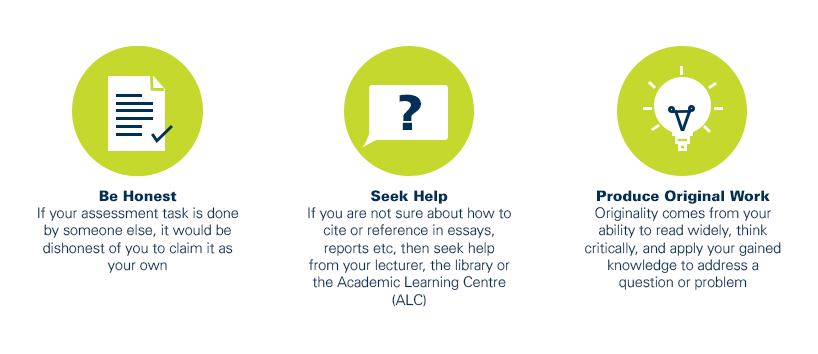
As a CQUniversity student you are expected to act honestly in all aspects of your academic work.
Any assessable work undertaken or submitted for review or assessment must be your own work. Assessable work is any type of work you do to meet the assessment requirements in the unit, including draft work submitted for review and feedback and final work to be assessed.
When you use the ideas, words or data of others in your assessment, you must thoroughly and clearly acknowledge the source of this information by using the correct referencing style for your unit. Using others’ work without proper acknowledgement may be considered a form of intellectual dishonesty.
Participating honestly, respectfully, responsibly, and fairly in your university study ensures the CQUniversity qualification you earn will be valued as a true indication of your individual academic achievement and will continue to receive the respect and recognition it deserves.
As a student, you are responsible for reading and following CQUniversity’s policies, including the Student Academic Integrity Policy and Procedure. This policy sets out CQUniversity’s expectations of you to act with integrity, examples of academic integrity breaches to avoid, the processes used to address alleged breaches of academic integrity, and potential penalties.
What is a breach of academic integrity?
A breach of academic integrity includes but is not limited to plagiarism, self-plagiarism, collusion, cheating, contract cheating, and academic misconduct. The Student Academic Integrity Policy and Procedure defines what these terms mean and gives examples.
Why is academic integrity important?
A breach of academic integrity may result in one or more penalties, including suspension or even expulsion from the University. It can also have negative implications for student visas and future enrolment at CQUniversity or elsewhere. Students who engage in contract cheating also risk being blackmailed by contract cheating services.
Where can I get assistance?
For academic advice and guidance, the Academic Learning Centre (ALC) can support you in becoming confident in completing assessments with integrity and of high standard.
What can you do to act with integrity?