Overview
This unit examines contemporary theoretical concepts and issues in the context of the history of literary theory. You will explore the ethical and ideological implications of different critical perspectives and reading practices including liberal humanism, psychoanalysis, Marxism, structuralism, deconstruction, and feminism. You will discover how literary theory has contributed to shaping and critiquing contemporary culture, and will, in turn, enable you to make your own informed contributions to ongoing debates in literary fields and broader social contexts.
Details
Pre-requisites or Co-requisites
Admission to CC10 or completion of 90 credit points in CA10, CB94, CC13, CG85 or CC43.
Important note: Students enrolled in a subsequent unit who failed their pre-requisite unit, should drop the subsequent unit before the census date or within 10 working days of Fail grade notification. Students who do not drop the unit in this timeframe cannot later drop the unit without academic and financial liability. See details in the Assessment Policy and Procedure (Higher Education Coursework).
Offerings For Term 1 - 2026
Attendance Requirements
All on-campus students are expected to attend scheduled classes - in some units, these classes are identified as a mandatory (pass/fail) component and attendance is compulsory. International students, on a student visa, must maintain a full time study load and meet both attendance and academic progress requirements in each study period (satisfactory attendance for International students is defined as maintaining at least an 80% attendance record).
Recommended Student Time Commitment
Each 6-credit Postgraduate unit at CQUniversity requires an overall time commitment of an average of 12.5 hours of study per week, making a total of 150 hours for the unit.
Class Timetable
Assessment Overview
Assessment Grading
This is a graded unit: your overall grade will be calculated from the marks or grades for each assessment task, based on the relative weightings shown in the table above. You must obtain an overall mark for the unit of at least 50%, or an overall grade of 'pass' in order to pass the unit. If any 'pass/fail' tasks are shown in the table above they must also be completed successfully ('pass' grade). You must also meet any minimum mark requirements specified for a particular assessment task, as detailed in the 'assessment task' section (note that in some instances, the minimum mark for a task may be greater than 50%). Consult the University's Grades and Results Policy for more details of interim results and final grades.
All University policies are available on the CQUniversity Policy site.
You may wish to view these policies:
- Grades and Results Policy
- Assessment Policy and Procedure (Higher Education Coursework)
- Review of Grade Procedure
- Student Academic Integrity Policy and Procedure
- Academic Progression Policy and Procedure
- Student Refund and Credit Balance Policy and Procedure
- Complaints Policy and Procedure
- Information and Communications Technology Acceptable Use Policy and Procedure
This list is not an exhaustive list of all University policies. The full list of University policies are available on the CQUniversity Policy site.
Feedback, Recommendations and Responses
Every unit is reviewed for enhancement each year. At the most recent review, the following staff and student feedback items were identified and recommendations were made.
Feedback from Student Evaluation Survey
Assessment instructions and guidance need to be revised for greater clarity
Review assessment instructions and general unit navigation to enhance clarity and understanding.
Feedback from Student Evaluation Survey
Some students found the quantity of content to be higher than they were able to engage with in each week
Engage a learning designer to assist in a review of the unit's learning materials and approach, with a particular focus on refining scope.
- Interrogate historical theoretical concepts and issues of literary and cultural studies to critique contemporary theories which affirm and contest these methods and their assumptions.
- Appraise key theorists and texts in literary criticism and theory, and interpret their methods and ideas in literary texts and cultural practices.
- Analyse and evaluate significant critical debates surrounding key texts and concepts, as well as theoretical problems associated with how texts make meaning.
- Critically interpret the positions taken by various theorists, and discuss some of their social, ethical and political implications.
N/A
Alignment of Assessment Tasks to Learning Outcomes
| Assessment Tasks | Learning Outcomes | |||
|---|---|---|---|---|
| 1 | 2 | 3 | 4 | |
| 1 - Oral Examination - 20% | ||||
| 2 - Written Assessment - 40% | ||||
| 3 - Written Assessment - 40% | ||||
Alignment of Graduate Attributes to Learning Outcomes
| Graduate Attributes | Learning Outcomes | |||
|---|---|---|---|---|
| 1 | 2 | 3 | 4 | |
| 1 - Knowledge | ||||
| 2 - Communication | ||||
| 3 - Cognitive, technical and creative skills | ||||
| 4 - Research | ||||
| 5 - Self-management | ||||
| 6 - Ethical and Professional Responsibility | ||||
| 7 - Leadership | ||||
| 8 - First Nations Knowledges | ||||
| 9 - Aboriginal and Torres Strait Islander Cultures | ||||
Textbooks
Beginning Theory
- Edition: 4th (2017)
- Authors: Peter Barry
- Manchester University Press
- Manchester Manchester , UK
- ISBN: 978 1 5261 2179 0
The Blackwell Guide to Literary Theory
- Edition: 1st (2007)
- Authors: Gregory Castle
- John Wiley & Sons
- New York New York , USA
- ISBN: 9781405171588
IT Resources
- CQUniversity Student Email
- Internet
- Unit Website (Moodle)
All submissions for this unit must use the referencing style: Harvard (author-date)
For further information, see the Assessment Tasks.
s.butler@cqu.edu.au
a.johnson2@cqu.edu.au
Week 1
Begin Date: 09 Mar 2026Module/Topic
Literary theory: Overview
Chapter
Beginning Theory (Barry 2017, pp. xiii-10 & 11-38)
Events and Submissions/Topic
Familiarize yourself with the scope of the unit and the assessment items.
Begin reading the set theoretical texts (primary sources) and continue to do so on a weekly basis.
Week 2
Begin Date: 16 Mar 2026Module/Topic
Formalism & New Criticism
Chapter
Beginning Theory (Barry 2017, pp. 11-38) [cont.]
'Some Recurrent Ideas in Theory' (pp. 33–38) )
Events and Submissions/Topic
Week 3
Begin Date: 23 Mar 2026Module/Topic
Structuralism and Semiotics
Chapter
Beginning Theory (Barry 2017, pp. 60-40)
Events and Submissions/Topic
Week 4
Begin Date: 30 Mar 2026Module/Topic
Deconstruction & Poststructuralism
Chapter
Beginning Theory (Barry 2017, pp. 61-81)
Events and Submissions/Topic
Week 5
Begin Date: 06 Apr 2026Module/Topic
Marxist Theory
Chapter
Beginning Theory (Barry 2017, pp. 159-173)
Events and Submissions/Topic
Week 6
Begin Date: 13 Apr 2026Module/Topic
Psychoanalysis
Chapter
Beginning Theory (Barry, pp. 97-120)
Events and Submissions/Topic
Vacation Week
Begin Date: 20 Apr 2026Module/Topic
Chapter
Events and Submissions/Topic
Week 7
Begin Date: 27 Apr 2026Module/Topic
Feminism, Sex & Gender
Chapter
Beginning Theory (Barry, pp. 123-138 & 141-155)
Events and Submissions/Topic
Week 8
Begin Date: 04 May 2026Module/Topic
New Historicism and Cultural Materialism
Chapter
Beginning Theory (Barry, pp. 175-192)
Events and Submissions/Topic
Week 9
Begin Date: 11 May 2026Module/Topic
Postcolonial & Ethnic Studies
Chapter
Beginning Theory (Barry 2017, pp. 194-203)
Events and Submissions/Topic
Week 10
Begin Date: 18 May 2026Module/Topic
Postmodernism & Cultural Studies
Chapter
Beginning Theory (Barry 2017, pp. 83-95)
Events and Submissions/Topic
Week 11
Begin Date: 25 May 2026Module/Topic
Eco Theory
Chapter
Beginning Theory (Barry 2017, pp. 248-257)
Events and Submissions/Topic
Week 12
Begin Date: 01 Jun 2026Module/Topic
Theory Today
Chapter
Beginning Theory (Barry 2017, 304-335)
Events and Submissions/Topic
Exam Week
Begin Date: 08 Jun 2026Module/Topic
Chapter
Events and Submissions/Topic
Vacation/Exam Week
Begin Date: 15 Jun 2026Module/Topic
Chapter
Events and Submissions/Topic
1 Oral Examination
This assessment provides an opportunity to explore the foundations of literary theory by engaging with Barry (2017). It is designed as a “shallow end” task, helping you to practice identifying, comparing, and critiquing key concepts before moving to more complex applications in later assessments. The Coordinator will lead a discussion on what theories you are interested in, what you have learned so far, and what issues you might focus on in subsequent assessments. You might discuss what you found easy or difficult to learn and how you believe you can apply theory to literary and popular texts and/or real-world situations.
The informal, one-to-one Zoom meeting with the Unit Coordinator will involve discussion of the excerpts from Barry:
'Ten Tenets of Liberal Humanism' (pp. 19–23)
'Some Recurrent Ideas in Theory' (pp. 33–38)
A means to book a meeting at a convenient time in Week 5 will be found on the Moodle site.
Use of Generative Artificial Intelligence agents (Gen AI)
Within this assessment, the use of Microsoft Copilot, Chat GPT or other Gen AI agents is as follows:
• You may use AI for planning, idea development, and research. Your final submission should show how you have developed and refined these ideas. Any misuse or lack of disclosure regarding AI tools will be considered a breach of academic integrity.
Week 5 Friday (10 Apr 2026) 11:45 pm AEST
Week 7 Friday (1 May 2026)
Your discussion will be assessed against the following criteria:
1. Reflection and critical thinking: a demonstration of the ability to question, compare, and evaluate rather than merely describe.
2. Engagement with ideas and concepts: show an understanding of the key concepts of liberal humanism and literary theory, with evidence of thoughtful reading.
3. Use of examples: use of appropriate literary or cultural examples to illustrate points and strengthen arguments.
4. Clarity of expression: discussion is clear, structured, and coherent.
- Interrogate historical theoretical concepts and issues of literary and cultural studies to critique contemporary theories which affirm and contest these methods and their assumptions.
- Analyse and evaluate significant critical debates surrounding key texts and concepts, as well as theoretical problems associated with how texts make meaning.
2 Written Assessment
Annotated Bibliography
The annotated bibliography provides you with the opportunity to critically engage with major theoretical texts in preparation for your final essay (Assessment 3). It is designed to develop your ability to summarize, evaluate, and contextualize scholarly sources — skills essential at postgraduate level and directly transferable to research, thesis writing, and professional practice.
You will select five (5) primary theoretical texts (not Beginning Theory) relevant to one of the essay topics for Assessment 3. If you wish to develop your own essay topic, you must consult the Unit Coordinator. For each of your five primary theoretical texts, provide a full Harvard-style bibliographic reference followed by an annotation of approximately 300 words. In your annotation, respond to the following four guiding questions:
1. Main idea / thesis / argument: What is the central claim of the text?
2. Purpose: Why is the theorist making this argument? What problem, assumption, or cultural issue are they addressing?
3. Evidence and reasoning: What examples, evidence, or reasoning does the theorist use to support their case?
4. Relevance and significance: How does this text relate to its school of theory, to literary theory more broadly, and to contemporary cultural or social life?
OR
Short Paper Journal
Each week you are required to address one of the Discussion Forum Topics as found in the weekly modules. Post your piece to the forum and then respond to another student's post (optional). The purpose of this activity is to learn through dialogue and to build a community of inquiry. Subsequently, in Week 9 collate your best five [5] pieces into a Word doc. and upload for assessment. Each post should be approximately 250-300 words, incorporating theoretical concepts relevant to the topic, analysis or argument. Use examples from literary/popular texts to support your position.
Important information about Word Count:
The word count is considered from the first word of the introduction to the last word of the conclusion. It excludes the cover page, abstract, contents page, reference page and appendices. It includes in-text references and direct quotations.
Use of Generative Artificial Intelligence agents (Gen AI) Within this assessment, the use of Microsoft Copilot, Chat GPT or other Gen AI agents is as follows:
• You may use AI for planning, idea development, and research. Your final submission should show how you have developed and refined these ideas. Any misuse or lack of disclosure regarding AI tools will be considered a breach of academic integrity.
Week 9 Friday (15 May 2026) 11:45 pm AEST
Week 11 Friday (29 May 2026)
The Annotated Bibliography will be marked using the following evaluation criteria:
1. Relevance of source selection to Research Essay topic;
2. The extent to which you have addressed the 4 questions effectively;
3. Critical analysis and evaluation of sources, including consideration of social, historical, aesthetic, and political contexts;
4. Presentation and scholarly writing style (including spelling, grammar, and punctuation);
5. Correct use of Harvard (author-date) referencing style.
The Short Paper Journal will be marked using the following evaluation criteria:
1. Coherence of argument in relation to the Discussion Forum topic;
2. Ability to interpret the significance of literary/cultural texts using theoretical concepts;
3. Critical analysis and evaluation of sources, including consideration of social, historical, aesthetic, and political contexts;
4. Presentation and scholarly writing style (including spelling, grammar, and punctuation);
5. Correct use of Harvard (author-date) referencing style.
- Interrogate historical theoretical concepts and issues of literary and cultural studies to critique contemporary theories which affirm and contest these methods and their assumptions.
- Appraise key theorists and texts in literary criticism and theory, and interpret their methods and ideas in literary texts and cultural practices.
- Critically interpret the positions taken by various theorists, and discuss some of their social, ethical and political implications.
3 Written Assessment
The Research Essay is the culmination of your work in this unit. It builds directly on your annotated bibliography (Assessment 2) by requiring you to transform your engagement with primary theoretical texts into a sustained, coherent argument. Alternatively, if you choose the Short Paper Journal option there needs to evidence that you have developed and synthesized your forum responses.
Your essay must:
- Respond to one of the topics below developing a coherent theoretical argument.
- Draw on at least five primary theoretical texts from your annotated bibliography.
- Demonstrate how a selection of literary and cultural texts can be analyzed through theoretical frameworks.
- Show your ability to synthesize theory, critique assumptions, and apply ideas to practice
Essay Topics
Choose one of the following:
- Castle (2006 p. 5) describes how the aim of literary theory is to interrogate the discursive framework of an 'Enlightenment thinking, characterized by a universalized subject of knowledge, an empirical orientation to phenomena, and a belief in the universality and instrumentality of reason'. Discuss how at least two schools of theory critique these sweeping humanist assumptions. Use literary/popular texts to exemplify your argument.
- Culler tells us that literary theory comprises a way of thinking about the 'nature of literature and the methods for analysing it' (1997, p.1). Choose two [2] literary theorists (or schools) and test (by comparing and contrasting) how they analyse literature or literariness. Use literary/popular texts to exemplify your argument.
- Culture is both a means of domination, of assuring the rule of one class or group over another, and a means of resistance to such domination, a way of articulating oppositional points of view to the dominant hegemony. Discuss using literary/popular texts to exemplify your argument.
- Contemporary critical practice calls into question traditional claims about literature and art’s ability to produce certain kinds of truths and values. Discuss in the context of the postmodern critique of Enlightenment humanism. Use literary/popular texts to exemplify your argument.
- According to Terry Eagleton (2007, p. 14), 'the mark of modernist thought is the belief that human existence is contingent – that it has no ground, goal, direction or necessity ... no unimpeachable foundation for what we are and what we do’. This may be seen as liberating or threatening (or both). He goes on to say that: ‘This may make our finest moments even more precious or it may serve to drastically devalue them.’ Discuss these issues using concepts from of relevant literary theories. Use literary/popular texts to exemplify your argument.
- In the words of Whitla (2010, p. 217) literary theories 'challenge fundamental assumptions about how language works and about how we know about the world, [and] they also question deep-seated sites of political and intellectual authority.' This can be seen as both empowering and disconcerting for people in the contemporary world. Discuss using literary/popular texts to exemplify your argument.
NOTE: Your essay should put forward an argument or position in relation to the topic, drawing on relevant theoretical concepts and supported by proper scholarly sources. More topics may be added and/or you may develop your own topic in consultation with the unit coordinator.
Use of Generative Artificial Intelligence agents (Gen AI) Within this assessment, the use of Microsoft Copilot, Chat GPT or other Gen AI agents is as follows:
- You may use AI for planning, idea development, and research. Your final submission should show how you have developed and refined these ideas. Any misuse or lack of disclosure regarding AI tools will be considered a breach of academic integrity.
Week 12 Friday (5 June 2026) 11:45 pm AEST
Vacation/Exam Week Friday (19 June 2026)
Your essay will be evaluated on:
- Argument and coherence: a clear, sustained, and convincing thesis supported by evidence.
- Engagement with theory: high-level understanding of key theoretical texts, debates, and concepts.
- Application to texts and effective use of literary and/or cultural examples to test and illustrate theoretical insights.
- Scholarly writing: clear and correct written expression, logical essay structure, accurate grammar and punctuation.
- Proper acknowledgement of all sources, with consistent use of Harvard (author-date) style.
- Appraise key theorists and texts in literary criticism and theory, and interpret their methods and ideas in literary texts and cultural practices.
- Analyse and evaluate significant critical debates surrounding key texts and concepts, as well as theoretical problems associated with how texts make meaning.
- Critically interpret the positions taken by various theorists, and discuss some of their social, ethical and political implications.
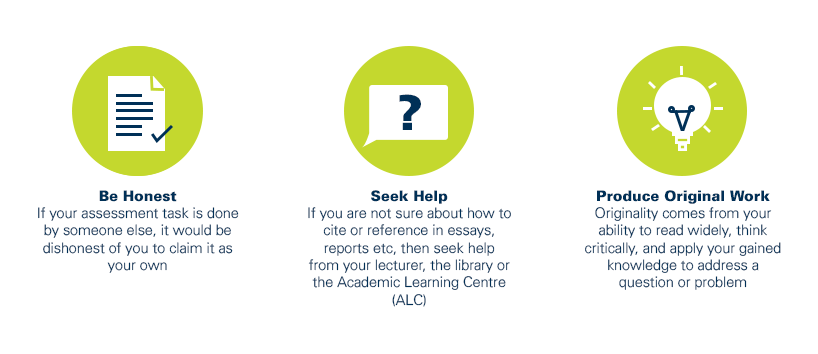
As a CQUniversity student you are expected to act honestly in all aspects of your academic work.
Any assessable work undertaken or submitted for review or assessment must be your own work. Assessable work is any type of work you do to meet the assessment requirements in the unit, including draft work submitted for review and feedback and final work to be assessed.
When you use the ideas, words or data of others in your assessment, you must thoroughly and clearly acknowledge the source of this information by using the correct referencing style for your unit. Using others’ work without proper acknowledgement may be considered a form of intellectual dishonesty.
Participating honestly, respectfully, responsibly, and fairly in your university study ensures the CQUniversity qualification you earn will be valued as a true indication of your individual academic achievement and will continue to receive the respect and recognition it deserves.
As a student, you are responsible for reading and following CQUniversity’s policies, including the Student Academic Integrity Policy and Procedure. This policy sets out CQUniversity’s expectations of you to act with integrity, examples of academic integrity breaches to avoid, the processes used to address alleged breaches of academic integrity, and potential penalties.
What is a breach of academic integrity?
A breach of academic integrity includes but is not limited to plagiarism, self-plagiarism, collusion, cheating, contract cheating, and academic misconduct. The Student Academic Integrity Policy and Procedure defines what these terms mean and gives examples.
Why is academic integrity important?
A breach of academic integrity may result in one or more penalties, including suspension or even expulsion from the University. It can also have negative implications for student visas and future enrolment at CQUniversity or elsewhere. Students who engage in contract cheating also risk being blackmailed by contract cheating services.
Where can I get assistance?
For academic advice and guidance, the Academic Learning Centre (ALC) can support you in becoming confident in completing assessments with integrity and of high standard.
What can you do to act with integrity?