Overview
On completion of this unit, you will be able to identify and discuss the clinical significance of viruses, fungi and parasites causing human disease. You will investigate the morphological characteristics, epidemiology, laboratory identification of these microorganisms and will be able to debate causes of mycological, parasitic and viral infectious diseases. You will discuss the life cycle of important parasites and their relevance to disease control. You will be able to interpret basic serological tests for the detection of human pathogenic viruses. Problem-solving and decision making skills will be developed through the use of authentic case studies. Skill development in instrument calibration, best practice measurement, interpretation of test results and test quality control monitoring will occur through practical exercises. You will be required to attend a residential school on the Rockhampton campus in order to promote the development of unit learning outcomes. The residential school may be scheduled outside of the term of offering of the unit.
Details
Pre-requisites or Co-requisites
Prerequisite Enrolment in Master of Laboratory Medicine (CM18).
Important note: Students enrolled in a subsequent unit who failed their pre-requisite unit, should drop the subsequent unit before the census date or within 10 working days of Fail grade notification. Students who do not drop the unit in this timeframe cannot later drop the unit without academic and financial liability. See details in the Assessment Policy and Procedure (Higher Education Coursework).
Offerings For Term 2 - 2026
Attendance Requirements
All on-campus students are expected to attend scheduled classes - in some units, these classes are identified as a mandatory (pass/fail) component and attendance is compulsory. International students, on a student visa, must maintain a full time study load and meet both attendance and academic progress requirements in each study period (satisfactory attendance for International students is defined as maintaining at least an 80% attendance record).
Recommended Student Time Commitment
Each 6-credit Postgraduate unit at CQUniversity requires an overall time commitment of an average of 12.5 hours of study per week, making a total of 150 hours for the unit.
Class Timetable
Assessment Overview
Assessment Grading
This is a graded unit: your overall grade will be calculated from the marks or grades for each assessment task, based on the relative weightings shown in the table above. You must obtain an overall mark for the unit of at least 50%, or an overall grade of 'pass' in order to pass the unit. If any 'pass/fail' tasks are shown in the table above they must also be completed successfully ('pass' grade). You must also meet any minimum mark requirements specified for a particular assessment task, as detailed in the 'assessment task' section (note that in some instances, the minimum mark for a task may be greater than 50%). Consult the University's Grades and Results Policy for more details of interim results and final grades.
All University policies are available on the CQUniversity Policy site.
You may wish to view these policies:
- Grades and Results Policy
- Assessment Policy and Procedure (Higher Education Coursework)
- Review of Grade Procedure
- Student Academic Integrity Policy and Procedure
- Academic Progression Policy and Procedure
- Student Refund and Credit Balance Policy and Procedure
- Complaints Policy and Procedure
- Information and Communications Technology Acceptable Use Policy and Procedure
This list is not an exhaustive list of all University policies. The full list of University policies are available on the CQUniversity Policy site.
Feedback, Recommendations and Responses
Every unit is reviewed for enhancement each year. At the most recent review, the following staff and student feedback items were identified and recommendations were made.
Feedback from SUTE
Students enjoyed the 'flipped classroom' style of teaching
Consider continuing to use the flipped classroom/lectorial style of delivery
Feedback from SUTE , self-reflection
Students liked the weekly “Test Your Knowledge” tutorial questions and the fact that the answers were discussed and then uploaded to the subject Moodle site.
Continue the weekly “Test Your Knowledge” tutorial questions, with answers discussed and uploaded to Moodle.
Feedback from SUTE, Self-reflection
The student evaluation response rate was low
Encourage and promote the importance of student surveys to increase participation in the evaluation process.
- Discuss the clinical significance and laboratory detection of the principal bacterial, viral, fungal and parasitic pathogens of each of the human body systems.
- Evaluate and interpret different testing methods used in the detection and monitoring of infectious diseases caused by bacteria, viruses, fungi and parasites.
- Evaluate and interpret different testing methods used in the determination of antimicrobial susceptibility of bacteria, viruses, fungi and parasites.
- Perform practical skills necessary to identify pathogenic bacteria, viruses, fungi and parasites and to determine their antimicrobial susceptibility.
- Implement the principles of quality control processes in a diagnostic microbiology laboratory for the practice of bacteriology, virology, mycology and parasitology identification and apply them in a practical setting.
Alignment of Assessment Tasks to Learning Outcomes
| Assessment Tasks | Learning Outcomes | ||||
|---|---|---|---|---|---|
| 1 | 2 | 3 | 4 | 5 | |
| 1 - Group Work - 20% | |||||
| 2 - Written Assessment - 20% | |||||
| 3 - Examination - 60% | |||||
| 4 - Laboratory/Practical - 0% | |||||
Alignment of Graduate Attributes to Learning Outcomes
| Graduate Attributes | Learning Outcomes | ||||
|---|---|---|---|---|---|
| 1 | 2 | 3 | 4 | 5 | |
| 1 - Knowledge | |||||
| 2 - Communication | |||||
| 3 - Cognitive, technical and creative skills | |||||
| 4 - Research | |||||
| 5 - Self-management | |||||
| 6 - Ethical and Professional Responsibility | |||||
| 7 - Leadership | |||||
| 8 - First Nations Knowledges | |||||
| 9 - Aboriginal and Torres Strait Islander Cultures | |||||
Textbooks
Mims' Medical Microbiology and Immunology
- 7th Edition (2024)
- Authors: Richard Goering, BA MSc PhD, Hazel M. Dockrell, BA (Mod) PhD, Mark Zuckerman, BSc(Hons), MBBS, MRCP, MSc, FRCPath and Peter L. Chiodini, BSc, MBBS, PhD, FRCP, FRCPath, FFTM, RCPS(Glas)
- Elsevier - Health Sciences Division
- ISBN: 9780323937252
Additional Textbook Information
Paper copies (if Preferred) can be purchased at the CQU Shop here: https://shop.cqu.edu.au/ (search on the Unit code)
IT Resources
- CQUniversity Student Email
- Internet
- Unit Website (Moodle)
All submissions for this unit must use the referencing style: Vancouver
For further information, see the Assessment Tasks.
m.rabiei@cqu.edu.au
Week 1- Bacteria: Structure, Classification, and Clinical Significance
Begin Date: 13 Jul 2026Module/Topic
This topic will explore the fundamental features of prokaryotes, including bacterial cell wall structure, classification, and staining techniques. Key differences between Gram-positive and Gram-negative bacteria will be examined, along with oxygen and temperature preferences. The roles of peptidoglycan, teichoic acids, lipid A, and LPS will be discussed, as well as the nature and types of bacterial toxins.
Chapter
No prescribed textbook for this unit. Pls review the lecture material and recordings available for week 1 in Moodle prior to your tutorial/ lectorial as well as other provided resources in
your Moodle for Week 1.
Events and Submissions/Topic
Welcome and introduction to the unit. The structure of the subject and the assessment items will be outlined.
In this week’s tutorial, we will explore the significance of bacterial infections and examine key structural components of bacteria, including the cell wall, spores, capsule, and flagella. We will also discuss endo- and exotoxins and their roles in pathogenesis, using examples to illustrate their impact on human health.
Week 2 - Viruses: Structure, Classification and Clinical Significance
Begin Date: 20 Jul 2026Module/Topic
This topic introduces key structural features of viruses, their classification systems, and replication strategies. It covers capsid types, RNA genome types, and how viral genomes are expressed. Antiviral targets, including the action of nucleoside analogues and the HIV-1 life cycle, will also be discussed.
Chapter
No prescribed textbook for this unit. Please review the lecture material and recordings available for week 2 in Moodle prior to your tutorial/ lectorial as well as other provided resources in
your Moodle for Week 2.
Events and Submissions/Topic
This week, we’ll explore viral structure and classification, as well as the significance of viral infections. We will focus on key types—acute, chronic, latent, and oncogenic—with examples highlighting their impact on human health.."
Week 3 - Fungi: Structure, Classification and Clinical Significance
Begin Date: 27 Jul 2026Module/Topic
This topic will cover the types, classification, and structure of fungi, including their roles in health and disease. It will also explore antifungal therapies, drug mechanisms, and the impact of fungi as pathogens, industrial agents, and toxin producers.
Chapter
No prescribed textbook for this unit. Pls review the lecture material and recordings available for week 3 in Moodle prior to your tutorial/ lectorial as well as other provided resources in
your Moodle for Week 3.
Events and Submissions/Topic
This week, we’ll explore fungal structure and classification, along with the significance of fungal infections. We will focus on key types—including superficial skin infections, subcutaneous, systemic, and opportunistic fungal diseases—with examples highlighting their impact on human health.
Week 4 - Parasites: Structure, Classification and Clinical Significance
Begin Date: 03 Aug 2026Module/Topic
This topic introduces host-parasite interactions, classifications of parasites including protozoa and helminths, and examples of parasitic diseases such as malaria and amoebiasis. It also covers parasite transmission, life cycles, and the concept of vector-borne nematodes.
Chapter
No prescribed textbook for this unit. Pls review the lecture material and recordings available for week 4 in Moodle prior to your tutorial/ lectorial as well as other provided resources in
your Moodle for Week 4.
Events and Submissions/Topic
This week, we’ll explore the classification and structure of medically important parasites, along with the significance of parasitic infections. We will focus on key types—including protozoan and helminth infections, with examples such as malaria, giardiasis, and intestinal worm infestations—highlighting their impact on human health.
Week 5 - Infectious Diseases of the Skin
Begin Date: 10 Aug 2026Module/Topic
This topic covers the anatomy and function of the skin, its normal microbiota, and various skin infections caused by bacteria (e.g. Staphylococcus aureus, Streptococcus pyogenes, Pseudomonas aeruginosa, Mycobacterium leprae), viruses, fungi, and parasites. .
Chapter
No prescribed textbook for this unit. Pls review the lecture material and recordings available for week 5 in Moodle prior to your tutorial/ lectorial as well as other provided resources in
your Moodle for Week 5.
Events and Submissions/Topic
This week, we’ll cover the significance of medically important skin infections and explore key types such as bacterial, viral, fungal, and parasitic, with examples highlighting their clinical impact.
Week 6 - Respiratory Tract Infections
Begin Date: 17 Aug 2026Module/Topic
This topic outlines the major microbial causes of respiratory tract infections—viral, bacterial, fungal, and parasitic. It identifies key viruses (e.g., for colds, flu, pneumonia), explains viral surface proteins (HA and NA), highlights common bacterial pathogens (e.g., Streptococcus, Corynebacterium, Mycoplasma, Legionella), and provides examples of fungal and parasitic infections affecting both upper and lower airways.
Chapter
No prescribed textbook for this unit. Pls review the lecture material and recordings available for week 6 in Moodle prior to your tutorial/ lectorial as well as other provided resources in
your Moodle for Week 6.
Events and Submissions/Topic
This week, we’ll cover the significance of medically important upper and lower Respiratory Tract Infections infections and explore key types such as bacterial, viral, fungal, and parasitic, with examples highlighting their clinical impact.
Assessment 1 - Written Assessment Due: Week 6 Friday (21 Aug 2026) 5:00 pm AEST
Vacation Week
Begin Date: 24 Aug 2026Module/Topic
Chapter
Events and Submissions/Topic
Week 7 -Sexually Transmitted Infections (STI)
Begin Date: 31 Aug 2026Module/Topic
This topic covers the main microbial causes of STIs, including bacteria (e.g. syphilis, gonorrhea, chlamydia, LGV, chancroid), viruses (HIV, HSV, HPV, HBV, HCV), the fungus Candida albicans, and parasites such as Trichomonas vaginalis, Sarcoptes scabiei, and Phthirus pubis. It also discusses factors influencing their transmission.
Chapter
No prescribed textbook for this unit. Pls review the lecture material and recordings available for week 7 in Moodle prior to your tutorial/ lectorial as well as other provided resources in
your Moodle for Week 7.
Events and Submissions/Topic
This week, we’ll cover the medical significance of STI infections and explore key types such as bacterial, viral, fungal, and parasitic, with examples highlighting their clinical impact.
Week 8 - Gastrointestinal Tract (GIT) Infections
Begin Date: 07 Sep 2026Module/Topic
This topic covers the normal microbiota and general features of the gastrointestinal tract, key GI terms, differences between infections and intoxications, and bacterial causes of GI infections such as S. aureus, Clostridium, Shigella, Salmonella, E. coli, Vibrio cholerae, Campylobacter, Yersinia, and Helicobacter.
Chapter
No prescribed textbook for this unit. Pls review the lecture material and recordings available for week 8 in Moodle prior to your tutorial/ lectorial as well as other provided resources in
your Moodle for Week 8.
Events and Submissions/Topic
This week, we’ll cover the significance of GIT infections and explore key types such as bacterial, viral, fungal, and parasitic, with examples highlighting their clinical impact.
Week 9 - Urinary Tract Infections (UTI) and Prions
Begin Date: 14 Sep 2026Module/Topic
This topic outlines the anatomy, symptoms, and causes of urinary tract infections (UTIs), including common pathogens like E. coli, and differentiates between ascending and descending infections. It covers bacterial virulence factors, host defences, clinical features, diagnostic methods, and treatment or prevention.
Chapter
No prescribed textbook for this unit. Pls review the lecture material and recordings available for week 9 in Moodle prior to your tutorial/ lectorial as well as other provided resources in
your Moodle for Week 9
Events and Submissions/Topic
This week, we’ll explore the significance of UTIs, covering bacterial, viral, fungal, and parasitic types with examples of their clinical impact. We’ll also introduce prions—infectious proteins that cause fatal brain diseases by triggering abnormal protein folding, challenging the conventional understanding of infectious agents.
Week 10 - Central Nervous System (CNS) and Eye Infections
Begin Date: 21 Sep 2026Module/Topic
This topic explores infections of the central nervous system (CNS) and the eye. It covers the structure and function of protective barriers, causes of encephalitis and meningitis, and the role of pathogens such as Cryptococcus neoformans, rabies virus, Trypanosoma, and prions in CNS infections. It also discusses eye defences, conjunctivitis, and bacterial causes like Haemophilus, Staphylococcus, Chlamydia trachomatis, and Neisseria gonorrhoeae, along with their virulence and diagnosis.
Chapter
No prescribed textbook for this unit. Pls review the lecture material and recordings available for week 10 in Moodle prior to your tutorial/ lectorial as well as other provided resources in
your Moodle for Week 10
Events and Submissions/Topic
This week, we’ll cover the significance of CNS and eye infections and explore key types such as bacterial, viral, fungal, and parasitic, with examples highlighting their clinical impact.
Assessment 2 - Scientific Poster Design Oral Presentation Due: Week 10 Monday (21 Sept 2026) 5:00 pm AEST
Week 11 - Advanced Laboratory Diagnostics: Microbial Identification and Disease Profiling
Begin Date: 28 Sep 2026Module/Topic
This topic introduces diagnostic bacteriology, covering specimen processing, bacterial culture, and identification using microscopy, staining, selective media, and tests such as serological (ELISA), molecular (PCR), and biochemical methods. It also includes the principles and applications of MALDI-TOF in identifying bacteria.
Chapter
No prescribed textbook for this unit. Pls review the lecture material and recordings available for week 11 in Moodle prior to your tutorial/ lectorial as well as other provided resources in
your Moodle for Week 11
Events and Submissions/Topic
This week a range of identification methods will be discussed, including microscopy, staining, formulated media, biochemical tests, serological and molecular techniques, along with the use of MALDI-TOF in bacterial diagnostics."
Week 12 - Revision - All topics
Begin Date: 05 Oct 2026Module/Topic
This week is dedicated to revision, and we will be working through tutorial questions covering Topics 1 to 11 to help you prepare for the end-of-term exam.
Chapter
No prescribed textbook for this unit. Pls review the lecture material and recordings available for week 12 in Moodle prior to your tutorial/ lectorial as well as other provided resources in
your Moodle for Week 12.
Events and Submissions/Topic
Revision all topics with particular emphasis on weeks 6 -11
Exam Week
Begin Date: 12 Oct 2026Module/Topic
Chapter
Events and Submissions/Topic
Vacation/Exam Week
Begin Date: 19 Oct 2026Module/Topic
Chapter
Events and Submissions/Topic
Your unit coordinator for LMED28004, Infectious Diseases 1 , is Dr Mohammad Rabiei. Your primary contact point is Mohammad, and
you can contact him using the following means:
Via the subject Discussion Forum on the unit's Moodle site. The forum for this unit is continuously monitored and
you can: expect a response within one-two (1-2) business day/s of posting your question.
Through email (m.rabiei@cqu.edu.au) or
Via Microsoft Teams.
Your secondary contact point is Dr Jalal Jazayeri and you can contact her using the following means:
Via the forum on the unit's Moodle site.
Through email (j.jazayeri@cqu.edu.au) or
Via Teams
CM18 - Master of Laboratory Medicine
Tutorials/Lectorials will be delivered each week at the Sydney, Rockhampton and Melbourne campuses, and students who are
enrolled in mixed mode will be able to join these classes via Zoom. These tutorials/lectorials will also be recorded for the
benefit of those students who are unable to attend the live classes. During the sessions, you will have the opportunity to
ask questions or discuss uncertainties in relation to the lecture materials and recordings for each week. There will be
some active learning exercises undertaken to assess your understating of the weekly lecture material including group
and individual activities, short answer questions, cases studies etc. We will also run through a set of
questions and discuss in greater depth the peer-reviewed article or other pre-tutorial/lectorial learning for the week.
These active learning activities will help you apply the knowledge learned during the weekly lectures and other pre-class
learning material and prepare you for the assessments. You will gain the most benefit from the tutorials/lectorial if you
watch the weekly lectures beforehand and read the peer-reviewed article and/or other pre-class learning material. You
are also strongly encouraged to participate in tutorials, as studies have shown that students who attend the tutorials and
participate in discussions have higher rates of success (Karnik et al., 2020*). Regular quizzes (ie kahoot) are also
provided during some of the lectorial/tutorial classes to reinforce the knowledge you have gained from the lectures and
to enhance your learning experience in this unit. As per Australian educational standards, you are expected to commit
150 hours of engagement to your study of this unit. This is broken down as:
2 - 3 hours per week watching recorded lectures and revising the content through study notes
2 - 3 hours per week reviewing the peer-reviewed article provided in Moodle and other relevant resources
available for each week
1.5 - 2.5 hours per week attending the weekly tutorial/lectorial classes and reflecting on your answers to the
activities undertaken during class, identifies areas of uncertainly that still remain and discussing this/these with
other fellow students or the teaching staff.
3 - 4 hours per week preparing your assessments or studying for your exams.
*Karnik, A., Kishore, P., & Meraj, M. (2020). Examining the linkage between class attendance at university and
academic performance in an International Branch Campus setting. Research in Comparative and International
Education, 15(4),371-390. https://doi.org/10.1177/1745499920958855
1 Written Assessment
Task Description
In this assessment, students are required to critically review a peer-reviewed, published research article relevant to molecular microbiology topic. Please visit the Moodle site to view the available research articles and download your selected article.
Each topic can be selected by a maximum of four students and is allocated on a first-come, first-served basis. Once a topic has been chosen by four students, it will no longer be available, and you will need to select an alternative from the remaining options.
The task involves both summarising the study and critically reflecting on its scientific merit, methodology, and relevance to pathology practice. Students must submit between 1200-1500 word written report that demonstrates their ability to:
Understand and summarise complex scientific literature
Critically evaluate experimental design and methodology
Interpret results in a scientific and clinical context
Reflect on the strengths, limitations, and broader implications of the study
Quick Guide: 1200–1500 Word Article Analysis
1. Choose an Article from the list of articles provided
Peer-reviewed articles
Includes methods, results, and discussion
Pick one you can clearly understand and analyse
2. Read It Twice
First read: understand the aim, methods, and main findings
Second read: note key experiments, results, conclusions, and new terms
3. Write Your Analysis
Summary: research question, why it matters, key findings
Methods critique: suitability, controls, sample size, limitations
Results interpretation: what the data show and whether conclusions are supported
Strengths & limitations: what works well, what could improve, significance, future directions
4. Structure of the Article
Introduction - One Paragraph
Study summary - One Paragraph
Methods evaluation - 2-3 paragraphs
Results interpretation - 2-3 Paragraphs
Strengths, limitations, implications - 2-4 Paragraphs
Applications in Pathology Laboratories - 2-3 Paragraphs
Conclusion - one paragraph
References - 2-3 references
Level of AI: A2: you may use AI for planning, idea development and research. your submission should show how you have developed and refined these ideas.
The 72-hours grace period applies to this assessment.
Week 6 Friday (21 Aug 2026) 5:00 pm AEST
Online submission via the subject Moodle site
Two weeks after submission -online
Your assessment will be evaluated based on the following criteria:
- Understanding and Summary (20%), Demonstrates clear understanding of the selected research article, including accurate summary of the research question, aims, and key findings.
- Analysis of Methods (20%), Demonstrates the ability to explain and evaluate the study’s experimental design, methodology, and appropriateness.
Interpretation of Results (20%), - Accurately interprets the findings and assesses whether the authors’ conclusions are supported by the data presented.
Critical Reflection (20%) - Provides thoughtful critique of the study’s strengths, limitations, significance, and potential future directions.
Application to Pathology Context (10%) - Demonstrates understanding of how the findings relate to molecular biology, genomics, or pathology practice.
Structure, Academic Writing, and Referencing (10%)
Presents ideas clearly and logically, uses appropriate scientific language, and applies correct referencing.
- Evaluate and interpret different testing methods used in the detection and monitoring of infectious diseases caused by bacteria, viruses, fungi and parasites.
- Evaluate and interpret different testing methods used in the determination of antimicrobial susceptibility of bacteria, viruses, fungi and parasites.
- Implement the principles of quality control processes in a diagnostic microbiology laboratory for the practice of bacteriology, virology, mycology and parasitology identification and apply them in a practical setting.
2 Group Work
You will be working in groups of two to produce a scientific poster that explores current laboratory techniques used to detect viral, prion, parasitic, and fungal pathogens. A list of suggested topics is provided on the subject Moodle site. Your group must select a topic by the end of Week 2 (Friday 24 July, 5:00 PM). Penalty applies for late selection of topics.
Each topic can be selected by a maximum of two students and is allocated on a first-come, first-served basis. Once a topic has been chosen by two students, it will no longer be available, and you will need to select an alternative from the remaining options.
Each group will focus on two pathogens that infect the same tissue or organ system. You may choose any combination of a virus, prion, parasite, bacterium, or fungus. Your poster should compare the life cycles (if applicable), diagnostic methods, and treatments of the selected pathogens, and present this information in a visually appealing format using recent scientific literature (published within the last 10 years).
Once your poster is complete, you are required to record an oral presentation using either Echo360 or Zoom. The recording between 5-10 minutes, and you should speak over your poster slide, clearly explaining your findings as if presenting to a scientific audience.
Submission: Please submit your individual recording online along with the poster file by the specified due date on Monday 21nd September 2026 by 5:00 PM
Level of Gen AI allowed: Level 2 Planning: You may use Al for planning, idea development, and research. Your final submission should show how you have developed and refined these ideas.
The 72-hours grace period applies to this assessment.
Week 10 Monday (21 Sept 2026) 5:00 pm AEST
Online submission via the subject Moodle site
Week 10 Monday (21 Sept 2026)
Via Subject Moodle site
Assessment Instructions: Poster Design and Oral Presentation
Designing the Poster:
- Use PowerPoint to create your poster.
- Set the slide size to A1 dimensions (594 x 841 mm).
- Organize your content and graphics using text boxes for clarity.
- Use a clean, professional, and visually appealing layout—avoid overly busy or distracting backgrounds.
- Refer to this helpful guide for tips on poster preparation: NYU Poster Guide
- Recording Your Oral Presentation. Please note that each group member must individually record and present their oral explanation of the poster. Each member will be assessed separately based on their individual presentation.
Once your poster is finalized, record an oral presentation explaining its content.
- Use either Echo360 or Zoom to record your presentation.
- The presentation should be 5 to 10 minutes in length.
- During the recording, present your poster as if addressing a scientific audience, clearly explaining the key content and findings.
- Your narration should be clear, concise, and professional, demonstrating a thorough understanding of the topic.
Academic integrity
Please note that all assessment submissions in this unit require submission of an Academic Integrity Assessment cover sheet , including acknowledgement of any AI/LLM use and that this use has been appropriately referenced. A copy of this cover sheet is available from the subject Moodle site. Assessments without this cover sheet submission will not be reviewed/marked until this cover has been received, which may delay marking and final grading.
- Discuss the clinical significance and laboratory detection of the principal bacterial, viral, fungal and parasitic pathogens of each of the human body systems.
3 Laboratory/Practical
The residential school assessment for LMED28004 Infectious Diseases 1 includes the following components:
- Attendance: Participation in the 3-day residential school is mandatory. Students are required to perform the experiments and complete the case studies as outlined in the laboratory manual.
- Laboratory Workbook: You are required to complete and submit the Laboratory Workbook by the final day of the residential school.
- Written Assessment Task: A practical assessment will be conducted on the third day of the residential school and will assess your engagement and understanding of the practical activities completed during the three-day program. It is strongly recommended that you review the laboratory manual and workbook prior to completing this assessment..
Both assessment components are graded on a PASS/FAIL basis. A minimum pass mark of 50% is required for this assessment task.
Level of AI allowed: No AI. You must not use Al at any point during the assessment. You must demonstrate your core skills and knowledge.
Please bring the following items with you to the residential school for LMED28004 Infectious Diseases 1:
- A printed copy of the LMED28004 Laboratory Manual
- A printed copy of the Student Laboratory Workbook
- A permanent fine-tip marker in your favourite colour
- Pens, pencils, and a scientific calculator (a smartphone app is acceptable)
Note: The 72-hour grace period does not apply to this assessment.
Students must submit their laboratory workbook on the third day of the residential school.
Students must submit their laboratory workbook on the third day of the residential school.
- Discuss the clinical significance and laboratory detection of the principal bacterial, viral, fungal and parasitic pathogens of each of the human body systems.
- Evaluate and interpret different testing methods used in the detection and monitoring of infectious diseases caused by bacteria, viruses, fungi and parasites.
- Evaluate and interpret different testing methods used in the determination of antimicrobial susceptibility of bacteria, viruses, fungi and parasites.
- Perform practical skills necessary to identify pathogenic bacteria, viruses, fungi and parasites and to determine their antimicrobial susceptibility.
- Implement the principles of quality control processes in a diagnostic microbiology laboratory for the practice of bacteriology, virology, mycology and parasitology identification and apply them in a practical setting.
Examination
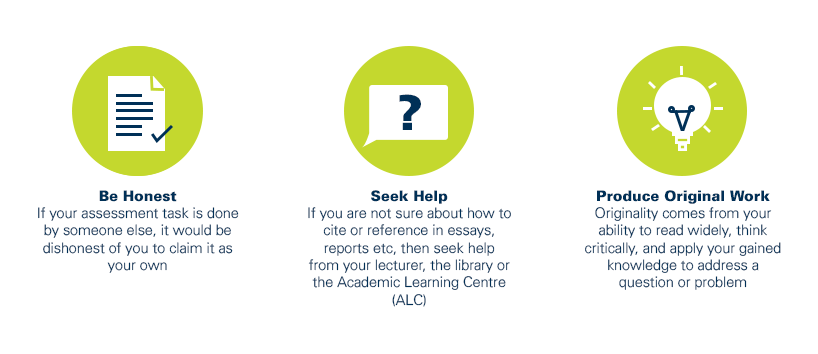
As a CQUniversity student you are expected to act honestly in all aspects of your academic work.
Any assessable work undertaken or submitted for review or assessment must be your own work. Assessable work is any type of work you do to meet the assessment requirements in the unit, including draft work submitted for review and feedback and final work to be assessed.
When you use the ideas, words or data of others in your assessment, you must thoroughly and clearly acknowledge the source of this information by using the correct referencing style for your unit. Using others’ work without proper acknowledgement may be considered a form of intellectual dishonesty.
Participating honestly, respectfully, responsibly, and fairly in your university study ensures the CQUniversity qualification you earn will be valued as a true indication of your individual academic achievement and will continue to receive the respect and recognition it deserves.
As a student, you are responsible for reading and following CQUniversity’s policies, including the Student Academic Integrity Policy and Procedure. This policy sets out CQUniversity’s expectations of you to act with integrity, examples of academic integrity breaches to avoid, the processes used to address alleged breaches of academic integrity, and potential penalties.
What is a breach of academic integrity?
A breach of academic integrity includes but is not limited to plagiarism, self-plagiarism, collusion, cheating, contract cheating, and academic misconduct. The Student Academic Integrity Policy and Procedure defines what these terms mean and gives examples.
Why is academic integrity important?
A breach of academic integrity may result in one or more penalties, including suspension or even expulsion from the University. It can also have negative implications for student visas and future enrolment at CQUniversity or elsewhere. Students who engage in contract cheating also risk being blackmailed by contract cheating services.
Where can I get assistance?
For academic advice and guidance, the Academic Learning Centre (ALC) can support you in becoming confident in completing assessments with integrity and of high standard.
What can you do to act with integrity?