Overview
Molecular and cellular pathology involves the study of disease processes at the molecular level and allows diagnosis of disease through the detection of genetic mutations, dysregulated gene expression and non functional or cytotoxic proteins. In this unit, you will learn about the role of cellular genetic material and associated genetic rearrangements and mutations. You will explore the application of molecular techniques, such as polymerase chain reaction and next generation sequencing, and their revolutionary impact on diagnostic testing. The residential school may be scheduled outside of the term of offering of the unit.
Details
Pre-requisites or Co-requisites
Prerequisites:Enrolment in Master of Laboratory Medicine.
Important note: Students enrolled in a subsequent unit who failed their pre-requisite unit, should drop the subsequent unit before the census date or within 10 working days of Fail grade notification. Students who do not drop the unit in this timeframe cannot later drop the unit without academic and financial liability. See details in the Assessment Policy and Procedure (Higher Education Coursework).
Offerings For Term 2 - 2026
Attendance Requirements
All on-campus students are expected to attend scheduled classes - in some units, these classes are identified as a mandatory (pass/fail) component and attendance is compulsory. International students, on a student visa, must maintain a full time study load and meet both attendance and academic progress requirements in each study period (satisfactory attendance for International students is defined as maintaining at least an 80% attendance record).
Recommended Student Time Commitment
Each 6-credit Postgraduate unit at CQUniversity requires an overall time commitment of an average of 12.5 hours of study per week, making a total of 150 hours for the unit.
Class Timetable
Assessment Overview
Assessment Grading
This is a graded unit: your overall grade will be calculated from the marks or grades for each assessment task, based on the relative weightings shown in the table above. You must obtain an overall mark for the unit of at least 50%, or an overall grade of 'pass' in order to pass the unit. If any 'pass/fail' tasks are shown in the table above they must also be completed successfully ('pass' grade). You must also meet any minimum mark requirements specified for a particular assessment task, as detailed in the 'assessment task' section (note that in some instances, the minimum mark for a task may be greater than 50%). Consult the University's Grades and Results Policy for more details of interim results and final grades.
All University policies are available on the CQUniversity Policy site.
You may wish to view these policies:
- Grades and Results Policy
- Assessment Policy and Procedure (Higher Education Coursework)
- Review of Grade Procedure
- Student Academic Integrity Policy and Procedure
- Academic Progression Policy and Procedure
- Student Refund and Credit Balance Policy and Procedure
- Complaints Policy and Procedure
- Information and Communications Technology Acceptable Use Policy and Procedure
This list is not an exhaustive list of all University policies. The full list of University policies are available on the CQUniversity Policy site.
Feedback, Recommendations and Responses
Every unit is reviewed for enhancement each year. At the most recent review, the following staff and student feedback items were identified and recommendations were made.
Feedback from Self-reflection
Residential school experiments
Consider incorporating additional experiments during the residential school, as there is capacity to include more practical work.
Feedback from SUTE and self-reflection
Tutorial format has been engaging
Retain the current tutorial format, with questions provided one week in advance and reviewed during face-to-face tutorial sessions.
Feedback from Self-reflection
The topic Molecular Basis of Prostate, Colorectal, and Breast Cancer requires an additional lecture/tutorial session, as the existing allocation is insufficient to adequately cover the breadth and depth of the content.
Consider adding an additional lecture/tutorial session to adequately cover this topic. This could be achieved by replacing the existing blood lecture topic with this content (as the blood related topic is also covered in LMED28002)
- Critically discuss how gene mutations or rearrangements underpin the molecular aetiology of particular diseases
- Evaluate the role of epigenetic modifications of the genome in disease pathogenesis
- Explain the process of identifying genetic modifications and their clinical significance
- Demonstrate skills in the use of genetic techniques in molecular pathology, including genetic amplification
- Explain the use of molecular pathology in disease diagnosis, prevention and treatment, including the development of personalised medicines.
Alignment of Assessment Tasks to Learning Outcomes
| Assessment Tasks | Learning Outcomes | ||||
|---|---|---|---|---|---|
| 1 | 2 | 3 | 4 | 5 | |
| 1 - Written Assessment - 20% | |||||
| 2 - Written Assessment - 30% | |||||
| 3 - Laboratory/Practical - 0% | |||||
| 4 - Examination - 50% | |||||
Alignment of Graduate Attributes to Learning Outcomes
| Graduate Attributes | Learning Outcomes | ||||
|---|---|---|---|---|---|
| 1 | 2 | 3 | 4 | 5 | |
| 1 - Knowledge | |||||
| 2 - Communication | |||||
| 3 - Cognitive, technical and creative skills | |||||
| 4 - Research | |||||
| 5 - Self-management | |||||
| 6 - Ethical and Professional Responsibility | |||||
| 7 - Leadership | |||||
| 8 - First Nations Knowledges | |||||
| 9 - Aboriginal and Torres Strait Islander Cultures | |||||
Textbooks
Thompson & Thompson Genetics and Genomics in Medicine
- 9th edition (2023)
- Authors: Edited by Ronald Cohn, Stephen Scherer and Ada Hamosh
- Elsevier - Health Sciences Division
- Philiadelphia Philiadelphia , PA , USA
- ISBN: 9780323547628
Additional Textbook Information
Paper copies (if preferred) can be purchased at the University Shop here: https://shop.cqu.edu.au/ (search on the Unit code)
IT Resources
- CQUniversity Student Email
- Internet
- Unit Website (Moodle)
- Microsoft Teams
All submissions for this unit must use the referencing styles below:
For further information, see the Assessment Tasks.
j.jazayeri@cqu.edu.au
Week 1 - Apoptosis, Necrosis and Inflammation
Begin Date: 13 Jul 2026Module/Topic
Revision of Molecular Pathology- Apoptosis an Inflammation
Chapter
No prescribed textbook for this unit.
Pls review the lecture material and recordings available for week 1 in Moodle prior to your tutorial/lectorial as well as other provided resources in your Moodle for Week 1.
Events and Submissions/Topic
Welcome and introduction to the unit. This session will provide an overview of the subject structure and outline the assessment components.
This week’s tutorial will focus on the concepts of apoptosis and necrosis, and will explore the biological processes involved in inflammatory pathways.
Week 2 - Omics
Begin Date: 20 Jul 2026Module/Topic
'Omics' techniques supporting molecular diagnosis, pathology and pathogenesis. This will include the study and analysis of various biological molecules that constitute the cells of an organism, such as genomics, proteomics, and metabolomics.
Chapter
No prescribed textbook for this unit.
Pls review the lecture material and recordings available for week 2 in Moodle prior to your tutorial/lectorial as well as the peer-reviewed article indicated for Week 2.
Events and Submissions/Topic
This week we'll review how omics tools (e.g. genomics, transcriptomics, proteomics, metabolomics) support molecular diagnosis, pathology, and understanding of disease pathogenesis.
Week 3 - Epigenetics
Begin Date: 27 Jul 2026Module/Topic
Epigenetics and human disease. The study of heritable changes in gene expression that do not involve changes to the DNA sequence, often involving mechanisms such as DNA methylation.
Chapter
No prescribed textbook for this unit.
Pls review the lecture material and recordings available for week 3 in Moodle prior to your tutorial/lectorial as well as the peer-reviewed article indicated for Week 3.
Events and Submissions/Topic
This week we will cover epigenetics—mechanisms such as DNA methylation and histone modification that regulate gene activity. Disruption of these processes can lead to diseases like cancer, neurological conditions, and developmental disorders.
Week 4 - Cardiovascular and Pulmonary Diseases
Begin Date: 03 Aug 2026Module/Topic
Molecular basis of cardiovascular and pulmonary diseases.
Chapter
No prescribed textbook for this unit.
Pls review the lecture material and recordings available for week 4 in Moodle prior to your tutorial/lectorial as well as the peer-reviewed article indicated for Week 4.
Events and Submissions/Topic
Molecular basis of cardiovascular and pulmonary diseases. Genetic, hormonal and metabolic aspects of PCOS.
Week 5 - Molecular Basis of Colorectal, Prostate and Breast Cancers: Part 1
Begin Date: 10 Aug 2026Module/Topic
The molecular basis of colorectal and prostate cancers.
Chapter
No prescribed textbook for this unit.
Pls review the lecture material and recordings available for week 5 in Moodle prior to your tutorial/lectorial as well as the peer-reviewed article indicated for Week 5.
Events and Submissions/Topic
This week we will outline the progression of prostate and colon cancers
Week 6 - Molecular Basis of Colorectal, Prostate and Breast Cancers: Part 2
Begin Date: 17 Aug 2026Module/Topic
Molecular basis of Breast cancers.
Chapter
Pls review the lecture material and recordings available for week 6 in Moodle prior to your tutorial/lectorial as well as the peer-reviewed article indicated for Week 6.
Events and Submissions/Topic
This week we will outline the progression of Estrogen Receptor-Positive (ER +) Breast Cancers
Vacation Week
Begin Date: 24 Aug 2026Module/Topic
Chapter
Events and Submissions/Topic
Week 7 - Molecular basis of liver and kidney diseases
Begin Date: 31 Aug 2026Module/Topic
Molecular basis of liver and kidney disease.
Chapter
Pls review the lecture material and recordings available for week 7 in Moodle prior to your tutorial/lectorial as well as the peer-reviewed article indicated for Week 7.
Events and Submissions/Topic
Molecular basis of liver and kidney disease. Analysis of a peer-reviewed article on a topic relevant to this week.
Opens Monday 31 August at 7:00 AM and closes on Tuesday 1st September 7:00 AM.
Written Assessment Due: Week 7 Tuesday (1 Sept 2026) 7:00 am AEST
Week 8 - Molecular basis of skin diseases
Begin Date: 07 Sep 2026Module/Topic
This week we will cove skin diseases such as filaggrin (eczema), keratin (epidermolysis bullosa), cytokines (psoriasis), allergens (contact dermatitis), and BRAF mutations (skin cancers).
NAFLD/NASH involve fat buildup, insulin resistance, and inflammation, explained by "two-hit" and "multiple-hit" models.
Chapter
Pls review the lecture material and recordings available for week 8 in Moodle prior to your tutorial/lectorial as well as the peer-reviewed article indicated for Week 8.
Events and Submissions/Topic
Molecular basis of skin diseases. Analysis of a peer-reviewed article on a topic relevant to this week.
Week 9 - Musculoskeletal Diseases
Begin Date: 14 Sep 2026Module/Topic
Molecular basis of Musculoskeletal Diseases
Chapter
Pls review the lecture material and recordings available for week 9 in Moodle prior to your tutorial/lectorial as well as the peer-reviewed article/other relevant resources indicated for Week 9.
Events and Submissions/Topic
Molecular basis of Musculoskeletal Diseases. Analysis of a peer-reviewed article/other relevant resources on a topic relevant to this week.
Molecular testing design Due: Week 9 Friday (18 Sept 2026) 7:00 pm AEST
Week 10 - Exocrine and Endocrine Systems
Begin Date: 21 Sep 2026Module/Topic
Molecular basis of Exocrine and Endocrine Systems
Chapter
Pls review the lecture material and recordings available for week 10 in Moodle prior to your tutorial/lectorial as well as the peer-reviewed article/other relevant resources indicated for Week 10.
Events and Submissions/Topic
Molecular basis of Exocrine and Endocrine Systems. Analysis of a peer-reviewed article/other relevant resources on a topic relevant to this week.
Week 11 - Molecular Diagnostics in the Modern Pathology Laboratory
Begin Date: 28 Sep 2026Module/Topic
This week covers key laboratory techniques used to diagnose disease, including immunoassays, PCR, and other molecular and biochemical tests essential for accurate clinical diagnosis.
Chapter
Pls review the lecture material and recordings available for week 11 in Moodle prior to your tutorial/lectorial as well as the peer-reviewed article/other relevant resources indicated for Week 11.
Events and Submissions/Topic
Clinical Laboratory and Personalised Medicine. Analysis of a peer-reviewed article/other relevant resources on a topic relevant to this week.
Week 12 - Revision - All topics
Begin Date: 05 Oct 2026Module/Topic
Revision – All Topics (Weeks 1–11)
Chapter
Please review all lecture and tutorial materials and recordings covered throughout the term.
Events and Submissions/Topic
Revise all topics covered during the term and review past examination papers.
Exam Week
Begin Date: 12 Oct 2026Module/Topic
Exam week
Chapter
Revise ALL topics Week 1- Week 11
Events and Submissions/Topic
An invigilated examination will be scheduled in the scheduled examination period. Exam timetable to be announced.
Vacation/Exam Week
Begin Date: 19 Oct 2026Module/Topic
Chapter
Events and Submissions/Topic
Unit Coordinator:
Your unit coordinator for LMED29001, Genomic Pathology 1, is Dr. Jalal Jazayeri. Your primary contact point is Jalal, and you can contact him using the following means:
- Via the subject Discussion Forum on the unit's Moodle site. The forum for this unit is continuously monitored and you can expect a response within one-two (1-2) business day/s of posting your question.
- Through email (j.jazayeri@cqu.edu.au) or Via Microsoft Teams.
Dr. Jazayeri is based in Melbourne, at 120 Spencer Street, level 4, Room number 4.02.
Your secondary contact point is A/Prof Genia Burchall and you can contact her using the following means:
Via the forum on the unit's Moodle site or through email (g.burchall@cqu.edu.au) or Via Teams.
Textbook:
There is no prescribed textbook for this subject. However, whenever required published journal articles relevant to each topic will be provided. These articles are up-to-date with the latest advancements in the field, ensuring that you have access to the most current research and developments.
Study Guide
In line with Australian educational standards, you are expected to dedicate approximately 150 hours to this unit over the term—equating to around 12.5 hours per week. Each week, students should allocate time to the following activities:
- 3 - 4 hours per week watching pre-recorded lectures and revising the content through study notes.
- 2 - 3 hours per week completing the weekly study questions and weekly revision quizzes on the unit's Moodle site.
- 2- 3 hours per week attending the weekly tutorials and reflecting on your answers to the weekly revision worksheets.
- 3- 4 hours per week preparing for your assessments and end of term invigilated exam.
This unit also includes a compulsory laboratory component (Residential School), which will be held in Rockhampton (10/09/2026 to 11/09/2026) from 9:0 AM - 17:00 PM , and in Melbourne from 19/11/2026 to 20/11/2026 and 26/11/2026 to 27/11/2026 at the Deakin University, Burwood campus, Melbourne.
1 Written Assessment
This online assessment will examine your comprehension of the learning objectives and activities carried our from weeks 1 - 6 inclusive in the unit. It will include any pre-tutorial/lectorial learning materials such as the weekly lecture notes and related resources, peer-reviewed articles and other relevant resources provided with the unit content and covered during scheduled classes. The assessment may include (but not be limited to) case studies, some short answer questions, terminology questions, process and arrangement questions.
You will be provided with support and examples of the types of questions you are likely to encountered in this assessment during your scheduled classes; this will assist you in learning and understanding the expectations of this assessment. You are therefore strongly encouraged to regularly attend and actively participate in the weekly scheduled classes, ask questions where you are uncertain and ensure you come prepared for each class by having reviewed any pre-class learning material. If you still have questions or areas you do not understand following each weekly lectorial/tutorial class you will be encouraged to address these promptly by posting your questions on the Discussion forum and engaging in discussion on this/these topics with fellow students and academics, and the Unit coordinators. This is a timed assessment, once you begin the assessment, you will have 2 hours and 15 minutes to complete and submit it.
- Level of GenAI Allowed: Level 1 - No AI. You must not use AI at any point during the assessment. You must demonstrate core skills and knowledge.
- Please note that the 72-hour grace period does NOT apply to this assessment.
Week 7 Tuesday (1 Sept 2026) 7:00 am AEST
Online submission via the subject Moodle site
Week 7 Tuesday (1 Sept 2026)
Two weeks after submission -online
A detailed marking criteria and marks allocated for each questions will be provided with this assessment. Marks will range from 1-2 marks for short responses and 4-5 marks where more detailed information will be required. You will be provided with support and examples of the types of questions you are likely to encountered in this assessment during your scheduled classes; this will assist you in learning and understanding the expectations of this assessment. You are therefore strongly encouraged to regularly attend and actively participate in the weekly scheduled classes, ask questions where you are uncertain and ensure you come prepared for each class by having reviewed any pre-class learning material. If you still have questions or areas you do not understand following each weekly lectorial/tutorial class you will be encouraged to address these promptly by posting your questions on the Discussion forum and engaging in discussion on this/these topics with fellow students and academics, and the Unit coordinators. Doing this will ensure you 'arrive' to this assessment well prepared and give yourself the best possibilities of preforming well in and from this assessment.
- Critically discuss how gene mutations or rearrangements underpin the molecular aetiology of particular diseases
- Explain the process of identifying genetic modifications and their clinical significance
- Explain the use of molecular pathology in disease diagnosis, prevention and treatment, including the development of personalised medicines.
2 Written Assessment
Molecular testing, using genetic amplification, for disease detection has become commonplace in most pathology workplaces. Tests that used to take days can now be done in an hour or 2, making turn-around times shorter and clinical decision making easier. Understanding how and why these tests are done is vital for a Medical Laboratory Scientist. For this assessment you will be given a range of scenarios with different diseases and will be asked to design a molecular experiment to determine the status of the disease in a specific patient. Working in pairs you will research the disease and determine a specific genetic target to be tested. You and your student partner will then design a genetic amplification-based experiment, including describing specific primer sets, amplification conditions, reagents and equipment needed. Individually, you will then outline what you expect to see in terms of results and interpret what this means for the patient. There are are 5 tasks associated with this assessment and are divided as follows:
GROUP TASKS
1. Introduction to the Genetic Disorder
Provide a brief introduction to the selected disorder including its prevalence, the specific point mutation involved, and how this mutation alters protein function and contributes to the clinical features of the condition.
2. ARMS-PCR Principle
Describe how ARMS-PCR uses allele-specific primers to detect any point mutations. Explain how it identifies homozygous normal, heterozygous (carrier), and homozygous mutant individuals in a single reaction. Diagrams may be used for clarity.
3. Primer Design and PCR Setup
Use the given gene sequence for the genetic disease of your choice design ARMS-PCR primers. You can use this site for primer design: http://primer1.soton.ac.uk/primer1.html). List required equipment and outline PCR conditions and gel electrophoresis setup to visualize results.
INDIVIDUAL TASKS
4. Patient Result Interpretation
Based on the provided case (e.g., patient diagnosed with the selected disorder), describe the expected ARMS-PCR result, including expected band sizes and their interpretation.
5. Parental Testing Outcome
Assuming the patient's parents are asymptomatic, describe what ARMS-PCR results (band patterns) would be expected and explain what they indicate about carrier status.
- Level of GenAI Allowed: Level 2 Planning. You may use AI for planning, idea development, and research. Your final submission should show how you have developed and refined these ideas.
- 72 hours grace period applies to this assessment.
Week 9 Friday (18 Sept 2026) 7:00 pm AEST
Oline via subject Moodle site
Week 11 Friday (2 Oct 2026)
Via Subject Moodle site
You will be assessed on the following criteria:
- Identification of the molecular etiology of the disease.
- Appropriate design of molecular primers/probes to determine the presence or absence of disease.
- Accurate description of the experimental conditions for the genetic amplification test.
- Clear identification of the experimental outcomes.
- Appropriate use of referencing of scientific literature.
A detailed marking rubric will be available on the Moodle site for this unit
- Demonstrate skills in the use of genetic techniques in molecular pathology, including genetic amplification
3 Laboratory/Practical
The residential school assessment for LMED29001 Genomic Pathology 1 includes the completion and submission of a Laboratory Workbook, which must be submitted on the final day of the residential school. This assessment will be graded on a PASS/FAIL basis, requiring an overall mark of at least 50% to pass. The three-day program consists of engaging, case study-based laboratory practicals, designed to give you hands-on experience that mirrors real-world diagnostic pathology practice. It is strongly recommended that you read and review the laboratory manual and workbook before attending the residential school.
- Level of GenAI use allowed: Level 1: You must not use Al at any point during the assessment. You must demonstrate your core skills and knowledge.
- Please note that the 72-hour grace period does NOT apply to this assessment.
Please bring the following items with you to the residential school for LMED29001 Genomic Pathology
1. A printed copy of the LMED29001 Laboratory Manual
2. A printed copy of the Student Laboratory Workbook
3. A permanent fine-tip marker in your favourite colour
4. Pens, pencils, and a scientific calculator (a smartphone app is acceptable)
Dates: The residential Schools will be held in
- Rockhampton (10/09/2026 to 11/09/2026) from 9:0 AM - 17:00 PM , and in
- Melbourne from 19/11/2026 to 20/11/2026 and 26/11/2026 to 27/11/2026 at the Deakin University, Burwood campus, Melbourne.
Please submit your Workbook individually by the end of the residential school period. Exact dates to be announced
You will be assessed on the following criteria:
- completion of the experiments outlined in the laboratory manual
- an understanding and adherence to the safety protocols dealing with blood handling
- displaying sufficient understanding of the experimental techniques as assessed by answering workbook
questions
Marks will be allocated within the Laboratory workbook for each section, and marking rubric will be available on the Moodle site for this unit.
- Demonstrate skills in the use of genetic techniques in molecular pathology, including genetic amplification
Examination
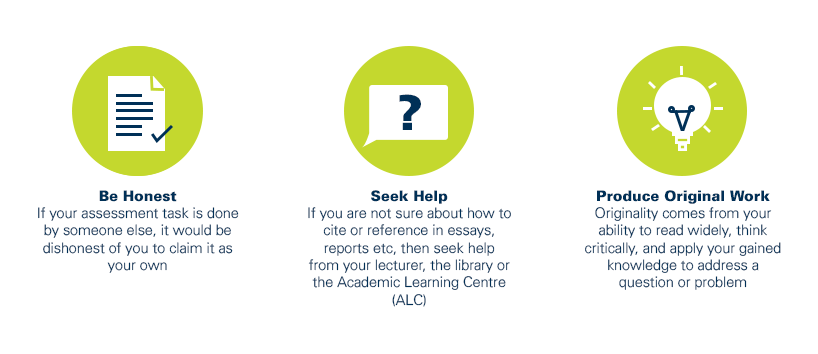
As a CQUniversity student you are expected to act honestly in all aspects of your academic work.
Any assessable work undertaken or submitted for review or assessment must be your own work. Assessable work is any type of work you do to meet the assessment requirements in the unit, including draft work submitted for review and feedback and final work to be assessed.
When you use the ideas, words or data of others in your assessment, you must thoroughly and clearly acknowledge the source of this information by using the correct referencing style for your unit. Using others’ work without proper acknowledgement may be considered a form of intellectual dishonesty.
Participating honestly, respectfully, responsibly, and fairly in your university study ensures the CQUniversity qualification you earn will be valued as a true indication of your individual academic achievement and will continue to receive the respect and recognition it deserves.
As a student, you are responsible for reading and following CQUniversity’s policies, including the Student Academic Integrity Policy and Procedure. This policy sets out CQUniversity’s expectations of you to act with integrity, examples of academic integrity breaches to avoid, the processes used to address alleged breaches of academic integrity, and potential penalties.
What is a breach of academic integrity?
A breach of academic integrity includes but is not limited to plagiarism, self-plagiarism, collusion, cheating, contract cheating, and academic misconduct. The Student Academic Integrity Policy and Procedure defines what these terms mean and gives examples.
Why is academic integrity important?
A breach of academic integrity may result in one or more penalties, including suspension or even expulsion from the University. It can also have negative implications for student visas and future enrolment at CQUniversity or elsewhere. Students who engage in contract cheating also risk being blackmailed by contract cheating services.
Where can I get assistance?
For academic advice and guidance, the Academic Learning Centre (ALC) can support you in becoming confident in completing assessments with integrity and of high standard.
What can you do to act with integrity?