Overview
In this unit you will build upon your knowledge of normal and abnormal histopathological features for a range of tissues along with normal and abnormal cytopathological features of a range of cells. The relationship between cellular injury, immune response, tumour formation, infection and pathological dysregulation of tissue organisation will be explored in relation to clinical cases you may encounter. You will develop the knowledge and skill to advise on the investigation of disease and recommend further investigations that will include the latest techniques in immunohistochemistry and fluorescence imaging and molecular pathology.
Details
Pre-requisites or Co-requisites
Prerequisites: LMED29002 Anatomical Pathology 1
Important note: Students enrolled in a subsequent unit who failed their pre-requisite unit, should drop the subsequent unit before the census date or within 10 working days of Fail grade notification. Students who do not drop the unit in this timeframe cannot later drop the unit without academic and financial liability. See details in the Assessment Policy and Procedure (Higher Education Coursework).
Offerings For Term 2 - 2026
Attendance Requirements
All on-campus students are expected to attend scheduled classes - in some units, these classes are identified as a mandatory (pass/fail) component and attendance is compulsory. International students, on a student visa, must maintain a full time study load and meet both attendance and academic progress requirements in each study period (satisfactory attendance for International students is defined as maintaining at least an 80% attendance record).
Recommended Student Time Commitment
Each 6-credit Postgraduate unit at CQUniversity requires an overall time commitment of an average of 12.5 hours of study per week, making a total of 150 hours for the unit.
Class Timetable
Assessment Overview
Assessment Grading
This is a graded unit: your overall grade will be calculated from the marks or grades for each assessment task, based on the relative weightings shown in the table above. You must obtain an overall mark for the unit of at least 50%, or an overall grade of 'pass' in order to pass the unit. If any 'pass/fail' tasks are shown in the table above they must also be completed successfully ('pass' grade). You must also meet any minimum mark requirements specified for a particular assessment task, as detailed in the 'assessment task' section (note that in some instances, the minimum mark for a task may be greater than 50%). Consult the University's Grades and Results Policy for more details of interim results and final grades.
All University policies are available on the CQUniversity Policy site.
You may wish to view these policies:
- Grades and Results Policy
- Assessment Policy and Procedure (Higher Education Coursework)
- Review of Grade Procedure
- Student Academic Integrity Policy and Procedure
- Academic Progression Policy and Procedure
- Student Refund and Credit Balance Policy and Procedure
- Complaints Policy and Procedure
- Information and Communications Technology Acceptable Use Policy and Procedure
This list is not an exhaustive list of all University policies. The full list of University policies are available on the CQUniversity Policy site.
Feedback, Recommendations and Responses
Every unit is reviewed for enhancement each year. At the most recent review, the following staff and student feedback items were identified and recommendations were made.
Feedback from Unit coordinator self reflection and SUTE data
Informal quizzes based on images shown in tutorials help students recall their learning but require clearer guidelines.
Continue using image-based quizzes and provide additional resources to guide students on how to approach these quizzes.
Feedback from Self reflection
Additional learning opportunities such as crossword puzzles and mock exam questions can complement learning and increase engagement.
Continue to provide these useful learning activities.
- Categorise complex histopathological and cytopathological specimens and discriminate artefactual morphology
- Analyse the role of histopathology in the detection of tissue inflammation and malignancy during the onset and progression of human disease
- Investigate the roles of supervision and management of the anatomical pathology laboratory
- Diagnose normal and non complex conditions using the cytological process
- Evaluate existing and emerging specialised fixation techniques and new molecular and hybridisation techniques in histology and cytology.
Alignment of Assessment Tasks to Learning Outcomes
| Assessment Tasks | Learning Outcomes | ||||
|---|---|---|---|---|---|
| 1 | 2 | 3 | 4 | 5 | |
| 1 - Online Quiz(zes) - 25% | |||||
| 2 - Written Assessment - 25% | |||||
| 3 - Examination - 50% | |||||
Alignment of Graduate Attributes to Learning Outcomes
| Graduate Attributes | Learning Outcomes | ||||
|---|---|---|---|---|---|
| 1 | 2 | 3 | 4 | 5 | |
| 1 - Knowledge | |||||
| 2 - Communication | |||||
| 3 - Cognitive, technical and creative skills | |||||
| 4 - Research | |||||
| 5 - Self-management | |||||
| 6 - Ethical and Professional Responsibility | |||||
| 7 - Leadership | |||||
| 8 - First Nations Knowledges | |||||
| 9 - Aboriginal and Torres Strait Islander Cultures | |||||
Textbooks
Cellular Pathology: An Introduction to Techniques and Applications
- Edition: 3rd (2015)
- Authors: D. J. Cook and P. J. Warren
- Scion Publishing Ltd
- ISBN: 1907904352
IT Resources
- CQUniversity Student Email
- Internet
- Unit Website (Moodle)
- Microsoft CoPilot, ChatGPT, or similar Generative Artificial Intelligence tool.
All submissions for this unit must use the referencing styles below:
For further information, see the Assessment Tasks.
t.q.nguyen@cqu.edu.au
i.christiansen@cqu.edu.au
Week 1
Begin Date: 13 Jul 2026Module/Topic
Module 1 - Cytology/Cytopathology
Chapter
Readings will be made available on the Moodle site.
Events and Submissions/Topic
Tutorial
Week 2
Begin Date: 20 Jul 2026Module/Topic
Module 1 - Cytology/Cytopathology
Chapter
Readings will be made available on the Moodle site.
Events and Submissions/Topic
Tutorial
Week 3
Begin Date: 27 Jul 2026Module/Topic
Module 1 - Cytology/Cytopathology
Chapter
Readings will be made available on the Moodle site.
Events and Submissions/Topic
Tutorial
Week 4
Begin Date: 03 Aug 2026Module/Topic
Module 1 - Cytology/Cytopathology
Chapter
Readings will be made available on the Moodle site.
Events and Submissions/Topic
Tutorial
Assessment 1: Online Quiz 1
Opens: Week 3 Monday (27 July)
8:00am AEST in week 3
Assessment 1: Online Quiz 1
Closes: Week 4 Friday (07 August)
4:00pm AEST in week 4
Week 5
Begin Date: 10 Aug 2026Module/Topic
Module 1 - Cytology/Cytopathology
Chapter
Readings will be made available on the Moodle site.
Events and Submissions/Topic
Tutorial
Week 6
Begin Date: 17 Aug 2026Module/Topic
Module 2 - Advancements in Anatomical Pathology
Chapter
Readings will be made available on the Moodle site.
Events and Submissions/Topic
Tutorial
Assessment 1: Online Quiz 2
Opens: Week 5 Monday (10 August)
8:00am AEST in week 5
Assessment 1: Online Quiz 2
Closes: Week 6 Friday (21 August)
4:00pm AEST in week 6
Vacation Week
Begin Date: 24 Aug 2026Module/Topic
Chapter
Events and Submissions/Topic
Week 7
Begin Date: 31 Aug 2026Module/Topic
Module 2 - Advancements in Anatomical Pathology
Chapter
Readings will be made available on the Moodle site.
Events and Submissions/Topic
Tutorial
Week 8
Begin Date: 07 Sep 2026Module/Topic
Module 2 - Advancements in Anatomical Pathology
Chapter
Readings will be made available on the Moodle site.
Events and Submissions/Topic
Tutorial
Week 9
Begin Date: 14 Sep 2026Module/Topic
Module 2 - Advancements in Anatomical Pathology
Chapter
Readings will be made available on the Moodle site.
Events and Submissions/Topic
Tutorial
Week 10
Begin Date: 21 Sep 2026Module/Topic
Module 3 - Quality and Management in Anatomical Pathology
Chapter
Readings will be made available on the Moodle site.
Events and Submissions/Topic
Tutorial
Assessment 2: Critique
Due: Week 10 Friday (25 September)
4:00pm AEST
Assessment 2: Critique Due: Week 10 Friday (25 Sept 2026) 4:00 pm AEST
Week 11
Begin Date: 28 Sep 2026Module/Topic
Module 3 - Quality and Management in Anatomical Pathology
Chapter
Readings will be made available on the Moodle site.
Events and Submissions/Topic
Tutorial
Week 12
Begin Date: 05 Oct 2026Module/Topic
Module 3 - Quality and Management in Anatomical Pathology
Chapter
Readings will be made available on the Moodle site.
Events and Submissions/Topic
Tutorial
Exam Week
Begin Date: 12 Oct 2026Module/Topic
Chapter
Events and Submissions/Topic
Exam to be held during the examination period. Dates and times to be confirmed during term.
Vacation/Exam Week
Begin Date: 19 Oct 2026Module/Topic
Chapter
Events and Submissions/Topic
Exam to be held during the examination period. Dates and times to be confirmed during term.
Your unit coordinator for LMED29010 Anatomical Pathology 2 is Trung Nguyen.
During term, Trung can be contacted via the following means (in order of preference):
1. using the forum on the unit's Moodle site. The forum for this unit is continuously monitored and you can expect a response within one (1) business day of posting your question
2. via email (t.q.nguyen@cqu.edu.au).
As the name suggests, this unit will provide you with an extension of knowledge gained in foundational LMED29002 Anatomical Pathology 1 unit. LMED29010 Anatomical Pathology 2 is an elective unit in the CM18 - Master of Laboratory Medicine course.
Tutorials will be delivered each week, primarily from the Melbourne campus or online. Students who are enrolled in either mixed mode, Rockhampton or Sydney campus will be able to join these clases via Inter-Switch Link (ISL) or Zoom. Students enrolled on campus will be expected to attend tutorial classes live from their respective campus. These tutorials will also be recorded for the benefit of those students who are unable to attend the live classes. During the tutorials, you will work through the weekly topics or study questions that are provided to you on the Moodle site. These discussion topics and weekly study questions will help you apply knowledge learned during the weekly lectures and prepare you for the assessments. You will gain the most benefit from the tutorials if you explore the weekly lectures beforehand and attempt the weekly study questions and associated learning activities that have been provided on the Moodle site. You are strongly encouraged to commit to the recommended study hours outlined below and participate in tutorials, as studies have shown that students who attend the tutorials and are active in discussions have higher rates of success (Karnik et al., 2020). Weekly learning activities such as revision quizzes and crossword puzzles are also provided to reinforce the knowledge you have gained from the lectures and to support your learning experience in this unit.
As per Australian educational standards, you are expected to commit 150 hours of engagement to your study of this unit for the term. This is broken down as:
2 - 3 hours per week watching recorded lectures and revising the content through study notes
3 - 4 hours per week completing the weekly study questions and weekly revision quizzes on the unit's Moodle site.
1 - 2 hours per week attending the weekly tutorial and reflecting on your answers to the weekly study questions
3 - 4 hours per week preparing your assessments or studying for your exams
Karnik, A., Kishore, P., & Meraj, M. (2020). Examining the linkage between class attendance at university and academic performance in an International Branch Campus setting. Research in Comparative and International Education, 15(4), 371-390. https://doi.org/10.1177/1745499920958855
1 Online Quiz(zes)
This assessment task requires you to demonstrate your knowledge and understanding of histological and cytological techniques that you learn in this unit.
You are required to complete two (2) online quizzes.
Each quiz will be comprised of multiple choice, true-false and short answer questions.
Your time limit for each quiz is 30 minutes.
The quiz will automatically submit at the completion of the 30 minute duration.
You will be allowed one (1) attempt at each quiz.
Each quiz is worth 12.5%, and overall will contribute 25% to your final grade.
You will only be able to access and complete Quiz 2 after you have attempted Quiz 1.
| Quiz | Opens | Closes | Covers |
| 1 | 27 July 2026 | 07 August 2026 | Topics from weeks 1-3 |
| 2 | 10 August 2026 | 21 August 2026 | Topics from weeks 4-5 |
Level of Gen AI use allowed:
Level 1: You must not use AI at any point during the assessment. You must demonstrate your core skills and knowledge.
Please see the timeline outlined above and in the schedule for specific information about quiz opening times and due dates.
Marks will become available once all students have completed the online quiz and all manual marking has been completed.
The questions will be marked upon submission of your quiz.
- Categorise complex histopathological and cytopathological specimens and discriminate artefactual morphology
- Diagnose normal and non complex conditions using the cytological process
2 Written Assessment
This assessment requires you to think critically and relies on your knowledge of histopathology analysis to assess the accuracy of the information that is presented. This assessment is made up of multiple parts:
Part 1. Select a specific solid tumour malignancy of your choice. Using a Generative Artificial Intelligence application such as Copilot, generate a prompt asking for a histology staining panel that is required to diagnose your chosen malignancy in 200-250 words.
Part 2. Using this information, generate a flowchart that outlines all the key steps required from receipt of specimen through to final diagnosis in a Histology laboratory.
Part 3. Critique the generated response from GenAI in 500-750 words, with the use of no more than eight (8) peer reviewed articles published in the last five (5) years.
Level of GenAI use allowed:
For Part 1. Level 4: You may use AI extensively throughout this part of your work as specifically directed in your assessment.
For Parts 2 and 3. Level 1: You must not use AI at any point during these parts of the assessment. You must demonstrate your core skills and knowledge.
Week 10 Friday (25 Sept 2026) 4:00 pm AEST
Week 12 Friday (9 Oct 2026)
You will be assessed on the following:
1. Ability to use GenAI to generate a response to the requested criteria.
2. Demonstration of using assumed knowledge to generate a flow chart of histology processes for tissue analysis.
3. Concise critique of the generated response using no more than eight (8) recent primary research publications.
A detailed marking rubric will be available on the Moodle site.
- Analyse the role of histopathology in the detection of tissue inflammation and malignancy during the onset and progression of human disease
- Evaluate existing and emerging specialised fixation techniques and new molecular and hybridisation techniques in histology and cytology.
Examination
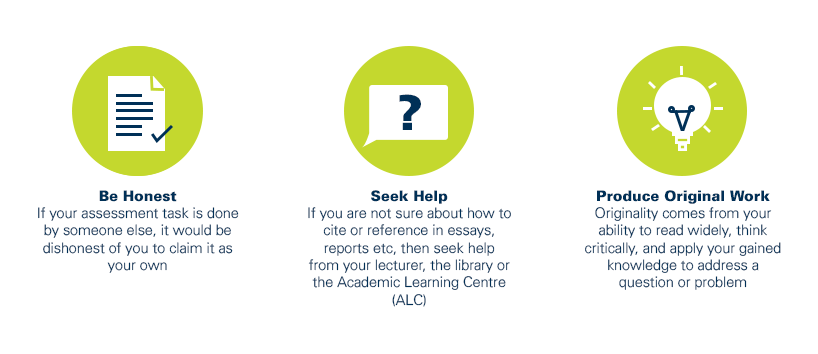
As a CQUniversity student you are expected to act honestly in all aspects of your academic work.
Any assessable work undertaken or submitted for review or assessment must be your own work. Assessable work is any type of work you do to meet the assessment requirements in the unit, including draft work submitted for review and feedback and final work to be assessed.
When you use the ideas, words or data of others in your assessment, you must thoroughly and clearly acknowledge the source of this information by using the correct referencing style for your unit. Using others’ work without proper acknowledgement may be considered a form of intellectual dishonesty.
Participating honestly, respectfully, responsibly, and fairly in your university study ensures the CQUniversity qualification you earn will be valued as a true indication of your individual academic achievement and will continue to receive the respect and recognition it deserves.
As a student, you are responsible for reading and following CQUniversity’s policies, including the Student Academic Integrity Policy and Procedure. This policy sets out CQUniversity’s expectations of you to act with integrity, examples of academic integrity breaches to avoid, the processes used to address alleged breaches of academic integrity, and potential penalties.
What is a breach of academic integrity?
A breach of academic integrity includes but is not limited to plagiarism, self-plagiarism, collusion, cheating, contract cheating, and academic misconduct. The Student Academic Integrity Policy and Procedure defines what these terms mean and gives examples.
Why is academic integrity important?
A breach of academic integrity may result in one or more penalties, including suspension or even expulsion from the University. It can also have negative implications for student visas and future enrolment at CQUniversity or elsewhere. Students who engage in contract cheating also risk being blackmailed by contract cheating services.
Where can I get assistance?
For academic advice and guidance, the Academic Learning Centre (ALC) can support you in becoming confident in completing assessments with integrity and of high standard.
What can you do to act with integrity?