Overview
This unit enables you to develop an advanced knowledge and understanding of the principles of transfusion and transplantation medicine, building on the knowledge and understanding of the principles gained in earlier units. You will enhance your knowledge on topics such as safe blood storage and handling, blood and tissue typing and the detection and identification of antibodies significant in transfusion and solid tissue transplantation. You will develop the critical skills necessary to enable you to provide advice on the provision of safe tissue transplantations and blood products and components for transfusion in both routine and emergency situations including product selection and patient management.
Details
Pre-requisites or Co-requisites
Prerequisites: LMED29003 Transfusion and Transplantation Medicine 1
Important note: Students enrolled in a subsequent unit who failed their pre-requisite unit, should drop the subsequent unit before the census date or within 10 working days of Fail grade notification. Students who do not drop the unit in this timeframe cannot later drop the unit without academic and financial liability. See details in the Assessment Policy and Procedure (Higher Education Coursework).
Offerings For Term 1 - 2026
Attendance Requirements
All on-campus students are expected to attend scheduled classes - in some units, these classes are identified as a mandatory (pass/fail) component and attendance is compulsory. International students, on a student visa, must maintain a full time study load and meet both attendance and academic progress requirements in each study period (satisfactory attendance for International students is defined as maintaining at least an 80% attendance record).
Recommended Student Time Commitment
Each 6-credit Postgraduate unit at CQUniversity requires an overall time commitment of an average of 12.5 hours of study per week, making a total of 150 hours for the unit.
Class Timetable
Assessment Overview
Assessment Grading
This is a graded unit: your overall grade will be calculated from the marks or grades for each assessment task, based on the relative weightings shown in the table above. You must obtain an overall mark for the unit of at least 50%, or an overall grade of 'pass' in order to pass the unit. If any 'pass/fail' tasks are shown in the table above they must also be completed successfully ('pass' grade). You must also meet any minimum mark requirements specified for a particular assessment task, as detailed in the 'assessment task' section (note that in some instances, the minimum mark for a task may be greater than 50%). Consult the University's Grades and Results Policy for more details of interim results and final grades.
All University policies are available on the CQUniversity Policy site.
You may wish to view these policies:
- Grades and Results Policy
- Assessment Policy and Procedure (Higher Education Coursework)
- Review of Grade Procedure
- Student Academic Integrity Policy and Procedure
- Academic Progression Policy and Procedure
- Student Refund and Credit Balance Policy and Procedure
- Complaints Policy and Procedure
- Information and Communications Technology Acceptable Use Policy and Procedure
This list is not an exhaustive list of all University policies. The full list of University policies are available on the CQUniversity Policy site.
Feedback, Recommendations and Responses
Every unit is reviewed for enhancement each year. At the most recent review, the following staff and student feedback items were identified and recommendations were made.
Feedback from SUTE
Students found use of guest lecturers from industry beneficial.
Continue to engage industry experts from the fields of transfusion and transplantation medicine.
Feedback from SUTE and email
Students appreciated the clear explanation of key concepts, engaging lectures, and thoughtful teaching approach, which made a challenging unit more understandable.
Continue to deliver this unit with clear and detailed explanation and engaging lectures and tutorials.
Feedback from SUTE and self-reflection
Some students indicated that video resources and organisation of learning material could be improved.
Video resources and learning material will be reviewed and reorganised to include more detail with clarity.
- Articulate the application of transfusion of human blood products in the prevention or treatment of serious medical conditions
- Analyse complex test results in transfusion and transplantation medicine
- Review and optimise quality control procedures in transfusion and transplantation medicine
- Determine the appropriate implementation of advanced testing procedures in transfusion science including pre-transfusion, compatibility testing, antenatal/postnatal/neonatal screening and the testing for autoantibodies
- Research and critique literature related to adverse outcomes and their effects in transfusion and transplantation medicine.
Alignment of Assessment Tasks to Learning Outcomes
| Assessment Tasks | Learning Outcomes | ||||
|---|---|---|---|---|---|
| 1 | 2 | 3 | 4 | 5 | |
| 1 - Written Assessment - 20% | |||||
| 2 - Case Study - 30% | |||||
| 3 - Examination - 50% | |||||
Alignment of Graduate Attributes to Learning Outcomes
| Graduate Attributes | Learning Outcomes | ||||
|---|---|---|---|---|---|
| 1 | 2 | 3 | 4 | 5 | |
| 1 - Knowledge | |||||
| 2 - Communication | |||||
| 3 - Cognitive, technical and creative skills | |||||
| 4 - Research | |||||
| 5 - Self-management | |||||
| 6 - Ethical and Professional Responsibility | |||||
| 7 - Leadership | |||||
| 8 - First Nations Knowledges | |||||
| 9 - Aboriginal and Torres Strait Islander Cultures | |||||
Textbooks
There are no required textbooks.
Additional Textbook Information
There are no new textbooks required for this unit. Students will continue to have e-access to all textbooks via E-Reading Lists from LMED29003 Transfusion and Transplantation medicine 1.
IT Resources
- CQUniversity Student Email
- Internet
- Unit Website (Moodle)
- Zoom
- Teams
All submissions for this unit must use the referencing style: Vancouver
For further information, see the Assessment Tasks.
r.r.sharma@cqu.edu.au
Week 1
Begin Date: 09 Mar 2026Module/Topic
- Unit and Assessment Overview
- Introduction and Revision
Chapter
Events and Submissions/Topic
Live tutorial - related topics
Week 2
Begin Date: 16 Mar 2026Module/Topic
1. Management of a Transfusion Laboratory
2. Medico-legal and Ethical Aspects of Providing a Blood Transfusion Service in Australia
Chapter
Events and Submissions/Topic
Live tutorial - related topics
Week 3
Begin Date: 23 Mar 2026Module/Topic
Quality Assurance, Quality Control and Quality Systems in the Transfusion Laboratory
Chapter
Events and Submissions/Topic
Live tutorial - related topics
Week 4
Begin Date: 30 Mar 2026Module/Topic
Research in Transfusion Medicine
Chapter
Events and Submissions/Topic
Live tutorial - related topics
Week 5
Begin Date: 06 Apr 2026Module/Topic
- Donor Selection and Processing
- Platelet Antibodies
Chapter
Events and Submissions/Topic
Live tutorial - related topics
Week 6
Begin Date: 13 Apr 2026Module/Topic
- Haemolytic Disease of the Foetus and the Newborn (HDFN)
- Paediatric Transfusion
Chapter
Events and Submissions/Topic
Live tutorial - related topics
Vacation Week
Begin Date: 20 Apr 2026Module/Topic
Break week - an opportunity for self-directed learning and mid-unit revision.
Chapter
Events and Submissions/Topic
No lectures or tutorials
Week 7
Begin Date: 27 Apr 2026Module/Topic
Introduction to Transplantation Medicine
Chapter
Events and Submissions/Topic
Live tutorial - related topics
Literature Review Due: Week 7 Monday (27 Apr 2026) 5:00 pm AEST
Week 8
Begin Date: 04 May 2026Module/Topic
Transplant Rejection
Chapter
Events and Submissions/Topic
Live tutorial - related topics
Week 9
Begin Date: 11 May 2026Module/Topic
Research in Transplantation Medicine
Chapter
Events and Submissions/Topic
Live tutorial - related topics
Week 10
Begin Date: 18 May 2026Module/Topic
Complex Laboratory Investigations 1 - Blood Group and Allo Antibodies
Chapter
Events and Submissions/Topic
Live tutorial - related topics
Week 11
Begin Date: 25 May 2026Module/Topic
Complex Laboratory Investigations 2 - allo and auto antibodies
Chapter
Events and Submissions/Topic
Live tutorial - related topics
Week 12
Begin Date: 01 Jun 2026Module/Topic
Unit Revision and Exam Preparation.
Chapter
Events and Submissions/Topic
Revision - independent study
Exam Week
Begin Date: 08 Jun 2026Module/Topic
Chapter
Events and Submissions/Topic
Vacation/Exam Week
Begin Date: 15 Jun 2026Module/Topic
Chapter
Events and Submissions/Topic
Unit Coordinators
Ms Roxina Sharma: r.r.sharma@cqu.edu.au; A/P Genia Burchall: g.burchall@cqu.edu.au
Lecturers
The lectures will be delivered by Ms Roxzina (Roxina) Sharma (Unit Coordinator: r.r.sharma@cqu.edu.au or 0403315881). Ms Sharma is a Brisbane-based lecturer with over 32 years of industry and teaching experience in the fields of transfusion science (immunohematology), haematology and coagulation. Please note, as this is an advanced level Transfusion & Transplantation Medicine unit we have invited and are privileged to have several industry guest speakers present a number of lecture and/or tutorial classes within this unit.
Pre-requisites
Transfusion and Transplantation Medicine 1 unit from year one of Master of Laboratory Medicine or equivalent.
Lectures and Textbooks
Pre-recorded lectures (and/or shorter videos) will be used throughout the term and will be available to students on the Friday before each lecture week.
Please note there are no recommended textbooks for this unit (due to the advanced and novel nature of the topics covered), but we have included several examples of texts you may choose to use to support your learning within the supplementary texts. We will also be including a number of peer-reviewed articles and other relevant resources for specific weeks to support your knowledge development in this unit (in addition to the lecture/video recordings and tutorial classes). Reading material will be provided on a weekly basis related to each week's topic. Additionally, students will have Moodle access to Transfusion and Transplantation Medicine 1 unit.
Tutorials
Live tutorials and Q&A sessions will be held weekly. Please refer to the Moodle site for further details. It is strongly advisable to review the weekly lectures/videos before each tutorial session to support your learning and success in and from this unit. You are also strongly encouraged to attend and actively engage in weekly live classes, that have been shown through research to be directly correlated to successful outcomes (Karnik, A., Kishore, P., & Meraj, M. (2020). Examining the linkage between class attendance at university and academic performance in an International Branch Campus setting. Research in Comparative and International Education, 15(4), 371-390. https://doi.org/10.1177/1745499920958855)
Work Expectations
Students are encouraged to use the Moodle Q&A forum for all communication purposes with the lecturers and tutors.
As per Australian educational standards, you are expected to commit 150 hours of engagement to your study of this unit (for the entire term). This is broken down per week as:
2 - 3 hours per week attending or watching recorded lectures or videos and revising the content through study notes
2 - 2.5 hours per week completing the weekly readings (i.e. peer-reviewed articles), case studies (in your tutorial/lectorial notes), supplementary readings, and/or other material in the unit's Moodle site.
2 - 3 hours per week attending the weekly tutorial/lectorial classes and contributing to discussions as well as revising the content provided.
3 - 4 hours per week preparing your assessments or studying for your exams
1 Written Assessment
Literature Review — Adverse Transfusion and Transplantation Medicine Outcomes & Control Measures (Traditional vs AI‑Assisted)
Rationale
This assessment develops students’ skills in critically evaluating scientific literature related to adverse outcomes in transfusion and transplantation medicine, while demonstrating responsible and transparent use of generative artificial intelligence (GenAI). Students must interrogate both peer‑reviewed traditional evidence and AI‑generated synthesis to inform evidence‑based laboratory practice, quality control, and patient safety.
The task builds capabilities in:
- Academic and scientific writing
- Critical appraisal of research
- Identification of trends, gaps, and controversies
- Responsible GenAI use
- Evidence‑based decision making in laboratory medicine
For this assessment, you will:
- Select one adverse outcome topic from the approved list provided in Moodle.
- Research and synthesise current traditional peer‑reviewed literature (2015–2026).
- Explain the adverse outcomes' pathophysiology, epidemiology, clinical features, and laboratory implications.
- Compare traditional literature versus AI‑assisted reviews (e.g., risk prediction, QC analytics, decision support).
- Evaluate control procedures or preventative measures used to reduce risk/impact.
- Critically analyse GenAI‑generated content
- Present conclusions and future research directions
- Include a transparent AI usage disclosure with unedited AI output and fact‑checking notes.
Note: Repeating students must select a different topic to avoid self‑plagiarism.
Assessment Structure
Section 1: AI‑Generated Background Overview (Not assessed for scientific accuracy)
You must:
- Use a generative AI tool (e.g., Microsoft Copilot, ChatGPT) to produce a high‑level overview of your selected topic.
- Include the following exactly and transparently:
- Tool used
- Date/version (if available)
- Exact prompt(s) used
- Full, unedited AI output
- Provide brief fact‑checking comments, supported by peer‑reviewed references.
Section 2: Critical Literature Review and Evidence Evaluation (1200 words +/-10%)
This section forms the core of the assessment. Use peer‑reviewed English‑language articles (2015–2026) only.
Required elements:
- Introduction & Objectives
- Search Strategy & Selection Criteria.
- Thematic Synthesis (organise by themes, not study‑by‑study)
- Critical Analysis of Evidence
- Summarise Implications & Recommendations
Section 3: Critical Reflection on the Use of Generative AI (300 words +/- 10%)
- How AI supported your learning (e.g., generating frameworks, keyword brainstorming).
- Risks/limitations (e.g., hallucinations, outdated info, missing context, lack of methodological nuance, opacity).
- How you mitigated these risks through evidence verification, responsible citation practices, Critical appraisal
- Ethical considerations in clinical laboratory contexts (bias, patient safety, data privacy).
Please note: AI augments but does not replace evidence appraisal.
Formatting and referencing:
- Length: 1200 words ±10% (main body). 300 +/- 10% (Critical Reflection on Generative AI).
- Minimum 10 peer‑reviewed sources published within the past 10 years.
- Cover page with student name and ID on all pages.
- Font/spacing: 12‑pt Times New Roman/Arial/Calibri, double‑spaced; use headings/sub‑headings.
- Figures/Tables: Allowed (small file size). Caption and cite sources unless self‑created.
- Referencing: Vancouver style in-text and end of text reference list
- In‑text Vancouver: superscript or bracketed numbers with page numbers for direct statements where applicable (e.g., “…risk increases with donor plasma volume^12(p.4)”).
- File type: .pdf.
Note: for further support on writing, referencing, etc. Please contact the Academic Learning Centre (ALC).
Academic Integrity & Responsible AI Use
Level of GenAI use allowed:
Level 3: You may use Al to assist with specific tasks such as drafting text, refining and evaluating your work. You must critically evaluate and modify any Al-generated content you use. Note: Cutting and pasting of Gen AI/LLM material into assessments may be considered contract cheating and/or plagiarism.
- You must include Section 1 with unedited AI output and prompts.
- AI may be used for ideation, outlining, language clarity, and figure drafting, but final claims must be supported by peer‑reviewed sources.
- Do not cite AI as an authority. Cite the primary literature.
- You are responsible for the accuracy, originality, and proper attribution of all content. Plagiarism, self‑plagiarism, and fabricated citations breach policy.
Week 7 Monday (27 Apr 2026) 5:00 pm AEST
Please upload your Literature Review in Turnitin Assessment 1 link in Moodle
Week 9 Friday (15 May 2026)
Feedback will be provided in Moodle/Turnitin and in class.
Each section will be allocated a specific number of marks. The marking rubric will be available in the unit's Moodle site.
Assessment criteria will focus on:
- Appropriateness of topic and selected literature
- Depth and sophistication of critical analysis
- Ability to compare traditional vs AI‑assisted approaches
- Evaluation of control and preventive strategies
- Identification of gaps, controversies, and future research directions
- Quality, cohesion, and logic of narrative structure
- Clarity and professionalism of writing
- Accuracy and consistency of Vancouver referencing in test and end of text list
- Transparency and ethical use of AI
A 5% late penalty per calendar day applies to all overdue assessments if submitted after the due date/time without an approved extension.
- Articulate the application of transfusion of human blood products in the prevention or treatment of serious medical conditions
- Review and optimise quality control procedures in transfusion and transplantation medicine
- Research and critique literature related to adverse outcomes and their effects in transfusion and transplantation medicine.
2 Case Study
This assessment is designed to strengthen your knowledge in selection of blood for transfusion to achieve a safe transfusion outcome, while gaining experience in presenting case studies for clinical meetings or conference presentations.
You and your group will analyse a provided clinical case study to determine the safest transfusion outcome for the patient. You will then create a short live presentation explaining your findings.
This assessment has three (3) parts:
- Part A – Individual Report (50%) - due Week 11 - Thursday 28.05.26, 23:59 PM
- Part B – Group Presentation (40%) - due Week 11 - Friday 29.05.26, 09:00 AM
- Part C – Self & Peer Review (10%) - due Week 11 - Friday 29.05.26, 23:59 PM
Part A – Individual (50%)
Submit a (600‑word +/-10%) report via Moodle analysing the case study. This may include but not limited to:
- Patient details, signs, and symptoms
- Details of clinician’s request
- Analysis of all lab results and how it impacts selection of compatible blood for safe transfusion purposes
- Explanation of compatibility testing
- Answers to all case questions to be included in relevant parts of your discussion
- Must use peer‑reviewed sources with references.
Formatting and Referencing - Part A:
- PDF format
- Cover page required. Student name and student number are to be included in the footer of each page
- Use double line spacing
- Font: Arial or Times New Roman, size 12 pt; page numbers on each page
- Vancouver referencing (in‑text and Reference List with page numbers)
Part B – Group Presentation (40%)
The opportunity to select your group via Moodle will be available to you sometime after week 4, after confirmation of student numbers for this unit. Each group is to work collaboratively to develop a 15–20-minute live presentation discussing their case study. This group work will include an in-depth discussion of the following:
- An outline of the patient's clinical presentation, including any signs and symptoms
- Analysis of the requesting clinicians request form
- Analysis and interpretation of all laboratory results, including any other clinical data provided
- Diagnostic criteria used to determine the patient's transfusion compatibility with selection of donor units for safe transfusion outcomes
- Each member’s contribution
Formatting and Referencing - Part B:
- Your response should be submitted via Moodle in PowerPoint format - PDF.
- No cover page is required. Student name and student number of each group member is to be included in the title slide.
- Double line spacing must be used.
- Font in either Arial or Times New Roman, 12 points.
- A minimum of 10 references, published within the last five (5) years.
- Vancouver referencing (in‑text and reference list with page numbers)
Part C – Self and Peer Review (10%)
To assess each member's contribution to the group's work, complete the confidential self and peer assessment (SPA) activity in Moodle.
Level of GenAI use allowed:
Level 1: You must not use Gen Al at any point during the assessment. You must demonstrate your core skills and knowledge.
Please note a 72-hour grace period does not apply to Part A, Part B or Part C of this assessment item.
Part A – Individual Report (50%) - due Week 11 - Thursday 28.05.26. Part B – Group Presentation (40%) - due Week 11 - Friday 29.05.26. Part C – Self & Peer Review (10%) - due Week 11 - Friday 29.05.26.
Week 12 Friday (5 June 2026)
Feedback will be provided via Moodle and verbally during oral presentation.
Detailed marking rubrics for group assessment component as well as individual assessment component will be provided in Moodle site of the assessment criteria used.
Each question will be allocated a specific number of marks. The marking rubric will be available on the unit's Moodle site.
Assessment criteria will be based on:
- Knowledge of theory
- Application of foundational concepts
- Correct use of terminology
- Presentation of information
- Feedback provided to peers
- Referencing
A 5% late penalty per calendar day applies to all overdue assessments if submitted after the due date/time without an approved extension.
- Analyse complex test results in transfusion and transplantation medicine
- Determine the appropriate implementation of advanced testing procedures in transfusion science including pre-transfusion, compatibility testing, antenatal/postnatal/neonatal screening and the testing for autoantibodies
- Research and critique literature related to adverse outcomes and their effects in transfusion and transplantation medicine.
Examination
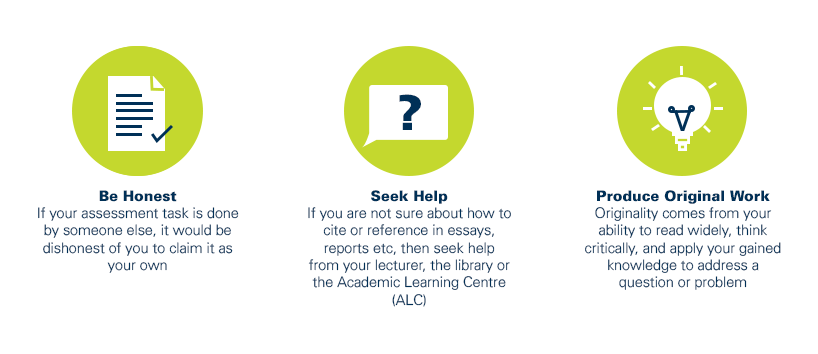
As a CQUniversity student you are expected to act honestly in all aspects of your academic work.
Any assessable work undertaken or submitted for review or assessment must be your own work. Assessable work is any type of work you do to meet the assessment requirements in the unit, including draft work submitted for review and feedback and final work to be assessed.
When you use the ideas, words or data of others in your assessment, you must thoroughly and clearly acknowledge the source of this information by using the correct referencing style for your unit. Using others’ work without proper acknowledgement may be considered a form of intellectual dishonesty.
Participating honestly, respectfully, responsibly, and fairly in your university study ensures the CQUniversity qualification you earn will be valued as a true indication of your individual academic achievement and will continue to receive the respect and recognition it deserves.
As a student, you are responsible for reading and following CQUniversity’s policies, including the Student Academic Integrity Policy and Procedure. This policy sets out CQUniversity’s expectations of you to act with integrity, examples of academic integrity breaches to avoid, the processes used to address alleged breaches of academic integrity, and potential penalties.
What is a breach of academic integrity?
A breach of academic integrity includes but is not limited to plagiarism, self-plagiarism, collusion, cheating, contract cheating, and academic misconduct. The Student Academic Integrity Policy and Procedure defines what these terms mean and gives examples.
Why is academic integrity important?
A breach of academic integrity may result in one or more penalties, including suspension or even expulsion from the University. It can also have negative implications for student visas and future enrolment at CQUniversity or elsewhere. Students who engage in contract cheating also risk being blackmailed by contract cheating services.
Where can I get assistance?
For academic advice and guidance, the Academic Learning Centre (ALC) can support you in becoming confident in completing assessments with integrity and of high standard.
What can you do to act with integrity?