Overview
Fundamental Mathematics for University introduces foundational concepts, rules and methods of elementary mathematics. You will complete regular module reviews and use the feedback to develop a unified body of knowledge in the fundamentals of mathematics. Topics include operations, percentages, introductory algebra, simple equation solving, exponents, linear equations, introductory statistics, and units and conversions. This provides a foundation for further study in mathematics and a broad range of other academic disciplines.
Details
Pre-requisites or Co-requisites
There are no requisites for this unit.
Important note: Students enrolled in a subsequent unit who failed their pre-requisite unit, should drop the subsequent unit before the census date or within 10 working days of Fail grade notification. Students who do not drop the unit in this timeframe cannot later drop the unit without academic and financial liability. See details in the Assessment Policy and Procedure (Higher Education Coursework).
Offerings For Term 2 - 2026
Attendance Requirements
All on-campus students are expected to attend scheduled classes - in some units, these classes are identified as a mandatory (pass/fail) component and attendance is compulsory. International students, on a student visa, must maintain a full time study load and meet both attendance and academic progress requirements in each study period (satisfactory attendance for International students is defined as maintaining at least an 80% attendance record).
Recommended Student Time Commitment
Each 6-credit Non-award unit at CQUniversity requires an overall time commitment of an average of 12.5 hours of study per week, making a total of 150 hours for the unit.
Class Timetable
Assessment Overview
Assessment Grading
This is a graded unit: your overall grade will be calculated from the marks or grades for each assessment task, based on the relative weightings shown in the table above. You must obtain an overall mark for the unit of at least 50%, or an overall grade of 'pass' in order to pass the unit. If any 'pass/fail' tasks are shown in the table above they must also be completed successfully ('pass' grade). You must also meet any minimum mark requirements specified for a particular assessment task, as detailed in the 'assessment task' section (note that in some instances, the minimum mark for a task may be greater than 50%). Consult the University's Grades and Results Policy for more details of interim results and final grades.
All University policies are available on the CQUniversity Policy site.
You may wish to view these policies:
- Grades and Results Policy
- Assessment Policy and Procedure (Higher Education Coursework)
- Review of Grade Procedure
- Student Academic Integrity Policy and Procedure
- Academic Progression Policy and Procedure
- Student Refund and Credit Balance Policy and Procedure
- Complaints Policy and Procedure
- Information and Communications Technology Acceptable Use Policy and Procedure
This list is not an exhaustive list of all University policies. The full list of University policies are available on the CQUniversity Policy site.
Feedback, Recommendations and Responses
Every unit is reviewed for enhancement each year. At the most recent review, the following staff and student feedback items were identified and recommendations were made.
Feedback from Unit Evaluations
Some students were struggling with the starting level of mathematics in the unit and subsequently the volume of work.
Implement a diagnostic quiz for "Week 0", so if needed students can go into the "Pathways for STEPS" program before term starts.
Feedback from Unit Evaluations
Positive student comments on the overall structure of the unit, including the content and structure of the Moodle site.
Continue with the current structure of the unit and the Moodle site.
Feedback from Staff Feedback
Quiz for STAT module does not provide comprehensive feedback for students, particularly on diagrams.
Review the STAT module and revise to a written submission rather than a quiz.
Feedback from Unit Evaluations
Many students commented on how beneficial internal classes were, as well as some online students said they would have preferred on campus.
Continue with on campus delivery in current workshop mode for on campus students.
Feedback from Unit Evaluations
Some students commented on the cost of printing.
Advise students that they can print the required materials at the beginning of term via a commercial printer such as Officeworks for approximately $20, or alternatively, avoid printing altogether and write electronically on the PDF documents with the necessary equipment.
- Recall fundamental mathematical concepts and techniques such as operations, percentages, introductory algebra, simple equation solving, exponents, linear equations, introductory statistics and units and conversions.
- Apply appropriate mathematical techniques
- Develop solutions to applied mathematical problems
- Reflect on assessment to improve mathematical comprehension
- Analyse information using mathematical techniques
- Communicate mathematical solutions.
NA
Alignment of Assessment Tasks to Learning Outcomes
| Assessment Tasks | Learning Outcomes | |||||
|---|---|---|---|---|---|---|
| 1 | 2 | 3 | 4 | 5 | 6 | |
| 1 - Portfolio - 50% | ||||||
| 2 - Take Home Exam - 50% | ||||||
Alignment of Graduate Attributes to Learning Outcomes
| Graduate Attributes | Learning Outcomes | |||||
|---|---|---|---|---|---|---|
| 1 | 2 | 3 | 4 | 5 | 6 | |
| 1 - Self Management | ||||||
| 2 - Communication | ||||||
| 3 - Information Literacy | ||||||
| 4 - Information Technology Competence | ||||||
| 5 - Problem Solving | ||||||
| 6 - Critical Thinking | ||||||
| 7 - Cross-Cultural Competence | ||||||
| 8 - Ethical Practice | ||||||
| 9 - Aboriginal and Torres Strait Islander Cultures | ||||||
| 10 - First Nations Knowledges | ||||||
Textbooks
Fundamental Mathematics for University
- Edition: 9 (2021)
- Authors: Sharon Cohalan
- CQUniversity Australia
- Rockhampton Rockhampton , Queensland , Australia
- ISBN: CQUniversity Australia
The textbook required for Fundamental Mathematics for University (FMU) cannot be purchased from the CQUniversity Bookshop, but it is available on the unit Moodle site. All modules can be downloaded and printed individually or together in textbook format using the links on Moodle.
You are welcome to use the electronic version of the modules or textbook, but we strongly advise you to print your own copies as it is easier to complete activities and take notes on hard copy materials. Your Access Coordinator can provide you with advice on printing options.
- Binding: Spiral
Additional Textbook Information
The textbook required for Fundamental Mathematics for University (FMU) cannot be purchased from the CQUniversity Bookshop, but it is available on the unit Moodle site. All modules can be downloaded and printed individually or together in textbook format using the links on Moodle.
You are welcome to use the electronic version of the modules or textbook, but we strongly advise you to print your own copies as it is easier to complete activities and take notes on hard copy materials. Your Access Coordinator can provide you with advice on printing options.
IT Resources
- CQUniversity Student Email
- Internet
- Unit Website (Moodle)
- Microsoft Office or similar
- CQU Student Identification card - or equivalent personal identification, for display at the start of each of the two workbook discussions.
- Computer with a webcam - to access study materials (including instructional videos), upload assessment, and complete the two Zoom-based Workbook Discussions. Access to a printer is needed for printing assessment, and a scanner (or equivalent) for uploading assessment. A headset is recommended for the Zoom-based Workbook Discussions.
All submissions for this unit must use the referencing style: Harvard (author-date)
For further information, see the Assessment Tasks.
h.conradie@cqu.edu.au
p.piacun@cqu.edu.au
Week 1
Begin Date: 13 Jul 2026Module/Topic
STMA - The Study of Mathematics
Chapter
Events and Submissions/Topic
STMA Workbook Due: Week 1 Friday (17 July) at 11:50 pm AEST. This task must be submitted before or by the specified due date and time.
Week 2
Begin Date: 20 Jul 2026Module/Topic
OPER - Basic Operations with Numbers
Chapter
Events and Submissions/Topic
STMA Module Quiz Due: Week 2 Monday (20 July) at 11:50 pm AEST. This assessment must be completed by the specified due date and time. Due to the nature of this task, the standard 72-hour grace period does not apply.
Week 3
Begin Date: 27 Jul 2026Module/Topic
OPER - Basic Operations with Numbers
PERC - Percentages
Chapter
Events and Submissions/Topic
OPER Workbook Due: Week 3 Wednesday (29 July) by 11:50 pm AEST. This task must be submitted before or by the specified due date and time.
OPER Module Review Due: Week 3 Friday (31 July) at 11:50 pm AEST.
Week 4
Begin Date: 03 Aug 2026Module/Topic
ALG1 - Introduction to Algebra
Chapter
Events and Submissions/Topic
PERC Workbook Due: Week 4 Wednesday (5 Aug) at 11:50 pm AEST. This task must be submitted before or by the specified due date and time.
PERC Module Review Due: Week 4 Friday (7 Aug) at 11:50 pm AEST.
Week 5
Begin Date: 10 Aug 2026Module/Topic
ALG1 - Introduction to Algebra
EQN1 - Solving Algebraic Equations
Chapter
Events and Submissions/Topic
ALG1 Workbook Due: Week 5 Friday (14 Aug) at 11:50 pm AEST. This task must be submitted before or by the specified due date and time.
Workbook Discussion #1: Bookings open for Weeks 5, 6, Break Week and Week 7.
Week 6
Begin Date: 17 Aug 2026Module/Topic
EQN1 - Solving Algebraic Equations
Chapter
Events and Submissions/Topic
ALG1 Module Review Due: Week 6 Wed (19 Aug) at 11:50 pm AEST.
Workbook Discussion #1: Bookings open for Weeks 5, 6, Break Week and Week 7.
Vacation Week
Begin Date: 24 Aug 2026Module/Topic
Chapter
Events and Submissions/Topic
EQN1 Workbook Due: Break Week Wednesday (26 Aug) at 11:50 pm AEST. This task must be submitted before or by the specified due date and time.
EQN1 Module Review Due: Break Week Friday (28 Aug) at 11:50 pm AEST.
Workbook Discussion #1: Bookings open Weeks 5, 6, Break Week and Week 7.
University non-teaching week.
Week 7
Begin Date: 31 Aug 2026Module/Topic
STAT - Introduction to Statistics
Chapter
Events and Submissions/Topic
STAT Workbook Due: Week 7 Friday (4 Sept) at 11:50 pm AEST. This task must be submitted before or by the specified due date and time.
Workbook Discussion #1: Bookings open Weeks 5, 6, Break Week and Week 7.
Week 8
Begin Date: 07 Sep 2026Module/Topic
LINE - Graphs and Linear Equations
Chapter
Events and Submissions/Topic
STAT Module Quiz Due: Week 8 Monday (7 Sept) at11:50 pm AEST. This assessment must be submitted by the specified due date and time. Due to the nature of this task, the standard 72-hour grace period does not apply.
Week 9
Begin Date: 14 Sep 2026Module/Topic
LINE - Graphs and Linear Equations
EXPO - Exponents
Chapter
Events and Submissions/Topic
LINE Workbook Due: Week 9 Friday (18 Sept) at 11:50 pm AEST. This task must be submitted before or by the specified due date and time.
Week 10
Begin Date: 21 Sep 2026Module/Topic
EXPO - Exponents
Chapter
Events and Submissions/Topic
LINE Module Review Due: Week 10 Wednesday (23 Sept) at 11.50 pm AEST.
EXPO Workbook Due: Week 10 Friday (25 Sept) at 11:50 pm AEST. This task must be submitted before or by the specified due date and time.
Workbook Discussion #2: Bookings open Weeks 10, 11, and 12.
Week 11
Begin Date: 28 Sep 2026Module/Topic
UNCN - Units and Conversion
Chapter
Events and Submissions/Topic
EXPO Module Review Due: Week 11 Wednesday (30 Sept) at 11:50 pm AEST.
UNCN Workbook Due: Week 11 Friday (2 Oct) at 11:50 pm AEST. This task must be submitted before or by the specified due date and time.
Workbook Discussion #2: Bookings open Weeks 10, 11, and 12.
Week 12
Begin Date: 05 Oct 2026Module/Topic
UNCN - Units and Conversion
REVIEW
Chapter
Events and Submissions/Topic
UNCN Module Quiz Due: Week 12 Monday (5 Oct ) at 11:50 pm AEST. This assessment must be submitted by the specified due date and time. Due to the nature of this task, the standard 72-hour grace period does not apply.
Workbook Discussion #2: Bookings open Weeks 10, 11, and 12.
Exam Week
Begin Date: 12 Oct 2026Module/Topic
Chapter
Events and Submissions/Topic
Vacation/Exam Week
Begin Date: 19 Oct 2026Module/Topic
Chapter
Events and Submissions/Topic
See Moodle for individual teaching contacts for the term.
Unit Coordinators:
Hermina (Herna) Conradie
(07) 4150 7189
h.conradie@cqu.edu.au
Bundaberg Campus STEPS Office Building 1
Peppa Piacun
(07) 3023 4168
p.piacun@cqu.edu.au
Brisbane Campus and Online
1 Portfolio
Your Portfolio for Assessment Task 1 is made up of three components: the Module Workbooks, the Module Reviews, and the Workbook Discussions. The allocation of marks to each component will be available on the FMU Moodle site.
You will complete nine modules in MATH40237 (from the Fundamental Mathematics for University textbook). At the conclusion of each module you must complete the corresponding Module Workbook as well as the Module Review. These will be available on the MATH40237 Moodle site, along with the due date for each.
The Module Workbooks and Module Reviews are completed as assignments and are unsupervised.
The purpose of the Module Workbooks is to show evidence of learning and to form the basis for your Workbook Discussions. The Module Reviews monitor your progress throughout the term, helping you identify concepts that need further review, either individually or with your Support Tutor.
Two Workbook Discussions will be conducted via Zoom to clarify and discuss your learning. The first will cover the first four modules and the second will cover the remaining five modules.
You must achieve an overall minimum of 50% across the Portfolio in order to be awarded a PASS for Assessment Task 1. You must pass Assessment Task 1 in order to be eligible to pass MATH40237, provided all other conditions are met.
Use of Artificial Intelligence (AI):
Level 2. AI Planning - You may use AI for planning, idea development, and research. Your final submission should show how you have developed and refined these ideas.
(Source: Perkins, M., Roe, J. and Furze, L. 2024, “The AI Assessment Scale Revisited: A framework for educational assessment”)
Further information about this requirement will be provided by the teaching staff in the unit.
You are required to submit each Module Workbook and Module Review online via the FMU Moodle site. Detailed instructions on how to complete and upload these tasks will be available on the FMU Moodle site.
Module Reviews:
Marks for each question in the Module Reviews will be allocated for the following:
- Using appropriate setting out as per the resources on the Moodle site
- Following correct mathematical protocols taught in this unit
- Showing all correct steps in the solution
- Answering the questions asked, where appropriate
- Finding the correct answer
Module Workbooks and Workbook Discussions:
Marks for Module Workbooks and Workbook Discussions will be awarded for the following:
- Engagement with workbooks
- Self-marking and reflection
- Mathematical communication
- Apply appropriate mathematical techniques
- Develop solutions to applied mathematical problems
- Reflect on assessment to improve mathematical comprehension
- Analyse information using mathematical techniques
- Communicate mathematical solutions.
2 Take Home Exam
The Final Unit Test (FUT) is a take-home exam, available via the MATH40237 Moodle site from 9am Thursday 15 October. The FUT covers material from all nine modules in the MATH40237 textbook.
Although the test is designed to take approximately three hours, you have a 24-hour window in which to access, download, complete, and upload it. It must be submitted as a single PDF file via the MATH40237 Moodle site.
You are expected to have completed the relevant Module Reviews for all nine modules before attempting the FUT.
This take-home exam is not supervised. You are required to do your own work, maintaining academic integrity and honesty at all times. To avoid last-minute difficulties, we recommend uploading your completed test well before the deadline.
Use of Artificial Intelligence (AI):
Level 2. AI Planning - You may use AI for planning, idea development, and research. Your final submission should show how you have developed and refined these ideas.
(Source: Perkins, M., Roe, J. and Furze, L. 2024, “The AI Assessment Scale Revisited: A framework for educational assessment”)
Further information about this requirement will be provided by the teaching staff in the unit.
Exam Week Friday (16 Oct 2026) 9:00 am AEST
The submission portal for the FUT will close at the due date and time. Late submissions will not be possible. If you miss the FUT submission due date, you will need to apply for an extension to complete a deferred task held in a different 24-hour period.
The Final Unit Test (FUT) result will be returned via the FMU Moodle site by Certification of Grades
Marks for each question will be allocated for the following:
- Using appropriate setting out as per the resources on the Moodle site
- Following correct mathematical protocols taught in this unit
- Showing all correct steps in the solution
- Answering the question, where appropriate
- Finding the correct answer.
- Recall fundamental mathematical concepts and techniques such as operations, percentages, introductory algebra, simple equation solving, exponents, linear equations, introductory statistics and units and conversions.
- Apply appropriate mathematical techniques
- Develop solutions to applied mathematical problems
- Analyse information using mathematical techniques
- Communicate mathematical solutions.
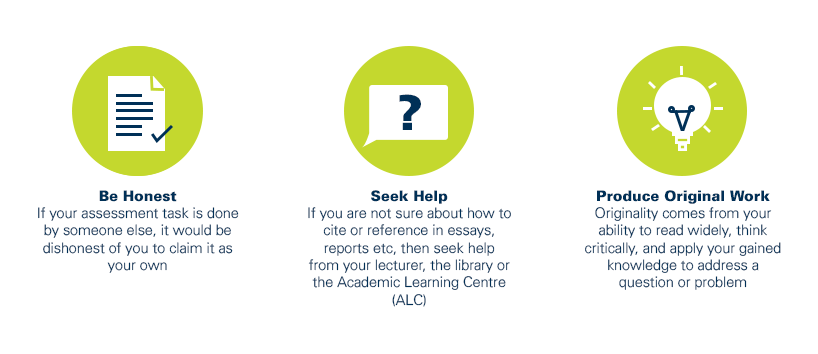
As a CQUniversity student you are expected to act honestly in all aspects of your academic work.
Any assessable work undertaken or submitted for review or assessment must be your own work. Assessable work is any type of work you do to meet the assessment requirements in the unit, including draft work submitted for review and feedback and final work to be assessed.
When you use the ideas, words or data of others in your assessment, you must thoroughly and clearly acknowledge the source of this information by using the correct referencing style for your unit. Using others’ work without proper acknowledgement may be considered a form of intellectual dishonesty.
Participating honestly, respectfully, responsibly, and fairly in your university study ensures the CQUniversity qualification you earn will be valued as a true indication of your individual academic achievement and will continue to receive the respect and recognition it deserves.
As a student, you are responsible for reading and following CQUniversity’s policies, including the Student Academic Integrity Policy and Procedure. This policy sets out CQUniversity’s expectations of you to act with integrity, examples of academic integrity breaches to avoid, the processes used to address alleged breaches of academic integrity, and potential penalties.
What is a breach of academic integrity?
A breach of academic integrity includes but is not limited to plagiarism, self-plagiarism, collusion, cheating, contract cheating, and academic misconduct. The Student Academic Integrity Policy and Procedure defines what these terms mean and gives examples.
Why is academic integrity important?
A breach of academic integrity may result in one or more penalties, including suspension or even expulsion from the University. It can also have negative implications for student visas and future enrolment at CQUniversity or elsewhere. Students who engage in contract cheating also risk being blackmailed by contract cheating services.
Where can I get assistance?
For academic advice and guidance, the Academic Learning Centre (ALC) can support you in becoming confident in completing assessments with integrity and of high standard.
What can you do to act with integrity?